

 EN
EN English
 中文简体
中文简体Polyester Chemical Structure: C10H8O4, Ester Bonds and Why They Matter
Content
- 1 What the Polyester Chemical Structure Actually Is
- 2 How the Ester Linkage Is Built: Condensation Polymerisation in Four Stages
- 3 From Structure to Performance: Crystallinity, Intrinsic Viscosity and Melting Point
- 4 Why the Backbone Decides How Polyester Takes Dye
- 5 Where the Structure Breaks: Hydrolysis, Recycling and Chain Length
- 6 Reading a Polyester Specification: What the Structure Tells You
- 7 Polyester Structure: Frequently Asked Questions
One repeat unit of the polyester used in textiles contains ten carbon atoms, eight hydrogen atoms and four oxygen atoms: C10H8O4, about 192 g/mol. Close to 46 percent of that mass sits inside two ester groups, the -COO- links that hold the chain together. That single fact explains why PET melts near 255 C, why it picks up only about 0.4 percent moisture, why it has to be dyed at 130 C under pressure, and why hot caustic soda will dissolve it.
The same backbone runs through a 75D/72F DTY yarn on a circular knitting machine, a bottle-grade chip at 0.80 dl/g intrinsic viscosity, and a recycled filament rebuilt from glycolysis. Read from the repeat unit upward, the chemistry stays simple. The commercial consequences do not.
What the Polyester Chemical Structure Actually Is
A polyester is any polymer whose repeat units are joined by ester linkages, and the polyester behind almost every textile label is poly(ethylene terephthalate), PET for short.
Two monomers build PET. Terephthalic acid supplies two -COOH groups on a para-substituted benzene ring, and ethylene glycol supplies two -OH groups. Acid meets alcohol, one water molecule leaves, one ester bond forms, and the sequence repeats in both directions.
The repeat unit -[O-CH2-CH2-O-CO-C6H4-CO]- is a sandwich of two ethylene segments, one aromatic ring, and two carbonyl carbons with their ester oxygens. The para placement of the ring matters more than its size: it keeps the chain straight, so PET packs into crystallites and melts near 255 C. Swap it for a flexible aliphatic chain, as in poly(ethylene adipate), and the melting point drops to roughly 50-60 C.
How the Ester Linkage Is Built: Condensation Polymerisation in Four Stages
PET is produced by condensation polymerisation, and every ester bond formed along the way releases one small molecule, usually water or methanol.
- Esterification or transesterification. Terephthalic acid reacts with ethylene glycol at 240-260 C, or dimethyl terephthalate reacts with glycol at 190-210 C while methanol distils off.
- Oligomer build. Chains of five to ten repeat units form, carrying an intrinsic viscosity below 0.2 dl/g, still too weak to spin.
- Melt polycondensation. At 275-285 C and below 1 mbar, glycol is stripped out and titanium or antimony catalysts push the intrinsic viscosity to 0.55-0.65 dl/g.
- Solid-state polycondensation. Chips are held at 200-230 C under vacuum for six to twenty hours until intrinsic viscosity reaches 0.62-0.68 dl/g for fibre grade, or 0.75-0.85 dl/g for bottle grade.
Fibre producers then choose between normal chips in SD, FD, CD and TBR grades, because brightness and dyeing behaviour are already fixed at the chip stage.
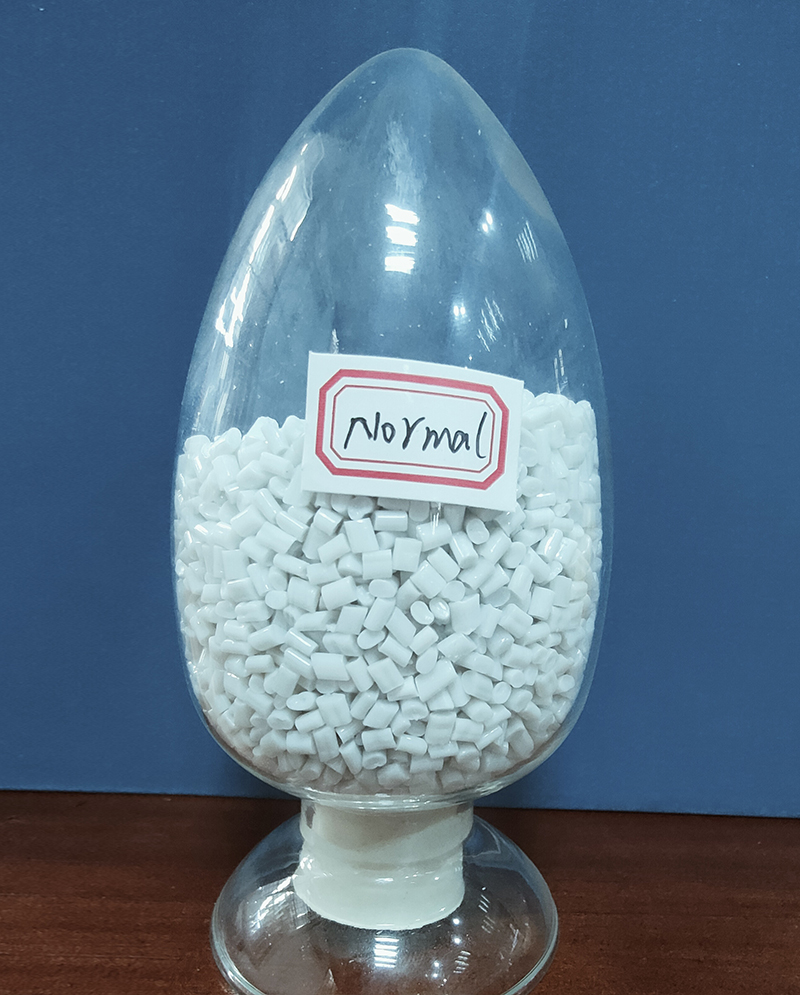 Normal chips (SD/FD/CD/TBR) ManufacturersHigh-Stability Normal Polyester Chips SD/FD/CD/TBR for Textile Fiber Production Normal chips (SD/FD/CD/TBR)View Product →
From Structure to Performance: Crystallinity, Intrinsic Viscosity and Melting Point
Two numbers predict most of what a polyester yarn will do: intrinsic viscosity, which measures chain length, and crystallinity, which measures how tightly those chains pack.
Intrinsic viscosity is the practical proxy for molecular weight. A gap of 0.02 dl/g between two chips is roughly 8 to 10 percent of weight-average molecular weight, and it surfaces as tenacity, elongation, dye uptake and filament breaks during texturing.
| Polymer | Diol component | Melting point | Crystallisation | Typical textile use |
| PET | Ethylene glycol | 255 C | Slow, needs nucleation | FDY, DTY, staple fibre |
| PTT | 1,3-propanediol | 228 C | Moderate | Carpet, elastic apparel |
| PBT | 1,4-butanediol | 225 C | Fast | High-elastic yarn, stretch fabric |
| CD-PET | Ethylene glycol plus SIP | 245-250 C | Reduced | Cationic dyeable yarn, cross-dye effects |
Why the Backbone Decides How Polyester Takes Dye
Standard PET carries no ionic side groups, so it cannot be dyed the way cotton is. Disperse dyes must dissolve into the amorphous regions of the fibre, and that only happens at about 130 C and 2 to 3 bar of pressure.
The ester carbonyls are weakly polar, but they are not dye sites. Below a glass transition temperature near 70-80 C the amorphous chains are frozen and dye molecules cannot squeeze between them. Above 130 C the structure opens, the dye diffuses in, and it stays trapped as the fibre cools.
Standard PET
- Disperse dye only, at 130 C and 2-3 bar
- Needs high-temperature or carrier dyeing equipment
- Shade depth limited by crystallinity, so lots can drift
- Blends with cotton usually mean two separate dye baths
Cationic dyeable PET
- Roughly 2-3 mol% sodium 5-sulfoisophthalate built into the chain
- Sulfonate groups act as permanent anionic dye sites
- Cationic dyes bond ionically at about 100 C, atmospheric pressure
- Cross-dyeing with regular PET creates two-tone and melange effects
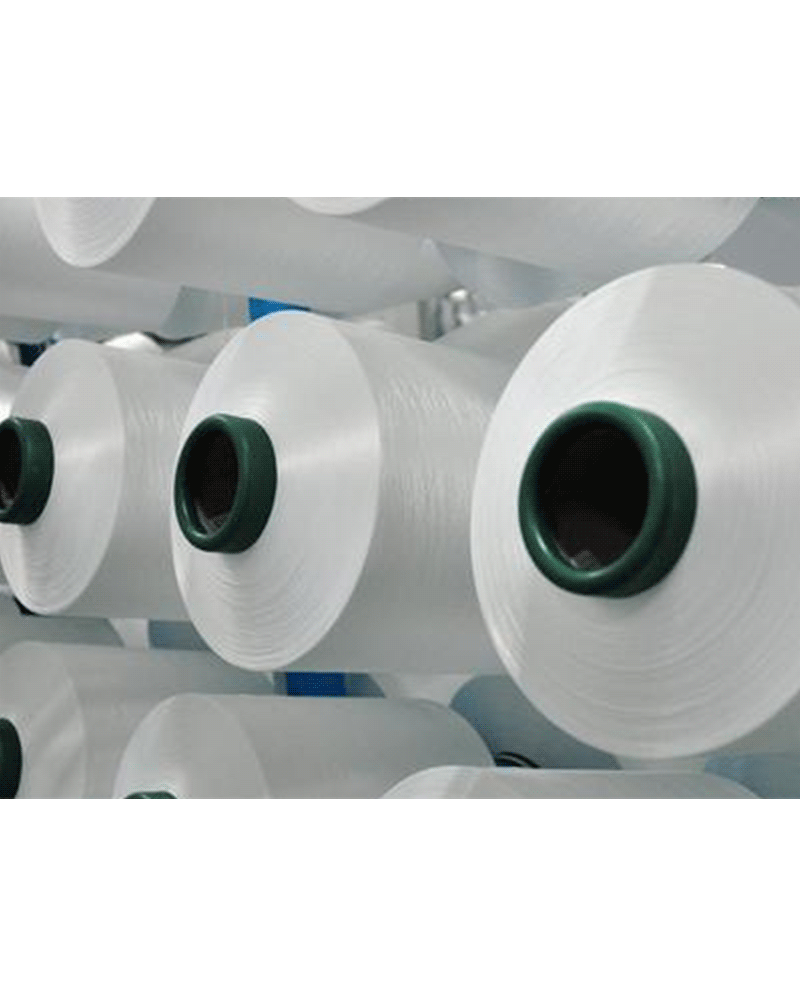 Cationic Polyester SD+CD DTY Yarn for Deep DyeingCationic polyester DTY combining SD and CD benefits for bright, uniform deep dyeing, lower contamination, and cost-effective textile yarn production.View Product →
Where the Structure Breaks: Hydrolysis, Recycling and Chain Length
The ester bond is the weak point of polyester, and every commercial recycling route attacks it deliberately.
Mechanical recycling keeps the backbone but shortens it. Heat, moisture and shear during re-melting cut chains, so a 100 percent recycled filament can arrive 0.05-0.10 dl/g below virgin viscosity. Without chain extenders or a virgin blend, tenacity and dye uniformity both drift.
- Glycolysis: ethylene glycol at 180-240 C breaks chains back to bis(2-hydroxyethyl) terephthalate, which can be repolymerised into new PET.
- Methanolysis: methanol at 180-280 C and 20-40 bar returns dimethyl terephthalate and glycol.
- Hydrolysis: steam or water at high temperature and pressure returns terephthalic acid and glycol.
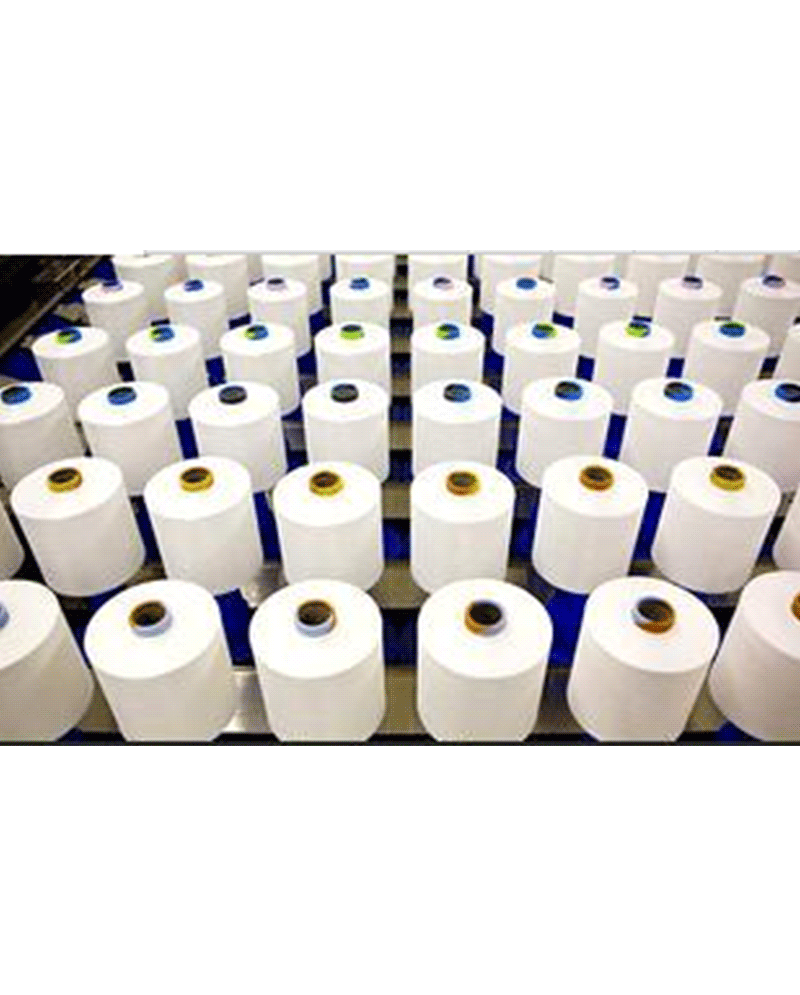 SD DTY High-Strength Recycled Polyester YarnSemi-dull draw textured recycled polyester yarn with high tensile strength, Oeko-Tex and GRS certification, for sportswear, outdoor, home textiles and industrial fabrics.View Product →
Reading a Polyester Specification: What the Structure Tells You
A polyester datasheet is a structural report in disguise, and four values carry most of the information a buyer needs.
- Intrinsic viscosity: 0.62-0.68 dl/g is normal fibre grade. Lower values spin cooler but break more often during texturing, while higher values need more heat to draw.
- Denier and filament count: 75D/72F gives a soft, draping hand, while 150D/48F gives bulk and cover. Filament count also changes how light reflects, which shifts apparent shade.
- Comonomer content: isophthalic acid, diethylene glycol or sodium 5-sulfoisophthalate lower crystallinity and move the melting point. Above roughly 3 mol%, a PET is no longer bottle grade.
- Moisture and finish: PET regains about 0.4 percent moisture, so it dries quickly but builds static, and spin finish decides how it runs on the knitting machine.
Buyers who need standard, cationic, high-elastic and recycled versions of the same yarn in one programme usually shorten the trial-and-error stage by working with a differential yarn supplier that runs all four lines.
Polyester Structure: Frequently Asked Questions
What is the chemical formula of polyester?
For textile PET the repeat unit is C10H8O4 and the polymer is written (C10H8O4)n. A commercial resin has no single molecular formula, because every batch is a distribution of chain lengths rather than one molecule. The notation itself is unpacked in this explanation of the polyester PET formula C10H8O4.
Is textile polyester chemically the same as bottle polyester?
Yes, both are PET. The difference sits in chain length and additives: fibre grade runs at 0.62-0.68 dl/g intrinsic viscosity, bottle grade at 0.75-0.85 dl/g, and fibre grades often carry titanium dioxide for dulling or comonomers for dyeing.
Does recycled polyester keep the same structure?
The backbone is identical, but the chain length distribution is wider. Mechanically recycled PET usually shows higher oligomer content and 0.05-0.10 dl/g lower intrinsic viscosity, which is why many mills blend it with virgin resin or add chain extenders.
Why does polyester need high-temperature dyeing?
Because the fibre offers no ionic dye sites and its amorphous regions are frozen below a glass transition temperature near 70-80 C. Disperse dye needs roughly 130 C and 2-3 bar to diffuse in. Cationic dyeable grades add sulfonate groups to the chain, so the same shade can be built at about 100 C.
Popular products
-

Premium Cationic Interlock Stretch Comfort Fabric
-
Moisture-Wicking Nylon Woven Fabric
-
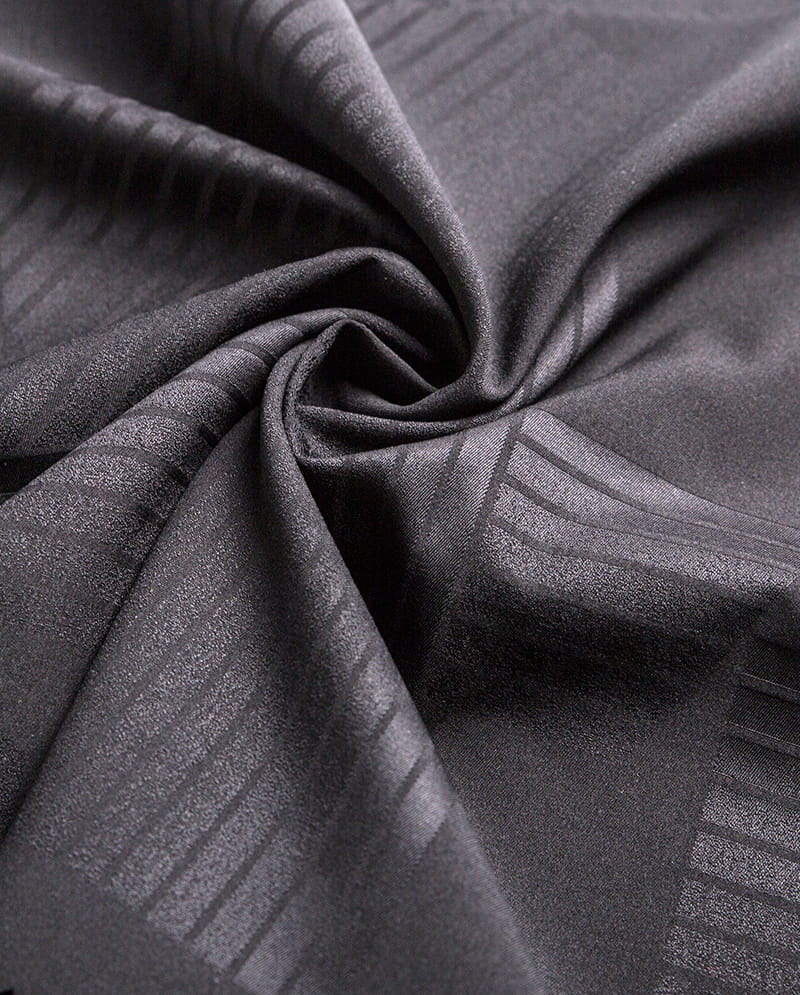
Double-faced jacquard elastic fabric
-
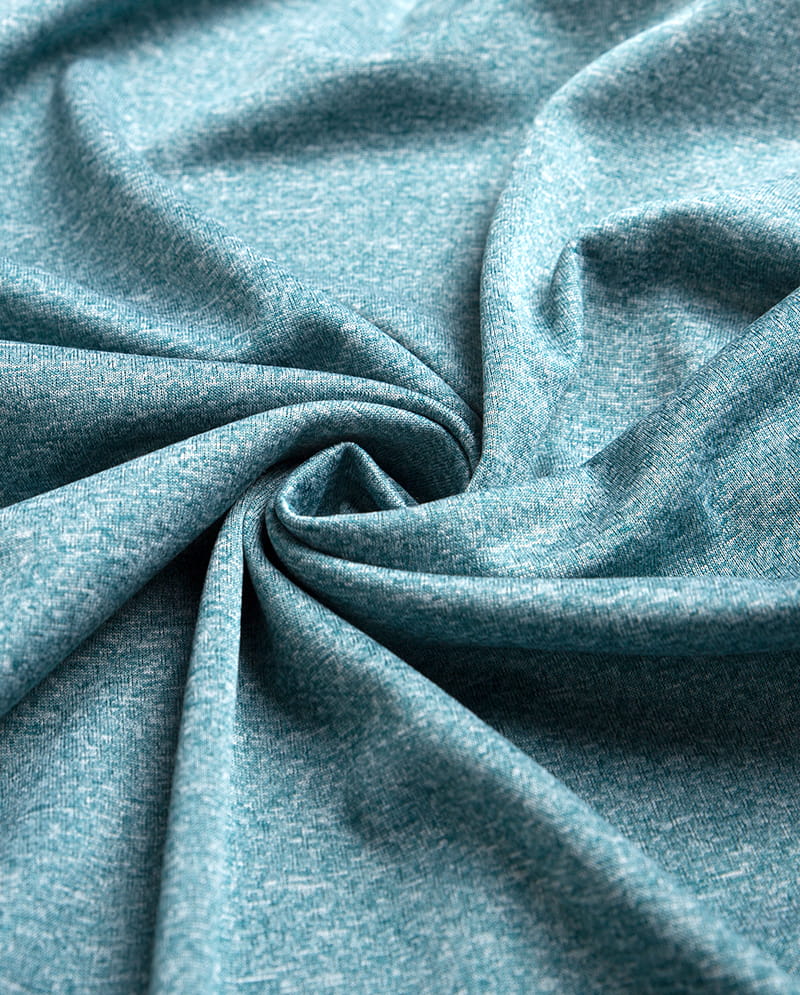
Heather Grey Double-faced cationic jersey fabric
-
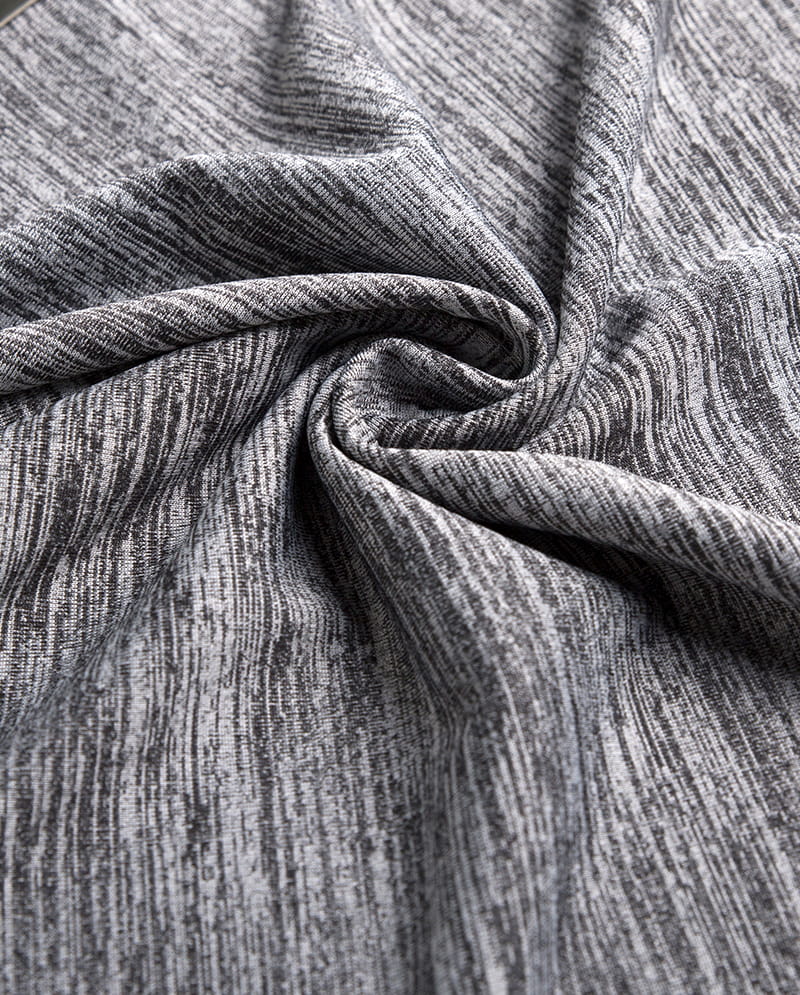
Anti-static Cationic Knitted Rib Fabric
-
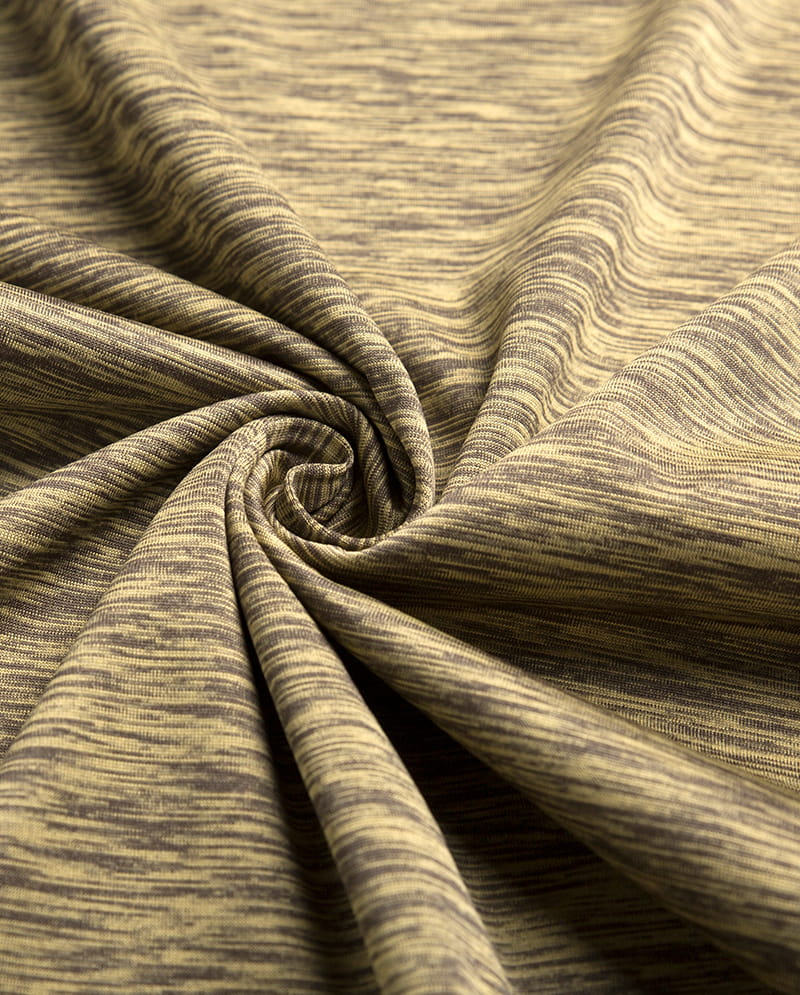
High-Stretch Cationic Jersey Fabric
-
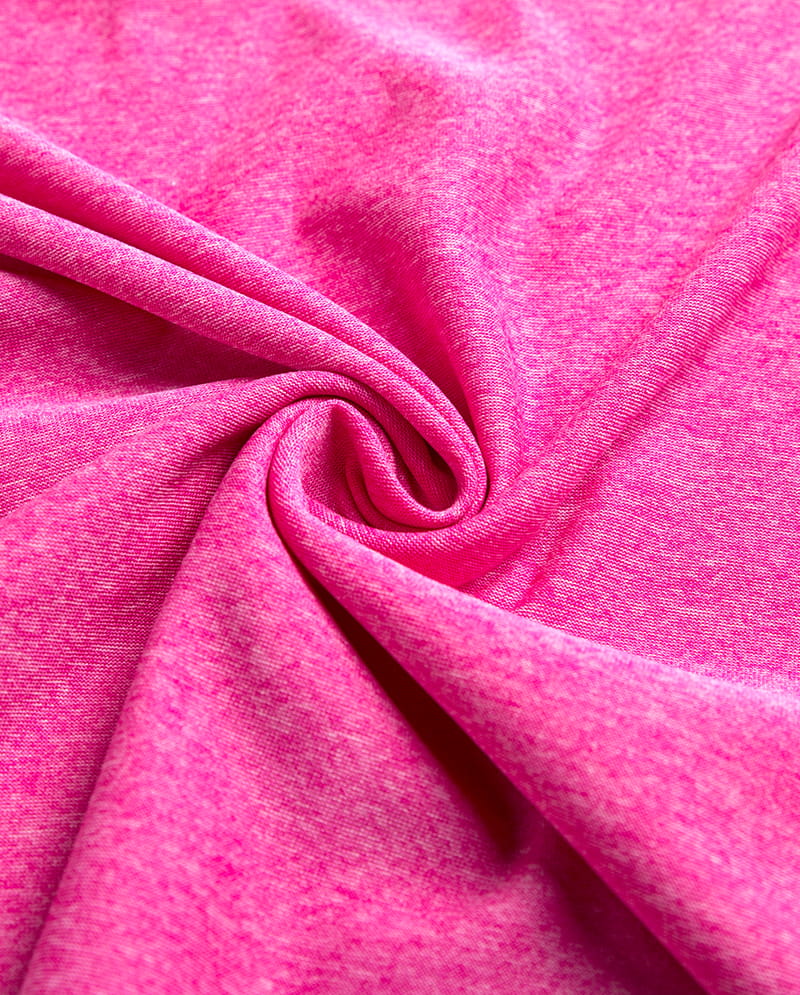
High Quality Cationic DTY Spandex Two Sides Brush Dralon Knit Fabric for Garment Thermal Underwear
-
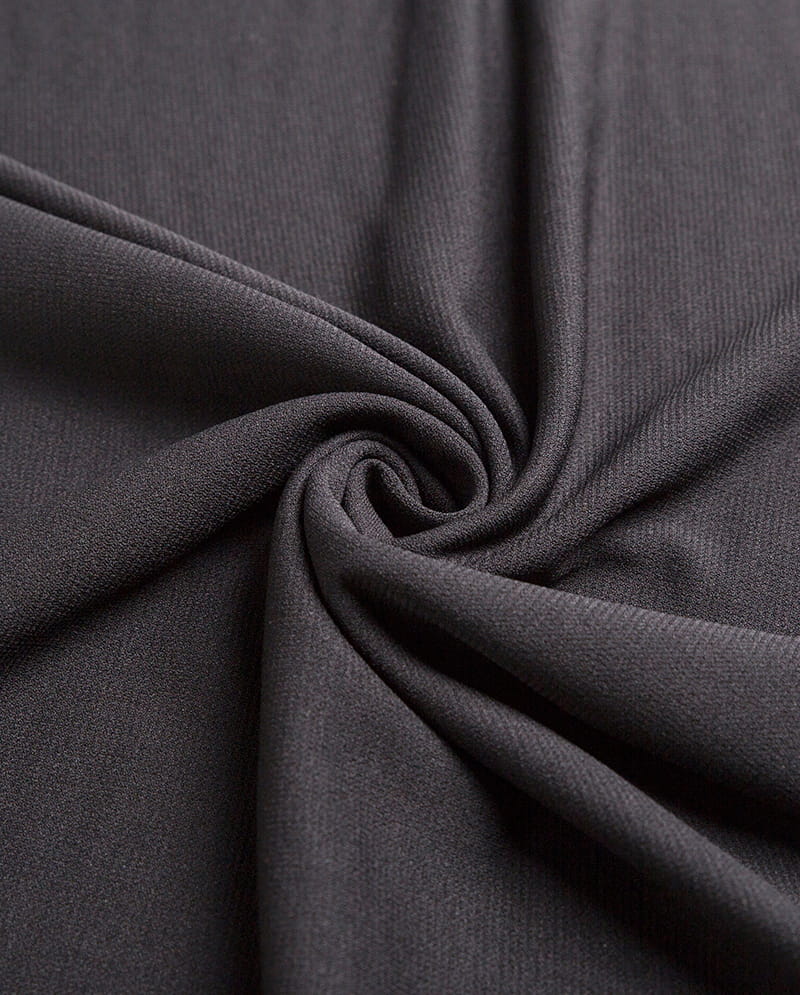
Durable Anti-Pilling Knitted Fabric for Home Textiles
-
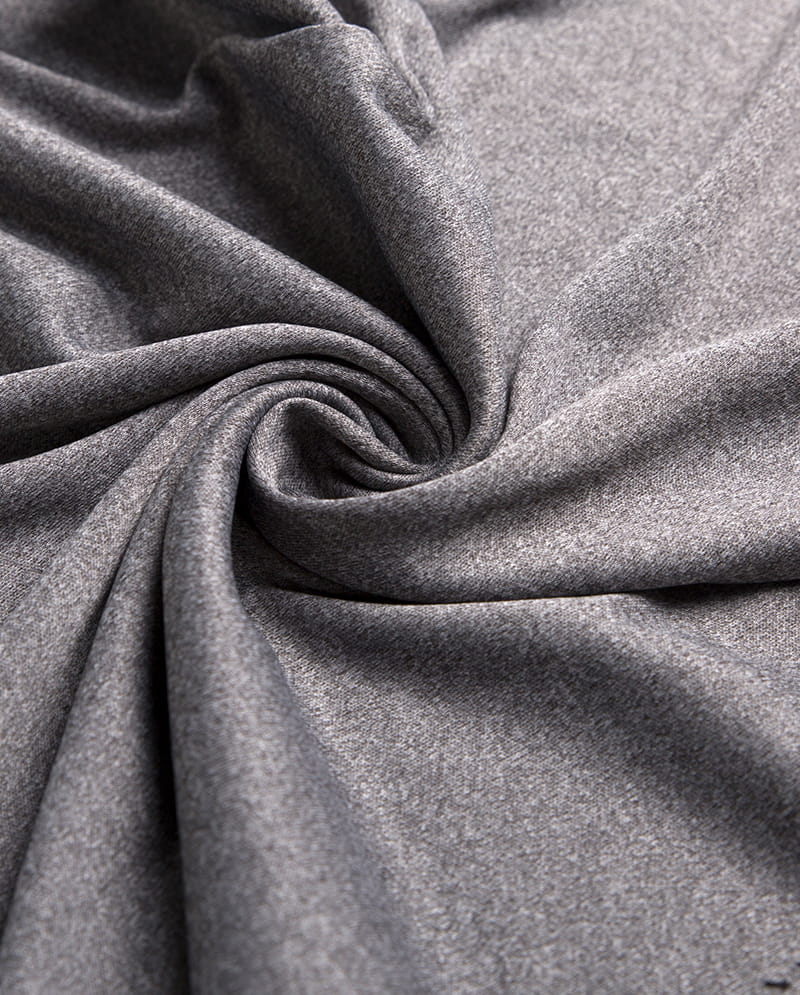
Wash-Resistant Cationic Elastic Knitted Fabric for Garment Industry
-
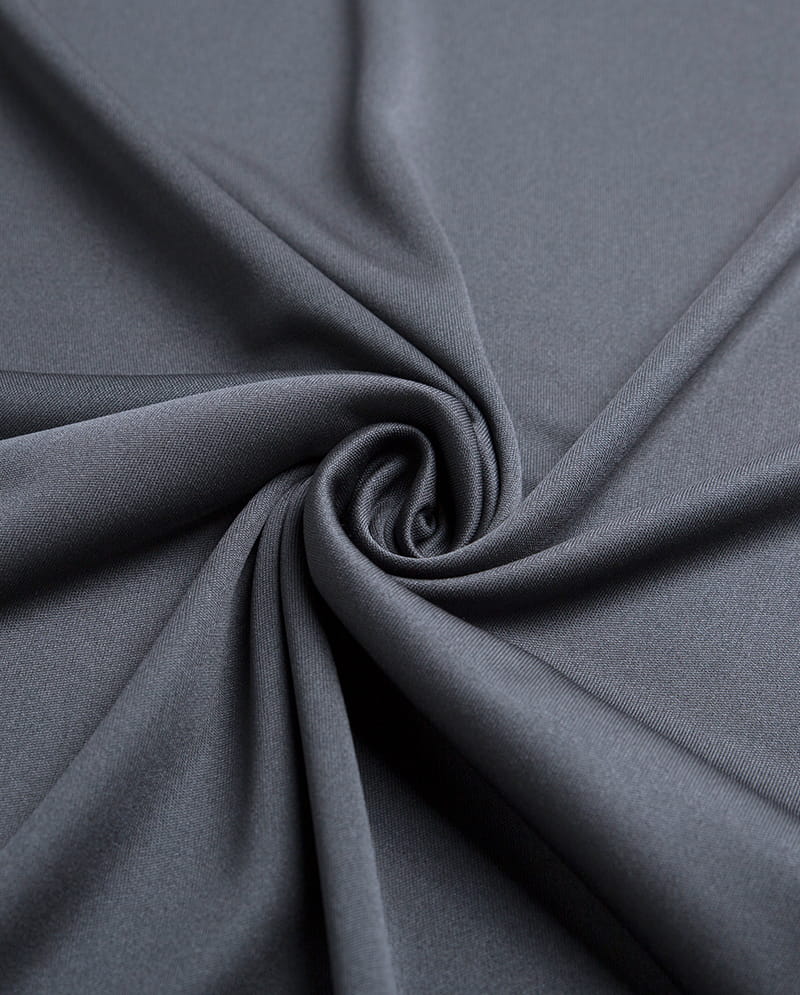
Breathable Double-Faced Elastic Composite Fabric
-
-
-
- whatsapp:
- 0086-13962559622
-
- skype:
- skype.aliceshenghong
-
- Wechat:


COPYRIGHT © 2016 Suzhou Junhui Textile Co., Ltd.
