

 EN
EN English
 中文简体
中文简体How Nylon Fibre is Made: Applications, Selection Criteria, and Practical Guidance
Content
- 1 The Chemistry: Two Monomers and One Water Molecule
- 2 Melt Spinning: From Chip to Filament
- 3 Drawing Makes the Fibre Strong, Heat Setting Makes It Stable
- 4 Nylon 6 and Nylon 6,6: Similar, Not Interchangeable
- 5 From Filament to Fabric: Where the Fibre Ends Up
- 6 Recycled Nylon: The Same Polymer from a Different Feedstock
- 7 What to Verify Before You Buy
A spinneret plate for textile nylon can hold more than 300 holes in a disc roughly 60 mm across. Every hole has to push molten polyamide out at the same rate and the same temperature for hours at a time. One hole running slightly hot, or slightly blocked, shows up later as a dye streak, a broken end, or a denier that sits outside tolerance in a finished fabric specification.
The short answer to how nylon fibre is made is this: small molecules are reacted into a long-chain polyamide, the polymer is melted and forced through fine holes, the filaments are cooled, and then they are stretched until their molecular chains align. Four stages do the work - monomer preparation, polymerisation, melt spinning, and drawing with finishing - and each one leaves a measurable fingerprint on the fibre: denier, filament count, tenacity, elongation, shrinkage, crimp and dye uptake.
Everything downstream, from texturing to weaving, knitting and dyeing, can only work with what the spinning line produced. That is why the useful questions for a buyer are rarely "what is nylon" but "which route, which drawing conditions, and which tolerances".
The Chemistry: Two Monomers and One Water Molecule
Nylon is a polyamide. Its backbone repeats an amide linkage, and the free amine groups left at the chain ends are the dye sites that acid dyes attach to. That is why nylon dyes readily in a conventional dyebath while polyester needs 130 °C and disperse dyes.
Nylon 6,6 is built from adipic acid and hexamethylenediamine. The two are combined into a salt and then heated to roughly 270-290 °C under nitrogen. This is a condensation polymerisation, and water is the by-product that has to be driven off to raise molecular weight; both monomers carry six carbon atoms, which is where the name comes from.
Nylon 6 starts from caprolactam, a six-carbon ring that is opened and polymerised at around 240-270 °C with a small amount of water acting as the initiator. There is no water by-product to strip out. The first commercial nylon fibre from these routes reached the market at the end of the 1930s.
Molecular weight governs everything that happens after the reactor, and fibre-grade chips are normally controlled by relative viscosity in formic acid. Too low, and spinning breaks rise while tenacity falls. Too high, and melt viscosity climbs until pack pressure becomes unstable and filament uniformity suffers.
Melt Spinning: From Chip to Filament
Both polyamides are melt spun, meaning the polymer is heated until it flows, so no solvent recovery is needed and the process is cheaper than the solution spinning used for some other fibres. The sequence on a modern line runs like this.
- Drying. Nylon is hygroscopic, so chips are dried until moisture falls below roughly 0.03-0.05 percent. Residual water hydrolyses the melt and causes bubbles and filament breaks.
- Melting and metering. A screw extruder melts the chips at 250-290 °C, and a gear pump delivers a fixed volume per revolution. Overheating degrades polyamide quickly.
- Filtration. A sand or metal-fibre pack traps gels, agglomerates and debris. Pack pressure, often between 10 and 20 MPa, is one of the clearest indicators of melt quality.
- Extrusion. The spinneret shapes the filament. Hole diameters commonly run from 0.15 to 0.5 mm, and the number of holes sets filament count - 36 filaments for a 70 denier yarn, for example.
- Quenching. Cross-flow or radial air at 15-25 °C solidifies the filaments. Uneven cooling produces irregular cross-sections, and irregular cross-sections dye unevenly.
- Spin finish. A water-based emulsion is applied so the filaments have the friction and anti-static behaviour that drawing, texturing and knitting demand. Oil pick-up typically sits between 0.4 and 0.8 percent.
- Take-up. Conventional lines wind at 1,000-1,500 m/min and draw in a second step. High-speed lines run at 4,000-6,000 m/min and produce partially oriented yarn, or POY, for later texturing.
Drawing Makes the Fibre Strong, Heat Setting Makes It Stable
Straight off the spinneret, nylon is weak. The long chains sit tangled and randomly oriented, so they slide past one another under load. Drawing pulls the filament to three, four or five times its original length, forcing the chains into alignment and raising crystallinity. Tenacity climbs to 4.5-7.5 g/denier for textile grades, with elongation at break controlled between roughly 20 and 45 percent.
Heat setting then relaxes internal stress and fixes crimp, which determines how much the yarn will shrink when a mill heats the fabric later. A yarn that shrinks three percent more than the previous lot can cost a mill two or three percent of usable fabric width, and on a long production run that is real money.
| Process stage | Typical setting | What it controls |
|---|---|---|
| Chip moisture before spinning | below 0.03-0.05% | Hydrolysis, bubbles, filament breaks |
| Extrusion temperature | 250-290 °C | Melt viscosity and thermal degradation |
| Quench air | 15-25 °C, low velocity | Filament uniformity and dye uptake |
| Draw ratio | 3.0-5.0 times | Tenacity, elongation, crystallinity |
| Spin finish (oil pick-up) | 0.4-0.8% | Friction, static, downstream processing |
| Hot-air shrinkage | checked at 160 °C | Dimensional stability after heat setting |
Nylon 6 and Nylon 6,6: Similar, Not Interchangeable
Both are polyamides, both are melt spun, and both dye with acid dyes. The differences appear in processing windows and in the hand of the finished cloth.
| Property | Nylon 6 | Nylon 6,6 |
|---|---|---|
| Monomer | Caprolactam | Adipic acid and hexamethylenediamine |
| Melting point | roughly 215-225 °C | roughly 255-265 °C |
| Moisture regain at 65% RH | about 4.5% | about 4.0% |
| Heat setting window | Lower temperatures | Higher temperatures |
| Hand and dye penetration | Softer, deeper penetration | Crisper, higher thermal resistance |
| Typical use | Apparel, hosiery, knitwear | Carpet, tyre cord, outdoor, industrial |
Choose nylon 6 when softness and dye depth matter; choose nylon 6,6 where heat resistance matters. Swapping one for the other without re-checking heat setting and dyeing temperatures is a common and expensive mistake.
From Filament to Fabric: Where the Fibre Ends Up
Nylon leaves the spinning line in three broad forms. Flat continuous filament yarn goes into lightweight woven shells and linings. Textured yarn, with its bulk and stretch, goes into swimwear, activewear and hosiery. High-tenacity yarns at 840-1,680 denier go into carpet, rope and industrial webbing.
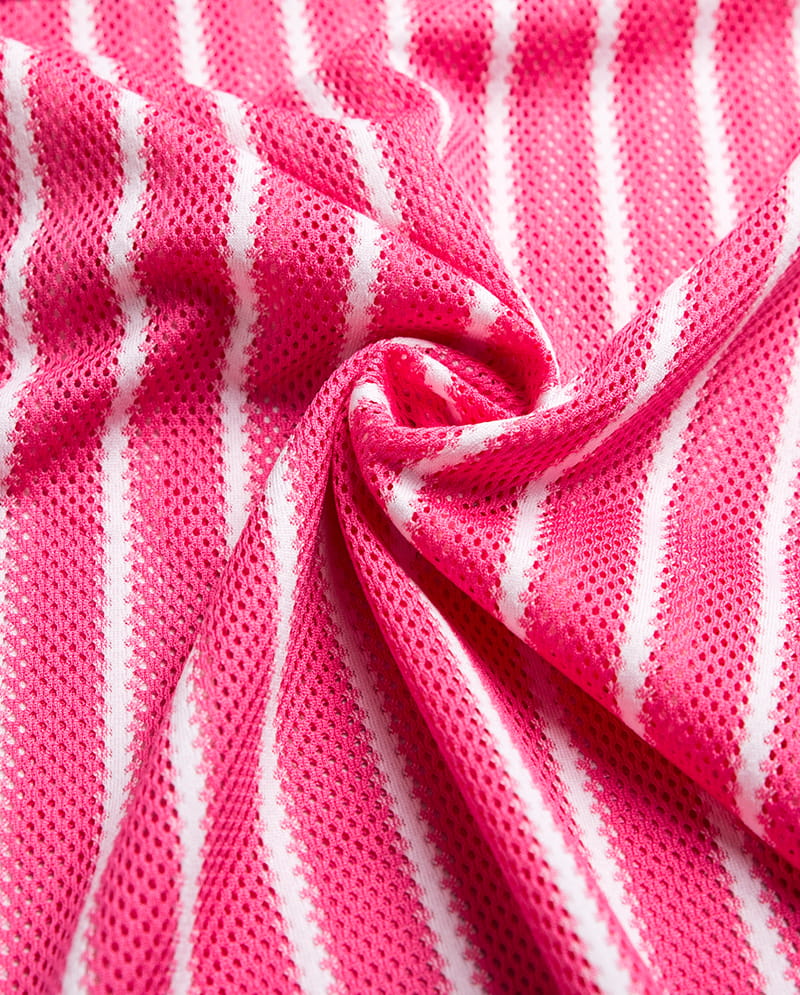
Knitted nylon mesh shows how fibre properties translate into a finished product. Tricot mesh leans on the fibre's abrasion resistance and its ability to be heat set into a stable open structure that still recovers its shape, which is why it turns up in linings, sports bras and technical apparel.
 Breathable Lightweight Tricot Mesh FabricSUZHOU JUNHUI TEXTILE CO.,LTDView Product →
Recycled Nylon: The Same Polymer from a Different Feedstock
Recycled nylon matters because the raw material is fossil-based and the fibre does not biodegrade. There are two routes back into the spinning line, and they are not equal in output quality.
Mechanical recycling grinds fabric waste, fishing nets or carpet into flakes, then re-melts and re-spins them. It saves energy and keeps material out of landfill, but repeated heat history lowers molecular weight and raises contamination, so the output is usually blended with virgin polymer.
Chemical recycling depolymerises the waste back to caprolactam, which is then repolymerised. For nylon 6 this route is well established and the polymer behaves like virgin material in spinning, so chemically recycled yarn can meet the same specifications. For nylon 6,6 the chemistry is harder and fewer plants run it commercially.
Certification is where buyers get their assurance, and standards such as GRS rely on chain-of-custody documents rather than a single test result. This walkthrough of turning nylon waste into eco-friendly fibre follows the steps in detail.
 SD DTY (D/F) High-Strength Recycled Polyester YarnSUZHOU JUNHUI TEXTILE CO.,LTDView Product →
What to Verify Before You Buy
Fibre specifications are only useful if they come with numbers you can reject a lot against. Ask for the following on every certificate of analysis, and keep retention samples from each shipment.
- Denier and filament count, with the tolerance stated; plus or minus two to three percent is common, and a consistent shortfall quietly changes fabric weight and cost.
- Tenacity and elongation at break, with the test method named, for example ASTM D2256 or ISO 2062.
- Hot-air shrinkage at a defined temperature, since shrinkage above expectation causes width loss after heat setting.
- Oil pick-up, because too much or too little finish changes how the yarn runs on knitting and texturing machines.
- Delustrant level - bright, semi-dull or dull - because titanium dioxide content shifts both lustre and dye shade.
- Moisture content and packaging, because nylon absorbs water in humid transit and can arrive heavier and tackier than it left.
- Lot-to-lot shade consistency, especially for dyed or solution-dyed programmes.
Most claims fail on small numbers rather than dramatic ones: a denier running a few percent light, shrinkage above expectation that eats fabric width, or moisture picked up during shipping. Switching between suppliers without comparing these figures on paper is how those costs arrive unannounced.
 Lightweight Waterproof Nylon Fabric for Outdoor Gear MakingSUZHOU JUNHUI TEXTILE CO.,LTDView Product →
None of this is exotic chemistry. Nylon fibre is made by holding a chain of ordinary industrial steps very tightly: dry the chips, melt them, filter them, push them through holes, cool them evenly, stretch them, and set them.
If you are weighing a nylon programme against polyester, or comparing virgin and recycled routes, our team at Suzhou Junhui Textile can match the specification to the end use, from chips and POY, FDY and DTY yarns through to knitted and woven fabrics.
Popular products
-
Premium Cationic Interlock Stretch Comfort Fabric
-
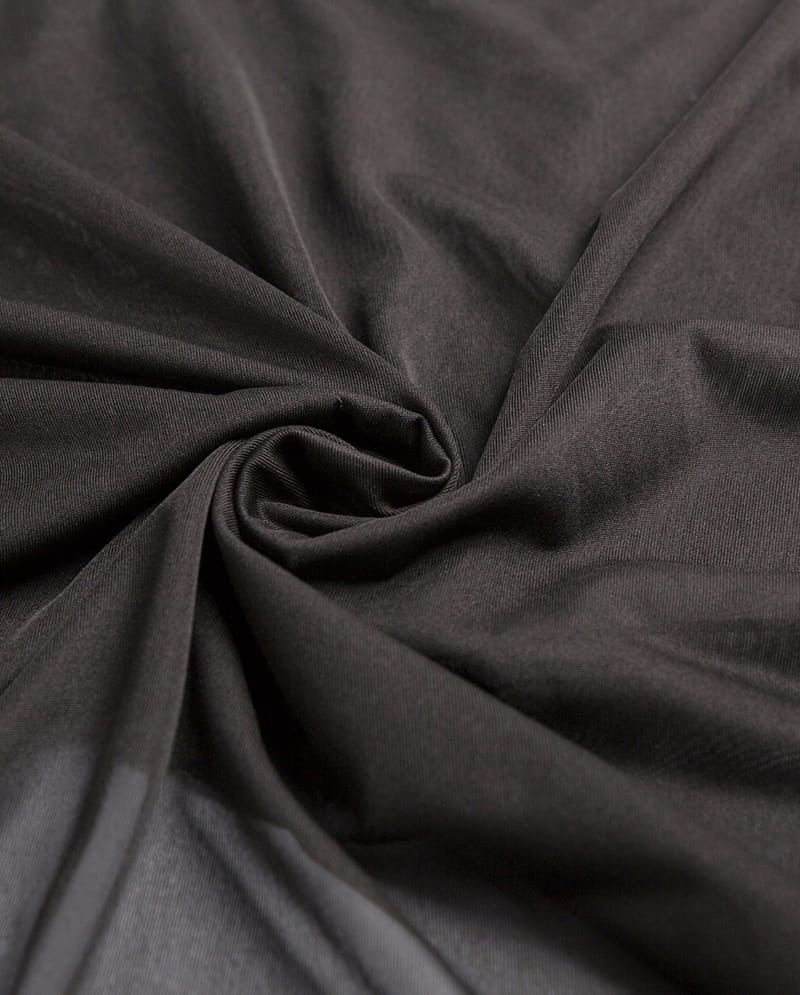
Moisture-Wicking Nylon Woven Fabric
-
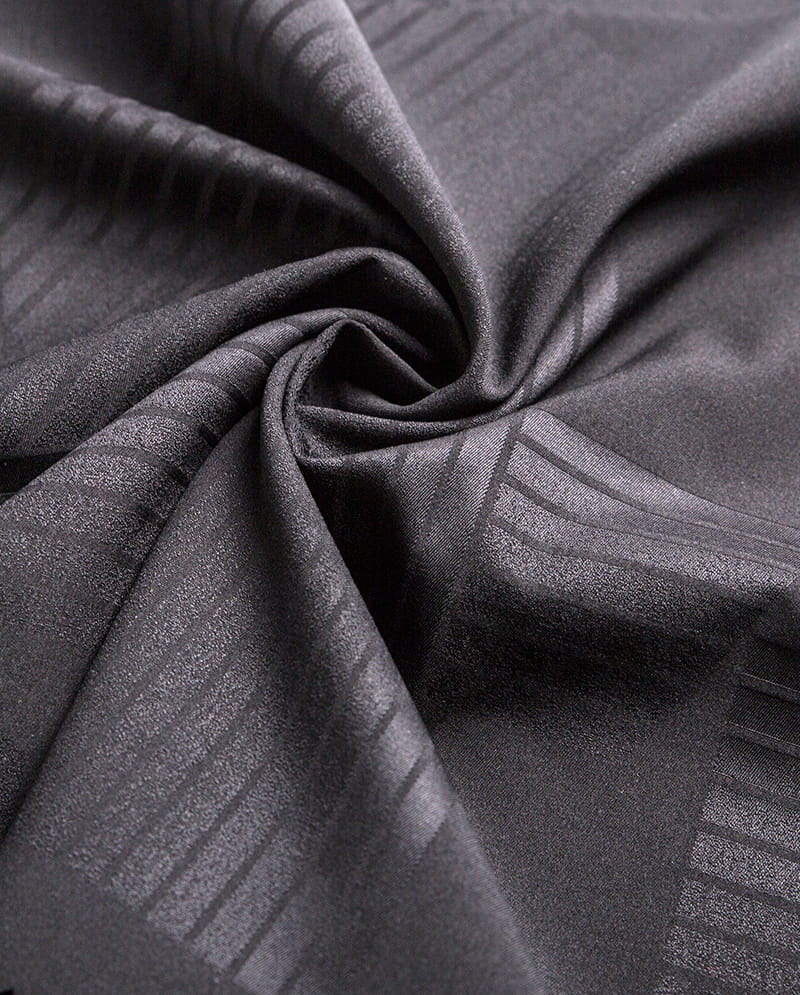
Double-faced jacquard elastic fabric
-
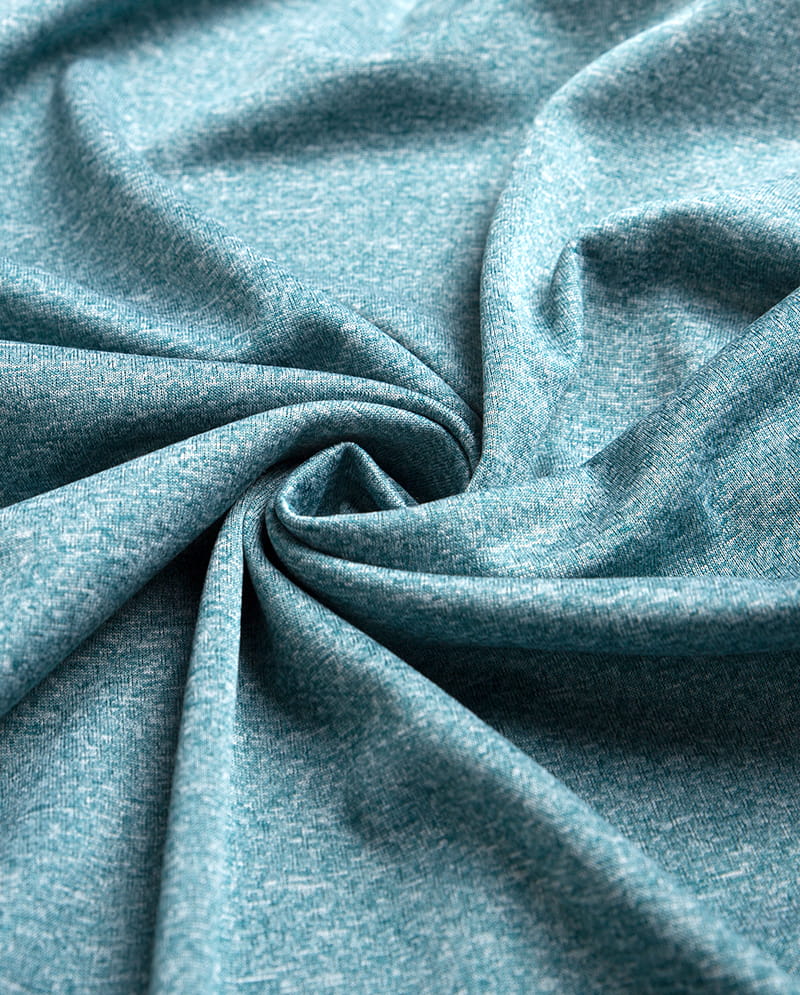
Heather Grey Double-faced cationic jersey fabric
-
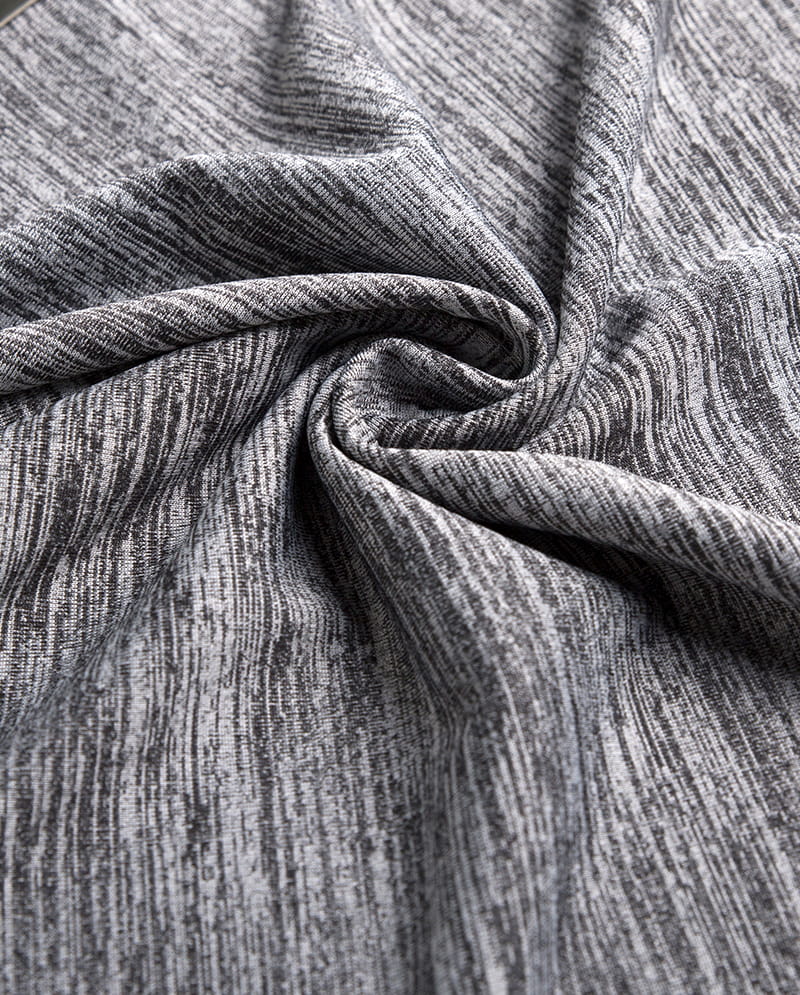
Anti-static Cationic Knitted Rib Fabric
-
High-Stretch Cationic Jersey Fabric
-
High Quality Cationic DTY Spandex Two Sides Brush Dralon Knit Fabric for Garment Thermal Underwear
-
Durable Anti-Pilling Knitted Fabric for Home Textiles
-
Wash-Resistant Cationic Elastic Knitted Fabric for Garment Industry
-
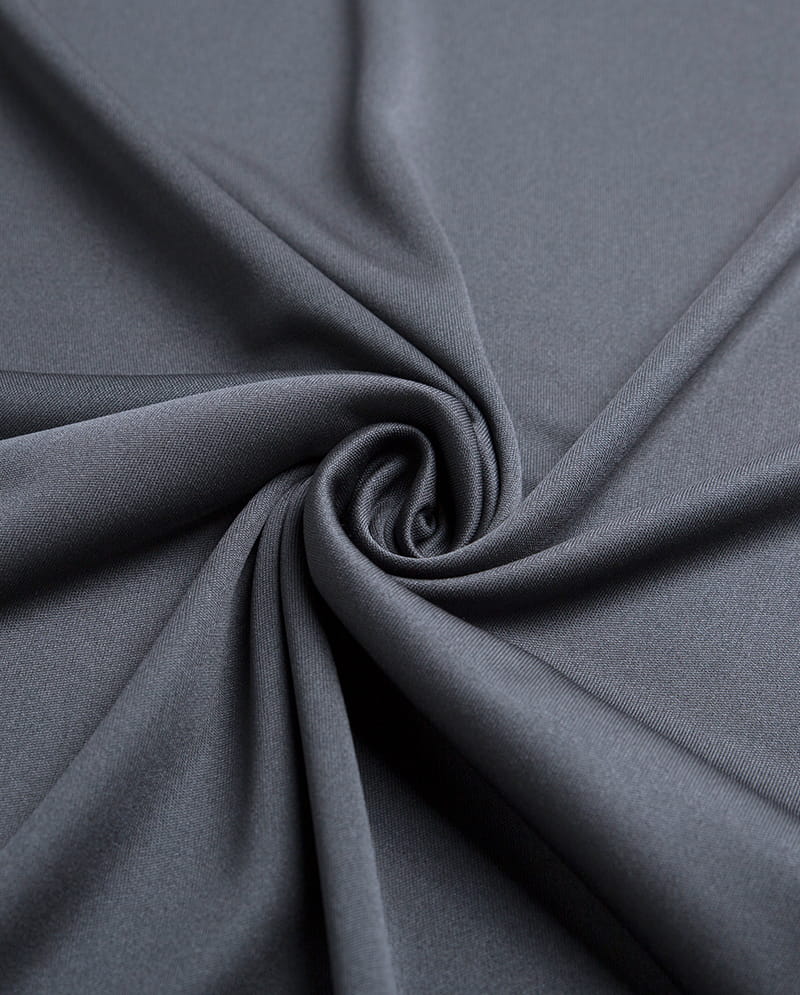
Breathable Double-Faced Elastic Composite Fabric
-
-
-
- whatsapp:
- 0086-13962559622
-
- skype:
- skype.aliceshenghong
-
- Wechat:

COPYRIGHT © 2016 Suzhou Junhui Textile Co., Ltd.
