

 EN
EN English
 中文简体
中文简体White-Black Bicolor D/F CD Yarn for Textile Weaving and Knitting
Content
- 1 Product Overview
- 2 Key Product Advantages
- 3 Technical Specification Range
- 4 Manufacturing and Process Strengths
- 5 Advantages Over Conventional Competitor Products
- 6 Applications in Weaving and Knitting
- 7 Recommended Development and Processing Approach
- 8 Environmental and Product Portfolio Considerations
- 9 Why Work with an Experienced Differentiated Yarn Manufacturer?
- 10 Quality, Documentation, and Purchasing Considerations
- 11 Common Customer Questions
- 11.1 What is white-black bicolor D/F CD yarn?
- 11.2 What does CD mean in this product category?
- 11.3 Can this yarn be used for both weaving and knitting?
- 11.4 What specifications are available for the white-black series?
- 11.5 Does the yarn require dyeing?
- 11.6 What are the main dyeing advantages?
- 11.7 Is the yarn suitable for premium-looking fabrics?
- 11.8 Can the yarn be customized?
- 11.9 Is recycled content available?
- 11.10 How should a buyer start a new project?
- 11.11 What tests should be performed before bulk production?
- 12 Conclusion
- 13 References
- 14 Product: White-Black Bicolor D/F CD Yarn for Textile Weaving & Knitting
White-black bicolor D/F CD yarn is a specialized polyester yarn developed for textile manufacturers seeking distinctive visual effects, reliable processing performance, and efficient coloration. Combining white and black components within a differentiated yarn structure, this product can create a refined two-tone appearance in woven and knitted fabrics without relying solely on conventional printing or surface finishing. It is suitable for apparel, home textiles, fashion fabrics, sportswear, decorative materials, and other applications in which color depth, fabric comfort, and design flexibility are important.
The yarn is part of a wider range of differentiated polyester products supplied by Suzhou Junhui Textile Co., Ltd. and Suzhou Xiaoran New Materials Co., Ltd. The product portfolio includes recycled yarn, cationic dyeing yarn, polyester drop-dyed yarn, microfine yarn, flame-retardant yarn, moisture-wicking yarn, anti-bacterial yarn, high-elastic yarn, PBT/PET yarn, hollow warm yarn, cotton-like yarn, and other functional materials. This broad manufacturing background supports the development of specialized yarns for customers with different fiber, color, performance, and end-use requirements.
Unlike an ordinary single-color polyester yarn, white-black bicolor CD yarn is designed to contribute both technical performance and visual character. Its contrast effect can be used to create subtle heathered surfaces, shadow effects, two-tone textures, and modern fabric appearances. When processed correctly, the yarn helps manufacturers reduce dependence on complicated downstream coloration while maintaining the design appeal expected from premium textile materials.
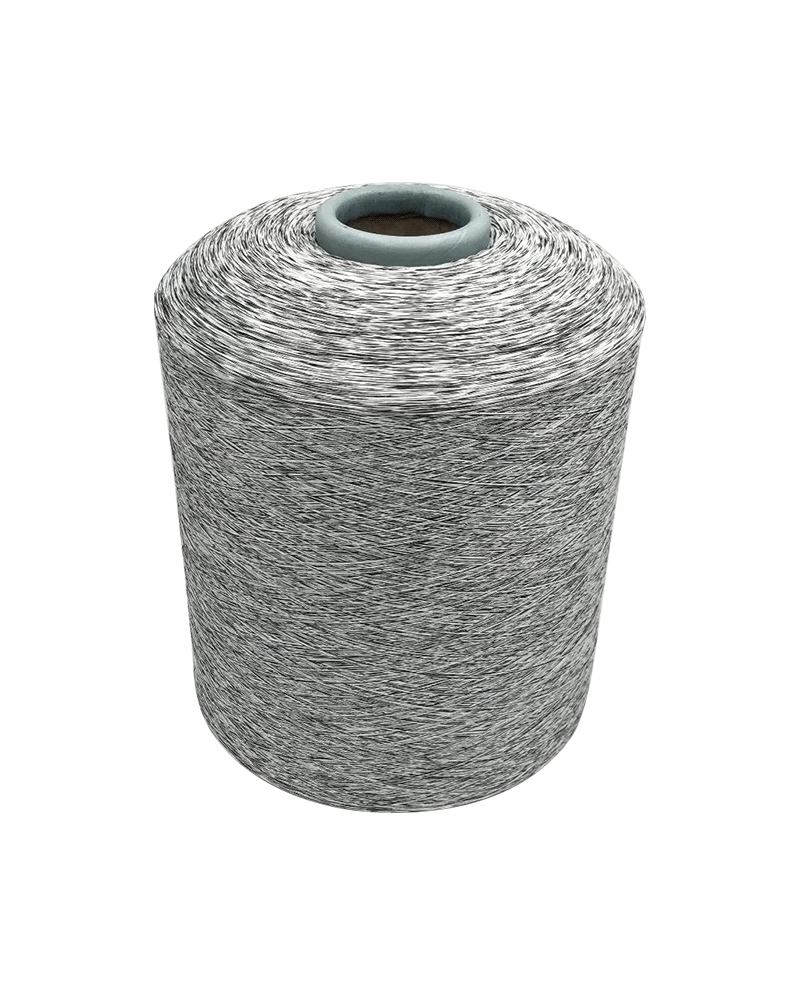
White-Black Bicolor D/F CD Yarn for Textile Weaving & Knitting
Product Overview
White-black bicolor D/F CD yarn belongs to the CD yarn category and is produced for textile weaving and knitting. The available product list includes white and black yarn options identified by specifications such as 100D B01/B02/B03, 150D B01/B02/B03, and 80D/72-84. These specifications provide textile producers with options for different fabric weights, surface effects, yarn densities, and machine requirements.
The product is made from cationic polyester. Cationic polyester is valued in the textile industry for its bright color expression, good deep-dyeing behavior, and high dye absorption efficiency. It can provide a strong visual result while maintaining the processing advantages associated with polyester filament yarn. The material is also suitable for creating fabric products that combine attractive appearance, practical durability, and a more accessible cost than natural silk.
The white-black contrast is particularly useful when a fabric designer wants a controlled, non-uniform appearance. Depending on the knitting or weaving construction, the yarn may produce a fine marl effect, a dimensional surface, a muted contrast, or a more visible black-and-white pattern. The final result depends on yarn specification, fabric construction, machine settings, finishing method, and the proportion of white and black components.
The term D/F is used in the supplied product range to identify differentiated filament yarn constructions. Buyers should confirm the exact structural meaning, cross-section, denier, filament count, and processing recommendation for each order with the technical team. This is important because different fabric constructions may require different tension, heat-setting, texturing, and dyeing conditions.
Key Product Advantages
Distinctive Two-Tone Appearance
The most visible advantage of white-black bicolor yarn is its ability to create contrast directly through the yarn structure. Conventional yarns often require piece dyeing, printing, coating, or additional finishing to achieve a two-tone appearance. A bicolor yarn can simplify the design route by introducing color contrast before the fabric reaches the final finishing stage.
This characteristic gives designers greater freedom. The same yarn can produce different visual effects in rib knitting, jersey knitting, jacquard structures, woven twill, plain weave, satin, and other constructions. In a compact fabric, the white and black components may create a restrained melange look. In an open structure, the contrast may become more visible and graphic. This adaptability allows one yarn family to support multiple product concepts.
Bright Color Expression
Cationic polyester is known for producing vivid and attractive coloration. Its dyeing characteristics can help fabrics achieve a strong visual presence, which is valuable in fashion garments, decorative fabrics, sportswear, and other products where appearance contributes directly to market appeal.
Bright color expression does not mean that every fabric will have the same result. The final appearance is influenced by dye selection, dye concentration, liquor ratio, temperature, time, fabric density, and finishing. Nevertheless, the fiber’s chemical characteristics provide a useful foundation for developing fabrics with clear color definition and a refined surface effect.
Good Deep-Dyeing Performance
Deep-dyeing capability is another important benefit. A yarn that accepts dye efficiently can help manufacturers obtain more saturated shades and consistent color development. This is particularly relevant when black, charcoal, navy, deep red, dark green, or other intensive shades are required.
High dye absorption efficiency may also support more effective use of dyestuff under properly controlled production conditions. It can contribute to improved color yield and may help manufacturers reduce the risk of weak or uneven coloration. Dye-house operators should still carry out laboratory trials before bulk production because each fabric construction and dye formulation reacts differently.
Fast Internal Diffusion
The supplied product information emphasizes a fast diffusion rate into the fiber and a reduced tendency toward ring dyeing. Ring dyeing refers to uneven coloration in which the outer portion of a filament receives more dye than the inner portion. When this effect occurs, the yarn may show inconsistent shade development, especially after deep dyeing or under demanding color requirements.
Improved internal dye diffusion helps promote more uniform color distribution through the fiber. This can be beneficial for fabric appearance, shade stability, and the consistency of finished products. Uniform dye penetration is especially important for fabrics that will be viewed closely, stretched during wear, or subjected to repeated washing.
Good Light and Smoke-Fading Fastness
The yarn is described as having good resistance to sunlight fastness and smoke fading. These properties help fabric maintain its appearance when exposed to environmental conditions during use. Light fastness is important for garments, curtains, upholstery, decorative fabrics, and other products that may experience repeated exposure to daylight.
Smoke-fading resistance can be useful in environments where fabric may be exposed to smoke or airborne contaminants. Although actual performance depends on the selected dye, finishing process, fabric construction, and testing method, the fiber provides a suitable base for developing materials with improved appearance retention.
Lower Risk of Cross-Fiber Contamination
Cationic polyester is described as having lower contamination of ordinary polyester fibers and other fiber types. This characteristic can be valuable when different fibers are combined in the same production system or when a fabric contains blended components.
Reduced contamination can help simplify cleaning and production changeover. It may also reduce the possibility that unwanted coloration will transfer to adjacent fibers during dyeing. For mills working with multiple polyester varieties, this can support better process organization and lower maintenance requirements.
Comfortable Fabric Handle
Although polyester is traditionally associated with durability and easy care, differentiated polyester yarns can also be engineered for improved fabric hand and wearing comfort. Fabrics made with this type of yarn may be developed to feel smoother, lighter, softer, or more textile-like, depending on denier, filament count, texturing, knitting structure, weaving density, and finishing treatment.
The supplied information indicates that fabrics made from cationic polyester can offer wearing comfort and a bright dyed effect comparable in visual appeal to natural fabrics. This is an important advantage for manufacturers seeking to combine a modern appearance with the practical benefits of man-made fibers.
Cost Efficiency Compared with Natural Silk
White-black bicolor D/F CD yarn provides a cost-effective alternative to natural silk for applications requiring a refined appearance but not necessarily the full cost structure of silk. Polyester filament yarn can support stable industrial production, consistent supply, and easier care performance.
The lower price compared with natural silk can help brands and fabric manufacturers develop products with a premium appearance at a more accessible market price. It may also provide greater freedom to experiment with new colors, textures, and fabric constructions without the same material cost pressure associated with high-value natural fibers.
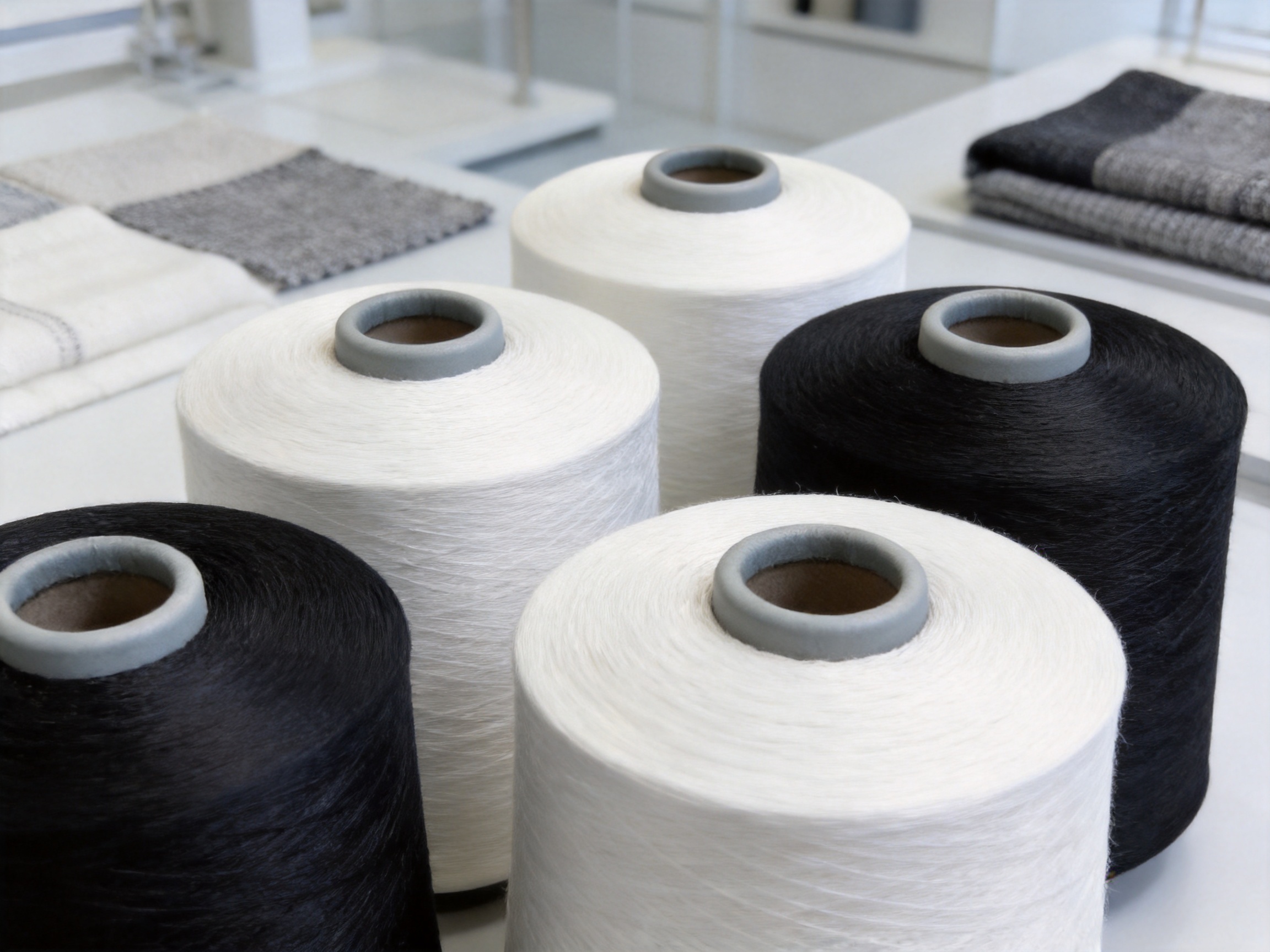
Technical Specification Range
The product list includes several white-black bicolor options. The notation used in textile yarn specifications generally combines denier and filament information, while certain product codes identify color or structural variations. Buyers should confirm the exact interpretation of each code before placing a production order, particularly when purchasing 80D, 100D, or 150D products for high-speed knitting or weaving.
| Product Category | Available Specification or Code | Potential Application Direction |
|---|---|---|
| White and Black Bicolor D/F CD Yarn | 100D B01/B02/B03 | Light and medium-weight knitted or woven fabrics, fashion textiles, decorative surfaces |
| White and Black Bicolor D/F CD Yarn | 150D B01/B02/B03 | Medium-weight fabrics, apparel, home textiles, structured knitted materials |
| White and Black Bicolor D/F CD Yarn | 80D/72-84 | Fine-gauge knitting, lightweight fabrics, soft fashion materials |
| CD DTY D/F Yarn | 25/24, 30/24-36, 50/36-72 | Fine and medium textile constructions requiring differentiated effects |
| CD DTY D/F Yarn | 75/36-72-144, 100/36-48-72-144 | Apparel fabrics, technical fashion materials, woven and knitted goods |
| CD DTY D/F Yarn | 150/48-144-288, 300/96 | Heavier or more textured fabrics, upholstery-related and home textile uses |
| SD plus CD DTY D/F Yarn | 50/48-72, 75/48-72, 80/72 | Blended visual effects, soft surfaces, fashion and performance fabrics |
In addition to the white-black bicolor range, the manufacturer’s CD series includes CD DTY and SD plus CD DTY products in multiple denier and filament combinations. This broader range is useful for buyers who want to develop coordinated fabric collections using related yarn technologies.
Manufacturing and Process Strengths
Specialized Differential Yarn Development
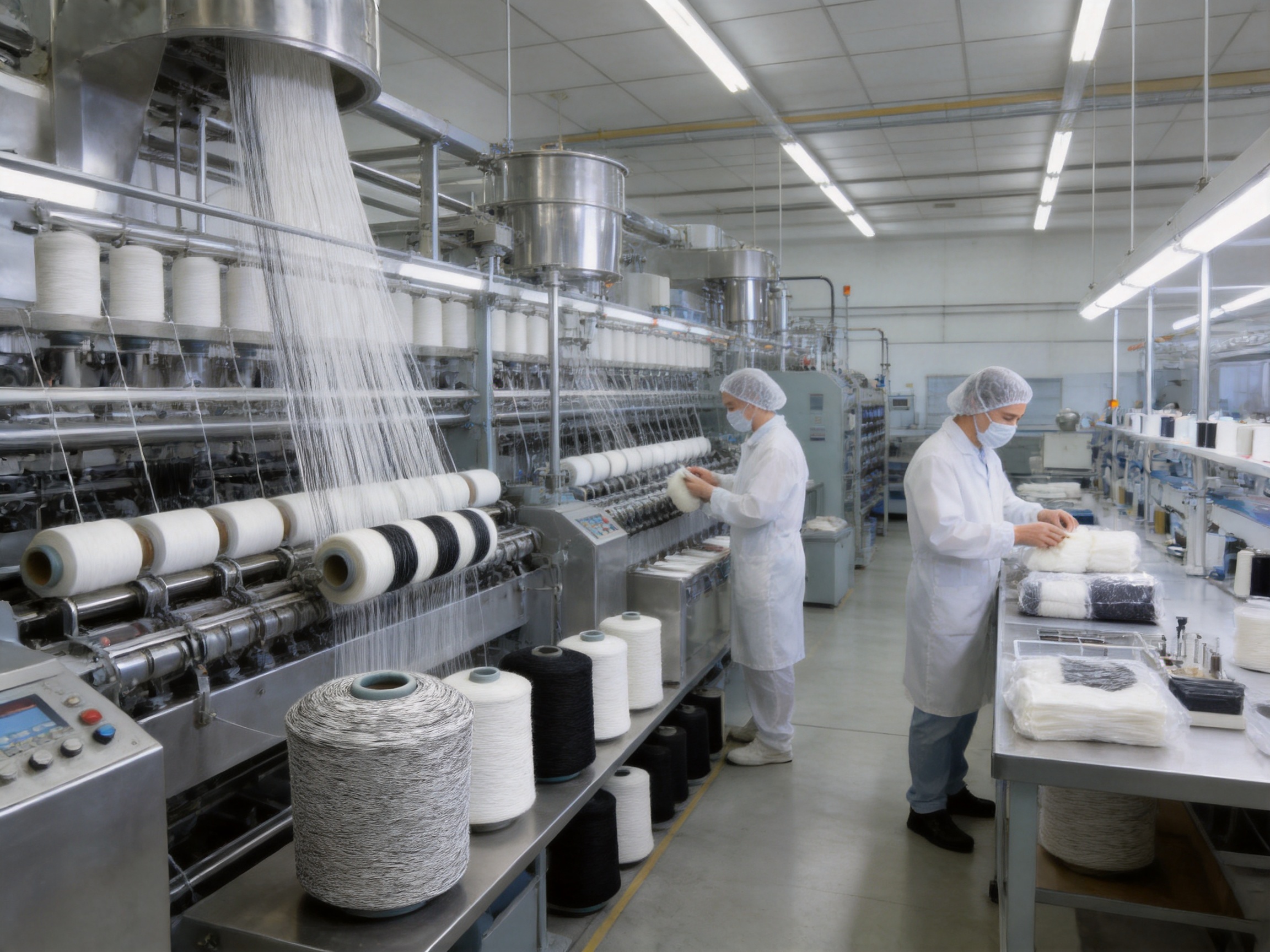
The companies behind this product focus on the development and sale of differentiated yarns rather than only standard commodity polyester. This specialization is important because differentiated yarn requires careful coordination between polymer characteristics, spinning conditions, filament structure, texturing, color contrast, winding, and final quality inspection.
A specialist manufacturer can adjust product design according to the intended fabric result. For example, a yarn intended for fine-gauge knitting may need different filament uniformity and winding behavior from a yarn intended for a heavier woven fabric. A yarn designed for strong two-tone contrast may require different component control from one intended to create a soft, low-contrast melange appearance.
Polymer and Material Selection
The production process begins with appropriate polyester raw materials and cationic-modified polymer components. Material selection influences dye receptivity, melting behavior, spinning stability, filament strength, color expression, and downstream performance.
Consistent raw material preparation is essential. Polymer chips must be stored and handled in a way that limits moisture and contamination. Before spinning, the material may be dried under controlled conditions to support stable melt processing. Moisture control is particularly important for polyester because excess moisture can affect polymer viscosity and filament quality during melt spinning.
Controlled Melt Spinning
In melt spinning, prepared polymer is heated until it reaches a stable molten state. The melt is then filtered and delivered through spinning components to form continuous filaments. For differentiated yarn, the spinning system must maintain stable temperature, pressure, throughput, and cooling conditions.
Accurate control of these parameters helps improve denier consistency, filament uniformity, strength, elongation, and surface quality. It also supports the production of white and black components with reliable contrast. Any significant fluctuation in polymer flow or cooling can influence the final appearance and processing performance of the yarn.
Advanced production management is especially valuable for bicolor products. The two components must remain correctly positioned and balanced through the spinning process. Stable component distribution allows the yarn to deliver a predictable visual effect when it is later knitted or woven.
Filament Cooling and Orientation
After extrusion, the newly formed filaments are cooled and solidified. Cooling conditions influence filament morphology and physical properties. The filaments are then guided through the drawing or orientation stages required to achieve the desired strength, elongation, dimensional stability, and processability.
Uniform cooling helps reduce variation between filaments. Stable orientation supports consistent behavior during high-speed knitting, weaving, winding, and dyeing. For a textile manufacturer, this consistency can reduce broken ends, irregular loops, fabric streaks, and other production problems.
Texturing and D/F Performance Control
Where the product is supplied as a textured differentiated filament yarn, texturing helps create bulk, stretch recovery, softness, and improved fabric coverage. The texturing process must be balanced carefully because excessive or insufficient treatment can change the yarn’s appearance and fabric behavior.
Texturing parameters may include heater temperature, draw ratio, false-twist conditions, overfeed, spindle speed, cooling, and winding tension. The correct combination depends on the yarn specification and intended end use. A controlled texturing process can help the yarn run smoothly while preserving the white-black visual relationship.
Precision Winding
Winding is more than a packaging step. It affects how the yarn performs on the customer’s machine. Proper winding can reduce tension variation, prevent package collapse, maintain stable unwinding, and minimize snarling or entanglement.
For knitting and weaving customers, package quality is closely connected to productivity. A package that unwinds smoothly helps reduce machine stops and operator intervention. Consistent package density also supports more stable yarn delivery throughout a production run.
Quality Inspection
Quality inspection should cover both physical and visual characteristics. Typical control points may include denier, filament count, tensile strength, elongation, crimp or texturing behavior, oil pickup, package weight, winding appearance, and color contrast.
Additional checks may be performed for dyeing behavior, shade consistency, internal diffusion, and fastness performance. Laboratory testing is useful because the white-black appearance can be affected by dyeing conditions and fabric construction. A technically responsible supplier should provide product data and sample support so customers can validate the yarn before bulk use.
Research and Development Capability
Suzhou Junhui Textile Co., Ltd. and Suzhou Xiaoran New Materials Co., Ltd. maintain a professional research and development team focused on environmental protection, functional yarn, and fabric applications. Their work includes cooperation and discussion with internationally recognized enterprises concerning research, development, and practical use.
This research-oriented approach supports the development of yarns that address changing market demands. Textile buyers increasingly need recycled content, reduced environmental impact, special dyeing performance, soft hand feel, stretch, flame resistance, antibacterial function, moisture management, and improved thermal properties. A manufacturer with experience across these categories can provide more informed technical guidance than a supplier focused only on standard yarn.
Advantages Over Conventional Competitor Products
More Than a Standard Black or White Yarn
A conventional black yarn provides a uniform dark appearance, while a conventional white yarn provides a plain light base. White-black bicolor yarn offers a third design possibility: a controlled contrast integrated into the filament. This can produce more depth and visual movement without requiring a separate printing process.
For designers, this means that the yarn itself becomes part of the surface design. For manufacturers, it can reduce the number of downstream operations required to achieve a fashionable two-tone effect. For consumers, the result may be a fabric with greater visual interest and a more sophisticated appearance.
More Flexible Than a Single End-Use Yarn
The product can be used in both weaving and knitting, giving it a wider application range than materials designed only for one construction. In knitting, it can support soft, flexible, and textured surfaces. In weaving, it can be selected for stripes, shadow effects, compact two-tone fabrics, or blended visual structures.
The broader product portfolio also enables customers to compare CD DTY, SD plus CD DTY, recycled yarn, high-elastic yarn, functional yarn, and related products from one manufacturing source. This can simplify sourcing and support coordinated development across several fabric programs.
Better Dyeing Potential Than Ordinary Polyester
Ordinary polyester may require specialized dyeing conditions and can present limitations when deep, bright, or highly differentiated coloration is needed. Cationic polyester offers a useful alternative because it is designed to improve dye absorption and color development.
The result can be a stronger visual effect with good color distribution, provided that the dyeing process is correctly matched to the yarn. This is a meaningful advantage for fabric mills seeking to develop deep shades, bright fashion colors, or stable two-tone appearances.
More Practical Than Natural Silk in Cost-Sensitive Programs
Natural silk remains valued for its unique hand feel and luxury image, but it may not be suitable for every production volume or price segment. White-black bicolor polyester yarn can help manufacturers achieve a visually attractive fabric at a lower material cost and with more industrially consistent processing.
It can therefore serve markets that require a premium appearance but also need scalable production, repeatable supply, easy-care performance, and competitive pricing. This makes the product relevant to commercial apparel, home textiles, fashion accessories, and private-label collections.
Applications in Weaving and Knitting
Fashion Apparel
White-black bicolor yarn can be used in shirts, dresses, skirts, jackets, trousers, knitwear, scarves, and fashion accessories. Its two-tone character can support monochrome collections while adding texture and depth. It is also suitable for minimalist designs in which contrast is created through yarn construction rather than large graphics or bright prints.
Sportswear and Athleisure
Sportswear manufacturers often seek materials that combine visual appeal, comfortable wear, durability, and efficient production. Depending on the selected yarn specification and fabric structure, this product can be developed for leggings, tops, training garments, lightweight jackets, and casual athleisure fabrics.
When combined with suitable functional yarns or fabric finishes, it may also contribute to products that require moisture management, elasticity, or improved comfort. The manufacturer’s broader range includes high-elastic and moisture-wicking products that may be considered for coordinated product development.
Home Textiles
The yarn can be used for curtains, cushion covers, blankets, bed textiles, decorative throws, table fabrics, and other interior products. The white-black effect is particularly suitable for modern interiors that use neutral colors and geometric or textured surfaces.
In home textiles, light fastness and appearance retention are important considerations. The reported sunlight fastness of cationic polyester provides a useful basis for development, although the finished fabric must be tested under the specific conditions expected in its final application.
Decorative and Upholstery Fabrics
Heavier specifications can be considered for decorative fabrics and selected upholstery applications. A two-tone yarn may create a woven surface with greater depth than a flat, single-color yarn. It can also help conceal minor surface variation in certain constructions while maintaining a designed visual effect.
For upholstery, buyers should evaluate abrasion resistance, seam performance, pilling, color fastness, flame requirements, and dimensional stability in the finished fabric. Yarn selection is only one part of the final performance system.
Knitted Accessories
Fine and medium specifications may be used in hats, gloves, socks, scarves, neck warmers, and other accessories. The black-and-white contrast can be used for seasonal products, sports-inspired patterns, or neutral fashion collections.
Recommended Development and Processing Approach
Successful use of white-black bicolor CD yarn begins with sample development. A buyer should first select a suitable specification based on machine gauge, fabric weight, target handle, coverage, and required visual effect. Small-scale knitting or weaving trials should then be performed before bulk ordering.
Machine tension should be controlled carefully. Excessive tension may reduce the visible contrast or cause uneven fabric appearance, while insufficient tension may create unstable loops or irregular warp behavior. Operators should monitor yarn delivery, package unwinding, broken ends, and fabric streaks throughout the trial.
Dyeing trials should also be conducted using the planned dyestuff and process. Laboratory work can evaluate shade depth, color distribution, washing fastness, light fastness, rubbing fastness, and any possible interaction between the cationic polyester and other fibers in a blend.
Finishing conditions should be adjusted according to fabric construction. Heat setting, softening, compacting, brushing, calendering, and other treatments may change the final hand feel and visual contrast. A finished fabric that looks excellent in a small sample may require process adjustment when produced at full width or at commercial speed.
| Development Stage | Recommended Control Point | Expected Benefit |
|---|---|---|
| Yarn selection | Confirm denier, filament count, D/F structure, package type, and color code | Improves compatibility with the intended machine and fabric design |
| Knitting or weaving trial | Check tension, yarn delivery, broken ends, loops, streaks, and surface contrast | Reduces production interruptions and visual defects |
| Dyeing trial | Evaluate dye uptake, shade depth, diffusion, fastness, and cross-fiber behavior | Supports stable and repeatable coloration |
| Finishing trial | Adjust heat, softening, compacting, and surface treatment | Optimizes hand feel, dimensional stability, and appearance |
| Bulk approval | Compare laboratory standards with production samples | Improves consistency between development and commercial output |
Environmental and Product Portfolio Considerations
The manufacturer’s product range includes recycled yarns, demonstrating attention to changing sustainability requirements in the textile industry. Recycled SD DTY, recycled SD FDY, recycled FD DTY, recycled DDB DTY, recycled CD DTY, and recycled SD plus CD DTY are included in the broader catalog.
Although the white-black bicolor CD yarn described here is presented as a cationic polyester product, buyers seeking recycled content or a specific environmental certification should request confirmation of the exact raw material composition, recycled percentage, chain-of-custody documentation, and applicable certifications for the selected item.
Environmental performance should be evaluated across the complete product life cycle. Important factors may include raw material origin, production energy, dyeing efficiency, water consumption, process waste, fabric durability, and end-of-life options. A durable and visually stable fabric can offer practical value by supporting longer product use, but formal environmental claims should always be supported by appropriate documentation.
Why Work with an Experienced Differentiated Yarn Manufacturer?
Textile sourcing involves more than finding a nominal denier or a low purchase price. The yarn must run well on the customer’s equipment, produce the intended fabric appearance, accept the selected dye system, meet performance expectations, and remain available for repeat orders.
An experienced differentiated yarn supplier can help connect these requirements. The supplier’s product knowledge may assist with specification selection, sample evaluation, machine compatibility, dyeing recommendations, and problem solving. This is especially valuable for bicolor yarn because the visual result depends on multiple production variables.
Suzhou Junhui Textile Co., Ltd. and Suzhou Xiaoran New Materials Co., Ltd. have supplied products to customers in 36 countries, with more than 90 percent of production intended for export. International customer experience can support clearer communication regarding specifications, packing, quality expectations, shipment preparation, and technical documentation.
The companies were founded in June 2015 and have continued to focus on differential yarn and knitting fabric products. Their business philosophy emphasizes customer success, cooperation, technical support, and timely assistance. The company states that its experts are ready to help customers globally within 12 hours, which can be useful when a mill is facing a production issue or needs a rapid product recommendation.
Another advantage is the ability to accept orders for many types of differentiated yarn. A customer developing a fabric collection may need several related materials rather than one isolated product. Access to recycled, functional, elastic, cationic, cotton-like, hollow, and CD yarns from the same supplier can make product development more efficient.

Quality, Documentation, and Purchasing Considerations
Before confirming a purchase, buyers should request a technical data sheet for the selected specification. The document should identify the denier, filament count, yarn type, color or component code, package weight, oil content where relevant, tensile properties, elongation, and recommended application.
Samples should be evaluated in the customer’s own knitting or weaving environment. A yarn that performs well on one machine may require different tension or speed settings on another. Sample approval should include both raw yarn inspection and finished fabric evaluation.
For dyed products, buyers should clarify the expected color standard and acceptable tolerance. White-black bicolor yarn can be judged by component contrast, uniformity, brightness, black depth, and fabric appearance. Clear approval standards reduce the risk of disagreement during bulk production.
Packaging and storage should also be considered. Polyester filament yarn should be kept in a clean, dry environment and protected from excessive heat, moisture, dust, and direct sunlight. Packages should remain properly wrapped until they are ready for use. Appropriate conditioning before processing may help reduce variation caused by differences in temperature and humidity.
For international orders, purchasing teams should confirm production lead time, minimum order quantity, package format, loading method, shipping documents, and repeat-order policy. They should also confirm whether the requested product is standard or requires customized development.
Common Customer Questions
What is white-black bicolor D/F CD yarn?
It is a differentiated cationic polyester yarn incorporating white and black components to create a two-tone visual effect. It is designed for textile weaving and knitting and is available in several denier and filament configurations.
What does CD mean in this product category?
CD refers to cationic-dyeable or cationic-related differentiated polyester yarn in the supplied product range. The exact structural details should be confirmed with the manufacturer for the selected specification because product construction and code meanings may vary.
Can this yarn be used for both weaving and knitting?
Yes. The product is presented for both textile weaving and knitting. However, the suitable denier, filament count, tension, machine gauge, and processing conditions will depend on the intended fabric.
What specifications are available for the white-black series?
The listed options include 100D B01/B02/B03, 150D B01/B02/B03, and 80D/72-84. Related CD DTY and SD plus CD DTY specifications are also available in the wider product range.
Does the yarn require dyeing?
The answer depends on the order configuration and the desired fabric effect. The yarn provides white and black components, while cationic polyester also supports bright and deep dyeing. Buyers should discuss whether they require a raw yarn, a pre-colored product, or a specific dyeing route.
What are the main dyeing advantages?
The supplied information highlights bright color expression, good deep-dyeing performance, high dye absorption efficiency, fast internal diffusion, and reduced risk of ring dyeing. Actual results depend on dyes, machinery, fabric construction, and process conditions.
Yes. Its two-tone appearance and bright dyeing potential can support premium-looking fashion, decorative, and home textile fabrics. It is also positioned as a more economical alternative to natural silk for applications where appearance and cost efficiency must be balanced.
Can the yarn be customized?
The supplier states that it can accept orders for different types of differentiated yarn. Customers should provide target denier, filament count, color effect, fabric construction, functional requirements, package details, and expected order volume when requesting customization.
Is recycled content available?
The broader product catalog includes several recycled yarn series, including recycled CD DTY and recycled SD plus CD DTY. Buyers should request confirmation of recycled content and certification for the exact product selected.
How should a buyer start a new project?
The recommended approach is to provide the intended fabric type, machine information, target weight, required hand feel, color effect, performance needs, and estimated quantity. The supplier can then recommend a suitable specification and provide samples for knitting, weaving, dyeing, and finishing trials.
What tests should be performed before bulk production?
Buyers should consider denier consistency, tensile strength, elongation, package unwinding, machine performance, dye absorption, shade uniformity, washing fastness, rubbing fastness, light fastness, pilling, dimensional stability, and finished-fabric appearance. The exact test list should reflect the final application.
Conclusion
White-black bicolor D/F CD yarn offers textile manufacturers a practical way to combine visual contrast, cationic dyeing performance, and polyester processing efficiency. Its white-and-black construction can create distinctive fabric effects in both woven and knitted materials, while its bright color expression, deep-dyeing capability, high dye absorption efficiency, fast internal diffusion, and reported fastness characteristics support demanding textile applications.
The product is more versatile than a standard single-color yarn because it contributes directly to fabric design. It can help manufacturers develop fashionable surfaces, neutral two-tone collections, decorative fabrics, sportswear, home textiles, and accessories. Its cost advantage compared with natural silk also makes it suitable for commercial products seeking an elevated appearance without an excessive material price.
The manufacturing strengths behind the product include specialized differential yarn development, controlled polyester melt spinning, material and moisture management, filament orientation, texturing, precision winding, quality inspection, international export experience, and research into functional and environmentally conscious yarns. The wider portfolio allows customers to develop coordinated materials, including recycled, elastic, flame-retardant, antibacterial, moisture-wicking, cotton-like, hollow, and other differentiated products.
For the best results, buyers should confirm the exact specification, conduct machine and dyeing trials, evaluate finished fabric performance, and establish clear quality standards before bulk production. With appropriate technical support and process control, white-black bicolor D/F CD yarn can become a reliable foundation for attractive, cost-effective, and differentiated textile products.
References
1. Supplier product information for white-black bicolor D/F CD yarn and related CD yarn specifications.
2. Supplier technical information concerning cationic polyester yarn dyeing characteristics, color absorption, diffusion, and fastness performance.
3. Supplier product portfolio information covering recycled yarn, functional yarn, high-elastic yarn, PBT/PET yarn, cotton-like yarn, hollow warm yarn, and knitting fabric products.
4. General textile manufacturing principles relating to polyester polymer preparation, melt spinning, filament orientation, texturing, winding, dyeing, and fabric finishing.
5. General textile quality-control practices for denier uniformity, tensile properties, elongation, package performance, color fastness, dimensional stability, and finished-fabric evaluation.
Product: White-Black Bicolor D/F CD Yarn for Textile Weaving & Knitting

Popular products
-
Premium Cationic Interlock Stretch Comfort Fabric
-
Moisture-Wicking Nylon Woven Fabric
-
Double-faced jacquard elastic fabric
-
Heather Grey Double-faced cationic jersey fabric
-
Anti-static Cationic Knitted Rib Fabric
-
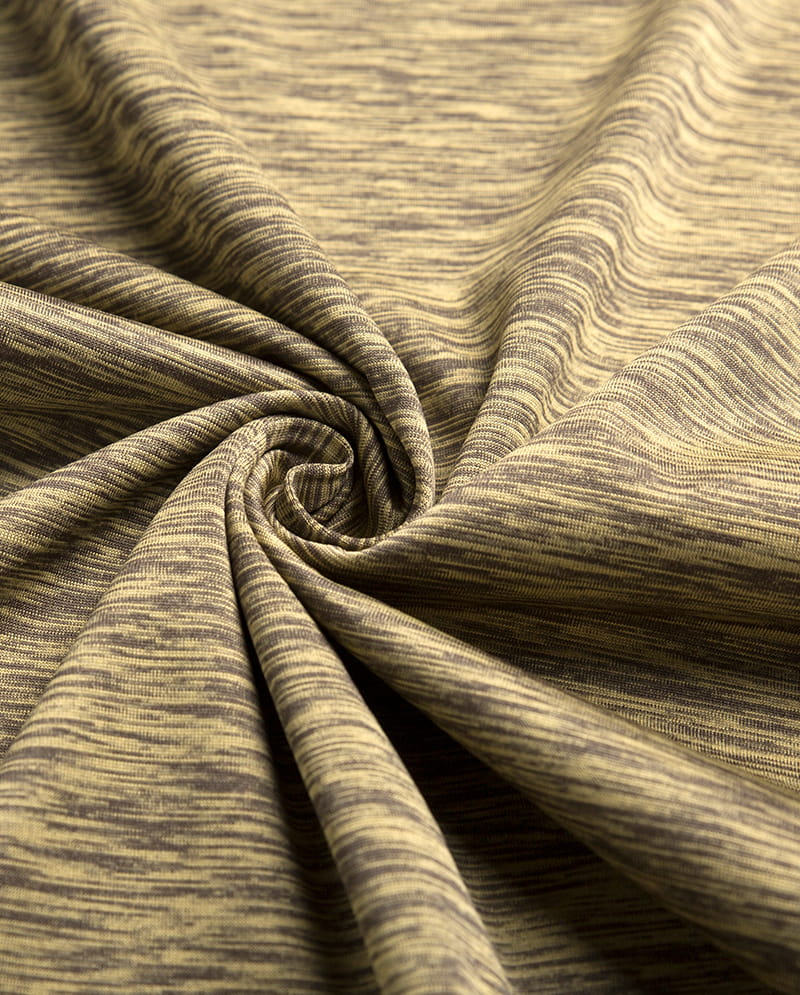
High-Stretch Cationic Jersey Fabric
-
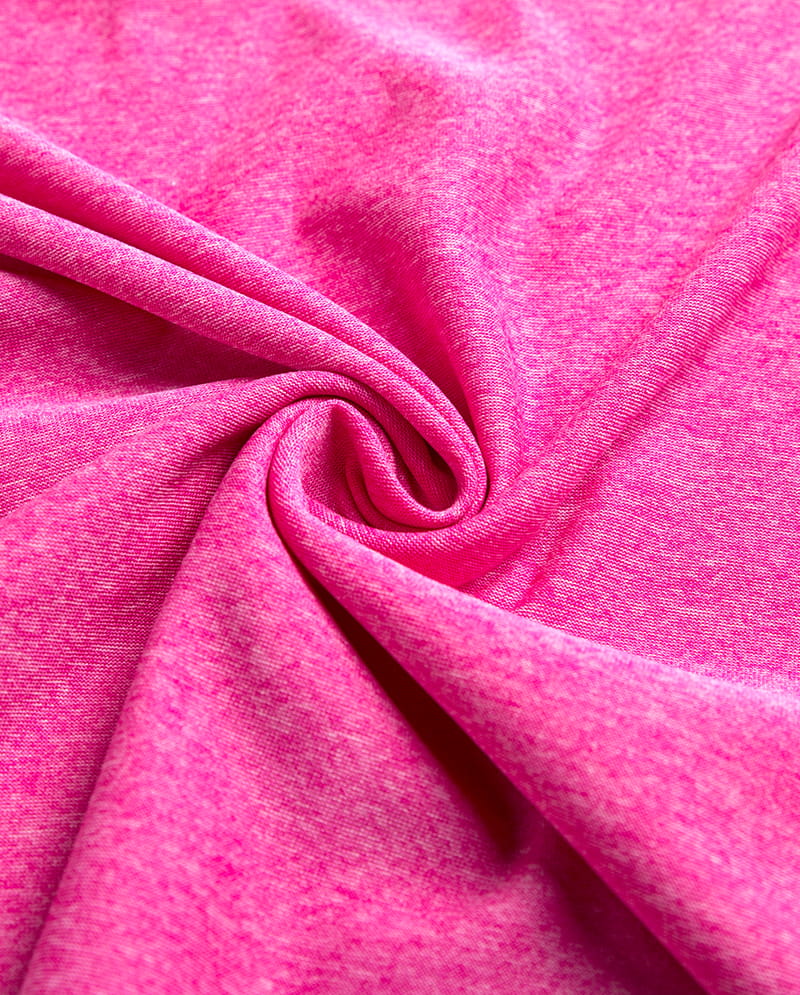
High Quality Cationic DTY Spandex Two Sides Brush Dralon Knit Fabric for Garment Thermal Underwear
-
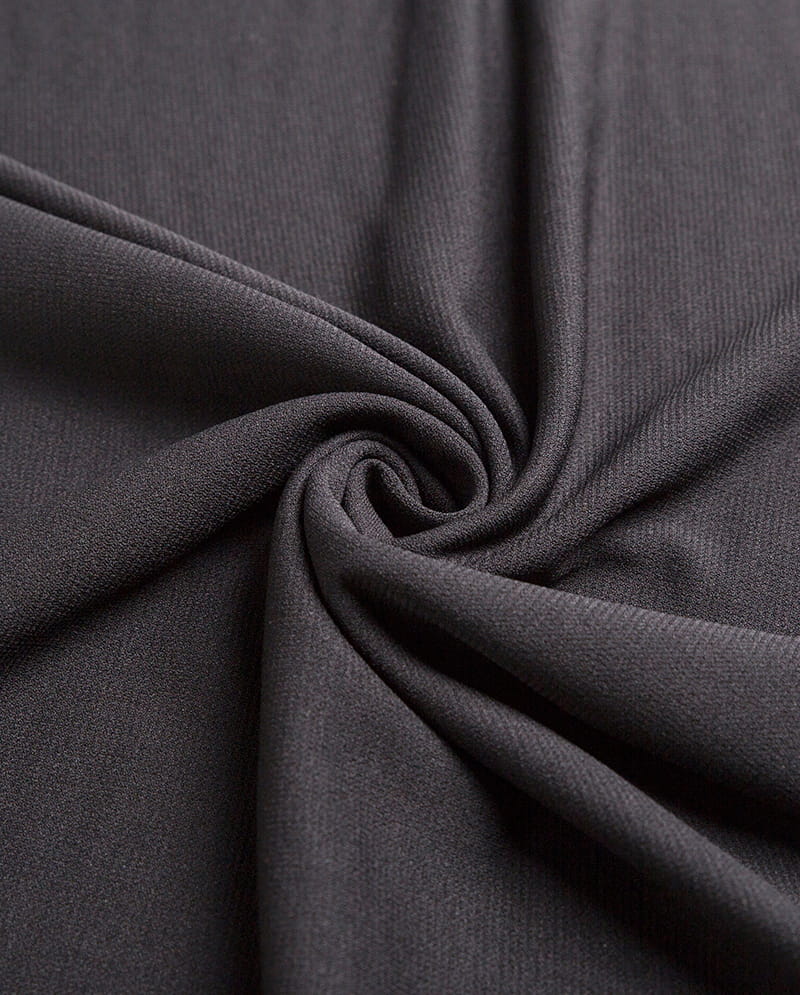
Durable Anti-Pilling Knitted Fabric for Home Textiles
-
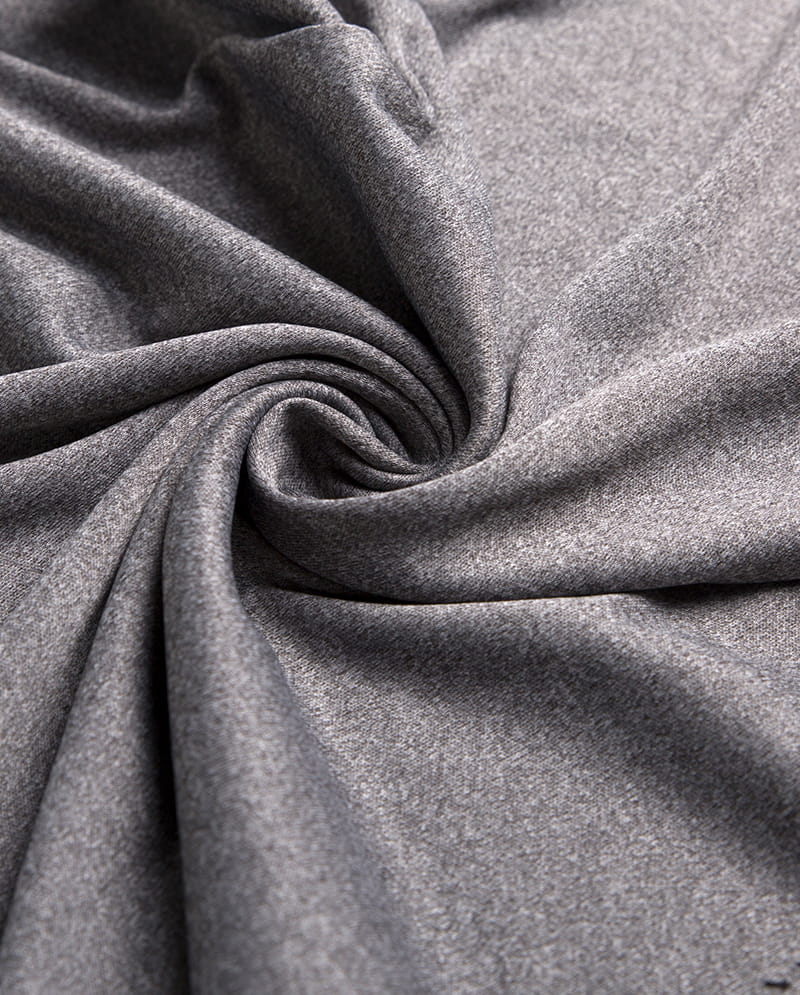
Wash-Resistant Cationic Elastic Knitted Fabric for Garment Industry
-
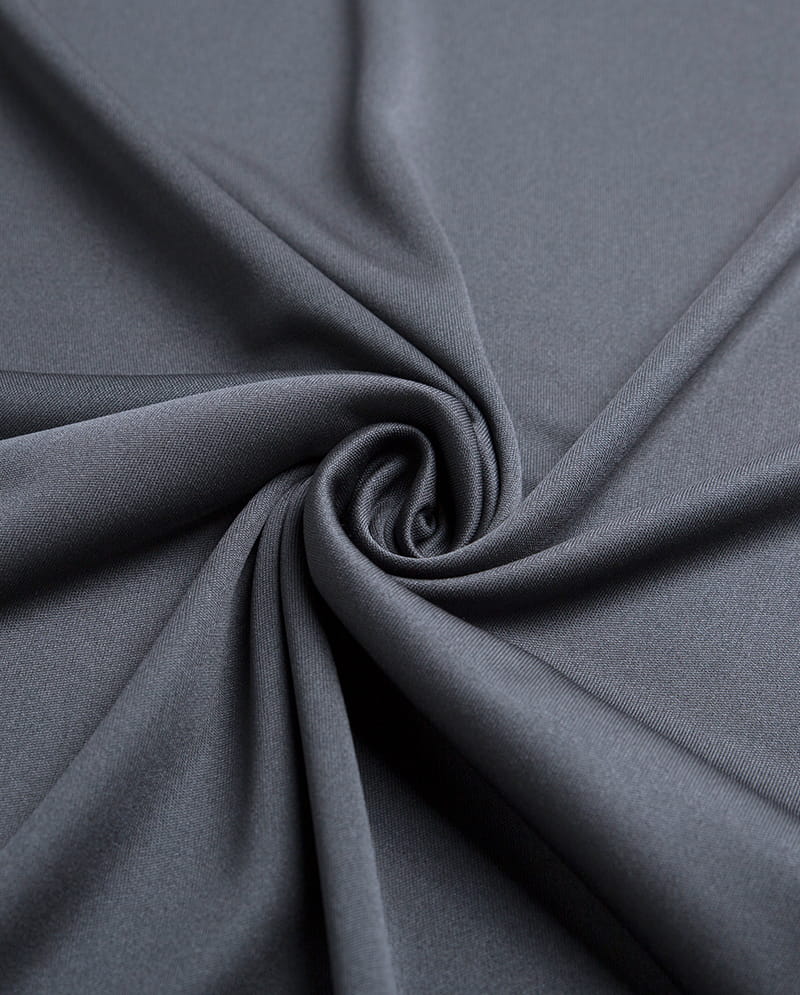
Breathable Double-Faced Elastic Composite Fabric
-
-
-
- whatsapp:
- 0086-13962559622
-
- skype:
- skype.aliceshenghong
-
- Wechat:


COPYRIGHT © 2016 Suzhou Junhui Textile Co., Ltd.
