
 EN
 English
 中文简体
Versatile SD/FD/CD/TBR Recycled POY Yarn for Sustainable Textile Manufacturing
Content
- 1 What Is Recycled POY Yarn?
- 2 Understanding SD, FD, CD, and TBR Specifications
- 3 Key Advantages of Versatile Recycled POY Yarn
- 4 Product Specification Portfolio
- 5 Advanced Manufacturing Approach
- 6 Why Choose This Product Instead of a Standard Virgin Polyester Yarn?
- 7 Applications in Bags, Luggage, and Outdoor Products
- 8 Applications in Apparel and Fashion Textiles
- 9 Applications in Home and Lifestyle Products
- 10 Customization and Product Development Support
- 11 Company Manufacturing and Export Strengths
- 12 How to Select the Correct Recycled Yarn
- 13 Quality Control Considerations for Buyers
- 14 Sustainability Benefits and Responsible Use
- 15 Frequently Asked Questions
- 15.1 What is the main raw material for this recycled yarn?
- 15.2 What does SD mean in the product range?
- 15.3 What does FD mean?
- 15.4 What is CD yarn used for?
- 15.5 What does TBR mean in this product title?
- 15.6 Can the yarn be used for bags and luggage?
- 15.7 Is the yarn suitable for apparel?
- 15.8 Can the supplier provide functional yarn?
- 15.9 Can customers request customized specifications?
- 15.10 How should buyers verify recycled content?
- 15.11 What information should be included in an inquiry?
- 15.12 Does recycled yarn require special equipment?
- 16 Conclusion
- 17 References
- 18 Product: Versatile SD/FD/CD/TBR Recycled POY Yarn
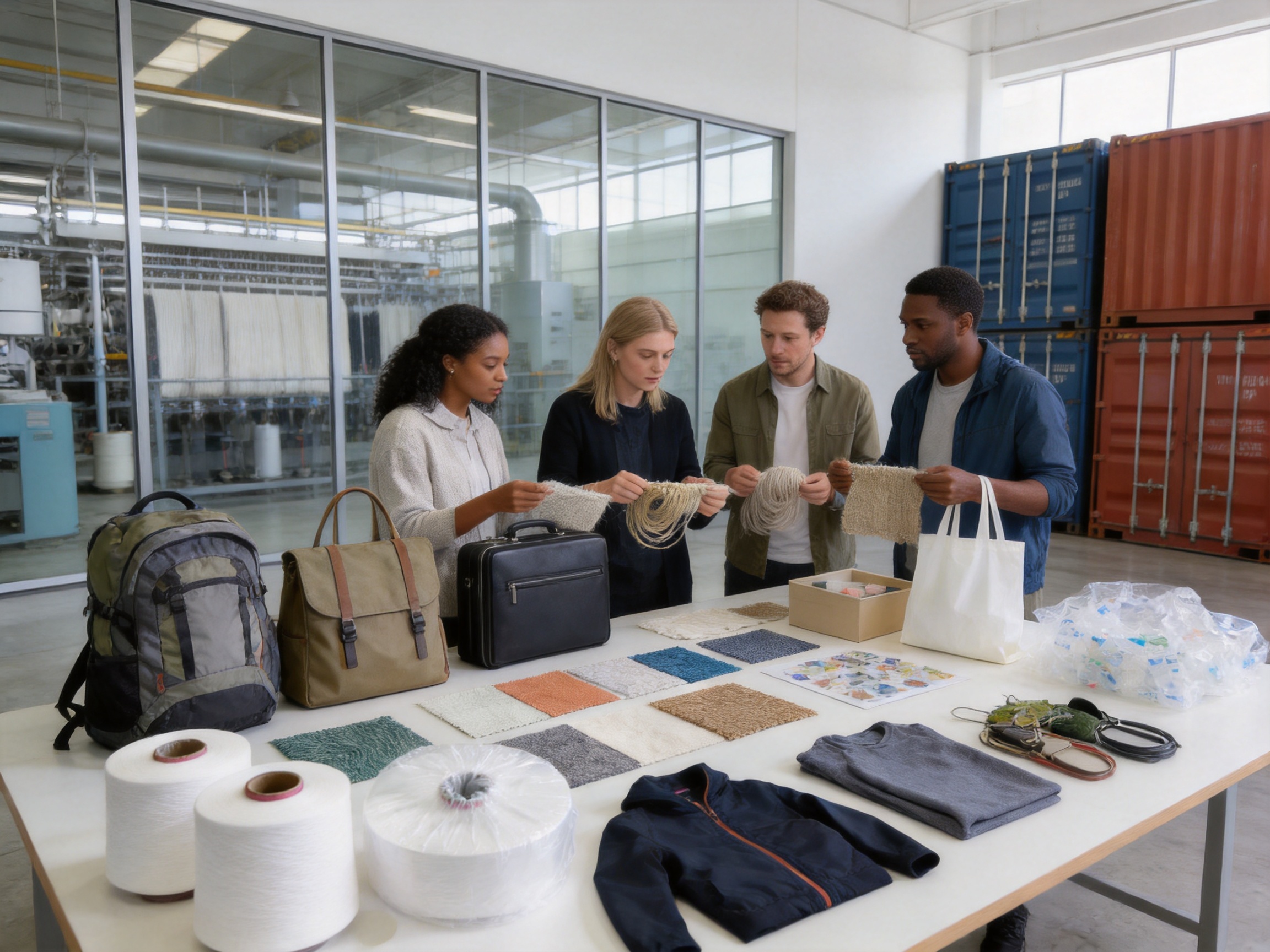
The textile industry is moving rapidly toward materials that combine reliable performance with measurable environmental benefits. Brands, fabric mills, garment manufacturers, and accessory producers are increasingly looking for yarns that can support sustainable product development without sacrificing strength, appearance, processing stability, or design flexibility. Versatile SD/FD/CD/TBR Recycled POY Yarn answers this demand by transforming discarded PET products into a practical textile raw material for a broad range of applications.
Produced from recycled polyester sources such as discarded water bottles and beverage containers, this yarn supports the circular use of plastic resources. Instead of depending entirely on virgin petroleum-based polyester, manufacturers can incorporate recycled feedstock into bags, luggage, clothing, outdoor goods, shopping bags, and other textile products. The result is a material solution that supports resource conservation while maintaining the processing advantages associated with polyester yarn.
The product is available in SD, FD, CD, and TBR-related specifications, allowing customers to select yarn characteristics according to fabric construction, surface effect, dyeing requirements, end-use performance, and production equipment. Its versatility is further supported by a broad product portfolio that includes recycled DTY, recycled FDY, recycled SD and CD combinations, recycled DDB yarn, functional yarns, high-elastic yarns, PBT/PET blends, and customized differential yarn solutions.
With professional research and development capabilities, export experience, and a product range designed for different downstream applications, Suzhou Junhui Textile Co., Ltd. and Suzhou Xiaoran New Materials Co., Ltd. provide more than a standard yarn product. They offer technical selection support, flexible specification development, and a manufacturing approach focused on consistent quality and customer-specific requirements.
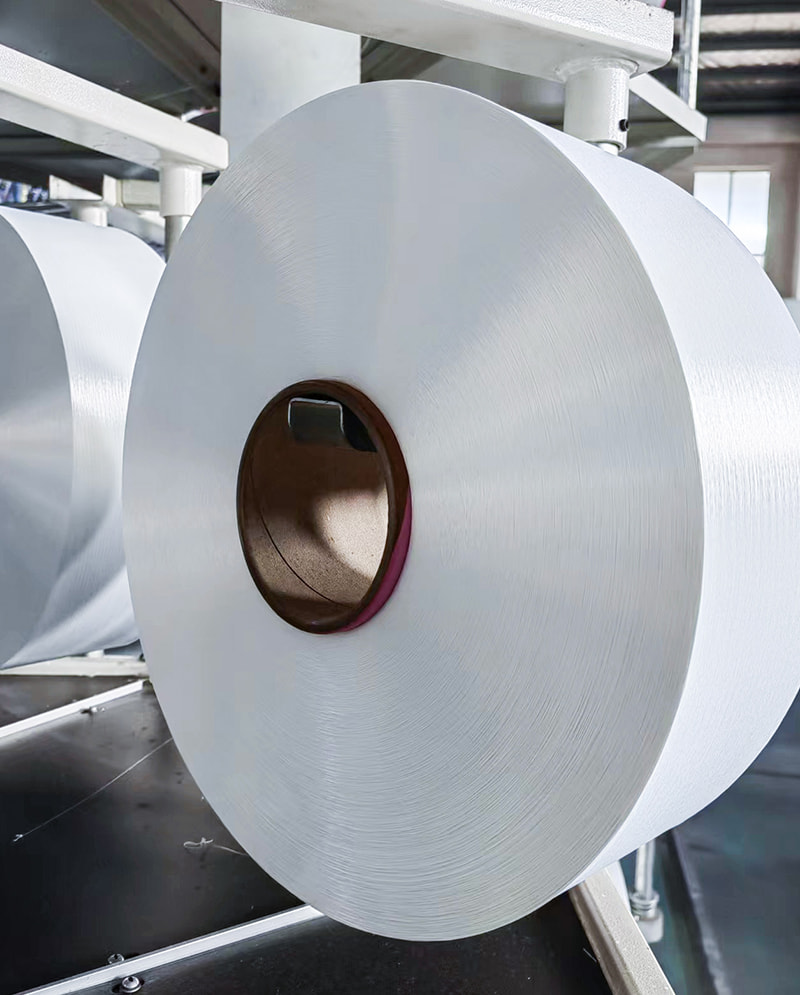
Versatile SD/FD/CD/TBR Recycled POY Yarn
What Is Recycled POY Yarn?
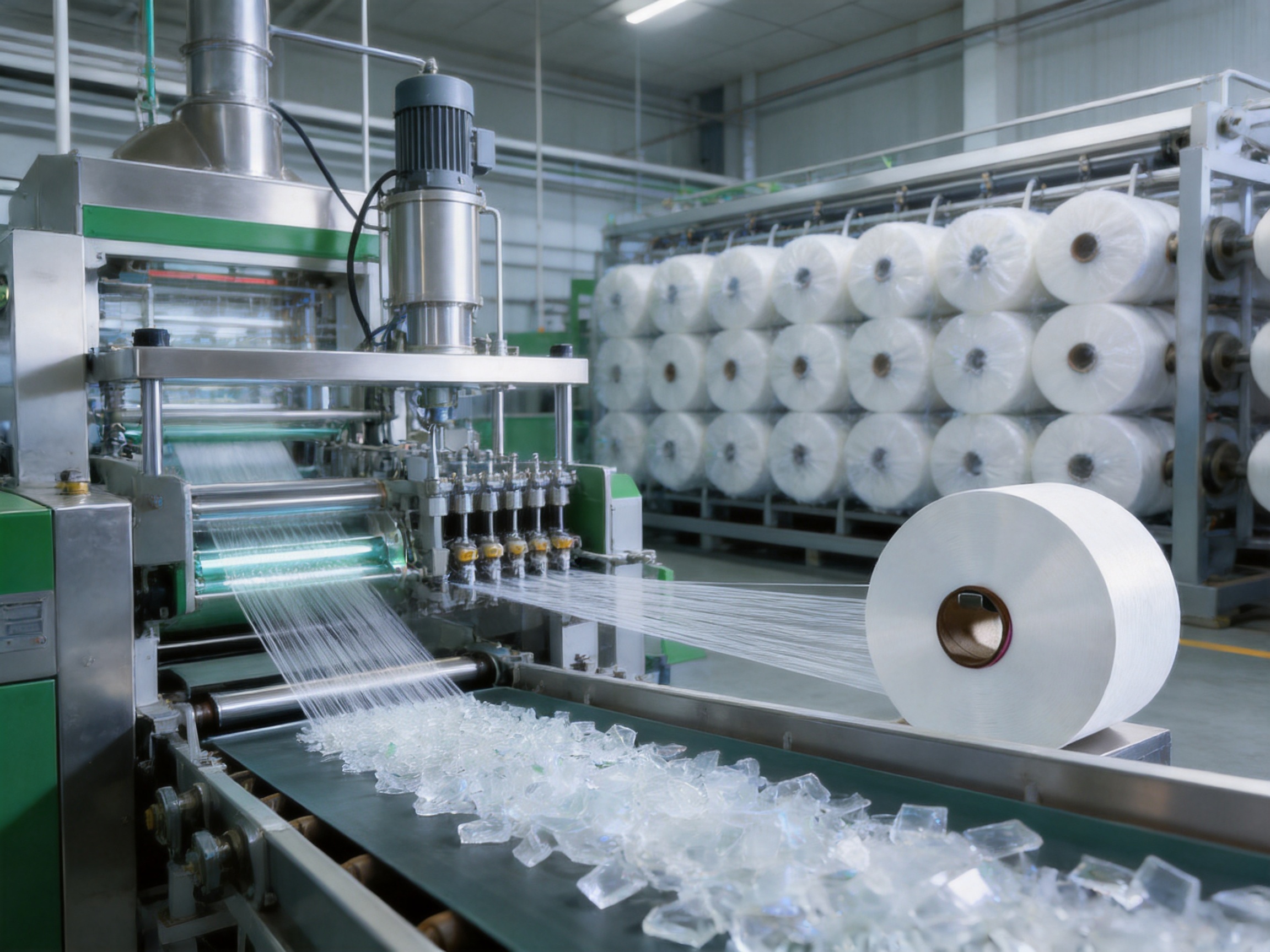
Recycled POY yarn is a polyester-oriented yarn produced from recycled polyester raw materials. The primary source is commonly post-consumer PET packaging, including discarded water bottles and beverage containers. These materials are collected, sorted, cleaned, processed, and converted into polyester feedstock suitable for textile yarn production.
Through controlled polymer processing and spinning, the recycled material is transformed into continuous filament yarn. Depending on the intended application, the yarn can subsequently be drawn, textured, combined, or modified to achieve specific properties. This makes recycled polyester suitable for both intermediate yarn production and finished textile manufacturing.
The use of recycled PET gives the material an important environmental advantage. It helps reduce the quantity of plastic waste entering landfills or the natural environment and makes productive use of a material that would otherwise be discarded. It can also reduce dependence on new petroleum-derived polyester feedstock. For manufacturers seeking to improve the sustainability profile of their products, recycled yarn provides a practical and scalable option.
However, sustainability alone is not enough for modern textile production. A recycled yarn must also meet the requirements of industrial processing. It needs stable linear density, dependable tensile behavior, suitable elongation, consistent appearance, and compatibility with downstream weaving, knitting, texturing, dyeing, and finishing operations. The purpose of a professional recycled yarn manufacturer is therefore to balance environmental responsibility with production reliability.
Understanding SD, FD, CD, and TBR Specifications
SD Yarn
SD generally refers to standard denier yarn. It is used when a conventional filament structure and familiar processing behavior are required. SD yarn can be selected for many ordinary woven and knitted fabrics, linings, bags, apparel materials, and textile accessories.
Recycled SD yarn is especially useful for manufacturers who want to introduce recycled content while maintaining a familiar production route. It can be incorporated into a wide range of fabric constructions and may be selected in different denier and filament combinations according to the required handle, weight, coverage, and appearance.
FD Yarn
FD refers to full-dull yarn. Compared with brighter filament types, full-dull yarn can provide a softer and less reflective visual effect. This makes it suitable for fabrics where a subdued, matte, or premium appearance is preferred.
Recycled FD yarn can support fashion fabrics, casual garments, bags, luggage materials, and home-textile products that require an understated surface appearance. It is also suitable for customers seeking a sustainable yarn with a visual effect that differs from conventional bright polyester.
CD Yarn
CD refers to compact denier yarn within the supplied product classification. It is intended for applications where a particular filament arrangement, compactness, or surface effect is desired. CD yarn may be combined with other yarn types to create differentiated fabric structures and special visual or tactile results.
Recycled CD yarn expands the design options available to fabric developers. It can be used independently or as part of a blended or combined yarn system. This is valuable for textile producers who need to create a fabric with a distinctive hand feel, surface texture, drape, or appearance while retaining recycled content.
TBR Yarn
TBR is presented as a textured base ready specification within the product range. It is intended to support downstream texturing and related yarn processing requirements. A textured base-ready yarn can provide a practical starting point for manufacturers that need to develop stretch, bulk, softness, elasticity, or other surface effects during subsequent processing.
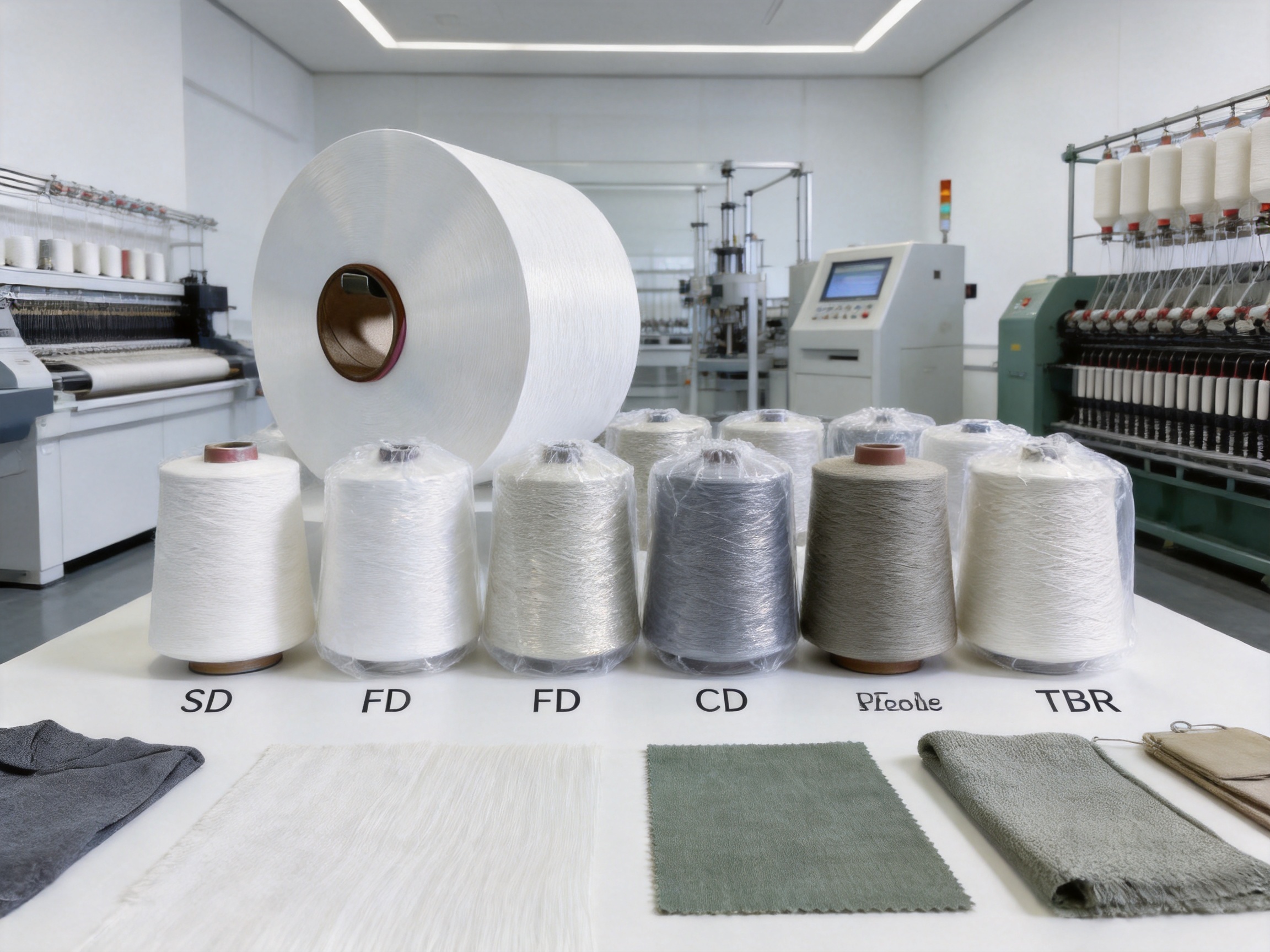
By offering SD, FD, CD, and TBR-related choices, the product range is not limited to one fixed type of recycled polyester yarn. Customers can select a suitable base according to the intended fabric, machine, processing route, and final product requirements.
Key Advantages of Versatile Recycled POY Yarn
1. Recycled Raw Material and Resource Efficiency
The most visible advantage of this yarn is its use of recycled PET material. Discarded water bottles and beverage containers are converted into a new textile resource instead of being treated only as waste. This supports a more circular approach to polyester manufacturing and helps textile companies respond to increasing demand for recycled content.
For brands and manufacturers, recycled yarn can be incorporated into sustainability-focused collections, outdoor equipment, travel products, accessories, and everyday clothing. It allows businesses to communicate a practical environmental story based on material recovery and reuse.
2. Broad Application Range
The yarn is suitable for many products, including mountaineering bags, handbags, school bags, luggage, briefcases, fashion bags, storage boxes, gift bags, shopping bags, garments, and other textile articles. Its application range is supported by the availability of different yarn constructions and counts.
Outdoor and travel products can benefit from polyester’s familiar durability and processing characteristics. Fashion and accessory manufacturers can select different denier and filament arrangements to achieve the required surface appearance and fabric weight. Garment producers can use suitable specifications for woven or knitted materials, linings, lightweight fabrics, and functional textile constructions.
3. Consistent Linear Density
Stable linear density is important because variations in yarn size can influence fabric weight, coverage, appearance, dye uptake, and production efficiency. The supplied product information emphasizes stable linear density as one of the important performance characteristics of the recycled yarn.
For weaving and knitting mills, consistent yarn size can support more predictable fabric construction. It may also reduce the need for frequent machine adjustments and help maintain uniformity between production lots. This is particularly important for large orders in which the same fabric appearance must be maintained across multiple shipments.
4. Reliable Tensile Performance
Yarn strength and tensile consistency are essential in applications such as bags, luggage, outdoor products, and apparel fabrics. A yarn with dependable tensile behavior can support stable weaving, knitting, winding, and downstream handling.
Recycled content does not eliminate the need for performance control. The manufacturing process must be managed so that the final filament yarn remains suitable for practical textile production. This product is designed to offer consistent tensile behavior for downstream fabric development, helping customers balance sustainable sourcing with functional performance.
5. Flexible Product Selection
One of the strongest advantages over a narrow single-specification supplier is the breadth of available options. The product list includes recycled SD DTY, recycled SD FDY, recycled FD DTY, recycled SD and CD DTY, recycled DDB DTY, and additional normal, CD, high-elastic, PBT/PET, and functional series.
Although the featured product is centered on recycled POY yarn, the broader portfolio allows customers to coordinate several related yarn requirements through one experienced supplier. This can simplify sourcing and make it easier to develop a complete fabric program with compatible materials.
6. Support for Differentiated Textile Design
Textile markets are increasingly competitive. Buyers often require more than a basic polyester yarn; they want a specific handle, luster, elasticity, moisture-management effect, warmth, color effect, or functional performance. The supplied product range responds to this need through multiple differentiated yarn families.
Available options include high-elastic yarn, PBT/PET yarn, fire-retardant yarn, anti-bacterial yarn, moisture-wicking yarn, hollow warm yarn, cotton-like yarn, cationic-dyeable yarn, white and black yarn, and other differentiated constructions. These options help fabric mills and product developers create materials with clearer market positioning.
Product Specification Portfolio
The following table summarizes representative specifications listed in the product materials. Actual availability, composition, color, filament arrangement, and minimum order quantity should be confirmed with the supplier before production.
| Product family | Representative specifications | Typical development direction |
|---|---|---|
| Recycled SD DTY | 15/6; 20/12–24; 30/12–24–36; 50/36–48–72; 75/36–72–144; 100/36–48–96–144; 150/48–96–144–288; 300/96–192–288–576 | Recycled woven and knitted fabrics, bags, apparel, and accessories |
| Recycled SD FDY | 40/24–72; 50/24–36–48–72; 66/24; 75/36–72–144; 100/72; 150/48–144 | Filament fabric construction, linings, apparel, and accessory materials |
| Recycled FD DTY | 50/72; 75/36; 75/72; 150/144 | Matte-effect fabrics, fashion textiles, and soft-surface applications |
| Recycled SD plus CD DTY | 50/48–72; 75/48–72; 80/72; 100/72–108–144; 125/72–144; 150/72–108–144; 300/96–144–288 | Combination effects, differentiated surfaces, and special fabric designs |
| Recycled DDB DTY | 75/36–72; 150/48; 300/96 | Special texture and appearance development |
| High-elastic yarn | 30/12; 50/36–72; 60/72; 75/36–72; 150/48–144 | Stretch-oriented garments, activewear, and flexible fabric structures |
| Functional yarn | Fire-retardant, anti-bacterial, moisture-wicking, hollow warm, cotton-like, and cationic-dyeable options | Performance apparel, outdoor products, workwear, and specialty textiles |
| PBT/PET yarn | 50/48; 75/36; PBT/PET DDB options | Elasticity, recovery, and blended performance fabric development |
The numbers shown in the product list represent denier and filament-related specifications as supplied by the manufacturer. Because naming conventions and production conditions can differ between mills, customers should confirm the exact technical interpretation, composition, finish, and test method during sample development.
Advanced Manufacturing Approach
Recycled Feedstock Preparation
The quality of recycled yarn begins with the quality and preparation of recycled feedstock. Post-consumer PET containers must be collected, sorted, cleaned, and processed before they can be used in polyester production. Effective preparation helps remove unwanted materials and supports a more stable polymerization and spinning process.
Feedstock preparation is particularly important for recycled polyester because contamination, inconsistent material composition, and moisture can affect melt quality and yarn performance. A disciplined raw-material process helps create a more dependable foundation for subsequent production stages.
Controlled Polymer and Melt Processing
After preparation, recycled polyester material is processed into a form suitable for melt spinning. Temperature control, melt uniformity, filtration, and pressure stability all influence the quality of the final filament. These factors must be managed carefully to limit variation in viscosity, denier, strength, and surface appearance.
Stable melt processing is also important when producing different yarn families. SD, FD, CD, and TBR-related products may require different conditions or finishing approaches. A manufacturer with experience across multiple differential yarn categories is better positioned to adjust production according to product requirements.
Precision Spinning
In the spinning stage, molten polyester is extruded through specialized spinnerets to form continuous filaments. The speed of extrusion, cooling conditions, winding tension, and process stability all contribute to filament uniformity.
Precision spinning supports the production of yarn with controlled linear density and consistent filament formation. These characteristics influence how the yarn performs during drawing, texturing, weaving, knitting, dyeing, and finishing. For customers making large quantities of fabric, process repeatability is as important as the performance of an individual sample.
Drawing and Texturing Compatibility
Many polyester yarns are processed further through drawing or texturing. Drawing develops the required molecular orientation and can improve tensile performance. Texturing can add bulk, elasticity, softness, crimp, and a more natural textile hand.
The featured recycled yarn is positioned for flexible downstream use, including SD, FD, CD, and TBR-related applications. This gives customers the opportunity to select a material that matches their existing processing route rather than redesigning an entire production system around one limited yarn type.
Quality and Batch Consistency
Manufacturing quality is not limited to a single laboratory test. A reliable supplier must consider raw-material control, spinning stability, winding quality, packaging, storage, and lot-to-lot consistency. Yarn users typically evaluate denier, filament count, tensile strength, elongation, appearance, oil content, moisture, package build, and processing behavior.
For recycled yarn, customers may also request information about recycled content, source materials, environmental documentation, and traceability. Clear communication between supplier and buyer is important because the exact documentation required may differ according to the destination market and end-use product.
Why Choose This Product Instead of a Standard Virgin Polyester Yarn?
Virgin polyester remains widely used, but recycled yarn offers several strategic advantages for companies under pressure to reduce the environmental impact of their products. The most direct difference is the use of recovered PET instead of entirely new petroleum-based raw material.
Recycled yarn can help brands meet internal sustainability targets, respond to buyer expectations, and create products with a stronger environmental proposition. It also supports the development of recycled-content product lines without requiring manufacturers to abandon the processing familiarity of polyester filament yarn.
The product is particularly competitive when customers need both sustainability and specification flexibility. A supplier offering only one recycled yarn count may not be able to support different fabric weights, surface effects, and downstream processes. By contrast, this product portfolio includes many denier and filament combinations, as well as related differential yarns.
Another advantage is the ability to work with a supplier that develops more than ordinary yarn. The company focuses on recycled yarn, polyester dope-dyed yarn, microfine yarn, flame-retardant yarn, cationic-dyeing yarn, SHAWLIENCE-related products, and knitting fabrics. This broader research direction can help customers find solutions for new textile concepts instead of relying only on standard commodity specifications.
Applications in Bags, Luggage, and Outdoor Products
Bags and luggage are important application areas for recycled polyester yarn. These products require fabrics that can withstand handling, folding, abrasion, and repeated use. Recycled yarn can be used in woven shell fabrics, lining materials, pockets, panels, webbing-related constructions, and decorative textile components.
Mountaineering bags and outdoor products may require additional features such as light weight, strength, water-repellent finishing, dimensional stability, and color fastness. The yarn itself is one part of the final performance system. Fabric construction, weaving density, finishing chemistry, coatings, sewing design, and component selection must also be considered.
For shopping bags, gift bags, school bags, and fashion accessories, appearance may be as important as mechanical performance. SD, FD, CD, and combined yarn options allow designers to create different levels of brightness, texture, hand feel, and fabric coverage.
The environmental message is also valuable in these categories. Consumers often associate reusable bags, outdoor equipment, and travel products with responsible consumption. Recycled polyester can support that positioning by giving manufacturers a recognizable recycled-material story.
Applications in Apparel and Fashion Textiles
Recycled polyester yarn is widely relevant to apparel because it can be used in woven and knitted fabrics across different market segments. Depending on the yarn specification and fabric construction, applications may include sportswear, casualwear, jackets, linings, dresses, trousers, shirts, uniforms, and fashion accessories.
FD yarn can be considered for fabrics that require a subdued surface. SD yarn is suitable for more conventional constructions. CD or SD plus CD combinations may be selected when the fabric developer wants a distinctive surface effect or a different tactile experience.
The functional yarn portfolio further expands apparel opportunities. Moisture-wicking yarn can support activewear and performance clothing. Anti-bacterial yarn may be considered for products where odor control or hygienic positioning is important. Fire-retardant yarn can support selected workwear, protective, or interior textile applications, subject to appropriate testing and regulatory requirements.
Cotton-like yarn options may help manufacturers create a softer or more natural-feeling polyester textile. Hollow warm yarn can be considered for thermal applications where bulk and warmth are desired. Cationic-dyeable yarn may support special color effects and differentiated dyeing programs.
Applications in Home and Lifestyle Products
Recycled polyester yarn can also be applied to home and lifestyle textiles. Possible uses include storage boxes, decorative bags, household organizers, cushion covers, curtains, lightweight blankets, and other textile accessories. The final suitability depends on the yarn construction, fabric design, finishing process, and required performance standards.
For lifestyle products, customers often want an attractive appearance combined with durability and easy care. Polyester yarn can support color variety, shape retention, and practical maintenance. Recycled content adds an additional value proposition for retailers and consumers looking for products with a lower reliance on virgin materials.
Customization and Product Development Support
Textile manufacturers rarely have identical requirements. A fabric mill may need a specific denier and filament arrangement, while a garment brand may need a special color, luster, stretch level, or functional effect. For this reason, the supplier states that it can accept orders for various kinds of differentiated yarn.
Customization may involve selecting an existing specification, combining SD and CD characteristics, choosing a functional yarn type, developing a special color direction, or determining an appropriate yarn for a particular weaving or knitting process. Customers should provide detailed information about fabric construction, machine type, target weight, desired hand feel, dyeing route, end use, and required performance.
A practical development process usually begins with technical discussion and sample selection. The supplier and customer can then review yarn parameters, conduct trial processing, evaluate fabric results, and adjust the product before bulk production. This approach helps prevent problems caused by selecting yarn based only on denier or general product naming.
For international buyers, communication speed is also important. The company states that its experts are ready to provide product selection and problem-solving support within 12 hours globally. Fast technical communication can be valuable when customers are working against seasonal deadlines, sample approval schedules, or urgent production requirements.
Company Manufacturing and Export Strengths
Suzhou Junhui Textile Co., Ltd. and Suzhou Xiaoran New Materials Co., Ltd. were founded in June 2015 and focus on the development and sale of differential yarn and knitting fabric products. Their product scope includes recycled yarn, polyester dope-dyed yarn, SHAWLIENCE-related products, microfine yarn, flame-retardant yarn, cationic-dyeing yarn, and knitting fabrics.
The companies have a professional research and development team and cooperate with internationally recognized enterprises on research, development, and application in environmental protection and functional yarn and fabric. This orientation is important because modern textile development increasingly requires cooperation between raw-material suppliers, yarn processors, fabric mills, garment manufacturers, and brands.
More than 90 percent of the products are exported, and the companies have established cooperative relationships with customers in 36 countries. This export experience suggests familiarity with international communication, product specifications, order coordination, and the different expectations of overseas markets.
The company’s location in Shengze Town, Suzhou, Jiangsu Province places it within one of China’s important textile manufacturing regions. Access to an established textile supply chain can support cooperation with mills, processors, logistics providers, and related manufacturing partners.
The company describes customer success as its central service principle. This is reflected in its emphasis on professional guidance, product selection, application support, and problem solving. For buyers of specialized recycled yarn, technical service can be as important as the yarn itself because the correct selection depends on the entire downstream production process.
How to Select the Correct Recycled Yarn
Define the End Product
Start by identifying the finished product. A lightweight fashion fabric may require a different yarn from a heavy-duty luggage fabric. A knitted sportswear fabric may require different elasticity and moisture-management properties from a woven shopping bag.
Determine Fabric Construction
Customers should identify whether the yarn will be used for weaving, knitting, texturing, or another process. The machine gauge, fabric density, fabric weight, construction pattern, and finishing route all affect yarn selection.
Select Denier and Filament Count
Denier influences yarn weight and coverage, while filament count can affect softness, surface appearance, and hand feel. The correct combination should be selected according to the desired fabric result rather than based only on a catalog number.
Choose the Surface Effect
SD, FD, CD, and combination yarns can create different visual and tactile effects. Customers should communicate whether they need a bright, standard, matte, compact, textured, soft, or special surface.
Consider Functional Requirements
For sportswear, outdoor products, uniforms, and technical textiles, customers may need moisture management, elasticity, warmth, anti-bacterial performance, flame retardancy, or a special dyeing effect. Functional claims must be verified through suitable testing for the intended market and application.
Confirm Recycled Content and Documentation
Buyers should discuss the required recycled content percentage, source of recycled material, traceability documentation, test reports, packaging information, and any market-specific compliance requirements. These details should be confirmed before order placement.
Quality Control Considerations for Buyers
When evaluating recycled POY or related yarn, buyers should review several technical indicators. Linear density should be stable, and the yarn should display consistent appearance along the package. Tensile strength and elongation should be suitable for the intended processing route. Package winding should be uniform enough for efficient unwinding and downstream use.
Customers should also consider moisture content, oiling or finish level, interlacing where applicable, color consistency, filament integrity, and package weight. For dyed or black-and-white yarn, shade consistency and lot control are especially important.
Sample trials should be performed under conditions that resemble bulk production. A yarn may perform differently on different machines or under different tension, temperature, speed, and finishing conditions. Evaluating the yarn in the customer’s actual process provides more useful information than relying only on a laboratory sample.
For functional products, performance testing should be linked to the final fabric and finished article. For example, moisture-wicking performance depends on yarn, fabric construction, finishing, and test method. Likewise, flame-retardant performance may change after washing or finishing. The yarn supplier can provide a starting point, but the finished product must be validated by the manufacturer.
Sustainability Benefits and Responsible Use
Recycled polyester is an important tool for improving material efficiency, but it should be viewed as part of a broader sustainability strategy. Responsible textile production also involves efficient manufacturing, reduced waste, longer product life, repairability, responsible finishing, appropriate packaging, and end-of-life planning.
Using recycled PET can reduce the demand for virgin polyester feedstock and give existing plastic materials a new productive use. It can also help companies develop products that contain recycled material in a visible and commercially meaningful way.
Manufacturers should communicate environmental claims accurately. Statements about recycled content, environmental impact, or recyclability should be supported by appropriate documentation and should reflect the actual composition and production process. Transparent communication helps protect consumer trust and supports credible sustainability programs.
When recycled yarn is used in durable products such as luggage, outdoor equipment, and reusable bags, its environmental value can be strengthened by designing products for long service life. Durability, repairability, and practical use are important complements to recycled material selection.
Frequently Asked Questions
What is the main raw material for this recycled yarn?
The yarn is processed from recycled PET products, including discarded water bottles and beverage containers. These materials are converted into polyester feedstock suitable for textile yarn production.
What does SD mean in the product range?
SD generally refers to standard denier yarn. It is a conventional filament yarn option for a wide range of woven and knitted textile applications.
What does FD mean?
FD refers to full-dull yarn. It is generally selected when a less reflective, subdued, or matte visual effect is desired.
What is CD yarn used for?
CD yarn is used for differentiated fabric development where a particular compactness, surface effect, hand feel, or filament arrangement is required. It may be used alone or combined with SD yarn.
What does TBR mean in this product title?
TBR is presented as a textured base ready specification. It is intended to support downstream texturing or related processing requirements, depending on the customer’s production route.
Can the yarn be used for bags and luggage?
Yes. The product is suitable for applications including mountaineering bags, handbags, school bags, luggage, briefcases, fashion bags, storage products, gift bags, and shopping bags. The final fabric design should be matched to the required strength, abrasion resistance, coating, and finishing performance.
Is the yarn suitable for apparel?
Yes. Suitable specifications can be used for garments, sportswear, casualwear, linings, and fashion textiles. The appropriate yarn depends on the fabric construction, desired hand feel, appearance, elasticity, and functional requirements.
Can the supplier provide functional yarn?
The product portfolio includes fire-retardant, anti-bacterial, moisture-wicking, hollow warm, cotton-like, high-elastic, PBT/PET, and cationic-dyeing options. Specific performance, composition, and test documentation should be confirmed for each project.
Can customers request customized specifications?
Yes. The supplier states that it can accept orders for various differentiated yarns. Customers should provide detailed information about the intended end use, fabric structure, machine, yarn count, color, finish, and performance requirements.
How should buyers verify recycled content?
Buyers should request documentation describing the recycled raw material, recycled content, traceability, testing, and any certification required for the target market. The exact documentation should be agreed upon before bulk production.
What information should be included in an inquiry?
An inquiry should include the desired yarn type, denier and filament count, recycled content requirement, color, intended application, weaving or knitting process, estimated quantity, packaging preference, destination market, and required delivery schedule.
Does recycled yarn require special equipment?
Many recycled polyester yarns can be processed through familiar textile equipment, but actual behavior depends on the yarn specification and the customer’s machinery. Sample trials are recommended before bulk production so that tension, speed, temperature, and finishing conditions can be optimized.
Conclusion
Versatile SD/FD/CD/TBR Recycled POY Yarn provides textile manufacturers with a practical way to combine recycled material selection, flexible product development, and dependable polyester processing. By converting discarded PET products into textile yarn, it supports resource recycling and helps companies respond to growing demand for lower-impact materials.
Its main competitive strengths include a broad choice of yarn constructions, stable linear density, consistent tensile performance, compatibility with different downstream processes, and suitability for applications ranging from bags and luggage to apparel, outdoor goods, shopping products, and lifestyle textiles. The availability of related high-elastic, functional, PBT/PET, cationic-dyeable, cotton-like, and hollow warm yarns further expands the possibilities for differentiated product development.
Supported by professional research and development capabilities, export experience, a broad customer network, and technical service, Suzhou Junhui Textile Co., Ltd. and Suzhou Xiaoran New Materials Co., Ltd. are positioned to support customers seeking recycled and functional yarn solutions. The best results will come from early communication, careful specification selection, sample testing, and clear confirmation of recycled content and performance requirements.
For textile brands, fabric mills, garment manufacturers, and accessory producers, this recycled yarn is more than an alternative raw material. It is a platform for developing durable, attractive, functional, and sustainability-oriented textile products in a changing global market.
References
1. Product information and specification materials supplied for Versatile SD/FD/CD/TBR Recycled POY Yarn.
2. Company information supplied by Suzhou Junhui Textile Co., Ltd. and Suzhou Xiaoran New Materials Co., Ltd.
3. General technical principles of recycled polyethylene terephthalate fiber production and polyester filament processing.
4. General textile manufacturing practices for denier, filament count, drawing, texturing, weaving, knitting, dyeing, and finishing.
5. General sustainability principles concerning recycled PET materials, resource efficiency, and circular textile product development.
Product: Versatile SD/FD/CD/TBR Recycled POY Yarn

Popular products
-
Premium Cationic Interlock Stretch Comfort Fabric
-
Moisture-Wicking Nylon Woven Fabric
-
Double-faced jacquard elastic fabric
-
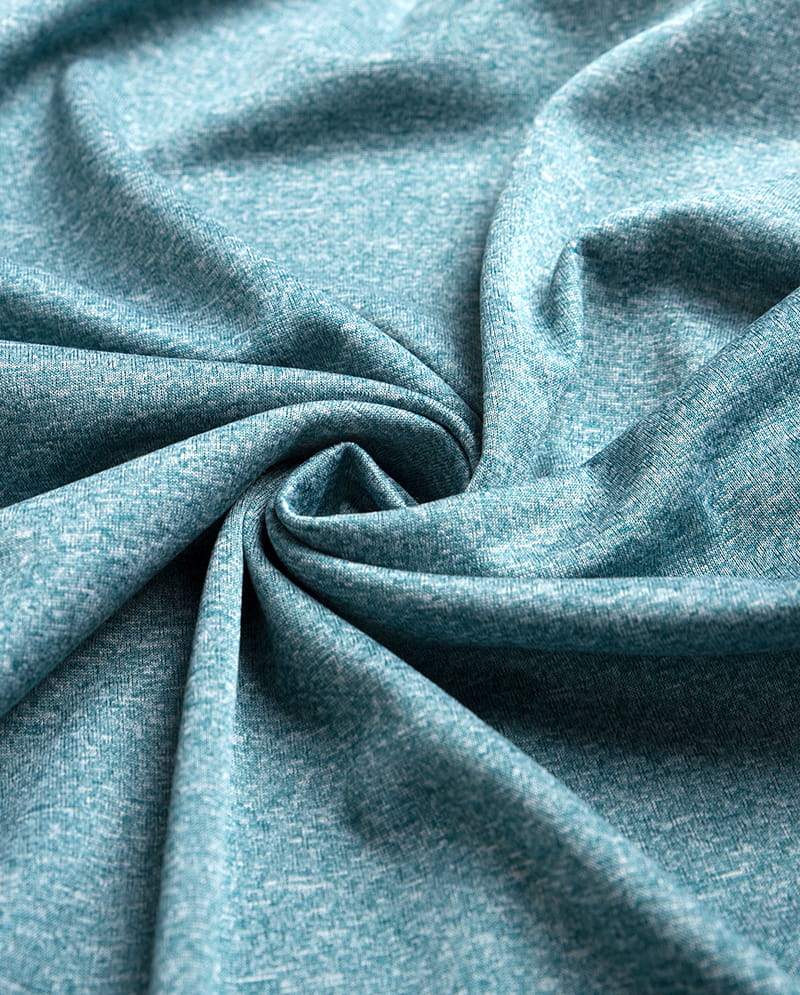
Heather Grey Double-faced cationic jersey fabric
-
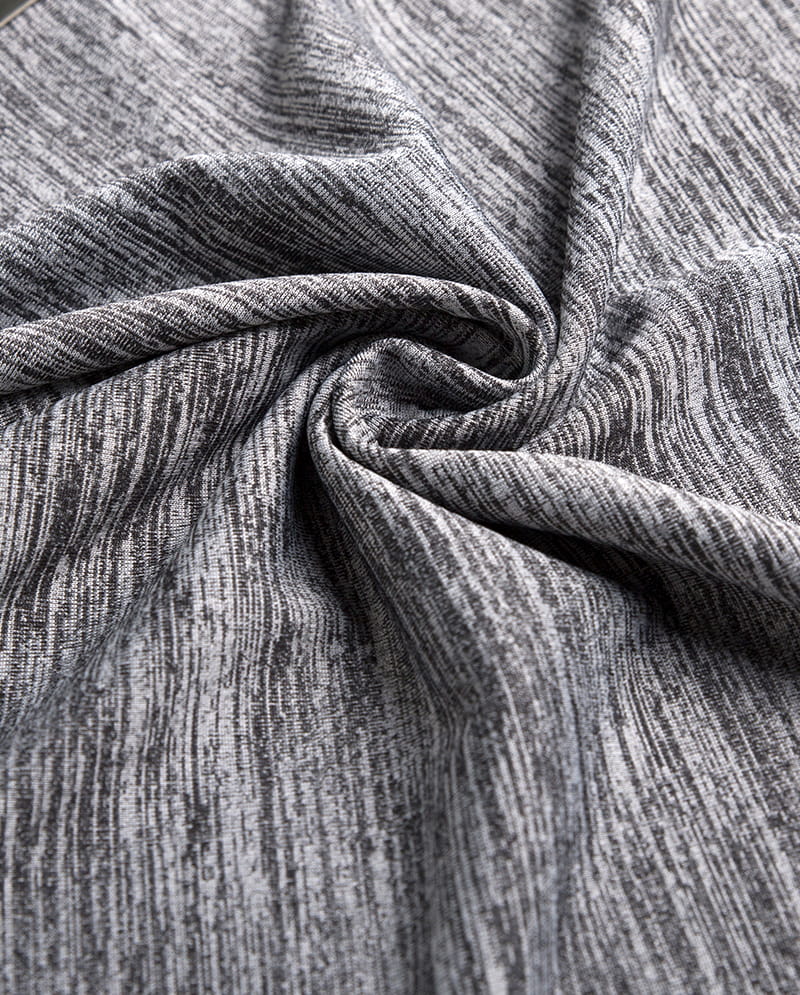
Anti-static Cationic Knitted Rib Fabric
-
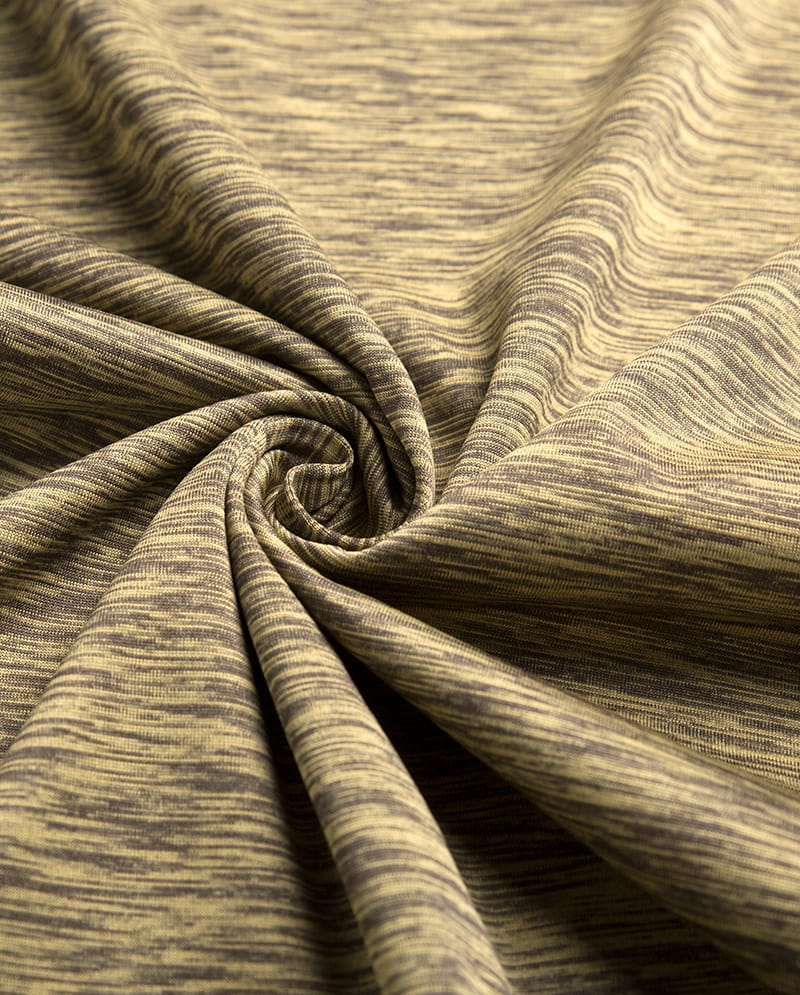
High-Stretch Cationic Jersey Fabric
-
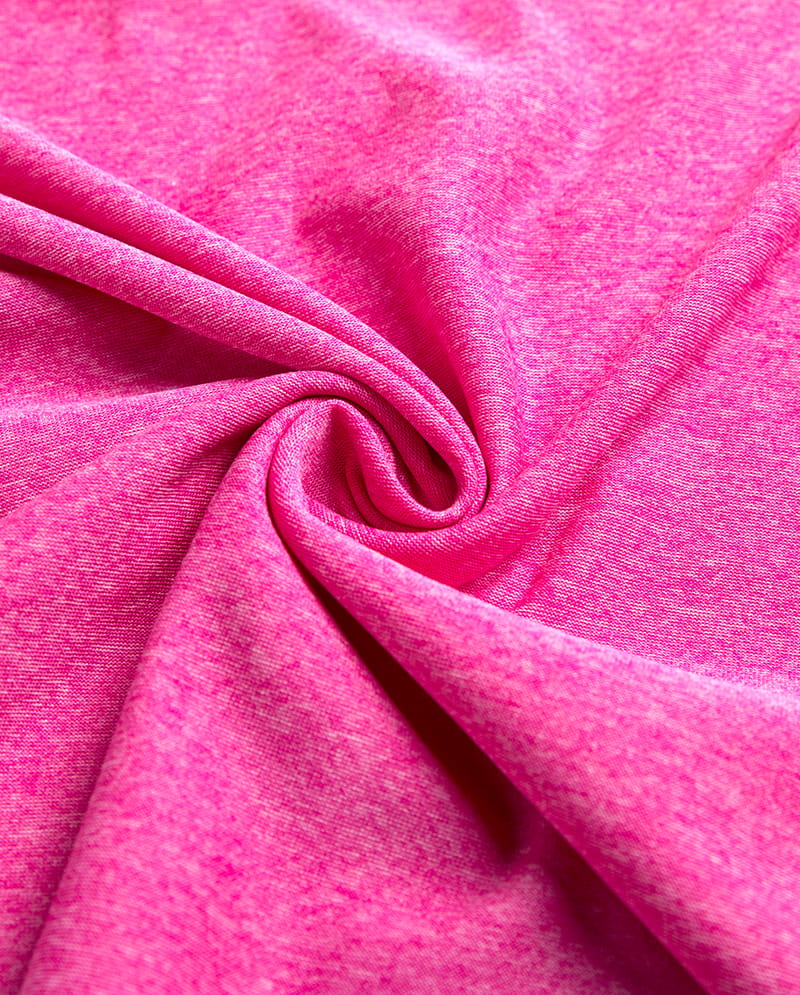
High Quality Cationic DTY Spandex Two Sides Brush Dralon Knit Fabric for Garment Thermal Underwear
-
Durable Anti-Pilling Knitted Fabric for Home Textiles
-
Wash-Resistant Cationic Elastic Knitted Fabric for Garment Industry
-
Breathable Double-Faced Elastic Composite Fabric
-
-
-
- whatsapp:
- 0086-13962559622
-
- skype:
- skype.aliceshenghong
-
- Wechat:

COPYRIGHT © 2016 Suzhou Junhui Textile Co., Ltd.
