

 EN
EN English
 中文简体
中文简体Versatile Recycled POY Yarn for Sustainable and High-Performance Textile Manufacturing
Content
- 1 Introduction
- 2 What Is Recycled POY Yarn?
- 3 Product Portfolio and Available Specifications
- 4 Environmental Advantages
- 5 Performance Advantages Over Conventional Alternatives
- 6 Manufacturing Process and Quality Control
- 7 Company Manufacturing and Development Strengths
- 8 Application Areas
- 9 Benefits for Different Types of Buyers
- 10 Customization and Product Development
- 11 How to Select the Correct Specification
- 12 Quality, Documentation, and Purchasing Considerations
- 13 Why a Specialized Differentiated-Yarn Supplier Matters
- 14 Recommended Development Workflow
- 15 Q&A
- 15.1 What is recycled POY yarn made from?
- 15.2 Is recycled polyester suitable for large-scale textile production?
- 15.3 What is the difference between SD and FD yarn?
- 15.4 What does CD mean in the product range?
- 15.5 Can the yarn be used for bags and luggage?
- 15.6 Can customers request special specifications?
- 15.7 Does recycled yarn perform exactly like virgin polyester yarn?
- 15.8 What information should be requested before purchasing?
- 15.9 Can recycled yarn be combined with functional yarn properties?
- 15.10 Why should buyers work with a supplier that offers several yarn categories?
- 16 Conclusion
- 17 References
- 18 Product: Versatile SD/FD/CD/TBR Recycled POY Yarn
Introduction
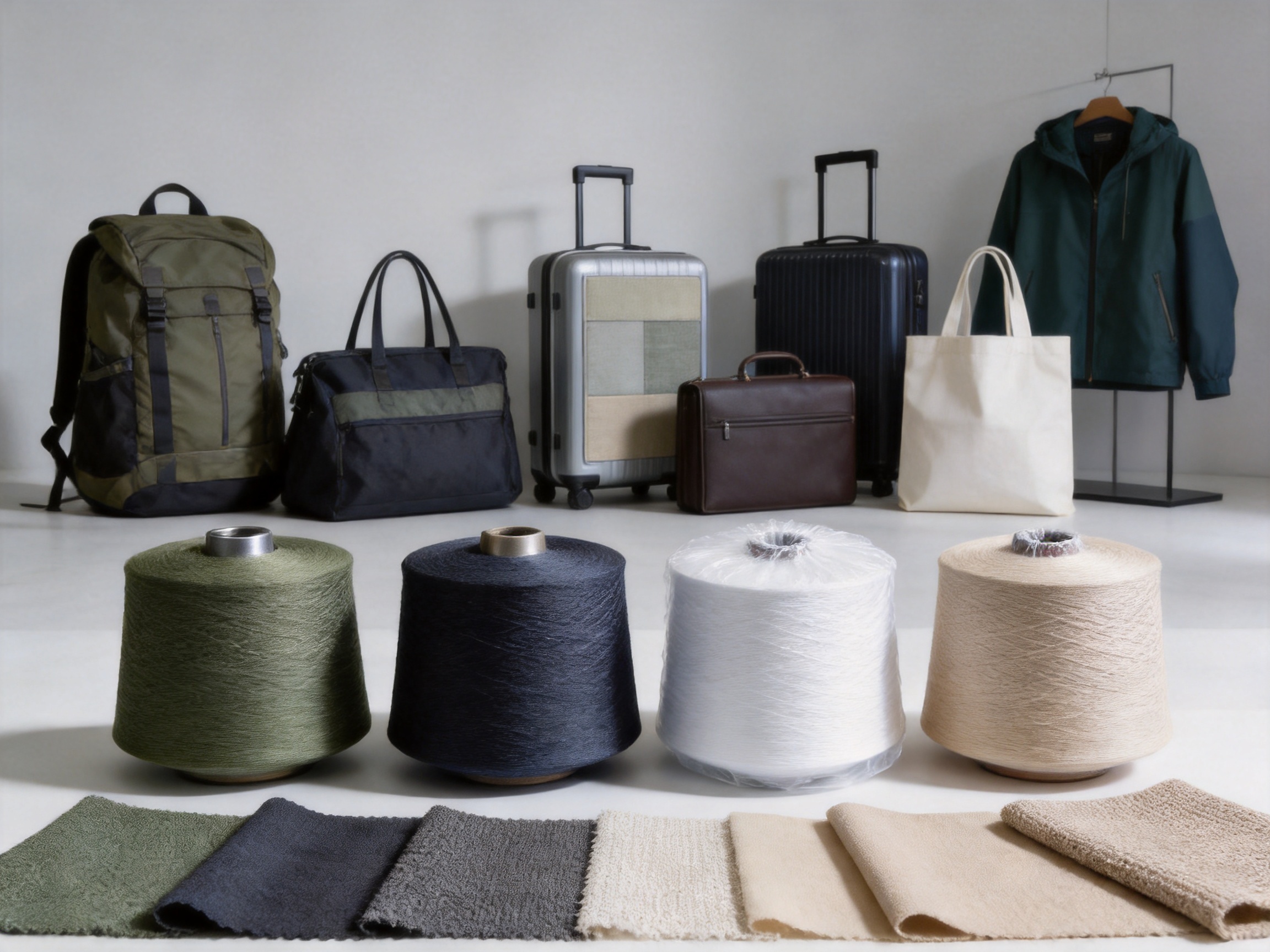
The textile industry is undergoing a major transformation as manufacturers, brands, and consumers seek materials that combine reliable performance with lower environmental impact. Recycled polyester yarn has become one of the most practical materials supporting this transition. It enables textile producers to reduce their dependence on virgin petroleum-based resources while continuing to manufacture fabrics for apparel, luggage, outdoor equipment, bags, home textiles, and industrial applications.
Versatile SD/FD/CD/TBR Recycled POY Yarn is designed for manufacturers that need flexible material options, stable processing performance, and a broad range of yarn specifications. Produced from recycled PET sources such as discarded water bottles and beverage containers, this yarn supports a circular approach to polyester production. At the same time, its range of denier, filament, luster, and functional options allows downstream processors to select yarns according to fabric construction, appearance, handle, strength, elasticity, and end-use requirements.
The product is part of a wider differential-yarn portfolio that includes recycled yarn, standard and full-dull yarn, compact-denier yarn, high-elastic yarn, PBT/PET yarn, cationic-dyeable yarn, flame-retardant yarn, antibacterial yarn, moisture-wicking yarn, hollow warm yarn, cotton-like yarn, and other customized options. This broad product structure gives buyers more than a single recycled yarn grade. It provides access to an integrated source for developing sustainable and functional textile collections.
For international buyers, the product’s main value lies in the combination of recycled content, specification flexibility, application versatility, and supplier support. Rather than forcing every customer to use one standard yarn construction, the supplier can accept orders for various differentiated yarns and help customers identify suitable options for their processing and product-development goals.
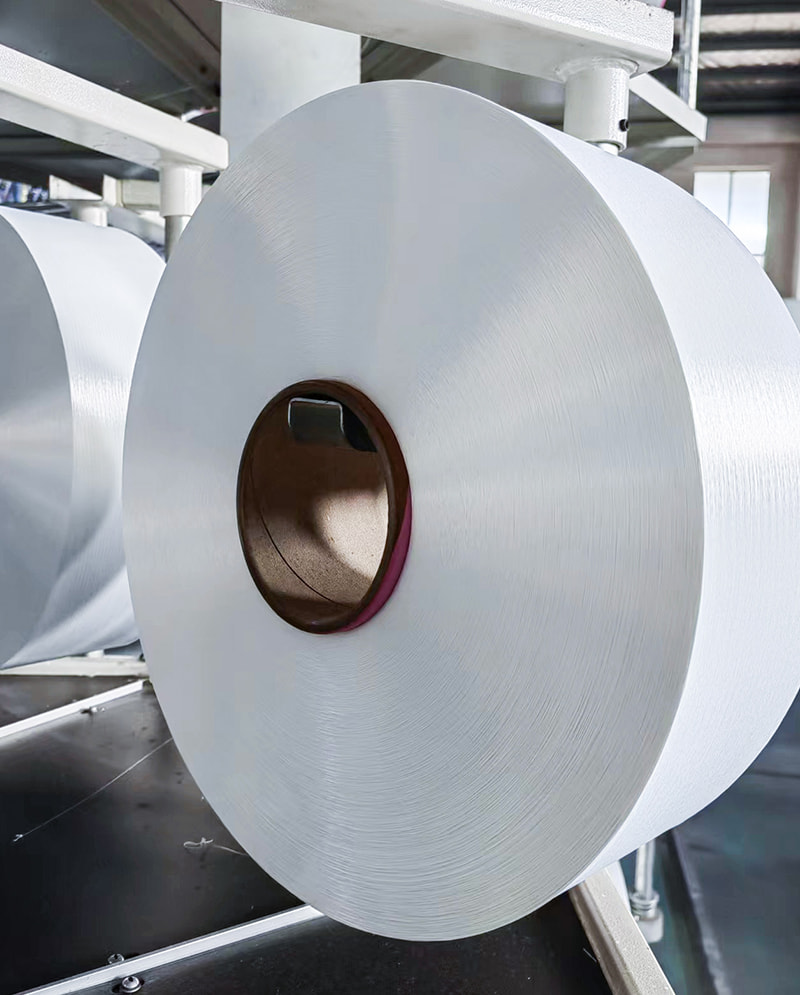
Versatile SD/FD/CD/TBR Recycled POY Yarn
What Is Recycled POY Yarn?
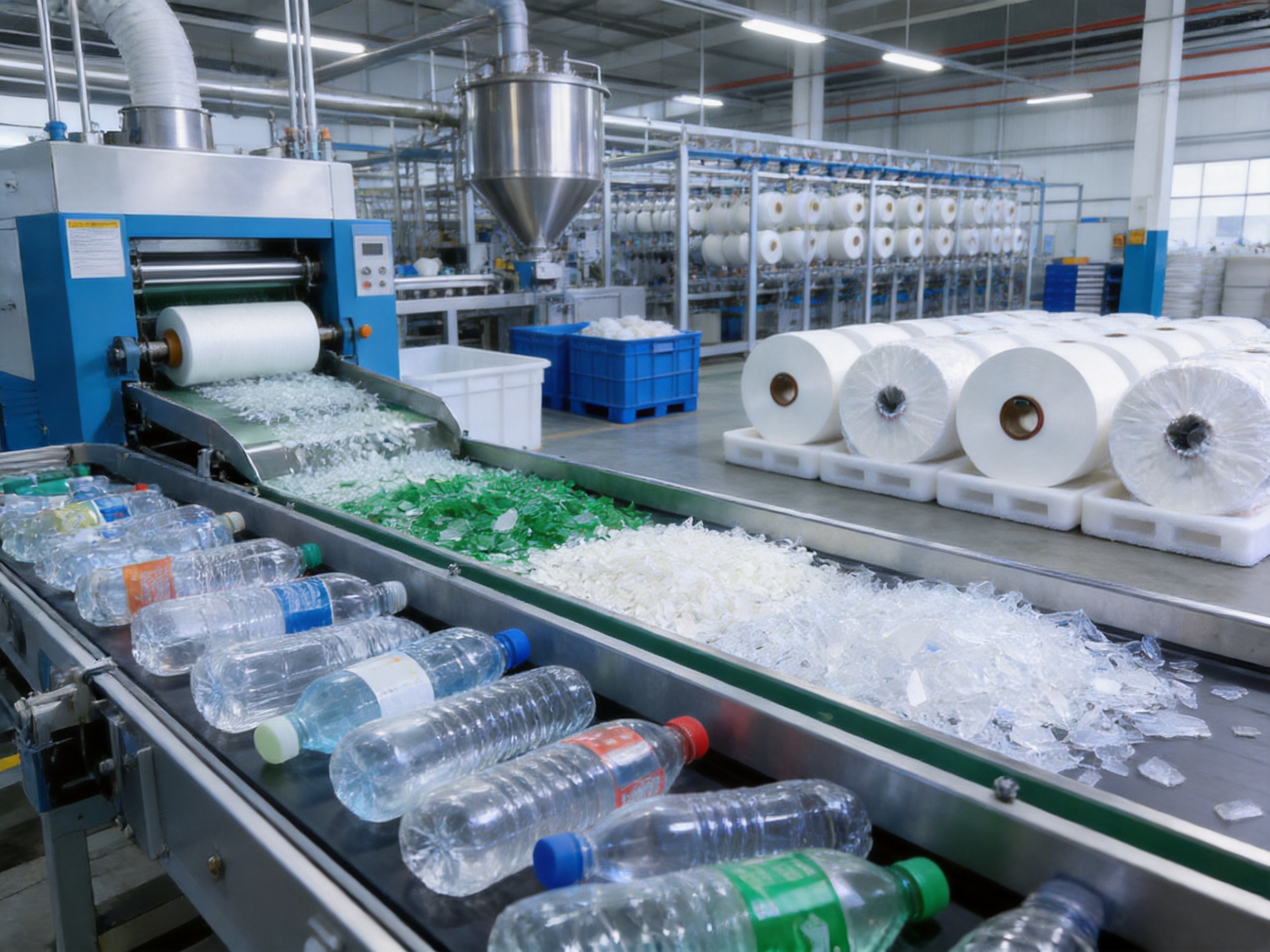
Recycled POY yarn is a polyester partially oriented yarn produced from recycled polyester raw materials. In this product range, the recycled feedstock is associated with post-consumer PET products, especially discarded water bottles and beverage containers. These materials are collected, sorted, cleaned, processed, and converted into polyester polymer or suitable recycled chips before being spun into yarn.
The term POY refers to partially oriented yarn. POY has a controlled degree of molecular orientation and is commonly used as an intermediate yarn for further processing. Depending on the final specification and production route, POY can be drawn, textured, combined, or otherwise processed to produce yarn with different physical and aesthetic properties. This makes POY an important foundation for many downstream textile applications.
Recycled polyester yarn is not limited to one visual effect or one type of fabric. It can be manufactured in different luster levels, including semi-dull and full-dull appearances. It can also be produced in different filament counts, denier ranges, colors, and functional constructions. As a result, recycled polyester can be used in lightweight fabrics, dense woven fabrics, knitted materials, technical textiles, fashion fabrics, and accessories.
In practical production, buyers should distinguish between the yarn’s raw-material origin and its processing specification. Recycled origin describes the source of the polyester. SD, FD, CD, and other terms describe the appearance, fineness, cross-sectional effect, or processing characteristics. A recycled yarn can therefore be selected in a configuration that is both environmentally preferable and technically suitable for a specific manufacturing process.
Meaning of SD, FD, CD, and TBR
SD generally refers to semi-dull or standard-denier polyester yarn. It offers a relatively controlled surface appearance and moderate luster, making it suitable for many conventional textile applications. SD yarn is often selected when a fabric requires a balanced appearance rather than a highly reflective or extremely matte effect.
FD commonly refers to full-dull yarn. Full-dull yarn has a lower-shine appearance and is often used when manufacturers want a softer, more subdued, or more premium visual effect. It can be useful in apparel, home textiles, luggage, and fabrics where excessive surface reflection is undesirable.
CD is used in the product range to identify compact-denier or related specialty constructions. CD yarn can support fabric developers seeking a particular surface character, compactness, touch, or visual effect. Its final performance depends on the exact denier, filament count, cross-section, spinning conditions, and subsequent textile processing.
TBR may be used to identify a textured-base-ready or downstream-processing-ready yarn configuration. The exact interpretation should be confirmed during technical discussions because terminology can vary between suppliers and markets. In all cases, buyers should request a technical data sheet and sample approval before placing a large production order.
Product Portfolio and Available Specifications
One of the product’s strongest commercial advantages is its extensive specification range. The supplied product list includes recycled SD DTY, recycled SD FDY, recycled FD DTY, recycled SD plus CD DTY, recycled DDB DTY, recycled CD DTY, and other differentiated constructions. The list also includes normal-series, CD-series, high-elastic, functional, cotton-like, hollow-warm, and cationic-related options.
Representative recycled specifications include 15/6, 20/12–24, 30/12–36, 50/24–72, 66/24, 75/36–144, 100/36–144, 150/48–288, and 300/96–576 configurations. The notation typically indicates denier and filament count, although the exact interpretation and available processing state should always be verified with the supplier.
| Product family | Representative specifications | Potential textile value |
|---|---|---|
| Recycled SD DTY | 20/12–24, 30/12–36, 50/36–72, 75/36–144, 100/36–144, 150/48–288, 300/96–576 | Balanced appearance, textured handle, and broad suitability for knitted and woven fabrics |
| Recycled SD FDY | 40/24–72, 50/24–72, 66/24, 75/36–144, 100/72, 150/48–144 | Continuous-filament applications requiring smoothness, consistency, and efficient weaving |
| Recycled FD DTY | 50/72, 75/36–72, 150/144 | Lower-luster appearance and textured performance for apparel and functional fabrics |
| Recycled SD plus CD DTY | 50/48–72, 75/48–72, 80/72, 100/72–144, 125/72–144, 150/72–144, 300/96–288 | Combined visual and tactile effects for differentiated textile design |
| Recycled DDB DTY | 75/36–72, 150/48, 300/96 | Specialty appearance and texture for selected fashion and fabric applications |
| Recycled CD DTY | 75/36–72 | Compact-denier effects and specialized fabric development |
The supplier also lists normal SD DTY, FD DTY, SD DDB, CD DTY, SD plus CD DTY, high-elastic yarn, PBT/PET yarn, PBT/PET DDB yarn, fire-retardant yarn, antibacterial yarn, moisture-wicking yarn, cotton-like yarn, hollow-warm yarn, and cationic-dyeable yarn. This supporting portfolio is important because many customers need to combine recycled yarn with functional or aesthetic yarns in one collection.
For example, a sportswear manufacturer may require recycled moisture-wicking yarn for a lightweight knitted fabric. A luggage producer may prefer a stronger denier and a suitable textured construction. A fashion brand may request full-dull yarn, cationic-dyeable yarn, or a mixed SD/CD effect. A winter-product manufacturer may evaluate hollow-warm yarn. By offering multiple families, the supplier can support a wider range of product briefs.
Environmental Advantages
The primary environmental advantage of recycled polyester yarn is its use of recovered PET resources. Instead of allowing suitable PET bottles and containers to become waste, the material can be redirected into a controlled industrial recycling stream. The recycled material is then processed into a new polyester input for yarn production.
This approach supports resource conservation in several ways. First, it gives discarded PET products a second life. Second, it reduces the need to use only virgin polyester raw materials. Third, it helps textile manufacturers respond to increasing demand for products containing recycled materials. Finally, it supports brand communication around circularity, responsible sourcing, and low-carbon product development.
Recycling does not eliminate the need for responsible production management. The environmental profile of recycled yarn depends on collection systems, sorting quality, washing, energy use, transportation, processing efficiency, and certification practices. For that reason, buyers should request appropriate documentation when recycled-content claims are important to their business. Nevertheless, recycled PET yarn remains one of the most commercially scalable ways to introduce recycled content into textile production.
The product is especially relevant to markets where consumers and brands pay close attention to sustainability. European and North American customers have shown strong interest in recycled polyester fabrics and products. Recycled yarn can be used to create sustainable product lines without requiring manufacturers to completely redesign existing polyester processing systems.
Recycled polyester also supports design continuity. Manufacturers can often use familiar weaving, knitting, dyeing, finishing, and sewing technologies, subject to the specifications and quality of the yarn. This makes the transition toward recycled materials more practical than adopting a completely unfamiliar fiber system.
Supporting Circular Product Development
Recycled yarn can contribute to a circular product strategy when it is combined with responsible design and end-of-life planning. A manufacturer may use recycled yarn in bags, luggage, clothing, and accessories, while also improving product durability, reducing unnecessary material combinations, and selecting packaging with a lower environmental impact.
The product’s application range includes mountaineering bags, handbags, school bags, luggage, briefcases, fashion bags, storage boxes, gift bags, shopping bags, and clothing. These applications benefit from the ability to combine visual appeal with practical performance and a sustainability story.
Although recycled content alone does not define the complete environmental performance of a product, it is a meaningful material-level improvement. Buyers can use this yarn as part of a broader sustainability program involving energy management, responsible dyeing, efficient cutting, waste reduction, and transparent supply-chain communication.
Performance Advantages Over Conventional Alternatives
Recycled yarn must compete with virgin polyester, commodity yarns, and other recycled yarn suppliers. Its competitive value therefore depends on more than the word “recycled.” The yarn must also provide stable processing, consistent linear density, suitable tensile strength, dependable package quality, and enough specification flexibility for different textile products.
The product is presented as having stable linear density and consistent tensile strength. These characteristics are important because variation in denier or strength can affect weaving efficiency, knitting performance, fabric uniformity, dye uptake, and finished-product quality. A stable yarn helps reduce production interruptions and makes it easier for textile mills to maintain repeatable operating conditions.
Compared with low-grade recycled yarn, a properly controlled recycled product can offer a more dependable basis for large-scale manufacturing. The value is particularly clear in export-oriented supply chains, where inconsistent yarn can lead to rejected fabric, color variation, broken filaments, machine downtime, and costly claims.
Compared with virgin polyester, recycled polyester provides the additional advantage of recycled material content. It allows manufacturers to address sustainability requirements while retaining the familiarity of polyester-based processing. This combination of technical continuity and environmental positioning is one of the product’s most important advantages.
Compared with suppliers that offer only a narrow range of recycled yarns, the product portfolio provides more alternatives in denier, filament count, luster, texture, function, and application. Buyers can develop several fabric constructions through one supplier instead of dividing orders among many sources.
| Comparison factor | Recycled SD/FD/CD/TBR yarn | Virgin polyester yarn | Low-specification recycled yarn |
|---|---|---|---|
| Material positioning | Uses recycled PET-based resources and supports circular sourcing objectives | Uses newly produced polyester raw materials | May provide recycled content but can vary considerably in consistency |
| Specification flexibility | Broad range of denier, filament, luster, texture, and functional options | Usually broad, depending on the supplier | May be limited to selected commodity grades |
| Processing familiarity | Compatible with established polyester textile processes when correctly specified | Highly familiar to textile mills | May require additional testing and machine adjustment |
| Brand sustainability value | Supports recycled-content and lower-resource product positioning | Limited recycled-content value | Potentially strong, subject to documentation and quality control |
| Customization potential | Suitable for differentiated, functional, and application-specific development | Depends on the supplier’s technical portfolio | Often focused on basic recycled grades |
Manufacturing Process and Quality Control
The quality of recycled polyester yarn begins with raw-material control. PET bottles and other suitable polyester products must be collected and sorted. Non-PET materials, labels, caps, adhesives, metals, and other contaminants should be removed as far as possible. The selected PET material is then cleaned and prepared for recycling.
After preparation, the PET feedstock can be converted into flakes, melt, recycled polymer, or recycled polyester chips, depending on the production system. Moisture control is essential because polyester is sensitive to hydrolysis during high-temperature processing. Proper drying helps protect molecular weight and supports more stable melt spinning.
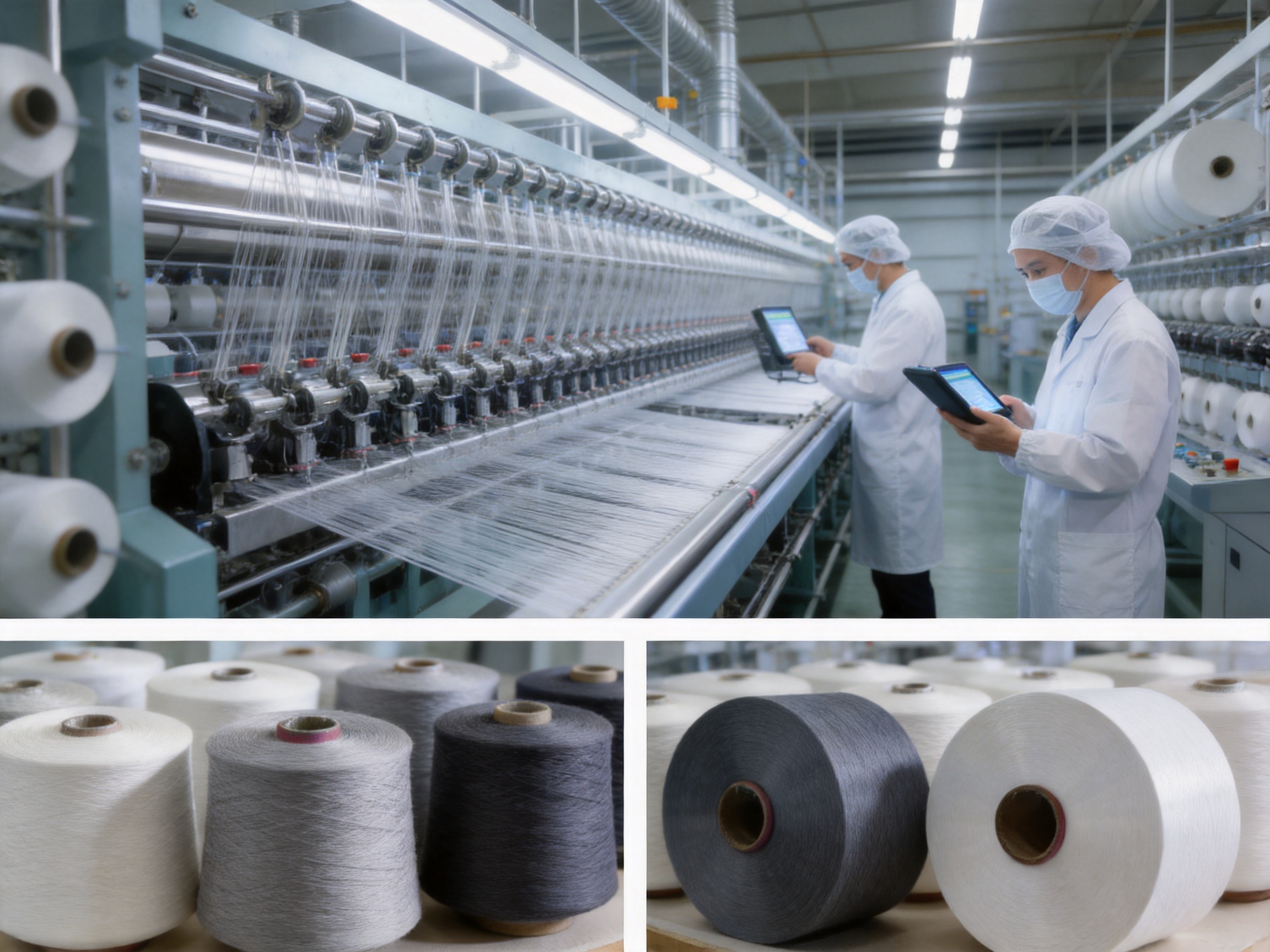
During melt preparation, the recycled polymer is heated and homogenized. Filtration is used to remove remaining solid impurities and protect the spinning system. The polymer then passes through precision spinnerets, where it is formed into fine filaments. Quenching air cools and solidifies the filaments, while controlled winding creates packages suitable for storage and downstream processing.
For POY production, the spinning and winding conditions determine the yarn’s degree of orientation, uniformity, and suitability for subsequent drawing or texturing. For FDY and DTY products, additional drawing, heat-setting, false-twist texturing, interlacing, or related processes may be applied. Each stage must be adjusted according to the denier, filament count, luster, elasticity, and intended application.
Raw-Material Preparation
Raw-material preparation is particularly important for recycled products. Differences in bottle source, color, polymer history, additives, and contamination can affect the final polymer. A professional recycling and spinning system therefore requires sorting discipline, cleaning capability, controlled blending, and monitoring of the recycled feedstock.
Consistent preparation helps reduce differences between production batches. It can also support more stable color, melt flow, spinning pressure, and filament formation. These controls are essential when the final yarn is intended for export customers or for products that require repeat orders over an extended period.
Melt Spinning and Filament Formation
In melt spinning, the polymer melt is delivered to the spinning pack under controlled temperature and pressure. The spinneret determines the number and arrangement of filaments. The cooling process must be sufficiently uniform to prevent variations in filament structure and yarn performance.
Different luster levels and specialty effects may require adjustments in polymer composition, additives, spinneret design, quenching, or subsequent processing. SD and FD yarns, for instance, are selected for different visual effects. A well-managed production line must maintain these differences consistently while avoiding excessive variation within the same lot.
Drawing, Texturing, and Interlacing
Drawing increases molecular orientation and can improve tensile performance, dimensional stability, and processability. Texturing changes the filament configuration and introduces crimp or bulk, which can improve softness, stretch, coverage, and fabric volume. Interlacing helps bind individual filaments together and can improve package stability and downstream handling.
For DTY products, the texturing process must be controlled to achieve consistent crimp, elongation, shrinkage, and handle. For FDY products, the focus is often on smoothness, orientation, uniformity, and weaving performance. For combined SD/CD or DDB constructions, the interaction of different filament effects requires additional process coordination.
Testing and Inspection
Quality inspection may include checks for linear density, tensile strength, elongation, interlacing, oil content, shrinkage, color, package weight, winding appearance, and yarn defects. The appropriate testing program depends on the product type and customer requirements.
Testing should occur at multiple stages rather than only at the end of production. Incoming raw materials, recycled chips or polymer, spinning conditions, intermediate yarn, and finished packages can all be monitored. Early detection helps prevent large quantities of nonconforming material and improves production efficiency.
For customers developing new fabrics, sample testing remains important even when a yarn meets a general specification. The same nominal denier may behave differently depending on the filament cross-section, texturing conditions, oiling, package format, and downstream machine settings. A responsible supplier should support sample evaluation before mass production.
Company Manufacturing and Development Strengths
Suzhou Junhui Textile Co., Ltd. and Suzhou Xiaoran New Materials Co., Ltd. were established in June 2015 and are focused on the development and sale of differentiated yarns and knitting fabric products. Their product direction includes recycled yarn, polyester dope-dyed yarn, specialized yarns, microfine yarn, flame-retardant yarn, cationic-dyeable yarn, and other functional textile materials.
The companies report a professional research and development team that works with internationally recognized enterprises on environmental-protection and functional-yarn research, development, and application. This development orientation is valuable for buyers that need more than a standard commodity product. It indicates an emphasis on translating material technology into commercially usable yarn and fabric solutions.
A broad product portfolio also reflects manufacturing flexibility. The listed products cover recycled, normal, CD, high-elastic, functional, cotton-like, hollow-warm, and cationic-related categories. Such variety requires knowledge of polymer behavior, spinning, texturing, blending, color effects, and fabric applications.
International experience is another strength. More than 90 percent of the products are reported to be exported, with customers in 36 countries. Export experience can support better communication regarding specifications, packaging, documentation, shipping schedules, inspection requirements, and product-development expectations.
The supplier also states that its experts are prepared to respond to customer requests within 12 hours globally. Prompt communication is important in yarn purchasing because technical questions often involve machine conditions, sample approval, color development, shipment planning, and replacement or adjustment requirements. Quick support can reduce delays during product development.
The combination of R&D, differentiated-yarn production, export experience, and customer service provides a practical advantage over suppliers focused only on standard mass-market yarn. Buyers can discuss a complete product requirement, including recycled content, denier, filament count, luster, elasticity, color, function, and end use.
Application Areas
Outdoor and Mountaineering Bags
Outdoor bags require materials that can tolerate repeated handling, abrasion, folding, and exposure to changing conditions. Recycled polyester yarn can be woven or knitted into fabrics for mountaineering bags, backpacks, gear bags, and travel accessories. Depending on the fabric construction, denier, coating, and finishing, the resulting material can support strength, shape retention, and practical durability.
Manufacturers can select heavier denier options for robust bag fabrics or finer yarns for lighter-weight constructions. Textured yarns may provide a fuller hand and improved fabric coverage, while smooth filament yarns may be selected for dense, clean surfaces. Recycled content can also strengthen the sustainability positioning of outdoor products.
Luggage and Travel Products
Luggage manufacturers often need fabrics that combine appearance, dimensional stability, abrasion resistance, and dependable sewing performance. Recycled yarn can be used in luggage linings, exterior textile panels, travel bags, briefcases, and organizer products.
The wide specification range allows product developers to balance weight and coverage. A fine filament yarn may be suitable for lightweight lining or soft compartments, while a heavier construction may be chosen for external fabric or reinforced panels. Full-dull and mixed-denier options can help create different visual effects for premium or fashion-oriented travel products.
Handbags, Shopping Bags, and Gift Bags
Handbags and shopping bags require a combination of visual appeal and practical handling. The fabric may need to feel soft, retain its shape, accept color evenly, and resist surface wear. Recycled SD, FD, CD, and textured options can support different design directions.
For promotional and reusable shopping bags, recycled polyester offers a clear material story. For fashion bags, differentiated yarns can help designers create a more distinctive surface, drape, luster, or handle. The choice of yarn should be matched with the intended fabric density, coating, print method, and sewing construction.
Apparel and Fashion Fabrics
Recycled polyester yarn is widely applicable to apparel. It may be used in woven shirts, sportswear, jackets, skirts, dresses, lining fabrics, uniforms, and fashion textiles. SD and FD constructions can provide different levels of surface brightness, while DTY options can contribute softness, stretch-like comfort, and fabric volume.
Functional yarns from the wider portfolio can support additional apparel requirements. Moisture-wicking yarn may be considered for activewear. Antibacterial yarn may be evaluated for selected hygiene-sensitive applications. Fire-retardant yarn may be relevant to protective or performance-oriented fabrics, subject to appropriate testing and regulatory requirements.
Home and Lifestyle Products
The yarn may also be suitable for selected home-textile and lifestyle products, including storage products, decorative fabrics, organizers, cushion covers, and other textile goods. A manufacturer can select a yarn according to the required softness, coverage, visual effect, and durability.
Hollow-warm yarn and cotton-like yarn in the wider portfolio can support products requiring thermal comfort or a more natural hand. These products demonstrate how a supplier with multiple yarn technologies can help customers develop coordinated collections rather than isolated materials.
Benefits for Different Types of Buyers
For Textile Mills
Textile mills can benefit from access to multiple yarn specifications through one supplier. This simplifies purchasing and may reduce the need to qualify many separate sources. Mills can compare recycled and conventional options while maintaining familiar polyester processing routes.
Stable linear density and tensile properties can help mills control weaving and knitting conditions. However, each new yarn should still be tested on the customer’s machines because equipment, gauge, speed, tension, and fabric design all influence performance.
For Garment and Bag Manufacturers
Garment and bag manufacturers increasingly need materials that support sustainability claims from their brand customers. Recycled yarn offers a practical material input for products that are marketed as containing recycled polyester.
The broad product range also helps manufacturers respond to different customer briefs. A buyer may need matte yarn for one collection, bright yarn for another, high-elastic yarn for sportswear, or a heavier textured yarn for bags. Consolidating these requirements with an experienced differentiated-yarn supplier can improve sourcing efficiency.
For Brands and Product Developers
Brands can use the product as part of a material-development program. They may request a specific recycled content target, luster, denier, filament count, function, or color. They can then evaluate fabric samples and finished-product prototypes before confirming bulk production.
Because the supplier’s product range includes both recycled and functional options, product developers can explore sustainability and performance together. For example, recycled yarn may be combined with moisture management, cationic dyeing, flame retardancy, antibacterial features, or high elasticity where technically appropriate.
Customization and Product Development
The supplier states that it can accept orders for various differentiated yarns. This is particularly useful for buyers whose requirements do not match a single standard catalog item. Customization may involve denier, filament count, luster, color, cross-sectional effect, texturing, functional additives, blending, or package format.
A successful customization project should begin with a complete technical brief. The buyer should identify the intended end product, fabric construction, machine type, dyeing method, finishing process, target hand, required strength, desired elongation, color standard, recycled-content expectation, and estimated order quantity.
Sample development should then proceed in stages. The first stage may involve yarn samples for basic handling and machine testing. The second stage can involve fabric trials to evaluate appearance, dye uptake, shrinkage, pilling, strength, and comfort. The final stage should include a finished-product trial under conditions that represent commercial production.
Communication between the yarn supplier, fabric mill, dye house, and finished-product manufacturer is important. A yarn that appears suitable in isolation may produce a different result after weaving, knitting, dyeing, brushing, coating, heat-setting, or lamination. Early cooperation reduces the risk of unexpected results at the production stage.
How to Select the Correct Specification
Denier is one of the first specifications to review. In general, finer yarns can support lighter and smoother fabrics, while heavier yarns may provide greater coverage and a stronger visual presence. The appropriate selection depends on the fabric design and final product.
Filament count also influences the yarn’s surface and behavior. A higher number of filaments at a comparable total denier may provide a softer or finer touch, while a lower filament count may create a different surface character. The relationship between denier and filament count should be evaluated together rather than separately.
Luster is another important factor. SD yarn provides a balanced appearance, while FD yarn offers a more subdued surface. CD and combined constructions can create differentiated effects. The final appearance will also depend on fabric structure, dyeing, finishing, and lighting conditions.
Texturing affects bulk, stretch behavior, recovery, softness, and fabric coverage. DTY is often selected when a more elastic or voluminous effect is required. FDY and POY-related materials may be more suitable for smooth continuous-filament structures or further processing.
Function should be selected according to a verified performance requirement. Moisture-wicking, antibacterial, fire-retardant, high-elastic, hollow-warm, and cationic-dyeable options may be relevant to specific products, but the finished fabric must be tested. Yarn-level functionality does not automatically guarantee a particular finished-product performance under every construction and finishing condition.
Quality, Documentation, and Purchasing Considerations
When purchasing recycled yarn, buyers should request a technical data sheet containing the yarn type, denier, filament count, luster, strength, elongation, shrinkage, oil content, interlacing, package weight, and applicable tolerances. These details allow the textile mill to assess compatibility with existing machinery.
Recycled-content documentation may also be required. Depending on the customer’s market and claim policy, the buyer may ask for information about the recycled source, chain of custody, production records, test reports, and relevant certifications. Documentation expectations should be discussed before an order is confirmed.
Color requirements should be defined clearly. If the yarn is dope-dyed or supplied in a specific color, the customer should provide a color standard or approved sample. If the yarn will be piece-dyed, the buyer should evaluate dye uptake, shade consistency, and fastness on the intended fabric construction.
Packaging and shipment conditions are also important. Yarn packages should be protected from moisture, contamination, compression, and excessive heat during storage and transport. Export customers should confirm carton or pallet requirements, labeling, gross and net weight, loading method, and shipping documentation.
Trial orders are recommended for new customers or new specifications. A trial allows the buyer to assess machine performance, fabric appearance, dyeing behavior, and finished-product quality. It also gives both parties an opportunity to adjust the specification before larger quantities are manufactured.
Why a Specialized Differentiated-Yarn Supplier Matters
Commodity yarn purchasing often focuses on price, but the lowest initial price may not represent the lowest total cost. Inconsistent yarn can create machine stoppages, fabric defects, rework, waste, delayed shipments, and customer complaints. A specialized supplier can add value through technical consistency, product development, and responsive communication.
A supplier with experience in recycled and functional yarns is better positioned to address the challenges associated with different raw materials and performance requirements. This includes helping customers select appropriate luster, denier, filament count, texturing, and functional options.
The supplier’s emphasis on R&D and cooperation with internationally recognized enterprises also supports application-focused development. Instead of treating recycled yarn as a basic replacement for virgin yarn, the development process can consider the complete performance needs of the target fabric and product.
International export experience is another practical advantage. Buyers in different countries may have different requirements for labeling, testing, recycled-content claims, packaging, payment, inspection, and delivery. Familiarity with international business processes can make cooperation more efficient.
Recommended Development Workflow
The first step is to define the finished product. A yarn for a lightweight fashion fabric will have different requirements from yarn for an outdoor backpack, luggage lining, or fire-retardant workwear fabric.
The second step is to select the initial yarn family. Buyers can compare recycled SD DTY, recycled SD FDY, recycled FD DTY, recycled SD plus CD DTY, recycled CD DTY, and other relevant options. If the customer requires a function, the functional series should be reviewed at the same time.
The third step is to confirm denier and filament count. The supplier can recommend representative specifications based on the desired fabric weight, coverage, handle, strength, and appearance.
The fourth step is to conduct yarn-level and fabric-level testing. The yarn should be tested on the intended equipment, then converted into the target fabric. The fabric should be evaluated for strength, elongation, shrinkage, pilling, color, fastness, handle, and dimensional stability.
The fifth step is to produce a finished-product sample. This is essential for bags, luggage, garments, and accessories because sewing, coating, printing, lamination, and final finishing may affect the perceived performance.
The final step is to approve the production standard. The approved sample, technical data, packaging requirements, tolerance limits, inspection method, and delivery schedule should be documented before bulk production begins.
Q&A
What is recycled POY yarn made from?
It is made from recycled polyester resources, particularly PET products such as discarded water bottles and beverage containers. The PET material is processed into a suitable polyester feedstock and then spun into yarn.
Is recycled polyester suitable for large-scale textile production?
Yes. Recycled polyester is widely used in commercial textile production. It can be processed into yarn for weaving, knitting, texturing, and other established polyester manufacturing routes, provided that the specification is correctly selected and tested.
What is the difference between SD and FD yarn?
SD generally refers to semi-dull or standard-denier yarn with a balanced luster. FD generally refers to full-dull yarn with a lower-shine appearance. The best choice depends on the desired fabric appearance, hand, and end use.
What does CD mean in the product range?
CD identifies a compact-denier or related differentiated yarn construction in the supplied range. Because terminology can differ among manufacturers, buyers should confirm the exact cross-section, processing condition, and performance with the supplier.
Can the yarn be used for bags and luggage?
Yes. The product is suitable for fabric development for mountaineering bags, handbags, school bags, luggage, briefcases, fashion bags, shopping bags, and related products. The denier and construction should be selected according to strength, weight, abrasion, coating, and appearance requirements.
Can customers request special specifications?
Yes. The supplier states that it can accept orders for various differentiated yarns. Customers should provide details about denier, filament count, luster, color, function, fabric construction, end use, order quantity, and testing requirements.
Does recycled yarn perform exactly like virgin polyester yarn?
Performance depends on the quality and consistency of the recycled raw material, the manufacturing process, and the selected specification. A well-controlled recycled yarn can be suitable for many of the same textile processes, but customers should conduct machine and fabric trials before bulk production.
What information should be requested before purchasing?
Buyers should request a technical data sheet, sample package, specification details, test results, recycled-content information, packaging details, minimum order quantity, lead time, and applicable quality tolerances. Certification or traceability documents should be discussed when required by the buyer’s market.
Can recycled yarn be combined with functional yarn properties?
It may be possible to select recycled yarn together with functional options such as moisture management, antibacterial performance, fire retardancy, high elasticity, hollow warmth, or cationic dyeability. The exact combination should be confirmed through technical evaluation and finished-fabric testing.
Why should buyers work with a supplier that offers several yarn categories?
A broad portfolio allows buyers to source recycled, functional, aesthetic, and specialty yarns from one experienced partner. This can simplify development, improve communication, and make it easier to coordinate yarn selection across several products or collections.
Conclusion
Versatile SD/FD/CD/TBR Recycled POY Yarn provides a practical material solution for textile manufacturers seeking recycled content, specification flexibility, and reliable processing potential. Produced from recycled PET resources, it supports more responsible polyester sourcing while remaining suitable for familiar textile manufacturing routes.
Its advantages include a broad denier and filament-count range, multiple luster and texture options, compatibility with diverse applications, and access to related functional and differentiated yarn categories. The product can support fabrics for outdoor bags, luggage, handbags, clothing, shopping bags, fashion accessories, and other textile goods.
The manufacturing strengths behind the product are equally important. Suzhou Junhui Textile Co., Ltd. and Suzhou Xiaoran New Materials Co., Ltd. combine differentiated-yarn development, recycled-material expertise, functional-yarn research, export experience, and customer-focused technical support. Their R&D orientation and wide product portfolio enable buyers to explore sustainable materials without sacrificing design flexibility.
For the best results, buyers should treat recycled yarn selection as a complete development process. Technical specifications, sample trials, fabric testing, documentation, quality tolerances, and finished-product evaluation should all be confirmed before bulk production. With the right specification and quality controls, recycled polyester yarn can help manufacturers create commercially practical products that respond to both performance demands and global sustainability expectations.
References
1. Internal product list for recycled, normal, CD, high-elastic, functional, cotton-like, hollow-warm, and specialty polyester yarns.
2. Supplier-provided information on recycled PET fabric and recycled polyester yarn applications.
3. General textile-industry principles for polyester polymer preparation, melt spinning, drawing, texturing, winding, and quality inspection.
4. General guidance on recycled PET material recovery, recycled-content management, and sustainable textile product development.
5. Supplier company information regarding R&D activities, export markets, differentiated yarn development, and customer support.
Product: Versatile SD/FD/CD/TBR Recycled POY Yarn

Popular products
-
Premium Cationic Interlock Stretch Comfort Fabric
-
Moisture-Wicking Nylon Woven Fabric
-
Double-faced jacquard elastic fabric
-
Heather Grey Double-faced cationic jersey fabric
-
Anti-static Cationic Knitted Rib Fabric
-
High-Stretch Cationic Jersey Fabric
-
High Quality Cationic DTY Spandex Two Sides Brush Dralon Knit Fabric for Garment Thermal Underwear
-
Durable Anti-Pilling Knitted Fabric for Home Textiles
-
Wash-Resistant Cationic Elastic Knitted Fabric for Garment Industry
-
Breathable Double-Faced Elastic Composite Fabric
-
-
-
- whatsapp:
- 0086-13962559622
-
- skype:
- skype.aliceshenghong
-
- Wechat:

COPYRIGHT © 2016 Suzhou Junhui Textile Co., Ltd.
