

 EN
EN English
 中文简体
中文简体Textile-Grade High-Purity Recycled Polyester Chips for Knitted Fabric
Content
- 1 1. Product Overview: Recycled Polyester Chips for High-Value Textile Production
- 2 2. Why Recycled Polyester Chips Matter in Today’s Textile Industry
- 3 3. Main Advantages Over Ordinary Recycled Chips and Competitor Materials
- 4 4. Key Product Characteristics
- 5 5. Advanced Manufacturing Process and Quality Control
- 6 6. Company Strengths Supporting Product Reliability
- 7 7. Application Fields for Recycled Polyester Chips
- 8 8. Comparison with Virgin Polyester Chips
- 9 9. Processing Benefits for Knitted Fabric Manufacturers
- 10 10. Sustainability and Market Value
- 11 11. Why Choose High-Purity Recycled Polyester Chips for Competitive Production
- 12 12. Product Development Possibilities
- 13 13. Practical Buying Considerations
- 14 14. Frequently Asked Questions
- 14.1 Q1: What are textile-grade recycled polyester chips made from?
- 14.2 Q2: Why is high purity important for knitted fabric production?
- 14.3 Q3: Can recycled polyester chips replace virgin polyester chips?
- 14.4 Q4: What products can be made from recycled PET yarn produced with these chips?
- 14.5 Q5: How do these chips support sustainability?
- 14.6 Q6: What makes this product different from ordinary recycled PET flakes?
- 14.7 Q7: Are the chips suitable for DTY, FDY, and POY applications?
- 14.8 Q8: Why is supplier experience important when buying recycled polyester chips?
- 15 15. Conclusion
- 16 References
In modern textile manufacturing, recycled polyester chips have moved from being a substitute material to becoming a strategic raw material for brands, mills, and fabric developers that want stable performance, lower environmental impact, and reliable downstream processing. Textile-grade high-purity recycled polyester chips for knitted fabric are designed for the production of recycled PET yarns and fabrics, especially applications that require consistent melt behavior, stable spinning performance, and dependable fabric quality. Produced from discarded PET containers such as water bottles and beverage bottles, these chips transform post-consumer plastic waste into a practical textile resource.
The product is especially valuable for manufacturers of knitted fabrics, DTY yarn, FDY yarn, POY yarn, functional polyester yarn, bags, luggage materials, sportswear, fashion accessories, and other textile products that need a balance of sustainability and performance. Compared with ordinary recycled chips or low-grade recycled PET flakes, textile-grade high-purity recycled polyester chips focus on controlled impurity levels, stable intrinsic viscosity, consistent color tone, and good compatibility with mainstream spinning and knitting processes.
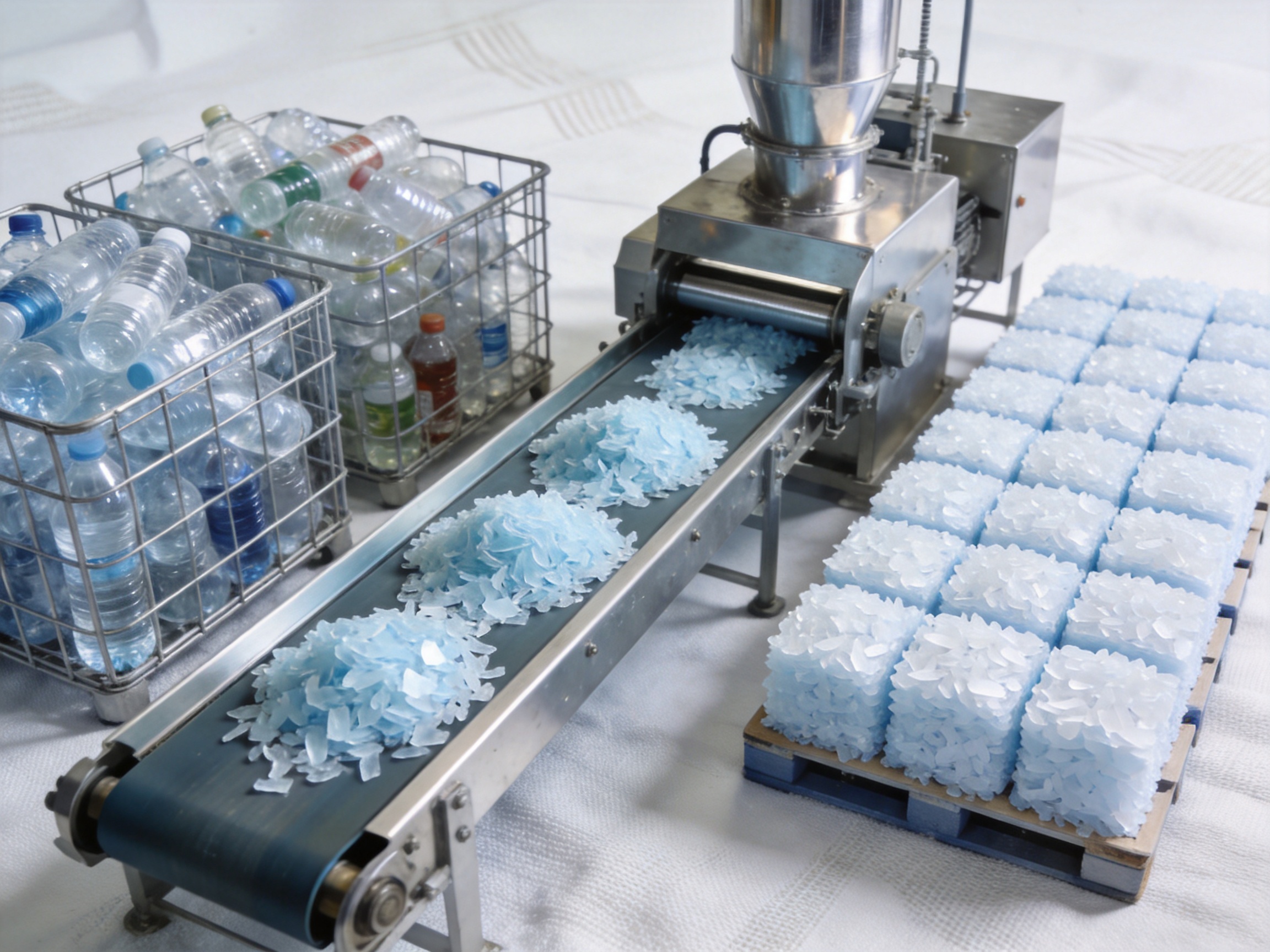
1. Product Overview: Recycled Polyester Chips for High-Value Textile Production
Textile-grade high-purity recycled polyester chips are a core raw material used to manufacture recycled PET yarn and knitted fabrics. The raw materials generally come from discarded PET bottles and containers, including water bottles and beverage bottles. Through sorting, cleaning, purification, melt filtration, pelletizing, and quality inspection, the PET waste is converted into uniform polyester chips suitable for textile processing.
Unlike low-grade recycled plastics used for non-textile applications, textile-grade recycled polyester chips must meet stricter processing requirements. Yarn spinning and knitted fabric production demand stable melting viscosity, low contamination, uniform particle size, reliable thermal behavior, and reduced gel or black spot content. If the chip quality is unstable, downstream producers may face broken filaments, inconsistent dyeing, lower yarn strength, poor fabric hand feel, and higher production waste.
This product is designed to support knitted fabric production by offering high purity and dependable spinning performance. It can be used as a sustainable alternative to virgin polyester chips while helping manufacturers respond to global market demand for recycled and low-carbon textile materials. In Europe, North America, and other export markets, recycled PET textiles are widely used because they connect practical performance with environmental responsibility.
For textile companies, the value of a recycled polyester chip is not only in its recycled origin. Its true value lies in whether it can run smoothly on production lines, deliver consistent yarn properties, and support the final fabric’s required appearance, strength, elasticity, and usability. This is why high-purity textile-grade chips are increasingly preferred over mixed-source or poorly filtered recycled materials.
2. Why Recycled Polyester Chips Matter in Today’s Textile Industry
The textile industry is under pressure to reduce its dependence on virgin resources, lower carbon emissions, improve material traceability, and meet the sustainability expectations of consumers and global brands. Polyester remains one of the most widely used textile fibers because it offers durability, easy care, dimensional stability, fast drying, high strength, and compatibility with many fabric structures. However, traditional polyester production relies heavily on petroleum-based raw materials.
Recycled PET chips provide a practical path to circular textile production. By using discarded PET bottles and containers, the material extends the life cycle of plastic resources and reduces the amount of waste entering landfills, incineration systems, or the natural environment. In textile applications, recycled PET can be converted into yarns, knitted fabrics, woven fabrics, nonwoven materials, bags, garment fabrics, outdoor products, luggage fabrics, and household textile products.
For knitted fabrics, the importance of chip quality is particularly high. Knitting processes require yarns with stable tensile properties, uniform filament fineness, suitable elongation, and smooth running performance. If the recycled chip contains excessive impurities or has unstable viscosity, the spinning process may create uneven yarn, resulting in visible fabric defects, poor dyeing uniformity, or reduced fabric durability. Textile-grade chips address these concerns by improving raw material consistency at the beginning of the production chain.
Using recycled polyester chips also helps fabric manufacturers strengthen their product stories. A knitted fabric made from recycled PET can be positioned as an environmentally responsible option for apparel, sportswear, bags, and accessories. This supports the purchasing preferences of global buyers who increasingly ask suppliers to provide lower-impact materials without sacrificing quality.
3. Main Advantages Over Ordinary Recycled Chips and Competitor Materials
Textile-grade high-purity recycled polyester chips offer several important advantages compared with ordinary recycled chips, mixed recycled flakes, or unstable recycled PET materials. These advantages appear throughout the entire value chain, from chip feeding and melting to spinning, texturing, knitting, dyeing, finishing, and final product use.
3.1 Higher Purity for Better Spinning Stability
One of the most important advantages is high purity. In recycled PET, impurities may include labels, caps, adhesives, PVC, metals, dust, paper, residual liquid, colored plastic, and degraded polymer particles. Even small amounts of contamination can cause melt instability, spinneret blockage, filament breakage, and yarn defects. High-purity recycled polyester chips are processed to reduce these unwanted substances, helping manufacturers achieve smoother spinning performance.
Compared with lower-grade recycled materials, high-purity chips help reduce production interruptions. This is especially valuable in high-volume textile factories, where downtime can lead to significant cost increases. Stable chip quality helps improve machine efficiency, reduce waste, and support consistent output.
3.2 Consistent Melting Viscosity
Stable melting viscosity is essential for polyester spinning. If viscosity fluctuates, the polymer flow through the spinneret becomes unstable, which can affect filament diameter, yarn strength, elongation, and overall uniformity. Textile-grade recycled chips are designed to provide consistent viscosity, allowing downstream manufacturers to maintain steady process parameters.
Competitor materials with poor viscosity control may force operators to frequently adjust temperature, pressure, and spinning speed. This increases technical difficulty and may cause inconsistent product quality. In contrast, chips with stable viscosity support more predictable production and better yarn uniformity.
3.3 Reliable Compatibility with Knitted Fabric Production
The product is developed for textile applications, especially knitted fabric production. Knitted fabrics need yarns that can pass smoothly through knitting machines, form uniform loops, resist breakage, and produce a consistent fabric surface. High-purity recycled polyester chips provide a strong foundation for recycled DTY, FDY, and POY yarns that can be used in various knitted structures.
This compatibility makes the chips suitable for manufacturers working with apparel fabrics, sportswear fabrics, bag fabrics, lining fabrics, fashion accessories, and other textile products. The product can support both standard textile applications and more differentiated yarn developments, depending on downstream processing conditions.
3.4 Environmental Value Without Sacrificing Practical Performance
Some recycled materials are promoted mainly for environmental reasons but cannot always meet industrial quality requirements. The competitive advantage of textile-grade recycled polyester chips is that they combine environmental value with processing practicality. They help reduce the use of virgin polyester resources while maintaining the performance needed for commercial textile production.
This balance is important for export-oriented manufacturers. International buyers may request recycled content, but they still expect fabric strength, color stability, smooth appearance, and reliable delivery. A high-quality recycled chip helps manufacturers meet both sustainability and performance expectations.
3.5 Stronger Support for Downstream Product Diversity
High-purity recycled polyester chips can support a wide range of textile yarns and fabric applications. Depending on downstream production technology, they may be used for recycled PET yarns, DTY yarns, FDY yarns, POY yarns, semi-dull yarns, full-dull yarns, cationic dyeable yarns, functional yarns, and knitted fabrics. This flexibility gives textile producers more options for product development.
Competitor materials with limited purity or unstable quality may only be suitable for low-end applications. By contrast, textile-grade chips can serve a broader range of products and help mills create higher-value recycled textile solutions.
4. Key Product Characteristics
The performance of recycled polyester chips can be evaluated through several technical and practical characteristics. While specific parameters may vary according to customer requirements and production conditions, the following characteristics are central to textile-grade applications.
Characteristic |
Product Advantage |
Benefit for Textile Manufacturers |
High purity |
Reduced impurity content and improved material cleanliness |
Fewer spinning defects, less clogging, and more stable production |
Stable melting viscosity |
Consistent polymer flow during melting and extrusion |
Improved filament uniformity and more predictable yarn performance |
Textile-grade processing suitability |
Designed for yarn and knitted fabric production |
Better compatibility with mainstream spinning and knitting equipment |
Recycled PET origin |
Made from discarded PET bottles and containers |
Supports circular economy goals and sustainable product positioning |
Broad downstream usability |
Applicable to recycled yarns, knitted fabrics, bags, clothing, and accessories |
Allows manufacturers to develop diversified recycled textile products |
Processing consistency |
Uniform chip quality supports stable production conditions |
Reduces waste, improves efficiency, and supports reliable delivery schedules |
5. Advanced Manufacturing Process and Quality Control
The strength of textile-grade recycled polyester chips is closely related to the manufacturing process. Producing chips suitable for knitted fabric applications requires more than simply crushing plastic bottles. It requires systematic raw material selection, controlled washing, purification, melt processing, filtration, pelletizing, and testing. Advanced manufacturing is the reason the product can achieve stable quality and distinguish itself from ordinary recycled PET materials.
5.1 Raw Material Selection and Sorting
The process begins with the selection of PET bottle materials. Proper sorting is critical because mixed plastics can seriously affect polyester quality. PET bottles must be separated from non-PET materials such as PVC, PE, PP, metals, paper, and other contaminants. Color sorting may also be used to improve the consistency of final chip appearance and reduce unwanted color variation.
High-quality sorting helps protect downstream spinning performance. If incompatible polymers enter the PET stream, they may create gels, black spots, or weak points in the final yarn. By emphasizing careful raw material selection, the manufacturing process builds quality from the very first step.
5.2 Washing and Decontamination
After sorting, the PET materials are washed to remove labels, adhesives, dirt, oils, residual beverage components, and other surface contaminants. Washing quality has a direct influence on chip purity. Insufficient washing may leave residues that degrade during melting and create defects in the polymer.
Advanced washing systems typically include crushing, friction washing, hot washing, rinsing, separation, and drying. Each step helps reduce contamination and prepare the material for stable melt processing. Clean flakes improve the reliability of recycled polyester chips and support textile-grade performance.
5.3 Drying and Moisture Control
PET is sensitive to moisture during high-temperature processing. If moisture remains in the material during melting, hydrolysis may occur, reducing molecular weight and affecting viscosity. This can lead to lower yarn strength and unstable spinning. Therefore, drying and moisture control are essential before extrusion and pelletizing.
Effective drying ensures that the PET material reaches suitable processing conditions. It helps preserve polymer properties and supports consistent intrinsic viscosity. For textile applications, this step is especially important because yarn quality depends strongly on polymer chain stability.
5.4 Melt Filtration and Purification
Melt filtration is one of the key technologies that separates textile-grade chips from lower-quality recycled materials. During melting, fine filters help remove remaining solid impurities, gels, and degraded particles. Improved filtration reduces the risk of spinneret blockage and filament breakage in downstream spinning.
Compared with ordinary recycled materials, high-purity chips benefit from stronger filtration control. This is particularly important for fine-denier yarns and high-filament-count yarns, where even tiny impurities can create visible defects or processing interruptions. Good melt filtration contributes to cleaner chips and better yarn quality.
5.5 Pelletizing and Chip Uniformity
After purification, the molten PET is pelletized into chips. Uniform chip size and shape improve feeding stability, drying efficiency, and melting consistency during downstream processing. Irregular chips may create uneven feeding or inconsistent thermal behavior, which can affect spinning stability.
Textile-grade recycled polyester chips are designed to provide consistent particle quality. This helps spinning mills maintain stable operating conditions and supports continuous production.
5.6 Laboratory Testing and Batch Control
Quality control is essential for recycled polyester chips because recycled raw materials naturally vary. Batch testing may include checks for viscosity, moisture, ash content, color, melting behavior, contamination, and chip appearance. Strong quality inspection helps ensure that each batch meets textile-processing requirements.
The company’s experience in differentiated yarns, recycled yarns, cationic dyeing yarns, flame-retardant yarns, microfine yarns, and knitting fabric products strengthens its understanding of downstream textile needs. This manufacturing and application knowledge allows the company to develop recycled polyester chips that are not only environmentally meaningful but also practical for real textile production.

6. Company Strengths Supporting Product Reliability
A recycled polyester chip supplier must offer more than raw material. Textile manufacturers need technical support, stable supply, product development capability, and a deep understanding of yarn and fabric applications. Suzhou Junhui Textile Co., Ltd. and Suzhou Xiaoran New Materials Co., Ltd. focus on the development and sale of differentiated yarns, recycled yarns, polyester drop-dyed yarns, microfine yarns, flame-retardant yarns, cationic dyeing yarns, and knitting fabric products. This background gives the company a strong advantage in understanding how raw materials affect final textile performance.
The company was founded in 2015 and has developed experience in environmental protection and functional yarn and fabric applications. Its products are exported to many international markets, with customers located in 36 countries. This export experience is important because different markets have different expectations for quality, sustainability, delivery, and product documentation.
The company also has a professional research and development team. R&D capability is especially important in the textile industry because customers often require customized yarn specifications, functional properties, dyeing behavior, fabric hand feel, and environmental claims. A supplier that understands both recycled raw materials and downstream yarn applications can provide more practical solutions than a supplier that only sells plastic pellets.
Another strength is service responsiveness. Textile production schedules are often tight, and technical questions need quick answers. The company emphasizes support in product selection and problem solving, helping customers reduce trial risks and improve production confidence. For customers working with recycled polyester chips for knitted fabric, this type of technical communication can be highly valuable.
7. Application Fields for Recycled Polyester Chips
Textile-grade high-purity recycled polyester chips can be used in a wide range of downstream applications. Their main role is to provide a stable material base for recycled PET yarns and fabrics. Once converted into yarn, the material can be used in many textile products that require durability, light weight, and sustainability.
7.1 Knitted Fabrics
Knitted fabrics are a major application area. Recycled PET yarns made from high-quality chips can be used in circular knitting, warp knitting, sportswear fabrics, casual wear fabrics, lining fabrics, and functional textiles. Knitted fabrics benefit from yarn uniformity because loop formation must be stable and fabric surfaces must remain even.
High-purity chips help reduce defects in yarn production, which supports better fabric appearance. For apparel manufacturers, this means fewer visible faults, better fabric consistency, and stronger potential for export-quality production.
7.2 DTY, FDY, and POY Yarn Production
The product can support the production of recycled polyester yarns such as DTY, FDY, and POY, depending on downstream equipment and processing conditions. POY can be further textured into DTY, which is widely used in knitted and woven fabrics. FDY is often used where stable strength and smooth filament yarn characteristics are needed.
The company’s product system includes recycled series yarns and differentiated yarns in multiple denier and filament combinations. This reflects strong familiarity with downstream yarn specifications, including semi-dull, full-dull, cationic dyeable, and functional yarn types. Such experience helps ensure that recycled polyester chip development aligns with actual textile yarn requirements.
7.3 Bags, Luggage, and Outdoor Products
Recycled PET fabrics are widely used in mountaineering bags, handbags, school bags, luggage, briefcases, shopping bags, gift bags, and fashion bags. These products require strength, abrasion resistance, dimensional stability, and attractive fabric surfaces. Recycled polyester provides these practical benefits while supporting a sustainable product identity.
Outdoor and travel products are especially suitable for recycled polyester because consumers often appreciate durability and environmental responsibility. A backpack or luggage fabric made from recycled PET can communicate both performance and resource recycling.
7.4 Apparel and Fashion Accessories
Recycled polyester is increasingly used in clothing, sportswear, casual wear, linings, and accessories. In apparel, comfort, appearance, dyeing performance, and fabric stability are important. High-quality recycled chips help support yarns that can be processed into fabrics with smooth hand feel and consistent quality.
Fashion brands often need materials that combine storytelling and performance. Recycled PET fabrics made from discarded bottles provide a clear sustainability narrative, while polyester’s inherent durability supports practical garment use.
7.5 Functional Textile Development
Recycled polyester chips may also support functional textile development when combined with appropriate spinning, texturing, and finishing technologies. Potential functional products include moisture-wicking fabrics, flame-retardant yarns, antibacterial textiles, hollow warm yarns, high-elastic yarns, and cationic dyeable fabrics. The company’s experience in functional and differentiated yarns provides a valuable foundation for such development.
8. Comparison with Virgin Polyester Chips
Virgin polyester chips are made from new petrochemical raw materials, while recycled polyester chips are made from recovered PET materials. Both can be used in textile applications, but they differ in environmental profile, material sourcing, and processing considerations. High-quality recycled polyester chips are designed to narrow the performance gap while offering clear sustainability advantages.
From an environmental perspective, recycled chips reduce dependence on virgin petroleum resources and help divert PET waste from disposal streams. They also support circular economy goals by transforming post-consumer packaging into new textile products. This advantage is increasingly important for brands and consumers who want products with recycled content.
From a processing perspective, recycled chips require stronger quality control because the raw materials come from varied sources. High-purity textile-grade chips solve this challenge through advanced sorting, washing, filtration, and testing. When properly controlled, recycled chips can deliver reliable spinning performance and become a practical alternative to virgin chips in many textile applications.
From a market perspective, recycled polyester fabrics can create added value. Buyers often seek recycled materials for bags, clothing, accessories, and home textile products. Manufacturers that can offer stable recycled PET textiles may gain a competitive advantage in sustainability-focused markets.
9. Processing Benefits for Knitted Fabric Manufacturers
Knitted fabric manufacturers care about efficiency, consistency, and final fabric quality. A raw material that causes frequent yarn breakage, uneven dyeing, or surface defects can quickly increase production costs. Textile-grade high-purity recycled polyester chips help reduce these risks by improving the stability of the upstream yarn process.
One key benefit is reduced production waste. When chip purity and viscosity are stable, yarn spinning becomes more predictable. Fewer broken ends and fewer defects mean less waste and better production efficiency. This is especially important when manufacturing large orders for export customers.
Another benefit is improved fabric consistency. Knitted fabrics show yarn irregularities easily because loop structures can highlight differences in yarn tension, color, or fineness. By supporting uniform yarn properties, high-quality recycled chips help create smoother and more consistent fabric surfaces.
A third benefit is better compatibility with differentiated yarn development. Many knitted fabric products require special yarn characteristics, such as high elasticity, microfine softness, cationic dyeability, full-dull appearance, semi-dull appearance, or functional performance. A stable recycled chip foundation allows mills to develop these products with greater confidence.
Finally, recycled chips help fabric manufacturers meet sustainability requirements from global buyers. Many international brands now request recycled content in textile products. Having a reliable recycled chip source allows manufacturers to respond to these requirements while maintaining production quality.
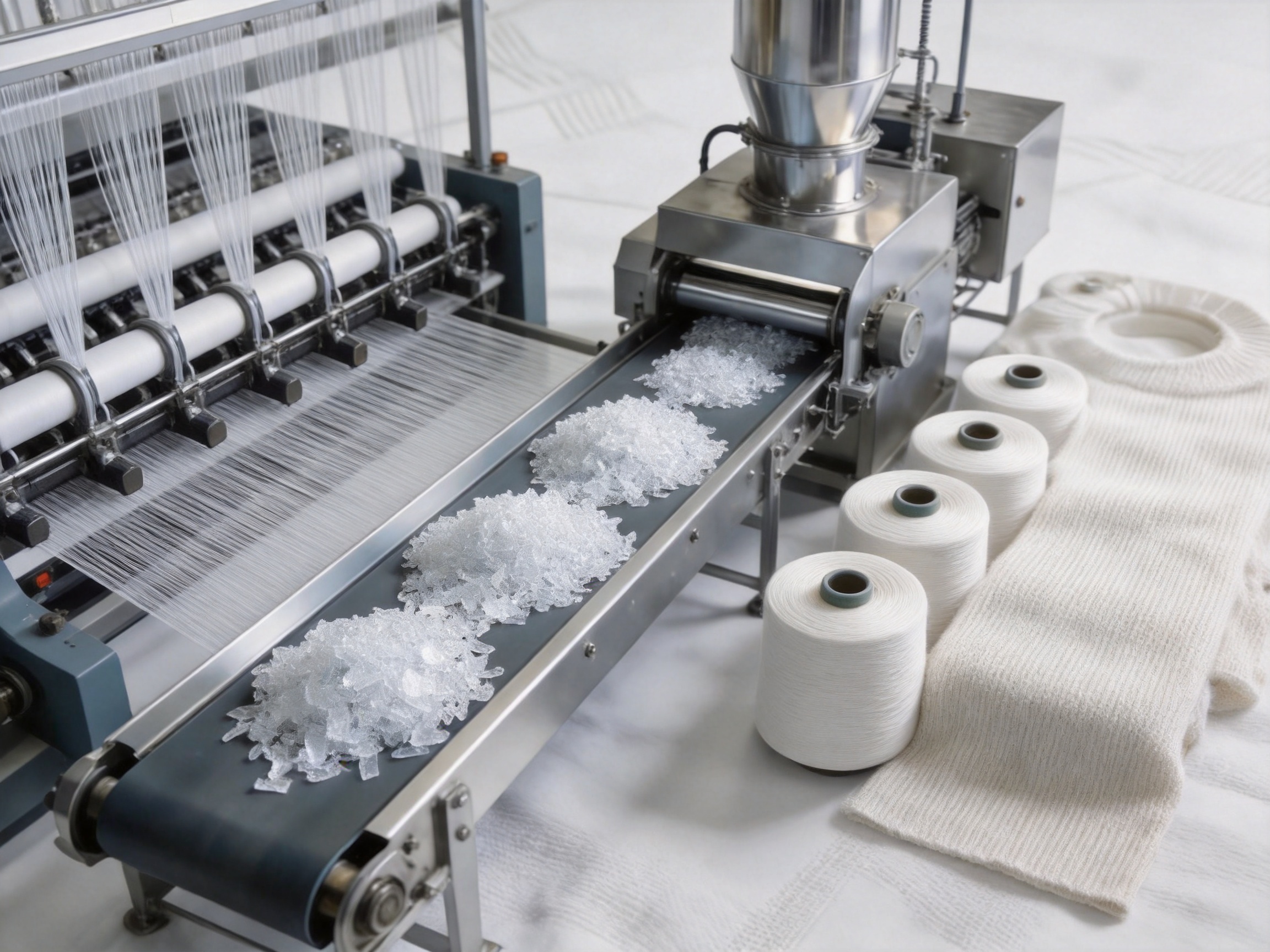
10. Sustainability and Market Value
Recycled polyester chips contribute directly to resource recycling. PET bottles that might otherwise become waste are transformed into textile raw materials. This process supports a circular economy by keeping materials in productive use for longer periods. For textile manufacturers, this creates both environmental and commercial value.
In Europe and the United States, recycled PET textiles have gained strong popularity because consumers and brands increasingly prefer products with lower environmental impact. Bags, clothing, and accessories made from recycled PET are widely accepted because they offer a clear and understandable sustainability story: discarded bottles are converted into useful textile products.
Low-carbon consumption is no longer a niche trend. It influences sourcing decisions, product labels, retail marketing, and brand reputation. Manufacturers that can supply recycled polyester fabrics and yarns are better positioned to serve international buyers. Textile-grade recycled polyester chips are the upstream material that makes this possible.
The sustainability value of the product is strengthened when it also performs well. If recycled chips create poor-quality yarn or fabric, the environmental benefit is weakened by waste and rejected goods. Therefore, high purity and stable processing are essential sustainability features. Reliable recycled chips help reduce both plastic waste and textile production waste.
11. Why Choose High-Purity Recycled Polyester Chips for Competitive Production
In a competitive textile market, choosing the right raw material affects cost, efficiency, product quality, and customer satisfaction. High-purity recycled polyester chips provide advantages that extend beyond the purchase price. They help protect production stability, support product development, and strengthen the manufacturer’s sustainability position.
Compared with cheaper low-grade recycled materials, textile-grade chips can reduce hidden costs. Low-grade materials may seem economical at first, but they can cause frequent machine stoppages, higher waste, inconsistent yarn, dyeing problems, and customer complaints. A higher-purity chip can reduce these risks and improve total production value.
Compared with suppliers that lack textile experience, a company with yarn and fabric knowledge can provide more useful support. Understanding recycled yarn, DTY, FDY, cationic dyeable yarn, flame-retardant yarn, high-elastic yarn, and knitted fabric applications allows the supplier to discuss real production challenges with customers. This knowledge is especially helpful when customers need customized textile solutions.
Compared with virgin polyester chips, recycled chips provide a sustainability advantage. For manufacturers serving global brands, this may be a decisive factor. The ability to supply recycled PET fabric or yarn can help win orders, meet buyer requirements, and build long-term customer relationships.
12. Product Development Possibilities
Textile-grade high-purity recycled polyester chips are not limited to basic yarn production. They can be part of a wider product development strategy. With the right spinning and texturing process, they can support different denier and filament combinations, including fine yarns, high-filament yarns, full-dull yarns, semi-dull yarns, and functional yarns.
For knitted fabric producers, this creates design flexibility. Recycled polyester yarns can be used for lightweight fabrics, elastic fabrics, sportswear materials, bag fabrics, lining materials, and decorative textiles. They can also be combined with other yarn types to achieve special appearance or performance characteristics.
The company’s experience with differentiated yarns supports this development direction. Product categories include recycled yarn, polyester drop-dyed yarn, microfine yarn, flame-retardant yarn, cationic dyeing yarn, and knitting fabric products. This broad technical foundation allows customers to explore practical applications rather than only purchasing a raw polymer material.
13. Practical Buying Considerations
When choosing recycled polyester chips for knitted fabric production, buyers should evaluate several practical factors. The first factor is purity. Low impurity content is essential for stable spinning. Buyers should ask about sorting, washing, filtration, and quality testing procedures.
The second factor is viscosity stability. Consistent viscosity helps maintain uniform polymer flow and yarn quality. A supplier should be able to explain how batch consistency is controlled.
The third factor is downstream compatibility. Chips intended for textile use should be suitable for spinning and knitting requirements, not merely general plastic processing. The supplier’s experience in yarn and fabric applications is therefore important.
The fourth factor is supply reliability. Textile mills need stable delivery and consistent quality from batch to batch. A supplier with export experience and customer relationships across multiple countries may be better prepared to serve international production needs.
The fifth factor is technical support. Recycled polyester processing can require adjustments in drying, melting, spinning, and texturing. A responsive supplier can help customers solve problems and reduce trial costs.
14. Frequently Asked Questions
Q1: What are textile-grade recycled polyester chips made from?
They are made from recovered PET materials, mainly discarded water bottles and beverage bottles. These materials are sorted, washed, purified, melted, filtered, and pelletized into polyester chips suitable for textile processing.
Q2: Why is high purity important for knitted fabric production?
High purity reduces impurities that can cause spinneret blockage, filament breakage, uneven yarn, black spots, and fabric defects. Knitted fabrics require stable yarn quality because surface irregularities can be easily visible in the final fabric.
Q3: Can recycled polyester chips replace virgin polyester chips?
In many textile applications, high-quality recycled polyester chips can be used as an environmentally friendly alternative to virgin polyester chips. Proper processing control is essential to ensure stable spinning performance and reliable fabric quality.
Q4: What products can be made from recycled PET yarn produced with these chips?
Typical applications include knitted fabrics, clothing, mountaineering bags, handbags, school bags, luggage, briefcases, shopping bags, gift bags, fashion bags, accessories, and various functional textile products.
Q5: How do these chips support sustainability?
They help recycle PET bottle waste into useful textile materials, reducing dependence on virgin petroleum resources and supporting circular economy goals. They also help manufacturers offer recycled-content fabrics for sustainability-focused markets.
Q6: What makes this product different from ordinary recycled PET flakes?
Ordinary flakes may not meet textile spinning requirements. Textile-grade recycled polyester chips are processed for higher purity, better viscosity stability, improved melt filtration, and more consistent chip quality, making them more suitable for yarn and knitted fabric production.
Q7: Are the chips suitable for DTY, FDY, and POY applications?
They can support recycled polyester yarn production such as DTY, FDY, and POY depending on downstream equipment, spinning technology, and customer requirements. Their stable processing behavior makes them suitable for a wide range of textile yarn developments.
Q8: Why is supplier experience important when buying recycled polyester chips?
Supplier experience matters because textile applications require more than general recycled plastic quality. A supplier with knowledge of yarn, knitting, functional textiles, and export requirements can provide better technical support and more practical product solutions.

15. Conclusion
Textile-grade high-purity recycled polyester chips for knitted fabric provide a strong solution for manufacturers seeking sustainable, reliable, and commercially practical raw materials. Made from discarded PET bottles and containers, the product supports resource recycling and responds to global demand for lower-impact textile materials. At the same time, its high purity, stable melting viscosity, and textile-grade process compatibility help ensure dependable spinning and knitted fabric performance.
Compared with ordinary recycled chips and lower-grade materials, these high-purity chips offer better production stability, reduced impurity-related defects, improved compatibility with yarn processing, and stronger downstream application value. Compared with virgin polyester chips, they provide a clear environmental advantage while maintaining the practical performance required by textile manufacturers.
The company’s strengths in recycled yarn, differentiated yarn, functional yarn, and knitted fabric development further support the product’s reliability. With R&D capability, export experience, and customer-focused technical service, the supplier is positioned to help textile manufacturers develop recycled PET yarns and fabrics for global markets.
For mills producing knitted fabrics, DTY yarn, FDY yarn, POY yarn, bags, luggage materials, apparel fabrics, and functional textiles, textile-grade high-purity recycled polyester chips are more than an alternative material. They are a foundation for efficient production, sustainable innovation, and long-term competitiveness in the modern textile industry.
References
1. Textile Exchange. Preferred Fiber and Materials Market Report.
2. Plastics Recyclers Europe. PET Recycling and Circular Plastics Industry Guidance.
3. European Commission. Circular Economy Action Plan.
4. International Organization for Standardization. Standards and Guidance Related to Recycled Plastics and Textile Materials.
5. Shen, L., Worrell, E., and Patel, M. K. Environmental Impact Assessment of Man-Made Cellulose Fibres and Polyester Fibres.
6. Awaja, F., and Pavel, D. Recycling of PET. European Polymer Journal.
7. Geyer, R., Jambeck, J. R., and Law, K. L. Production, Use, and Fate of All Plastics Ever Made.

Popular products
-

Premium Cationic Interlock Stretch Comfort Fabric
-
Moisture-Wicking Nylon Woven Fabric
-
Double-faced jacquard elastic fabric
-
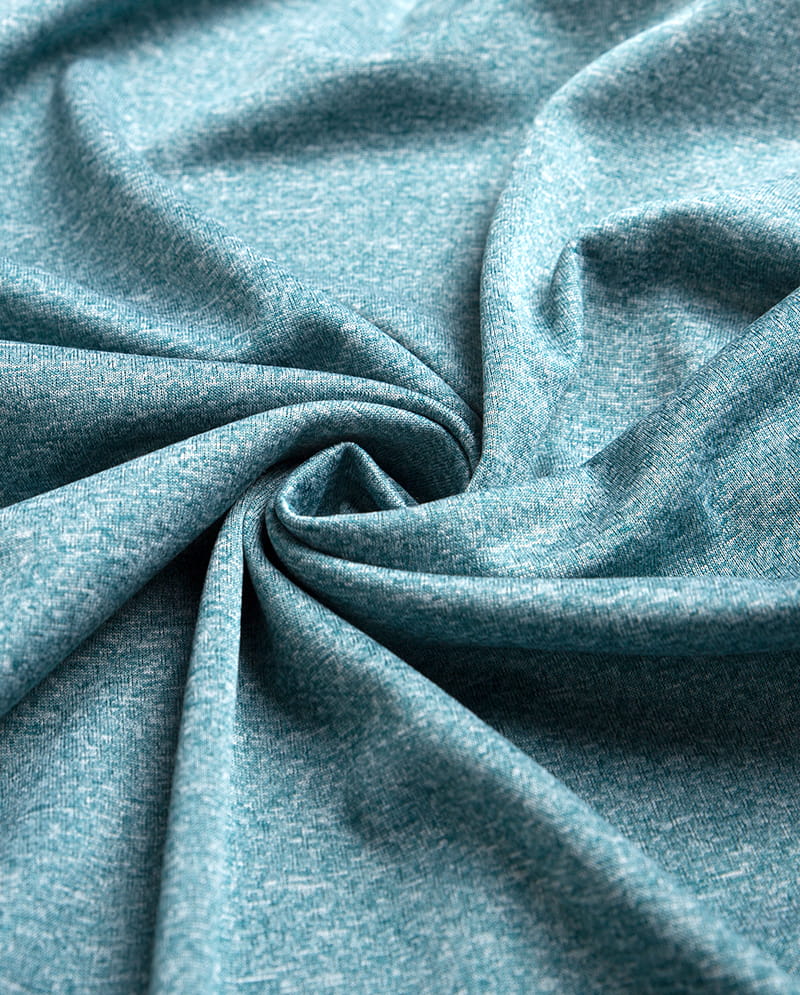
Heather Grey Double-faced cationic jersey fabric
-
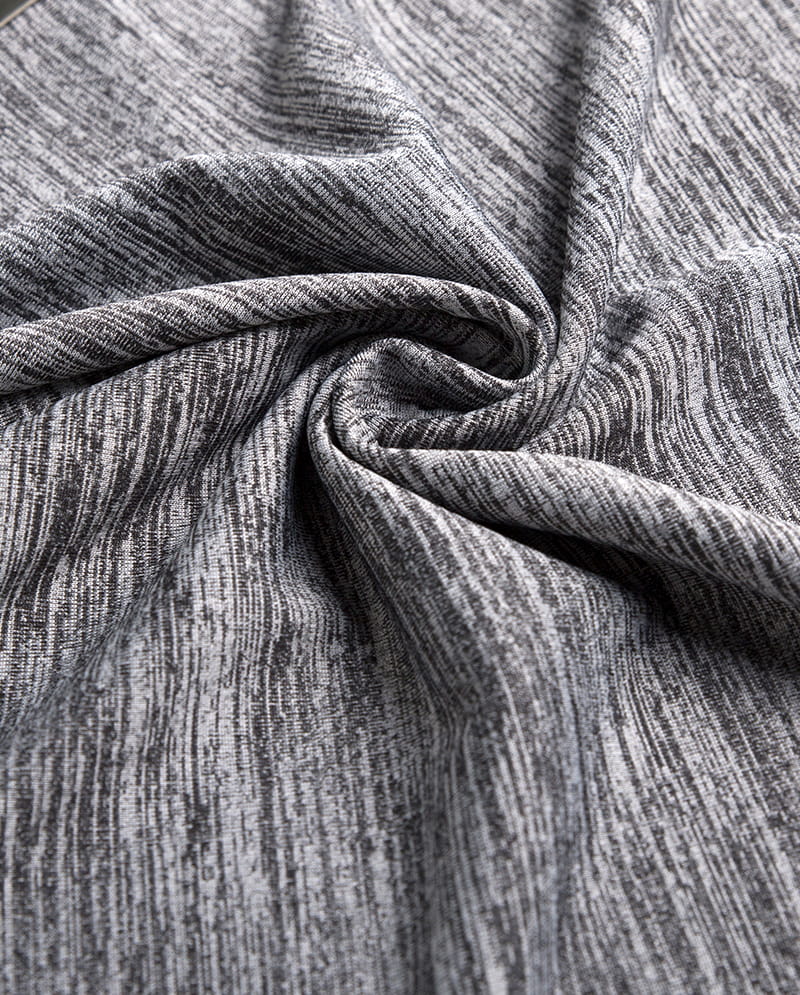
Anti-static Cationic Knitted Rib Fabric
-
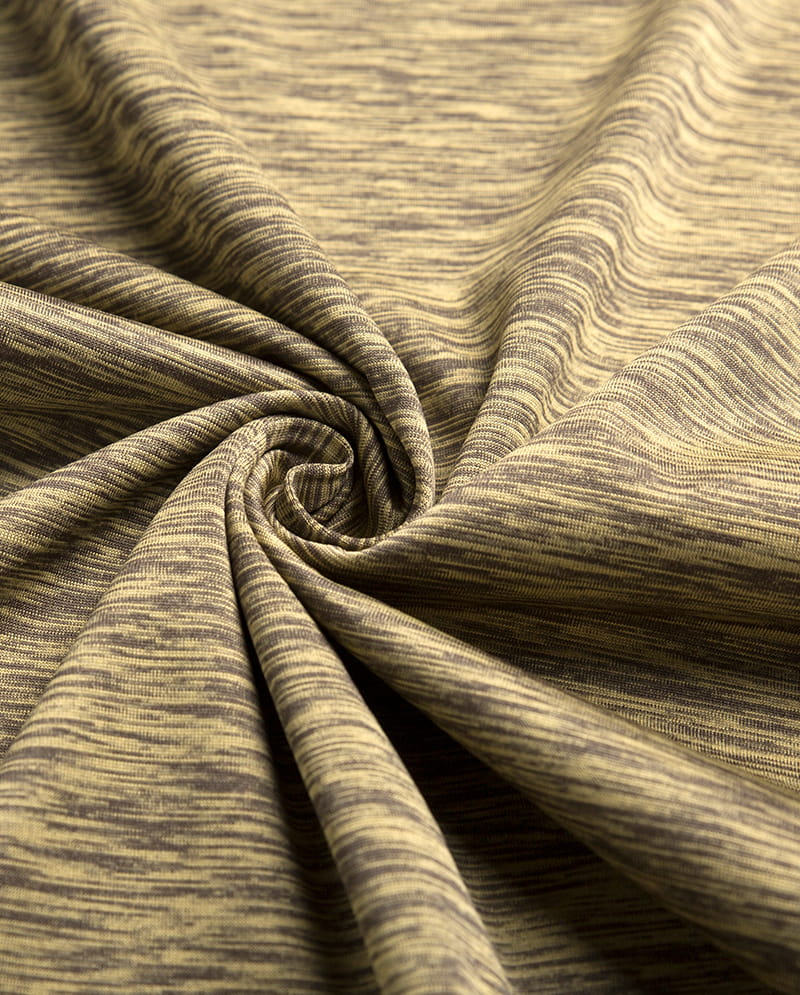
High-Stretch Cationic Jersey Fabric
-
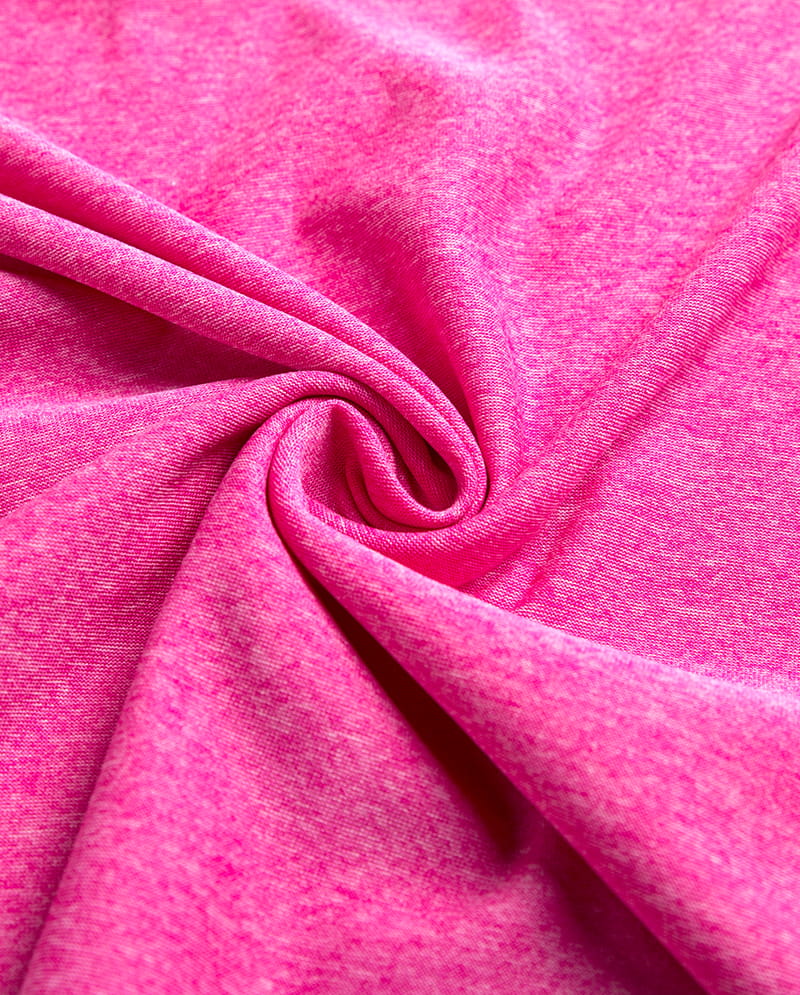
High Quality Cationic DTY Spandex Two Sides Brush Dralon Knit Fabric for Garment Thermal Underwear
-
Durable Anti-Pilling Knitted Fabric for Home Textiles
-
Wash-Resistant Cationic Elastic Knitted Fabric for Garment Industry
-
Breathable Double-Faced Elastic Composite Fabric
-
-
-
- whatsapp:
- 0086-13962559622
-
- skype:
- skype.aliceshenghong
-
- Wechat:


COPYRIGHT © 2016 Suzhou Junhui Textile Co., Ltd.
