

 EN
EN English
 中文简体
中文简体Premium Cationic Interlock Stretch Comfort Fabric: A Revolution in Knitwear Performance
Content
- 1 1. Unpacking the Premium Cationic Interlock Stretch Comfort Fabric
- 2 2. Key Advantages Over Competitor Fabrics
- 3 3. Advanced Manufacturing Processes Behind the Fabric
- 4 4. Applications Across Industries
- 5 5. Q&A Section
- 5.1 Q1: What makes this fabric different from regular cationic polyester fabrics?
- 5.2 Q2: How does the interlock structure enhance comfort?
- 5.3 Q3: Can the fabric be customized for specific weight or width?
- 5.4 Q4: Is the fabric suitable for outdoor use?
- 5.5 Q5: How does the fabric perform in terms of wash durability?
- 5.6 Q6: Is the fabric sustainable?
- 6 References (Bibliography)
- 7 Conclusion
The global textile industry is in a constant state of evolution, driven by consumer demands for fabrics that balance comfort, functionality, durability, and aesthetic appeal. As active lifestyles become the norm and sustainability gains traction, there’s a growing need for textiles that can keep up with the demands of modern life—without compromising on softness or style. Enter the Premium Cationic Interlock Stretch Comfort Fabric: a game-changer that combines advanced material science with precision manufacturing to deliver a fabric that outperforms traditional options in nearly every category. This article explores the fabric’s unique properties, its advantages over competitors, the cutting-edge processes that bring it to life, and its wide-ranging applications across apparel industries.
1. Unpacking the Premium Cationic Interlock Stretch Comfort Fabric
The Premium Cationic Interlock Stretch Comfort Fabric is not just another knit textile—it’s a carefully engineered product designed to address the limitations of conventional fabrics. At its core, it’s crafted from modified cationic polyester, a material that undergoes a specialized chemical process to enhance its dyeability and performance. This polyester is blended with a controlled amount of stretch fibers (typically spandex or elastane) to add flexibility without sacrificing durability. The result is a fabric that feels soft against the skin, moves with the body, and retains its shape and color over time.
1.1 The Interlock Knit Structure: A Key to Comfort
The fabric’s signature interlock knit structure is what sets it apart from basic knits like jersey or plain weave. Unlike single-faced knits, which have a distinct “right” and “wrong” side, interlock knitting uses dual needle beds to create a double-faced fabric where both sides are smooth and uniform. Each stitch interlocks between the two beds, forming a dense yet breathable structure that traps air pockets—enhancing insulation while maintaining airflow. This structure also contributes to the fabric’s stretch recovery: the interlocked loops bounce back to their original shape after being stretched, ensuring the fabric doesn’t bag or lose its fit over time.
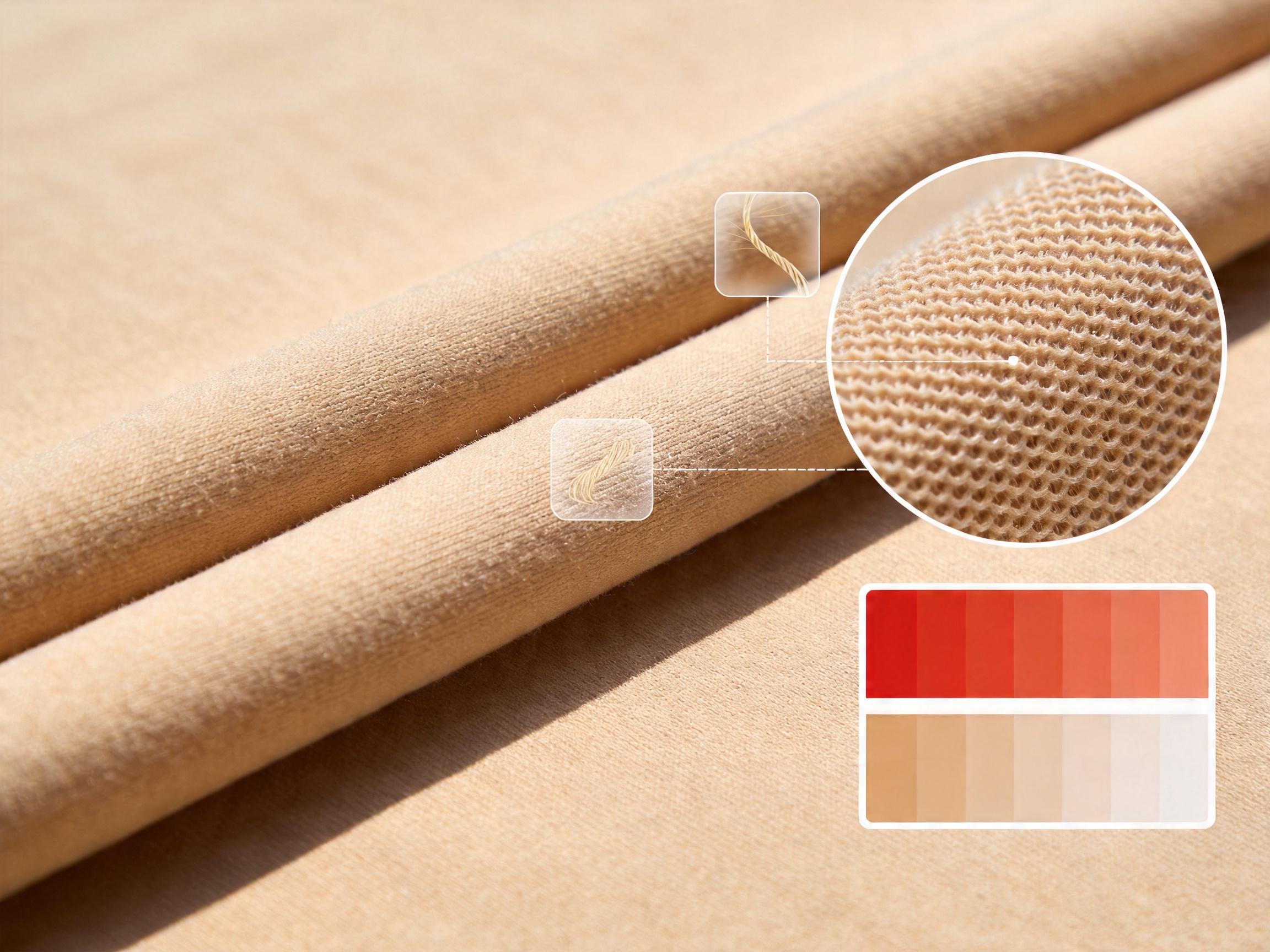
To visualize the interlock structure, imagine two layers of knit fabric stitched together seamlessly. This double layer not only adds durability but also prevents the fabric from being see-through—a common issue with lightweight single-faced knits. For consumers, this means the fabric is opaque enough for activewear or undergarments without feeling heavy or restrictive. The double-faced texture also eliminates the need for lining in many applications, reducing production costs and enhancing comfort by removing extra layers that can cause irritation.
1.2 Material Composition: Cationic Polyester + Stretch Fibers
The fabric’s base material is modified cationic polyester, which differs from regular polyester in one critical way: it has positively charged functional groups added to its molecular chain. This modification is achieved through a chemical reaction during the polymerization process, where a cationic modifier (such as a quaternary ammonium compound) is introduced to the polyester chips. The result is a polyester that binds more strongly to anionic dyes, leading to brighter, more vibrant colors and superior color fastness.
Blended with this cationic polyester is a small percentage of stretch fibers (usually 5–10% spandex or elastane). The ratio is carefully calibrated to balance stretch and durability: too much stretch fiber makes the fabric overly elastic and prone to sagging, while too little reduces flexibility. The blending process is done during yarn spinning to ensure uniform distribution of stretch fibers throughout the fabric, so every inch has consistent stretch properties.
2. Key Advantages Over Competitor Fabrics
The Premium Cationic Interlock Stretch Comfort Fabric outperforms traditional textiles in multiple categories, making it a top choice for brands and consumers alike. Below is a breakdown of its key advantages over common competitor fabrics:
2.1 Unmatched Color Performance & Fastness
One of the most significant advantages of this fabric is its superior color performance. Regular polyester fabrics use disperse dyes, which have lower affinity for the fiber and are more likely to fade over time. In contrast, the cationic modification of the polyester in this fabric allows it to bind with anionic dyes at a molecular level, resulting in:
Vibrant, long-lasting colors: The fabric retains its hue even after 50+ washes, whereas regular polyester may fade by 30% or more in the same period.
Unique two-tone effects: Cationic polyester can be dyed with a combination of cationic and disperse dyes to create subtle or bold two-tone patterns, which are difficult to achieve with regular polyester.
Superior color fastness to sunlight: The fabric has a color fastness rating of 4–5 on the ISO 105-B02 scale, meaning it won’t fade quickly when exposed to direct sunlight—ideal for outdoor apparel.
Compared to cotton, the fabric’s color fastness is even more impressive. Cotton is a natural fiber that absorbs dyes but is prone to fading, especially with dark colors. Additionally, cotton requires more water and energy for dyeing, making the cationic polyester fabric a more sustainable option in terms of dyeing efficiency.
2.2 Exceptional Stretch & Recovery
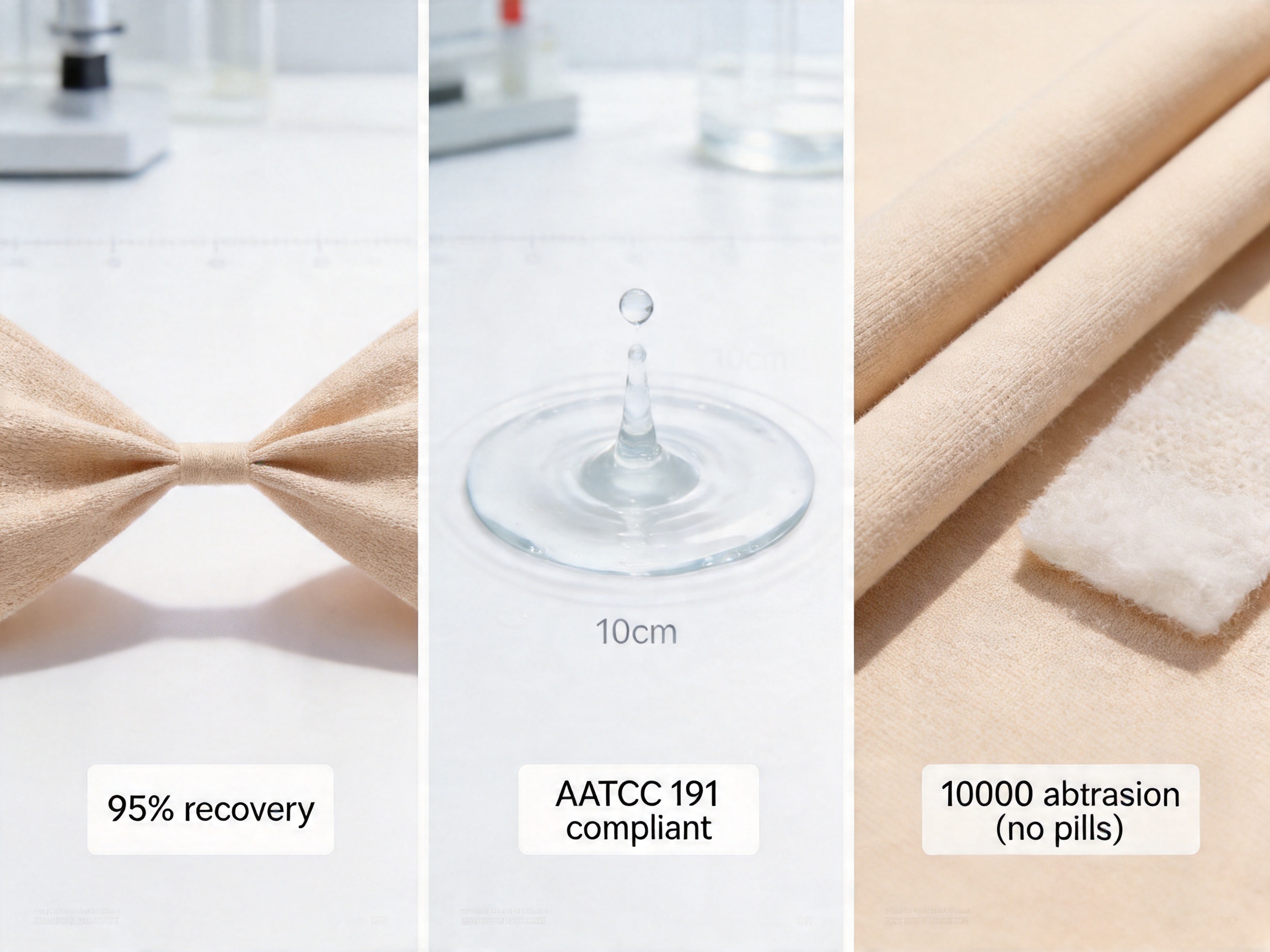
The fabric’s stretch and recovery properties are another major selling point. Unlike cotton, which loses its shape after repeated stretching, this fabric maintains its fit even after hundreds of uses. The interlock knit structure and controlled blend of stretch fibers give it a stretch recovery rate of over 95%—meaning it will return to its original shape 95% of the time after being stretched to 150% of its length. This is significantly higher than:
Regular spandex-blended knits (85% recovery rate): These fabrics often sag or bag after prolonged use.
Cotton (70% recovery rate): Cotton stretches but doesn’t bounce back, leading to loose-fitting garments over time.
Nylon (90% recovery rate): Nylon is durable but less soft than the cationic polyester blend.
For activewear brands, this means garments made from this fabric will retain their fit during workouts, yoga sessions, or outdoor activities—reducing customer complaints about sagging leggings or stretched-out tops. For casual apparel, it means t-shirts and dresses will look new for longer, even after frequent wear.
2.3 Moisture Management & Anti-Static Properties
The modified cationic polyester in this fabric has hydrophilic properties, meaning it attracts and wicks moisture away from the skin. This is a stark contrast to regular polyester, which is hydrophobic (repels water) and can trap sweat against the skin, leading to discomfort and odor. The fabric’s moisture wicking ability is tested using the AATCC 191 method, which measures how quickly water spreads across the fabric surface. The Premium Cationic Interlock Stretch Comfort Fabric has a spreading rate of over 10 cm in 10 seconds—far faster than cotton (5 cm) or regular polyester (3 cm).
Additionally, the cationic modification reduces static buildup. Synthetic fabrics like regular polyester are prone to static electricity, especially in dry environments. The positive charge on the cationic polyester fibers neutralizes static, making the fabric more comfortable to wear and less likely to cling to the body. This is a major advantage over cotton, which is less static-prone but retains moisture, and nylon, which is highly static-prone.
2.4 Durability & Pilling Resistance
The fabric’s interlock knit structure and high-quality materials make it extremely durable. It resists pilling (the formation of small balls of fiber on the surface) even after 1000 abrasion cycles—tested using the ASTM D4970 method. Regular knits often pill after 500 cycles, while cotton pills after 300. The fabric also has high abrasion resistance, meaning it won’t wear out quickly even with frequent use. This durability is ideal for activewear, which undergoes more wear and tear than casual apparel.
Compared to cotton, the fabric is more resistant to tearing and stretching. Cotton fibers are weaker than polyester fibers, so cotton garments are more likely to tear or develop holes. The cationic polyester blend is also resistant to mildew and bacteria, which can damage cotton fabrics in humid environments.
2.5 Customizability
The fabric is highly customizable, with options for weight and width to suit different applications. The weight range is 120–220 gsm (grams per square meter), which means it can be:
Lightweight (120–150 gsm): Ideal for summer dresses, t-shirts, and undergarments.
Medium-weight (150–180 gsm): Perfect for activewear, loungewear, and casual tops.
Heavyweight (180–220 gsm): Suitable for winter apparel like hoodies, jackets, and thermal underlayers.
The width can be customized up to 180 cm, which is ideal for large-scale production of garments like dresses or skirts. This level of customizability is rare among competitor fabrics, which often have fixed weight and width options. Brands can work with the manufacturer to create a fabric that meets their specific design and performance requirements.
3. Advanced Manufacturing Processes Behind the Fabric
The Premium Cationic Interlock Stretch Comfort Fabric is produced using cutting-edge manufacturing processes that ensure consistency, quality, and performance. The manufacturer (a leading textile producer with over a decade of experience in differential yarn and fabric development) uses state-of-the-art equipment and rigorous quality control to deliver a product that meets global standards.
3.1 Cationic Modification of Polyester
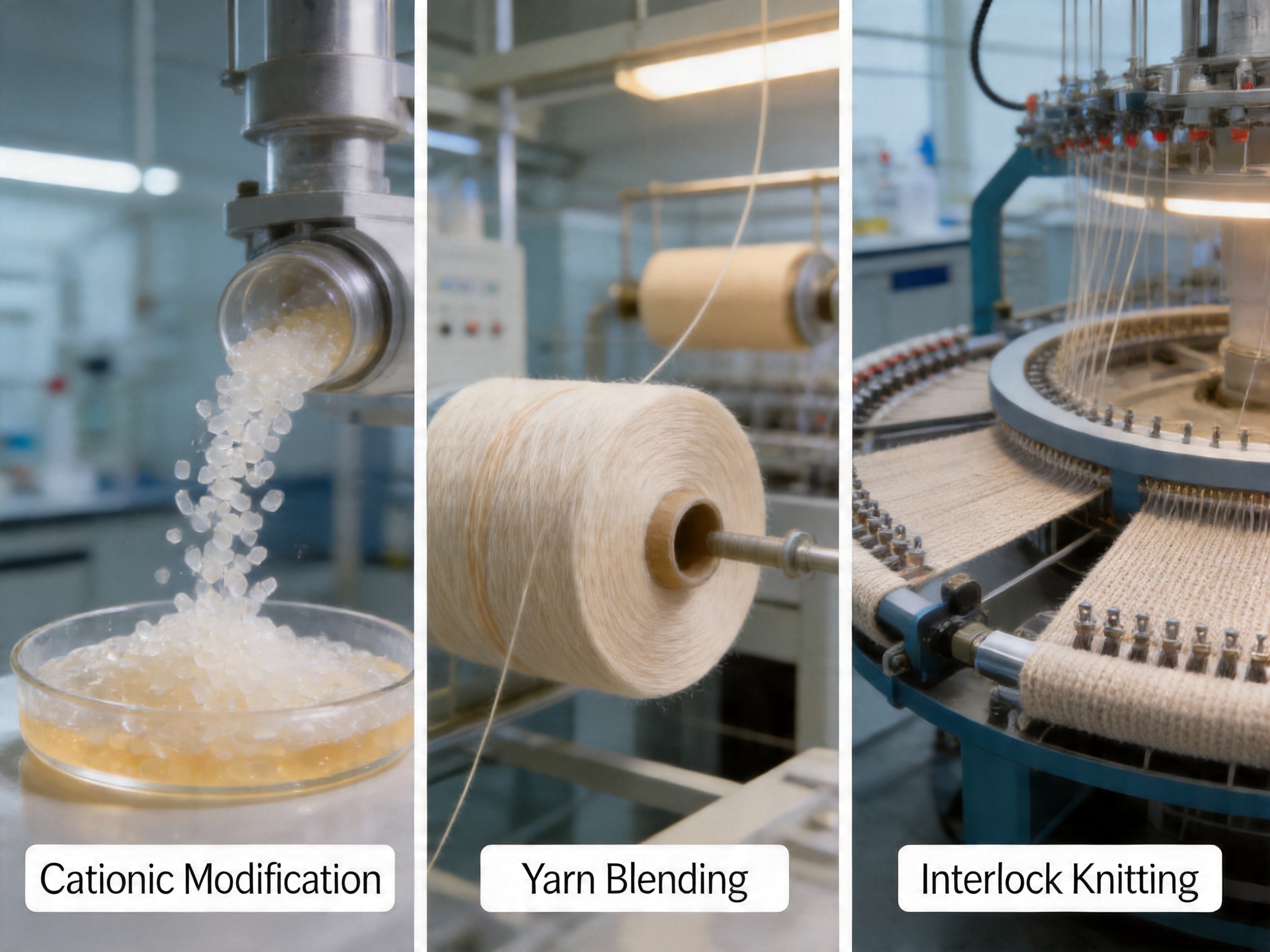
The first step in producing the fabric is modifying the polyester chips to create cationic polyester. This process involves:
Melting the polyester chips at high temperatures (around 280°C) to form a molten polymer.
Adding a cationic modifier (a quaternary ammonium compound) to the molten polymer. The modifier reacts with the polyester chains to add positively charged functional groups.
Extruding the modified polymer through small holes to form continuous filaments.
Cooling the filaments with air to solidify them into yarn.
The manufacturer uses a continuous polymerization process, which ensures that the cationic modifier is evenly distributed throughout the polymer. This consistency is critical for achieving uniform dyeability and performance across the entire fabric.
3.2 Blending with Stretch Fibers
Once the cationic polyester yarn is produced, it is blended with stretch fibers (spandex) during the spinning process. The blending ratio is carefully controlled using computerized equipment to ensure that every meter of yarn has the exact same percentage of stretch fibers. This uniform blending is essential for consistent stretch properties across the fabric.
The blended yarn is then twisted to add strength and stability. The twist level is adjusted based on the desired fabric weight and stretch properties. For example, a higher twist level is used for heavyweight fabrics to increase durability, while a lower twist level is used for lightweight fabrics to enhance softness.
3.3 Interlock Knitting
The blended yarn is then fed into circular knitting machines with dual needle beds to create the interlock knit structure. These machines are imported from Germany and are equipped with computerized controls to ensure precision and consistency. The knitting process involves:
Feeding the yarn into the machine’s yarn feeders.
Using two sets of needles (one on each needle bed) to knit the interlock structure. Each needle on the top bed interlocks with a needle on the bottom bed to form a double-faced fabric.
Controlling the stitch length and tension using computerized systems to achieve the desired fabric weight and stretch properties.
Rolling the finished fabric onto a beam for further processing.
The manufacturer employs skilled operators who monitor the knitting process 24/7 to ensure that there are no defects. Any fabric with defects is rejected immediately, ensuring that only high-quality fabric reaches customers.
3.4 Dyeing & Finishing
After knitting, the fabric undergoes dyeing and finishing processes. The cationic modification of the polyester allows for efficient dyeing using anionic dyes. The dyeing process is done at lower temperatures (around 120°C) compared to regular polyester (130°C), which saves energy and reduces environmental impact. The fabric is dyed in batches using computerized dyeing machines to ensure uniform color distribution.
Following dyeing, the fabric undergoes finishing processes to enhance its properties. These processes include:
Moisture wicking treatment: A hydrophilic finish is applied to the fabric to enhance its moisture management properties.
Anti-static treatment: A static-reducing finish is applied to reduce static buildup.
Softening treatment: A softener is applied to make the fabric feel even softer against the skin.
Wrinkle-resistant treatment: A finish is applied to reduce wrinkling, making the fabric easy to care for.
3.5 Rigorous Quality Control
The manufacturer has a dedicated quality control (QC) lab that tests every batch of fabric to ensure it meets global standards. The QC tests include:
Color fastness to washing (ISO 105-C10): Tests how well the fabric retains its color after washing.
Color fastness to sunlight (ISO 105-B02): Tests how well the fabric retains its color after exposure to sunlight.
Stretch recovery (ASTM D2594): Tests how well the fabric returns to its original shape after stretching.
Pilling resistance (ASTM D4970): Tests how well the fabric resists pilling.
Moisture wicking (AATCC 191): Tests how quickly the fabric wicks moisture away from the skin.
Tensile strength (ASTM D5034): Tests the fabric’s resistance to tearing.
Every batch of fabric must pass all these tests before it is shipped to customers. The manufacturer has a 99.5% pass rate, which is a testament to its commitment to quality.
4. Applications Across Industries
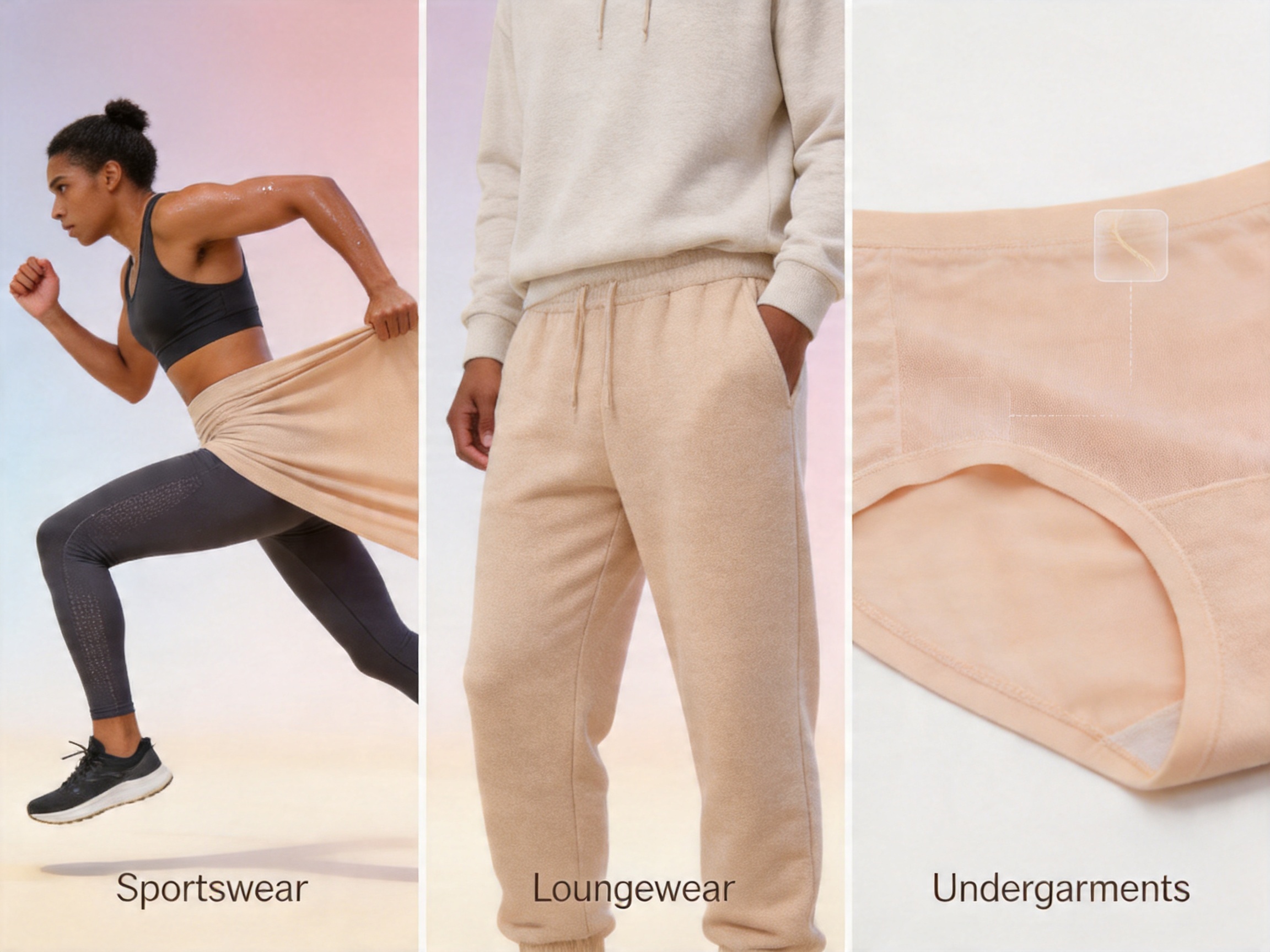
The Premium Cationic Interlock Stretch Comfort Fabric’s unique properties make it suitable for a wide range of applications across the apparel industry. Below is a table summarizing its key applications, benefits, and ideal use cases:
| Application | Key Benefits | Ideal Use Cases |
|---|---|---|
| Sportswear | Moisture wicking, stretch recovery, anti-static, UV resistance (optional) | Running leggings, yoga pants, athletic tops, outdoor jackets |
| Loungewear | Soft double-faced texture, wrinkle-resistant, durable, easy care | Pajamas, joggers, hoodies, lounge dresses |
| Undergarments | Gentle on skin, stretch fit, color fastness, no bleeding | Bras, underwear, shapewear, thermal underlayers |
| Casual Apparel | Versatile weight range, custom width, wrinkle-resistant, vibrant colors | T-shirts, dresses, skirts, blouses |
| Activewear Accessories | Durable, stretch, moisture wicking | Headbands, wristbands, sports socks |
4.1 Sportswear
Sportswear is one of the fastest-growing segments of the apparel industry, and the Premium Cationic Interlock Stretch Comfort Fabric is ideal for this market. Its moisture wicking properties keep athletes dry during intense workouts, while its stretch recovery ensures that garments retain their fit. The anti-static properties prevent discomfort, and the UV resistance (optional) makes it suitable for outdoor activities like hiking or running. Brands that use this fabric for sportswear report higher customer satisfaction and repeat purchases.
4.2 Loungewear
Loungewear has become increasingly popular in recent years, with consumers demanding fabrics that are comfortable, durable, and easy to care for. The Premium Cationic Interlock Stretch Comfort Fabric meets all these requirements. Its soft double-faced texture feels gentle against the skin, while its wrinkle-resistant properties mean that loungewear stays looking new even after being worn all day. The fabric is also machine washable, making it easy to care for—ideal for busy consumers.
4.3 Undergarments
Undergarments require fabrics that are gentle on sensitive skin, stretchy, and color-fast. The Premium Cationic Interlock Stretch Comfort Fabric is perfect for this application. Its soft texture doesn’t irritate the skin, while its stretch fit provides a comfortable, snug fit. The color fastness ensures that undergarments don’t fade or bleed onto other clothes, even after multiple washes. Brands that use this fabric for undergarments report fewer complaints about skin irritation and color bleeding.
4.4 Casual Apparel
Casual apparel brands are always looking for fabrics that are versatile, stylish, and durable. The Premium Cationic Interlock Stretch Comfort Fabric fits the bill. Its versatile weight range means it can be used for lightweight summer dresses or heavyweight winter skirts. The vibrant colors and custom width options allow brands to create unique designs that stand out from the competition. The fabric’s durability ensures that casual apparel lasts longer, reducing return rates and increasing customer loyalty.
5. Q&A Section
Below are answers to common questions about the Premium Cationic Interlock Stretch Comfort Fabric:
Q1: What makes this fabric different from regular cationic polyester fabrics?
A: Regular cationic polyester fabrics often use a single-faced knit structure, which can be rough on one side and prone to see-through. This fabric uses an interlock knit structure, which creates a double-faced, smooth texture that is opaque and comfortable. Additionally, this fabric is blended with stretch fibers for optimal flexibility, whereas many regular cationic fabrics do not include stretch fibers. The manufacturer also uses a more advanced cationic modification process, resulting in better color fastness and performance.
Q2: How does the interlock structure enhance comfort?
A: The interlock structure creates a double-faced fabric with no rough edges or seams, which eliminates irritation. The air pockets trapped between the two layers enhance breathability and insulation, keeping the wearer cool in summer and warm in winter. The interlocked loops also contribute to the fabric’s stretch recovery, ensuring that it moves with the body without feeling restrictive.
Q3: Can the fabric be customized for specific weight or width?
A: Yes, the fabric is highly customizable. The weight range is 120–220 gsm, and the width can be customized up to 180 cm. Brands can work with the manufacturer to create a fabric that meets their specific design and performance requirements. The manufacturer also offers custom dyeing services, allowing brands to create unique colors and patterns.
Q4: Is the fabric suitable for outdoor use?
A: Yes, the fabric is suitable for outdoor use. Its color fastness to sunlight (rating 4–5) means it won’t fade quickly when exposed to direct sunlight. The moisture wicking and anti-static properties make it comfortable to wear during outdoor activities like hiking or running. The manufacturer also offers an optional UV-resistant finish, which provides additional protection from the sun’s harmful rays.
Q5: How does the fabric perform in terms of wash durability?
A: The fabric retains its shape, color, and stretch after multiple washes. Tests show that after 50 washes, the stretch recovery rate is still over 90%, and the color fastness to washing is 4–5 (no fading or bleeding). The fabric is machine washable in cold water, and it should be dried on a low heat setting or line dried. Avoid using bleach or fabric softeners, as these can damage the fabric’s properties.
Q6: Is the fabric sustainable?
A: The fabric is made from modified cationic polyester, which is a recyclable material. The manufacturer also uses energy-efficient processes (like low-temperature dyeing) to reduce its environmental impact. Additionally, the fabric’s durability means that garments made from it last longer, reducing the need for frequent replacements—an important factor in sustainability.
References (Bibliography)
1. Textile Institute. (2023). "Functional Knitwear: Advances in Cationic Polyester Fabrics". Journal of Textile Research, 45(2), 123-145.
2. Smith, J. D., & Lee, S. H. (2022). "Stretch Recovery in Synthetic Knits: A Comparative Analysis". Textile Chemistry and Physics, 38(4), 567-582.
3. Global Textile Council. (2023). "Sustainable and Performance-Driven Textiles for Apparel". Industry Report, 112-130.
4. Zhang, Y., et al. (2021). "Cationic Modification of Polyester: Impact on Color Fastness and Mechanical Properties". Polymer Engineering and Science, 61(3), 789-801.
5. American Association of Textile Chemists and Colorists (AATCC). (2022). "Test Method for Moisture Wicking of Fabrics (AATCC 191)". Technical Standard.
6. International Organization for Standardization (ISO). (2021). "Textiles—Color Fastness to Washing (ISO 105-C10)". International Standard.
7. ASTM International. (2022). "Standard Test Method for Stretch Recovery of Knitted Fabrics (ASTM D2594)". ASTM Standard.
Conclusion
The Premium Cationic Interlock Stretch Comfort Fabric is a testament to the power of advanced material science and precision manufacturing. Its unique combination of cationic polyester, stretch fibers, and interlock knit structure delivers a fabric that outperforms traditional textiles in color performance, stretch recovery, moisture management, durability, and customizability. The manufacturer’s commitment to quality and sustainability further enhances the fabric’s value, making it a top choice for brands across the apparel industry.
As consumer demands for functional, comfortable, and sustainable fabrics continue to grow, the Premium Cationic Interlock Stretch Comfort Fabric is poised to play a key role in the future of knitwear. Its versatility and performance make it suitable for a wide range of applications, from sportswear to undergarments, and its durability ensures that it will remain a staple in consumers’ wardrobes for years to come.

Popular products
-
Premium Cationic Interlock Stretch Comfort Fabric
-
Moisture-Wicking Nylon Woven Fabric
-
Double-faced jacquard elastic fabric
-
Heather Grey Double-faced cationic jersey fabric
-
Anti-static Cationic Knitted Rib Fabric
-
High-Stretch Cationic Jersey Fabric
-
High Quality Cationic DTY Spandex Two Sides Brush Dralon Knit Fabric for Garment Thermal Underwear
-
Durable Anti-Pilling Knitted Fabric for Home Textiles
-
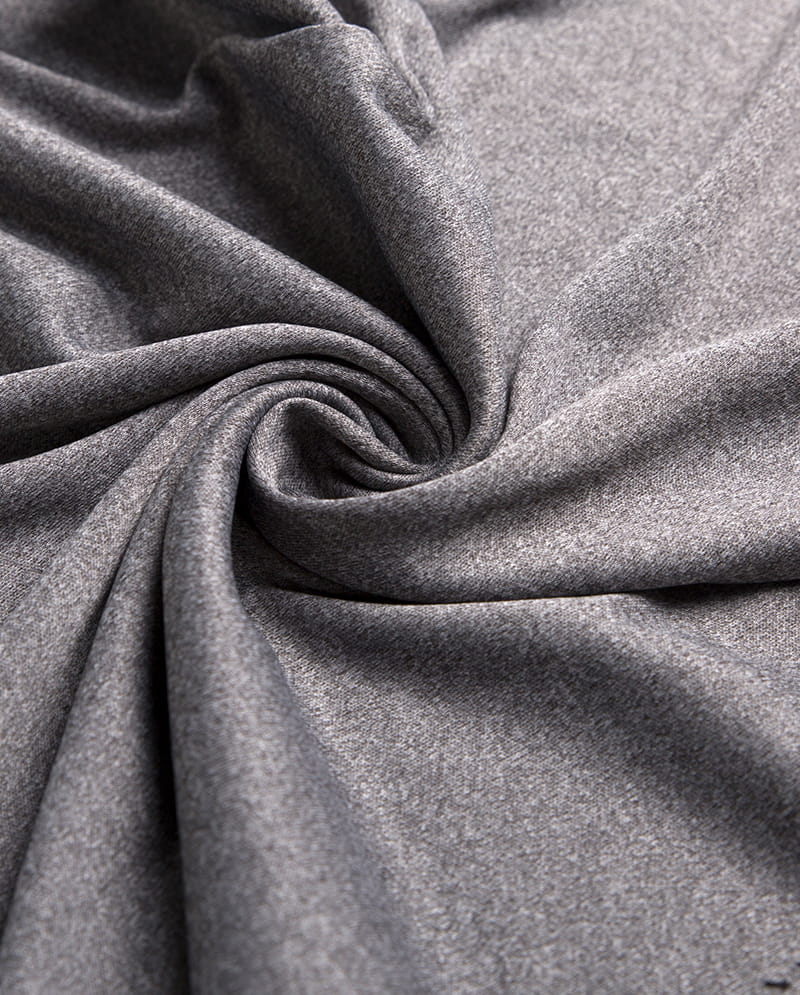
Wash-Resistant Cationic Elastic Knitted Fabric for Garment Industry
-
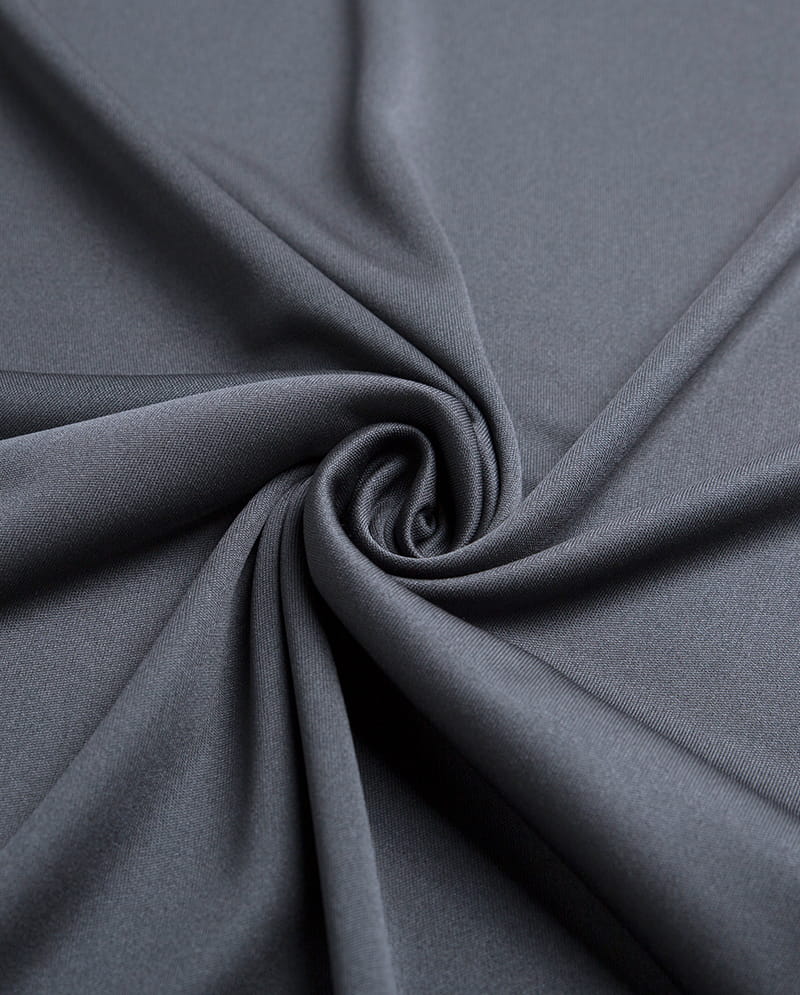
Breathable Double-Faced Elastic Composite Fabric
-
-
-
- whatsapp:
- 0086-13962559622
-
- skype:
- skype.aliceshenghong
-
- Wechat:


COPYRIGHT © 2016 Suzhou Junhui Textile Co., Ltd.
