

 EN
 English
 中文简体
High-Tenacity CD DTY Recycled Filament Yarn: Sustainable Strength for Advanced Textile Applications
Content
- 1 1. What Is High-Tenacity CD DTY Recycled Filament Yarn?
- 2 2. Key Product Specifications
- 3 3. Sustainability Without Sacrificing Performance
- 4 4. High Tenacity for Demanding End Uses
- 5 5. The Functional Advantages of DTY Construction
- 6 6. The Value of the CD Feature
- 7 7. Manufacturing Process and Quality Control
- 8 8. Product Range and Customization Capability
- 9 9. Advantages Over Conventional and Lower-Specification Alternatives
- 10 10. Applications
- 11 11. Recommended Processing Considerations
- 12 12. A Technical Partner for Global Buyers
- 13 13. How Buyers Can Select the Correct Specification
- 14 14. Suggested Quality Checklist for Procurement
- 15 15. Frequently Asked Questions
- 15.1 Q1: What is the main material used in this yarn?
- 15.2 Q2: What does CD mean in CD DTY?
- 15.3 Q3: What does DTY mean?
- 15.4 Q4: How strong is the yarn?
- 15.5 Q5: What denier and filament options are available?
- 15.6 Q6: Is the product suitable for apparel?
- 15.7 Q7: Can it be used for bags and luggage?
- 15.8 Q8: Can the yarn be used for geotextiles?
- 15.9 Q9: Does recycled yarn perform like virgin polyester?
- 15.10 Q10: Is the yarn GRS certified?
- 15.11 Q11: Can the product be customized?
- 15.12 Q12: What information should be provided when requesting a quotation?
- 15.13 Q13: How should the yarn be tested before mass production?
- 15.14 Q14: Can the supplier provide other textile materials?
- 15.15 Q15: Why is supplier technical support important?
- 16 16. Conclusion
- 17 References
- 18 Product: High-Tenacity CD DTY(D/F) Recycled Filament Yarn
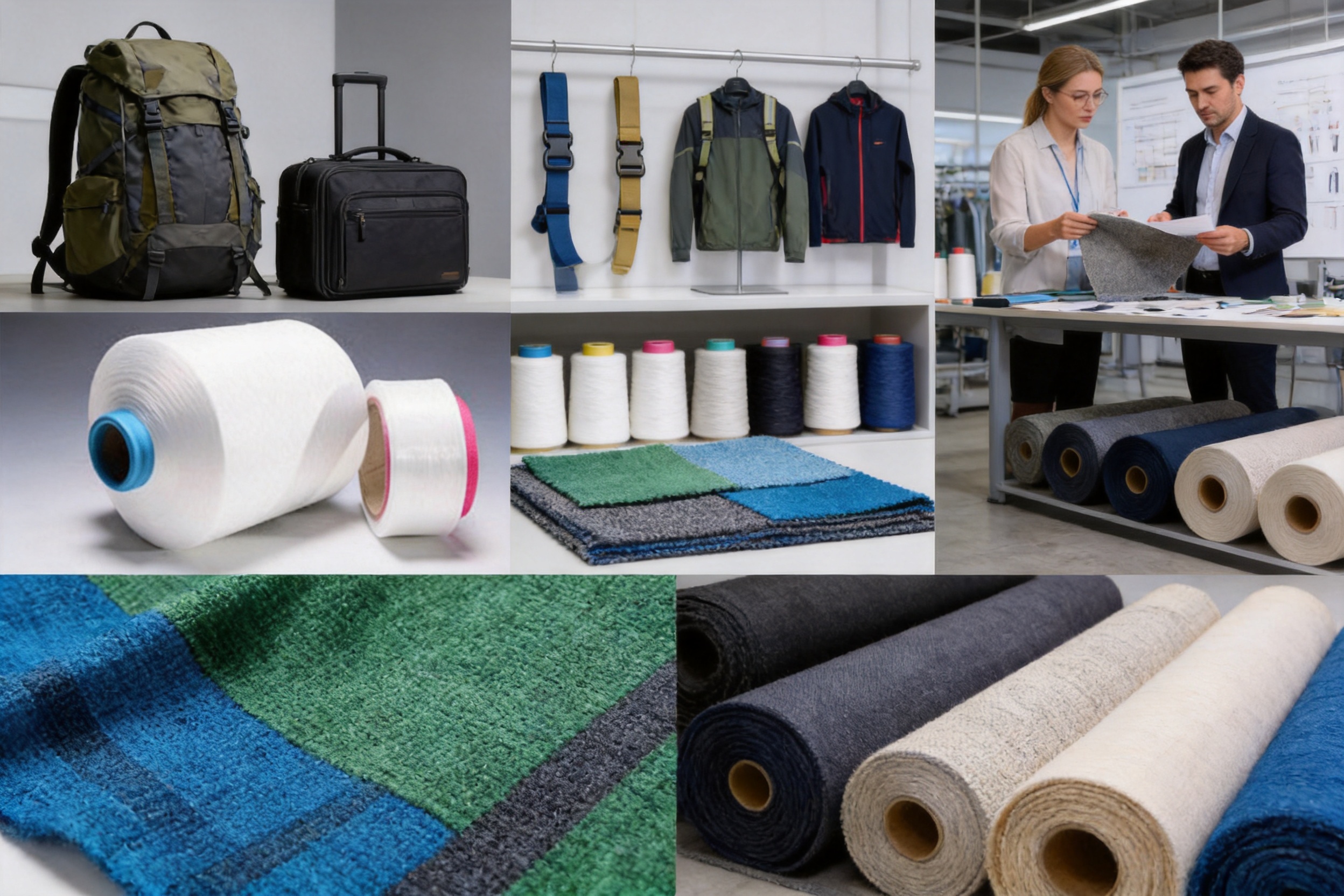
As textile manufacturers, apparel brands, industrial fabric producers, and sourcing professionals respond to growing environmental expectations, recycled polyester yarn has become an important material for next-generation products. However, sustainability alone is not enough. A recycled yarn must also provide dependable strength, consistent processing performance, attractive appearance, dimensional stability, and the flexibility required for different fabric constructions.
High-Tenacity CD DTY(D/F) Recycled Filament Yarn is designed to address these requirements in a single material. Produced from recycled polyester and supported by Global Recycled Standard certification, this yarn transforms post-consumer plastic waste into a high-value textile resource. At the same time, its high tenacity, textured structure, broad denier and filament options, colorability, and resistance to daily wear make it suitable for demanding textile and industrial applications.
The product is developed and supplied by a specialized textile enterprise with experience in differential yarn, recycled yarn, functional yarn, colored yarn, and knitting fabric. Its manufacturing and development capabilities allow buyers to source not only a standard recycled DTY product, but also customized specifications for specific machinery, fabric constructions, performance requirements, and end uses.
1. What Is High-Tenacity CD DTY Recycled Filament Yarn?
High-Tenacity CD DTY Recycled Filament Yarn is a recycled polyester draw textured yarn with a CD, or cationic-dyeable, characteristic. DTY stands for Draw Textured Yarn. During texturing, partially oriented polyester filaments are drawn and processed to create bulk, crimp, softness, elasticity, and improved fabric hand feel.
The CD feature gives the yarn additional coloration flexibility. Cationic-dyeable polyester can be used to create contrast effects, heathered appearances, two-tone designs, and differentiated color effects when combined with conventional polyester or other compatible fibers. This makes the yarn useful for fashion fabrics as well as performance textiles where visual differentiation is important.
The product is made from 100% recycled polyester. The recycled raw material is obtained from discarded plastic bottles and similar polyester waste streams. Through sorting, cleaning, processing, and polymer preparation, waste material is converted into usable polyester feedstock and subsequently spun into filament yarn.
Unlike a basic recycled yarn intended only for general fabric production, this high-tenacity product is engineered for applications where the yarn must withstand higher tensile loads, repeated movement, abrasion, and long-term use. Its reported tenacity range of approximately 7.6–9.3 cN/dtex provides a strong performance foundation for heavy-duty fabrics, safety products, sportswear, geotextiles, bags, and other demanding applications.
2. Key Product Specifications
| Property | Product Information | Practical Benefit |
|---|---|---|
| Fiber type | 100% recycled polyester filament | Supports recycled-content goals and reduces reliance on virgin polyester |
| Yarn type | Draw textured yarn, or DTY | Provides crimp, softness, bulk, elasticity, and improved fabric comfort |
| Yarn characteristic | CD, or cationic-dyeable | Enables differentiated color effects and flexible design options |
| Tenacity | Approximately 7.6–9.3 cN/dtex | Helps fabrics withstand tension, abrasion, and repeated use |
| Shrinkage | Approximately 2.3% | Supports dimensional stability during fabric processing and use |
| Available range | Approximately 150d to 22000d, subject to specification | Accommodates fine, medium, and heavy constructions |
| Color performance | Strong dyeability and vibrant color development | Suitable for fashion, sportswear, home textiles, and colored industrial fabrics |
| Resistance | Resistance to abrasion, chemicals, and ultraviolet exposure | Improves service life in demanding environments |
| Certification | GRS-certified recycled content | Supports traceability and sustainability documentation |
Specifications may be adjusted according to the required denier, filament count, luster, dyeing behavior, texture, strength, elasticity, and final application. Buyers should confirm the exact technical data for each order because performance can vary according to the selected yarn construction and processing conditions.
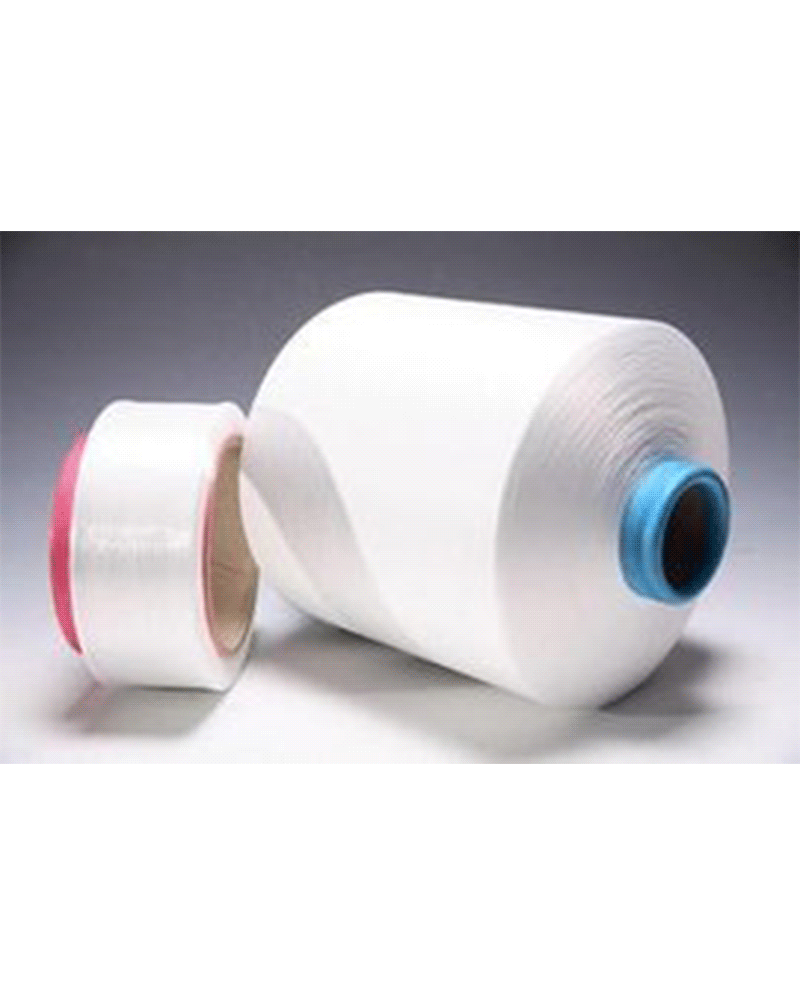
High-Tenacity CD DTY(D/F) Recycled Filament Yarn
3. Sustainability Without Sacrificing Performance
The major environmental advantage of this yarn is its use of recycled polyester. Conventional polyester depends on virgin petrochemical raw materials. Recycled polyester, by contrast, uses existing plastic resources and helps divert suitable waste from disposal routes. Converting used bottles and other polyester waste into filament yarn extends the useful life of the material and supports a more circular textile economy.
For brands and manufacturers, recycled content can contribute to environmental targets, product sustainability claims, and responsible sourcing programs. The use of GRS-certified material adds value because it provides a recognized framework for recycled-content verification, chain-of-custody management, social requirements, and chemical controls.
Sustainability, however, must be integrated with product performance. A recycled yarn that breaks easily, creates unstable fabric, or produces inconsistent dyeing can lead to increased waste during production. It may also shorten the useful life of the finished product. High-tenacity recycled DTY addresses this concern by combining recycled content with strong mechanical performance and controlled texturing.
The product’s high tensile strength helps reduce the risk of yarn failure during knitting, weaving, warping, and subsequent fabric handling. Its relatively low shrinkage supports better dimensional control. Its abrasion, chemical, and ultraviolet resistance can contribute to longer-lasting end products, particularly in applications exposed to friction, sunlight, moisture, or repeated cleaning.
For sustainability-focused buyers, the most valuable solution is not simply a recycled label. It is a recycled material that performs comparably to, or better than, conventional alternatives in the intended application. This balance between environmental responsibility and dependable technical performance is one of the product’s principal advantages.
4. High Tenacity for Demanding End Uses
Tenacity expresses the tensile strength of a yarn relative to its linear density. A tenacity range of approximately 7.6–9.3 cN/dtex indicates that the yarn is developed for applications requiring more than ordinary decorative or lightweight textile performance.
High tenacity is especially important when a fabric will experience pulling, tension, impact, repeated flexing, or load-bearing conditions. In a safety belt, for example, yarn strength contributes to the structure’s ability to withstand force. In a bag or luggage fabric, high tenacity helps the material resist tearing and seam-related stress. In geotextiles, strength supports soil separation, reinforcement, filtration, and long-term structural stability.
High-tenacity yarn can also be useful in sportswear and outdoor fabrics. Garments and equipment used for running, training, hiking, climbing, travel, or outdoor work may experience constant movement and friction. A yarn with good tensile and abrasion resistance can help improve durability without requiring excessively heavy fabric constructions.
Because the product is textured, it can offer a more comfortable hand than a completely flat high-strength filament. The crimped structure creates bulk and softness, which can be valuable in apparel and home textile applications. Buyers can therefore explore a broader range of fabric constructions than would normally be associated with rigid, high-strength industrial yarns.
5. The Functional Advantages of DTY Construction
5.1 Softness and Comfort
Draw texturing introduces controlled crimp into the filaments. This gives DTY a softer, fuller, and more textile-like hand. In apparel, the resulting fabric can feel more comfortable against the skin. In home textiles, the yarn can support a pleasant surface touch and attractive drape.
5.2 Elasticity and Recovery
Although DTY is not an elastane substitute, its textured structure provides useful stretch and recovery behavior. This can help fabrics accommodate movement and reduce a flat, rigid appearance. The degree of elasticity depends on the yarn specification, texturing conditions, fabric structure, and finishing process.
5.3 Bulk and Coverage
Textured filaments occupy more space than completely flat filaments of the same nominal linear density. This can improve fabric coverage and create a fuller appearance. Manufacturers may be able to achieve a desired hand or visual effect with an efficient yarn construction, depending on the product design and processing conditions.
5.4 Dimensional Stability
The product is described as having shrinkage of approximately 2.3%. Controlled shrinkage is important during heat setting, dyeing, knitting, and finishing. Reduced dimensional change can help manufacturers maintain fabric width, weight, shape, and appearance more consistently.
5.5 Wrinkle Resistance
Polyester’s inherent resilience, combined with the structure of textured filament yarn, supports wrinkle resistance. This is beneficial for clothing, uniforms, bags, upholstery, and home textiles where a clean appearance is expected after handling or use.
6. The Value of the CD Feature
Cationic-dyeable yarn provides design possibilities that are not always available with standard polyester. When CD yarn is combined with conventional polyester or other compatible components, differences in dye uptake can create visual contrast. Depending on the fabric construction and dyeing process, manufacturers can develop two-tone, cross-dyed, mélange, shadow, stripe, and heather-like effects.
This feature is particularly valuable for fashion fabrics, sportswear, casual apparel, uniforms, decorative textiles, and branded products. It can help designers achieve visual depth without relying exclusively on printing, coating, or complex post-processing.
The CD characteristic also supports product differentiation. In a competitive textile market, buyers often need a material that offers more than basic strength or basic recycled content. A yarn that combines environmental credentials, high tenacity, texturing, and cationic coloration can help mills and brands create fabrics with a distinctive appearance and technical story.
Color development depends on dye selection, dyeing temperature, time, liquor ratio, fabric construction, and finishing conditions. For this reason, trial dyeing is recommended before large-scale production. The supplier’s technical team can assist with selecting suitable specifications for the required color effect and fabric type.
7. Manufacturing Process and Quality Control
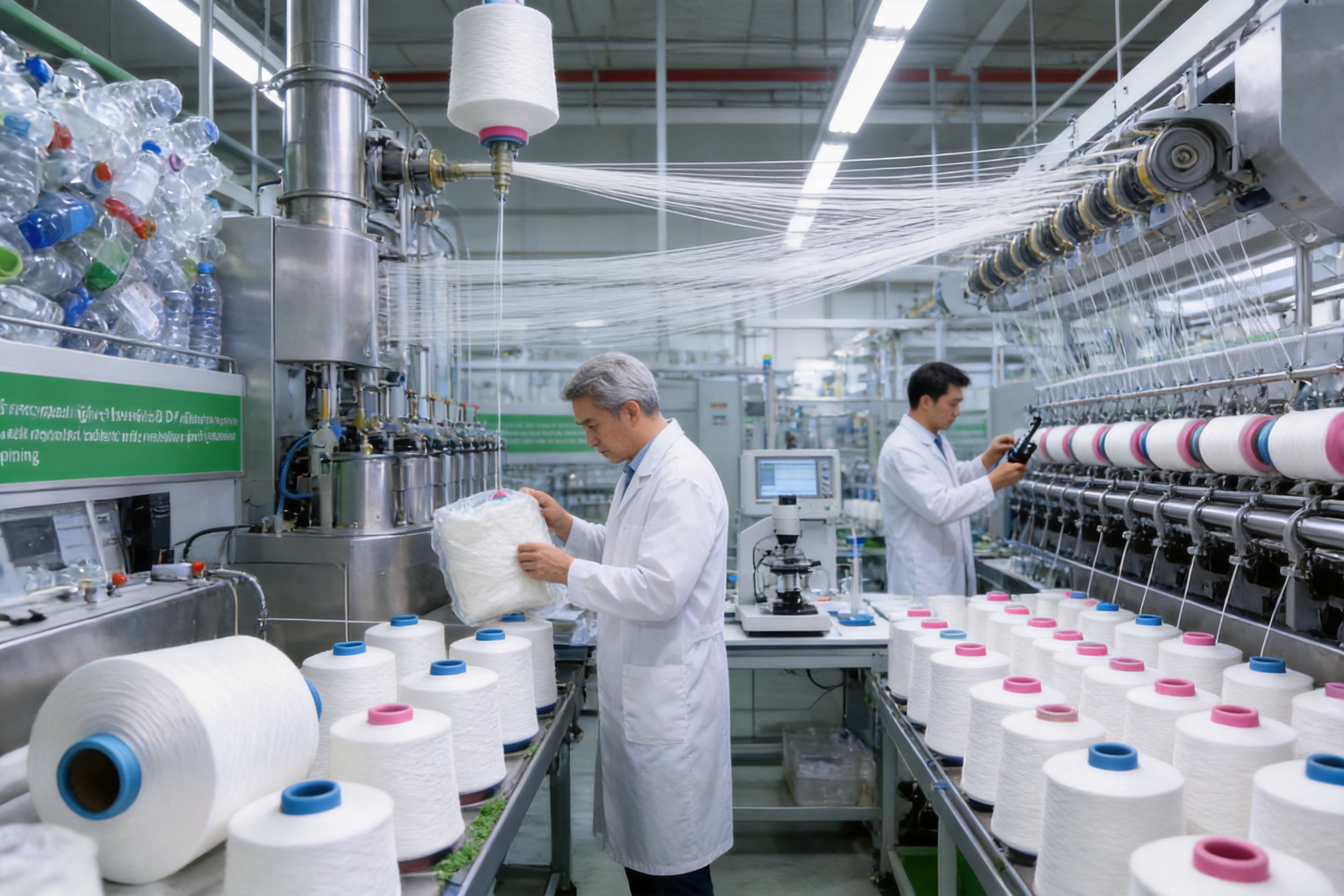
The performance of a high-tenacity recycled DTY yarn depends on the consistency of every stage, from recycled raw material preparation to final winding. Advanced manufacturing is not limited to the texturing machine. It includes material selection, polymer quality, spinning stability, filament uniformity, texturing control, winding, packaging, testing, and traceability.
7.1 Recycled Raw Material Preparation
The process begins with the selection and preparation of suitable recycled polyester feedstock. Post-consumer plastic bottles and other polyester materials must be sorted to remove unsuitable polymers, colors, contaminants, metals, and foreign matter. Cleaning and processing are essential for protecting downstream equipment and maintaining polymer quality.
Consistent recycled feedstock helps reduce variation in melt behavior, color, viscosity, and spinning performance. A professional supplier must therefore manage raw material sourcing and preparation carefully rather than treating recycled content as a simple substitution for virgin polymer.
7.2 Polymer Processing
After preparation, the recycled material is converted into polyester chips or another suitable polymer feedstock. Controlled drying is important because moisture can negatively affect polyester processing. Proper temperature management, filtration, and melt handling help create a cleaner and more stable polymer stream.
The company’s product portfolio includes polyester chips and bio-based PEF chips as well as various yarn categories. This broader material knowledge provides a useful foundation for research, formulation, and application development across different polymer and yarn systems.
7.3 Melt Spinning
During melt spinning, the polyester melt is extruded through spinnerets to form continuous filaments. The spinning process must control temperature, pressure, throughput, cooling, and winding speed. Small variations can influence filament diameter, orientation, strength, elongation, and dyeing behavior.
For high-tenacity yarn, spinning conditions are selected to promote the required molecular orientation and mechanical properties. Filament uniformity is also important because uneven filaments may lead to irregular dyeing, weak points, fabric streaks, or unstable texturing.
7.4 Drawing and Texturing
In DTY production, the filament is drawn and textured to create crimp and bulk. The draw ratio, heater temperature, false-twist conditions, overfeed, cooling, and winding parameters all influence the final yarn properties.
Correct process control helps achieve the required balance of strength, elongation, crimp, shrinkage, softness, and cohesion. Excessive variation can cause problems such as uneven dye uptake, poor knitting performance, excessive hairiness, unstable fabric width, or inconsistent appearance.
7.5 Winding and Packaging
After texturing, the yarn is wound onto packages suitable for transportation and downstream processing. Package density, winding tension, package shape, and surface quality affect unwinding behavior. Proper packaging also protects the yarn from moisture, contamination, compression, and handling damage.
For international shipments, stable packaging and clear product identification are essential. Buyers need to know the yarn type, denier, filament count, color or luster, lot number, quantity, and any special processing information associated with each package.
7.6 Testing and Inspection
Quality control may include testing for linear density, tenacity, elongation, crimp, shrinkage, oil pickup, intermingling, package appearance, dyeability, and yarn evenness. The exact inspection program depends on the product specification and final application.
High-tenacity products intended for safety, industrial, or geotextile applications require particularly careful control of strength consistency. Apparel and home textile applications may place greater emphasis on softness, color uniformity, appearance, and knitting or weaving performance. A flexible supplier should be able to adjust inspection priorities according to the customer’s technical requirements.
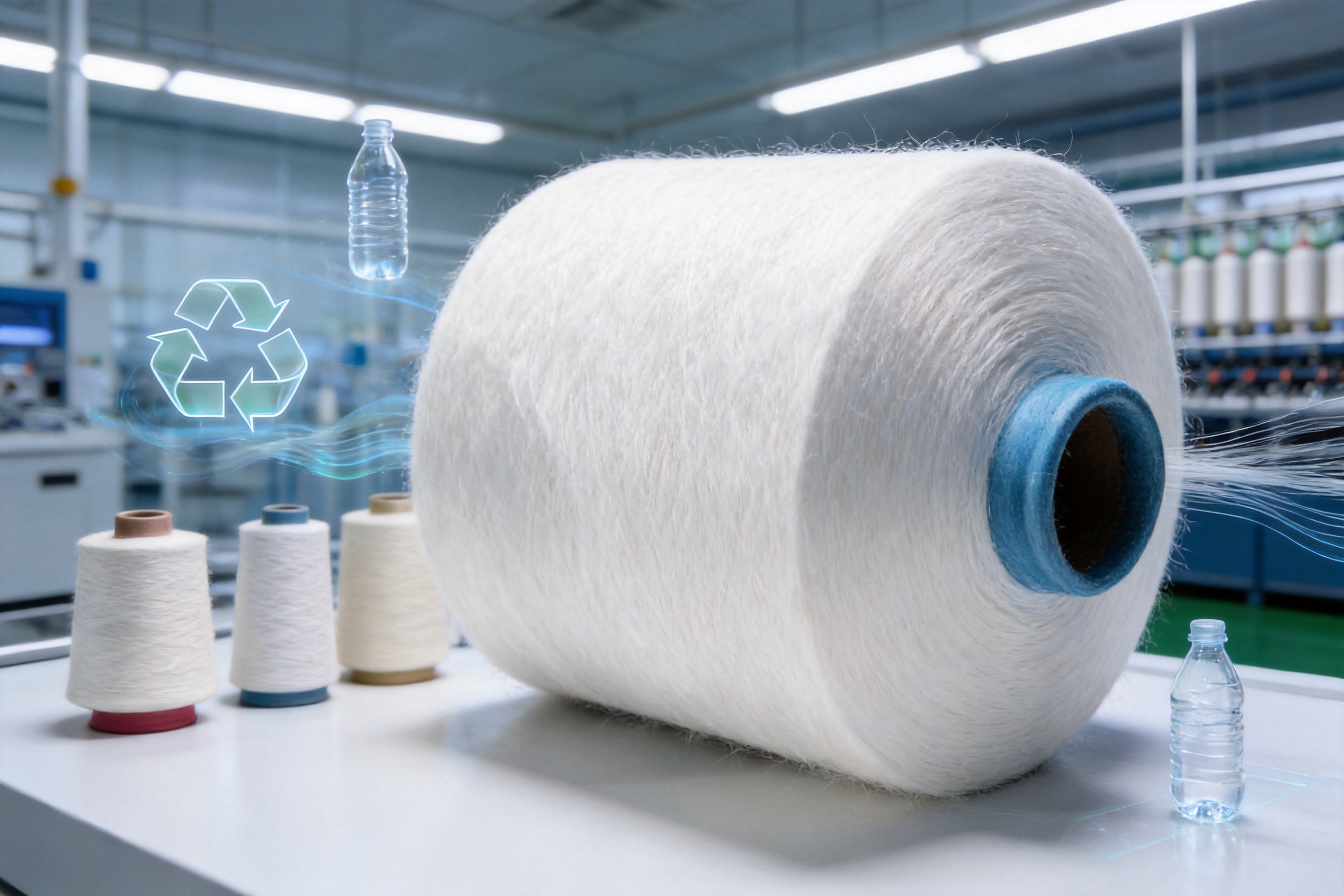
8. Product Range and Customization Capability
The company’s product list includes a wide range of recycled and conventional yarn constructions. Recycled options include recycled SD DTY, recycled SD FDY, recycled FD DTY, recycled SD+CD DTY, recycled DDB DTY, and recycled CD DTY. Available combinations cover different denier and filament configurations, including fine, medium, and heavier yarns.
The broader portfolio also includes normal-series SD DTY, FD DTY, and SD DDB yarns; CD-series CD DTY, SD+CD DTY, and white and black yarns; high-elastic yarn; PBT/PET yarn; PBT/PET DDB yarn; fire-retardant yarn; antibacterial yarn; moisture-wicking yarn; cotton-like yarn; hollow warm yarn; and Acy yarn.
| Product Family | Representative Options | Potential Applications |
|---|---|---|
| Recycled series | SD DTY, SD FDY, FD DTY, SD+CD DTY, DDB DTY, CD DTY | Sustainable apparel, bags, sportswear, home textiles, industrial fabrics |
| CD series | CD DTY, SD+CD DTY, white and black yarn | Contrast-dyed fabrics, fashion textiles, uniforms, decorative materials |
| High-elastic series | High-elastic yarn, PBT/PET, PBT/PET DDB | Stretch fabrics, activewear, comfort textiles, fitted garments |
| Functional series | Fire-retardant, antibacterial, moisture-wicking | Protective clothing, hygiene-related textiles, sportswear, technical fabrics |
| Special-effect series | Cotton-like, hollow warm, Acy yarn | Soft-touch garments, thermal fabrics, specialty apparel and textiles |
This range is important for buyers developing coordinated product lines. Instead of sourcing each yarn category from a separate supplier, customers may be able to work with one technical partner for recycled yarn, functional yarn, colored yarn, and related fabric requirements.
The company states that it can accept orders for different kinds of differentiated yarn. Customization may involve denier, filament count, luster, color, recycled content, cationic-dyeable performance, elasticity, functional additives, cross-section, or end-use requirements. Custom development should be discussed in detail before sampling so that the appropriate equipment, raw material, and testing plan can be selected.
9. Advantages Over Conventional and Lower-Specification Alternatives
9.1 Compared with Virgin Polyester DTY
The most obvious advantage over standard virgin polyester DTY is recycled content. Recycled yarn enables manufacturers to reduce dependence on virgin resources and support sustainability programs. When the recycled product also meets the required strength and processing standards, buyers can improve the environmental profile of a finished product without redesigning the entire fabric structure.
The CD characteristic provides another advantage where color differentiation is important. Standard polyester may not create the same cationic-dyeing effects. High-tenacity performance adds further value for products that must combine appearance with durability.
9.2 Compared with Basic Recycled Yarn
Some recycled yarns are designed primarily for general-purpose fabrics and may not be suitable for high-tension applications. High-tenacity recycled DTY is positioned for more demanding uses because of its reported strength range, resistance properties, and controlled shrinkage.
The product also offers the comfort and bulk associated with DTY rather than the flatter, more rigid feel that may be found in certain industrial filament constructions. This allows the same general material concept to serve both technical and consumer-facing products.
9.3 Compared with Low-Consistency Supply
Textile mills often face high costs when yarn lots vary significantly. Inconsistent denier, dye uptake, strength, or package behavior can create machine stoppages, fabric defects, rework, and customer complaints. A supplier with professional R&D, manufacturing control, and product breadth can reduce these risks by establishing clearer specifications and repeatable production procedures.
9.4 Compared with Narrow Product Portfolios
A narrow supplier may offer one or two recycled yarn types but have limited ability to support alternative specifications. A diversified supplier can help customers compare recycled SD DTY, recycled FD DTY, recycled CD DTY, SD+CD constructions, and functional options. This is particularly useful when a buyer is developing several fabric collections or needs to replace an existing yarn with a similar but more sustainable alternative.
10. Applications
10.1 Heavy-Duty Fabrics
High-tenacity recycled DTY can be used in heavy-duty fabrics where tensile strength, abrasion resistance, and structural stability are important. These may include workwear fabrics, equipment covers, durable bags, luggage materials, protective accessories, and reinforced textile components.
10.2 Safety Belts and Safety Products
Safety-related products require careful engineering and testing. The yarn’s high tenacity makes it a candidate for selected safety belt and restraint-related fabric constructions, subject to product-specific standards, design requirements, and independent validation. Yarn suitability alone does not establish compliance with a complete safety product standard.
10.3 Geotextiles
Geotextiles are used for separation, filtration, drainage, reinforcement, and erosion control. They may be exposed to moisture, soil pressure, ultraviolet radiation, chemicals, and long service periods. Recycled high-tenacity polyester can support sustainable infrastructure projects where strength and resistance are required.
10.4 Sportswear
Sportswear requires a combination of comfort, flexibility, durability, moisture management, colorfastness, and appearance retention. Textured recycled polyester can support soft and resilient fabric structures. When combined with moisture-wicking or other functional yarns, it can contribute to performance-oriented apparel systems.
10.5 Outdoor and Travel Products
Mountaineering bags, handbags, school bags, luggage, briefcases, fashion bags, shopping bags, and gift bags are among the applications associated with recycled polyester fabrics. High-tenacity yarn is especially valuable in these products because handles, seams, panels, and load-bearing areas experience repeated tension and abrasion.
10.6 Home Textiles
Home textile applications may include upholstery, curtains, cushions, bed products, decorative fabrics, and other household materials. The yarn’s softness, colorability, dimensional stability, and resistance can help create attractive products designed for repeated use.
10.7 Fashion and Casual Apparel
The CD dyeing effect can give apparel fabrics a distinctive surface appearance. Combined with the soft hand of DTY and the sustainability message of recycled content, the yarn is suitable for fashion collections, casual garments, uniforms, activewear, and lifestyle products.
11. Recommended Processing Considerations
Before large-scale production, buyers should conduct trials using the exact yarn specification, machine type, fabric construction, dye class, and finishing route intended for commercial production. This is especially important for CD yarn because the final appearance depends on the relationship between cationic-dyeable and conventional components.
Knitting and weaving settings may need to be adjusted according to yarn denier, filament count, intermingling, friction behavior, and package tension. Excessive machine tension can reduce the benefits of texturing or increase the risk of breaks. Suitable lubrication and tension control support stable running.
Dyeing conditions should be selected according to the cationic-dyeable component and the accompanying fibers. Laboratory dips can help determine the most appropriate dye combination, temperature profile, pH, leveling agent, and finishing treatment. Color matching should be evaluated under suitable lighting conditions and against an approved standard.
Heat setting and finishing processes should also be optimized. Because the yarn is designed for dimensional stability, controlled thermal treatment can help maintain fabric structure. However, excessive heat or unsuitable dwell times may influence crimp, bulk, shrinkage, handle, or color appearance.
For industrial applications, buyers should assess not only yarn strength but also fabric tear strength, bursting strength, seam performance, abrasion resistance, ultraviolet stability, chemical exposure, and long-term aging. The appropriate test program should reflect the actual use environment.
12. A Technical Partner for Global Buyers
The supplier behind the product operates in Suzhou, Jiangsu Province, one of China’s important textile manufacturing regions. The company was founded in June 2015 and focuses on the development and sale of differential yarn, recycled yarn, polyester dope-dyed yarn, SHAWLIENCE, microfine yarn, flame-retardant yarn, cationic-dyeing yarn, and knitting fabric products.
Its professional R&D team works with internationally recognized enterprises on the research, development, and application of environmental and functional yarns and fabrics. This orientation toward development is important because recycled yarn specifications are not always interchangeable. Different customers may require different combinations of strength, dyeability, softness, luster, elasticity, and processing behavior.
More than 90% of the company’s products are exported, and it has developed customer relationships in 36 countries. International experience can help a supplier understand different documentation expectations, packaging requirements, communication standards, delivery arrangements, and application needs.
The company also emphasizes customer support and states that its experts are available to provide guidance on product selection and problem solving within 12 hours globally. For overseas buyers, responsive technical communication can be as important as the yarn itself. Fast clarification of specifications, sampling questions, testing results, and production issues helps reduce project delays.
The supplier’s broad product structure creates opportunities for integrated sourcing. A customer may begin with high-tenacity CD DTY recycled filament yarn and later require recycled FDY, recycled SD DTY, high-elastic yarn, functional yarn, colored yarn, or knitting fabric. Access to related materials through one supplier can simplify development and reduce the number of separate technical interfaces.
13. How Buyers Can Select the Correct Specification
Choosing the correct specification begins with the final product rather than the yarn name alone. Buyers should define the intended fabric construction, machine type, target weight, required hand feel, color effect, strength level, and environmental conditions.
13.1 Determine the Required Linear Density
Lower-denier yarns are generally suited to finer and lighter fabrics, while higher-denier yarns can provide greater coverage, bulk, and strength. The appropriate choice depends on fabric weight, density, drape, opacity, abrasion requirements, and the desired surface effect.
13.2 Select the Filament Count
Filament count influences softness, surface smoothness, bulk, and appearance. A higher number of finer filaments can create a softer hand, while other constructions may provide a more pronounced texture or stronger visual character. The denier/filament combination should be considered together rather than separately.
13.3 Confirm the Dyeing Objective
If the fabric requires a standard solid color, a conventional polyester construction may be sufficient. If the design requires contrast, cross-dyeing, or a special two-tone effect, CD DTY or SD+CD DTY may be more suitable.
13.4 Define the Mechanical Requirements
For bags, safety products, geotextiles, outdoor equipment, and other demanding applications, buyers should specify minimum tenacity, elongation, tear resistance, abrasion performance, and dimensional stability. These requirements should be translated into measurable yarn and fabric test standards.
13.5 Confirm Sustainability Documentation
Buyers requiring recycled-content claims should confirm the applicable certification, transaction documentation, scope, and chain-of-custody requirements. GRS certification can support responsible sourcing programs, but each brand or market may have additional documentation requirements.
14. Suggested Quality Checklist for Procurement
| Procurement Stage | Recommended Checks |
|---|---|
| Initial inquiry | Confirm yarn type, recycled content, CD function, denier, filament count, luster, color, and intended application |
| Sample approval | Evaluate appearance, hand feel, package quality, knitting or weaving performance, dyeing behavior, and fabric dimensions |
| Laboratory testing | Test linear density, tenacity, elongation, shrinkage, crimp, evenness, and color performance where applicable |
| Trial production | Check machine tension, breakage rate, unwinding, fabric defects, dye uniformity, and finishing response |
| Commercial order | Confirm tolerances, inspection standards, packaging, lot identification, delivery schedule, and documentation |
| Repeat orders | Compare new lots with approved standards and retain reference samples for color and physical properties |
A clear technical specification protects both buyer and supplier. It prevents misunderstandings about what “high tenacity,” “recycled,” “CD,” or “customized” means in a particular application. Written approval samples and agreed tolerances are especially valuable for repeat production.
15. Frequently Asked Questions
Q1: What is the main material used in this yarn?
The yarn is made from 100% recycled polyester. The recycled material is derived from suitable post-consumer polyester waste, including discarded plastic bottles, and is processed into filament yarn.
Q2: What does CD mean in CD DTY?
CD means cationic-dyeable. This characteristic allows the yarn to respond differently from conventional polyester during suitable dyeing processes, making it possible to create contrast, two-tone, heathered, and other differentiated color effects.
Q3: What does DTY mean?
DTY means Draw Textured Yarn. The yarn is drawn and textured to create crimp, bulk, softness, elasticity, and improved textile hand feel.
Q4: How strong is the yarn?
The stated tenacity range is approximately 7.6–9.3 cN/dtex. Exact performance depends on the selected denier, filament count, construction, production lot, and testing method. Buyers should request a technical data sheet for the precise specification.
Q5: What denier and filament options are available?
The described range extends approximately from 150d to 22000d, with multiple denier and filament combinations. The company’s product list includes recycled CD DTY and related recycled yarn options in several configurations. Custom specifications may be discussed for particular applications.
Q6: Is the product suitable for apparel?
Yes. Its textured structure, softness, elasticity, colorability, and recycled content make it suitable for sportswear, casualwear, uniforms, fashion fabrics, and other apparel applications. The exact specification should be selected according to fabric weight, hand feel, color effect, and performance requirements.
Q7: Can it be used for bags and luggage?
Yes. Recycled polyester fabrics are widely used for mountaineering bags, handbags, school bags, luggage, briefcases, shopping bags, gift bags, and related products. High-tenacity yarn is particularly suitable where the fabric must withstand repeated pulling and abrasion.
Q8: Can the yarn be used for geotextiles?
It may be suitable for selected geotextile constructions that require polyester strength and resistance. However, the final fabric must be tested for the relevant mechanical, environmental, and durability requirements of the intended geotechnical application.
Q9: Does recycled yarn perform like virgin polyester?
Performance depends on the raw material, polymer processing, spinning conditions, and yarn construction. A well-controlled high-tenacity recycled yarn can provide strong mechanical properties and stable processing performance. Buyers should compare approved samples and test data for the specific application.
Q10: Is the yarn GRS certified?
The product information states that the recycled yarn holds GRS certification. Buyers should confirm the current certificate scope, transaction documentation, and any customer-specific certification requirements before making sustainability claims.
Q11: Can the product be customized?
Yes. The supplier states that it can accept orders for various differentiated yarns. Customization may cover denier, filament count, dyeing behavior, luster, color, elasticity, functional properties, and other technical requirements, subject to feasibility and minimum order conditions.
Q12: What information should be provided when requesting a quotation?
Buyers should provide the required yarn type, recycled content, CD or non-CD requirement, denier, filament count, luster, color, intended application, estimated quantity, packaging requirements, delivery destination, and any required certification or testing documentation.
Q13: How should the yarn be tested before mass production?
A trial should include package inspection, machine running, knitting or weaving evaluation, dyeing tests, dimensional assessment, and physical testing. For industrial products, additional tests for abrasion, tear strength, ultraviolet exposure, chemical resistance, and aging may be necessary.
Q14: Can the supplier provide other textile materials?
The company’s product range includes recycled yarn, normal polyester yarn, CD yarn, high-elastic yarn, functional yarn, cotton-like yarn, hollow warm yarn, colored yarn, and knitting fabric. This broader range can support customers seeking multiple related textile materials.
Q15: Why is supplier technical support important?
Textile performance depends on the interaction between yarn, machine settings, fabric construction, dyeing, and finishing. Responsive technical support helps buyers select the appropriate specification, troubleshoot processing issues, and reduce the risk of costly production problems.
16. Conclusion
High-Tenacity CD DTY(D/F) Recycled Filament Yarn combines recycled polyester content with strength, texture, dyeing flexibility, dimensional stability, and resistance. It is designed for buyers who need more than a basic sustainable yarn. The product can support durable bags, luggage, sportswear, outdoor products, safety-related textiles, geotextiles, heavy-duty fabrics, home textiles, and differentiated fashion materials.
Its reported tenacity of approximately 7.6–9.3 cN/dtex, shrinkage of around 2.3%, broad denier and filament range, cationic-dyeable functionality, and GRS-certified recycled content create a strong value proposition for modern textile supply chains.
The manufacturing advantage comes from the combination of recycled-material knowledge, filament spinning, draw texturing, product testing, differentiated yarn development, and application-oriented technical support. The supplier’s broad portfolio and experience in exports to customers in multiple countries further support international sourcing programs.
For buyers, the best approach is to begin with a clear application brief, request the appropriate technical data, conduct a representative sample trial, and confirm all performance and certification requirements before commercial production. When properly selected and processed, high-tenacity CD DTY recycled filament yarn can help manufacturers achieve a practical balance between durability, design flexibility, responsible sourcing, and long-term product value.
References
1. Product information and technical description for High-Tenacity CD DTY(D/F) Recycled Filament Yarn.
2. Product list covering recycled, normal, CD, high-elastic, functional, cotton-like, hollow warm, and Acy yarn series.
3. Global Recycled Standard principles relating to recycled-content verification and chain-of-custody management.
4. General textile engineering references concerning polyester filament spinning, drawing, texturing, dyeing, and fabric finishing.
5. General technical references concerning recycled polyester production from post-consumer plastic materials.
6. General textile testing references for yarn tenacity, elongation, shrinkage, linear density, abrasion resistance, and dimensional stability.
Product: High-Tenacity CD DTY(D/F) Recycled Filament Yarn

Popular products
-
Premium Cationic Interlock Stretch Comfort Fabric
-
Moisture-Wicking Nylon Woven Fabric
-
Double-faced jacquard elastic fabric
-
Heather Grey Double-faced cationic jersey fabric
-
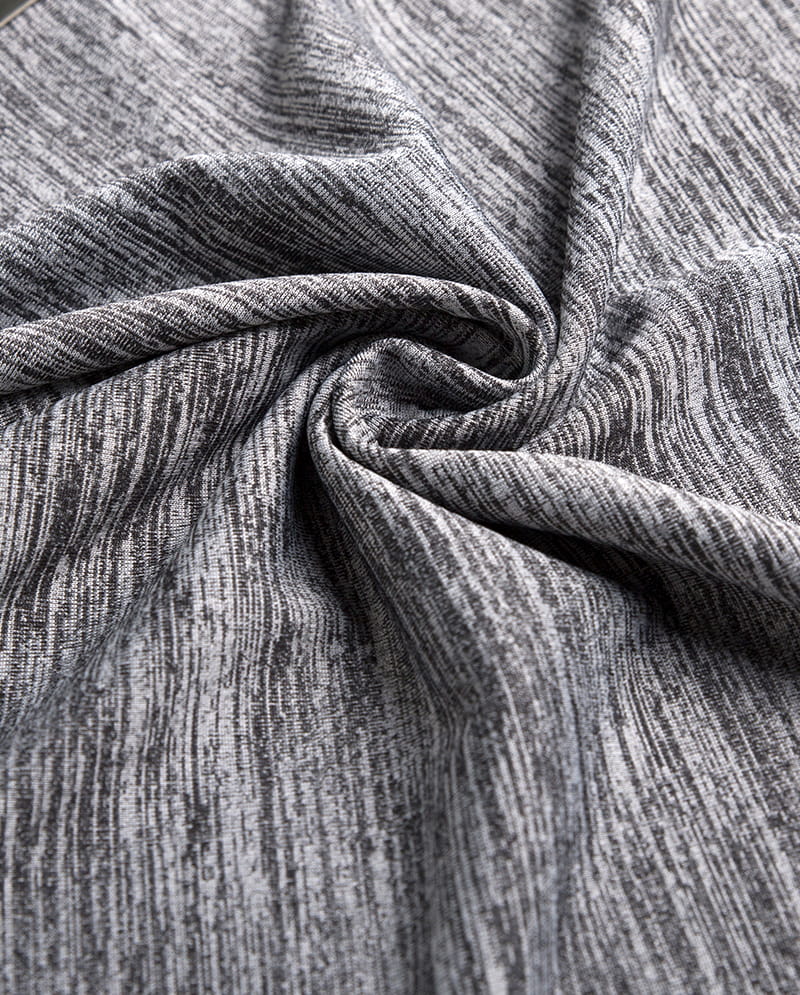
Anti-static Cationic Knitted Rib Fabric
-
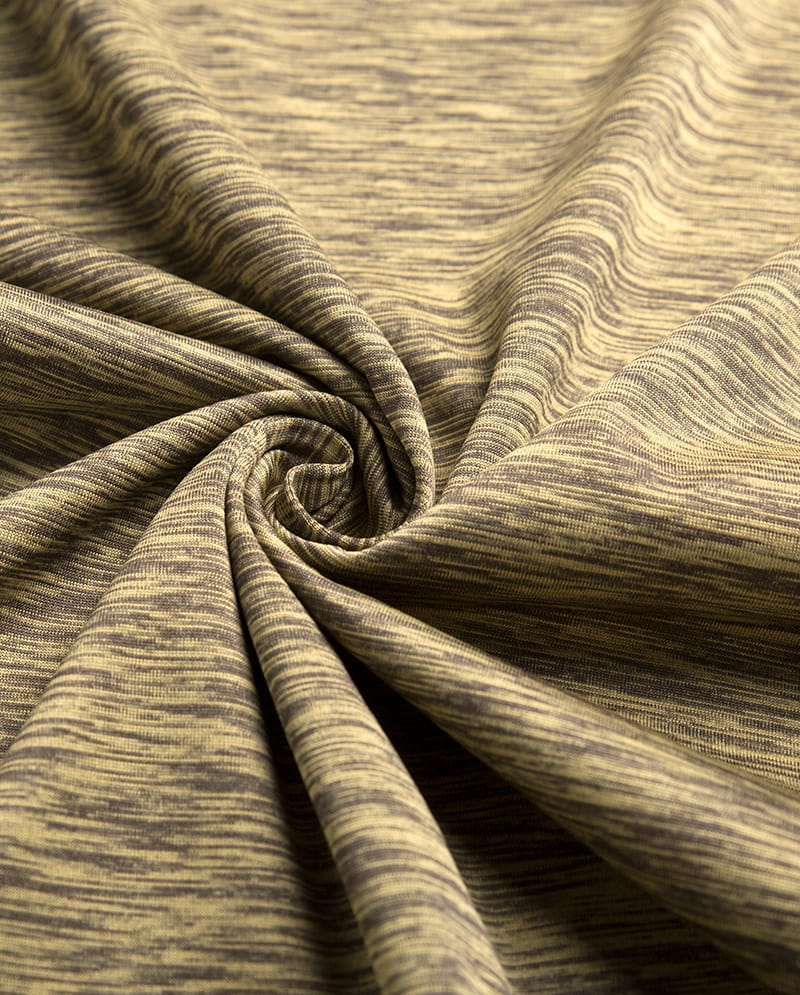
High-Stretch Cationic Jersey Fabric
-
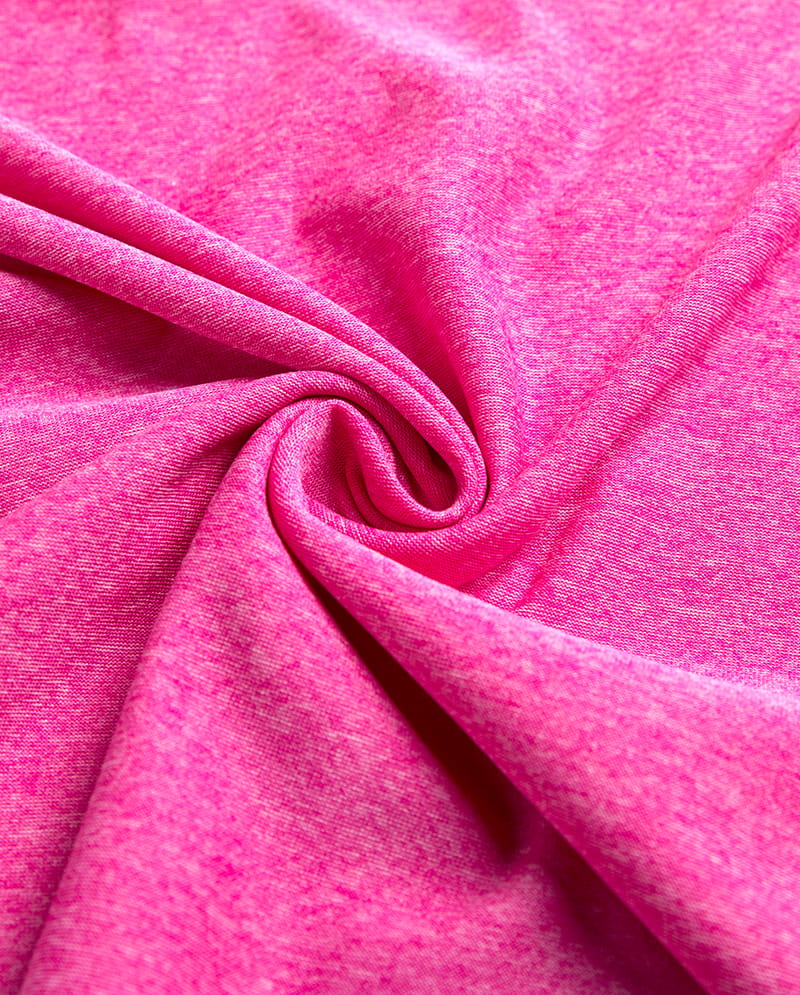
High Quality Cationic DTY Spandex Two Sides Brush Dralon Knit Fabric for Garment Thermal Underwear
-
Durable Anti-Pilling Knitted Fabric for Home Textiles
-
Wash-Resistant Cationic Elastic Knitted Fabric for Garment Industry
-
Breathable Double-Faced Elastic Composite Fabric
-
-
-
- whatsapp:
- 0086-13962559622
-
- skype:
- skype.aliceshenghong
-
- Wechat:

COPYRIGHT © 2016 Suzhou Junhui Textile Co., Ltd.
