

 EN
EN English
 中文简体
中文简体High-Tenacity CD DTY Recycled Filament Yarn for Sustainable Performance Textiles
Content
- 1 Introduction: A New Standard for Sustainable High-Performance Yarn
- 2 Product Identity and Core Positioning
- 3 Technical Advantages Over Conventional and Competing Yarns
- 4 Manufacturing Strength: From Recycled PET to High-Value Filament
- 5 Product Specifications and Application Guidance
- 6 Applications in Bags, Luggage, and Outdoor Products
- 7 Applications in Apparel, Sportswear, and Home Textiles
- 8 Applications in Technical and Industrial Textiles
- 9 Why This Yarn Stands Out in a Competitive Market
- 10 Advanced Process Control and Environmental Responsibility
- 11 Customization and Specification Flexibility
- 12 Quality Considerations for Buyers
- 13 Q&A: Common Questions About High-Tenacity CD DTY Recycled Filament Yarn
- 13.1 Q1: What is High-Tenacity CD DTY(D/F) Recycled Filament Yarn?
- 13.2 Q2: Why is this yarn considered eco-friendly?
- 13.3 Q3: What makes it different from ordinary recycled polyester yarn?
- 13.4 Q4: What does CD mean in this yarn?
- 13.5 Q5: What does DTY mean?
- 13.6 Q6: What applications are most suitable for this yarn?
- 13.7 Q7: Can this yarn replace virgin polyester yarn?
- 13.8 Q8: What are the main performance benefits?
- 13.9 Q9: Is it suitable for export-oriented textile products?
- 13.10 Q10: How should buyers choose the right specification?
- 14 Conclusion: Strength, Sustainability, and Design Freedom in One Yarn
- 15 References
- 16 Product: High-Tenacity CD DTY(D/F) Recycled Filament Yarn
High-Tenacity CD DTY(D/F) Recycled Filament Yarn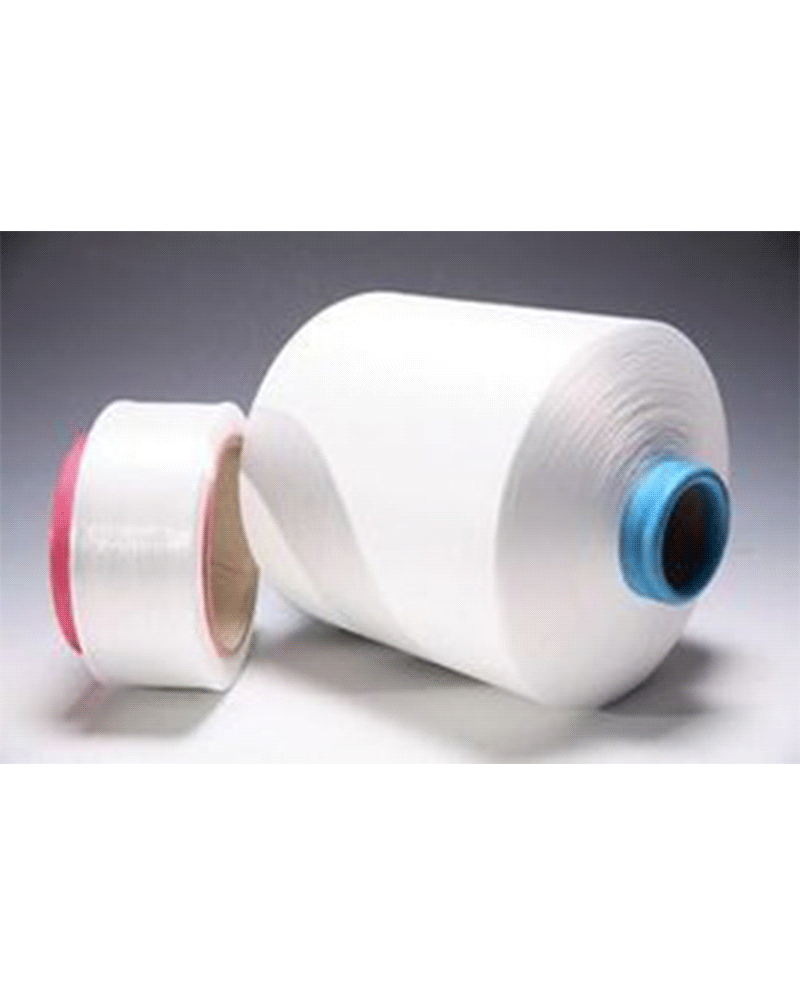
Introduction: A New Standard for Sustainable High-Performance Yarn
High-Tenacity CD DTY(D/F) Recycled Filament Yarn is designed for textile manufacturers, fabric developers, sourcing teams, and brands that need a yarn capable of combining strength, dyeing flexibility, durability, and environmental responsibility. As global textile production moves toward lower-carbon materials and circular manufacturing, recycled polyester filament yarn has become an important solution for reducing dependence on virgin petroleum-based resources while still delivering reliable performance in demanding applications.
This yarn is made from recycled polyester resources, including post-consumer plastic bottles and related PET waste streams. Through controlled recycling, purification, melting, spinning, drawing, and texturing processes, discarded PET is transformed into a high-value filament yarn suitable for modern fabrics and industrial textiles. Unlike ordinary recycled yarns that may focus only on environmental claims, this product emphasizes a balanced technical profile: high tenacity, stable dimensional behavior, good abrasion resistance, chemical resistance, UV resistance, soft DTY texture, and strong dyeability.
The “CD” characteristic indicates cationic dyeable functionality, giving the yarn an advantage in color development and fabric design. The “DTY” structure refers to draw textured yarn, which provides bulk, elasticity, softness, and improved fabric hand feel. The “D/F” configuration refers to denier and filament count, allowing customers to select suitable specifications according to fabric weight, texture, strength, and end-use requirements. Together, these features make the yarn especially useful for heavy-duty fabrics, bags, luggage, sportswear, home textiles, safety-related textiles, geotextiles, fashion fabrics, and eco-conscious product lines.
Compared with many conventional recycled polyester yarns, High-Tenacity CD DTY(D/F) Recycled Filament Yarn offers a more performance-oriented approach. It is not merely a substitute for virgin polyester; it is a technical material engineered to support durability, attractive dyeing effects, process stability, and responsible sourcing. For manufacturers seeking to differentiate their fabrics in competitive markets, this yarn provides a practical route to combine sustainability narratives with measurable textile performance.
Product Identity and Core Positioning
High-Tenacity CD DTY(D/F) Recycled Filament Yarn belongs to the recycled yarn category and is closely connected with polyester filament innovation. It can be used across multiple product categories, including textile fabric, DTY yarn, FDY yarn, POY yarn, and polyester chip-based downstream processing. Its main value is that it transforms recycled PET into a yarn capable of meeting both aesthetic and functional requirements.
The product is especially suitable for companies that want to create fabric collections with lower environmental impact while maintaining consistent production quality. Many end users today require materials that support sustainability goals, traceability expectations, and responsible sourcing policies. Recycled polyester yarn helps reduce plastic waste and lowers the need for virgin raw materials. When supported by proper certification systems such as GRS, it can also help brands communicate recycled content with greater confidence.
In practical textile development, the yarn’s high tenacity is one of its strongest advantages. A tenacity range of approximately 7.6 to 9.3 cn/dtex allows the yarn to withstand tension, repeated use, friction, and demanding fabric construction processes. This is particularly important in luggage materials, outdoor fabrics, mountaineering bags, briefcases, safety belts, reinforced woven fabrics, and other applications where yarn failure can reduce product life.
At the same time, the DTY structure contributes comfort and fabric usability. Draw textured yarn has a crimped and bulked structure, which improves elasticity, softness, covering power, and dimensional stability. For apparel and home textile applications, this can create fabrics that are pleasant to touch and practical to wear or use. For industrial and semi-industrial fabrics, it helps create a balance between strength and processability.
The CD feature further expands design possibilities. Cationic dyeable polyester can produce deeper shades, different dyeing behaviors, and attractive two-tone or mélange effects when combined with regular polyester or other yarns. This gives fabric designers additional freedom without requiring excessively complicated fiber blends. In a market where appearance, function, and sustainability must often be achieved at the same time, CD DTY recycled filament yarn provides an efficient material foundation.
Technical Advantages Over Conventional and Competing Yarns
The textile yarn market includes many recycled polyester products, but not all recycled yarns deliver the same level of performance consistency. Some recycled yarns may suffer from uneven viscosity, weak tensile properties, inconsistent color uptake, unstable shrinkage, or poor processing behavior. High-Tenacity CD DTY(D/F) Recycled Filament Yarn is positioned as a premium recycled filament yarn that addresses these common limitations through careful raw material selection, controlled production, and strict testing.
1. High Tenacity for Long Service Life
One of the key advantages is its high tensile strength. With a tenacity range of around 7.6 to 9.3 cn/dtex, the yarn is suitable for fabrics that must resist pulling, tearing, and repeated mechanical stress. In comparison, ordinary recycled DTY yarn may be adequate for basic apparel or lining fabrics but may not meet the requirements of heavy-duty woven fabrics, outdoor products, or technical textile applications.
High tenacity improves the final product’s resistance to deformation and failure. For bags, luggage, backpacks, school bags, gift bags, shopping bags, and storage boxes, stronger yarn contributes to longer-lasting seams, better fabric integrity, and improved consumer satisfaction. For safety belts and geotextiles, yarn strength is even more critical because performance failure can have serious consequences.
2. Recycled Content Without Sacrificing Performance
A major challenge in recycled polyester manufacturing is maintaining reliable quality while using recovered PET resources. This yarn is engineered to convert plastic waste into high-value filament while preserving the mechanical properties required by textile producers. This allows brands to reduce environmental impact without creating products that feel inferior or perform poorly compared with virgin polyester alternatives.
For competitors relying mainly on low-cost recycled feedstock with limited purification, yarn quality can fluctuate from batch to batch. By contrast, a controlled manufacturing approach reduces contamination, improves melt stability, and supports more consistent spinning and texturing. This results in yarn that is easier to weave, knit, dye, finish, and convert into finished goods.
3. Cationic Dyeability for Richer Fabric Design
The CD feature gives the yarn a notable advantage in dyeing and design development. Cationic dyeable polyester can be dyed with cationic dyes, often producing bright, deep, and differentiated color effects. When combined with semi-dull, full-dull, regular polyester, or other functional yarns, it can create two-tone, heathered, or contrast effects that add visual value to fabrics.
This is particularly useful for fashion bags, sportswear, outerwear, decorative textiles, and home textiles where color uniqueness is part of the product identity. Instead of relying only on printing or complicated post-finishing, fabric developers can build color effects directly into the yarn and fabric structure. This may improve production efficiency and reduce some finishing complexity.
4. DTY Texture for Comfort, Elasticity, and Fabric Coverage
DTY yarn has a soft and crimped texture that improves bulk and elasticity. Compared with flat filament yarns, DTY can create fabrics with better hand feel, improved coverage, and enhanced wrinkle resistance. In apparel, sportswear, and home textile applications, these qualities translate into comfort and appearance retention. In bags and industrial fabrics, DTY can improve texture, thickness, and surface character.
The yarn also supports dimensional stability, with low shrinkage behavior around 2.3% under suitable conditions. Stable shrinkage is valuable in fabric finishing because it helps reduce unexpected size changes, distortion, and quality claims. For manufacturers producing large production runs, predictable shrinkage improves cutting accuracy, finishing efficiency, and final product consistency.
5. Resistance to Abrasion, Chemicals, and UV Exposure
Polyester is widely used because of its durability, and this recycled filament yarn retains important polyester performance characteristics. It offers good resistance to abrasion, many chemicals, and UV exposure. These properties are highly valuable for outdoor fabrics, luggage, bags, school bags, mountaineering bags, and sports textiles that experience sunlight, friction, sweat, washing, and repeated handling.
In competitor products where recycled polyester quality is inconsistent, abrasion resistance and dye fastness may vary. A stronger, more stable yarn helps reduce surface fuzzing, pilling, color fading, and premature fabric degradation. This can improve the perceived quality of finished products and reduce the risk of returns or complaints.
Manufacturing Strength: From Recycled PET to High-Value Filament
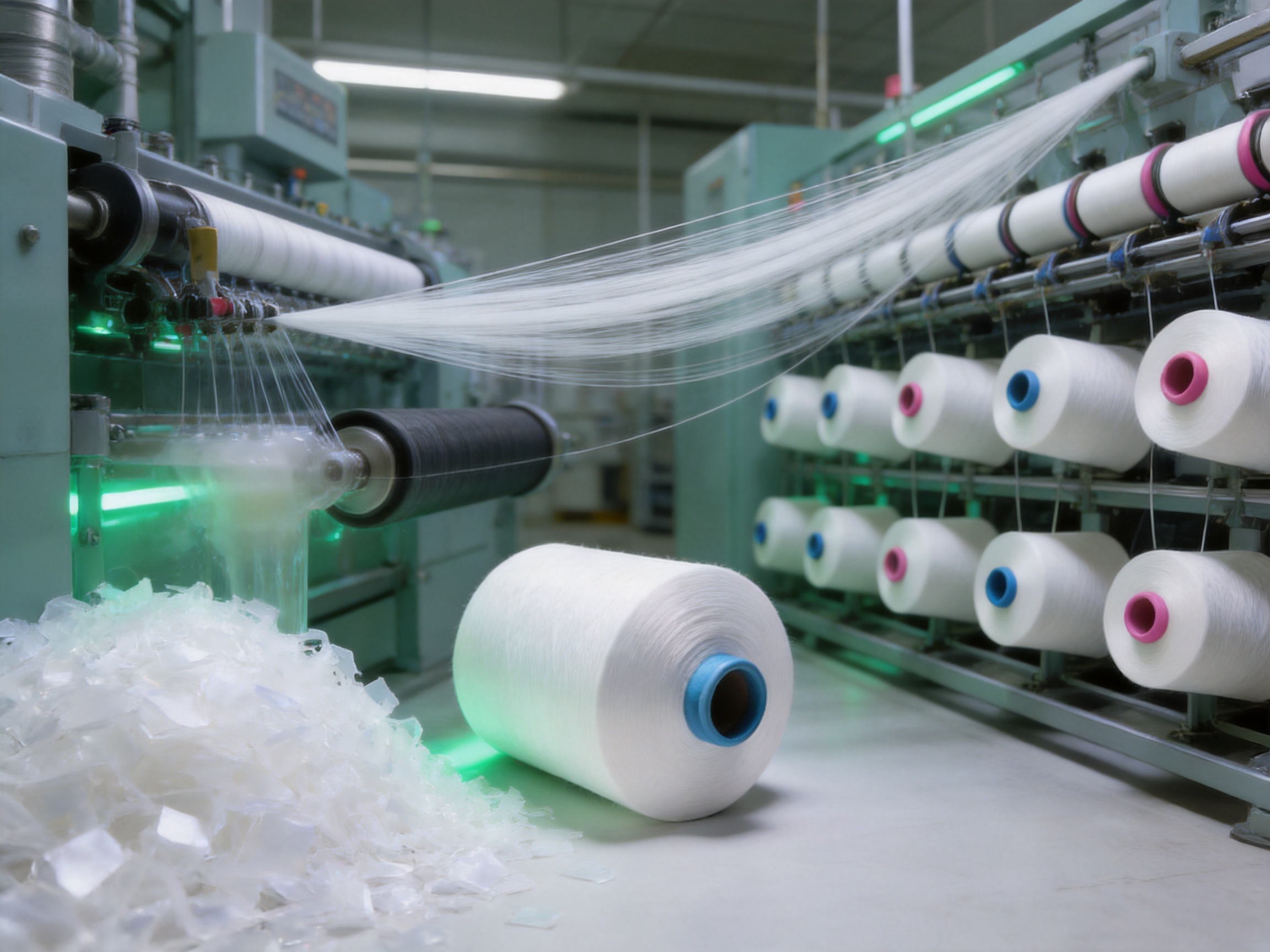
The quality of recycled filament yarn depends heavily on manufacturing control. The process begins long before the yarn is wound onto a package. It requires careful sorting of recycled PET sources, removal of impurities, controlled washing, drying, chip preparation, melt filtration, spinning, drawing, texturing, intermingling, winding, and final inspection. Each stage influences yarn strength, dyeability, cleanliness, and processing stability.
Suzhou Junhui Textile Co., Ltd. and Suzhou Xiaoran New Material Co., Ltd. are focused on differential yarn development and sales, including recycled yarn, polyester drop-dyed yarn, microfine yarn, flame-retardant yarn, cationic dyeing yarn, and knitting fabric products. The company’s background in functional and environmental yarn categories gives it practical experience in developing yarns that meet both market and technical requirements.
The company was founded in 2015 and has built a customer base across many international markets. More than 90% of its products are exported, and cooperative relationships have been established with customers in 36 countries. This export orientation requires reliable quality control, practical communication, and the ability to respond to different standards, specifications, and end-use expectations.
Raw Material Selection and Recycling Control
Recycled PET quality begins with feedstock selection. PET bottles and related polyester waste must be sorted to reduce contamination from labels, caps, PVC, colored plastics, metals, adhesives, and other foreign materials. Effective sorting helps prevent defects in extrusion and spinning. Poorly sorted materials can cause black spots, filament breaks, uneven dyeing, and unstable mechanical properties.
After sorting, PET is cleaned, crushed, washed, dried, and prepared for melting or chip production. Moisture control is especially important because polyester can degrade during melting if water content is too high. Degradation reduces molecular weight and weakens yarn tenacity. Therefore, controlled drying is essential for producing high-strength recycled filament yarn.
Melting, Filtration, and Spinning
During melt processing, recycled PET is heated into a molten state and filtered to remove fine impurities. High-quality filtration supports smoother spinning, fewer broken filaments, and better yarn uniformity. The melt must be carefully controlled for viscosity, temperature, residence time, and pressure. Stable melt behavior helps produce consistent filament diameter and reduces defects in downstream processes.
The molten polyester is extruded through spinnerets to form continuous filaments. Cooling and solidification must be precisely managed to obtain uniform filament structure. For CD yarn, chemical modification or cationic dyeable polyester composition must be controlled to ensure the correct dyeing behavior. If cationic dyeability is inconsistent, the fabric may show shade variation or uneven dye uptake.
Drawing and Texturing
Drawing aligns polymer molecules and improves yarn strength. For high-tenacity products, the draw ratio, temperature, tension, and relaxation settings must be carefully optimized. Excessive drawing may cause brittleness, while insufficient drawing may reduce strength. The goal is to create a yarn that combines tensile performance with processability.
Texturing transforms flat filament into a bulked, crimped DTY structure. This process improves elasticity, softness, and fabric coverage. False-twist texturing is commonly used for polyester DTY production. The process involves twisting, heating, cooling, untwisting, and stabilizing the yarn. Precise control of heater temperature, yarn speed, twist level, and tension determines the final crimp, elongation, shrinkage, and hand feel.
Quality Inspection and Batch Consistency
Quality control is vital for a yarn intended for demanding applications. Important testing items include denier, filament count, tenacity, elongation, shrinkage, oil pickup, intermingling, evenness, dyeability, color consistency, appearance, package formation, and contamination. For recycled yarn, traceability and recycled content verification are also important, especially when customers need certification support.
The company’s professional R&D team works with customers and industry partners on research, development, and application of environmental and functional yarns and fabrics. This capability supports customization, problem solving, and specification matching. When a customer needs a yarn for a particular loom speed, knitting gauge, dyeing method, finishing condition, or fabric performance target, technical support can help reduce trial-and-error costs.
Product Specifications and Application Guidance
The yarn is available in diverse D/F configurations. In recycled and CD-related product ranges, common specifications may include 75/36, 75/72, 50/48, 50/72, 100/72, 100/108, 100/144, 125/72, 125/144, 150/72, 150/108, 150/144, 300/96, 300/144, and 300/288, among others. Broader denier options can be selected according to end-use requirements, from finer textile applications to heavier technical and industrial uses.
The following table summarizes key performance features and typical application directions.
Feature |
Technical Meaning |
Practical Benefit |
Typical Applications |
Recycled polyester base |
Made from recovered PET resources |
Supports lower reliance on virgin polyester and helps reduce plastic waste |
Eco-friendly apparel, bags, luggage, home textiles |
High tenacity |
Approximate tenacity range of 7.6-9.3 cn/dtex |
Improves tensile strength, durability, and product life |
Heavy-duty fabrics, safety belts, geotextiles, outdoor goods |
CD functionality |
Cationic dyeable polyester characteristic |
Enables rich colors, special dyeing effects, and design differentiation |
Fashion fabrics, sportswear, decorative textiles, two-tone fabrics |
DTY structure |
Draw textured yarn with crimp and bulk |
Provides softness, elasticity, coverage, and wrinkle resistance |
Knitted fabrics, woven fabrics, apparel, upholstery, bags |
Low shrinkage behavior |
Stable dimensional performance, around 2.3% under suitable conditions |
Reduces fabric deformation and improves finishing predictability |
Garments, home textiles, precision fabric production |
Abrasion and chemical resistance |
Retains key polyester durability features |
Improves resistance to wear, handling, washing, and outdoor exposure |
Backpacks, briefcases, shopping bags, outdoor equipment |
Applications in Bags, Luggage, and Outdoor Products
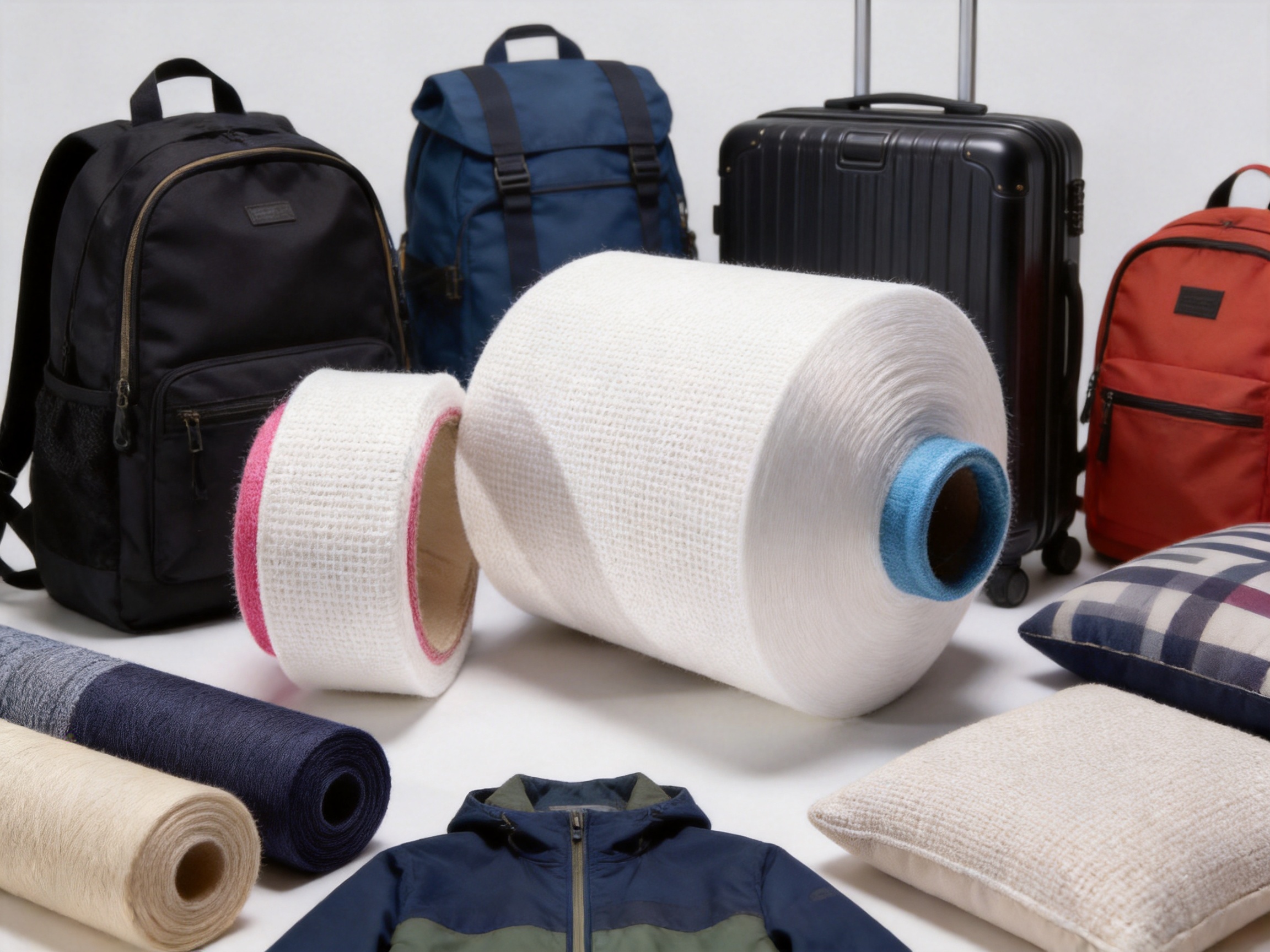
One of the strongest application areas for High-Tenacity CD DTY(D/F) Recycled Filament Yarn is bag and luggage fabric. Products such as mountaineering bags, handbags, school bags, travel bags, briefcases, fashion bags, shopping bags, gift bags, and storage boxes require yarns that can withstand friction, load, and repeated handling. A fabric used in a backpack must resist tearing at stress points, abrasion from daily use, and deformation from weight.
The high-tenacity characteristic supports fabric strength and seam reliability. When used in woven or knitted constructions, the yarn can help create durable surfaces that remain stable under load. For brands selling bags in overseas markets, durability is directly related to consumer trust. A bag that tears easily or loses shape quickly damages brand reputation. By using stronger recycled filament yarn, manufacturers can offer a product that is both responsible and reliable.
The CD dyeability also gives bag designers more options. Fashion bags and outdoor equipment are increasingly expected to have distinctive color palettes. Cationic dyeable yarn can help produce deep shades, contrast textures, or two-color effects when combined with other yarn types. This means recycled content does not have to limit creativity. Instead, recycled CD DTY yarn can become a design tool.
For mountaineering bags and outdoor accessories, UV resistance and abrasion resistance are especially useful. Outdoor products may be exposed to sunlight, dust, rocks, moisture, and repeated movement. Polyester’s natural durability, combined with high yarn tenacity and controlled texturing, helps fabrics maintain strength and appearance over time.
Applications in Apparel, Sportswear, and Home Textiles
Although the yarn has strong performance characteristics, it is not limited to industrial uses. The DTY structure makes it suitable for apparel and home textile fabrics where comfort, softness, stretch, and dimensional stability matter. Sportswear fabrics can benefit from the combination of recycled content, elasticity, wrinkle resistance, and color flexibility. Active consumers increasingly prefer garments with sustainability stories, but they still expect comfort and durability.
In sportswear, DTY yarn contributes to fabric resilience and body movement comfort. It can be used in knitted or woven constructions, depending on the desired fabric effect. The yarn’s dyeability supports vibrant colors that remain attractive after repeated use. Its abrasion resistance helps reduce wear in high-friction areas, while dimensional stability helps garments retain shape.
For home textiles, including decorative fabrics, upholstery-related materials, storage products, and functional household textiles, recycled CD DTY yarn offers both performance and market value. Consumers increasingly look for environmentally responsible materials in home goods. The yarn’s soft texture, color possibilities, and durability make it suitable for products that must look good and withstand daily use.
In fashion textiles, the CD component can be used to create differentiated dyeing results. Designers can combine CD yarn with regular polyester, full-dull yarn, semi-dull yarn, or other functional yarns to achieve layered visual effects. This is a practical advantage over basic recycled yarns that may only offer standard dyeing behavior.
Applications in Technical and Industrial Textiles
Technical textiles require materials that are predictable, strong, and suitable for specialized processing. High-Tenacity CD DTY(D/F) Recycled Filament Yarn is relevant for heavy-duty fabrics, geotextiles, safety-related products, reinforced fabric structures, and other performance applications. The high tenacity and abrasion resistance provide a strong foundation for demanding environments.
Geotextiles, for example, may require resistance to tensile stress, soil contact, moisture, and long-term mechanical loading. While final performance depends on fabric construction and finishing, strong polyester filament yarn can contribute to better reinforcement and durability. Safety belts and load-bearing textiles require particularly strict design and testing, but a high-tenacity yarn provides an important starting point for development.
Industrial fabrics often face friction, tension, chemicals, and environmental exposure. Polyester’s resistance to many chemicals and its ability to retain strength under practical use conditions make it widely adopted. When recycled polyester can meet performance expectations, it helps industrial users improve sustainability without redesigning their entire material strategy.
Compared with low-grade recycled yarns, a controlled high-tenacity CD DTY product provides better confidence for technical fabric developers. Consistency reduces production problems, improves test repeatability, and supports more reliable customer approval processes.
Why This Yarn Stands Out in a Competitive Market
In today’s textile market, sustainability alone is no longer enough. Buyers want evidence of recycled content, but they also need materials that can be processed efficiently and perform well in finished products. High-Tenacity CD DTY(D/F) Recycled Filament Yarn stands out because it combines several value points in one material: recycled origin, high strength, DTY comfort, cationic dyeability, durability, broad specification options, and export-oriented manufacturing support.
Many competing recycled yarns are positioned as low-cost alternatives. They may be suitable for simple products but may not provide the tensile strength, dyeing flexibility, or consistency needed for more demanding fabrics. This product is positioned for manufacturers that want to upgrade recycled textiles rather than compromise. It helps customers create higher-value fabrics with sustainability credentials and practical performance.
The company’s strength in differential yarn categories also supports product development. Because the company works with recycled yarn, flame-retardant yarn, cationic dyeing yarn, microfine yarn, polyester drop-dyed yarn, and knitting fabric products, it understands how different yarn properties interact in fabric construction. This is important because fabric development often requires more than choosing one yarn. It requires matching yarn type, denier, filament count, twist, texture, dyeing method, finishing process, and final application.
Another competitive advantage is responsiveness. The company emphasizes professional guidance and product selection support, helping customers address problems within a global service framework. For international buyers, communication and technical support can be as important as the yarn itself. A supplier that understands customer needs, provides specification advice, and supports application trials can help shorten development cycles and reduce production risk.
Advanced Process Control and Environmental Responsibility
The environmental value of recycled yarn depends on both raw material selection and manufacturing discipline. Turning plastic waste into filament yarn requires energy, water, filtration, and quality management. Responsible production aims to reduce waste, improve yield, and make sure that recycled resources become durable products rather than short-lived low-quality goods.
High-quality recycled yarn can contribute to a circular textile economy by extending the value of PET materials. Instead of discarded bottles ending in landfills or natural environments, they are processed into yarn for fabrics and finished goods. When those goods are durable, the environmental benefit increases because products remain useful for longer periods.
Process control also reduces manufacturing waste. Stable spinning reduces broken ends and off-grade yarn. Consistent texturing reduces rejects in weaving and knitting. Predictable dyeability reduces shade correction, re-dyeing, and finishing waste. In this sense, quality is not only a commercial issue; it is also an environmental issue. A better yarn can help the entire production chain operate more efficiently.
The company’s commitment to environmental protection and functional yarn research supports this direction. Through R&D cooperation and application development, it can help customers move from basic recycled material adoption to more advanced sustainable textile engineering. This is particularly important as global buyers increasingly evaluate suppliers based on both product performance and responsible manufacturing capability.
Customization and Specification Flexibility
Different fabrics require different yarn configurations. A lightweight sports fabric may need finer denier and softer hand feel, while a luggage fabric may need stronger denier, higher filament stability, and better abrasion resistance. A decorative fabric may prioritize dyeing effect and texture, while an industrial fabric may prioritize tensile strength and dimensional stability. The D/F flexibility of this yarn allows customers to select specifications that match their exact requirements.
Available specification ranges include common CD DTY and recycled CD-related options such as 75/36, 75/72, 150/48, 150/144, 300/96, and additional denier-filament combinations. In broader high-performance use, denier ranges can be selected according to strength and fabric structure requirements. This flexibility makes the yarn suitable for woven, knitted, and composite textile applications.
Customization may also involve luster, color, intermingling, package type, oiling level, shrinkage target, and dyeing behavior. For example, a customer developing a two-tone fabric may require CD yarn to interact with regular polyester in a specific dyeing process. A customer producing bag fabric may need a yarn that performs well on high-speed looms. A customer making sportswear may need soft texture and stable elasticity. Technical communication helps determine the correct yarn selection.
The company’s broad product list across recycled, normal, CD, high-elastic, and functional series shows its ability to serve diverse yarn requirements. This broad base helps customers source related materials from a single experienced supplier, simplifying development and purchasing.
Quality Considerations for Buyers
When selecting High-Tenacity CD DTY(D/F) Recycled Filament Yarn, buyers should consider several technical and commercial factors. First, the intended application should be clearly defined. A yarn suitable for fashion fabric may not be the best option for geotextile reinforcement. Second, denier and filament count should match the target fabric weight, hand feel, tensile strength, and surface appearance.
Third, dyeing requirements should be discussed in advance. Because CD yarn has special dyeing behavior, fabric developers should confirm dye class, temperature, shade target, and compatibility with other yarns in the construction. Fourth, shrinkage and finishing conditions should be tested before bulk production. Even stable yarns can behave differently depending on fabric construction, heat setting, dyeing, and finishing processes.
Fifth, buyers should request consistent batch management and relevant documentation when recycled content verification is required. If a brand needs GRS-related support or recycled content claims, traceability and documentation should be aligned before orders are placed. Finally, trial production is recommended for new applications. Sampling helps confirm weaving or knitting performance, dyeing appearance, hand feel, strength, and final product suitability.
Q&A: Common Questions About High-Tenacity CD DTY Recycled Filament Yarn
Q1: What is High-Tenacity CD DTY(D/F) Recycled Filament Yarn?
It is a recycled polyester filament yarn made from recovered PET resources and engineered for high strength, cationic dyeability, and DTY texture. The “D/F” refers to denier and filament count, which can be selected according to application requirements.
Q2: Why is this yarn considered eco-friendly?
It uses recycled polyester resources, including PET waste such as discarded bottles, reducing reliance on virgin petroleum-based polyester. With proper certification and traceability support, it can help brands communicate recycled content and support sustainability goals.
Q3: What makes it different from ordinary recycled polyester yarn?
Its key differences include higher tenacity, controlled DTY texture, cationic dyeable performance, good abrasion resistance, stable shrinkage, and broad specification flexibility. These features make it suitable for higher-value and more demanding applications than basic recycled yarn.
Q4: What does CD mean in this yarn?
CD refers to cationic dyeable polyester characteristics. This allows the yarn to be dyed with cationic dyes and helps create bright colors, deep shades, or special two-tone effects when combined with other yarns.
Q5: What does DTY mean?
DTY means draw textured yarn. It is produced through drawing and texturing processes that create crimp, bulk, elasticity, and a softer hand feel compared with flat filament yarn.
Q6: What applications are most suitable for this yarn?
It is suitable for heavy-duty fabrics, bags, luggage, mountaineering bags, handbags, school bags, briefcases, fashion bags, shopping bags, sportswear, home textiles, geotextiles, safety belts, and other durable textile products.
Q7: Can this yarn replace virgin polyester yarn?
In many applications, yes. It is designed to offer recycled content while maintaining strong performance. However, buyers should test the yarn in their specific fabric construction and finishing process before bulk production.
Q8: What are the main performance benefits?
The main benefits include high tensile strength, durability, dyeing flexibility, soft DTY texture, dimensional stability, abrasion resistance, chemical resistance, UV resistance, and sustainability value.
Q9: Is it suitable for export-oriented textile products?
Yes. The yarn is especially relevant for export markets where brands and consumers increasingly require recycled materials, reliable quality, traceability, and strong performance in finished goods.
Q10: How should buyers choose the right specification?
Buyers should consider fabric type, target weight, strength requirements, hand feel, dyeing method, finishing process, and end use. Technical consultation and sample testing are recommended before confirming bulk orders.
Conclusion: Strength, Sustainability, and Design Freedom in One Yarn
High-Tenacity CD DTY(D/F) Recycled Filament Yarn is a practical material solution for the next generation of sustainable textiles. It addresses a central challenge in the textile industry: how to reduce environmental impact without sacrificing performance, appearance, or manufacturing efficiency. By combining recycled polyester content with high tenacity, cationic dyeability, DTY texture, and broad specification flexibility, it gives manufacturers a stronger foundation for developing durable and attractive products.
Its advantages are clear in bag and luggage fabrics, where strength and abrasion resistance are essential. They are equally valuable in sportswear and apparel, where softness, elasticity, dyeability, and sustainability influence consumer choice. In home textiles and technical fabrics, the yarn’s durability and dimensional stability support reliable product performance. For brands and factories competing in global markets, this combination of features can help create differentiated products with both environmental and commercial value.
The company behind the product brings experience in differential yarns, recycled materials, functional textile development, export service, and application support. Its advanced manufacturing approach, from recycled PET control to spinning, drawing, texturing, inspection, and customer-oriented customization, helps ensure that the yarn is not only sustainable in concept but also dependable in production.
As textile buyers increasingly demand responsible materials, high performance, and creative design possibilities, High-Tenacity CD DTY(D/F) Recycled Filament Yarn offers a meaningful competitive advantage. It transforms plastic waste into durable textile value, supports modern fabric innovation, and helps manufacturers build products that meet both market expectations and environmental responsibility.
References
1. Textile Institute. Textile Terms and Definitions. Textile Institute Publications.
2. Gupta, V. B., and Kothari, V. K. Manufactured Fibre Technology. Springer.
3. Scheirs, J., and Long, T. E. Modern Polyesters: Chemistry and Technology of Polyesters and Copolyesters. Wiley.
4. Aizenshtein, E. M. Polyester Fibres and Yarns: Production, Properties and Applications. Fibre Chemistry Publications.
5. Global Recycled Standard. General Principles for Recycled Content Verification and Responsible Processing.
6. Horrocks, A. R., and Anand, S. C. Handbook of Technical Textiles. Woodhead Publishing.
Product: High-Tenacity CD DTY(D/F) Recycled Filament Yarn

Popular products
-
Premium Cationic Interlock Stretch Comfort Fabric
-
Moisture-Wicking Nylon Woven Fabric
-
Double-faced jacquard elastic fabric
-
Heather Grey Double-faced cationic jersey fabric
-
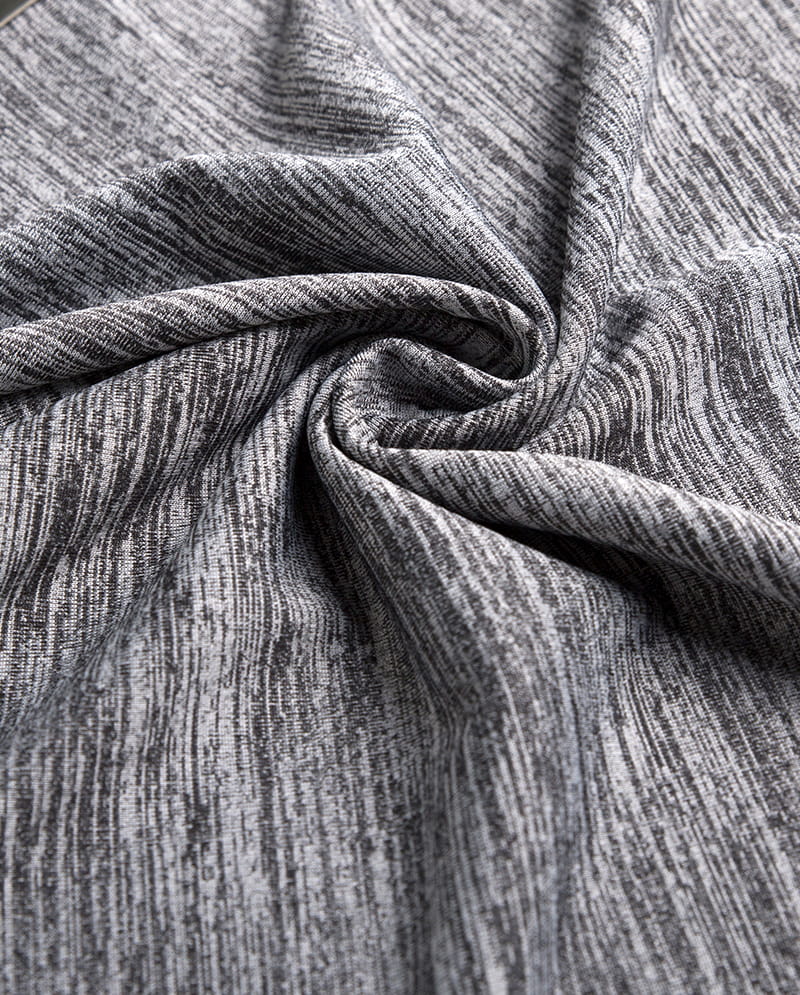
Anti-static Cationic Knitted Rib Fabric
-
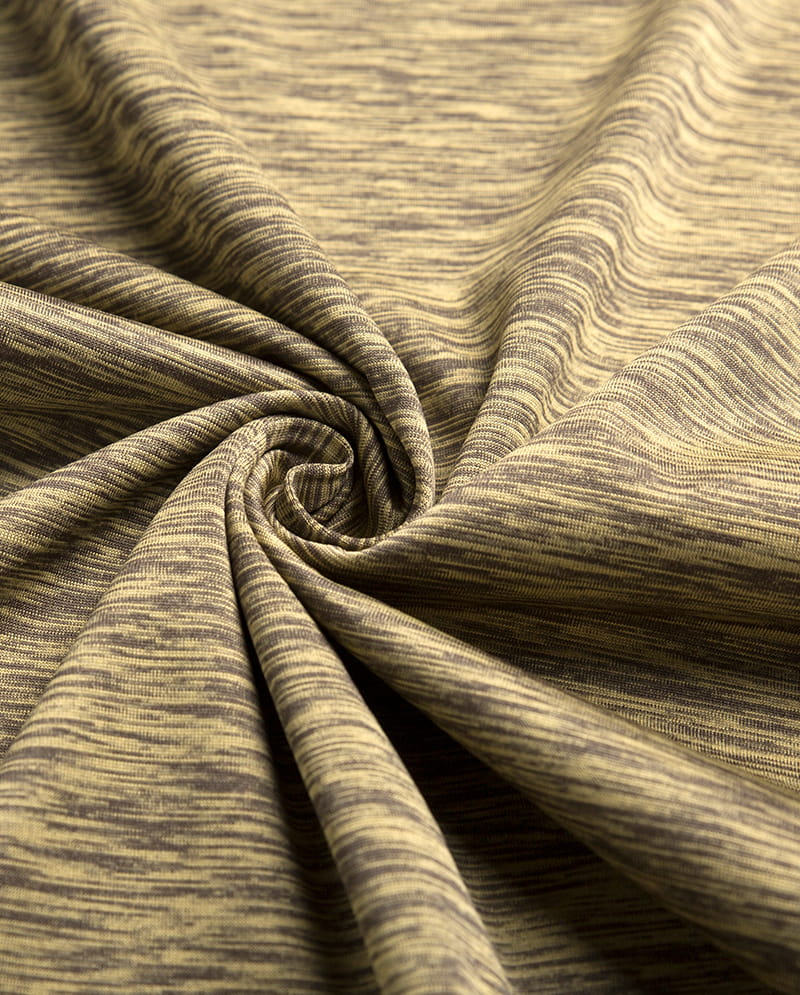
High-Stretch Cationic Jersey Fabric
-
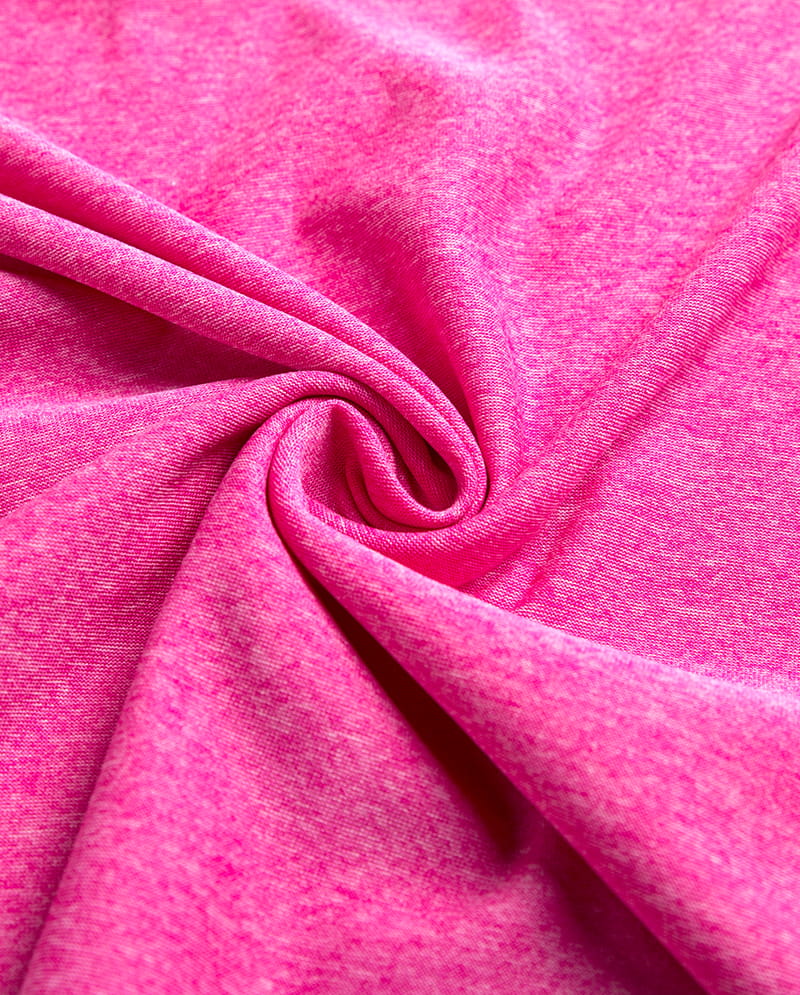
High Quality Cationic DTY Spandex Two Sides Brush Dralon Knit Fabric for Garment Thermal Underwear
-
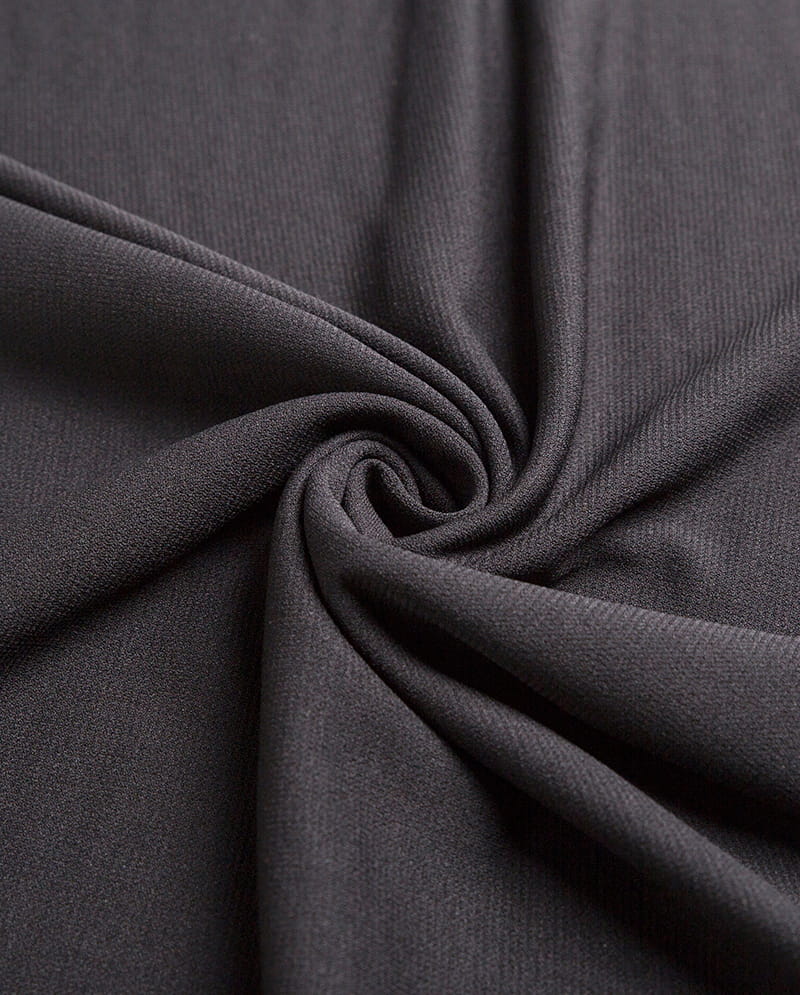
Durable Anti-Pilling Knitted Fabric for Home Textiles
-
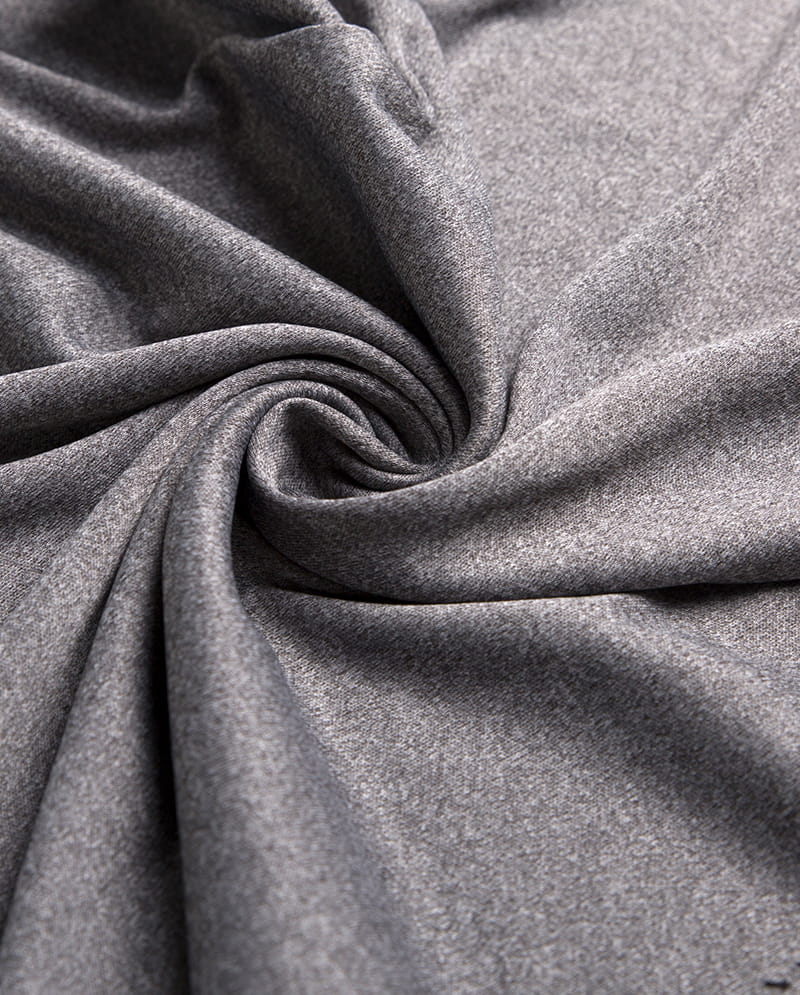
Wash-Resistant Cationic Elastic Knitted Fabric for Garment Industry
-
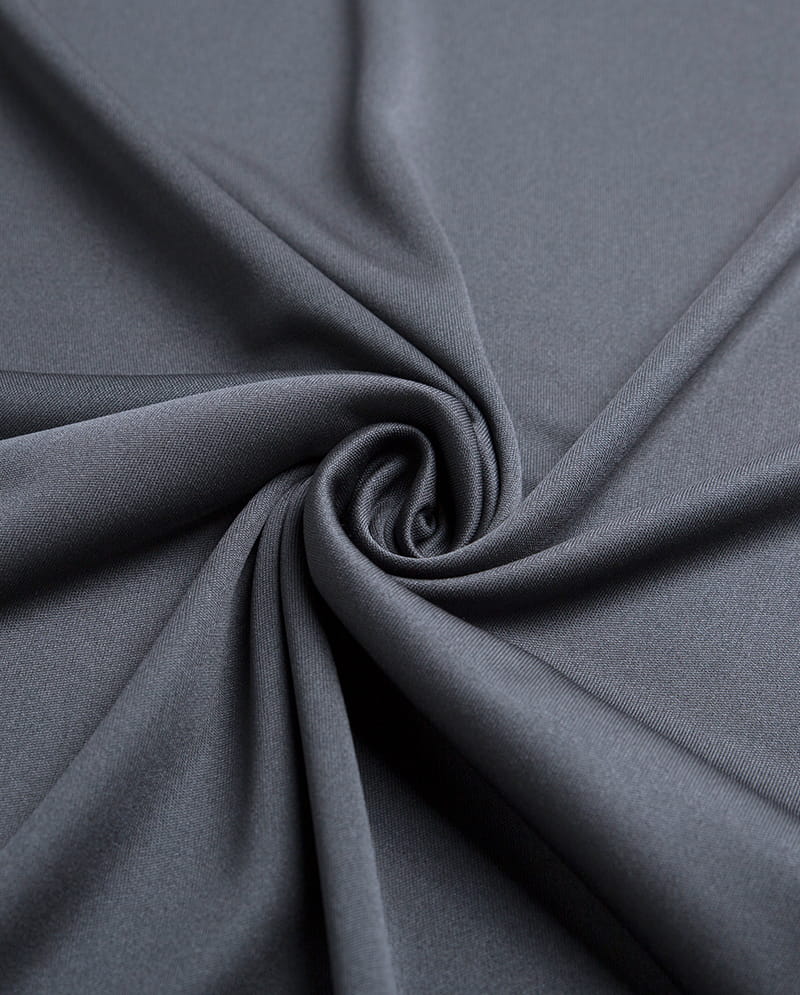
Breathable Double-Faced Elastic Composite Fabric
-
-
-
- whatsapp:
- 0086-13962559622
-
- skype:
- skype.aliceshenghong
-
- Wechat:

COPYRIGHT © 2016 Suzhou Junhui Textile Co., Ltd.
