

 EN
EN English
 中文简体
中文简体High-Stability Normal Polyester Chips for Reliable Textile Fiber Production
Content
- 1 Product Overview: SD, FD, CD, and TBR Polyester Chips
- 2 Why Polymer Chip Stability Matters
- 3 Core Technical Advantages
- 4 Comparison with Conventional Polyester Chips
- 5 Advanced Manufacturing Process
- 6 Quality Control and Testing Strengths
- 7 SD Polyester Chips: Balanced Luster and Broad Application
- 8 FD Polyester Chips: Full-Dull Appearance for Cotton-Like Textures
- 9 CD Polyester Chips: Vivid Color and Design Flexibility
- 10 TBR Polyester Chips: Stability for High-Performance Fiber Production
- 11 Applications Across the Textile Value Chain
- 12 Connection with Differentiated Yarn Development
- 13 Sustainability and Recycled Textile Development
- 14 Manufacturing Strengths and Export Experience
- 15 Advantages for Fiber Spinning Manufacturers
- 16 Storage and Processing Recommendations
- 17 How the Product Supports Better Fabric Quality
- 18 Market Relevance in Apparel, Home Textile, and Industrial Sectors
- 19 Customer-Oriented Technical Support
- 20 Frequently Asked Questions
- 20.1 What are high-stability normal polyester chips?
- 20.2 What does SD mean in polyester chips?
- 20.3 What does FD mean in polyester chips?
- 20.4 What are CD polyester chips used for?
- 20.5 Why is intrinsic viscosity important?
- 20.6 How do high-stability chips reduce production cost?
- 20.7 Can these chips be used for DTY, FDY, and POY?
- 20.8 Are these chips suitable for apparel and home textiles?
- 20.9 What makes these chips better than ordinary polyester chips?
- 20.10 How should polyester chips be stored?
- 21 Conclusion
- 22 References
- 23 Product: High-Stability Normal Polyester Chips SD/FD/CD/TBR for Textile Fiber Production
In modern textile manufacturing, consistency at the raw-material stage determines the quality of everything that follows. A spinning line may be equipped with advanced extruders, high-precision metering pumps, optimized quenching systems, and automated winding machines, but the performance of the final yarn still begins with the polymer chip. High-stability normal polyester chips in SD, FD, CD, and TBR variants are designed to give fiber producers a dependable foundation for manufacturing polyester staple fiber, POY, FDY, DTY, and a wide range of differentiated yarns used in apparel, home textiles, bags, industrial fabrics, and functional textile products.
These polyester chips are fiber-grade raw materials synthesized from purified terephthalic acid and monoethylene glycol through controlled esterification and polycondensation. Their intrinsic viscosity is typically controlled within a stable range of approximately 0.60–0.68 dl/g, supporting reliable melt flow, consistent spinning behavior, and stable yarn formation. Compared with ordinary or less controlled polyester chips, high-stability chips offer narrower molecular weight distribution, improved thermal stability, better spinnability, and more predictable dyeing performance. For textile manufacturers seeking fewer production interruptions, lower waste, and more uniform fiber properties, these advantages can translate directly into operational efficiency and commercial value.
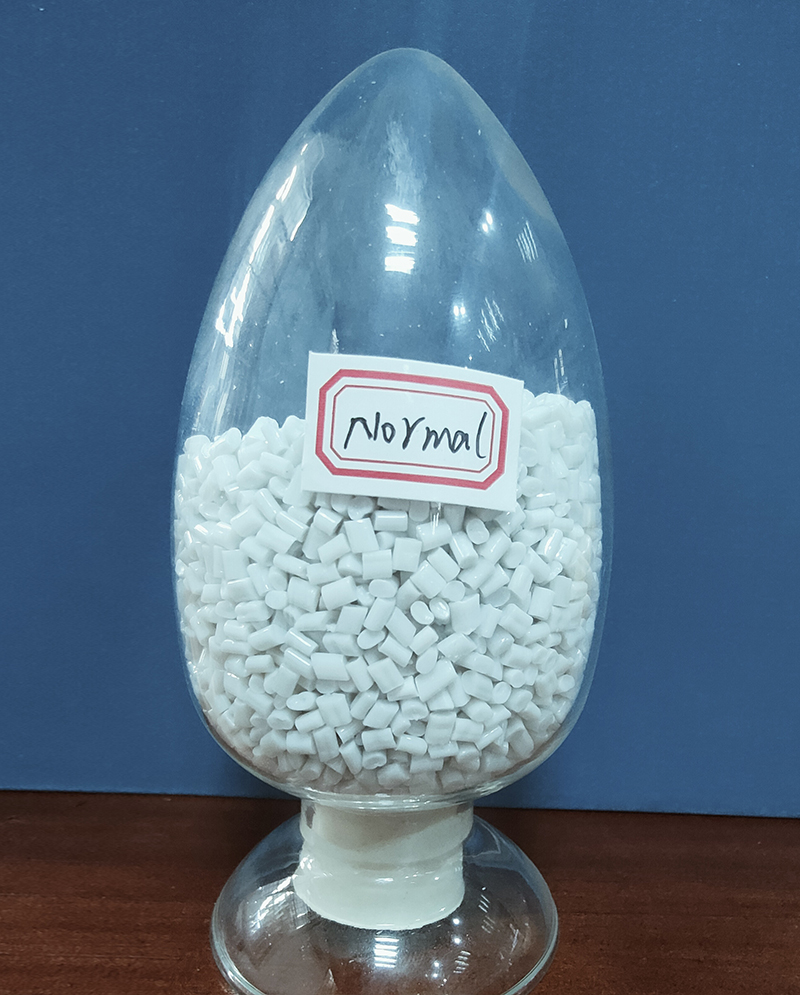
High-Stability Normal Polyester Chips SD/FD/CD/TBR for Textile Fiber Production
Product Overview: SD, FD, CD, and TBR Polyester Chips
Normal polyester chips are widely used in fiber production because polyester remains one of the most versatile synthetic textile materials in the world. It offers strength, dimensional stability, wrinkle resistance, durability, chemical resistance, and compatibility with many finishing technologies. The SD, FD, CD, and TBR categories allow manufacturers to select a chip type according to the required fiber appearance, dyeing performance, hand feel, and end-use application.
SD, or semi-dull polyester chips, contain a controlled amount of titanium dioxide matting agent. This produces fibers with a natural, moderate luster rather than a bright synthetic shine. SD fibers are widely used for apparel, sportswear, knitted fabrics, woven fabrics, bags, and home textile products where a balanced visual effect is preferred.
FD, or full-dull polyester chips, use a higher dulling effect to create fibers with stronger light absorption and a softer, cotton-like appearance. This grade is often preferred for textiles that require a subdued surface, improved opacity, and a more natural texture. Full-dull yarns are common in casualwear, outerwear linings, curtains, bedding, and fabrics where glare reduction is important.
CD, or cationic-dyeable polyester chips, are engineered to accept cationic dyes and achieve bright, vivid, and differentiated color effects. They are especially valuable for two-tone effects, mélange effects, deep shades, and combination yarns such as SD+CD DTY. CD chips enable textile designers to expand color possibilities while maintaining the strength and processability of polyester.
TBR polyester chips are used for high-performance fiber manufacturing where stable processing, consistent structure, and reliable downstream properties are required. They can support filament production and specialty textile applications where uniformity and durability are critical.
Why Polymer Chip Stability Matters
Polyester fiber production is a continuous process. Even small fluctuations in raw-material properties can cause variations in melt pressure, filament diameter, drawability, dye uptake, tensile strength, and winding stability. If chips contain inconsistent molecular weight distribution, excessive moisture, impurities, or unstable intrinsic viscosity, the result may be broken ends, uneven yarn, dyeing streaks, weak points, poor package formation, and higher production waste.
High-stability normal polyester chips are engineered to reduce these risks. Their controlled intrinsic viscosity supports uniform melt viscosity during extrusion. Their thermal stability helps reduce polymer degradation during high-temperature processing. Their clean and consistent structure supports smoother filtration and lower pressure fluctuation. Their balanced crystallinity and drying behavior support efficient preparation before spinning. These factors combine to create a more predictable production environment for yarn manufacturers.
For producers of DTY, FDY, and POY yarns, stability is not only a technical advantage but also a financial one. Stable chips help increase machine efficiency, reduce downtime, lower rejected batches, improve dyeing pass rates, and support consistent delivery to fabric mills and garment manufacturers. In competitive textile markets, these benefits can create a measurable advantage over suppliers relying on less controlled raw materials.
Core Technical Advantages
The primary advantage of high-stability normal polyester chips is the balance between process reliability and end-product performance. Many polyester chips can be melted and spun, but not all chips can provide stable performance across different production speeds, yarn counts, filament numbers, dullness requirements, and dyeing conditions. The SD, FD, CD, and TBR portfolio allows textile producers to match polymer characteristics with specific manufacturing goals.
Controlled intrinsic viscosity is one of the most important features. When intrinsic viscosity is maintained within a narrow and appropriate range, the polymer melt flows more consistently through spinning packs and spinnerets. This helps create uniform filament diameter and reduces variation in denier. Uniform denier supports better fabric hand feel, more even dyeing, and improved physical performance.
Another important advantage is thermal stability. Polyester processing typically involves high temperatures, and unstable polymer can degrade, forming acetaldehyde, gels, black specks, or viscosity loss. High-quality chips are designed to withstand thermal exposure during drying, melting, filtration, extrusion, spinning, drawing, and texturing. Better thermal stability helps improve yarn cleanliness and reduces the risk of defects in fabric.
Chemical resistance is also valuable. Polyester fibers made from stable chips maintain durability under washing, finishing, dyeing, and daily use. This is important for apparel, home textiles, bags, and industrial fabrics where long-term performance affects customer satisfaction.
Spinnability is the practical measure of how well chips perform on real production lines. High-stability chips support smooth spinning, fewer filament breaks, stable winding, and consistent package build. For high-volume textile manufacturers, good spinnability is one of the most direct indicators of raw-material quality.
Comparison with Conventional Polyester Chips
Compared with conventional polyester chips that may have wider specification variation, high-stability normal polyester chips deliver stronger manufacturing control. Conventional chips may be acceptable for basic applications, but they can create challenges in high-speed spinning, fine denier production, microfilament yarns, differentiated yarns, and fabric programs requiring strict dyeing consistency.
The following table summarizes key differences between high-stability normal polyester chips and ordinary lower-control polyester chips.
Performance Factor |
High-Stability SD/FD/CD/TBR Polyester Chips |
Conventional Polyester Chips |
Intrinsic Viscosity Control |
Narrow, stable range supporting consistent melt flow |
May fluctuate more between batches |
Molecular Weight Distribution |
Controlled distribution for reliable spinning |
Often broader and less predictable |
Thermal Stability |
Designed to resist degradation during high-temperature processing |
Greater risk of degradation, gels, and defects |
Spinnability |
Supports stable extrusion, drawing, winding, and texturing |
May cause more broken ends and pressure fluctuation |
Dyeing Uniformity |
Improved batch consistency and shade reliability |
Higher risk of dyeing streaks or uneven shade |
Application Flexibility |
Suitable for staple fiber, POY, FDY, DTY, and differentiated yarns |
Often limited to less demanding applications |
Production Efficiency |
Helps reduce downtime, waste, and rejected lots |
May increase troubleshooting and reprocessing costs |
This comparison shows why raw-material selection should not be based only on price per ton. A lower-cost chip can become expensive if it increases waste, reduces production speed, or causes dyeing defects. High-stability chips help protect the total value chain by improving the predictability of downstream processing.
Advanced Manufacturing Process
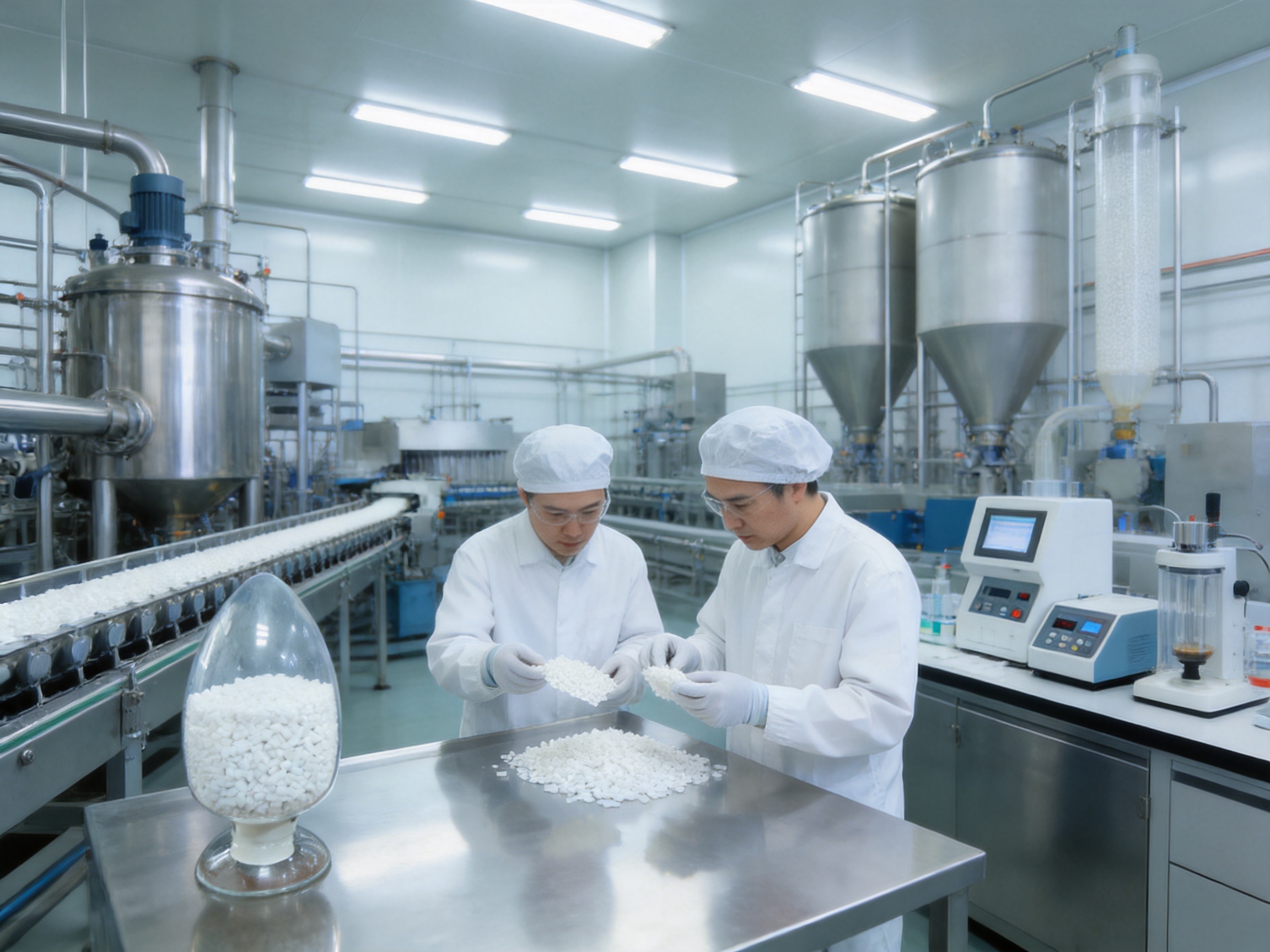
The production of fiber-grade polyester chips requires disciplined process control from raw-material selection to final packaging. The process begins with purified terephthalic acid and monoethylene glycol. These raw materials are reacted through esterification, where water is removed as the reaction proceeds. The intermediate product then undergoes polycondensation under high temperature and vacuum conditions, allowing molecular chains to grow and reach the desired intrinsic viscosity.
Precise control of temperature, pressure, residence time, catalyst dosage, and vacuum level is essential. If the reaction is under-controlled, the polymer may have unstable viscosity, excessive carboxyl end groups, poor color, or inconsistent spinnability. Advanced manufacturing facilities use automated monitoring systems to maintain stable reaction conditions and reduce batch-to-batch variation.
After polymerization, the molten polymer is filtered to remove impurities and gels before being extruded into strands. These strands are cooled and cut into uniform chips. Chip size consistency is important because it affects drying efficiency and feeding stability. Chips that are too large, too small, dusty, or irregular can create feeding problems or uneven moisture removal before spinning.
The finished chips are then crystallized, dried, inspected, and packed under controlled conditions. Moisture management is particularly important because polyester is sensitive to hydrolytic degradation at high processing temperatures. Excess moisture can reduce molecular weight and cause unstable spinning. High-quality manufacturing therefore includes strict drying and moisture control systems before shipment and recommends proper storage and pre-drying before use.
Suzhou Junhui Textile Co., Ltd. and Suzhou Xiaoran New Material Co., Ltd. operate with a strong focus on differentiated yarns, recycled yarns, cationic dyeing yarns, flame-retardant yarns, microfine yarns, and functional textile materials. This downstream textile expertise strengthens the understanding of how polymer chips behave in actual fiber and fabric production. The ability to connect raw-material science with yarn and fabric application is an important competitive advantage.
Quality Control and Testing Strengths
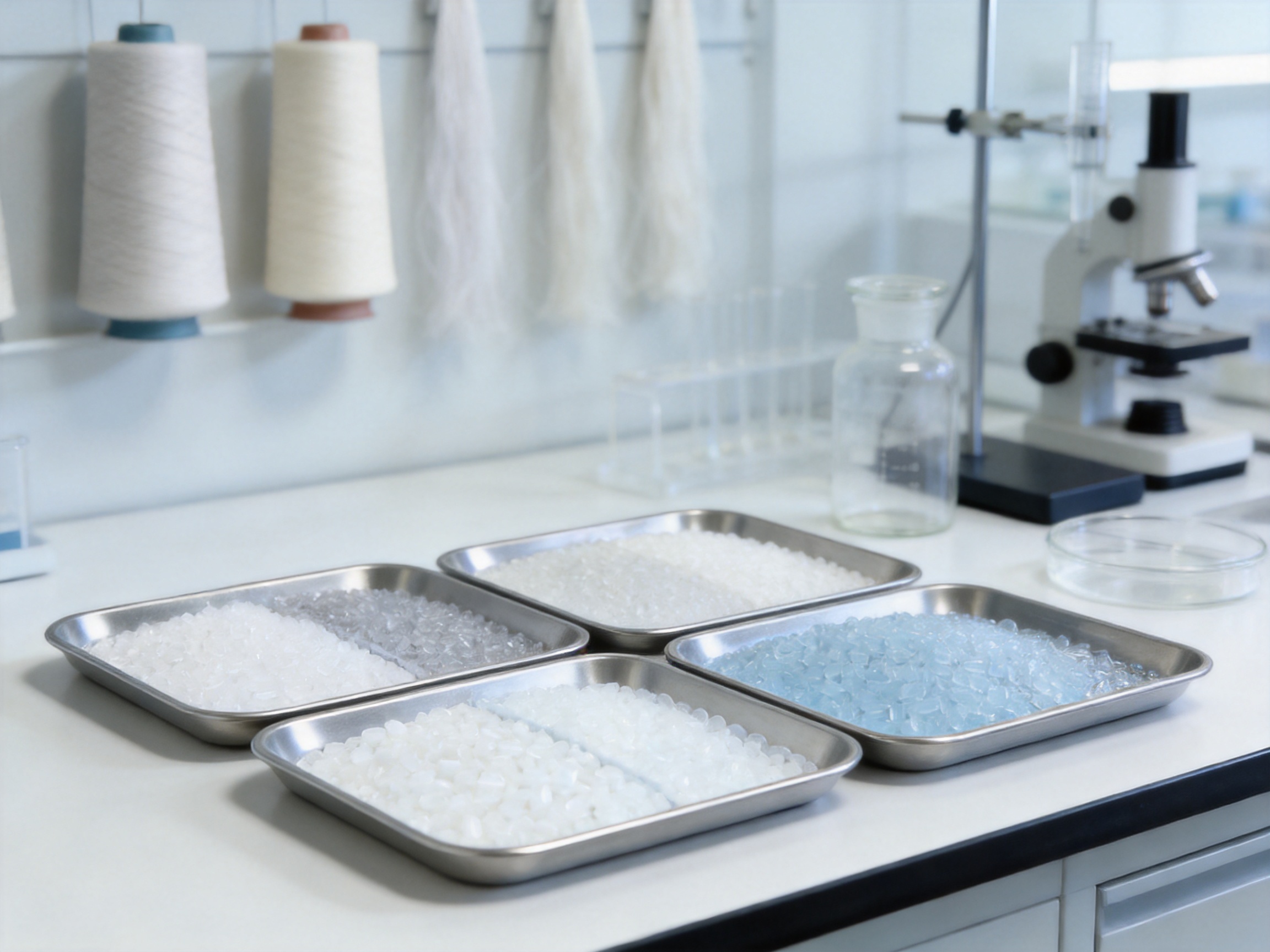
Reliable polyester chips require more than good polymerization. They require systematic quality control. Key indicators include intrinsic viscosity, moisture content, melting point, color value, carboxyl end group content, diethylene glycol content, ash content, TiO₂ dispersion for dull grades, chip size distribution, dust level, and black speck control. Each parameter can influence downstream spinning and textile quality.
Intrinsic viscosity testing helps confirm molecular weight and melt behavior. Moisture testing helps prevent hydrolysis during spinning. Color testing ensures that the chips will not create unwanted yellowing or shade variation. Filtration performance testing helps predict spinning pack life and pressure stability. For SD and FD products, TiO₂ dispersion must be uniform because poor dispersion can cause spinneret clogging or fabric streaks. For CD products, dyeability and cationic modification must be controlled to support bright and consistent shade development.
Advanced quality management also includes traceability. Each batch should be identifiable from raw-material input to final package. Traceability allows technical teams to investigate any customer feedback quickly and accurately. For international customers, consistent documentation and responsive technical communication are especially important.
The company’s emphasis on professional research and development supports ongoing product improvement. With products exported to many countries and used in diverse textile applications, the company has accumulated practical knowledge about different spinning systems, dyeing methods, and fabric requirements. This experience helps customers choose suitable chip grades and optimize production parameters.
SD Polyester Chips: Balanced Luster and Broad Application
Semi-dull polyester chips are among the most widely used fiber-grade materials because they offer a balanced surface appearance. The moderate TiO₂ content reduces excessive shine while maintaining a clean, modern look. This makes SD chips suitable for everyday textile products as well as performance apparel.
Yarns produced from SD chips can be used in DTY, FDY, POY, and staple fiber applications. They are suitable for shirts, sportswear, jackets, linings, knitted fabrics, woven fabrics, curtains, bedding, luggage materials, fashion bags, and school bags. The semi-dull effect gives fabrics a more natural appearance than bright yarn, while still retaining the strength and easy-care benefits of polyester.
For textile manufacturers, SD chips provide a flexible base material. They can be processed into multiple denier and filament combinations, including fine denier and high-filament-count yarns for soft hand feel. They can also be combined with functional finishing technologies such as moisture wicking, antibacterial treatments, or flame-retardant systems depending on end-use requirements.
The advantage of high-stability SD chips lies in their ability to maintain uniform dullness and spinning performance. If TiO₂ dispersion is inconsistent, yarn can show uneven appearance or create spinning defects. Stable SD chips help reduce these risks and support consistent fabric quality.
FD Polyester Chips: Full-Dull Appearance for Cotton-Like Textures
Full-dull polyester chips are designed for textile products requiring stronger light absorption and a softer visual effect. The full-dull appearance can make polyester fabrics look less synthetic and more refined. This is valuable in apparel and home textiles where consumers prefer a matte, comfortable, and natural style.
FD chips are often used for cotton-like fabrics, curtain fabrics, bedding, leisurewear, fashion textiles, and products where opacity and anti-glare appearance are important. Full-dull yarns can also improve perceived softness, especially when combined with fine denier filaments or texturing processes.
Producing high-quality FD chips requires careful control of matting agent dispersion. Higher dulling content can create more processing challenges than semi-dull grades because poor dispersion may lead to filtration pressure rise or spinneret problems. High-stability FD chips reduce these issues through controlled formulation and manufacturing discipline.
Compared with lower-grade full-dull chips, high-stability FD chips help manufacturers achieve smoother spinning, more even fabric appearance, and better dyeing consistency. This is especially useful for large production lots where shade and surface uniformity must be maintained across many fabric rolls.
CD Polyester Chips: Vivid Color and Design Flexibility
Cationic-dyeable polyester chips support brilliant color effects and differentiated textile design. Standard polyester is typically dyed with disperse dyes under high temperature and pressure. CD polyester is modified so it can be dyed with cationic dyes, producing bright shades and unique color combinations. When CD fibers are combined with regular polyester fibers, textile designers can create two-tone, mélange, stripe, jacquard, and differential dyeing effects.
CD chips are valuable for fashion fabrics, decorative textiles, sportswear, home textiles, and special yarn combinations such as SD+CD DTY. The ability to create vivid colors and differentiated textures helps fabric producers respond to fast-changing market trends.
The main advantage of high-stability CD chips is consistent dyeability. If modification levels vary between batches, dye uptake may change, causing shade mismatch. For fabric mills and dye houses, shade inconsistency can be costly. Stable CD chips support predictable dyeing behavior and reduce the risk of re-dyeing, claims, or rejected fabric.
In addition, CD chips must still maintain good spinnability. The modification that enables cationic dyeing should not compromise fiber strength or process stability. Proper polymer design and strict production control help maintain the right balance between dyeability and mechanical performance.
TBR Polyester Chips: Stability for High-Performance Fiber Production
TBR polyester chips support demanding fiber manufacturing where consistency and performance are essential. They are used in applications that require reliable polymer behavior, uniform fiber formation, and strong downstream durability. Although specific processing conditions may vary by customer, the core requirement remains the same: the chip must perform consistently in high-temperature, high-speed textile production.
For fiber producers working with performance yarns or industrial textile materials, TBR chips can help provide a stable platform for controlled fiber properties. Strong polymer uniformity supports tensile strength, elongation control, and dimensional stability. These features are important in applications where fabrics must endure repeated use, mechanical stress, washing, or finishing.
High-stability TBR chips offer an advantage over ordinary chips by reducing the risk of process drift. In large-scale production, even small variations can accumulate into major quality issues. Stable polymer behavior helps producers maintain target specifications and reduce adjustment time.
Applications Across the Textile Value Chain
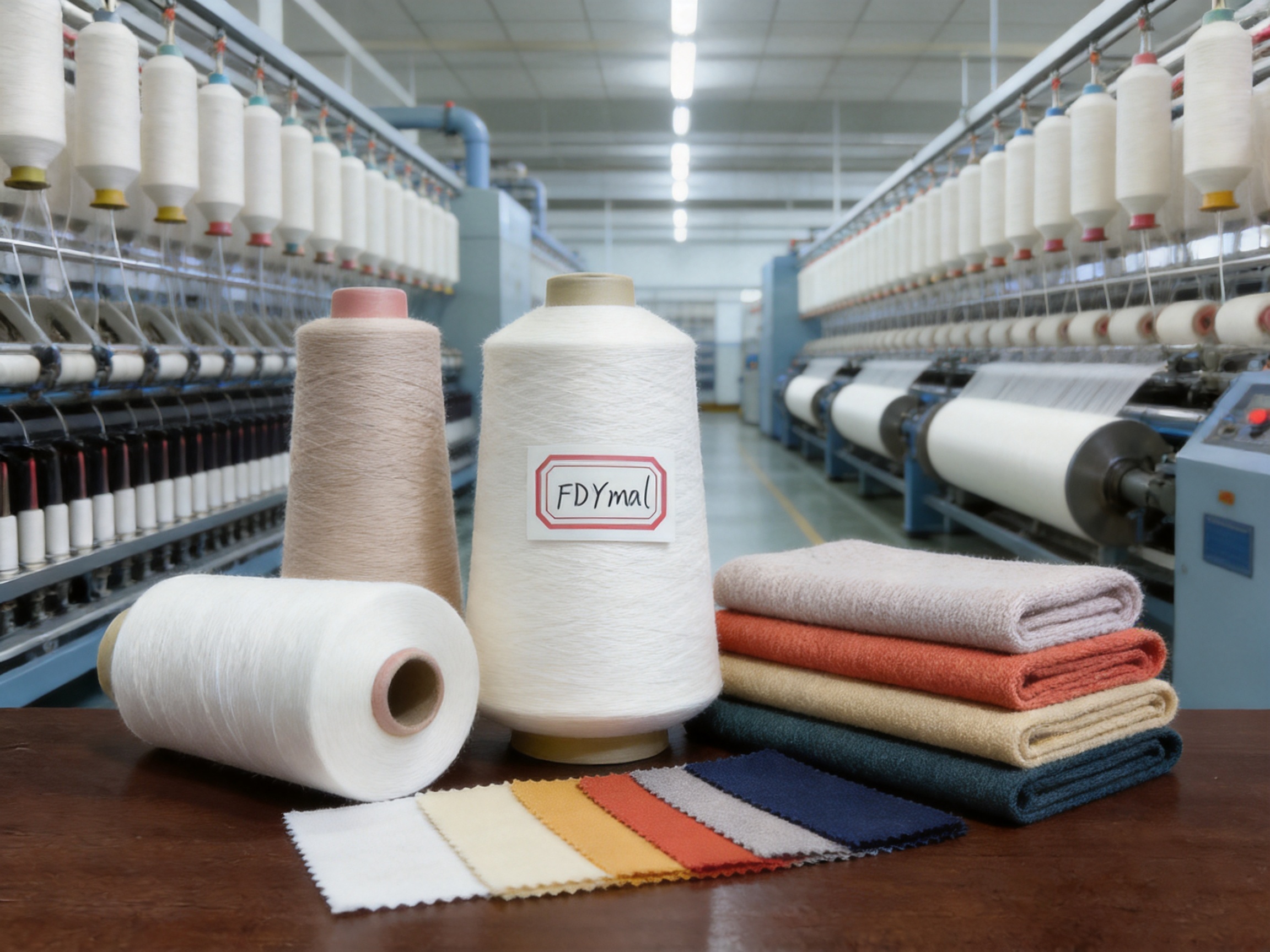
High-stability normal polyester chips can serve many textile sectors. In filament yarn production, they are suitable for POY, FDY, and DTY manufacturing. POY is commonly used as feed yarn for draw texturing, FDY is used directly in weaving and knitting, and DTY provides bulk, elasticity, and soft hand feel for apparel and home textiles. Stable chips support all three pathways by providing consistent melt flow and filament formation.
In staple fiber production, polyester chips can be spun into fibers used for spinning yarns, nonwovens, padding, filling materials, and blended textile products. Polyester staple fibers are commonly blended with cotton, viscose, wool, or other fibers to improve durability, wrinkle resistance, and cost efficiency.
In apparel, these chips support fibers for shirts, sportswear, casualwear, jackets, linings, fashion fabrics, and functional garments. Polyester’s strength, easy-care properties, and compatibility with performance finishes make it a leading material for modern clothing.
In home textiles, polyester fibers are used for bed sheets, curtains, upholstery fabrics, decorative fabrics, blankets, and cushion materials. FD and SD grades are particularly valuable where appearance, drape, opacity, and fabric hand feel matter.
In bags and luggage, polyester fibers provide durability, abrasion resistance, and dimensional stability. Recycled and differentiated yarn expertise also supports applications in mountaineering bags, handbags, school bags, travel luggage, shopping bags, gift bags, and storage products.
In industrial fabrics, polyester’s chemical resistance and mechanical strength make it suitable for reinforcement materials, filtration fabrics, protective textiles, and other technical uses. The final suitability depends on yarn design, fabric structure, and finishing method, but stable chips are an essential first step.
Connection with Differentiated Yarn Development
The company’s product background includes a wide portfolio of differentiated yarns, including recycled SD DTY, recycled SD FDY, recycled FD DTY, recycled CD DTY, SD+CD DTY, normal SD DTY, FD DTY, CD DTY, high-elastic yarns, PBT/PET yarns, flame-retardant yarns, antibacterial yarns, moisture-wicking yarns, hollow warm yarns, cotton-like yarns, and air-covered yarn combinations. This broad yarn knowledge is highly relevant to polyester chip supply because it reflects a deep understanding of how raw materials perform in downstream products.
For example, DTY production requires stable draw texturing behavior. If the feed yarn is inconsistent, texturing performance may suffer, causing uneven crimp, broken filaments, poor package formation, or fabric defects. FDY production requires stable spinning and drawing in one continuous process. POY production requires controlled orientation and package stability. CD yarn production requires predictable dyeing. Functional yarns require compatibility between polymer properties and additives or finishing systems.
By understanding these downstream requirements, the supplier can provide more practical chip recommendations. Instead of simply selling polymer chips as a commodity, the company can support customers with application-oriented technical communication. This is valuable for customers developing new yarn counts, filament combinations, recycled series, high-elastic series, or functional textile products.
Sustainability and Recycled Textile Development
Sustainability has become a central theme in global textile production. Recycled PET fabrics, often produced from post-consumer bottles, are increasingly popular in Europe, the United States, and other developed markets. These fabrics are used in bags, apparel, home textiles, and lifestyle products. The company’s experience with recycled yarn and RPET fabric applications demonstrates awareness of environmental market trends and customer demand for responsible textile solutions.
Although normal polyester chips and recycled polyester chips are different product categories, the technical discipline required for stable polymer processing is closely connected. Recycled polyester production must address issues such as contamination, viscosity restoration, color control, filtration, and batch stability. Experience in recycled yarns can strengthen overall polymer and spinning expertise.
For buyers, working with a supplier that understands both normal fiber-grade polyester chips and recycled/differentiated yarn markets can be beneficial. Many textile companies now require flexible sourcing strategies, combining virgin polyester, recycled polyester, cationic dyeable yarns, full-dull yarns, flame-retardant yarns, and other functional materials. A supplier with broad technical capability can help customers respond to market changes more effectively.
Manufacturing Strengths and Export Experience
Suzhou Junhui Textile Co., Ltd. and Suzhou Xiaoran New Material Co., Ltd. were founded with a commitment to developing and selling differentiated yarns and textile materials. Their product range covers recycled yarns, polyester dope-dyed yarns, microfine yarns, flame-retardant yarns, cationic dyeing yarns, knitting fabric products, and related textile solutions. This wide scope reflects a practical manufacturing and market orientation rather than a narrow commodity supply model.
The company has a professional research and development team and works with internationally recognized enterprises in the research, development, and application of environmentally friendly and functional yarns and fabrics. This technical cooperation helps strengthen product innovation and application knowledge. For polyester chip customers, the benefit is access to a supplier that understands not only polymer specifications but also yarn performance, fabric development, and international buyer expectations.
More than 90 percent of the company’s products are exported, and customers are located across many countries. Export experience matters because international customers often require stable quality, accurate documentation, reliable shipment coordination, prompt technical response, and long-term consistency. The company’s commitment to customer support within a global service framework helps reduce communication barriers and supports smoother cooperation.
In addition, the company’s location in Shengze Town, Wujiang Area, Suzhou City, Jiangsu Province, places it within one of China’s important textile industry clusters. This industrial environment provides access to yarn producers, fabric mills, dyeing and finishing facilities, testing resources, and logistics networks. The regional textile ecosystem supports faster product development and practical problem solving.
Advantages for Fiber Spinning Manufacturers
For fiber spinning manufacturers, the benefits of high-stability normal polyester chips can be evaluated in several practical areas. First, stable chips support higher operating efficiency. When melt pressure remains stable and filament breaks are reduced, spinning lines can run longer with fewer interruptions. This improves output and reduces labor associated with troubleshooting.
Second, stable chips support better product uniformity. Uniform yarn denier, strength, elongation, and dyeing behavior allow customers to maintain consistent fabric quality. This is especially important for orders that require repeat production over several months or across multiple batches.
Third, stable chips can reduce total cost. Even if premium chips have a higher purchase price than low-grade alternatives, they may reduce waste, rejected fabric, dyeing claims, machine downtime, and customer complaints. The total economic value should be measured across the full production chain.
Fourth, stable chips expand product development options. Fine denier yarns, high-filament-count yarns, full-dull yarns, cationic dyeable yarns, and functional yarns all require dependable raw materials. High-stability chips give manufacturers greater confidence when developing new specifications.
Fifth, stable chips support brand reputation. Textile buyers increasingly require predictable performance, traceable quality, and reliable supply. Fiber producers using better raw materials are more likely to deliver consistent products and build long-term customer trust.
Storage and Processing Recommendations
To obtain the best performance from polyester chips, proper storage and processing are essential. Chips should be stored in clean, dry, ventilated areas away from moisture, dust, oil, and direct contamination. Packaging should remain sealed until use. If bags are opened, remaining chips should be protected from ambient humidity.
Before spinning, polyester chips must be dried according to suitable processing conditions. Moisture can cause hydrolysis during melting, reducing intrinsic viscosity and weakening yarn properties. Drying temperature, drying time, airflow, dew point, and equipment condition should be controlled carefully. Over-drying or excessive heat exposure should also be avoided because it may affect color or thermal history.
Spinning conditions should be optimized according to chip grade, yarn type, denier, filament count, and equipment design. Parameters such as extruder temperature, melt temperature, filtration selection, spinning speed, quenching airflow, drawing ratio, winding tension, and texturing settings should be adjusted systematically. Technical communication with the supplier can help customers develop suitable starting conditions.
For CD chips, dyeing tests should be performed to confirm shade performance before large-scale fabric production. For FD and SD chips, appearance and dullness should be evaluated under standard fabric inspection conditions. For TBR chips, mechanical and application-specific tests should be aligned with the intended end use.
How the Product Supports Better Fabric Quality
Fabric quality begins with fiber consistency. When polyester chips produce stable yarn, the resulting fabric can achieve more uniform texture, more even dyeing, improved strength, and better dimensional behavior. In knitted fabrics, yarn uniformity affects loop formation, fabric smoothness, elasticity, and surface appearance. In woven fabrics, it affects warp and weft stability, fabric density, drape, and defect rate.
Dyeing uniformity is one of the most visible benefits. Uneven polymer properties can cause shade bars, streaks, or roll-to-roll variation. Stable chips reduce this risk by supporting uniform fiber structure and consistent dye uptake. This is especially important for dark shades, bright CD colors, and large export orders where color consistency is strictly inspected.
Strength and durability are also improved by stable raw materials. Polyester fibers with consistent molecular structure and controlled orientation can deliver reliable tensile performance. This helps fabrics withstand sewing, wearing, washing, and finishing.
Wrinkle resistance and dimensional stability are key reasons polyester is widely used in apparel and home textiles. High-quality chips support fiber formation that preserves these benefits, helping final products maintain their shape and appearance after repeated use.
Market Relevance in Apparel, Home Textile, and Industrial Sectors
The textile market demands both cost efficiency and differentiation. Basic polyester products remain important, but customers increasingly seek better hand feel, sustainable options, special dyeing effects, functional finishes, and reliable quality. SD, FD, CD, and TBR polyester chips help address these needs by providing raw-material choices for different design and performance targets.
In apparel, sportswear and casualwear demand comfort, durability, color variety, and easy care. SD chips support versatile everyday textiles, FD chips support matte and cotton-like aesthetics, and CD chips support bright or two-tone designs. In home textiles, curtains and bedding benefit from dull effects, dimensional stability, and consistent dyeing. In bags and luggage, polyester provides abrasion resistance and strength. In industrial fabrics, stable polymer properties support technical performance.
As textile supply chains become more global, manufacturers must provide consistent quality across repeat orders. High-stability chips support this requirement by reducing variation at the source. This makes them suitable for export-oriented mills and brands with strict quality control systems.
Customer-Oriented Technical Support
A strong supplier does not only deliver products; it helps customers succeed in production. Technical support may include chip grade selection, processing suggestions, troubleshooting of spinning defects, dyeing consultation, and recommendations for yarn or fabric development. The company’s stated service orientation emphasizes customer success as a foundation for long-term cooperation.
For a customer developing a semi-dull DTY program, the supplier can help identify suitable SD chip properties and suggest evaluation points. For a customer seeking full-dull fabric with cotton-like appearance, FD chip selection and filament design can be discussed. For a customer producing two-tone fabric, CD chips and SD+CD combinations may be considered. For functional yarns, compatibility between polymer, additives, yarn construction, and finishing should be reviewed.
Prompt communication is particularly important for international buyers. Time zone differences, production deadlines, and shipment schedules can create pressure. A supplier prepared to respond quickly can help reduce downtime and support smoother planning.
Frequently Asked Questions
What are high-stability normal polyester chips?
They are fiber-grade polyester raw materials produced from PTA and MEG through controlled esterification and polycondensation. They are designed for stable spinning performance in polyester staple fiber, POY, FDY, DTY, and other textile fiber production processes.
What does SD mean in polyester chips?
SD means semi-dull. SD polyester chips contain a moderate amount of matting agent, usually titanium dioxide, to reduce excessive shine and create a natural, balanced fabric appearance.
What does FD mean in polyester chips?
FD means full-dull. FD polyester chips provide stronger light absorption and a more matte, cotton-like surface. They are suitable for fabrics requiring soft visual appearance, opacity, and reduced glare.
What are CD polyester chips used for?
CD means cationic-dyeable. CD polyester chips are used to produce fibers that can be dyed with cationic dyes, enabling vivid colors, two-tone effects, mélange effects, and differentiated fabric designs.
Why is intrinsic viscosity important?
Intrinsic viscosity reflects the molecular weight of polyester. A controlled intrinsic viscosity range helps maintain stable melt flow, consistent filament formation, good strength, and reliable spinning behavior.
How do high-stability chips reduce production cost?
They help reduce broken ends, spinning interruptions, dyeing defects, rejected batches, and troubleshooting time. Even if the initial material cost is not the lowest, the total production cost can be lower because efficiency and quality are improved.
Can these chips be used for DTY, FDY, and POY?
Yes. The chips are suitable for filament yarn production, including POY, FDY, and DTY, depending on the selected grade and the customer’s processing conditions.
Are these chips suitable for apparel and home textiles?
Yes. They are widely applicable for apparel such as shirts, sportswear, casualwear, and linings, as well as home textiles such as bed sheets, curtains, decorative fabrics, and upholstery materials.
What makes these chips better than ordinary polyester chips?
The key advantages include narrower molecular weight distribution, more stable intrinsic viscosity, better thermal stability, improved spinnability, more consistent dyeing behavior, and lower risk of production defects.
How should polyester chips be stored?
They should be stored in clean, dry, sealed packaging and protected from moisture, dust, oil, and contamination. Proper drying before spinning is essential to prevent hydrolysis during melt processing.
Conclusion
High-stability normal polyester chips in SD, FD, CD, and TBR variants provide a dependable raw-material solution for modern textile fiber production. Their controlled intrinsic viscosity, narrow molecular weight distribution, excellent thermal stability, chemical resistance, and strong spinnability help manufacturers improve production efficiency and final yarn quality. Whether used for semi-dull everyday textiles, full-dull cotton-like fabrics, cationic-dyeable color effects, or performance-oriented fiber applications, these chips create value throughout the textile chain.
The advantages are not limited to laboratory specifications. In real production, stable chips can reduce downtime, improve dyeing uniformity, support consistent fiber diameter, enhance yarn strength, and lower total production risk. For apparel, home textiles, bags, luggage, and industrial fabrics, this stability contributes directly to better fabric appearance, durability, and customer satisfaction.
Supported by advanced manufacturing control, professional research and development, broad differentiated yarn expertise, export experience, and customer-oriented service, Suzhou Junhui Textile Co., Ltd. and Suzhou Xiaoran New Material Co., Ltd. are positioned to supply textile manufacturers with reliable polyester chip solutions and practical technical support. In a competitive global textile market, choosing stable raw materials is not only a production decision; it is a strategic investment in quality, efficiency, and long-term customer trust.
References
1. Scheirs, J., and Long, T. E. Modern Polyesters: Chemistry and Technology of Polyesters and Copolyesters. Wiley Series in Polymer Science.
2. Deopura, B. L., Alagirusamy, R., Joshi, M., and Gupta, B. Polyesters and Polyamides. Woodhead Publishing.
3. Gupta, V. B., and Kothari, V. K. Manufactured Fibre Technology. Springer.
4. Hearle, J. W. S. Synthetic Fibres: Nylon, Polyester, Acrylic, Polyolefin. Woodhead Publishing.
5. Textile Institute. Textile Terms and Definitions. Textile Institute Publications.
Product: High-Stability Normal Polyester Chips SD/FD/CD/TBR for Textile Fiber Production

Popular products
-
Premium Cationic Interlock Stretch Comfort Fabric
-
Moisture-Wicking Nylon Woven Fabric
-
Double-faced jacquard elastic fabric
-
Heather Grey Double-faced cationic jersey fabric
-
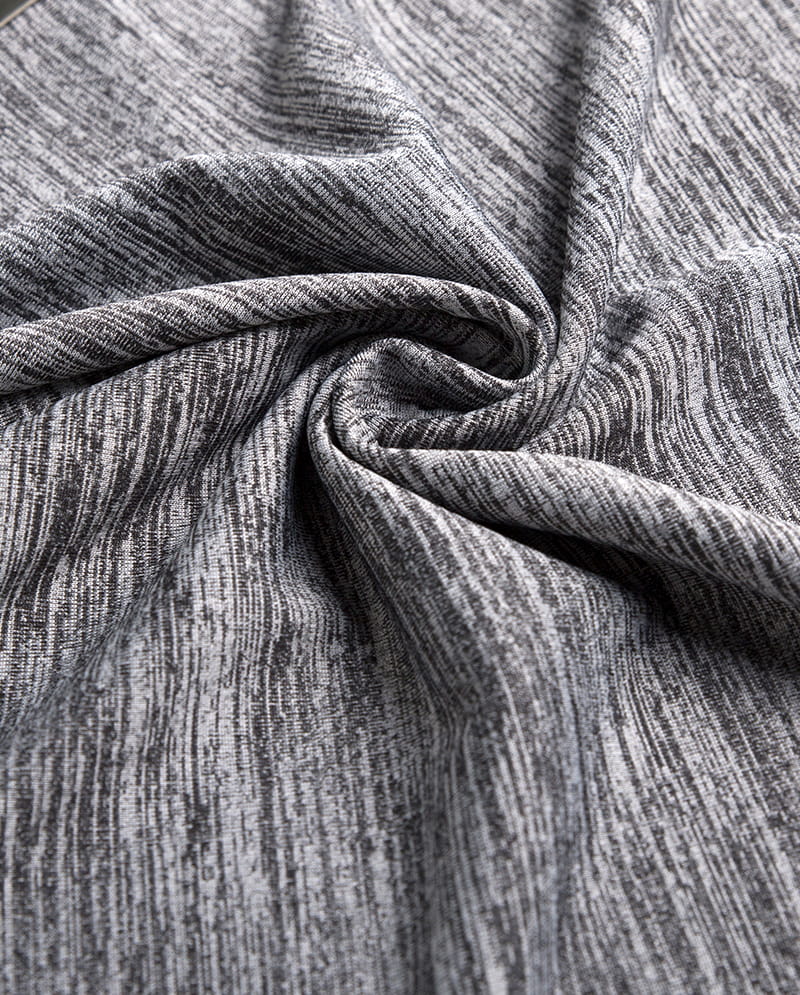
Anti-static Cationic Knitted Rib Fabric
-
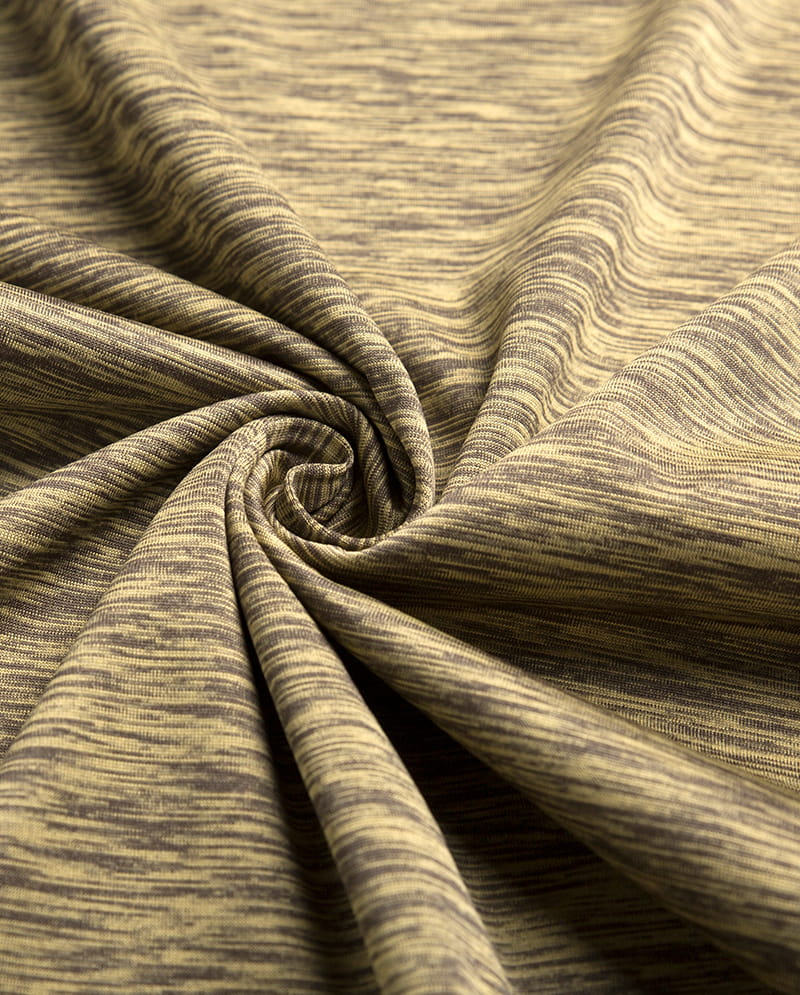
High-Stretch Cationic Jersey Fabric
-
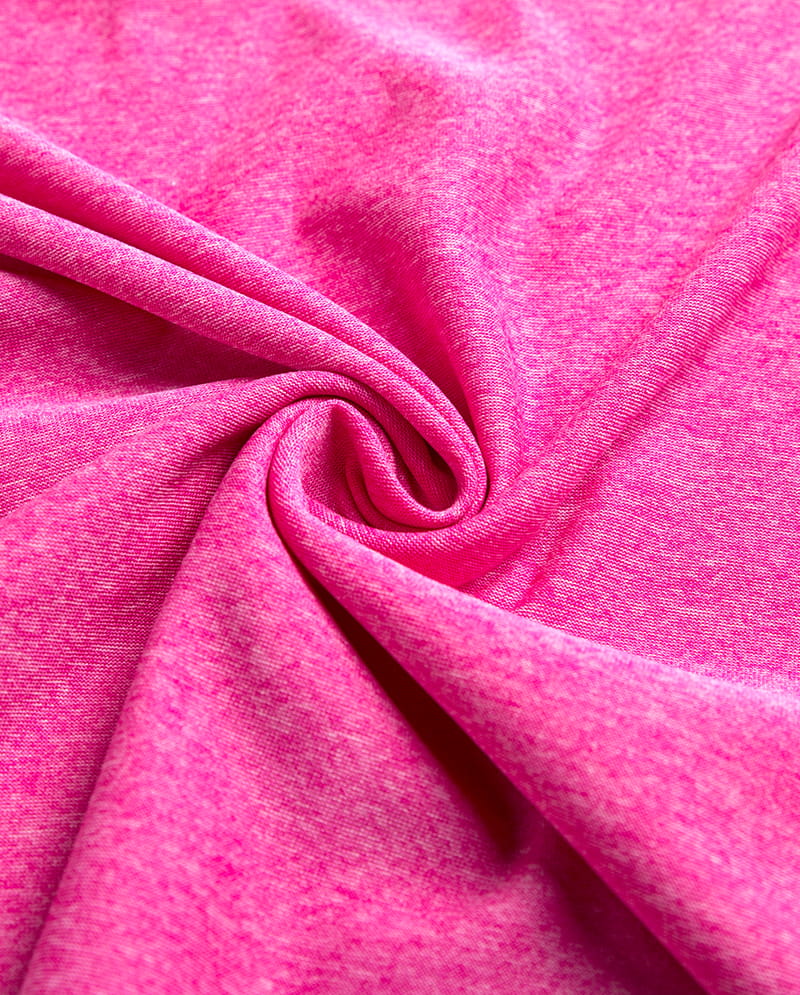
High Quality Cationic DTY Spandex Two Sides Brush Dralon Knit Fabric for Garment Thermal Underwear
-
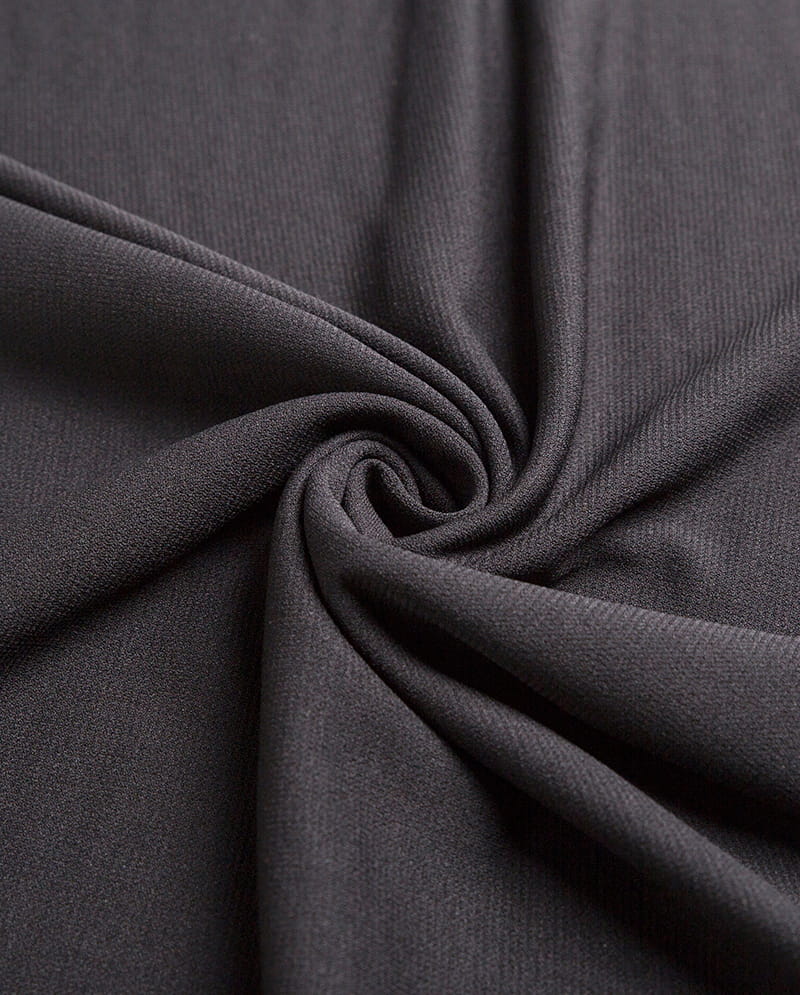
Durable Anti-Pilling Knitted Fabric for Home Textiles
-
Wash-Resistant Cationic Elastic Knitted Fabric for Garment Industry
-
Breathable Double-Faced Elastic Composite Fabric
-
-
-
- whatsapp:
- 0086-13962559622
-
- skype:
- skype.aliceshenghong
-
- Wechat:


COPYRIGHT © 2016 Suzhou Junhui Textile Co., Ltd.
