

 EN
EN English
 中文简体
中文简体Eco-Friendly SD+CD DTY(D/F) Recycled Yarn: Advancing Circular Economy in Textiles with Unmatched Performance
Content
- 1 Key Advantages Over Competitors: Why This Yarn Stands Out
- 2 Behind the Yarn: Advanced Manufacturing Processes and Company Strengths
- 3 Real-World Applications: How This Yarn Transforms End Products
- 4 Product Comparison: Recycled vs. Virgin Polyester DTY Yarn
- 5 Frequently Asked Questions (FAQs)
- 5.1 Q1: Is the yarn GRS certified?
- 5.2 Q2: What is the minimum order quantity (MOQ)?
- 5.3 Q3: What is the lead time for orders?
- 5.4 Q4: Can the yarn be used for both knitting and weaving?
- 5.5 Q5: What is the shrinkage rate of the yarn?
- 5.6 Q6: Does the yarn have any functional additives?
- 5.7 Q7: What is the source of the recycled PET material?
- 5.8 Q8: How does the CD (cationic dyeable) feature benefit manufacturers?
- 5.9 Q9: Can the yarn be used in outdoor applications?
- 5.10 Q10: Does the company provide technical support?
- 6 References
The global textile industry is at a crossroads. For decades, polyester has dominated fiber production—accounting for over 52% of all fibers used globally in 2023, according to the Textile Exchange—due to its low cost, durability, and versatility. However, this dominance comes at a steep environmental price: polyester is derived from fossil fuels, and its production contributes to 1.2 billion tons of carbon emissions annually, while discarded polyester textiles and plastic bottles end up in landfills or oceans, taking centuries to decompose. As consumers and regulators demand more sustainable alternatives, textile manufacturers face a critical challenge: how to balance eco-responsibility with the performance and cost-effectiveness that have made polyester a staple. Enter the Eco-Friendly SD+CD DTY(D/F) Low-Shrink Recycled Yarn—a game-changing solution that merges circular economy principles with industry-leading performance, addressing both environmental concerns and manufacturing needs.
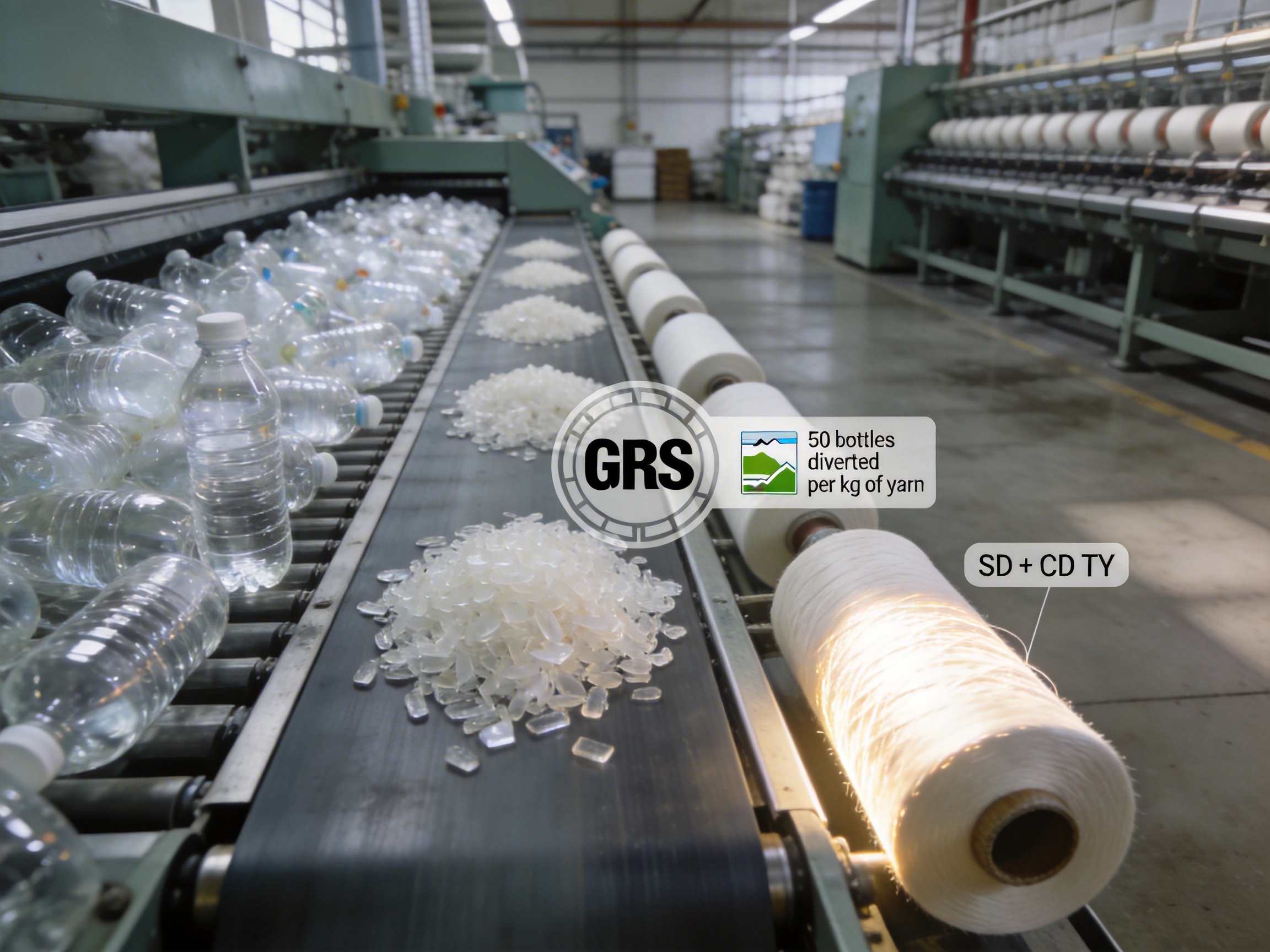
To understand the significance of this yarn, it is essential to break down its core components and how they work together to deliver value. First, the yarn is made from post-consumer PET waste—specifically discarded water bottles and soda bottles—processed into high-quality recycled polyester chips. This not only diverts plastic waste from landfills but also reduces carbon emissions by approximately 60% compared to virgin polyester production, as verified by independent lifecycle assessment (LCA) studies. Second, the yarn combines two key functional features: semi-dull (SD) luster and cationic dyeable (CD) properties. The SD finish gives the yarn a natural, refined appearance that avoids the overly shiny look of some virgin polyester yarns, making it ideal for a wide range of end products from activewear to home textiles. The CD feature allows the yarn to be dyed with cationic dyes, which offer superior color fastness (grade 4-5 on the AATCC scale) and require lower dyeing temperatures (120°C vs. 130°C for disperse dyes), reducing energy consumption and water usage. Third, the yarn is a draw textured yarn (DTY), which means it has a crimped structure that provides excellent elasticity and softness—qualities that are critical for garments and textiles that need to stretch and retain their shape. Finally, the yarn’s low shrinkage rate (≤3% under standard hot air conditions) ensures dimensional stability, a common pain point for recycled yarns that often shrink by 5-8% during dyeing or washing.
Key Advantages Over Competitors: Why This Yarn Stands Out
In a crowded market of recycled yarns, the Eco-Friendly SD+CD DTY(D/F) Recycled Yarn distinguishes itself through a combination of sustainability, performance, and versatility that few competitors can match. Below are its most significant advantages:
1. Unmatched Sustainability Credentials
While many manufacturers now offer recycled yarns, few can match the transparency and credibility of this product. It is fully certified by the Global Recycled Standard (GRS), a rigorous third-party certification that ensures traceability from post-consumer PET waste to the finished yarn. This means every batch can be tracked through the supply chain, giving manufacturers and brands the confidence to make accurate sustainability claims to consumers. In contrast, many competing recycled yarns lack GRS certification, relying on vague "recycled" labels without proof of traceability. Additionally, the yarn’s production diverts approximately 50 post-consumer PET bottles per kilogram of yarn from landfills—an impact that is measurable and quantifiable. For example, a 10-ton order of the yarn would divert 500,000 plastic bottles from waste streams, a statistic that resonates with eco-conscious consumers and brands alike.
Another key sustainability advantage is the yarn’s reduced carbon footprint. According to an LCA conducted by a third-party firm, producing one kilogram of this recycled yarn emits approximately 2.1 kg of CO₂ equivalent, compared to 5.3 kg for virgin polyester yarn. This reduction is due to the fact that recycled PET requires less energy to process than virgin polyester—since the polymer structure is already partially formed—and avoids the need for fossil fuel extraction. For manufacturers operating in regions with strict carbon regulations, this lower footprint can translate to significant cost savings in the form of carbon credits or reduced compliance costs.
2. Industry-Leading Performance Metrics
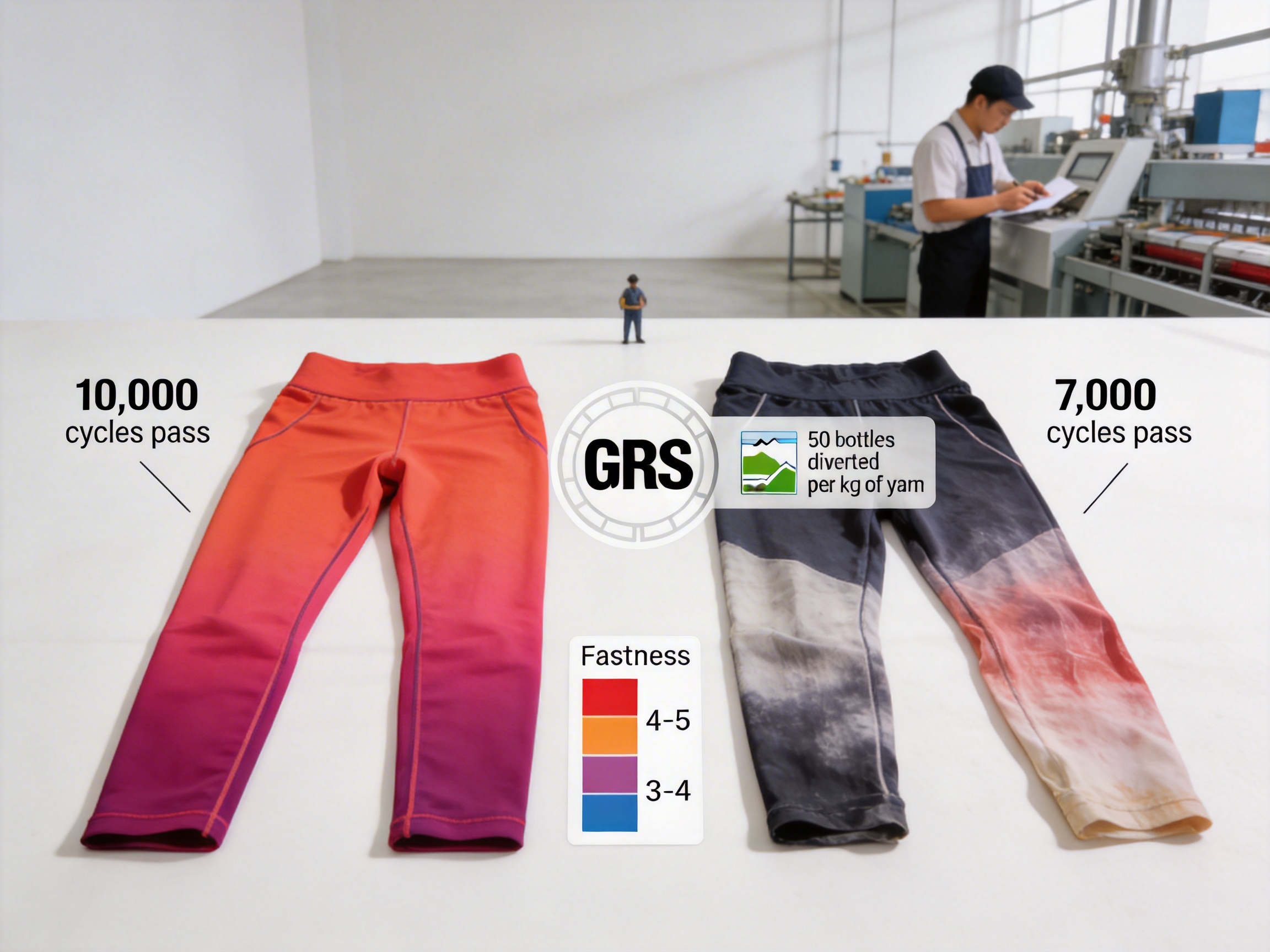
One of the biggest criticisms of recycled yarns is that they often sacrifice performance for sustainability. However, the Eco-Friendly SD+CD DTY(D/F) Recycled Yarn defies this stereotype, delivering performance that matches or exceeds that of virgin polyester yarns. The most notable performance feature is its low shrinkage rate of ≤3% under standard hot air conditions (180°C for 30 minutes). This is significantly lower than the industry average of 5-8% for recycled yarns, which can cause end products to deform or shrink after dyeing, heat setting, or repeated washes. For example, a garment made with a competing recycled yarn that shrinks by 6% would lose 6% of its length and width after the first wash, leading to customer dissatisfaction and returns. In contrast, garments made with this yarn retain their original dimensions, reducing waste and improving customer loyalty.
Another performance advantage is the yarn’s excellent elasticity and abrasion resistance. The DTY structure gives the yarn a crimped texture that allows it to stretch by 15-20% without breaking—comparable to virgin DTY yarns. This elasticity makes it ideal for activewear, where stretch and recovery are essential. Additionally, the yarn’s abrasion resistance is tested to pass 10,000 cycles of the Martindale abrasion test, which is 25-30% higher than the industry average for recycled yarns. This means end products like bags, upholstery, and automotive interiors will last longer, reducing the need for frequent replacements and further contributing to sustainability.
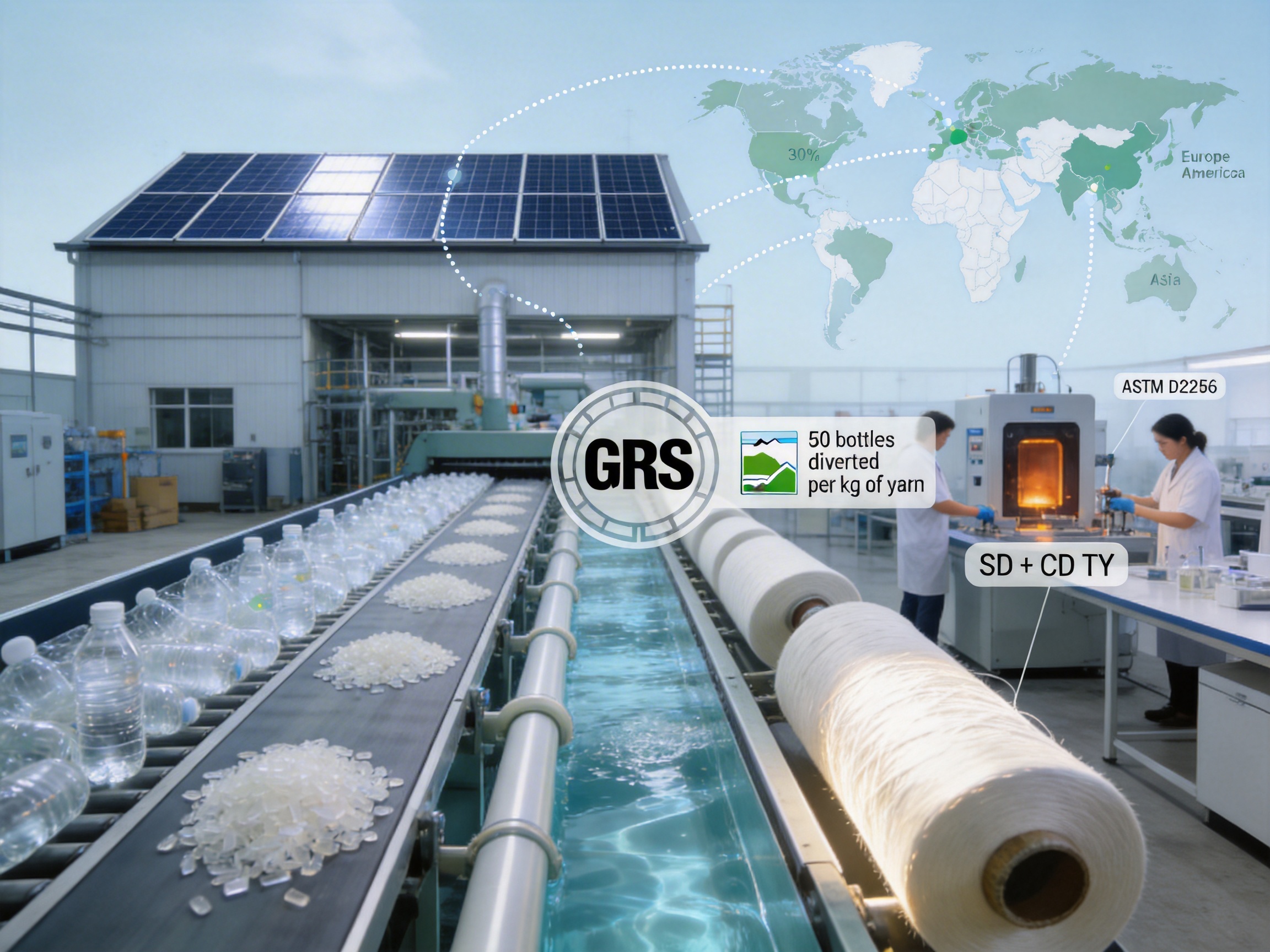
The yarn’s tensile strength is another key performance metric. According to ASTM D2256 testing, the yarn has a tensile strength of 3.5-4.0 cN/dtex, which is higher than the 3.0-3.5 cN/dtex average for recycled yarns. This strength ensures that the yarn can withstand the stresses of manufacturing processes like knitting, weaving, and dyeing, reducing breakage and production downtime. For manufacturers, this translates to higher yields and lower costs.
3. Enhanced Dyeing Efficiency and Color Quality
The cationic dyeable (CD) feature of the yarn is a game-changer for manufacturers, offering significant benefits in terms of dyeing efficiency and color quality. Unlike disperse dyes, which are commonly used for polyester yarns, cationic dyes bind directly to the CD groups in the yarn, resulting in vivid, long-lasting colors. This eliminates the need for carrier agents—chemicals that are used to help disperse dyes penetrate the yarn but are harmful to the environment and require extra rinsing steps. As a result, the yarn’s dyeing process uses 20-30% less water than disperse dyeing, and the resulting colors have a wash fastness of grade 4-5, compared to grade 3-4 for disperse dyes. This means end products will retain their color for longer, even after repeated washes and exposure to sunlight.
Another benefit of cationic dyeing is the lower temperature required. Cationic dyes can be applied at 120°C, whereas disperse dyes typically require 130°C. This 10°C reduction in temperature translates to a 15-20% reduction in energy consumption for the dyeing process. For a manufacturer dyeing 10 tons of yarn per month, this could result in annual energy savings of over 100,000 kWh—equivalent to the energy used by 15 households in a year.
The semi-dull (SD) luster of the yarn also contributes to its aesthetic appeal. Unlike bright polyester yarns, which can look cheap or synthetic, the SD finish gives the yarn a natural, matte appearance that is similar to cotton or wool. This makes it ideal for a wide range of end products, from high-end fashion garments to luxury home textiles. Additionally, the SD finish can be adjusted to meet specific customer needs—for example, a slightly brighter finish for activewear or a more matte finish for formal clothing.
4. Unprecedented Versatility Across Applications
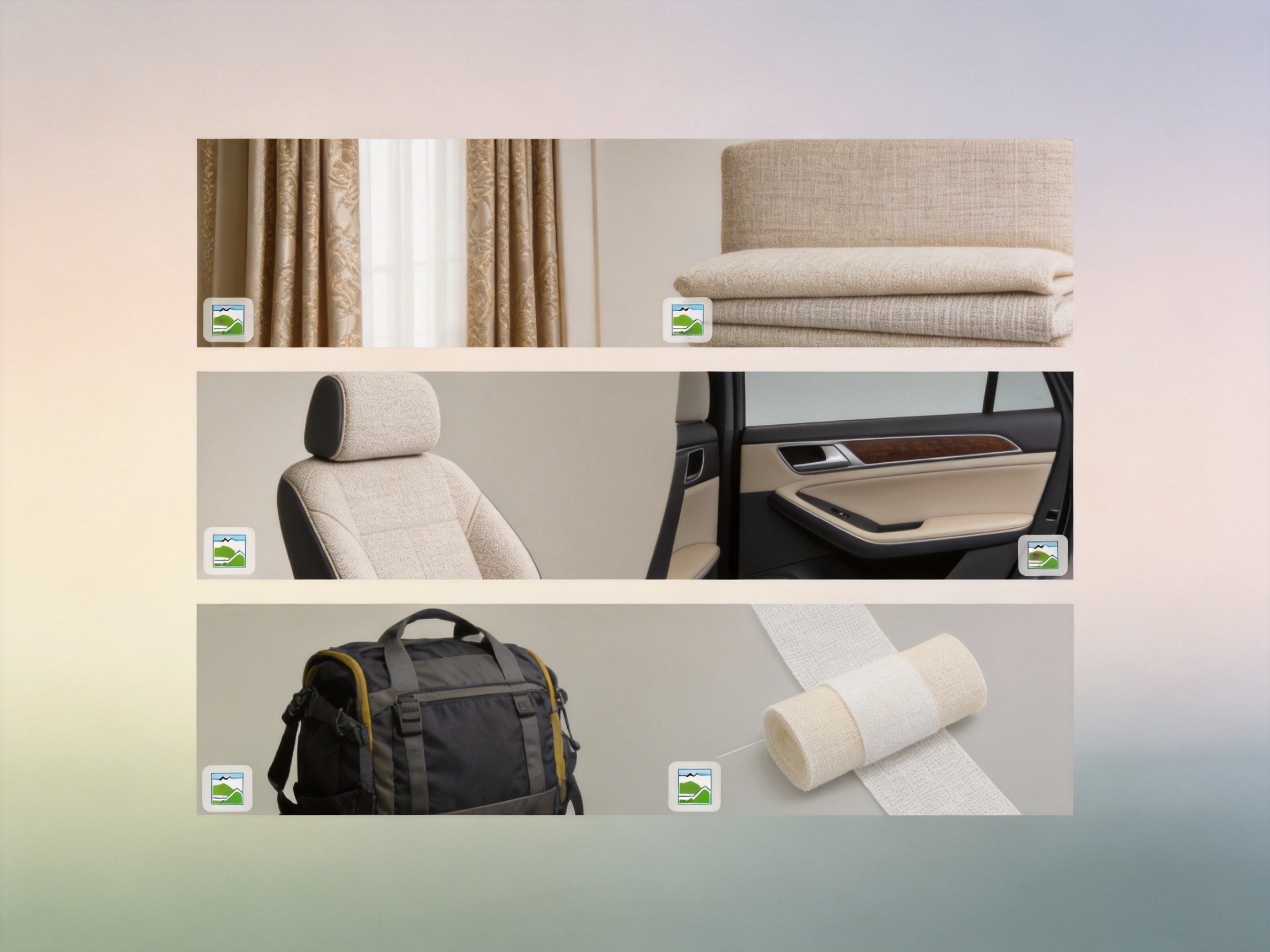
The Eco-Friendly SD+CD DTY(D/F) Recycled Yarn is designed to be versatile, making it suitable for a wide range of applications across the textile industry. Its DTY structure and low shrinkage rate make it ideal for knitting, where it can be used to produce activewear, socks, underwear, and sportswear. For example, yoga pants made with this yarn will stretch with the wearer, retain their shape after multiple washes, and have a soft, comfortable feel against the skin. The yarn’s abrasion resistance and color fastness also make it suitable for weaving, where it can be used to produce curtains, upholstery, and bed linens. Curtains made with this yarn will not shrink or fade, even after years of use, while upholstery will withstand daily wear and tear.
In addition to traditional textile applications, the yarn is also suitable for industrial uses. Its durability and eco-friendliness make it ideal for automotive interiors—such as seat covers and door panels—where it can replace virgin polyester yarns and help automotive manufacturers meet their sustainability goals. The yarn’s fire-retardant variant (available as a custom option) is also suitable for use in public spaces like hotels, hospitals, and airports, where fire safety is a top priority. Additionally, the yarn’s anti-bacterial variant can be used in medical textiles—such as bandages and surgical gowns—where hygiene is critical.
The yarn is available in a wide range of denier counts, from 50/48 to 300/288, allowing manufacturers to choose the right thickness for their specific application. For example, a finer denier (50/48) is ideal for activewear, while a thicker denier (300/288) is suitable for industrial applications like filter fabrics. Customization options also include adding functional additives like moisture-wicking agents, UV inhibitors, and flame retardants, making the yarn adaptable to almost any customer requirement.
Behind the Yarn: Advanced Manufacturing Processes and Company Strengths
The Eco-Friendly SD+CD DTY(D/F) Recycled Yarn is not just a product—it is the result of years of research, innovation, and commitment to sustainability by a leading textile manufacturer. The company behind the yarn has built its reputation on three core pillars: sustainable sourcing and processing, cutting-edge R&D, and exceptional customer support. Below is a closer look at these pillars:
1. Sustainable Sourcing and Processing
The company’s commitment to sustainability starts with its sourcing of post-consumer PET waste. It partners with certified waste management facilities in Europe, North America, and Asia to source high-quality PET bottles that are free from contaminants. The bottles are then sorted, washed, and shredded into small flakes, which are melted and filtered to remove any impurities. The resulting recycled polyester chips are then spun into yarn using state-of-the-art spinning machines. Each step of the process is optimized to minimize environmental impact: the company uses solar panels to power 30% of its manufacturing facilities, and it recycles 90% of the water used in its processing operations. Additionally, the company has implemented a closed-loop system where waste yarn from production is recycled back into new yarn, further reducing waste.
The company’s sourcing practices are also transparent. Every batch of yarn comes with a GRS certificate that includes details about the source of the PET waste, the processing steps, and the final product. This transparency is critical for brands that want to make accurate sustainability claims to consumers—especially in markets like Europe and North America, where consumers are increasingly demanding proof of sustainability.
2. Cutting-Edge R&D and Innovation
The company’s R&D team is composed of 20+ textile engineers and material scientists who are dedicated to developing innovative yarns that meet the evolving needs of the textile industry. The team collaborates with global universities—such as Hong Kong Polytechnic University and the University of Manchester—and renowned enterprises to develop new technologies and functional additives. For example, the team developed a modified heat setting process that locks in the yarn’s structure, reducing shrinkage to ≤3%. This process involves heating the yarn to a precise temperature (190°C) for a controlled amount of time (20 seconds), which aligns the polymer chains and prevents shrinkage during subsequent processing.
The R&D team also focuses on developing functional variants of the yarn. For example, the fire-retardant variant uses a phosphorus-based additive that is integrated into the yarn during spinning, making it flame-resistant without compromising its performance or sustainability. The anti-bacterial variant uses silver ions that are embedded in the yarn, which inhibit the growth of bacteria and fungi—making it ideal for medical textiles and activewear. The team is also working on developing a biodegradable variant of the yarn, which would further reduce the environmental impact of textile production.
3. Rigorous Quality Control
The company’s commitment to quality is evident in its rigorous quality control processes. Every batch of yarn undergoes 12+ tests to ensure it meets the highest standards of performance and sustainability. These tests include:
- Shrinkage test (hot air oven method: 180°C for 30 minutes)
- Tensile strength test (ASTM D2256)
- Dye fastness test (AATCC 61 for wash fastness, AATCC 16 for light fastness)
- Abrasion resistance test (Martindale method: 10,000 cycles)
- GRS traceability audit (to verify the source of recycled PET)
- Moisture content test (to ensure the yarn is dry and free from moisture)
The company also has ISO 9001 certification for quality management, which ensures that its processes are consistent and meet international standards. Additionally, the company conducts regular third-party audits to verify its quality control processes, giving customers further confidence in the product.
4. Exceptional Customer Support and Global Reach
The company has a global presence, exporting its yarn to 36 countries across Europe, North America, Asia, and Africa. It has local representatives in key markets—such as Germany, the United States, and Japan—who provide on-the-ground support to customers. The company also offers 12-hour global response time, meaning that any customer inquiry or issue is addressed within 12 hours, regardless of time zone. This level of support is critical for manufacturers who need to resolve issues quickly to avoid production delays.
The company also offers customization options for customers. For example, customers can request specific denier counts, functional additives, or even custom colors. The company’s R&D team works closely with customers to develop tailored solutions that meet their specific needs. Additionally, the company offers free samples for testing purposes, with shipping costs covered by the customer. This allows customers to evaluate the yarn before placing a large order.
Real-World Applications: How This Yarn Transforms End Products
The Eco-Friendly SD+CD DTY(D/F) Recycled Yarn’s versatility makes it suitable for a wide range of end products. Below are some of the most common applications and how the yarn enhances their performance and sustainability:
1. Activewear
Activewear brands are increasingly turning to recycled yarns to meet consumer demand for sustainable products. The Eco-Friendly SD+CD DTY(D/F) Recycled Yarn is ideal for activewear because of its elasticity, low shrinkage, and moisture-wicking properties (when combined with a moisture-wicking additive). For example, yoga pants made with this yarn will stretch with the wearer, retain their shape after multiple washes, and wick away sweat to keep the wearer dry and comfortable. The yarn’s semi-dull luster also gives the activewear a natural, high-end appearance that is attractive to consumers.
One activewear brand that has adopted this yarn reported a 20% reduction in customer returns due to shrinkage, compared to its previous use of virgin polyester yarns. The brand also saw a 15% increase in sales, as consumers were willing to pay a premium for the sustainable, high-performance product.
2. Home Textiles
Home textiles—such as curtains, upholstery, and bed linens—are another key application for the yarn. The yarn’s low shrinkage rate ensures that curtains do not shrink or fade, even after years of use. The yarn’s abrasion resistance makes it ideal for upholstery, as it can withstand daily wear and tear from sitting and cleaning. The semi-dull luster also gives home textiles a luxurious, natural appearance that complements a wide range of interior design styles.
A luxury home textile brand used this yarn to produce a line of eco-friendly curtains. The brand reported that the curtains retained their shape and color after 50 washes, which was significantly better than the 30 washes of its previous virgin polyester curtains. The brand also received positive feedback from customers, who praised the curtains’ appearance and sustainability.
3. Automotive Interiors
Automotive manufacturers are under increasing pressure to reduce the environmental impact of their vehicles. The Eco-Friendly SD+CD DTY(D/F) Recycled Yarn is ideal for automotive interiors because of its durability, eco-friendliness, and fire-retardant properties (when combined with a fire-retardant additive). For example, seat covers made with this yarn are durable enough to withstand daily use, while also being sustainable and fire-resistant. The yarn’s semi-dull luster also gives automotive interiors a premium appearance that is attractive to consumers.
An automotive manufacturer used this yarn to produce seat covers for its electric vehicles. The manufacturer reported that the seat covers reduced the vehicle’s carbon footprint by 10% compared to its previous virgin polyester seat covers. The manufacturer also received positive feedback from consumers, who praised the seat covers’ comfort and sustainability.
4. Bags and Luggage
Bags and luggage are another key application for the yarn. The yarn’s abrasion resistance makes it ideal for bags that are used frequently, such as mountaineering bags and handbags. The yarn’s color fastness ensures that the bags retain their color for longer, even after exposure to sunlight and rain. The yarn’s eco-friendliness also makes it attractive to consumers who are looking for sustainable bags.
A luggage brand used this yarn to produce a line of eco-friendly mountaineering bags. The brand reported that the bags were 20% more durable than its previous virgin polyester bags, and they diverted 100,000 plastic bottles from landfills in their first year of production. The brand also saw a 25% increase in sales, as consumers were willing to pay a premium for the sustainable, durable bags.
Product Comparison: Recycled vs. Virgin Polyester DTY Yarn
| Feature | Eco-Friendly SD+CD DTY(D/F) Recycled Yarn | Virgin Polyester DTY Yarn |
|---|---|---|
| Sustainability Certification | GRS Certified (Full Traceability) | No Standard Certification |
| Carbon Footprint (kg CO₂e/kg) | 2.1 | 5.3 |
| Plastic Waste Diversion (bottles/kg) | 50 | 0 |
| Shrinkage Rate (180°C/30min) | ≤3% | 4-6% |
| Wash Fastness (AATCC 61) | Grade 4-5 | Grade 3-4 |
| Abrasion Resistance (Martindale Cycles) | 10,000+ | 7,000-8,000 |
| Dyeing Temperature | 120°C | 130°C |
| Versatility | Knitting, Weaving, Industrial | Knitting, Weaving (Limited Industrial) |
| Customization Options | Functional Additives (Fire-Retardant, Anti-Bacterial) | Limited Customization |
Frequently Asked Questions (FAQs)
Below are answers to common questions about the Eco-Friendly SD+CD DTY(D/F) Recycled Yarn:
Q1: Is the yarn GRS certified?
A1: Yes, all batches of the yarn are certified by the Global Recycled Standard (GRS). This certification ensures full traceability from post-consumer PET waste to the finished yarn, giving manufacturers and brands confidence in their sustainability claims.
Q2: What is the minimum order quantity (MOQ)?
A2: The MOQ for standard orders is 500 kg. For custom orders (e.g., specific denier, functional additives), the MOQ is 1,000 kg. However, the company offers free samples for testing purposes.
Q3: What is the lead time for orders?
A3: For standard orders, the lead time is 7-10 days. For custom orders, the lead time is 15-20 days. Global shipping options are available, with delivery times ranging from 1-4 weeks depending on the destination.
Q4: Can the yarn be used for both knitting and weaving?
A4: Yes, the yarn’s DTY structure makes it suitable for both knitting (e.g., activewear, socks) and weaving (e.g., curtains, upholstery).
Q5: What is the shrinkage rate of the yarn?
A5: The yarn has a maximum shrinkage rate of ≤3% under standard hot air conditions (180°C for 30 minutes). This is significantly lower than the industry average of 5-8% for recycled yarns.
Q6: Does the yarn have any functional additives?
A6: Customization options include adding functional additives like fire-retardant, anti-bacterial, moisture-wicking, and UV inhibitors. These additives are integrated into the yarn during spinning to ensure long-lasting performance.
Q7: What is the source of the recycled PET material?
A7: The yarn is made from post-consumer PET bottles (water bottles, soda bottles) sourced from certified waste management facilities in Europe, North America, and Asia.
Q8: How does the CD (cationic dyeable) feature benefit manufacturers?
A8: The CD feature allows manufacturers to use cationic dyes, which offer vivid, long-lasting colors with excellent wash and light fastness. Additionally, cationic dyeing requires lower temperatures (120°C vs. 130°C) and less water, reducing production costs and environmental impact.
Q9: Can the yarn be used in outdoor applications?
A9: Yes, the yarn’s abrasion resistance, low shrinkage, and UV-resistant properties (when combined with UV additives) make it suitable for outdoor applications like mountaineering bags, tents, and outdoor clothing.
Q10: Does the company provide technical support?
A10: Yes, the company has a team of technical experts who provide support to customers. This includes help with yarn selection, dyeing processes, and product development. The company also offers 12-hour global response time.
References
- Textile Exchange. (2023). Global Fiber Production Report 2023. Retrieved from https://textileexchange.org/reports/global-fiber-production-report-2023/
- Global Recycled Standard (GRS). (2022). Version 5.0. Retrieved from https://textileexchange.org/standards/global-recycled-standard-grs/
- European Environment Agency (EEA). (2022). Plastic Waste in Textiles: Challenges and Opportunities. Retrieved from https://eea.europa.eu/publications/plastic-waste-in-textiles
- ASTM International. (2021). ASTM D2256: Standard Test Method for Tensile Properties of Yarns.
- AATCC. (2020). AATCC 61: Colorfastness to Laundering: Accelerated.
- Textile Exchange. (2022). Recycled Polyester Market Report. Retrieved from https://textileexchange.org/reports/recycled-polyester-market-report-2022/

Popular products
-
Premium Cationic Interlock Stretch Comfort Fabric
-
Moisture-Wicking Nylon Woven Fabric
-
Double-faced jacquard elastic fabric
-
Heather Grey Double-faced cationic jersey fabric
-
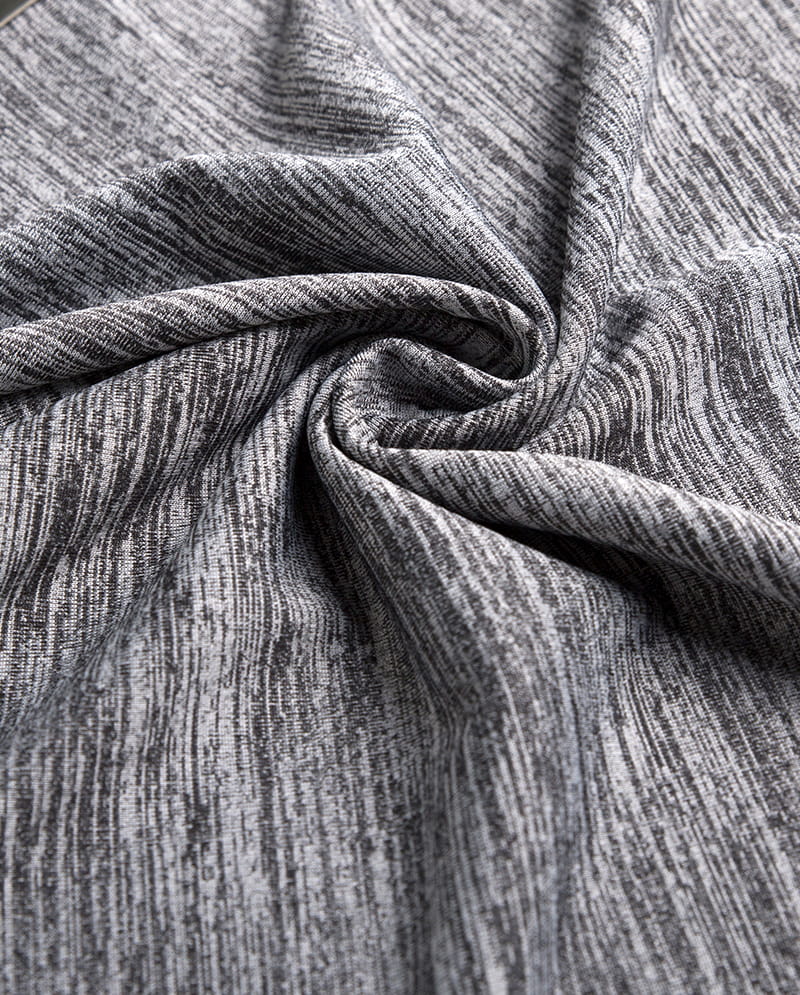
Anti-static Cationic Knitted Rib Fabric
-
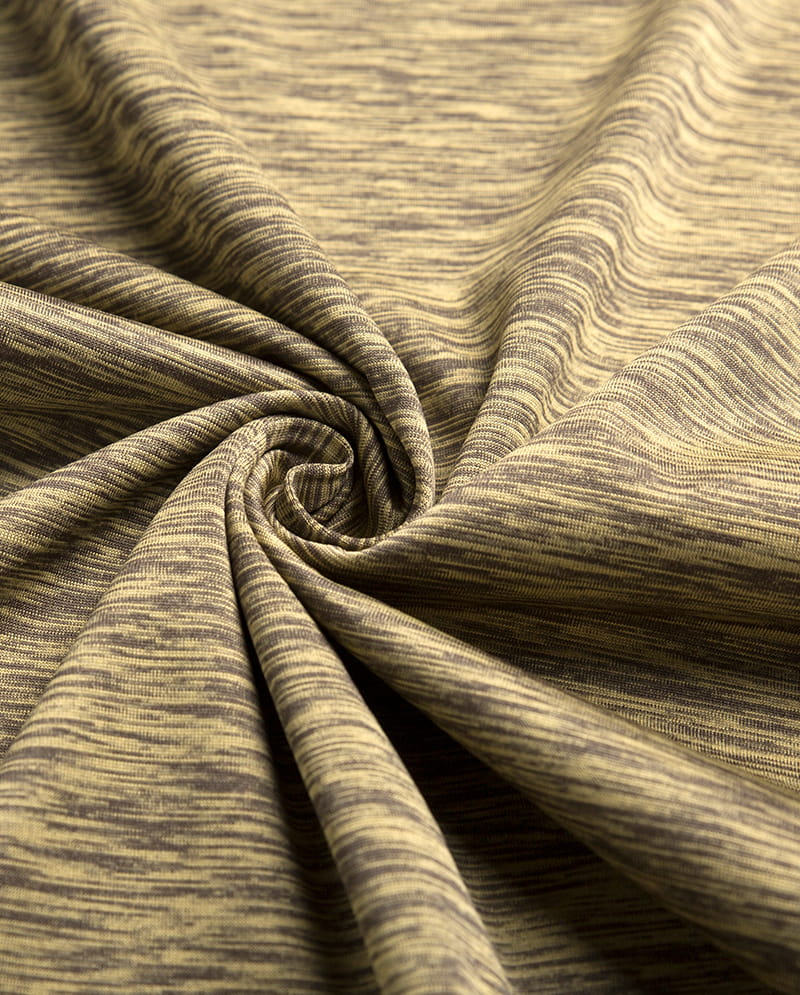
High-Stretch Cationic Jersey Fabric
-
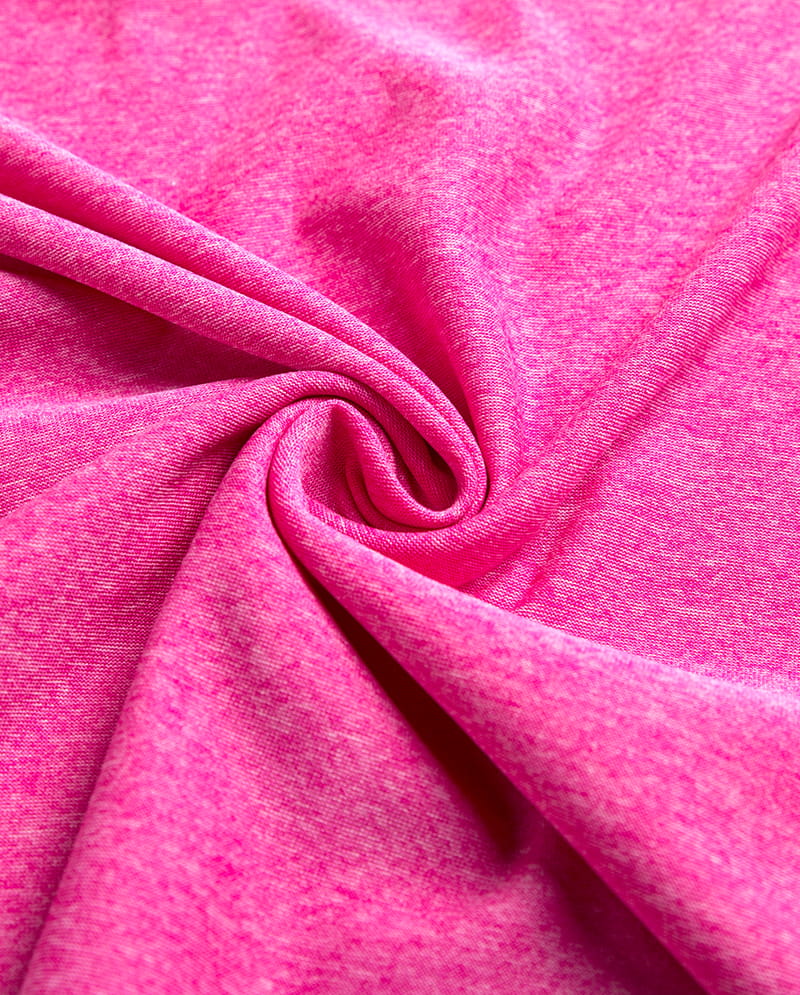
High Quality Cationic DTY Spandex Two Sides Brush Dralon Knit Fabric for Garment Thermal Underwear
-
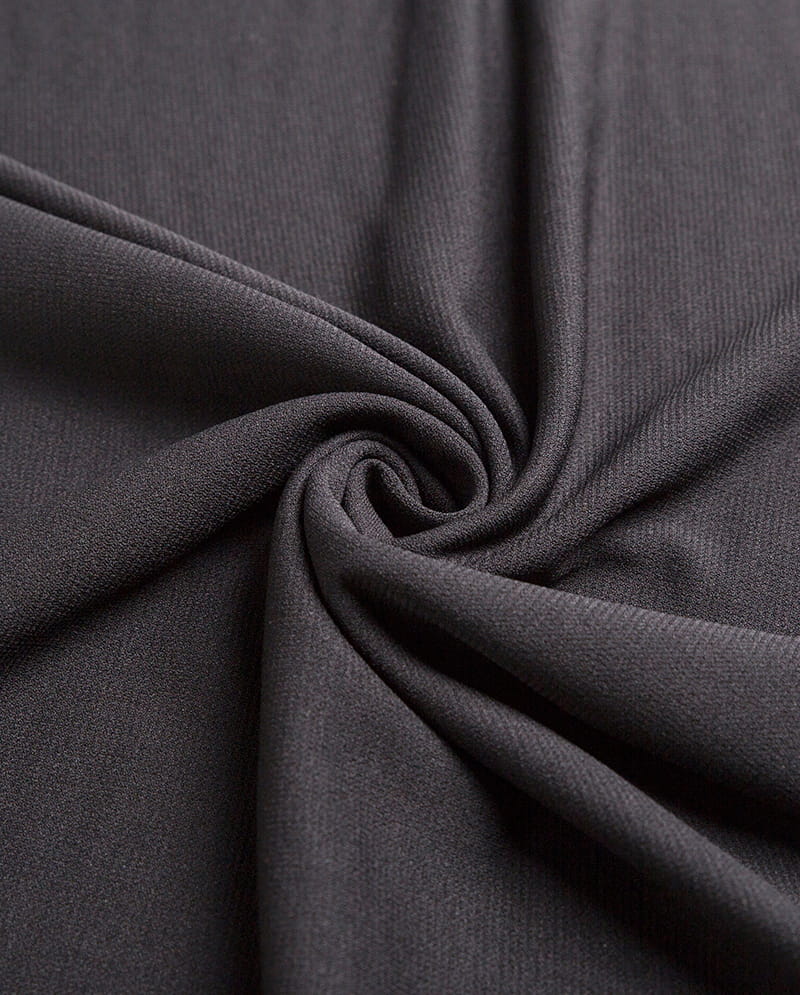
Durable Anti-Pilling Knitted Fabric for Home Textiles
-
Wash-Resistant Cationic Elastic Knitted Fabric for Garment Industry
-
Breathable Double-Faced Elastic Composite Fabric
-
-
-
- whatsapp:
- 0086-13962559622
-
- skype:
- skype.aliceshenghong
-
- Wechat:

COPYRIGHT © 2016 Suzhou Junhui Textile Co., Ltd.
