

 EN
EN English
 中文简体
中文简体Eco-Friendly SD+CD DTY(D/F) Low-Shrink Recycled Yarn for Advanced Textile Manufacturing
Content
- 1 What SD+CD DTY(D/F) Low-Shrink Recycled Yarn Means
- 2 Environmental Value and Circular Material Use
- 3 Performance Advantages Compared with Conventional Alternatives
- 4 Manufacturing Process and Quality Development
- 5 Manufacturing Strengths and Product Development Capability
- 6 Available Product Range and Specification Flexibility
- 7 Application Opportunities
- 8 Processing Guidance for Knitting and Weaving
- 9 Quality, Certification, and Responsible Purchasing
- 10 Why Supplier Partnership Matters
- 11 Recommended Product Development Workflow
- 11.1 Step One: Define the End Use
- 11.2 Step Two: Select Denier and Filament Count
- 11.3 Step Three: Confirm the SD+CD Color Concept
- 11.4 Step Four: Test on the Intended Equipment
- 11.5 Step Five: Establish Dyeing and Finishing Conditions
- 11.6 Step Six: Validate the Finished Product
- 11.7 Step Seven: Confirm Documentation and Supply Terms
- 12 Frequently Asked Questions
- 12.1 What is the main advantage of this recycled yarn?
- 12.2 What does the SD+CD combination do in fabric?
- 12.3 Is the yarn suitable for both knitting and weaving?
- 12.4 How low is the shrinkage?
- 12.5 Can it replace virgin polyester yarn directly?
- 12.6 What kinds of products can be made from this yarn?
- 12.7 Can the yarn create special color effects?
- 12.8 Is the product certified as recycled?
- 12.9 What technical information should be requested before ordering?
- 12.10 Does the company offer other specialized yarns?
- 12.11 How should a new customer begin development?
- 13 Conclusion
- 14 References
- 15 Product: Eco-Friendly SD+CD DTY(D/F) Low-Shrink Recycled Yarn
The textile industry is entering a period in which sustainability, performance, production efficiency, and product differentiation must be considered together. Manufacturers are no longer evaluating yarn only by tensile strength, colorability, or price. They are also examining the source of raw materials, the environmental impact of production, dimensional stability after processing, compatibility with existing machinery, and the ability to create fabrics with distinctive hand feel and appearance.
Eco-Friendly SD+CD DTY(D/F) Low-Shrink Recycled Yarn has been developed to address these combined requirements. Made from post-consumer polyethylene terephthalate, commonly known as PET, the yarn transforms discarded plastic bottles and related PET waste into a useful textile resource. Its semi-dull appearance, cationic dyeable characteristics, draw-textured construction, and low-shrinkage performance give textile producers a practical alternative to conventional virgin polyester yarns.
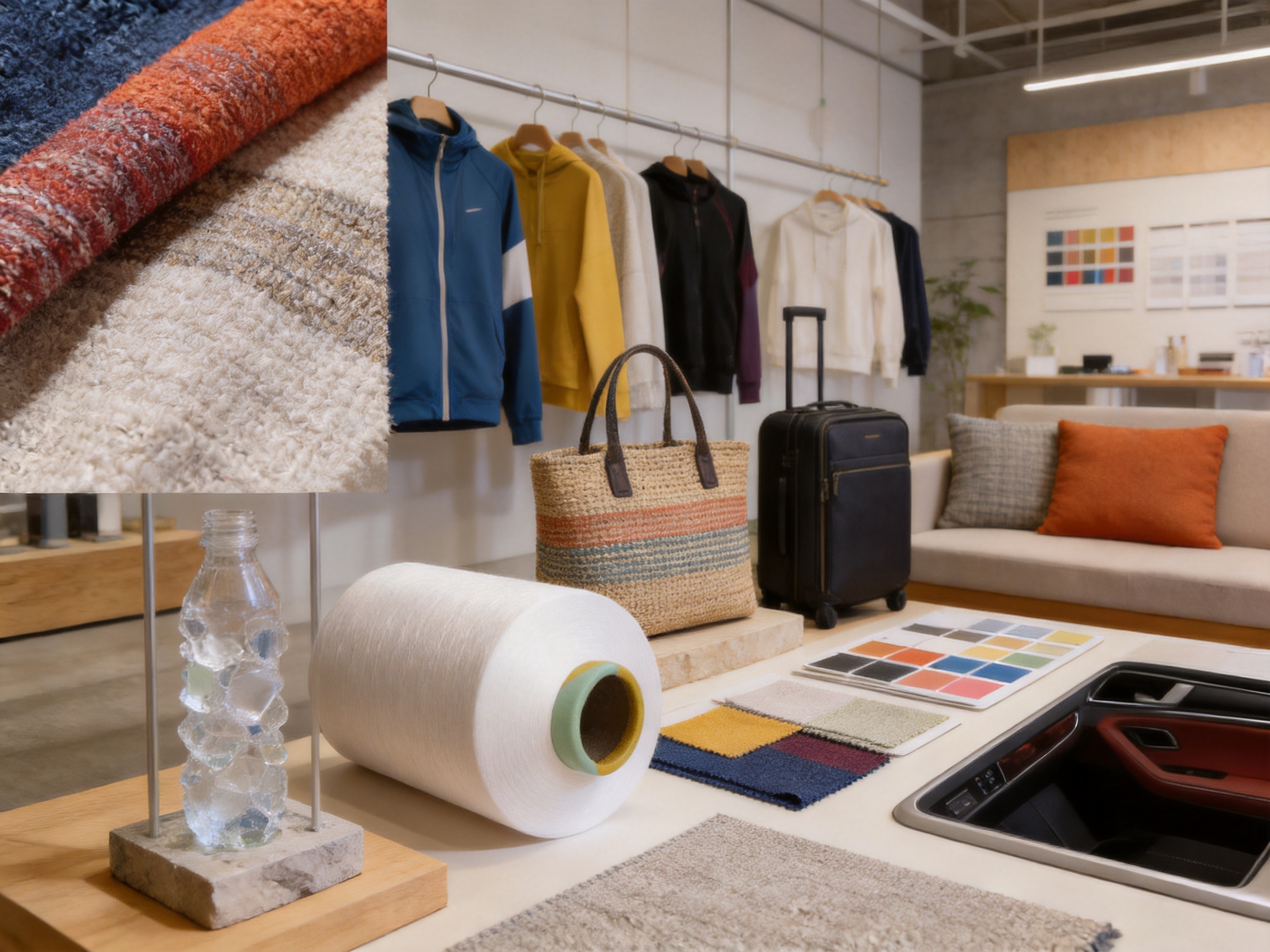
The product is designed for knitting, weaving, apparel, home textiles, accessories, industrial fabrics, and automotive interior applications. It combines the sustainability advantages of recycled polyester with the functional versatility associated with specialized differential yarns. For manufacturers seeking to reduce dependence on virgin petrochemical resources without sacrificing production stability or fabric quality, this yarn provides a balanced solution.
Its principal performance advantage is low shrinkage of no more than 3% under standard hot-air conditions, as specified for the product. This characteristic helps improve dimensional stability during dyeing, heat setting, finishing, and repeated laundering. At the same time, the D/F draw-textured structure produces a soft and crimped surface with useful stretch recovery, bulk, abrasion resistance, and comfort.
The SD+CD combination creates additional design possibilities. Semi-dull filaments offer a refined, natural-looking luster rather than a highly glossy surface, while cationic dyeable components can develop vivid shades and attractive contrast effects. These characteristics allow designers and fabric developers to create garments and textile products that look sophisticated while carrying a credible recycled-material story.
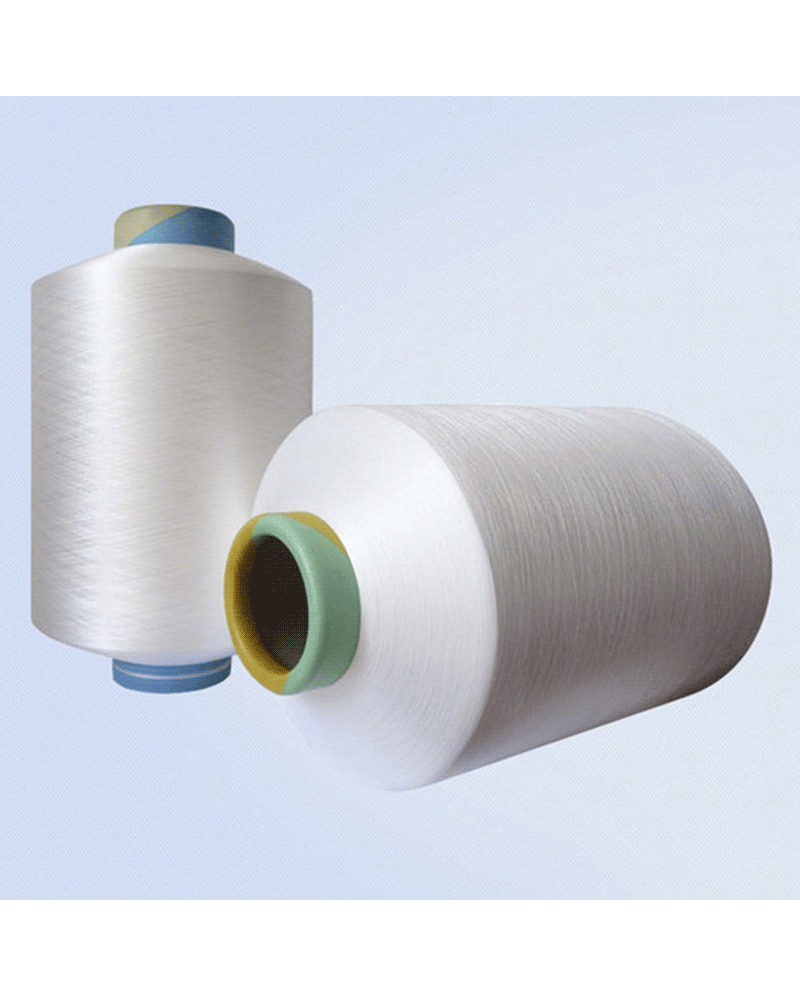
Eco-Friendly SD+CD DTY(D/F) Low-Shrink Recycled Yarn
What SD+CD DTY(D/F) Low-Shrink Recycled Yarn Means
Understanding the product terminology helps buyers evaluate how the yarn may perform in a particular textile process. Each part of the product name describes an important technical or aesthetic characteristic.
Recycled Yarn
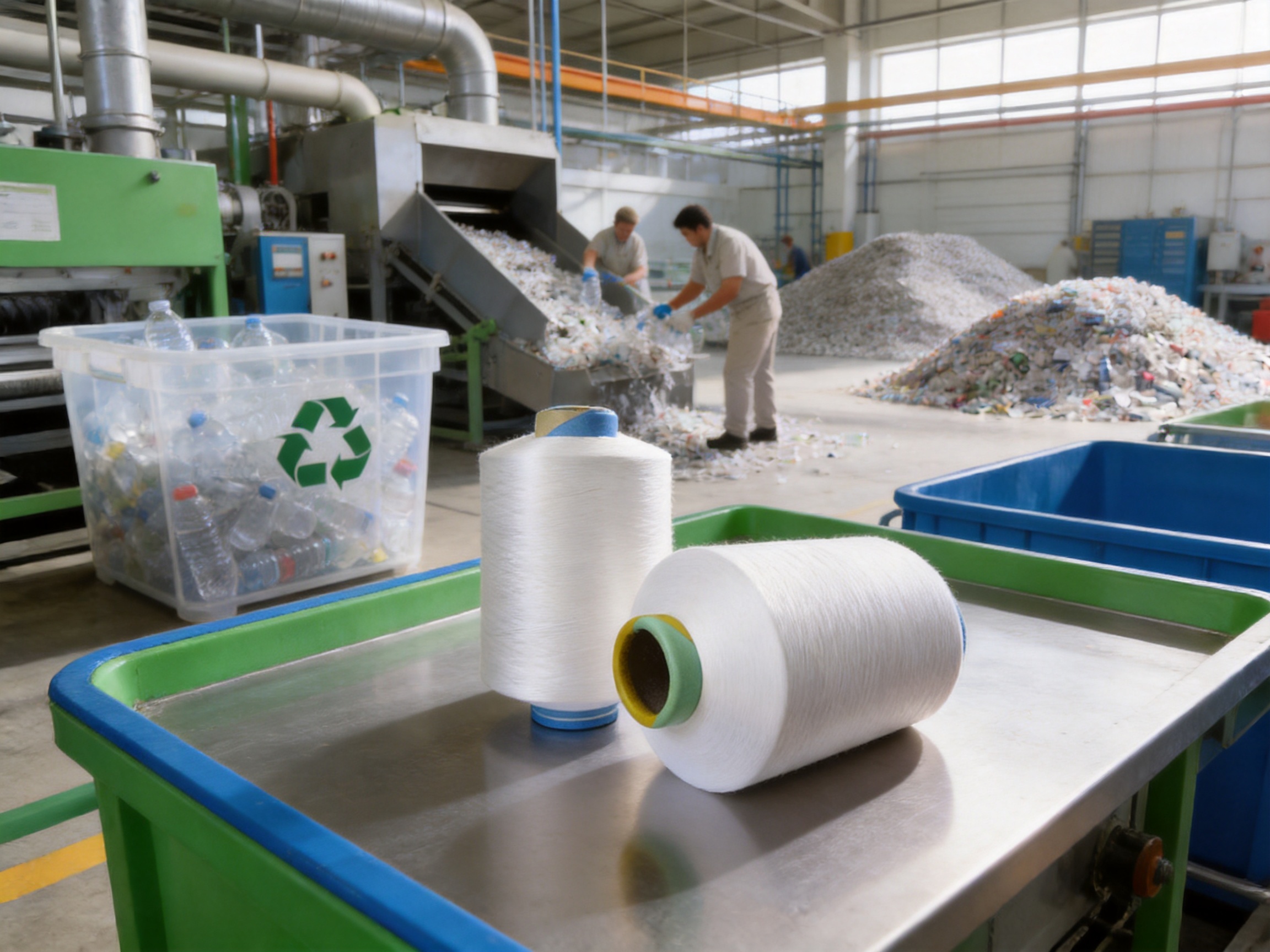
Recycled yarn is produced from recovered materials rather than relying exclusively on newly manufactured polymer. In this product category, the principal feedstock is recycled PET. Used water bottles and other post-consumer PET products can be collected, sorted, cleaned, processed, and converted into polymer suitable for spinning into textile filaments.
This approach supports a circular material flow. Instead of allowing PET waste to remain in landfills or enter the natural environment, the material is redirected into a productive industrial application. Once converted into yarn, recycled PET can be used in fabrics for clothing, bags, luggage, school products, home furnishings, and technical textiles.
Recycled polyester does not automatically mean that every environmental impact has been eliminated. Collection, transportation, cleaning, processing, energy consumption, and finishing all influence the total environmental footprint. Nevertheless, the use of post-consumer PET can reduce the need for virgin polymer feedstock and provide a practical route for using existing plastic waste.
SD: Semi-Dull Appearance
SD stands for semi-dull. Compared with bright polyester, semi-dull yarn has a softer and less reflective visual effect. This subdued luster is valued in fabrics that require a natural, elegant, technical, or premium appearance.
Semi-dull yarn is suitable for sportswear, casual clothing, linings, home textiles, bags, upholstery, and many other products in which excessive shine would be undesirable. The appearance can also help conceal minor surface irregularities and create a more sophisticated visual impression after knitting or weaving.
CD: Cationic Dyeable Function
CD refers to cationic dyeable polyester. Cationic dyeable yarn is designed to accept cationic dyes, which are different from the disperse dyes normally used for standard polyester. This difference creates opportunities for color contrast, two-tone effects, mélange appearances, and vivid shades.
When SD and CD components are combined, fabric developers can use dyeing behavior as a design tool. Different components may respond differently during the dyeing process, producing visual depth and color variation without requiring complex printing or additional surface treatments. The final effect depends on yarn construction, fabric structure, dye selection, dyeing recipe, temperature, and finishing conditions.
DTY(D/F): Draw-Textured Filament Structure
DTY means draw-textured yarn. During draw texturing, filament yarn is drawn and texturized to introduce crimp, bulk, softness, and elasticity. The resulting yarn is more suitable for many knitted and woven fabrics than a completely straight filament because it offers a more textile-like hand and improved surface coverage.
D/F is used in the supplied product information to identify the draw-textured filament format. The textured structure can help fabrics achieve a soft touch, comfortable drape, enhanced recovery, and a fuller appearance. It can also improve the visual richness of fabric surfaces by adding controlled crimp and fine irregularity.
Low Shrinkage
Low shrinkage is a critical quality factor in modern textile production. Excessive shrinkage can create fabric distortion, unexpected width changes, seam puckering, uneven garment measurements, or poor dimensional stability after washing. The product is specified with shrinkage of no more than 3% under standard hot-air conditions.
This performance helps manufacturers establish more predictable processing conditions. It does not eliminate the need for proper process control. Dyeing temperature, residence time, fabric tension, heat-setting conditions, machine type, blend composition, and finishing chemistry can all affect the final result. However, a low-shrinkage yarn provides a stronger starting point for stable production.
Product characteristic |
Meaning |
Potential textile benefit |
Recycled PET origin |
Produced from recovered post-consumer PET materials |
Supports material circularity and recycled-content programs |
Semi-dull finish |
Controlled, subdued filament luster |
Natural appearance and refined surface effect |
Cationic dyeability |
Affinity for cationic dyes |
Vivid color and opportunities for contrast effects |
Draw-textured construction |
Crimped filament structure created through texturing |
Softness, bulk, elasticity, and comfortable hand feel |
Low shrinkage |
No more than 3% under specified standard hot-air conditions |
Improved dimensional stability during processing and use |
Environmental Value and Circular Material Use
The environmental value of this yarn begins with its raw-material strategy. PET bottles are widely used in consumer packaging, but their useful life as packaging is usually short. Converting this waste into textile polymer extends its material life and creates a second application for an existing resource.
The recycling process generally involves the collection of PET products, sorting by material type and color, removal of foreign matter, washing, shredding, drying, and conversion into flakes or other intermediate forms. These materials can then be processed into recycled polymer suitable for spinning. The quality of the final yarn depends heavily on the cleanliness, consistency, and polymer characteristics of the recycled feedstock.
For textile manufacturers, recycled yarn can support several sustainability objectives. It can help increase recycled content in finished products, reduce the use of virgin polyester, support brand sustainability programs, and contribute to waste-diversion goals. When the recycled material is documented through a recognized certification system such as the Global Recycled Standard, buyers can communicate recycled-content claims with greater confidence, subject to the scope and validity of the relevant certification.
A responsible sustainability strategy should evaluate the entire product life cycle. Yarn manufacturers and textile mills must consider energy efficiency, water consumption, dyeing chemistry, packaging, transportation, production waste, and end-of-life options. The recycled content of the yarn is an important component of that strategy, but it works best when combined with efficient manufacturing and responsible supply-chain management.
The product is particularly suitable for companies that need to combine sustainability with performance. Some recycled yarns may be selected primarily for environmental reasons and then require substantial adjustments in downstream processing. A well-developed recycled DTY product should instead be engineered for compatibility with regular textile operations, allowing mills to adopt recycled materials without completely redesigning their production systems.
Performance Advantages Compared with Conventional Alternatives
Compared with Standard Virgin Polyester DTY
Virgin polyester DTY remains widely used because of its strength, availability, and stable processing characteristics. The main advantage of the recycled alternative is its use of post-consumer PET rather than exclusively virgin polymer. This gives buyers a sustainability advantage while retaining many of the familiar benefits of polyester, including durability, quick drying, dimensional stability, and broad application range.
The SD+CD construction also creates functions that are not available in every standard polyester DTY. Cationic dyeability can provide special color effects, while semi-dull luster can produce a more restrained appearance. A product that combines these features can help brands develop fabrics with both environmental value and visual differentiation.
Compared with Bright Polyester Yarn
Bright polyester yarn reflects more light and can produce a shiny appearance. That effect is desirable for some fabrics, but it may appear too glossy for premium sportswear, casual garments, soft furnishings, or contemporary accessories. Semi-dull recycled yarn provides a more controlled appearance that often resembles the visual character expected from natural or high-value synthetic fabrics.
The semi-dull surface can also support a more uniform dye appearance and reduce the visual harshness sometimes associated with bright filament. Designers can select it when they want color depth and surface softness rather than a strong reflective effect.
Compared with Ordinary Polyester That Accepts Only Conventional Dye Classes
Ordinary polyester generally relies on disperse dyes. Cationic dyeable polyester expands the available coloration approach. It can be used to create contrast between cationic and conventional polyester components, depending on the construction of the yarn and fabric.
This makes the SD+CD product valuable for collections that require mélange, two-color, cross-dyed, or heather-like effects. It can reduce dependence on complicated printing processes in certain designs. However, color development should be confirmed through laboratory trials because the final appearance depends on the specific dye system and fabric construction.
Compared with High-Shrinkage or Unstable Filament Options
High or unpredictable shrinkage can increase production risk. Fabric width may change unevenly, garment dimensions may become difficult to control, and repeated washing may reveal unwanted distortion. With a specified shrinkage level of no more than 3% under standard hot-air conditions, this yarn provides a more stable platform for controlled processing.
Low shrinkage is especially helpful in products that require accurate dimensions, such as fitted sportswear, uniform fabrics, upholstery panels, automotive interior materials, and finished goods with carefully engineered measurements. Manufacturers still need to establish appropriate heat-setting and finishing recipes, but a stable yarn can reduce the range of adjustments required.
Compared with Non-Textured Filament
Flat filament yarn can offer smoothness and strength, but it may not provide the same bulk, softness, elasticity, and fabric coverage as a draw-textured yarn. DTY introduces crimp that helps create a more comfortable hand and a richer surface. This makes the yarn appropriate for fabrics that need body and resilience without excessive weight.
Comparison point |
SD+CD DTY(D/F) recycled yarn |
Potential limitation of a basic alternative |
Raw-material positioning |
Uses recycled PET feedstock |
Virgin-only yarn does not directly use post-consumer PET waste |
Surface appearance |
Semi-dull and refined |
Bright yarn may create excessive shine for some products |
Color design |
Supports cationic dyeing and contrast effects |
Conventional dyeable yarn may offer fewer differential-color options |
Hand feel |
Soft, crimped, and textile-like |
Flat filament may provide less bulk and softness |
Dimensional control |
Specified low shrinkage of no more than 3% under standard hot-air conditions |
Uncontrolled shrinkage may cause processing variation |
Application flexibility |
Suitable for knitting, weaving, apparel, home, and industrial uses |
Highly specialized yarn may be less adaptable across product categories |
Manufacturing Process and Quality Development
Advanced recycled yarn manufacturing requires more than simply replacing virgin polymer with recycled material. The entire process must be controlled so that the final filament provides consistent denier, evenness, color response, strength, elongation, crimp, and shrinkage. The manufacturing capabilities associated with this product category are built around material preparation, polymer handling, spinning, texturing, testing, and application support.
1. Recycled PET Collection and Material Preparation
The starting material is post-consumer PET waste. Collection and sorting are important because contamination from other plastics, labels, adhesives, metals, organic residue, or incompatible polymers can affect melt quality and yarn performance.
Material preparation normally includes sorting, cleaning, shredding, drying, and inspection. PET must be sufficiently clean and dry before melting. Moisture can cause hydrolytic degradation during melt processing, reducing polymer viscosity and weakening the resulting filament. Careful drying and material handling therefore play a major role in maintaining recycled polymer quality.
The use of controlled feedstock helps reduce variations in color, viscosity, and contamination. While recycled materials naturally require responsible management of variability, professional preparation can make the polymer more suitable for high-value textile applications.
2. Polymer Melting and Filtration
After preparation, the PET material is melted under controlled temperature conditions. Melt filtration helps remove remaining solid impurities and protects downstream spinning components. Stable melt pressure and temperature are important for producing filaments with consistent cross-sectional characteristics.
For a recycled product, filtration and melt management are particularly important because the feedstock may contain more variation than virgin polymer. Advanced process control helps reduce defects such as black specks, gels, broken filaments, uneven denier, and inconsistent dye uptake.
The polymer handling stage also influences the final low-shrinkage performance. Molecular orientation, intrinsic viscosity, cooling conditions, and draw ratios must be coordinated so that the filament has the required balance of strength, elongation, crimp, and thermal stability.
3. Melt Spinning of Specialized Filaments
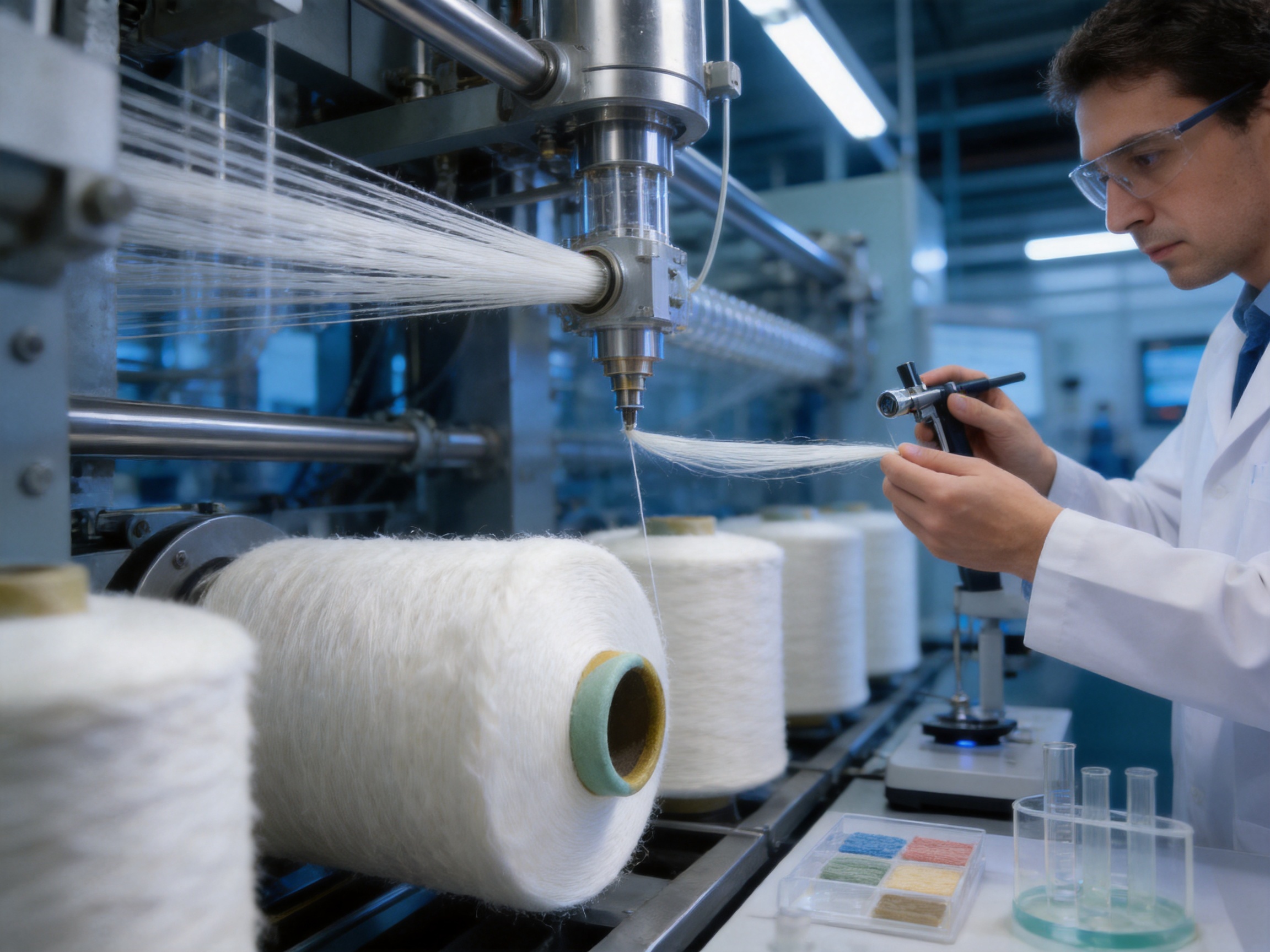
During melt spinning, the polymer is extruded through spinnerets to form fine continuous filaments. The spinning process determines many of the yarn's fundamental characteristics, including fineness, filament count, cross-sectional uniformity, surface quality, and initial orientation.
For SD+CD products, the relevant polymer components must be controlled to achieve their intended functional relationship. The semi-dull component must offer the desired luster, while the cationic dyeable component must maintain appropriate dye affinity. Consistent distribution and stable spinning conditions support uniform fabric coloration and appearance.
Cooling air, spinning speed, quenching uniformity, and winding tension all affect filament quality. Variations in these conditions can produce differences in elongation, crimp response, dye uptake, or fabric hand. A professional manufacturing system therefore emphasizes stable operating parameters and frequent quality checks.
4. Drawing and Texturing
Freshly spun filaments are drawn to improve orientation and develop the desired strength and elongation balance. The filaments are then texturized to introduce controlled crimp. Draw texturing is central to the product because it gives the yarn its soft, elastic, and bulky character.
Texturing conditions must be matched to the target denier and filament count. Excessive texturing may reduce uniformity or create an overly bulky hand, while insufficient texturing may result in a flat or less comfortable fabric. Heater temperature, draw ratio, texturing speed, false-twist conditions, and winding tension can all influence the final result.
The low-shrinkage objective requires careful thermal treatment. If residual stress remains too high in the filaments, the yarn may contract excessively during dyeing or heat setting. Controlled drawing and texturing can reduce unwanted relaxation and improve dimensional stability.
5. Winding, Packaging, and Traceability
After texturing, the yarn is wound onto packages suitable for downstream knitting, weaving, or other textile operations. Package density, winding shape, edge quality, and tension consistency affect unwinding performance. Poor packages can cause yarn breaks, tension fluctuations, and production interruptions even when the yarn itself has acceptable physical properties.
Clear labeling and batch traceability are important for recycled products. Buyers may need to connect a yarn package to a particular production lot, recycled-material record, test report, or certification document. Traceability supports quality control and helps customers manage claims about recycled content and product consistency.
6. Testing and Process Verification
Quality testing may include denier measurement, filament count verification, tensile strength, elongation, crimp characteristics, boiling-water shrinkage, hot-air shrinkage, evenness, oil content, package inspection, and dyeing trials. The precise test method should be agreed between supplier and buyer because results can vary according to equipment, conditioning, and standard.
Color testing is especially important for SD+CD yarn. Laboratory dyeing can confirm shade development, color contrast, color fastness, and compatibility with the customer's dyeing equipment. Small-scale trials reduce the risk of unexpected results in bulk production.
The company behind this product has developed a broad differential-yarn portfolio that includes recycled SD DTY, recycled SD FDY, recycled FD DTY, recycled SD+CD DTY, recycled DDB DTY, recycled CD DTY, normal polyester yarn, high-elastic yarn, PBT/PET products, flame-retardant yarn, antibacterial yarn, moisture-wicking yarn, hollow warm yarn, cotton-like yarn, and other differentiated products. This breadth indicates an ability to work across multiple performance requirements rather than focusing on a single commodity specification.
Manufacturing Strengths and Product Development Capability
A major advantage for textile buyers is access to a supplier with experience in differential yarn development. Differential yarns require a deeper understanding of polymer characteristics, spinning behavior, texturing, dyeing, and fabric construction than standard commodity yarns.
The company was established in 2015 and focuses on the development and sale of recycled yarn, polyester dope-dyed yarn, microfine yarn, flame-retardant yarn, cationic dyeing yarn, knitting fabrics, and other specialized textile materials. Its professional research and development team works with internationally recognized enterprises on environmental-protection and functional-yarn applications.
This development orientation is valuable because textile problems are often application-specific. A yarn that performs well in circular knitting may require different characteristics for warp knitting, woven fabric, fleece, automotive interiors, or bag materials. A supplier with experience across several yarn categories can better understand how a specification will behave after fabric formation and finishing.
The company's products are exported to customers in many countries, with more than 90% of production reportedly sold internationally and cooperative relationships established in 36 countries. International market experience can support communication across different technical standards, shipping requirements, documentation systems, and application expectations.
Customer support is another stated strength. The company positions itself as a service-oriented textile enterprise and reports that its experts are prepared to assist customers with product selection and problem solving within 12 hours globally. For buyers developing a new recycled fabric, rapid technical communication can shorten sampling cycles and help identify the correct yarn construction earlier.
Its location in Shengze Town, Wujiang Area, Suzhou City, Jiangsu Province, places the company within one of China's important textile manufacturing regions. This regional concentration can provide access to textile machinery, dyeing facilities, knitting and weaving partners, logistics services, testing resources, and experienced industry personnel.
Another advantage is the ability to accept orders for different kinds of differentiation yarn. Buyers may therefore discuss related options rather than treating the SD+CD DTY product as an isolated item. Depending on the application, a customer may require recycled SD DTY, recycled CD DTY, FDY, high-elastic yarn, PBT/PET, functional yarn, or a cotton-like format. A diversified product list can simplify sourcing and support coordinated development.
Available Product Range and Specification Flexibility
The supplied product list demonstrates a broad range of denier and filament combinations. Recycled series include recycled SD DTY(D/F), recycled SD FDY(D/F), recycled FD DTY(D/F), recycled SD+CD DTY(D/F), recycled DDB DTY(D/F), and recycled CD DTY(D/F).
Examples listed for recycled SD+CD DTY include 50/48-72, 75/48-72, 80/72, 100/72-108-144, 125/72-144, 150/72-108-144, and 300/96-144-288. In textile yarn notation, the first number commonly refers to denier and the second number commonly refers to filament count, although buyers should confirm the supplier's exact specification convention before placing an order.
The broader range also includes recycled SD DTY specifications such as 15/6, 20/12-24, 30/12-24-36, 50/36-48-72, 75/36-72-144, 100/36-48-96-144, 150/48-96-144-288, and 300/96-192-288-576. Recycled FD DTY options include 50/72, 75/36, 75/72, and 150/144. Recycled CD DTY options include 75/36-72, 150/72-108-144, and 300/96-144-288.
This range allows buyers to balance softness, coverage, strength, weight, stretch behavior, and fabric appearance. Finer yarns can be used for lightweight fabrics and smooth surfaces, while heavier constructions may be appropriate for substantial knits, upholstery, bags, or industrial applications.
Normal-series products listed by the supplier include SD DTY, FD DTY, and SD DDB. The CD series includes CD DTY, SD+CD DTY, and white-and-black options. High-elastic products include high-elastic yarn, PBT/PET, and PBT/PET DDB. Functional offerings include flame-retardant, antibacterial, and moisture-wicking yarns. Cotton-like, hollow-warm, and Acy yarns are also available.
Product family |
Representative listed options |
Typical development purpose |
Recycled SD+CD DTY |
50/48-72; 75/48-72; 80/72; 100/72-108-144; 125/72-144; 150/72-108-144; 300/96-144-288 |
Recycled content, subdued luster, cationic color effects, and textured hand |
Recycled SD DTY |
15/6 through 300/96-192-288-576 |
General recycled textured fabrics with a semi-dull appearance |
Recycled FD DTY |
50/72; 75/36; 75/72; 150/144 |
Recycled fabrics requiring a fuller or brighter filament effect |
Recycled CD DTY |
75/36-72 through 300/96-144-288 |
Cationic dyeable recycled fabric development |
High-elastic series |
High-elastic yarn, PBT/PET, and PBT/PET DDB |
Stretch, recovery, comfort, and shape retention |
Functional series |
Flame-retardant, antibacterial, and moisture-wicking yarns |
Performance-driven apparel and technical textile applications |
Cotton-like and hollow-warm series |
32S, 40S, 80S cotton-like; 75/72 and 150/144 hollow warm |
Natural hand feel, warmth, softness, and comfort |
Application Opportunities
Activewear and Sportswear
Activewear requires a combination of comfort, recovery, abrasion resistance, color stability, and manageable moisture behavior. The crimped DTY structure can provide a soft hand and useful elasticity, while the polyester base supports quick drying and durability. The semi-dull appearance is suitable for technical garments that should look modern without excessive shine.
The yarn can be used in shirts, leggings, training tops, jackets, base layers, sports accessories, and knitted panels. For products requiring moisture management, it may be combined with moisture-wicking yarns or engineered into fabric structures that promote air movement and liquid transport.
Cationic dyeability can also help sportswear brands create color-blocking, contrast, and mélange effects. These design features can distinguish a recycled collection from basic solid-color products.
Casual and Fashion Apparel
The softness and refined luster of semi-dull DTY make the yarn suitable for casual garments, sweaters, skirts, dresses, trousers, cardigans, and lightweight outerwear. The textured structure can contribute to a smooth drape or a fuller hand depending on yarn count and fabric construction.
Fashion developers can use the SD+CD combination to create subtle color variation. A fabric may appear different under various lighting conditions because the textured surface and differential dye response create visual depth. Sampling remains essential, but the yarn gives designers a broader palette of possibilities than a single-component filament.
Home Textiles
Home textile products often require a combination of attractive appearance, wash durability, dimensional stability, and resistance to daily abrasion. Suitable applications may include curtains, cushion covers, decorative fabrics, bedding components, blankets, throws, upholstery blends, and household storage products.
The low-shrinkage characteristic helps reduce dimensional changes during care and finishing. The recycled origin can also support home-textile collections marketed around responsible material use. For upholstery and heavier products, buyers should select an appropriate denier and filament count and confirm abrasion, seam, and colorfastness requirements through testing.
Bags, Luggage, and Accessories
Recycled PET yarn is widely associated with bags and accessories because it can offer a strong sustainability message together with practical durability. Potential applications include mountaineering bags, handbags, school bags, luggage, briefcases, fashion bags, shopping bags, gift bags, storage boxes, and travel accessories.
Textured yarn can create a softer and more flexible surface than some flat industrial filaments. It can also be woven or knitted into fabrics that combine body, abrasion resistance, and visual texture. For load-bearing products, the final fabric construction, reinforcement, coating, seam design, and hardware must be evaluated in addition to yarn properties.
Automotive Interiors
Automotive interior materials require consistent appearance, durability, abrasion resistance, dimensional control, and reliable color performance. Recycled DTY can be considered for seat-related fabrics, door-panel materials, headliners, trim fabrics, and other interior components where the specification permits polyester yarn.
The semi-dull appearance can help create a refined interior surface, while the textured construction may improve comfort and visual depth. Low shrinkage is valuable because automotive components often require close dimensional tolerances. Additional testing for light fastness, fogging, odor, flammability, abrasion, and chemical resistance should be conducted according to the relevant vehicle or component standard.
Industrial and Technical Textiles
Industrial textile applications may include protective covers, equipment fabrics, filtration-support structures, interior materials, packaging fabrics, and other products that require strength and process consistency. The exact suitability depends on the required technical properties and whether additional functional treatments are needed.
The supplier's wider portfolio of flame-retardant, antibacterial, moisture-wicking, high-elastic, and other functional yarns allows buyers to discuss combinations for specialized applications. The SD+CD recycled yarn may serve as the base material for products where sustainable content and appearance are primary requirements, while another functional yarn can be introduced where a specific performance standard must be met.
Processing Guidance for Knitting and Weaving
Before bulk production, textile mills should conduct a controlled trial using the intended machine, fabric construction, dyeing route, and finishing recipe. Recycled yarns can be highly consistent when properly manufactured, but each lot should still be checked because recycled feedstock and processing conditions may produce normal batch variation.
Knitting Considerations
For circular knitting, buyers should evaluate yarn tension, package unwinding, needle compatibility, breakage rate, fabric weight, loop stability, and surface appearance. DTY can generate a soft and bulky fabric, but machine speed and yarn feeding tension may need adjustment to achieve the desired structure.
Warp knitting applications require attention to beam preparation, tension uniformity, filament integrity, and pattern stability. If the fabric includes both SD and CD effects, the arrangement of yarns in the guide bars or fabric structure can influence the final color contrast and visual balance.
Weaving Considerations
In woven fabrics, yarn selection should be matched to warp and weft requirements. Warp yarns may face higher tension and abrasion during weaving, while weft yarns can influence bulk, drape, and surface texture. The yarn's strength, elongation, crimp, and package performance should be confirmed for the specific loom and fabric design.
For bag and luggage fabrics, weaving density, coating compatibility, tear strength, and seam performance are especially important. For apparel fabrics, drape, softness, pilling, and color development may be more important than maximum tensile strength alone.
Dyeing and Finishing Considerations
Cationic dyeing should be developed with the dye supplier or dyehouse to establish the correct recipe. Important variables include dye concentration, liquor ratio, pH, temperature profile, leveling agent, reduction clearing, and final washing. The use of cationic dyes can produce strong and vivid shades, but recipe control is necessary to avoid unlevel dyeing.
When SD and CD components are used together, the final result may depend on differential dye uptake. A laboratory sample should be evaluated under the same approximate conditions expected in production. This helps confirm the desired tone, contrast, fastness, and repeatability.
Heat setting should be carefully controlled to preserve the yarn's low-shrinkage advantage. Excessive temperature or prolonged residence time may alter crimp, hand feel, width, and elasticity. The fabric mill should establish a process window rather than relying solely on a general temperature recommendation.
Finishing may include softening, moisture management, brushing, raising, calendaring, coating, or other treatments. Each treatment can change the perceived softness, luster, bulk, and dimensional behavior. A full performance assessment should therefore be carried out after finishing, not only on greige fabric.
Quality, Certification, and Responsible Purchasing
Buyers evaluating recycled yarn should request clear technical documentation. Useful information includes the recycled-content percentage, denier, filament count, yarn type, luster classification, shrinkage test method, tensile properties, elongation, oil content, package weight, recommended applications, and available color or dope-dyed options.
Certification documentation should be checked for scope, certificate validity, product coverage, and chain-of-custody requirements. The supplied product information identifies GRS certification as support for sustainability claims. Buyers should verify the current certification status and ensure that their own claims accurately reflect the certified material and supply chain.
Traceability is particularly important when a finished product is marketed as recycled. Documents should connect the raw material to the yarn production batch and then to the textile manufacturer. Accurate records help prevent exaggerated claims and support transparent communication with brand customers, retailers, and end consumers.
Quality assurance should include both laboratory and production-scale evaluation. A laboratory report may show acceptable values, but the yarn must also run consistently on the customer's equipment. Buyers should examine package unwinding, yarn breaks, dyeing uniformity, fabric appearance, shrinkage after laundering, pilling, abrasion, and final dimensional stability.
Because textile specifications differ by market, the supplier and buyer should agree on acceptance standards before shipment. A clear technical agreement may define test methods, tolerances, lot size, inspection procedures, packaging requirements, labeling, and procedures for handling nonconforming material.
Why Supplier Partnership Matters
Choosing a recycled yarn is not only a purchasing decision; it is a product-development decision. The yarn influences fabric construction, dyeing, finishing, cost, lead time, product claims, and customer satisfaction. A supplier that can provide technical consultation is therefore more valuable than a source that only quotes a price.
Suzhou Junhui Textile Co., Ltd. and Suzhou Xiaoran New Materials Co., Ltd. focus on differential yarn development and international textile supply. Their product portfolio covers recycled and conventional yarns, functional yarns, high-elastic materials, cationic dyeing products, and knitting fabrics. This range can help customers compare alternatives within one technical relationship.
The company reports that its professional R&D team cooperates with internationally known enterprises in the research, development, and application of environmental-protection and functional yarns and fabrics. Such cooperation can support practical product development because performance must be evaluated not only at the yarn stage but also during fabric formation, dyeing, finishing, and end use.
The company's export orientation is also relevant for international buyers. With more than 90% of products reportedly sold overseas and customers in 36 countries, the business has experience serving varied markets and communicating across international supply chains. Its stated commitment to responding to product-selection and problem-solving requests within 12 hours can help reduce delays during sampling and troubleshooting.
For buyers, the strongest partnership model begins with a detailed product brief. This should identify the target fabric, machine type, yarn count, color effect, required recycled content, shrinkage limit, hand feel, strength, fastness, end-use standard, estimated annual volume, and delivery schedule. The supplier can then recommend the most appropriate yarn specification and arrange trial samples.
Recommended Product Development Workflow
Step One: Define the End Use
Start by identifying whether the yarn will be used for sportswear, casual apparel, home textiles, bags, automotive interiors, or a technical product. Each category places different demands on softness, strength, abrasion resistance, color fastness, stretch recovery, and dimensional stability.
Step Two: Select Denier and Filament Count
Denier and filament count influence fabric coverage, softness, bulk, appearance, and production behavior. Finer options may be selected for lightweight products, while heavier options may be preferred for durable accessories or substantial fabrics. The correct choice should be based on the fabric weight and construction rather than yarn count alone.
Step Three: Confirm the SD+CD Color Concept
Decide whether the fabric will use the cationic dyeable effect for a solid shade, contrast effect, mélange appearance, or two-tone design. Conduct laboratory dyeing with the intended dyes and confirm whether the resulting visual effect meets the design objective.
Step Four: Test on the Intended Equipment
Run a pilot lot on the actual knitting or weaving machine. Check unwinding, tension, breakage, fabric formation, surface uniformity, and productivity. If the yarn is intended for multiple factories, test on representative equipment from each location.
Step Five: Establish Dyeing and Finishing Conditions
Confirm the dyeing recipe, heat-setting conditions, softening treatment, washing process, and final finishing sequence. Measure shrinkage and appearance after each major stage. This ensures that the yarn's low-shrinkage potential is translated into stable finished-fabric performance.
Step Six: Validate the Finished Product
Evaluate the finished fabric or product for dimensional stability, color fastness, pilling, abrasion, tensile and tear strength, stretch recovery, hand feel, and end-use requirements. The final approval should be based on the finished product rather than yarn test data alone.
Step Seven: Confirm Documentation and Supply Terms
Before bulk purchasing, confirm technical specifications, certification documentation, lot traceability, packaging, minimum order quantity, lead time, inspection requirements, and after-sales support. Clear terms help protect both the buyer and the supplier during long-term cooperation.
Frequently Asked Questions
What is the main advantage of this recycled yarn?
The main advantage is the combination of recycled PET content with specialized textile performance. The yarn offers a semi-dull appearance, cationic dyeability, draw-textured softness, and specified low shrinkage, allowing manufacturers to pursue sustainability without relying on a basic recycled filament alone.
What does the SD+CD combination do in fabric?
SD provides a semi-dull, subdued luster, while CD identifies a cationic dyeable component. Together, they can support vivid shades, contrast effects, two-tone appearances, and visual depth. The exact result depends on the yarn arrangement, fabric construction, dyes, and processing conditions.
Is the yarn suitable for both knitting and weaving?
Yes. The supplied information identifies knitting and weaving as suitable processing routes. However, the best denier, filament count, package format, and process settings should be confirmed through a trial on the intended machinery.
How low is the shrinkage?
The product information specifies shrinkage of no more than 3% under standard hot-air conditions. Buyers should confirm the precise test method, temperature, exposure time, conditioning procedure, and acceptance tolerance before comparing results with other suppliers.
Can it replace virgin polyester yarn directly?
It is designed to provide a practical alternative to virgin polyester in many textile applications, but direct replacement should be verified through sampling. The buyer should compare yarn strength, elongation, dyeing behavior, fabric appearance, shrinkage, pilling, and machine performance before full-scale adoption.
What kinds of products can be made from this yarn?
Potential products include activewear, casual apparel, knitted garments, woven fabrics, home textiles, bags, luggage, school bags, handbags, shopping bags, storage products, automotive interiors, and selected industrial textiles.
Can the yarn create special color effects?
Yes. The cationic dyeable component can be used to develop vivid colors and differential dyeing effects. The final result should be confirmed through laboratory and pilot dyeing because color contrast is influenced by dye selection, recipe, temperature, fabric construction, and finishing.
Is the product certified as recycled?
The supplied information states that the product is supported by GRS certification. Buyers should request the current certificate and verify its scope, validity, covered products, and chain-of-custody requirements before making a formal recycled-content claim.
What technical information should be requested before ordering?
Buyers should request denier, filament count, yarn type, recycled-content details, shrinkage test data, tensile properties, elongation, dyeing recommendations, package information, certification documents, available sample specifications, and recommended processing conditions.
Does the company offer other specialized yarns?
Yes. The listed portfolio includes recycled SD, FD, CD, DDB, and SD+CD yarns, normal polyester yarns, high-elastic yarns, PBT/PET products, flame-retardant yarns, antibacterial yarns, moisture-wicking yarns, cotton-like yarns, hollow-warm yarns, Acy yarns, and other differentiated yarn products.
How should a new customer begin development?
The best approach is to provide the intended application, fabric construction, machine type, target yarn count, color requirements, recycled-content expectations, annual volume, and required delivery schedule. The supplier can then recommend samples and support a staged process from laboratory testing to pilot production and bulk supply.
Conclusion
Eco-Friendly SD+CD DTY(D/F) Low-Shrink Recycled Yarn represents a practical direction for textile manufacturers that want to combine environmental responsibility with reliable product performance. Its post-consumer PET origin supports circular material use, while the semi-dull appearance gives fabrics a refined visual character. Cationic dyeability expands color-development possibilities, and the draw-textured structure contributes softness, bulk, elasticity, and abrasion resistance.
The specified low shrinkage of no more than 3% under standard hot-air conditions is especially valuable for manufacturers concerned with dimensional stability. It can support more predictable dyeing, heat setting, finishing, laundering, and end-product performance when matched with appropriate process control.
The product is also strengthened by the supplier's broad experience in differential yarns, recycled materials, functional yarn development, international sales, and application support. Its portfolio gives customers access to related options when a project requires a different balance of luster, elasticity, warmth, moisture management, flame resistance, antibacterial performance, or fabric hand.
Successful adoption should begin with technical communication and testing. Buyers should confirm the exact yarn specification, recycled-content documentation, certification status, test methods, dyeing behavior, machine compatibility, and finished-fabric performance. With a structured development process, this yarn can help textile producers create durable and attractive products while reducing reliance on virgin polyester and giving post-consumer PET a valuable second life.
References
Global Recycled Standard, Textile Exchange, guidance on recycled-material certification and chain-of-custody principles.
International Organization for Standardization, standards and technical guidance concerning textile fibers, yarn testing, dimensional stability, and color fastness.
Textile Exchange, preferred fiber and material market information concerning recycled polyester and responsible material sourcing.
Technical product information supplied for Eco-Friendly SD+CD DTY(D/F) Low-Shrink Recycled Yarn.
Company product portfolio information supplied for recycled yarn, differential yarn, functional yarn, high-elastic yarn, and knitting fabric development.
Product: Eco-Friendly SD+CD DTY(D/F) Low-Shrink Recycled Yarn

Popular products
-
Premium Cationic Interlock Stretch Comfort Fabric
-
Moisture-Wicking Nylon Woven Fabric
-
Double-faced jacquard elastic fabric
-
Heather Grey Double-faced cationic jersey fabric
-
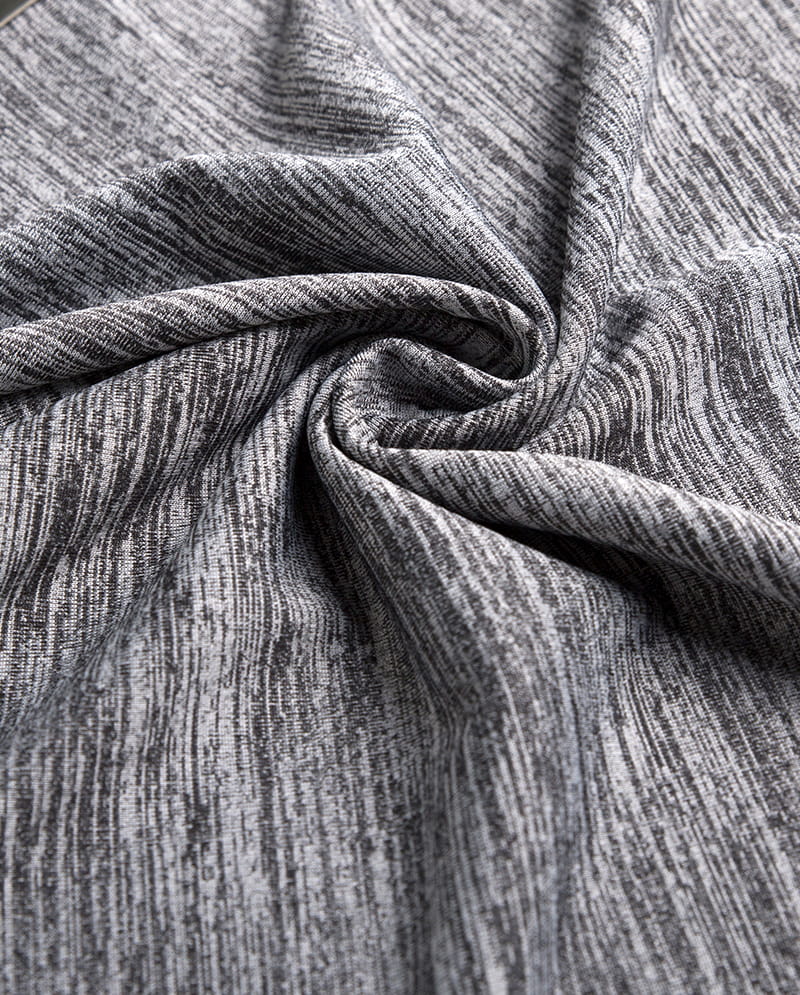
Anti-static Cationic Knitted Rib Fabric
-
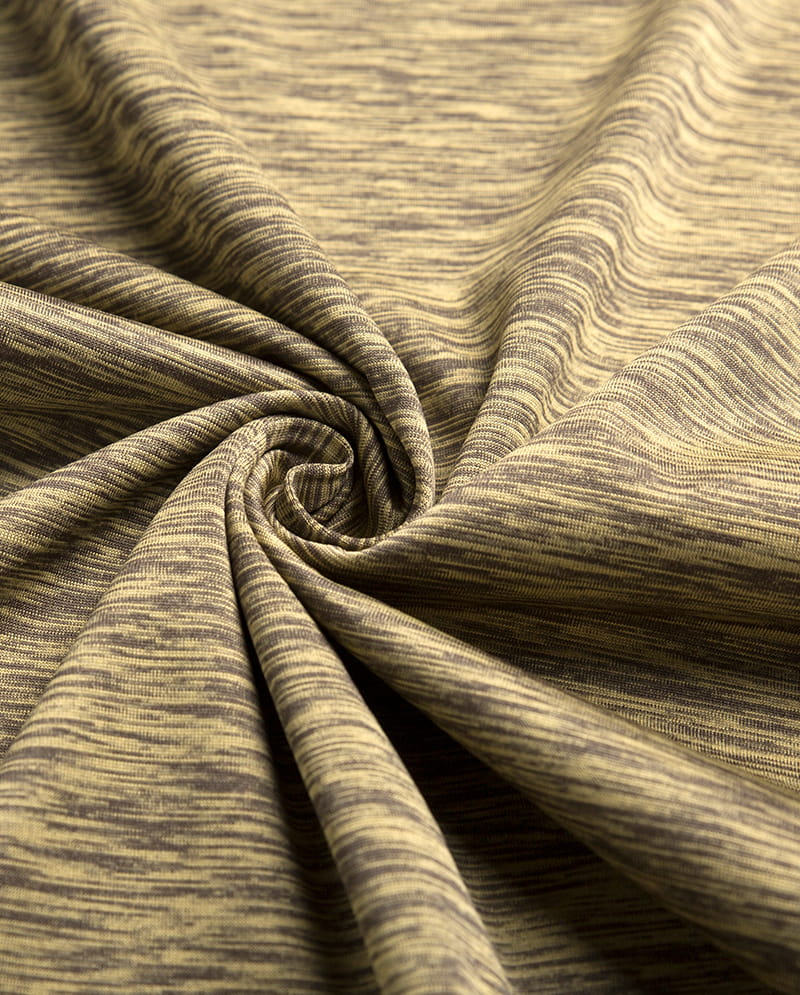
High-Stretch Cationic Jersey Fabric
-
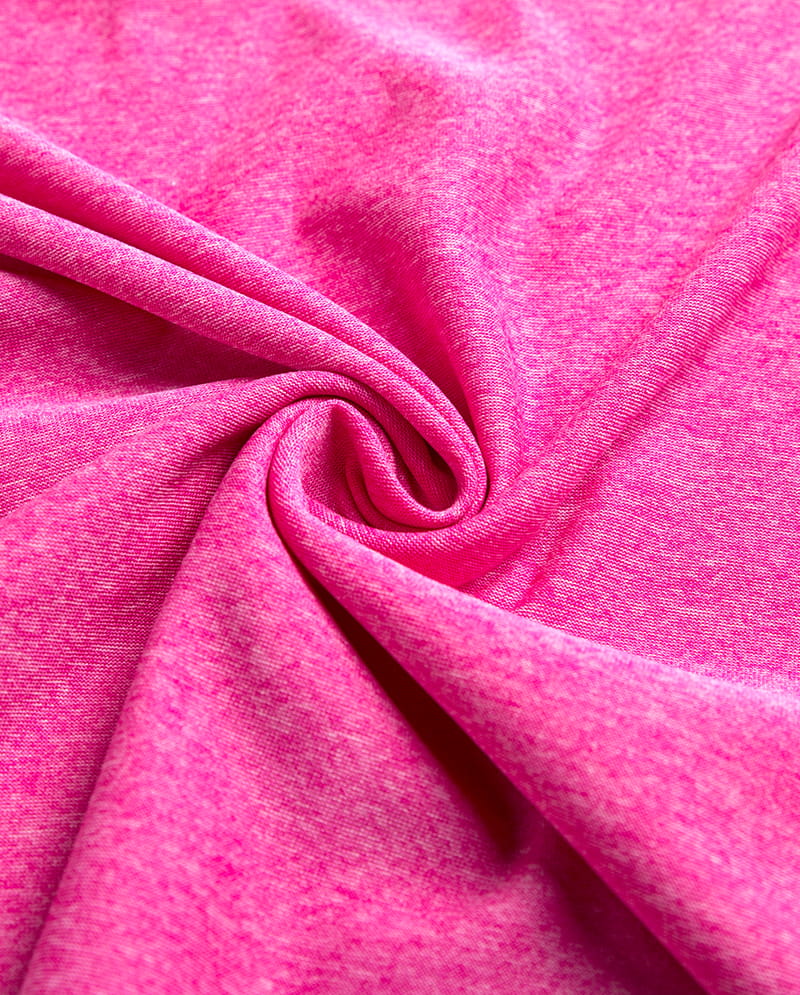
High Quality Cationic DTY Spandex Two Sides Brush Dralon Knit Fabric for Garment Thermal Underwear
-
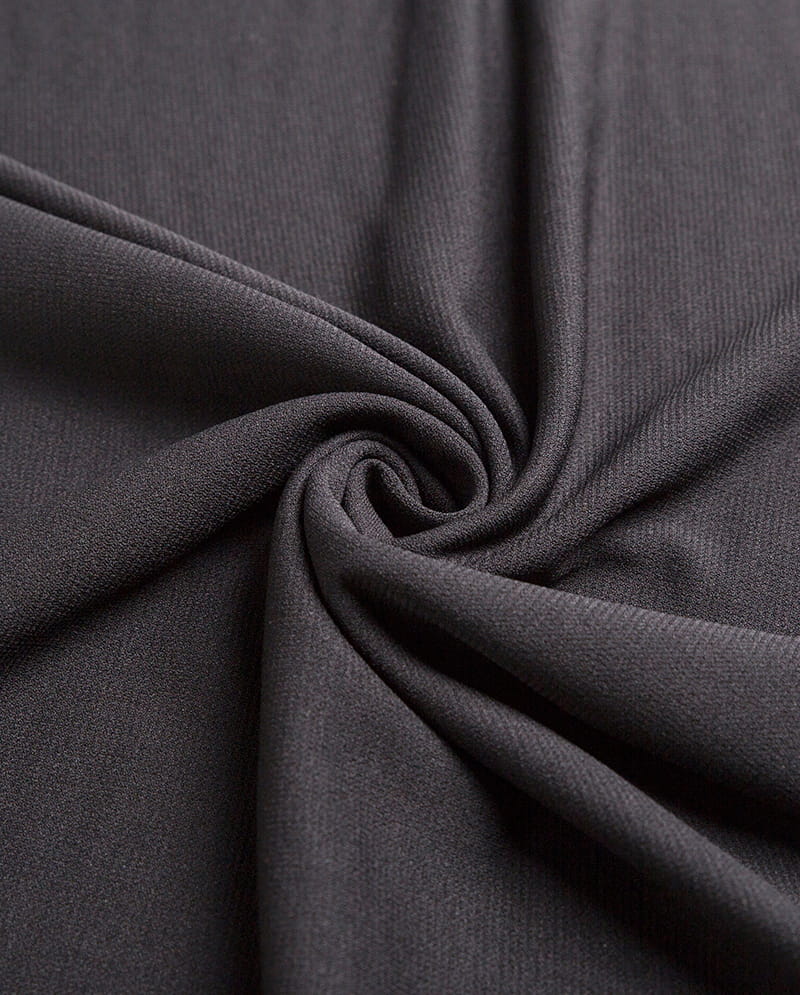
Durable Anti-Pilling Knitted Fabric for Home Textiles
-
Wash-Resistant Cationic Elastic Knitted Fabric for Garment Industry
-
Breathable Double-Faced Elastic Composite Fabric
-
-
-
- whatsapp:
- 0086-13962559622
-
- skype:
- skype.aliceshenghong
-
- Wechat:

COPYRIGHT © 2016 Suzhou Junhui Textile Co., Ltd.
