

 EN
 English
 中文简体
Eco-Friendly SD+CD DTY(D/F) Low-Shrink Recycled Yarn: A Technical and Commercial Guide
Content
- 1 1. Product Overview
- 2 2. Main Technical Characteristics
- 3 3. Recycled Raw Materials and Circular Manufacturing
- 4 4. Manufacturing Process and Process Control
- 5 5. Competitive Advantages Over Conventional Alternatives
- 6 6. Available Product Range and Specification Flexibility
- 7 7. Application Areas
- 8 8. Quality and Testing Considerations
- 9 9. Supplier Manufacturing Strengths
- 10 10. Processing Recommendations for Textile Manufacturers
- 11 11. Sustainability and Commercial Value
- 12 12. Buyer Selection Guide
- 13 13. Q&A
- 13.1 Q1: What is Eco-Friendly SD+CD DTY(D/F) Low-Shrink Recycled Yarn?
- 13.2 Q2: What does SD mean?
- 13.3 Q3: What does CD mean?
- 13.4 Q4: What does DTY mean?
- 13.5 Q5: What is the stated shrinkage performance?
- 13.6 Q6: Is the yarn suitable for knitting and weaving?
- 13.7 Q7: What recycled material is used?
- 13.8 Q8: Does recycled yarn perform like conventional polyester?
- 13.9 Q9: Can customers request customized specifications?
- 13.10 Q10: Is certification available for sustainability claims?
- 13.11 Q11: Which industries can use this yarn?
- 13.12 Q12: How should buyers begin product development?
- 14 14. Conclusion
- 15 References
- 16 Product: Eco-Friendly SD+CD DTY(D/F) Low-Shrink Recycled Yarn
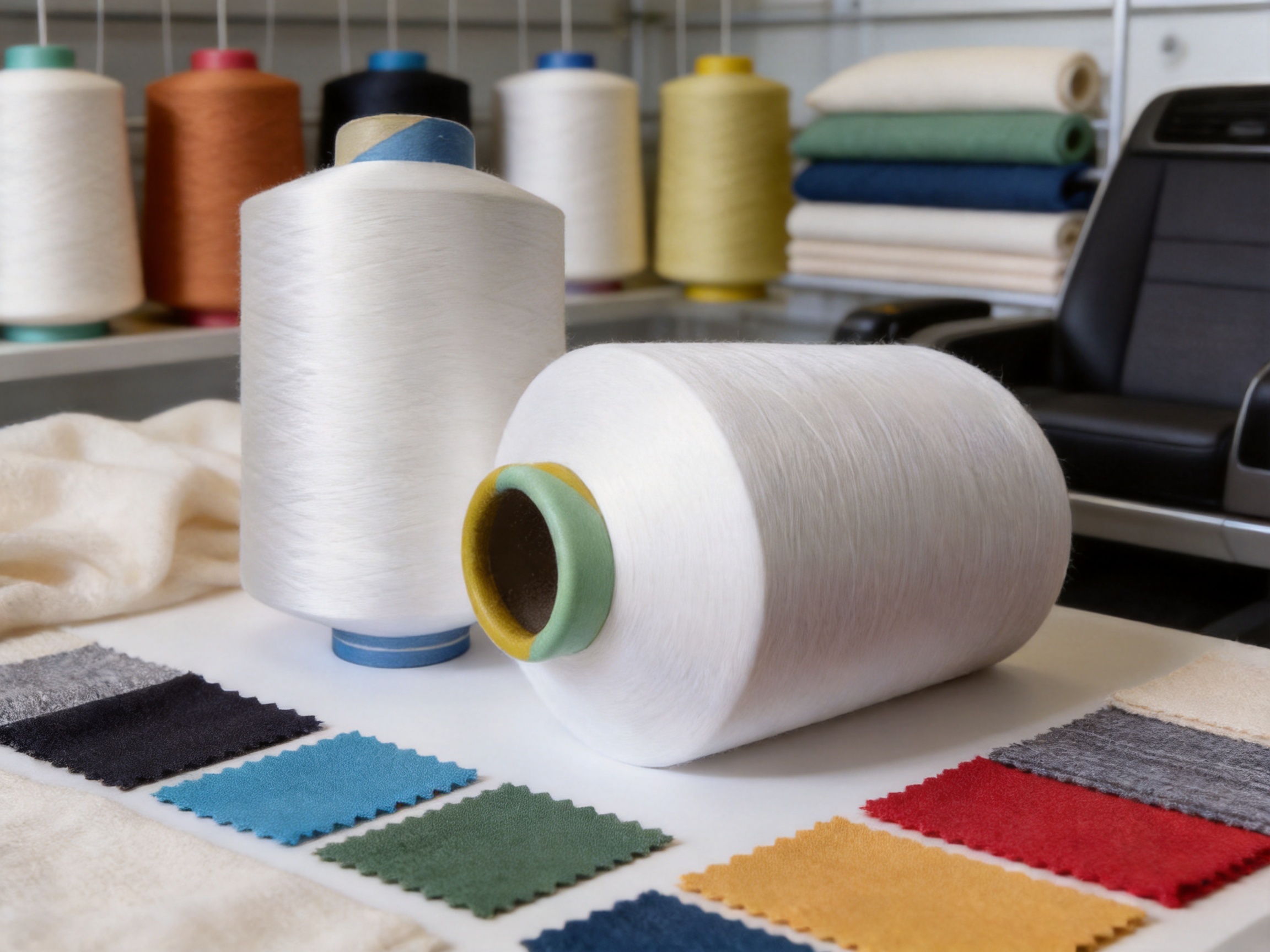
The textile industry is under growing pressure to reduce plastic waste, lower carbon emissions, improve resource efficiency, and maintain dependable product quality. Recycled polyester yarn has become one of the most practical answers to these challenges because it combines the established performance of polyester with a more circular raw-material pathway. However, not every recycled yarn delivers the same balance of dyeability, dimensional stability, appearance, softness, and processing reliability.
Eco-Friendly SD+CD DTY(D/F) Low-Shrink Recycled Yarn is designed to address these requirements in one product platform. Manufactured from post-consumer PET waste, this recycled yarn combines semi-dull appearance, cationic dyeability, draw-textured construction, and low-shrinkage performance. The result is a versatile material for knitting, weaving, apparel, home textiles, bags, automotive interiors, and other applications that require both visual quality and stable processing.
The yarn is particularly valuable for manufacturers that do not want to choose between sustainability and performance. Its recycled origin helps divert discarded plastic bottles from landfill and supports circular material use. At the same time, its DTY structure provides softness, crimp, stretch recovery, abrasion resistance, and a textile hand comparable to conventional polyester yarns in many applications.
This article examines the product’s composition, technical advantages, manufacturing approach, available specifications, application potential, quality considerations, and the capabilities of the supplier behind it. It also explains how the yarn can help textile producers improve product differentiation, simplify sourcing, and respond to the market’s increasing demand for credible environmental solutions.
1. Product Overview
Eco-Friendly SD+CD DTY(D/F) Low-Shrink Recycled Yarn is a differentiated polyester yarn made using recycled PET feedstock. “Recycled” refers to the origin of the polymer, which is recovered from post-consumer PET products such as discarded beverage bottles. After collection, sorting, cleaning, processing, and conversion into suitable polyester raw material, the material is spun into yarn for textile production.
“SD” refers to semi-dull luster. Unlike bright yarn, which reflects more light and creates a pronounced shine, semi-dull yarn produces a softer and more restrained appearance. This effect is useful for fashion fabrics, sportswear, lining materials, home textiles, bags, and interior products where a refined surface is preferred.
“CD” refers to cationic dyeable polyester. Cationic dyeability allows the yarn to accept cationic dyes and supports strong color contrast when used with conventional polyester components. This characteristic can be used to create mélange effects, two-tone surfaces, visual texture, and vivid coloration. It also gives designers greater freedom when developing fabrics with a distinctive appearance.
“DTY” means draw textured yarn. Through drawing and texturing, the filaments gain a crimped structure that improves bulk, softness, elasticity, and covering power. Compared with a flat filament yarn, DTY can provide a more comfortable hand and a more fabric-friendly surface. The D/F designation identifies the draw-textured filament configuration supplied for the product range.
The low-shrinkage feature is one of the product’s most important performance advantages. The stated shrinkage can be controlled to no more than 3% under standard hot-air conditions. In practical terms, this helps fabrics retain their intended dimensions during dyeing, heat setting, garment finishing, and repeated washing. Dimensional stability is particularly important for knitted garments, stretch-sensitive constructions, uniform fabrics, home furnishings, and products that must maintain consistent measurements throughout production.
2. Main Technical Characteristics
The yarn combines several functions that are often sourced separately. Recycled content supports environmental objectives, semi-dull luster controls surface appearance, cationic dyeability expands coloration options, DTY construction contributes softness and elasticity, and low shrinkage improves dimensional stability. This combination gives the product a broad technical and commercial value.
Characteristic |
Product Contribution |
Typical Manufacturing Benefit |
Recycled PET origin |
Uses material recovered from post-consumer PET waste |
Supports recycled-content programs and circular sourcing |
Semi-dull finish |
Creates a softer, more natural surface appearance |
Suitable for fashion, sportswear, home textile, and interior products |
Cationic dyeability |
Accepts cationic dyes and supports color differentiation |
Enables vivid shades, contrast effects, and specialized fabric designs |
Draw-textured structure |
Adds crimp, softness, bulk, and elasticity |
Improves fabric hand and processing versatility |
Low shrinkage |
Up to 3% under stated standard hot-air conditions |
Helps maintain dimensional stability during finishing and washing |
Polyester durability |
Offers resistance to abrasion and repeated use |
Supports demanding apparel, bag, furnishing, and industrial applications |
These characteristics are not independent. They work together during fabric development. For example, the crimped DTY structure helps a fabric feel softer, while the semi-dull surface prevents the product from appearing excessively synthetic or reflective. Cationic dyeability allows designers to add color depth, while low shrinkage helps preserve the resulting design after thermal and wet processing.
3. Recycled Raw Materials and Circular Manufacturing
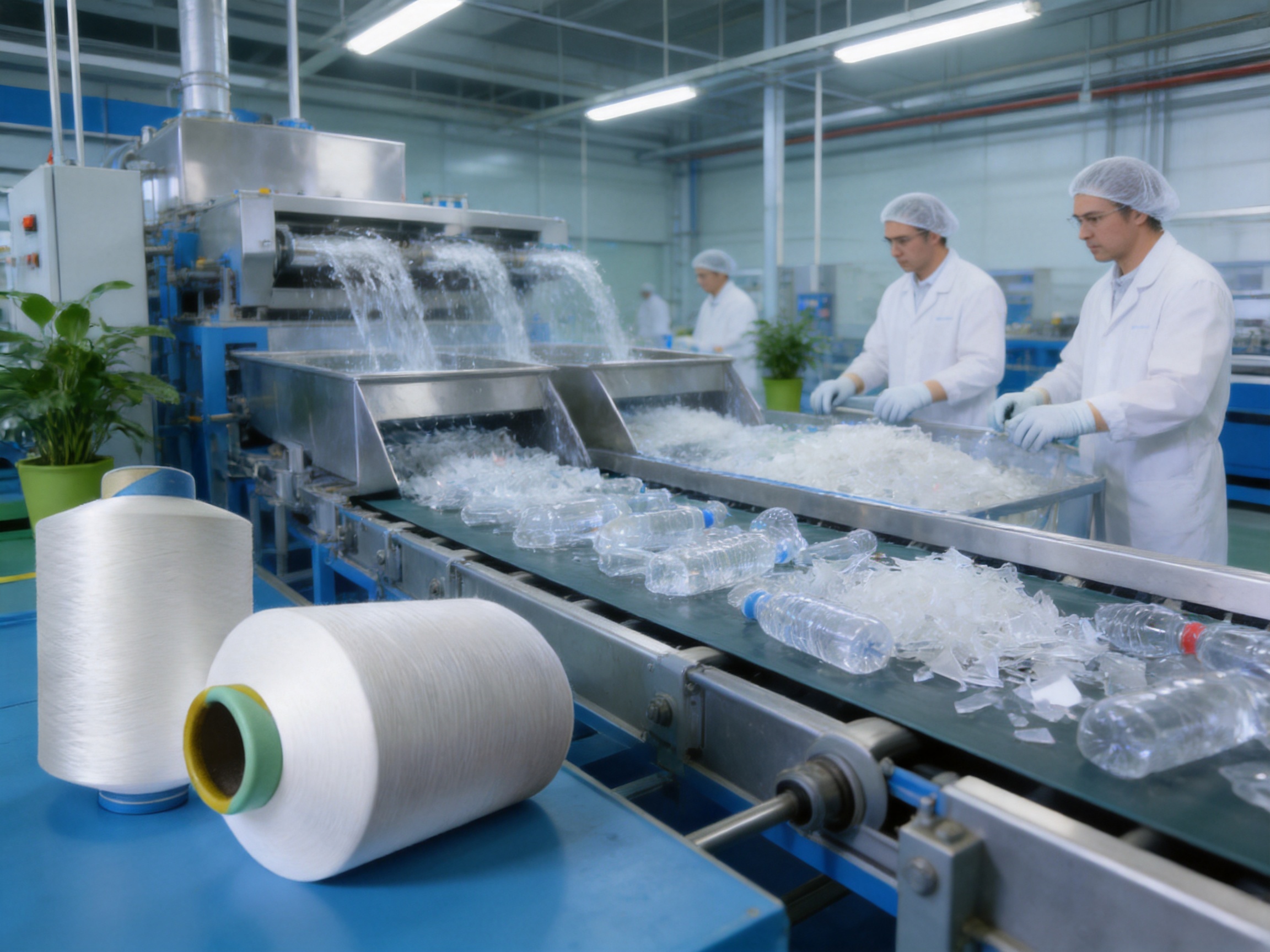
Post-consumer PET waste is a valuable source of polyester because PET has a stable polymer structure and is widely used in beverage containers. When suitable bottles are collected and processed correctly, their material can be transformed into polyester feedstock for new fiber and yarn production. This approach extends the useful life of plastic and reduces dependence on virgin fossil-based resources.
A responsible recycled yarn process begins with material selection. Collected PET must be sorted to separate suitable bottles from incompatible plastics, colored materials, contaminants, and non-PET components. The material is then cleaned and prepared for further processing. Consistency at this stage is essential because contamination or excessive variation can influence polymer quality, spinning stability, color, and yarn performance.
After preparation, the recycled PET material is converted into a form suitable for polyester yarn production. Depending on the production route, the material may be processed into recycled polymer chips or another controlled polymer feedstock. The feedstock must be managed carefully so that the final yarn maintains consistent denier, filament formation, strength, dye response, and shrinkage behavior.
The recycling pathway creates several environmental advantages. It diverts plastic waste from landfill, reduces the need for newly extracted raw materials, and supports a more circular relationship between consumption and manufacturing. It can also help brands and textile producers develop products with recycled-content claims when the relevant chain-of-custody and certification requirements are satisfied.
The supplied product information identifies GRS certification support for credible sustainability claims. In commercial practice, buyers should confirm the exact scope of certification, transaction documentation, recycled-content percentage, and applicable certificate validity for each order. These details help ensure that environmental statements are traceable and suitable for brand, retailer, and regulatory requirements.
Compared with unsupported “green” marketing, documented recycled content provides a stronger foundation for responsible product communication. Textile manufacturers can use this yarn in programs that require a measurable material story rather than a general claim of environmental friendliness.
4. Manufacturing Process and Process Control
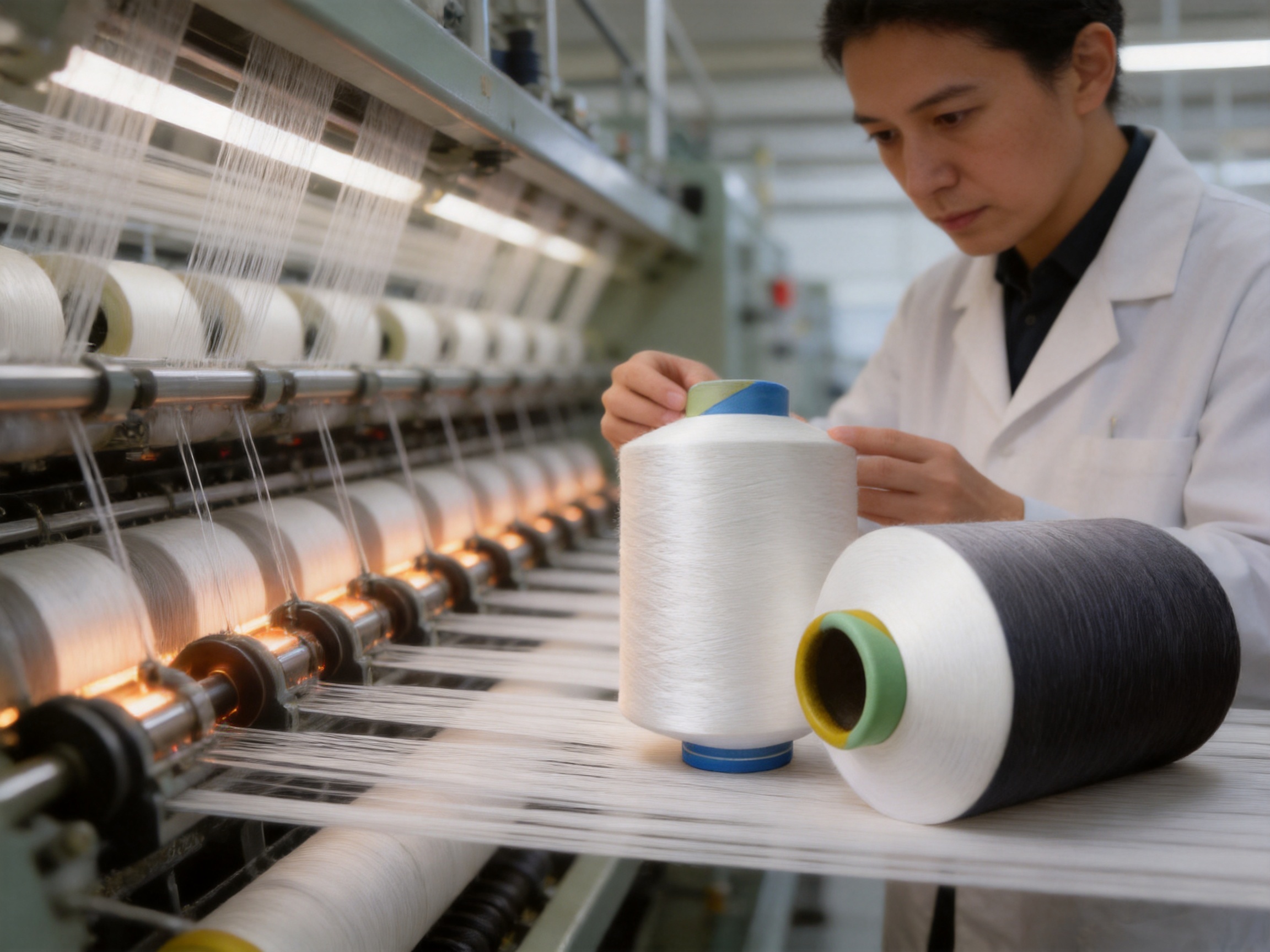
The performance of recycled DTY depends on more than the raw material itself. It also depends on polymer preparation, spinning control, filament uniformity, drawing, texturing, winding, packaging, and inspection. The manufacturing process must therefore be managed as an integrated system.
4.1 Raw-Material Preparation
Raw-material preparation establishes the foundation for stable yarn production. Recycled PET feedstock must be assessed for cleanliness, polymer consistency, moisture, color variation, and contamination risk. Moisture management is particularly important in polyester processing because excessive moisture can affect polymer behavior during melting and spinning.
Controlled preparation helps reduce variation between production lots. A stable feedstock supports more uniform melt flow and makes it easier to control filament formation. It also contributes to improved consistency in denier, elongation, strength, shrinkage, and dyeing behavior.
4.2 Melt Processing and Filament Formation
During melt processing, the prepared polyester material is heated and formed into continuous filaments. The temperature profile, pressure stability, filtration, spinning speed, and cooling conditions all influence filament quality. Effective filtration helps remove residual impurities and protects downstream components from blockage or instability.
Uniform filament formation is essential for producing a reliable DTY. Variations in filament diameter can lead to uneven dye uptake, irregular fabric appearance, weak points, and processing problems. For this reason, advanced polyester yarn production requires close attention to operating conditions and regular monitoring of the spinning system.
The semi-dull appearance is achieved through the appropriate polymer and spinning formulation. The objective is to control light reflection without reducing the yarn’s ability to process smoothly. A balanced semi-dull effect gives fabrics a more understated surface while retaining the strength and serviceability expected from polyester.
4.3 Drawing and Texturing
Drawing aligns and stabilizes the polymer chains, improving the balance of strength and elongation. Texturing then introduces crimp and bulk into the filament bundle. The relationship between draw ratio, heating conditions, texturing speed, tension, and cooling must be controlled carefully to achieve consistent yarn behavior.
Correctly managed texturing produces a soft, resilient yarn with a stable crimp structure. This structure allows the yarn to create comfortable fabric surfaces and supports elasticity in knitted or woven constructions. It also improves covering power, which can help manufacturers achieve the desired fabric appearance with efficient yarn consumption.
Inadequate texturing may lead to excessive roughness, poor crimp recovery, uneven bulk, or unstable shrinkage. Excessive heat or tension can also influence the final hand and dimensional behavior. A professional production system therefore balances texturing intensity with the requirements of the target application.
4.4 Low-Shrinkage Control
Low shrinkage is developed through polymer selection, drawing conditions, thermal stabilization, texturing control, and finishing discipline. The yarn must retain sufficient stability to resist excessive contraction when exposed to hot air, dye baths, heat setting, or laundering.
The stated shrinkage level of no more than 3% under standard hot-air conditions provides an important reference for customers. However, actual fabric shrinkage can also be affected by knitting density, weaving tension, fabric construction, dyeing temperature, finishing route, and relaxation conditions. Buyers should conduct application-specific testing before mass production.
Low-shrinkage yarn is especially advantageous when a fabric includes multiple components with different thermal responses. Better yarn stability can reduce distortion, uneven surface development, and size variation. It can also make downstream process planning more predictable.
4.5 Winding, Packaging, and Inspection
After texturing, the yarn is wound into packages suitable for knitting, weaving, dyeing, or other textile processes. Winding tension must be managed to prevent package deformation and ensure smooth unwinding. Proper packaging protects the yarn from moisture, dust, compression, and handling damage during storage and transportation.
Inspection may include checks for appearance, package formation, linear density, strength, elongation, shrinkage, crimp, oil content, and dyeing response. The exact testing program can be adapted to buyer requirements. Consistent inspection helps identify production deviations before the yarn reaches the customer’s line.
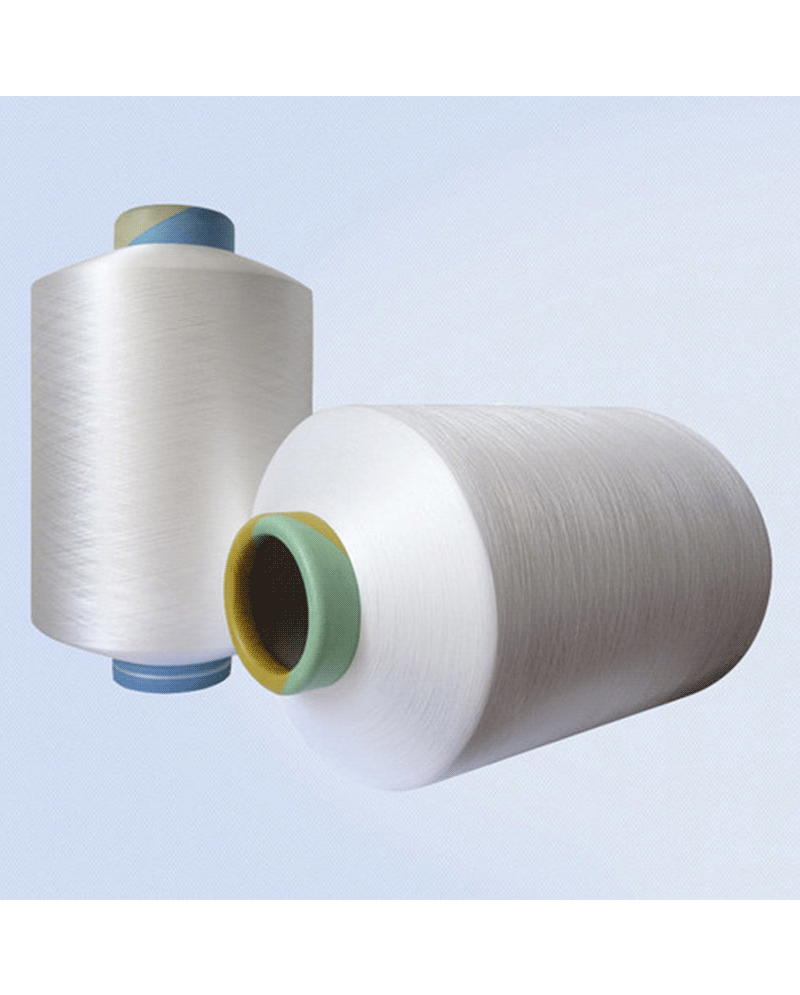
Eco-Friendly SD+CD DTY(D/F) Low-Shrink Recycled Yarn
5. Competitive Advantages Over Conventional Alternatives
The product’s competitive position comes from its combination of environmental value and practical textile performance. Many yarns offer one or two of these characteristics, but the SD+CD DTY platform integrates several of them in one material.
5.1 Advantage Over Virgin Polyester Yarn
Virgin polyester yarn is widely used because of its strength, durability, and stable processing. However, it is made from newly produced petrochemical raw materials. Recycled yarn offers a way to retain many of polyester’s established functional advantages while using recovered PET as the material source.
For brands and manufacturers with recycled-content targets, the recycled version can provide an important commercial advantage. It allows existing polyester-based product lines to move toward more responsible sourcing without requiring a complete change in machinery, fabric construction, or end-use design.
The SD+CD DTY product also offers features beyond basic recycled polyester. Semi-dull appearance, cationic dyeability, low shrinkage, and textured softness create differentiation that standard polyester yarn may not provide in the same combination.
5.2 Advantage Over Basic Recycled DTY
Basic recycled DTY may provide recycled content and general polyester performance, but it may not offer cationic dyeability or the same level of visual design flexibility. The CD component of this product supports color development, contrast effects, and specialized dyeing concepts.
This is valuable for manufacturers serving fashion, sportswear, casualwear, and interior markets where color and surface appearance strongly influence purchasing decisions. Instead of treating sustainability as the only selling point, brands can combine an environmental story with a distinctive design story.
5.3 Advantage Over Bright Filament Yarn
Bright filament yarn has a high-reflective surface that may not suit every product. In many modern textile designs, buyers prefer a softer, more natural appearance. The semi-dull finish reduces excessive brightness and can create a more sophisticated visual effect.
This makes the yarn suitable for products that require a refined surface, including apparel, lining, upholstery, bags, sportswear, and selected automotive interior fabrics. Semi-dull yarn can also help reduce the visual emphasis of minor surface irregularities compared with highly reflective materials.
5.4 Advantage Over High-Shrinkage Yarn
Excessive shrinkage can create difficulties during dyeing and finishing. It may result in inconsistent dimensions, uneven fabric width, distortion, or additional reprocessing. By controlling shrinkage to a low level, the product helps manufacturers improve process predictability.
Low-shrinkage performance is particularly valuable in export production, where consistency across large batches is essential. It can also reduce the risk of mismatch between fabric lots and help maintain finished-product measurements.
5.5 Advantage Through Product Breadth
The supplier’s product list includes more than recycled SD+CD DTY. It covers recycled SD DTY, recycled SD FDY, recycled FD DTY, recycled DDB DTY, recycled CD DTY, and a wide range of conventional, cationic, high-elastic, functional, cotton-like, hollow-warm, and composite yarns.
This breadth creates a sourcing advantage. Customers can discuss multiple yarn requirements with one experienced partner instead of coordinating separate suppliers for each material. It can also support coordinated fabric development, color matching, and product-line expansion.
6. Available Product Range and Specification Flexibility
The supplied product list demonstrates broad denier and filament-count coverage. Recycled product options include specifications such as 15/6, 20/12–24, 30/12–36, 50/36–72, 75/36–144, 100/36–144, 150/48–288, and 300/96–576 in relevant recycled categories. The exact specification depends on the yarn family, filament construction, and customer application.
Recycled SD DTY, recycled SD FDY, recycled FD DTY, recycled SD+CD DTY, recycled DDB DTY, and recycled CD DTY are all represented in the product portfolio. This range allows customers to compare different luster, dyeability, filament, and texturing requirements within a recycled-material framework.
Product Family |
Examples of Listed Specifications |
Potential Use Direction |
Recycled SD DTY |
20/12–24, 30/12–36, 50/36–72, 75/36–144, 150/48–288 |
Knitted apparel, sportswear, home textiles, general fabric production |
Recycled SD FDY |
40/24–72, 50/24–72, 66/24, 75/36–144, 100/72 |
Woven fabrics, lining, smooth surfaces, lightweight constructions |
Recycled FD DTY |
50/72, 75/36, 75/72, 150/144 |
Soft textured fabrics and durable textile products |
Recycled SD+CD DTY |
50/48–72, 75/48–72, 80/72, 100/72–144, 125/72–144, 150/72–144 |
Color-differentiated fabrics, apparel, interiors, and specialty textiles |
Recycled CD DTY |
75/36–72, 150/48, 300/96 |
Cationic dyeing, mélange effects, contrast designs |
Recycled DDB DTY |
75/36–72, 150/48, 300/96 |
Specialized textured and differentiated fabric constructions |
Denier and filament count should be selected according to fabric weight, machine gauge, stitch density, weaving construction, required coverage, handle, and end-use performance. Finer yarns can support lightweight and softer constructions, while heavier yarns can provide more coverage, durability, and visual body.
The supplier also states that it can accept orders for various differentiated yarns. This flexibility is important for customers that need customized specifications rather than only standard catalog products. Customization may involve denier, filament count, luster, dyeability, elasticity, functional treatment, color, or package format, subject to technical evaluation and minimum-order requirements.
7. Application Areas
7.1 Apparel and Sportswear
The yarn is suitable for activewear, casualwear, performance garments, leggings, tops, jackets, uniforms, and fashion fabrics. DTY softness supports wearer comfort, while crimp contributes stretch and fabric fullness. Semi-dull appearance is appropriate for garments that require a natural, understated surface.
For sportswear, low shrinkage can help maintain garment dimensions after repeated washing and heat exposure. Cationic dyeability enables strong color development and visual differentiation, which is useful for teamwear, athleisure, fashion sportswear, and color-blocked designs.
7.2 Knitted Fabrics
Knitting manufacturers can use the yarn in circular knitting, warp knitting, and other suitable constructions. The yarn’s crimp and elasticity support comfortable fabric formation and can contribute to a soft hand. Specification selection should be matched to machine gauge, fabric weight, and the desired level of stretch and coverage.
Before bulk production, knitting trials should examine yarn tension, hairiness, needle performance, fabric recovery, dyeing response, and dimensional stability. These trials help confirm the most appropriate specification for each machine and construction.
7.3 Woven Fabrics
Although DTY is often associated with knitted products, it can also be used in woven fabrics where textured softness, surface fullness, or controlled elasticity is desired. Warp and weft applications require attention to tension, sizing, loom settings, and fabric finishing.
The semi-dull appearance can add a modern visual effect to woven apparel, lining, home décor, and bag fabrics. Cationic dyeability can be used to develop contrast with other polyester components in the same construction.
7.4 Bags and Accessories
Recycled polyester yarn is widely relevant to bags, school bags, luggage, handbags, shopping bags, gift bags, storage boxes, and other accessories. These products benefit from abrasion resistance, reasonable strength, easy care, and a clear recycled-material story.
For bags and accessories, yarn selection should consider fabric weight, coating compatibility, seam strength, abrasion requirements, colorfastness, and exposure to moisture or sunlight. The product’s low-shrinkage performance can help maintain panel dimensions during finishing and assembly.
7.5 Home Textiles
Potential home textile applications include curtains, cushion covers, blankets, decorative fabrics, bed products, upholstery components, and household storage products. The soft DTY structure can improve hand feel, while polyester’s durability supports repeated use.
For home textiles, buyers may prioritize pilling resistance, abrasion performance, wash stability, colorfastness, and dimensional retention. These requirements should be confirmed through application-specific testing because fabric construction and finishing strongly influence final performance.
7.6 Automotive Interiors
Automotive interior fabrics require consistent appearance, durability, abrasion resistance, and stable dimensions. Recycled SD+CD DTY can be considered for selected seat, door, trim, and decorative interior applications where the yarn meets the required testing and regulatory standards.
Automotive projects typically require more extensive validation than general apparel production. Buyers should assess flammability, fogging, odor, abrasion, lightfastness, colorfastness, and emissions according to the specific vehicle program and regional requirements.
8. Quality and Testing Considerations
Responsible sourcing requires more than selecting a recycled label. Buyers should evaluate both yarn performance and documentation. A complete approval process may include laboratory testing, knitting or weaving trials, dyeing trials, fabric inspection, and end-use simulation.
Important yarn tests can include linear density, tenacity, elongation, shrinkage, crimp properties, package build, oil content, moisture, appearance, and dye uptake. The required test methods should be agreed upon before order placement so that supplier and buyer use comparable evaluation criteria.
Color performance is especially important for cationic dyeable yarn. Testing may examine shade consistency, color yield, wash fastness, rubbing fastness, perspiration fastness, lightfastness, and compatibility with other fibers. The final result depends on dye selection, dyeing conditions, auxiliaries, temperature profile, and finishing.
Dimensional stability should be evaluated at fabric level, not only yarn level. A low-shrinkage yarn can still produce fabric variation if the knitting tension, weaving tension, heat setting, or dyeing route is not controlled. Joint process trials between yarn supplier, fabric mill, dye house, and garment manufacturer can reduce this risk.
Sustainability documentation should include recycled-content information, chain-of-custody records where applicable, certification status, transaction certificates when required, and any restrictions on environmental claims. Clear documentation protects both the supplier and the customer from inaccurate or unsupported marketing statements.
9. Supplier Manufacturing Strengths
Suzhou Junhui Textile Co., Ltd. and Suzhou Xiaoran New Materials Co., Ltd. were founded in June 2015 and focus on differentiated yarn and fabric products. Their stated product direction includes recycled yarn, polyester dope-dyed yarn, specialty yarn, microfine yarn, flame-retardant yarn, cationic dyeing yarn, and knitting fabrics.
This product focus is significant because differentiated yarn requires more than standard commodity production. It demands knowledge of polymer behavior, spinning, texturing, dyeing compatibility, fabric construction, and end-use requirements. A supplier that works across multiple yarn categories can often provide more practical development support than a supplier limited to one standard product.
The companies report having a professional research and development team and working with internationally recognized enterprises on environmental protection and functional yarn and fabric research, development, and application. This indicates an emphasis on translating material technology into commercial textile solutions.
More than 90% of the products are reported to be exported, with customers in 36 countries. Export experience can strengthen communication around packaging, documentation, quality expectations, lead times, inspection, and international shipment coordination. It also exposes the supplier to diverse market requirements and application standards.
The company states that professional support is available within 12 hours globally. Rapid technical communication is valuable when customers need help with product selection, sample evaluation, dyeing issues, fabric problems, or order planning. In international textile sourcing, timely answers can prevent production delays and reduce unnecessary trial costs.
The company’s location in Shengze Town, Suzhou, places it in a major textile manufacturing region with access to spinning, weaving, knitting, dyeing, finishing, trading, and logistics resources. This industrial environment can support collaboration across the textile supply chain and make it easier to coordinate product development from yarn to fabric.
9.1 Research and Development Orientation
The supplier’s focus on differential yarns supports the development of products with specific visual, functional, and environmental attributes. Recycled SD+CD DTY is an example of this approach because it combines recycled content with semi-dull appearance, cationic dyeability, texturing, and low shrinkage.
Research and development in this field involves balancing several properties at once. Increasing softness must not cause excessive instability. Improving dyeability must not compromise color consistency. Using recycled feedstock must not lead to unacceptable variation. A capable R&D team can help optimize these relationships for a customer’s specific application.
9.2 Broad Product Portfolio
The company’s product portfolio includes recycled and conventional series, CD yarns, high-elastic yarns, PBT/PET products, functional yarns, cotton-like yarns, hollow-warm yarns, and composite constructions. Functional options include flame-retardant, anti-bacterial, and moisture-wicking yarns, subject to the specified product and testing requirements.
A broad portfolio makes the supplier useful for customers developing multiple collections. A buyer may begin with recycled DTY, then request a moisture-wicking version, a high-elastic alternative, a cotton-like yarn, or a coordinated cationic product. Centralized communication can simplify technical comparisons and purchasing management.
9.3 Customization Capability
The supplier states that it can accept orders for different kinds of differentiated yarn. Customization is particularly important when standard denier and filament combinations do not provide the required fabric weight, hand, elasticity, dye effect, or appearance.
Custom development should begin with a clear technical brief. The brief may include target denier, filament count, luster, recycled-content requirement, shrinkage target, color, dye class, end use, machine type, fabric construction, expected order volume, and testing standards. This information allows the supplier to recommend a suitable yarn structure and development route.
10. Processing Recommendations for Textile Manufacturers
Manufacturers should store the yarn in a clean, dry environment and protect packages from direct sunlight, water, oil, dust, and severe temperature fluctuation. Packages should remain in their original protective packaging until they are conditioned for production.
Before running a new lot, production teams should inspect package appearance, labels, lot numbers, net weight, and visible yarn condition. Any damaged or contaminated package should be isolated for evaluation. Maintaining lot traceability helps identify the source of any later fabric variation.
Machine settings should be adjusted gradually during the first trial. Knitting and weaving tension, yarn guides, feeding speed, take-up, and machine speed may need to be optimized according to denier and filament count. Excessive tension can influence fabric width, stretch, crimp development, and dimensional stability.
Dyeing trials should consider the difference between cationic dyeable components and conventional polyester components. The dye recipe, temperature, holding time, pH, auxiliaries, and reduction clearing process should be selected for the target fabric construction and shade. Laboratory trials can help reduce the risk of shade variation during bulk production.
Heat setting must be controlled carefully. Excessive temperature or dwell time may alter hand, shrinkage, elasticity, and surface appearance. The optimum setting conditions depend on the fabric structure and the desired finished dimensions. Production teams should confirm width, weight, recovery, and shrinkage after finishing.
For garments and finished products, washing and care-label testing should be performed before commercialization. Repeated laundering can reveal changes in size, color, surface appearance, pilling, and elasticity that may not appear in an initial inspection.
11. Sustainability and Commercial Value
Environmental responsibility increasingly influences product development, purchasing, and consumer communication. Recycled polyester yarn gives textile producers a practical way to incorporate recovered material into mainstream products without abandoning familiar polyester processing systems.
The commercial value of this yarn comes from combining environmental positioning with performance-based differentiation. A product made from recycled material can be promoted through responsible sourcing, while semi-dull luster and cationic dyeability offer aesthetic value. Soft DTY texture and low shrinkage contribute functional value.
This combination helps manufacturers avoid treating sustainability as an isolated feature. Instead, the yarn can support a complete product story involving design, comfort, durability, processing efficiency, and resource responsibility.
For brands, traceability and accuracy are essential. Environmental claims should reflect verified recycled content and appropriate certification documentation. Buyers should also consider packaging, transport efficiency, waste reduction during cutting and sewing, dyehouse water management, and product durability when evaluating the total sustainability profile.
A durable textile that remains attractive and functional for a longer period may provide additional environmental value by reducing replacement frequency. Therefore, the yarn’s abrasion resistance, colorfastness, dimensional stability, and end-use performance are relevant to sustainability as well as quality.
12. Buyer Selection Guide
When selecting this yarn, buyers should first define the intended application. Apparel, bags, home textiles, and automotive interiors have different requirements for softness, strength, abrasion, colorfastness, shrinkage, and regulatory compliance.
The second step is selecting denier and filament count. Lightweight products may require finer yarns, while heavy fabrics and durable accessories may benefit from heavier specifications. Machine gauge and construction must also be considered.
The third step is confirming the desired visual and dyeing effect. Semi-dull yarn is suitable for restrained luster, while cationic dyeability is useful for strong color and contrast effects. If the fabric combines different yarn types, compatibility testing is recommended.
The fourth step is confirming sustainability documentation. Buyers should request information about recycled raw materials, recycled-content percentage, certification scope, transaction records, and permitted claims. This step is especially important for brands that publish environmental product information.
The fifth step is conducting a sample trial. A small-scale knitting, weaving, dyeing, or finishing trial can reveal practical issues before the purchase becomes a mass-production commitment. Trial results should cover yarn behavior, fabric appearance, shrinkage, color, hand, and final product performance.
Buyer Question |
Why It Matters |
Recommended Action |
What is the final application? |
Different products require different performance balances |
Provide end-use, fabric construction, and care requirements |
What denier and filament count are needed? |
These affect weight, coverage, hand, and machine performance |
Match specification to machine gauge and fabric target |
Is cationic dyeability required? |
It determines dye selection and color-development potential |
Conduct laboratory dyeing and compatibility tests |
What shrinkage level is acceptable? |
Dimensional targets differ among products |
Confirm yarn and fabric test conditions in advance |
What documentation is needed? |
Environmental claims must be traceable and accurate |
Request certification and recycled-content records |
Is customization required? |
Special applications may not fit standard specifications |
Submit a technical brief for development evaluation |
13. Q&A
Q1: What is Eco-Friendly SD+CD DTY(D/F) Low-Shrink Recycled Yarn?
It is a draw-textured polyester yarn made from recycled PET material. The yarn combines a semi-dull appearance, cationic dyeability, low-shrinkage performance, and a soft, crimped DTY structure for use in apparel, home textiles, bags, interiors, and other textile products.
Q2: What does SD mean?
SD means semi-dull. It describes the yarn’s luster and indicates a softer, less reflective surface than bright polyester yarn. Semi-dull yarn is often selected for modern apparel, sportswear, home textiles, and interior fabrics.
Q3: What does CD mean?
CD means cationic dyeable. Cationic dyeable polyester can accept cationic dyes and can be used to develop vivid colors, contrast effects, mélange appearances, and other differentiated fabric designs.
Q4: What does DTY mean?
DTY means draw textured yarn. Drawing and texturing give the filament bundle crimp, softness, bulk, and a degree of elasticity. These characteristics can improve fabric hand, covering power, and comfort.
Q5: What is the stated shrinkage performance?
The product information states that shrinkage can be controlled to no more than 3% under standard hot-air conditions. Actual fabric shrinkage depends on yarn specification, fabric construction, dyeing, heat setting, and finishing, so application-specific testing is recommended.
Q6: Is the yarn suitable for knitting and weaving?
Yes. The yarn can be considered for both knitting and weaving. The correct specification and machine settings depend on fabric weight, construction, tension, gauge, desired hand, and end-use requirements.
Q7: What recycled material is used?
The yarn is made from post-consumer PET waste, commonly associated with discarded PET beverage bottles. The waste is processed into suitable polyester feedstock before being converted into yarn.
Q8: Does recycled yarn perform like conventional polyester?
When properly manufactured and controlled, recycled polyester can provide durability, abrasion resistance, dyeing capability, and processing performance suitable for many of the same applications as conventional polyester. Product testing should still be completed for each specific end use.
Q9: Can customers request customized specifications?
The supplier states that it can accept orders for various differentiated yarns. Customers should provide details such as denier, filament count, luster, dyeability, recycled-content requirement, shrinkage target, color, application, and expected order volume.
Q10: Is certification available for sustainability claims?
The supplied information identifies GRS certification support. Buyers should confirm the current certificate, scope, recycled-content percentage, transaction documentation, and claim requirements for the specific order and market.
Q11: Which industries can use this yarn?
Potential industries include apparel, sportswear, fashion textiles, knitting, weaving, bags, luggage, school products, home textiles, upholstery, automotive interiors, and other applications requiring polyester-based yarn with recycled content and differentiated performance.
Q12: How should buyers begin product development?
Buyers should provide the intended application, fabric construction, target yarn specification, color and dyeing requirements, performance expectations, sustainability documentation needs, and sample quantity. A laboratory or pilot trial should be completed before bulk production.
14. Conclusion
Eco-Friendly SD+CD DTY(D/F) Low-Shrink Recycled Yarn offers a balanced solution for textile manufacturers seeking recycled content without sacrificing practical performance. Its post-consumer PET origin supports circular material use, while semi-dull luster, cationic dyeability, DTY softness, abrasion resistance, and low shrinkage create meaningful advantages for fabric development.
The product is more than a basic recycled alternative. Its combination of technical characteristics can help manufacturers create fabrics with improved appearance, color flexibility, comfort, processing stability, and commercial differentiation. The broad specification range further supports applications from lightweight apparel to durable bags, home textiles, and selected automotive interiors.
The supplier’s focus on differentiated yarns, recycled materials, functional products, research and development, export service, and customized orders strengthens the product’s market position. Its broad portfolio can also help customers consolidate sourcing and explore new fabric concepts through one technical partner.
For the best results, buyers should confirm specification, documentation, testing requirements, dyeing compatibility, and fabric-level performance before mass production. With careful application development, this yarn can help textile companies move toward more responsible sourcing while preserving the quality, efficiency, and design flexibility demanded by modern markets.
References
1. Product information supplied for Eco-Friendly SD+CD DTY(D/F) Low-Shrink Recycled Yarn.
2. Product portfolio information supplied for recycled, conventional, functional, high-elastic, cationic, and specialty polyester yarns.
3. General technical principles for recycled polyethylene terephthalate fiber and yarn manufacturing.
4. General textile engineering principles for draw-textured yarn, filament drawing, texturing, winding, and heat stabilization.
5. General guidance for recycled-content traceability and textile sustainability certification.
6. General testing considerations for polyester yarn shrinkage, colorfastness, dimensional stability, abrasion resistance, and fabric performance.
Product: Eco-Friendly SD+CD DTY(D/F) Low-Shrink Recycled Yarn

Popular products
-
Premium Cationic Interlock Stretch Comfort Fabric
-
Moisture-Wicking Nylon Woven Fabric
-
Double-faced jacquard elastic fabric
-
Heather Grey Double-faced cationic jersey fabric
-
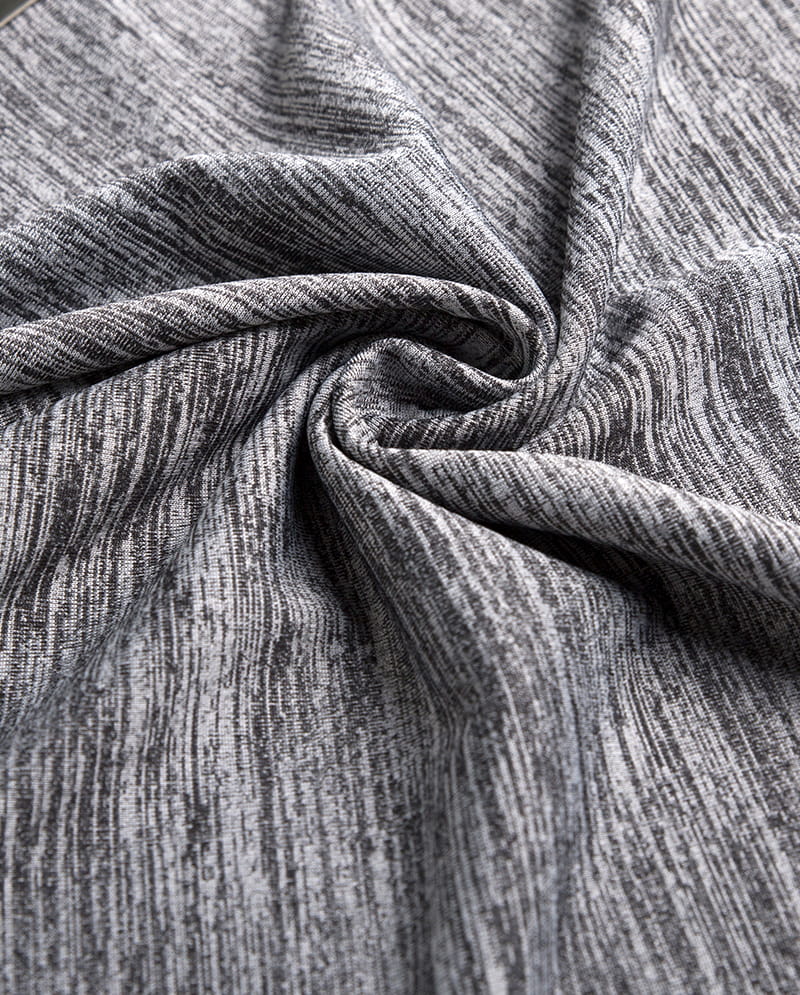
Anti-static Cationic Knitted Rib Fabric
-
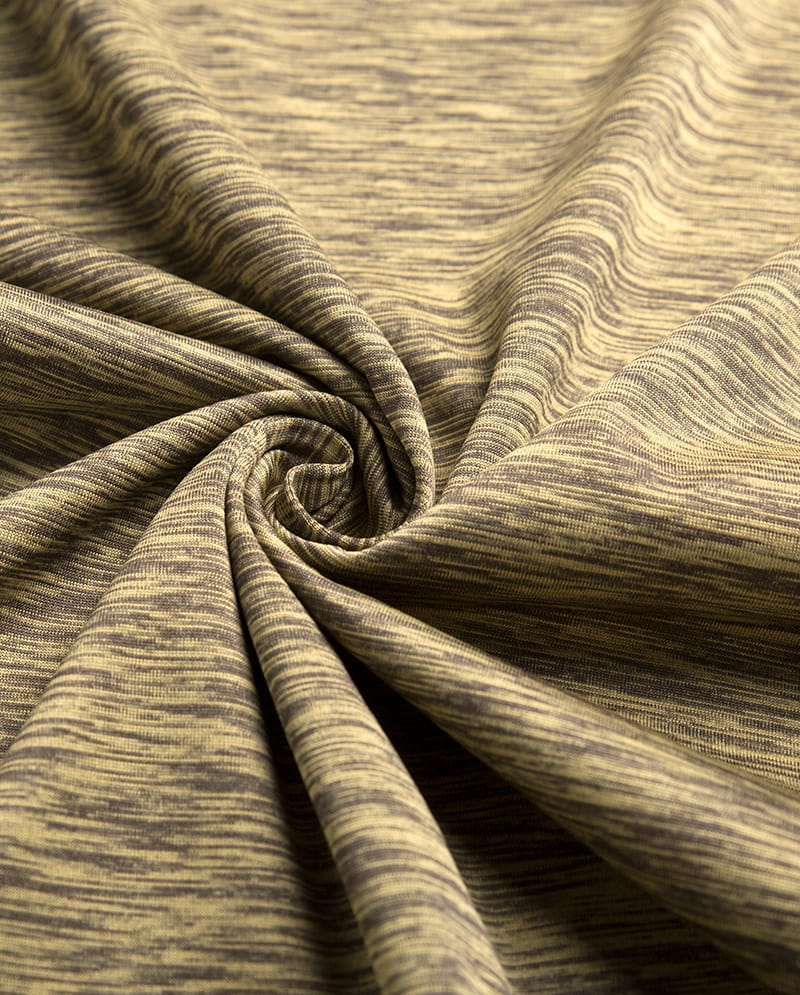
High-Stretch Cationic Jersey Fabric
-
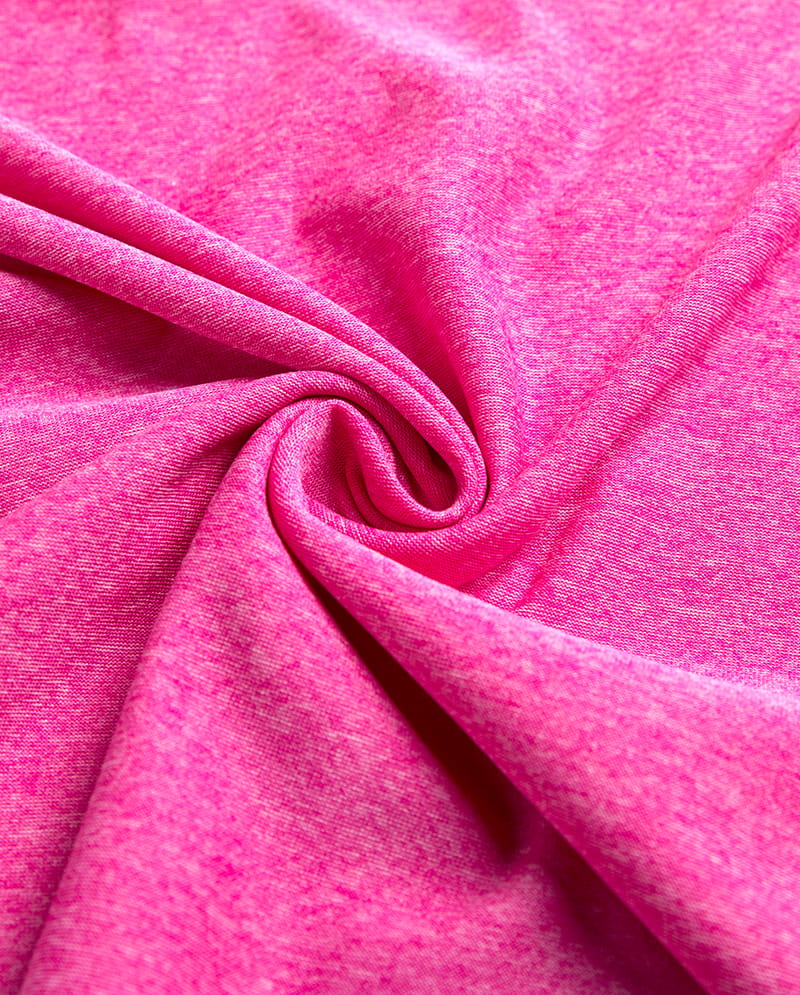
High Quality Cationic DTY Spandex Two Sides Brush Dralon Knit Fabric for Garment Thermal Underwear
-
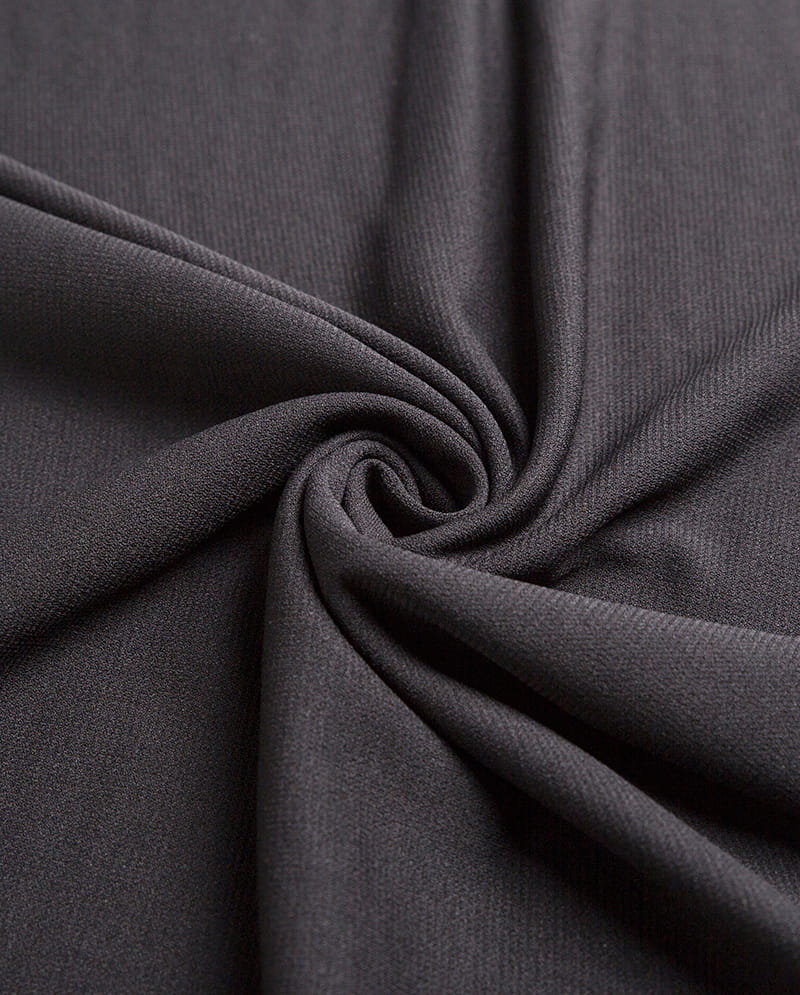
Durable Anti-Pilling Knitted Fabric for Home Textiles
-
Wash-Resistant Cationic Elastic Knitted Fabric for Garment Industry
-
Breathable Double-Faced Elastic Composite Fabric
-
-
-
- whatsapp:
- 0086-13962559622
-
- skype:
- skype.aliceshenghong
-
- Wechat:

COPYRIGHT © 2016 Suzhou Junhui Textile Co., Ltd.
