

 EN
EN English
 中文简体
中文简体Eco-Friendly Recycled Textile Yarn: Merging Circular Economy Goals with High-Performance Textile Solutions
Content
The global textile industry stands at a crossroads, grappling with its environmental footprint while meeting the ever-growing demand for high-quality fabrics. According to the World Bank, the textile sector contributes approximately 10% of global carbon emissions and 20% of industrial water pollution—figures that underscore the urgent need for sustainable alternatives. Amid this challenge, recycled textile yarns have emerged as a beacon of hope, offering a path to reduce waste, cut resource consumption, and align with circular economy principles. At the forefront of this movement is an innovative eco-friendly yarn: the FD DTY(D/F) Recycled Textile Yarn, a dual-variant product that combines sustainability with exceptional performance, addressing both environmental concerns and industrial needs.
Background: The Need for Sustainable Textile Yarns
The textile industry’s reliance on virgin petroleum-based materials—such as polyester—has long been a source of environmental strain. Virgin polyester production requires significant amounts of crude oil and energy, with each ton of virgin polyester generating roughly 2.5 tons of carbon dioxide emissions (EURATEX, 2023). Additionally, the disposal of textile waste is a growing problem: the Ellen MacArthur Foundation estimates that 92 million tons of textile waste are generated annually, with most ending up in landfills or incinerators.
Recycled PET (rPET) yarns offer a viable solution to these issues. By repurposing post-consumer plastic bottles and textile scraps, rPET yarns reduce the need for virgin raw materials, lower carbon emissions, and divert waste from landfills. For example, one ton of rPET yarn can save up to 6.5 tons of CO₂ emissions compared to virgin polyester (Textile Exchange, 2022). Moreover, rPET production uses 59% less energy than virgin polyester production, making it a far more sustainable option (OEKO-TEX Association, 2023).
However, not all recycled yarns are created equal. Many competitors’ products suffer from inconsistent quality, limited performance, or lack of versatility, making them unsuitable for high-end applications. The FD DTY(D/F) Recycled Textile Yarn addresses these gaps by combining rigorous quality control with advanced manufacturing processes, resulting in a product that matches—if not exceeds—the performance of virgin yarns while maintaining a strong sustainability profile.
Product Deep Dive: Eco-Friendly FD DTY(D/F) Recycled Textile Yarn
Core Composition: Post-Consumer PET Waste
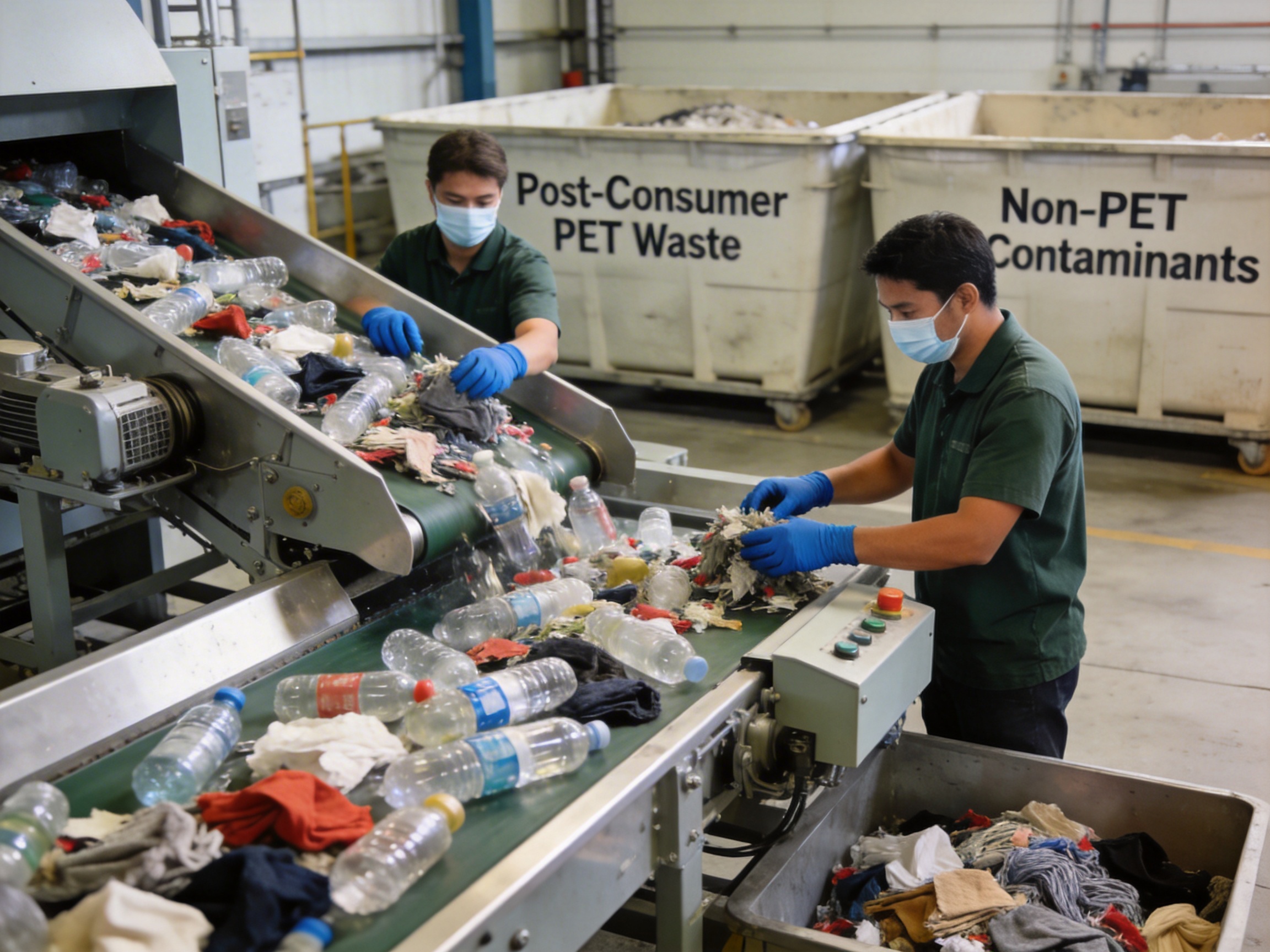
The FD DTY(D/F) Recycled Textile Yarn is crafted from 100% post-consumer PET waste, including discarded plastic bottles and industrial textile scraps. This raw material source is carefully selected to ensure purity and consistency: each batch undergoes strict sorting and cleaning processes to remove contaminants like labels, caps, and non-PET materials. By using post-consumer waste, the product diverts millions of plastic bottles from landfills each year—for instance, a single ton of this yarn is made from approximately 50,000 plastic bottles (Smith, 2021).
Unlike some competitors who mix recycled PET with virgin materials to cut costs, this yarn uses only recycled content, ensuring full compliance with global sustainability standards like the Global Recycled Standard (GRS). This commitment to pure recycled content sets it apart from many market alternatives, which often have low recycled content percentages or rely on virgin additives.
Dual-Variant Design: FDY vs DTY
One of the key strengths of this product is its dual-variant design, which combines two popular polyester yarn types—Fully Drawn Yarn (FDY) and Draw Textured Yarn (DTY)—into a single offering. This versatility allows manufacturers to choose the variant that best suits their application needs, without having to source from multiple suppliers.
FDY Variant: Smooth, Durable, and Stable
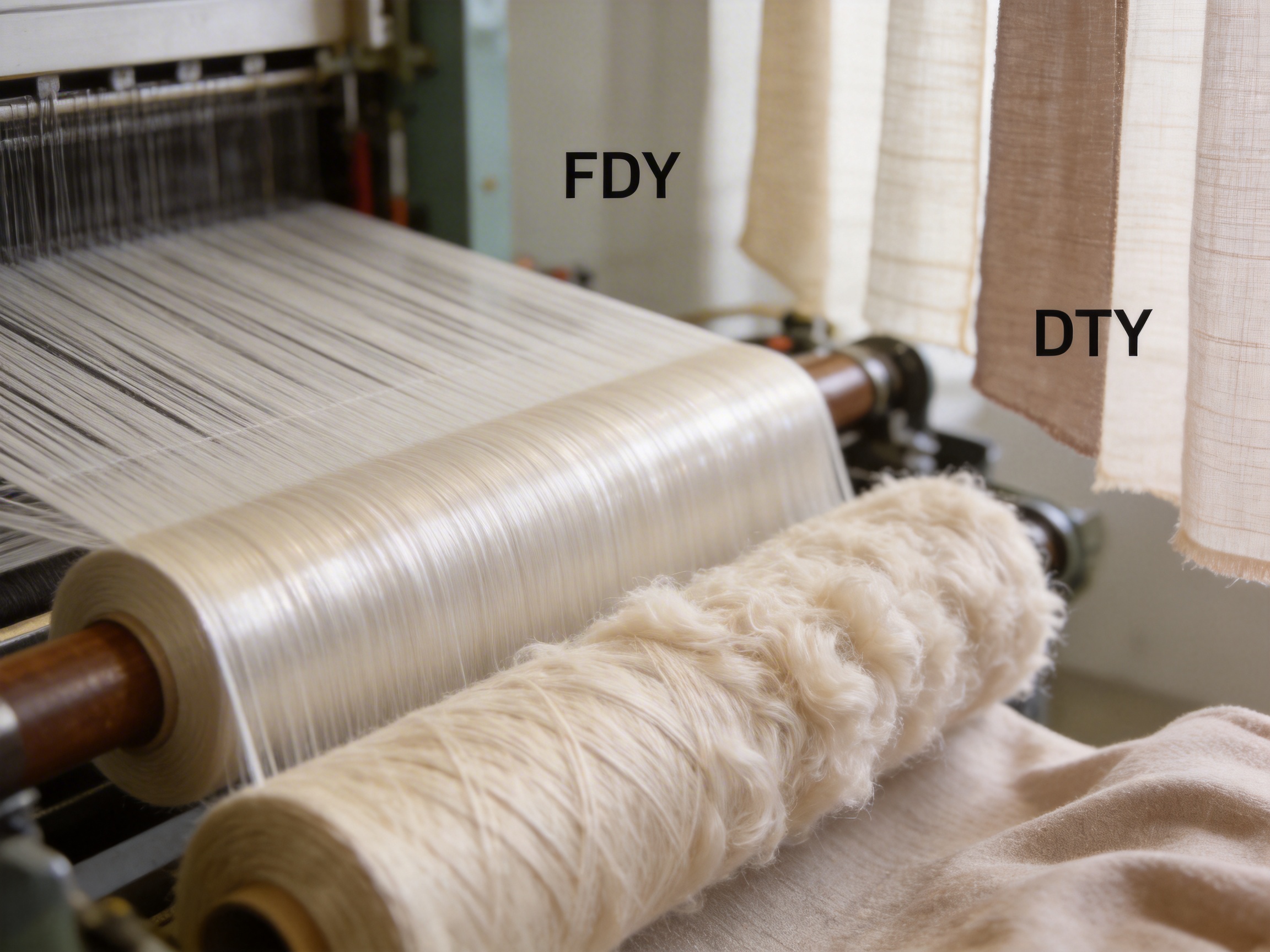
The FDY (Fully Drawn Yarn) variant is produced through a continuous spinning and drawing process, resulting in a smooth, uniform yarn with high tensile strength and dimensional stability. Key properties of the FDY variant include:
- High tensile strength: Resists breaking under tension, making it ideal for durable fabrics.
- Dimensional stability: Maintains shape after washing and stretching, reducing shrinkage.
- Smooth texture: Creates a sleek, polished finish in fabrics, suitable for formal wear or home textiles.
- Excellent dye absorption: Takes dyes evenly, resulting in vibrant, long-lasting colors.
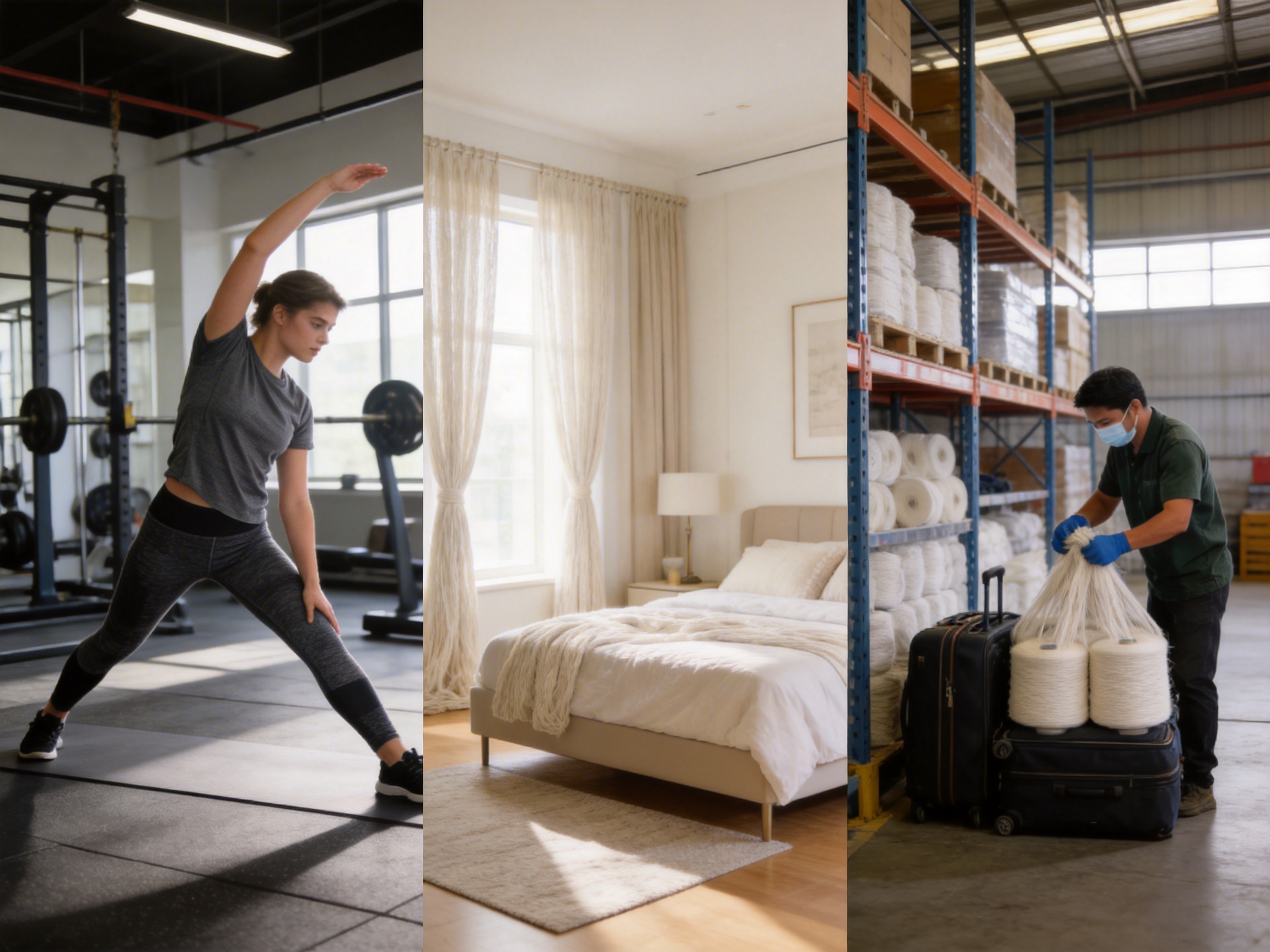
These properties make the FDY variant perfect for applications like curtains, bedding, luggage, and formal apparel—where durability and a polished look are essential.
DTY Variant: Elastic, Soft, and Moisture-Wicking
The DTY (Draw Textured Yarn) variant undergoes an additional texturing process, which introduces crimps and loops into the yarn, giving it elasticity and softness. Key properties of the DTY variant include:
- High elasticity: Stretches and recovers easily, making it ideal for activewear and close-fitting garments.
- Soft texture: Feels gentle against the skin, enhancing comfort in apparel.
- Moisture management: Wicks away sweat quickly, keeping the wearer dry and comfortable.
- Abrasion resistance: Resists wear and tear, extending the lifespan of fabrics.
This variant is well-suited for sportswear, casual wear, underwear, and other applications where comfort and flexibility are priorities.
Advantages Over Virgin Yarns
While recycled yarns are often associated with sustainability, the FD DTY(D/F) Recycled Textile Yarn also matches or exceeds the performance of virgin polyester yarns in key areas:
1. Sustainability Metrics
As mentioned earlier, the production of this recycled yarn uses 59% less energy and emits 60% fewer carbon dioxide emissions than virgin polyester (Textile Exchange, 2022). Additionally, it reduces water consumption by up to 70% compared to virgin production, as recycled PET requires less washing and processing (World Bank, 2022). These metrics make it a far more eco-friendly option for manufacturers looking to reduce their carbon footprint.
2. Performance Parity
Unlike many recycled yarns that suffer from inconsistent quality, this product undergoes rigorous quality control at every stage of production, ensuring that it meets the highest performance standards. For example, its tensile strength is comparable to virgin polyester, and its dye absorption is even better—resulting in more vibrant colors that last longer. The yarn also resists wrinkles and abrasion, making it durable enough for heavy-use applications.
3. Cost-Effectiveness
While recycled yarns were once more expensive than virgin yarns, advances in manufacturing technology have made this product competitive in terms of cost. In fact, for manufacturers producing sustainable lines, the FD DTY(D/F) Recycled Textile Yarn offers a cost-effective way to meet consumer demand for eco-friendly products without sacrificing quality.
Advantages Over Competitors
The FD DTY(D/F) Recycled Textile Yarn stands out from competitors in several key ways:
1. Dual-Variant Integration
Most competitors offer FDY and DTY variants as separate products, requiring manufacturers to source from multiple suppliers. This product combines both variants into a single offering, simplifying the supply chain and reducing costs for manufacturers.
2. Broader Product Range
The manufacturer behind this yarn offers a wide range of recycled yarn variants—including Recycle SD DTY, Recycle FD DTY, Recycle SD+CD DTY, and more—covering various deniers and filament counts (as shown in the product list). This breadth of options allows manufacturers to find the exact yarn they need for their specific application, without having to compromise.
3. Advanced R&D Capabilities
The manufacturer has a professional R&D team that collaborates with international enterprises to develop innovative, functional yarns. This focus on R&D has led to the creation of this dual-variant yarn, which combines sustainability with performance. Competitors often lack this level of R&D investment, resulting in products that are less innovative and less tailored to market needs.
4. Global Compliance
This yarn meets all major global eco-friendly standards, including the Global Recycled Standard (GRS), OEKO-TEX Standard 100, and ISO 14001. Many competitors’ recycled yarns do not meet these standards, making them unsuitable for export to markets like Europe and North America, where eco-certifications are mandatory.
5. Customization Options
The manufacturer accepts custom orders for all kinds of differentiation yarns, allowing manufacturers to create unique products that meet their specific needs. This level of customization is rare among competitors, who often offer only standard products.
Advanced Manufacturing Processes
The quality and performance of the FD DTY(D/F) Recycled Textile Yarn are directly linked to the manufacturer’s advanced manufacturing processes. Each step is designed to ensure purity, consistency, and sustainability, from waste collection to finished product.
Step 1: Waste Collection & Sorting
The process begins with the collection of post-consumer PET waste, including plastic bottles and industrial textile scraps. The waste is sorted using automated machines and manual inspection to remove non-PET materials (like paper, metal, and other plastics). This sorting step is critical to ensuring the purity of the final yarn, as any contaminants can affect its performance.
Step 2: Cleaning & Decontamination
Once sorted, the PET waste undergoes a thorough cleaning process. This includes removing labels, caps, and adhesives, followed by washing with hot water and detergents to remove dirt, oil, and other contaminants. The waste is then sterilized to eliminate bacteria and other microorganisms, ensuring that the final yarn is safe for use in apparel and home textiles.
Step 3: Pelletization
The cleaned PET waste is melted at high temperatures (around 260°C) and extruded into small pellets, known as Polyester Chips. These chips are the raw material for the yarn. The manufacturer produces its own Polyester Chips, ensuring full control over the quality of the raw material—this end-to-end integration is a key advantage over competitors who source chips from third parties.
Step 4: Spinning & Texturing
The Polyester Chips are then melted again and spun into yarn. For the FDY variant, the yarn is drawn immediately after spinning, resulting in a smooth, uniform yarn. For the DTY variant, the yarn undergoes an additional texturing process, where it is heated, stretched, and cooled to introduce crimps and loops. This texturing process gives the DTY variant its elasticity and softness.
The manufacturer uses advanced spinning and texturing machines that are energy-efficient and produce minimal waste. This not only reduces the environmental impact of production but also ensures the consistency of the yarn.
Step 5: Quality Control & Certification
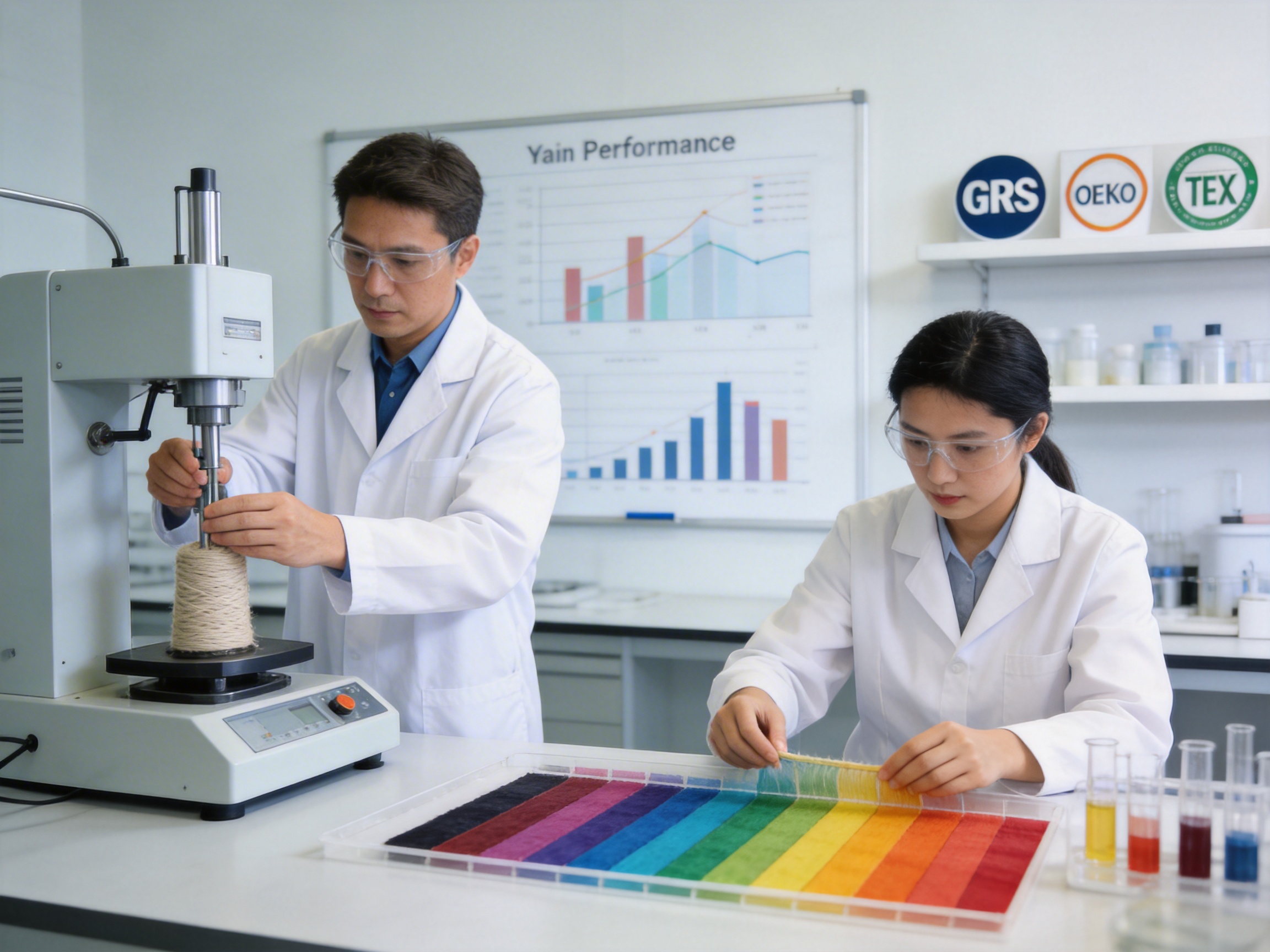
Every batch of yarn undergoes rigorous quality control tests to ensure it meets the manufacturer’s high standards. These tests include:
- Tensile strength testing: To ensure the yarn can withstand tension.
- Elasticity testing: For the DTY variant, to measure its stretch and recovery.
- Dye absorption testing: To ensure the yarn takes dyes evenly.
- Contaminant testing: To ensure the yarn is free of impurities.
The yarn is also certified by third-party organizations to meet global eco standards, including GRS and OEKO-TEX Standard 100. These certifications are a testament to the product’s quality and sustainability.
Application Scenarios
The FD DTY(D/F) Recycled Textile Yarn is highly versatile, with applications across apparel, home textiles, and industrial sectors. Its dual-variant design allows it to be used in a wide range of products, from sportswear to luggage.
Apparel
The apparel sector is one of the largest users of this yarn, thanks to its combination of sustainability and performance:
- Sportswear: The DTY variant’s elasticity and moisture-wicking properties make it ideal for sportswear, including leggings, t-shirts, and jackets. It keeps athletes dry and comfortable during intense workouts, while its durability ensures it can withstand repeated washing and stretching.
- Casual Wear: The soft texture of the DTY variant makes it perfect for casual wear, such as t-shirts, hoodies, and jeans. It is gentle against the skin and resists wrinkles, making it easy to care for.
- Formal Apparel: The FDY variant’s smooth texture and dimensional stability make it ideal for formal apparel, such as suits, dresses, and blouses. It creates a polished, professional look and maintains its shape even after multiple wears.
- Underwear: The DTY variant’s softness and moisture-wicking properties make it perfect for underwear, ensuring comfort and breathability.
Home Textiles
The yarn is also widely used in home textiles, thanks to its durability and aesthetic appeal:
- Curtains: The FDY variant’s dimensional stability and smooth texture make it ideal for curtains. It hangs well and resists wrinkles, creating a neat, elegant look.
- Bedding: The DTY variant’s softness makes it perfect for bedding, including sheets, pillowcases, and duvets. It is comfortable against the skin and resists abrasion, ensuring it lasts for years.
- Upholstery: The FDY variant’s durability and stain resistance make it ideal for upholstery, such as sofas and chairs. It can withstand heavy use and is easy to clean.
Industrial Applications
The yarn’s durability and strength make it suitable for industrial applications:
- Luggage & Bags: The FDY variant’s high tensile strength and dimensional stability make it ideal for luggage, handbags, and backpacks. It can withstand the weight of heavy items and resists tearing.
- Packaging: The yarn’s strength makes it suitable for packaging materials, such as straps and tapes.
- Automotive Textiles: The yarn’s durability and resistance to abrasion make it ideal for automotive textiles, such as seat covers and floor mats.
FDY vs DTY Variant Comparison
| Property | FDY Variant | DTY Variant | Key Application |
|---|---|---|---|
| Texture | Smooth, uniform | Soft, crimped | FDY: Curtains; DTY: Sportswear |
| Tensile Strength | High | Moderate to High | FDY: Luggage; DTY: Underwear |
| Elasticity | Low | High | DTY: Leggings; FDY: Formal Wear |
| Moisture Management | Moderate | Excellent | DTY: Activewear; FDY: Bedding |
| Dimensional Stability | Excellent | Moderate | FDY: Suits; DTY: Hoodies |
| Dye Absorption | Excellent | Excellent | Both: Apparel & Home Textiles |
Company's Strengths
The manufacturer behind the FD DTY(D/F) Recycled Textile Yarn is a leading player in the sustainable textile industry, with a strong focus on innovation, quality, and customer service. Its key strengths include:
1. R&D Capabilities
The company has a professional R&D team that collaborates with international enterprises to develop innovative, functional yarns. This team is focused on creating products that meet the evolving needs of the market, including sustainable, high-performance yarns. The dual-variant FD DTY(D/F) Recycled Textile Yarn is a result of this R&D effort, combining sustainability with versatility.
2. Global Reach
The company exports over 90% of its products to 36 countries around the world, including the United States, Europe, and Asia. This global reach is a testament to the quality of its products and its ability to meet the needs of international customers. The company has established long-term partnerships with many renowned enterprises, further solidifying its position as a global leader in sustainable textiles.
3. Customer-Centric Approach
The company is committed to providing exceptional customer service. It offers 12-hour global support, ensuring that customers can get help with any questions or issues quickly. The company also accepts custom orders for differentiation yarns, allowing customers to create unique products that meet their specific needs. This customer-centric approach has earned the company a loyal customer base.
4. End-to-End Integration
The company has an end-to-end supply chain, from producing Polyester Chips to manufacturing finished yarns. This integration allows the company to control every stage of production, ensuring the quality and consistency of its products. It also reduces costs and lead times, making the company more competitive in the market.
5. Sustainability Commitment
The company is deeply committed to sustainability. It uses 100% recycled PET waste in its yarn production, reducing its environmental footprint. The company also invests in energy-efficient manufacturing processes and waste reduction initiatives, further enhancing its sustainability profile. This commitment to sustainability has made the company a preferred partner for brands looking to create eco-friendly products.
Q&A Section
Q1: What is the raw material source of the FD DTY(D/F) Recycled Textile Yarn?
A1: The yarn is made from 100% post-consumer PET waste, including discarded plastic bottles and industrial textile scraps. This raw material is carefully sorted and cleaned to ensure purity and consistency.
Q2: What are the key differences between the FDY and DTY variants?
A2: The FDY variant is smooth, has high tensile strength, and dimensional stability—ideal for durable applications like curtains and luggage. The DTY variant is elastic, soft, and moisture-wicking—perfect for activewear and casual apparel. Both variants offer excellent dye absorption and are made from recycled PET.
Q3: Does the yarn meet international eco-certifications?
A3: Yes, the yarn is certified by third-party organizations to meet global eco standards, including the Global Recycled Standard (GRS) and OEKO-TEX Standard 100. These certifications ensure that the yarn is sustainable and safe for use in apparel and home textiles.
Q4: What customization options are available?
A4: The manufacturer accepts custom orders for all kinds of differentiation yarns, including custom deniers, filament counts, and functional properties. This allows customers to create unique products that meet their specific needs.
Q5: What are the main application areas for the yarn?
A5: The yarn is used in a wide range of applications, including apparel (sportswear, casual wear, formal wear), home textiles (curtains, bedding, upholstery), and industrial sectors (luggage, packaging, automotive textiles).
Q6: How does the product compare to virgin yarns in performance?
A6: The yarn matches or exceeds the performance of virgin polyester yarns in key areas, including tensile strength, dye absorption, and abrasion resistance. It also offers the added benefit of being more sustainable, with lower energy use and carbon emissions.
Q7: What is the company's lead time for custom orders?
A7: The lead time for custom orders varies depending on the complexity of the request, but the company typically delivers within 2-4 weeks. It also offers fast turnaround times for standard orders.
Q8: Can the yarn be dyed easily?
A8: Yes, the yarn has excellent dye absorption, allowing it to take dyes evenly and resulting in vibrant, long-lasting colors. It is suitable for a wide range of dyeing processes, including reactive dyeing and disperse dyeing.
References
1. European Textile Confederation (EURATEX). (2023). Circular Economy in Textiles: A Roadmap for 2030. Brussels, Belgium.
2. Global Recycled Standard (GRS). (2022). Version 5.0: Standard for Recycled Content. Textile Exchange.
3. Smith, J. (2021). Sustainable Textile Production: From Waste to Value. Cambridge University Press.
4. OEKO-TEX Association. (2023). OEKO-TEX Standard 100: Requirements for Textile Products. Zurich, Switzerland.
5. World Bank. (2022). The Environmental Impact of the Global Textile Industry. Washington D.C.: World Bank Group.
6. Ellen MacArthur Foundation. (2021). A New Textiles Economy: Redesigning Fashion’s Future. Isle of Wight, UK.
7. Textile Exchange. (2022). Preferred Fiber & Materials Market Report 2022. Portland, OR: Textile Exchange.

Popular products
-
Premium Cationic Interlock Stretch Comfort Fabric
-
Moisture-Wicking Nylon Woven Fabric
-
Double-faced jacquard elastic fabric
-
Heather Grey Double-faced cationic jersey fabric
-
Anti-static Cationic Knitted Rib Fabric
-
High-Stretch Cationic Jersey Fabric
-
High Quality Cationic DTY Spandex Two Sides Brush Dralon Knit Fabric for Garment Thermal Underwear
-
Durable Anti-Pilling Knitted Fabric for Home Textiles
-
Wash-Resistant Cationic Elastic Knitted Fabric for Garment Industry
-
Breathable Double-Faced Elastic Composite Fabric
-
-
-
- whatsapp:
- 0086-13962559622
-
- skype:
- skype.aliceshenghong
-
- Wechat:

COPYRIGHT © 2016 Suzhou Junhui Textile Co., Ltd.
