

 EN
EN English
 中文简体
中文简体Eco-Friendly Recycled FDY and DTY Yarn for Sustainable Textile Manufacturing
Content
- 1 1. Product Overview
- 2 2. Environmental Value of Recycled Polyester Yarn
- 3 3. Performance Advantages Over Ordinary Commodity Yarn
- 4 4. Manufacturing Process and Technical Strengths
- 5 5. Product Portfolio and Available Specifications
- 6 6. Advantages for Fabric Mills and Garment Manufacturers
- 7 7. Application Areas
- 8 8. Quality, Testing, and Responsible Purchasing
- 9 9. Why Supplier Capability Matters
- 10 10. How the Yarn Compares with Virgin Polyester
- 11 11. Selecting the Correct Specification
- 12 12. Development and Customization Process
- 13 13. Practical Sustainability Benefits Across the Supply Chain
- 14 14. Ordering and Partnership Considerations
- 15 15. Frequently Asked Questions
- 15.1 Q1: What is Eco-Friendly FD DTY(D/F) Recycled Textile Yarn?
- 15.2 Q2: What is the difference between FDY and DTY?
- 15.3 Q3: Can recycled yarn replace virgin polyester yarn?
- 15.4 Q4: What products can be made with this yarn?
- 15.5 Q5: Are different luster options available?
- 15.6 Q6: Can the supplier develop customized yarn?
- 15.7 Q7: Is the yarn suitable for sportswear?
- 15.8 Q8: What documentation should buyers request?
- 15.9 Q9: What information is needed for a quotation?
- 15.10 Q10: How can a buyer minimize production risk?
- 16 Conclusion
- 17 References
- 18 Product: Eco-Friendly FD DTY(D/F) Recycled Textile Yarn
The textile industry is entering a new era in which performance, design flexibility, supply reliability, and environmental responsibility must work together. Brands, fabric mills, garment manufacturers, and home-textile producers are increasingly seeking yarns that reduce dependence on virgin petroleum-based raw materials while maintaining the strength, appearance, processability, and comfort expected from modern textiles. Eco-Friendly FD DTY(D/F) Recycled Textile Yarn is designed for this transition. Produced from recycled polyester resources, including post-consumer PET bottles and industrial textile waste, the yarn combines circular-material advantages with the practical benefits of filament yarn technology.
This product belongs to a broad recycled and differentiated yarn portfolio supplied by Suzhou Junhui Textile Co., Ltd. and Suzhou Xiaoran New Materials Co., Ltd. The portfolio includes recycled semi-dull and full-dull draw textured yarn, recycled FDY, recycled cationic-dyeable yarn, recycled SD+CD yarn, recycled DDB yarn, and other functional varieties. Such breadth allows customers to select a yarn according to fabric construction, hand feel, dyeing method, elasticity, appearance, end use, and price target rather than being limited to one standard specification.
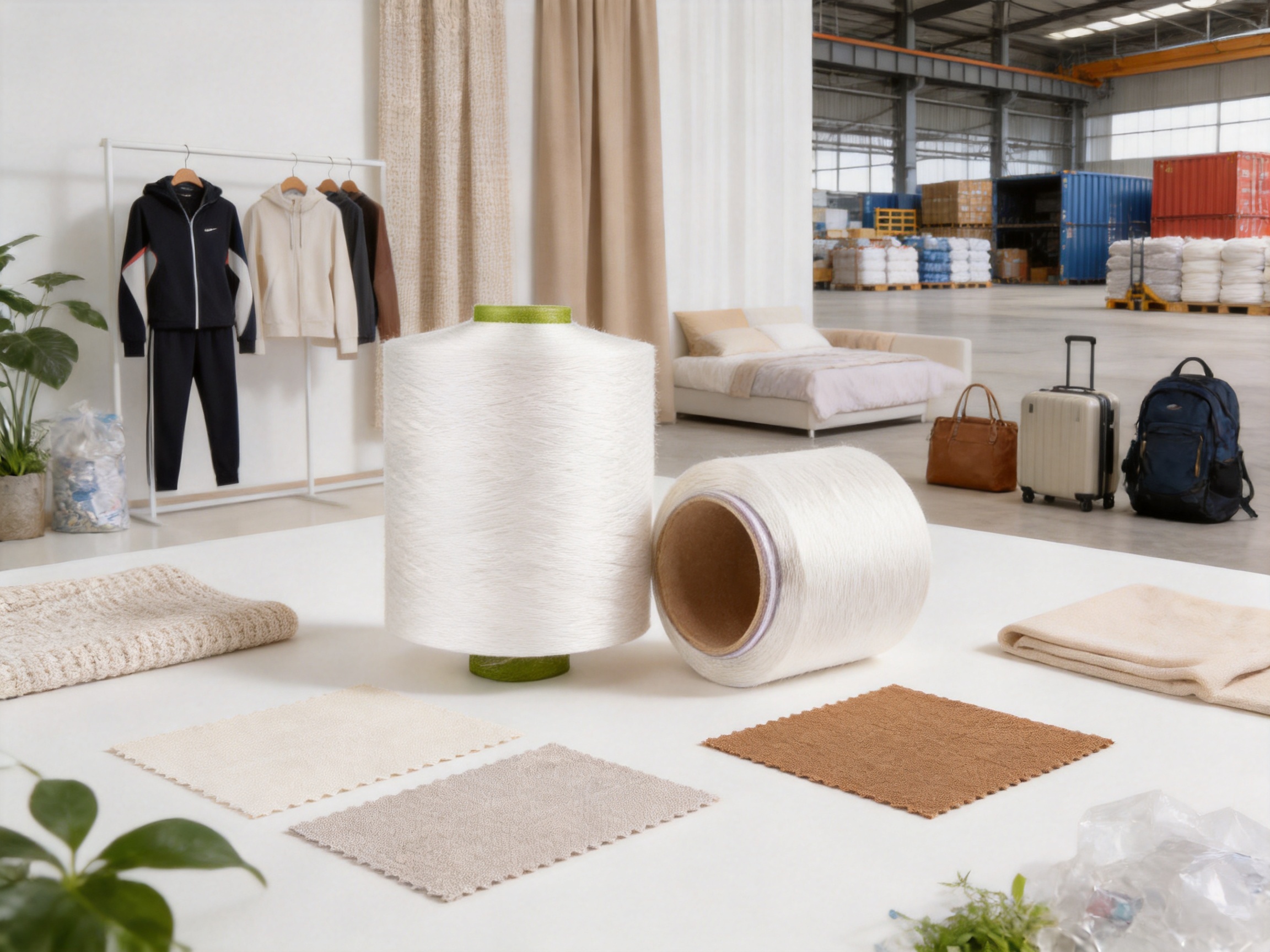
The central value of recycled FDY and DTY is that sustainability does not need to mean compromised performance. FDY provides a smooth, stable, and comparatively sleek filament structure, while DTY provides texturing, bulk, softness, extensibility, and a more natural fabric hand. Depending on the selected denier, filament count, luster, and functional treatment, the yarn can be used in sportswear, casual apparel, lining, knitted fabrics, woven fabrics, curtains, bedding, bags, luggage, accessories, and selected industrial textiles.
For manufacturers comparing recycled yarn suppliers, the most important questions are practical. Can the yarn run smoothly on existing machines? Is the quality consistent from lot to lot? Are the available specifications broad enough for different fabric programs? Can the supplier support customized differentiation? Is the recycled material suitable for a brand’s sustainability strategy? This article examines these questions while explaining the product’s material basis, manufacturing characteristics, technical advantages, applications, quality considerations, and purchasing value.
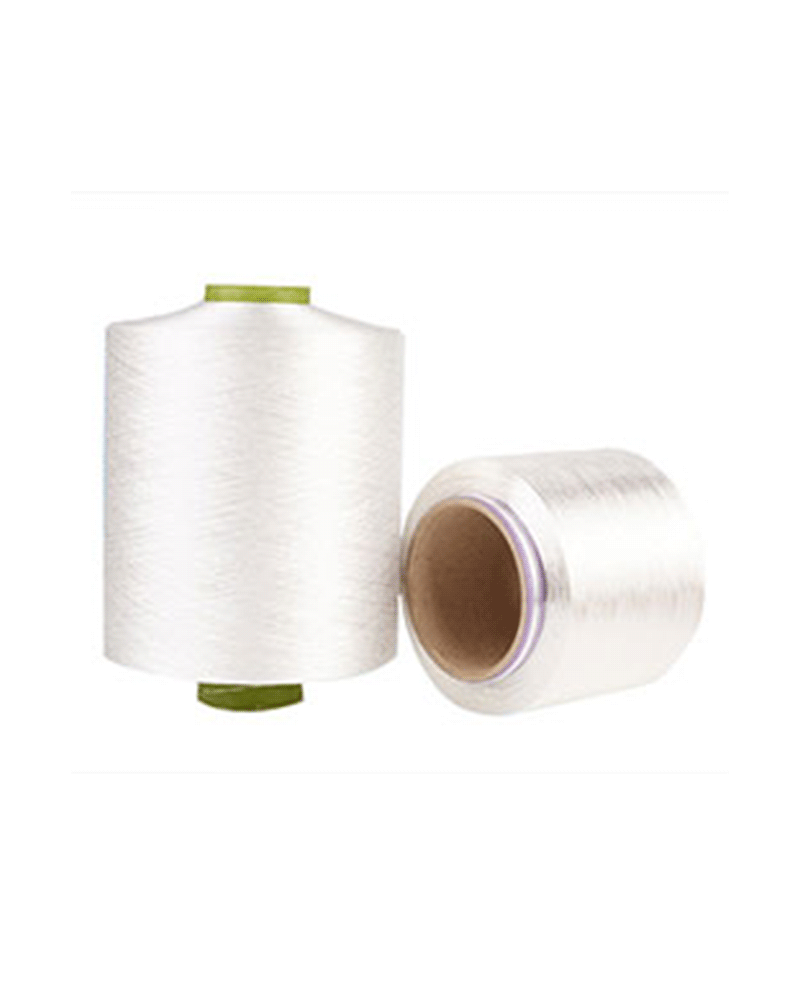
Eco-Friendly FD DTY(D/F) Recycled Textile Yarn
1. Product Overview
Eco-Friendly FD DTY(D/F) Recycled Textile Yarn is a polyester filament yarn made with recycled raw materials. The product family includes both FDY and DTY forms. In common textile terminology, FDY means fully drawn yarn, while DTY means draw textured yarn. The notation D/F refers to denier and filament number, which together help describe the fineness and filament construction of the yarn.
Recycled polyester is commonly produced by collecting, sorting, cleaning, crushing, melting, and reforming polyester waste into a usable polymer or spinning feedstock. Post-consumer PET bottles are an important source, but suitable industrial polyester waste can also contribute to the recycled-material stream. Through controlled processing, this waste can be transformed into filament yarn for further use in textile production.
The recycled yarn portfolio includes a wide range of specifications. Examples include recycled FDY options such as 40/24–72, 50/24–36–48–72, 66/24, 75/36–72–144, and 100/72. Recycled DTY options include constructions such as 15/6, 20/12–24, 30/12–24–36, 50/36–48–72, 75/36–72–144, 100/36–48–96–144, 150/48–96–144–288, and 300/96–192–288–576. The precise availability of each specification should be confirmed according to production planning and application requirements.
The portfolio also includes recycled SD+CD DTY, recycled DDB DTY, and recycled CD DTY. These differentiated structures can provide special visual effects, contrast, dyeing behavior, surface character, or fabric texture. In addition, the supplier can accept orders for various differentiated yarns, creating an opportunity for customers to develop a customized material rather than selecting only from a fixed commodity range.
FDY and DTY in practical textile production
FDY is produced through a drawing process that gives the filament a relatively smooth and stable structure. It is suitable for applications where a clean surface, dimensional stability, strength, and uniform appearance are important. FDY can be used directly in some fabric constructions or can serve as a component in further textile processing, depending on the customer’s equipment and fabric design.
DTY is created by texturing partially oriented or drawn polyester filament so that the yarn gains crimp, bulk, softness, and improved stretch characteristics. Compared with a flat filament, DTY can create a fuller hand and a more comfortable fabric surface. It is widely used in knitted and woven fabrics, apparel, sportswear, home textiles, and accessories.
The combination of recycled content and FDY/DTY technology gives manufacturers design flexibility. A customer may choose FDY for a smooth, clean, and stable construction, or DTY for a softer and more elastic effect. The same recycled-material strategy can therefore support several product categories instead of being restricted to one narrow end use.
2. Environmental Value of Recycled Polyester Yarn
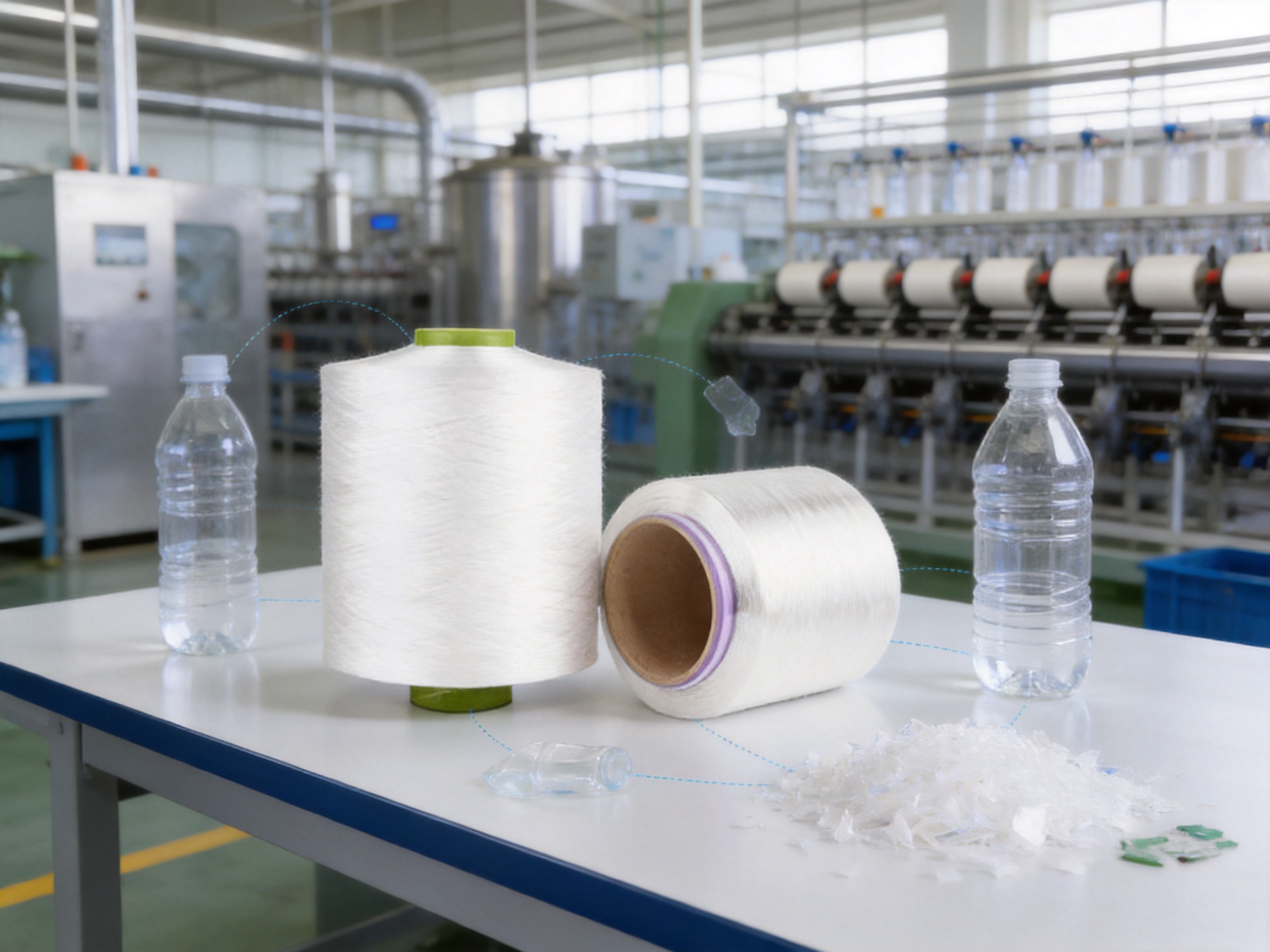
The primary environmental advantage of recycled polyester is the productive reuse of existing polymer resources. Discarded PET bottles and polyester textile scraps would otherwise require disposal, downcycling, or long-term management. Converting these materials into filament yarn helps return them to the textile value chain and supports a more circular approach to material use.
Recycled polyester can also reduce reliance on newly extracted petroleum-based feedstocks. Conventional polyester begins with virgin petrochemical raw materials. Recycled polyester, by contrast, uses a portion of material that has already been manufactured and placed into circulation. The exact environmental benefit depends on the collection system, recycling technology, energy source, transportation distance, and production conditions, but the basic resource-efficiency principle remains significant.
For brands and manufacturers, recycled yarn provides a tangible way to respond to consumer interest in responsible products. Sportswear, casualwear, bags, luggage, home textiles, and promotional products can communicate a material story based on waste recovery and resource conservation. However, responsible communication should be supported by accurate documentation. Customers should confirm recycled content, chain-of-custody requirements, testing, and any certification needed for a particular market or brand program.
The environmental value of this yarn is not limited to the raw material. Efficient spinning, stable production control, reduced reprocessing, and reliable quality can also contribute to better resource utilization. When yarn runs consistently, mills may experience fewer breaks, less waste, and lower risk of rejected fabric. Product quality and sustainability are therefore connected: a durable, processable yarn can help reduce material loss throughout the manufacturing chain.
Recycled yarn is especially relevant for companies developing sustainability programs across multiple product lines. Instead of purchasing a separate material for every category, a business may use recycled DTY in activewear, recycled FDY in linings or smooth woven fabrics, and recycled differentiated yarns in fashion or home-textile collections. This can simplify material planning while maintaining a consistent sustainability direction.
3. Performance Advantages Over Ordinary Commodity Yarn
A recycled yarn must first perform as a textile yarn. Environmental positioning alone is not sufficient for a fabric mill or garment manufacturer that needs reliable production. Eco-Friendly FD DTY(D/F) Recycled Textile Yarn is intended to offer performance comparable to conventional polyester yarns in key areas, including strength, surface quality, dye absorption, dimensional stability, abrasion resistance, and wrinkle resistance.
Smoothness and dimensional stability
The FDY variant offers a smooth filament surface and a stable structure. These characteristics are useful for fabrics requiring a clean appearance, controlled drape, and consistent width or length behavior. Smooth yarn can also support an even fabric surface, which is valuable in lining, lightweight woven fabric, fashion fabric, and selected home-textile constructions.
Dimensional stability is important because fabric manufacturers must control shrinkage, skew, spirality, and shape retention. While final fabric performance depends on knitting, weaving, heat setting, dyeing, finishing, and garment construction, a stable yarn provides a dependable starting point. FDY can be selected when the customer prioritizes a neat appearance and predictable processing behavior.
Elasticity and soft hand feel
DTY introduces crimp and bulk, creating a softer and more flexible yarn structure. This can help produce fabrics that feel comfortable against the skin and recover better after movement. Such characteristics are useful in sportswear, leggings, casualwear, underwear-related constructions, stretch-look fabrics, and fitted garments.
DTY does not replace elastane in every application, but it can contribute to comfort and fabric extensibility without requiring a fully elastic fiber construction. The appropriate result depends on yarn specification, texturing conditions, fabric construction, finishing method, and the target level of stretch. Customers should conduct trials when a precise recovery or elongation value is required.
Moisture management potential
Polyester filament is widely used in moisture-management textiles because of its low moisture regain, quick-drying behavior, and ability to be engineered into different cross-sectional or textured structures. DTY’s bulk and surface characteristics can support comfortable sports and casual fabrics. Functional moisture-wicking options are also included in the broader differentiated yarn portfolio.
The final moisture-management effect depends on more than the yarn itself. Filament geometry, yarn density, fabric construction, finishing chemistry, garment design, and environmental conditions all influence performance. For this reason, a fabric-level test is recommended before making a specific performance claim in a finished product.
Dye absorption and color retention
Recycled polyester yarn can be dyed using processes suitable for polyester, and the material is designed to support strong color development. Consistent dye absorption is important for fashion brands because uneven coloration can lead to shade variation, rework, and commercial loss. A stable yarn structure can help mills achieve more uniform dyeing when temperature, time, liquor ratio, auxiliaries, and machine settings are properly controlled.
Color durability is also valuable in sportswear, uniforms, casual garments, bags, and home textiles. Resistance to fading, abrasion, and repeated washing must be verified according to the finished product’s intended use. The recycled yarn provides a practical base for high-quality colored textiles while supporting a lower-impact raw-material strategy.
Resistance to wrinkles and abrasion
Polyester filament yarn is recognized for its useful resistance to wrinkling and abrasion. These qualities are important in travel products, luggage, handbags, school bags, workwear, sportswear, and frequently handled home textiles. DTY can create a resilient and flexible surface, while FDY can provide a more compact and smooth construction.
Compared with lower-quality recycled yarns that may suffer from unstable tenacity, excessive hairiness, or inconsistent dyeing, a properly controlled recycled filament offers a more dependable manufacturing experience. This is one of the product’s major advantages over purely price-driven commodity yarn: the customer receives a material designed around both recycled content and usable textile performance.
4. Manufacturing Process and Technical Strengths
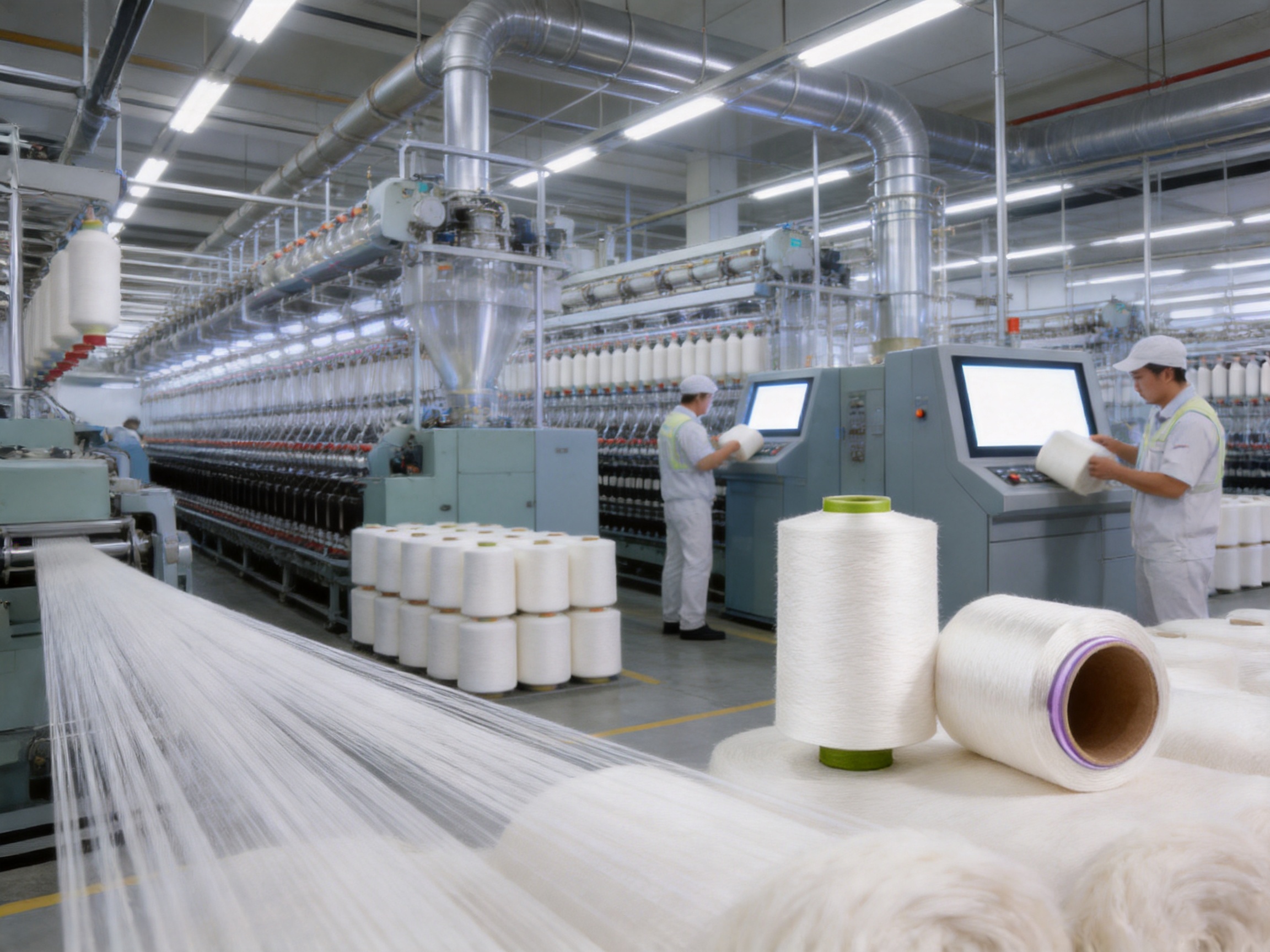
The performance of recycled FDY and DTY depends heavily on manufacturing control. Recycled raw materials can vary more than virgin feedstock if collection, sorting, cleaning, and preparation are not carefully managed. A capable manufacturer must therefore control the material stream before spinning and maintain stable parameters throughout polymer handling, extrusion, spinning, drawing, and texturing.
Raw-material preparation
The process begins with the selection and preparation of recycled polyester sources. Post-consumer PET bottles and industrial textile scraps must be collected and sorted to remove unsuitable materials. Labels, caps, foreign polymers, metals, dirt, moisture, and other contaminants can affect melt quality and yarn performance. Proper separation is essential for stable processing.
After sorting, the material is cleaned and reduced to a form suitable for further processing. Moisture control is particularly important because polyester can be sensitive to hydrolysis during high-temperature melting. Inadequate drying may reduce polymer quality and lead to unstable spinning. Controlled preparation helps protect intrinsic viscosity, melt stability, and filament uniformity.
Melting and filtration
Prepared recycled polyester is melted under controlled thermal conditions. Filtration helps remove remaining solid contaminants and supports a cleaner polymer stream. The temperature profile must be carefully managed: excessive heat can degrade the polymer, while insufficient heat can create poor flow and unstable spinning.
Consistent filtration is especially important for fine-filament products. Blocked spinnerets, pressure fluctuations, broken filaments, and uneven denier can result when contamination is not controlled. A strong manufacturing process therefore links raw-material inspection with melt filtration and production monitoring instead of treating these steps as separate activities.
Spinning and filament formation
During spinning, molten polymer passes through spinnerets to form continuous filaments. The design and condition of the spinneret, cooling system, spinning speed, and winding equipment influence filament fineness, cross-sectional uniformity, strength, and surface quality. Stable cooling is necessary to solidify filaments evenly and reduce variation between positions.
Modern filament production requires precise control of tension and winding. Excessive tension can create defects or uneven package formation, while insufficient tension may cause loose winding and downstream processing problems. Consistent packages make it easier for knitting, weaving, warping, and texturing customers to achieve efficient production.
Drawing and texturing
FDY is drawn to orient the polymer chains and achieve the desired balance of strength, elongation, and stability. DTY undergoes drawing and false-twist texturing, which introduces crimp and bulk. Heating, cooling, draw ratio, twist level, spindle speed, and winding tension all affect the final character of the yarn.
Texturing must be controlled carefully to achieve consistent crimp and evenness. If the process is unstable, the yarn may show differences in bulk, stretch, shrinkage, or surface appearance. A reliable manufacturer uses process experience and equipment control to maintain repeatability across positions and batches.
Inspection and quality management
Quality management should cover raw materials, intermediate production, finished yarn, and packaging. Typical inspection points may include denier, filament count, tenacity, elongation, evenness, oil content, crimp characteristics, shrinkage, color, package weight, and appearance. The exact test list depends on the product specification and customer requirements.
Inspection is not only a final pass-or-fail activity. Continuous monitoring helps identify process drift before it becomes a large-scale problem. This is particularly important for recycled yarn, where raw-material variation can influence the production system. A responsive supplier can adjust process parameters, segregate lots, communicate variation, and support customers with technical recommendations.
Suzhou Junhui Textile Co., Ltd. and Suzhou Xiaoran New Materials Co., Ltd. emphasize differentiated yarn development and export-oriented service. Their product scope includes recycled yarn, polyester dope-dyed yarn, high-elastic yarn, microfine yarn, flame-retardant yarn, cationic-dyeable yarn, and knitting fabric products. This broad technical background is valuable because customers often need more than one yarn type for a collection or supply program.
5. Product Portfolio and Available Specifications
The recycled series is designed to cover different combinations of luster, construction, denier, and filament number. SD generally refers to semi-dull yarn, while FD generally refers to full-dull yarn. These luster options influence the visual brightness and surface character of the finished fabric. Customers can select a more subdued appearance or a different level of surface reflectance according to design needs.
The following table summarizes representative product groups and specifications from the available product list. It is intended as a planning guide rather than a substitute for a current quotation or technical datasheet. Availability, minimum order quantity, color, package form, and production lead time should be confirmed before purchasing.
| Product family | Representative specifications | Typical characteristics | Potential applications |
|---|---|---|---|
| Recycled SD DTY (D/F) | 15/6; 20/12–24; 30/12–24–36; 50/36–48–72; 75/36–72–144; 100/36–48–96–144; 150/48–96–144–288; 300/96–192–288–576 | Textured, soft, flexible, semi-dull appearance | Knitted apparel, casualwear, sportswear, home textiles |
| Recycled SD FDY (D/F) | 40/24–72; 50/24–36–48–72; 66/24; 75/36–72–144; 100/72 | Smooth filament, stable structure, controlled luster | Woven fabrics, lining, lightweight textiles, fashion fabrics |
| Recycled FD DTY (D/F) | 50/72; 75/36; 75/72; 150/144 | Full-dull textured yarn with soft surface character | Apparel, knitwear, fabrics requiring a subdued appearance |
| Recycled SD+CD DTY (D/F) | 50/48–72; 75/48–72; 80/72; 100/72–108–144; 125/72–144; 150/72–108–144; 300/96–144–288 | Combined visual or dyeing effects from differentiated components | Fashion fabrics, contrast effects, specialty textiles |
| Recycled DDB DTY (D/F) | 75/36–72; 150/48; 300/96 | Differentiated bulk and surface character | Knitted fabrics, casual textiles, design-led products |
| Recycled CD DTY (D/F) | 75/36–72 | Cationic-dyeable differentiated yarn | Color-effect fabrics and blended visual designs |
The supplier’s normal series further includes SD DTY, FD DTY, SD DDB, CD DTY, SD+CD DTY, and white or black yarn options. Representative normal-series specifications range from fine constructions such as 30/36 and 30/24 to heavier options such as 300/96, 300/192–288–576, and 200/96–288–384. This range gives customers a basis for comparing recycled and conventional options within a coordinated product strategy.
The high-elastic series includes high-elastic yarn and PBT/PET varieties. The functional series includes fire-retardant, anti-bacterial, and moisture-wicking yarns. Cotton-like yarn is available in counts such as 32S, 40S, and 80S, while hollow warm yarn includes options such as 75/72 and 150/144. Acy products and other differentiated constructions are also listed. These additional categories demonstrate that the manufacturer’s capability extends beyond standard recycled polyester and into performance-oriented yarn development.
6. Advantages for Fabric Mills and Garment Manufacturers
For fabric mills, the first advantage is material versatility. One supplier can support several fabric programs, from smooth woven constructions to soft textured knits and differentiated fashion fabrics. This reduces the need to search for a separate source for every yarn category and can simplify communication regarding technical requirements, packaging, and delivery planning.
The second advantage is the balance between sustainable content and familiar polyester processing. Mills already experienced with polyester often have established equipment, dyeing recipes, heat-setting methods, and quality standards. Recycled FDY and DTY can fit into this existing knowledge base, although production trials and parameter adjustments remain advisable.
The third advantage is design flexibility. The selection of denier and filament count allows the manufacturer to adjust fabric weight, opacity, texture, drape, and surface appearance. SD and FD variations can support different visual effects, while CD, SD+CD, DDB, and other differentiated constructions can create more distinctive products than ordinary single-structure yarn.
The fourth advantage is product storytelling. A garment or bag made with recycled PET yarn can support a sustainability narrative that is easy for consumers to understand. Brands may use recycled content in sportswear, casualwear, travel products, school bags, luggage, handbags, shopping bags, gift bags, and storage products. The material story is particularly relevant where customers want visible progress toward circularity.
The fifth advantage is access to technical support. The company describes an experienced R&D team that works with internationally recognized enterprises on environmental and functional yarn and fabric development. It also reports that more than 90 percent of its products are exported and that it has established customer relationships in 36 countries. International experience can help suppliers understand differences in specification, communication, packaging, documentation, and delivery expectations.
Customer support is presented as a core part of the business model. The company states that experts are ready to provide assistance within 12 hours globally for product selection and problem-solving. For overseas buyers, timely communication can be as important as the yarn itself, especially when a customer is developing a new fabric, troubleshooting a production issue, or coordinating a seasonal launch.
7. Application Areas
Sportswear and active garments
Sportswear requires comfort, movement freedom, moisture management, resilience, and attractive appearance. Recycled DTY can contribute softness, bulk, and flexibility, while functional moisture-wicking options can be considered when enhanced moisture transport is required. Recycled yarn helps sportswear brands combine technical design with a material story based on recovered PET resources.
Applications may include training tops, leggings, running garments, yoga clothing, cycling apparel, warm-up suits, and athletic accessories. The exact yarn should be selected according to fabric weight, stretch target, recovery, opacity, surface feel, and laundering requirements. A sample fabric trial is recommended before confirming bulk production.
Casualwear and fashion textiles
Casual garments benefit from soft hand feel, comfortable drape, color variety, and resistance to everyday wear. DTY can create a fuller and softer appearance, while FDY can be used where a smooth and clean surface is desired. SD, FD, CD, and SD+CD options give designers additional choices for visual effect.
Recycled yarn can be used in T-shirts, dresses, skirts, shirts, jackets, trousers, leisurewear, and fashion knitwear, subject to the fabric construction and finishing process. For fashion collections, differentiated yarns can create subtle color contrast, matte effects, texture variation, or a more distinctive surface than standard bright polyester.
Bags, luggage, and accessories
Recycled polyester is highly relevant to bags and accessories because of its strength, abrasion resistance, light weight, and ability to accept color. The product information identifies mountaineering bags, handbags, school bags, luggage, briefcases, fashion bags, shopping bags, gift bags, and storage boxes as application areas.
In these products, yarn selection influences fabric tear resistance, coating compatibility, surface appearance, sewing behavior, and overall hand. FDY may be suitable for a smooth woven base, while DTY can support softer or more flexible constructions. Heavier denier options may be selected for more demanding products, provided that the finished fabric meets the required mechanical tests.
Home textiles
Curtains, bedding, cushion covers, blankets, decorative textiles, and other home products can use recycled polyester yarn where color stability, easy care, dimensional control, and durability are important. DTY can provide a comfortable surface and fuller texture, while FDY can support smooth, clean, or lightweight fabric designs.
Home-textile manufacturers should evaluate shrinkage, pilling, seam performance, washing durability, light fastness, and flame behavior according to the intended product category. Where special performance is required, the supplier’s flame-retardant, anti-bacterial, moisture-wicking, hollow-warm, or other functional series may provide a suitable development direction.
Industrial and institutional textiles
Selected industrial applications can benefit from recycled polyester’s strength, stability, abrasion resistance, and processability. Possible areas include protective covers, workwear fabrics, lining, promotional textiles, organizational products, and selected technical fabric constructions. The appropriate product depends on load, temperature, chemical exposure, abrasion level, and regulatory requirements.
Industrial buyers should provide a detailed technical brief. Information such as end use, fabric construction, target weight, weaving or knitting method, finishing process, color requirement, testing standard, and annual consumption will help the supplier recommend the correct yarn structure.
8. Quality, Testing, and Responsible Purchasing
Choosing recycled yarn requires a quality assessment that considers both sustainability and technical performance. Buyers should request a clear specification sheet and, where appropriate, a sample lot for laboratory and machine trials. Testing should be performed on the yarn and on the finished fabric because fabric construction and finishing can significantly change the final result.
Recommended yarn-level checks
Denier and filament count should be checked to confirm that the yarn matches the ordered construction. Tenacity and elongation help indicate whether the yarn is appropriate for knitting, weaving, warping, or other processes. Evenness, oil content, crimp, shrinkage, and package build can affect running efficiency and fabric quality.
Visual inspection should look for broken filaments, contamination, fuzz, uneven dyeing, poor winding, damaged packages, and variation between cones. The acceptable limits depend on the customer’s equipment and product requirements. A supplier should be able to discuss inspection methods and provide relevant production information without making unsupported claims.
Recommended fabric-level checks
Fabric testing may include color fastness to washing, rubbing, perspiration, and light; pilling resistance; abrasion resistance; dimensional stability; bursting or tensile strength; tear strength; stretch and recovery; moisture-management behavior; and appearance after laundering. For bags and luggage, tear and abrasion tests may be particularly important. For apparel, hand feel, drape, comfort, and recovery may receive greater emphasis.
Recycled-content documentation
Customers selling into markets with sustainability labeling or brand-specific requirements should verify recycled-content documentation at the beginning of the project. Depending on the destination market and customer program, evidence may include supplier declarations, transaction records, traceability documents, recycled-content certificates, or third-party certifications. The required documentation should be agreed upon before purchase rather than after goods are shipped.
The phrase “eco-friendly” should be used responsibly. Recycled polyester can reduce the demand for virgin resources and divert waste into productive use, but it still involves energy, water, transportation, chemicals, and processing. A credible sustainability statement should describe the recycled source accurately and avoid suggesting that the product has no environmental impact.
9. Why Supplier Capability Matters
Recycled filament yarn is more demanding than a simple commodity purchase because the customer may require traceability, stable quality, functional differentiation, and reliable export service at the same time. A supplier with a broad product range and R&D capability can offer more value than a seller that only resells a limited number of standard items.
Suzhou Junhui Textile Co., Ltd. and Suzhou Xiaoran New Materials Co., Ltd. were founded in June 2015 and focus on the development and sale of differential yarn and knitting-fabric products. Their stated product categories include recycled yarn, polyester dope-dyed yarn, microfine yarn, flame-retardant yarn, cationic-dyeable yarn, high-elastic yarn, and other functional materials.
This specialization supports a development-oriented purchasing relationship. If a customer’s first product requires recycled DTY and a later collection requires flame-retardant, cationic, or high-elastic yarn, the same technical network may be able to support the new request. This can reduce the learning curve and improve communication between the buyer and supplier.
Export experience is another strength. Products are reported to be supplied to customers in 36 countries, with more than 90 percent of production intended for export. International business experience can contribute to better understanding of export packaging, commercial documentation, lead-time coordination, container planning, and communication across time zones.
The company’s location in Shengze Town, Suzhou, Jiangsu Province, places it in one of China’s important textile manufacturing regions. Access to a concentrated textile ecosystem can support cooperation with upstream material suppliers, spinning and texturing operations, dyeing facilities, knitting and weaving mills, testing resources, and logistics providers. This regional network can be valuable when a customer needs a complete development solution rather than a single cone of yarn.
10. How the Yarn Compares with Virgin Polyester
Virgin polyester may offer highly consistent raw-material characteristics because it is produced from newly manufactured polymer. Recycled polyester introduces a sustainability advantage by using recovered material, but it requires careful sorting, purification, and process control to achieve consistent performance. The relevant comparison is therefore not simply recycled versus virgin; it is controlled recycled yarn versus uncontrolled or low-quality yarn.
When properly manufactured, recycled FDY and DTY can provide strength, colorability, dimensional stability, softness, and abrasion resistance suitable for many of the same applications as conventional polyester. The main distinction is the material origin and the documentation needed to support recycled-content claims.
Compared with a low-cost recycled yarn made with insufficient process control, a professionally developed product can offer better lot consistency, more stable package quality, broader specification coverage, and improved technical assistance. These differences can reduce downstream costs caused by machine stoppages, fabric defects, dyeing variation, or rejected production.
Compared with a narrow product range, the available recycled portfolio provides greater freedom to select denier, filament number, luster, and differentiated structure. This is especially helpful for brands that want to build a coordinated sustainable collection across multiple fabric weights and appearances.
11. Selecting the Correct Specification
The correct yarn should be selected from the final fabric backward. Buyers should first define the product’s end use, fabric construction, weight, stretch, hand feel, luster, color, durability, and care requirements. After that, the supplier can recommend a denier and filament combination.
Finer denier yarns are generally considered for lightweight or delicate constructions, while heavier yarns may be appropriate for durable fabrics, bags, luggage, or products requiring greater coverage. Filament number affects the yarn’s fineness, surface, softness, and visual character. The same nominal denier can produce a different fabric result when the filament count changes.
SD and FD should be selected according to the desired appearance. Semi-dull yarn provides a controlled, subdued luster, while full-dull yarn creates a more matte visual effect. For fashion products, the choice can influence whether the fabric looks sleek, understated, technical, or soft.
DTY should be considered when bulk, softness, flexibility, or a textured appearance is wanted. FDY is suitable when a smoother and more stable filament is preferred. CD and SD+CD products may be selected when a special dyeing effect or contrast is required. DDB and other differentiated yarns can support additional surface and construction effects.
Buyers should also consider machine compatibility. The supplier should receive information about knitting gauge, machine type, weaving speed, warping conditions, tension range, heat-setting temperature, and dyeing process where available. A small trial can reveal whether the chosen yarn performs as expected before a larger commitment is made.
12. Development and Customization Process
A successful custom yarn project begins with a clear technical brief. The brief should include the recycled-content target, yarn type, denier, filament number, luster, color, functional requirements, package form, estimated order quantity, end use, testing standards, delivery market, and required documentation.
The supplier can then review the request and recommend an existing specification or a differentiated construction. If a standard product is suitable, sampling can move quickly. If the customer needs a special hand feel, elasticity, dyeing behavior, luster, or functional treatment, the R&D team may need to develop and test several options.
Sampling should include both yarn evaluation and fabric evaluation. A yarn that appears suitable on a laboratory instrument may produce a different result on a high-speed knitting or weaving machine. The customer should therefore test runnability, fabric appearance, dyeing consistency, finishing response, and end-use performance before approving bulk production.
After approval, the supplier and customer should define the approved standard. This may include physical-property tolerances, color references, package weight, winding requirements, carton or pallet configuration, recycled-content documentation, inspection procedures, and shipment terms. Clear approval standards help prevent misunderstandings during repeat orders.
13. Practical Sustainability Benefits Across the Supply Chain
Sustainable textile production is a supply-chain issue rather than a single-fiber decision. The use of recycled yarn can support several connected goals: recovering waste, reducing the demand for virgin polymer, improving the material story of finished products, and encouraging manufacturers to measure and manage their resource use more carefully.
For a fashion brand, recycled yarn can become part of a collection-level material strategy. For a fabric mill, it can open new business with customers seeking recycled inputs. For a garment manufacturer, it can provide a recognizable raw-material attribute for product development and marketing. For consumers, it offers a practical alternative to products made entirely from newly produced polyester.
Nevertheless, sustainability should be evaluated through the complete product life cycle. Product durability, repairability, washing instructions, recycling potential, packaging, transportation, and end-of-life management all matter. A recycled yarn is an important input, but responsible textile design should also aim to make products last longer and perform well over repeated use.
14. Ordering and Partnership Considerations
Before placing an order, customers should confirm the exact yarn category, specification, luster, recycled-content requirement, color, package type, quantity, lead time, payment terms, inspection process, and shipping arrangement. It is also useful to clarify whether the material is suitable for knitting, weaving, warp knitting, or a specific technical process.
For new customers, a staged approach is recommended. Begin with a sample or trial order, evaluate yarn and fabric performance, and then proceed to a larger production lot after approval. This approach is particularly useful for new fabric constructions, special functional yarns, and products that will carry sustainability claims.
Communication is easier when the buyer provides a complete application brief. Instead of requesting only “recycled polyester yarn,” the buyer should explain whether the target is a soft circular-knit fabric, a smooth woven lining, an abrasion-resistant bag fabric, a matte fashion textile, or a moisture-management sports fabric. A detailed brief allows the supplier to propose a more accurate solution.
Long-term cooperation can provide additional advantages. Repeat customers may develop approved specifications, forecast demand, coordinate seasonal capacity, and work with the supplier on differentiated products. This may improve consistency and shorten development time for future collections.
15. Frequently Asked Questions
Q1: What is Eco-Friendly FD DTY(D/F) Recycled Textile Yarn?
It is a recycled polyester filament-yarn product family that includes FDY and DTY constructions. The raw material is derived from recovered polyester resources such as discarded PET bottles and industrial textile scraps. D/F refers to denier and filament number, which describe the yarn’s fineness and filament structure.
Q2: What is the difference between FDY and DTY?
FDY is fully drawn yarn with a comparatively smooth and stable filament structure. DTY is draw textured yarn with crimp, bulk, softness, and improved flexibility. FDY is often selected for smooth and stable fabrics, while DTY is commonly selected for softer, fuller, and more elastic-feeling fabrics.
Q3: Can recycled yarn replace virgin polyester yarn?
For many apparel, home-textile, accessory, and selected industrial applications, recycled polyester can provide performance comparable to virgin polyester when it is properly manufactured and matched to the application. The correct choice should be confirmed through yarn testing and fabric trials because performance depends on specification and processing conditions.
Q4: What products can be made with this yarn?
Potential products include sportswear, casualwear, fashion garments, knitted fabrics, woven fabrics, curtains, bedding, linings, mountaineering bags, handbags, school bags, luggage, briefcases, shopping bags, gift bags, storage products, and selected industrial textiles.
Q5: Are different luster options available?
Yes. The portfolio includes semi-dull and full-dull options, as well as differentiated yarns such as SD+CD, CD, DDB, and other constructions. Luster and differentiation should be selected according to the desired fabric appearance, dyeing effect, and end use.
Q6: Can the supplier develop customized yarn?
The product information states that orders for various differentiated yarns can be accepted. Customers should provide their target denier, filament number, luster, elasticity, hand feel, color, function, fabric construction, and end use so the supplier can assess the development requirement.
Q7: Is the yarn suitable for sportswear?
Recycled DTY can be suitable for sportswear because it can provide softness, flexibility, and a comfortable textured structure. Moisture management depends on the yarn design and finished fabric. Customers should conduct fabric-level moisture, drying, colorfastness, stretch, and laundering tests for specific sportswear claims.
Q8: What documentation should buyers request?
Buyers should request a technical datasheet, product specification, lot information, recycled-content documentation, packaging details, and any testing or certification records required by their market or brand program. The exact documents depend on the customer’s sustainability policy and destination requirements.
Q9: What information is needed for a quotation?
A quotation request should include yarn type, denier, filament number, luster, color, recycled-content target, quantity, package requirement, intended application, delivery destination, and requested delivery schedule. Providing a fabric sample or technical specification can make the recommendation more accurate.
Q10: How can a buyer minimize production risk?
The buyer should approve a sample, test the yarn on the intended machine, evaluate the resulting fabric, confirm the quality standard, and agree on inspection and documentation before bulk production. Maintaining a forecast and ordering approved specifications can also improve supply planning.
Conclusion
Eco-Friendly FD DTY(D/F) Recycled Textile Yarn provides a practical route toward more responsible textile manufacturing. By converting recovered PET resources and polyester waste into useful filament yarn, it supports resource conservation while maintaining the familiar performance advantages of polyester. The FDY variant offers smoothness, strength, and dimensional stability, while DTY provides softness, elasticity, bulk, and comfort.
The product’s strongest competitive advantage is the combination of recycled material, broad specification coverage, differentiated yarn capability, and application-oriented technical support. Recycled SD DTY, recycled SD FDY, recycled FD DTY, recycled SD+CD DTY, recycled DDB DTY, and recycled CD DTY give customers multiple design and processing choices. The wider portfolio of high-elastic, functional, cotton-like, hollow-warm, and other yarns further supports customized textile development.
Manufacturing quality remains essential. Careful raw-material preparation, drying, filtration, spinning, drawing, texturing, winding, and inspection help transform variable recycled inputs into a stable commercial yarn. Suzhou Junhui Textile Co., Ltd. and Suzhou Xiaoran New Materials Co., Ltd. bring experience in differentiated yarn development, export supply, and customer-oriented technical service.
For brands and manufacturers seeking sustainable materials without abandoning performance, this recycled FDY and DTY family is a strong candidate for evaluation. The best results come from selecting the yarn according to the final fabric, conducting appropriate trials, confirming technical specifications, and documenting recycled content accurately. With the right product match and quality controls, recycled polyester yarn can support durable, attractive, and commercially reliable textiles for a wide range of global markets.
References
1. Product information and technical specification list supplied for Eco-Friendly FD DTY(D/F) Recycled Textile Yarn.
2. Company information supplied for Suzhou Junhui Textile Co., Ltd. and Suzhou Xiaoran New Materials Co., Ltd.
3. General textile-industry terminology relating to polyester FDY, DTY, denier, filament count, semi-dull yarn, full-dull yarn, cationic-dyeable yarn, and differentiated filament yarn.
4. General principles of recycled PET collection, preparation, melt processing, polyester spinning, drawing, texturing, and textile quality control.
5. General sustainability principles concerning recycled materials, supply-chain traceability, product durability, and responsible environmental communication.
Product: Eco-Friendly FD DTY(D/F) Recycled Textile Yarn

Popular products
-
Premium Cationic Interlock Stretch Comfort Fabric
-
Moisture-Wicking Nylon Woven Fabric
-
Double-faced jacquard elastic fabric
-
Heather Grey Double-faced cationic jersey fabric
-
Anti-static Cationic Knitted Rib Fabric
-
High-Stretch Cationic Jersey Fabric
-
High Quality Cationic DTY Spandex Two Sides Brush Dralon Knit Fabric for Garment Thermal Underwear
-
Durable Anti-Pilling Knitted Fabric for Home Textiles
-
Wash-Resistant Cationic Elastic Knitted Fabric for Garment Industry
-
Breathable Double-Faced Elastic Composite Fabric
-
-
-
- whatsapp:
- 0086-13962559622
-
- skype:
- skype.aliceshenghong
-
- Wechat:

COPYRIGHT © 2016 Suzhou Junhui Textile Co., Ltd.
