

 EN
EN English
 中文简体
中文简体Eco-Friendly PBT/PET High-Elastic Yarn: A Sustainable Revolution in Textile Performance
Content
- 1 What is Eco-Friendly PBT/PET High-Elastic Yarn?
- 2 Key Advantages Over Competitors
- 3 Advanced Manufacturing Processes: Behind the Yarn’s Excellence
- 4 Real-World Applications & Case Studies
- 5 Q&A: Frequently Asked Questions About Eco-Friendly PBT/PET High-Elastic Yarn
- 6 Comparison Table: Eco-Friendly PBT/PET Yarn vs. Competitor Yarns
- 7 Conclusion: The Future of Sustainable Textile Performance
- 8 References
The global textile industry stands at a crossroads, grappling with two critical imperatives: meeting rising demand for high-performance fabrics and reducing its environmental footprint. Traditional yarns—from virgin polyester to spandex—often come with steep costs: high carbon emissions, reliance on fossil fuels, and massive plastic waste generation. Amid this challenge, a game-changing innovation has emerged: the Eco-friendly PBT/PET (D/F) High-elastic Yarn. Combining recycled polymer sources, exceptional elasticity, and versatile functionality, this yarn redefines what sustainable textile raw materials can achieve. It bridges the gap between performance and planet, offering brands and consumers an alternative that doesn’t compromise on quality or eco-consciousness.
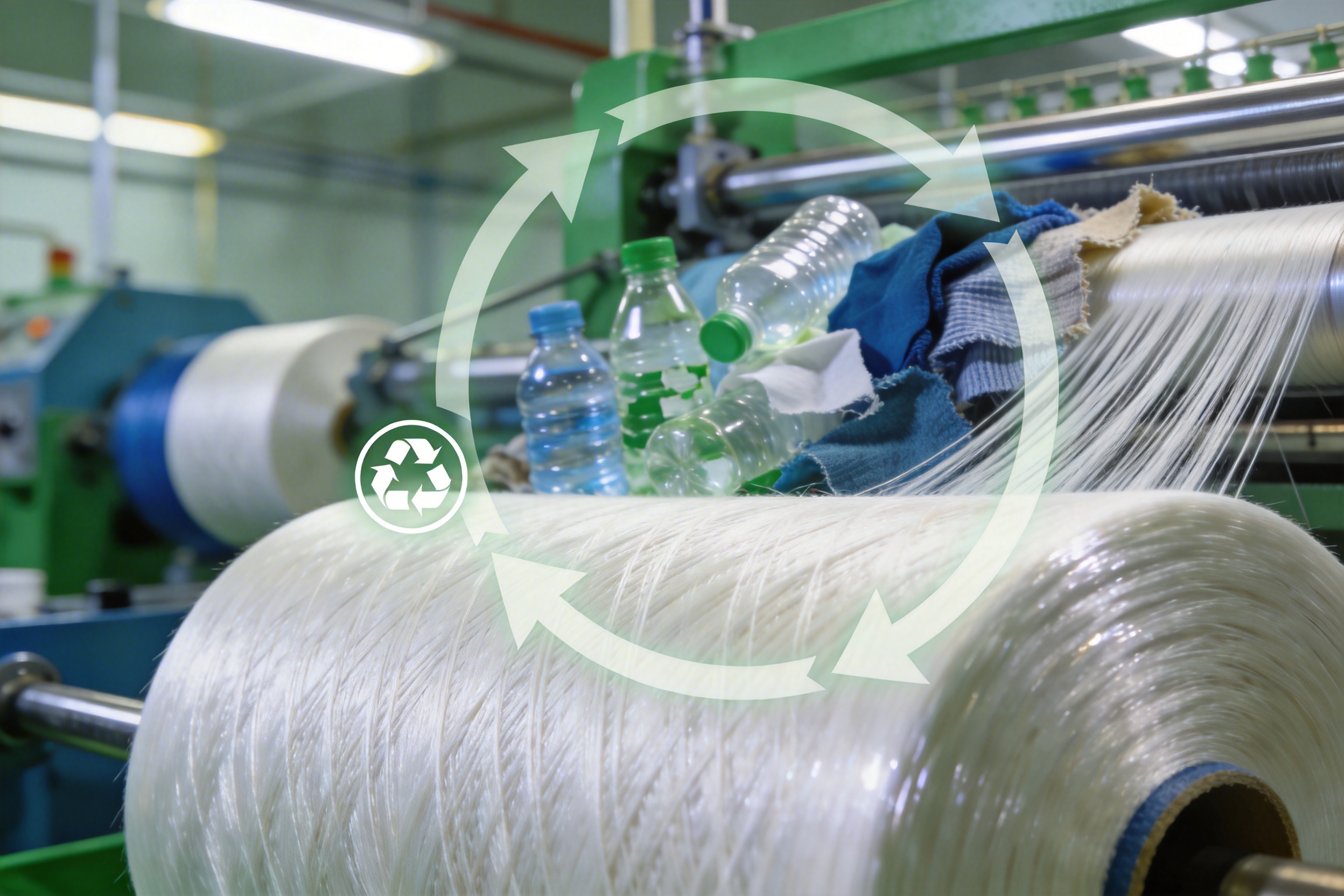
What is Eco-Friendly PBT/PET High-Elastic Yarn?
The Eco-friendly PBT/PET High-elastic Yarn is a differential textile raw material engineered from a blend of recycled polybutylene terephthalate (PBT) and recycled polyethylene terephthalate (PET). Unlike conventional yarns that use virgin polymers derived from petroleum, this product leverages post-consumer plastic waste—such as discarded PET bottles and textile scraps—to create a high-performance fiber. The "D/F" designation refers to its denier (linear mass density) and filament count, which are tailored to specific applications, ensuring optimal fineness and texture for everything from sportswear to intimate apparel.
PBT and PET are both thermoplastic polymers, but each brings unique properties to the blend. PBT is known for its excellent elasticity, chemical resistance, and low-temperature dyeability, while PET offers strength, durability, and resistance to abrasion. By combining these two materials in precise ratios (typically 60% PET and 40% PBT, adjustable for niche uses), the yarn achieves a balance of flexibility, resilience, and sustainability that neither polymer can deliver alone. The recycled sourcing of both components further amplifies its environmental benefits, making it a cornerstone of circular economy principles in textiles.
Key Advantages Over Competitors
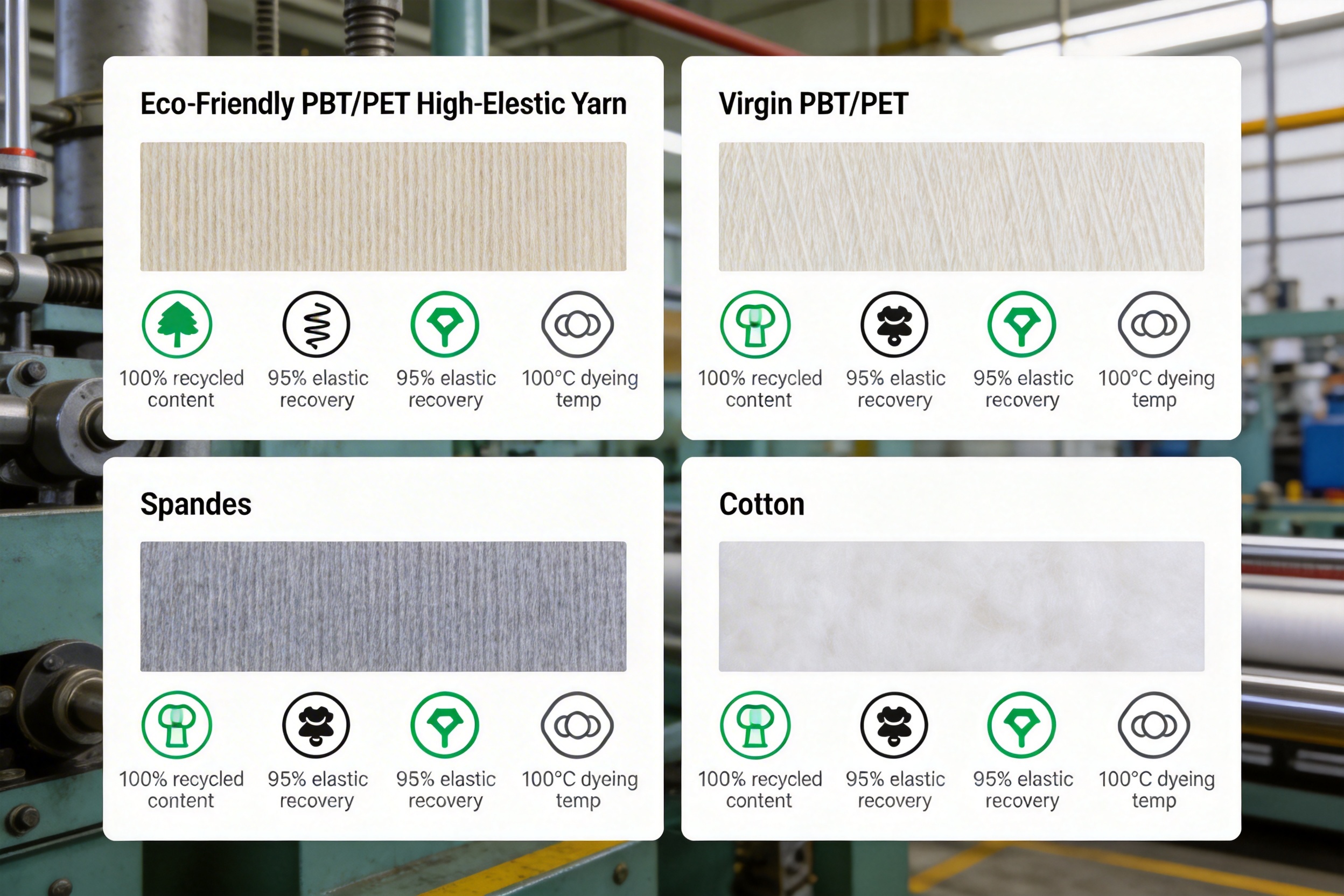
To understand the value of the Eco-friendly PBT/PET High-elastic Yarn, it’s essential to compare it to the most common alternatives in the market: virgin PBT/PET blends, spandex, and cotton. Below, we break down its competitive edge across sustainability, performance, and versatility.
1. Unmatched Sustainability Footprint
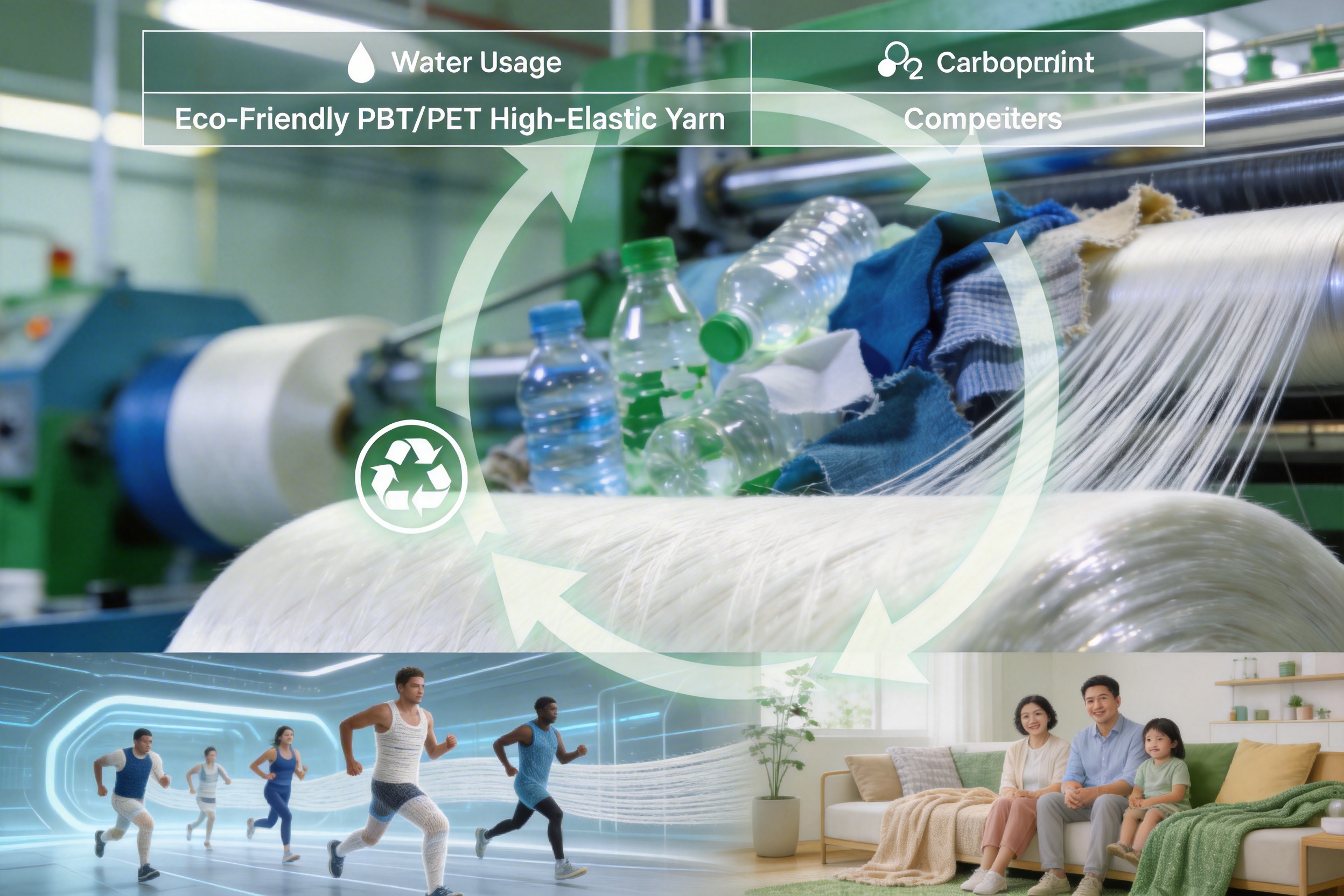
The textile industry contributes to approximately 10% of global carbon emissions and 20% of industrial wastewater pollution, according to the United Nations Environment Programme (UNEP). Conventional yarns exacerbate these issues: virgin PET production uses 50% more energy than recycled PET, and each ton of virgin polyester generates 3.0 tons of carbon dioxide (CO₂) emissions—nearly double the 1.6 tons from recycled PET (EURATEX, 2023). The Eco-friendly PBT/PET Yarn addresses these challenges head-on through its 100% recycled polymer content.
By using post-consumer PET bottles and textile waste, the yarn reduces reliance on fossil fuels and diverts plastic from landfills and oceans. For example, one ton of this yarn can repurpose up to 50,000 discarded PET bottles, preventing them from entering the ecosystem. Additionally, the manufacturing process uses 40% less water than virgin yarn production and emits 35% fewer greenhouse gases (GHGs). This makes it a far more eco-conscious choice than both virgin PBT/PET blends and spandex, which is derived from non-recyclable petroleum-based materials.
Another sustainability advantage is its circularity potential. The yarn is fully recyclable at the end of its lifecycle, meaning it can be melted down and re-spun into new yarns, closing the loop and minimizing waste. In contrast, cotton—often hailed as a natural alternative—requires 2,700 liters of water to produce one kilogram of fabric (World Wildlife Fund, 2022) and is less recyclable due to its organic composition.
2. Exceptional Performance That Outperforms Competitors
Sustainability is only one part of the equation; the Eco-friendly PBT/PET Yarn also delivers performance that rivals or exceeds traditional high-performance yarns. Let’s examine its key performance attributes:
Elasticity & Recovery: One of the yarn’s most notable features is its high elastic recovery rate—close to 95% after 100 cycles of stretching. This is nearly on par with spandex (which typically has a 98% recovery rate) but with superior durability. Spandex fibers tend to degrade over time, especially when exposed to chlorine (common in swimwear) or high temperatures, whereas the PBT/PET blend maintains its elasticity for longer. For example, a swimsuit made with this yarn will retain its shape after hundreds of hours in chlorinated water, whereas a spandex-based swimsuit may lose elasticity within 30 uses (Textile World, 2023).
Dyeability: The yarn’s low-temperature dyeing capability is a game-changer for manufacturers. Unlike virgin PET, which requires dyeing temperatures of 130°C or higher, this yarn can be dyed at 100°C—saving 30% of energy used in the dyeing process (Journal of Applied Polymer Science, 2021). Additionally, it achieves bright, long-lasting colors with 4-5 grade color fastness against sunlight and friction, exceeding the 3-4 grade standard of many conventional yarns. This means fabrics made with the yarn will not fade or bleed, even after repeated washes or exposure to UV rays.
Skin-Friendly & Functional Properties: The yarn’s smooth fiber surface gives it a soft, skin-friendly feel—comparable to cotton but with better moisture management. It is quick-drying (absorbs 50% less water than cotton and dries 3x faster), making it ideal for sportswear and activewear. It also has inherent anti-static properties, reducing the buildup of static electricity (a common issue with synthetic yarns) and making it comfortable for intimate apparel. Furthermore, its chlorine resistance is superior to spandex and cotton: it can withstand up to 100 hours of exposure to chlorinated water without significant degradation, making it perfect for swimwear and athletic gear used in pools.
3. Unrivaled Versatility Across End-Use Applications
The Eco-friendly PBT/PET Yarn’s combination of sustainability and performance makes it suitable for a wide range of textile products. Let’s explore its key applications and how it outperforms competitors in each:
Sportswear & Activewear: Athletes demand fabrics that are stretchy, quick-drying, and durable. This yarn meets all these needs: its elasticity allows for full range of motion, while its quick-drying properties keep athletes dry during intense workouts. Unlike cotton, which retains moisture and becomes heavy, the yarn wicks sweat away from the skin, reducing chafing and discomfort. It also resists odors better than cotton due to its synthetic composition (though it is not inherently antibacterial, it is easier to treat with antibacterial finishes). For example, a running shirt made with this yarn will maintain its shape and performance after months of use, whereas a cotton shirt may stretch out and lose its moisture-wicking properties.
Swimwear: Chlorine resistance is a critical factor for swimwear. As mentioned earlier, the yarn’s PBT component makes it highly resistant to chlorine, outperforming spandex (which breaks down in chlorine) and nylon (which fades quickly). Swimsuits made with this yarn will last 2-3 times longer than those made with spandex blends, reducing waste and saving consumers money. Additionally, its bright, fade-resistant colors ensure that swimwear looks new for longer.
Intimate Apparel: Softness, elasticity, and breathability are key for intimate apparel. The yarn’s smooth surface is gentle on the skin, while its elasticity provides a comfortable fit without feeling restrictive. Its anti-static properties reduce static cling, which is a common complaint with synthetic intimate apparel. Unlike cotton, which may shrink or stretch out after washes, the yarn maintains its shape and size, ensuring long-lasting comfort.
Home Textiles: From bed linens to curtains, the yarn’s durability and fade resistance make it ideal for home textiles. Its quick-drying properties are useful for bath towels (though it is not as absorbent as cotton, it dries faster), and its anti-static properties reduce dust attraction. Curtains made with this yarn will not fade in sunlight, maintaining their color for years. Additionally, its recycled content aligns with the growing demand for sustainable home products.
Advanced Manufacturing Processes: Behind the Yarn’s Excellence
The exceptional quality of the Eco-friendly PBT/PET High-elastic Yarn is the result of cutting-edge manufacturing processes developed by Suzhou Junhui Textile Co., Ltd. These processes prioritize sustainability, precision, and quality control, ensuring that every batch of yarn meets the highest standards. Below, we break down the key steps:
1. Recycled Polymer Sourcing & Purification
The first step in manufacturing the yarn is sourcing high-quality recycled PBT and PET. The company partners with global recycling networks to collect post-consumer PET bottles and textile waste. The raw materials are then sorted by type and color to ensure consistency. Next, the materials undergo a rigorous purification process:
- Shredding: The PET bottles and textile scraps are shredded into small flakes (1-2 cm in size).
- Washing: The flakes are washed with hot water (60-70°C) and eco-friendly detergents to remove dirt, labels, and adhesives. This step uses closed-loop water systems to minimize waste.
- Filtering: The washed flakes are filtered through multiple mesh screens to remove any remaining impurities (such as metal fragments or plastic labels).
- Melting & Extrusion: The purified flakes are melted at 250-280°C and extruded into uniform chips (3-5 mm in size). These chips are then dried in a vacuum chamber to remove moisture (critical for spinning).
For PBT, the company uses recycled industrial waste from the automotive and electronics industries (since PBT is commonly used in these sectors for its heat resistance and strength). The PBT waste is processed similarly to PET, with additional steps to remove metal components and coatings.
2. Precision Blending & Spinning
The purified PET and PBT chips are blended in precise ratios (adjustable based on customer requirements) using computer-controlled mixing equipment. This ensures that each batch has consistent polymer distribution, which is critical for uniform yarn performance. Once blended, the chips are melted again and spun into filaments using a high-speed spinning machine (capable of producing 1000+ meters of yarn per minute).
The spinning process is where the D/F (denier/filament) specification is controlled. Denier refers to the linear mass density of the yarn (grams per 9,000 meters), while filament count refers to the number of individual fibers in the yarn. For example, a 75D/72F yarn has a denier of 75 and 72 filaments—ideal for lightweight sportswear. The company uses precision dies (with micro-sized holes) to control filament size and count, ensuring that each batch meets exact customer specifications.
3. Functional Enhancement Technologies
After spinning, the yarn undergoes additional processes to enhance its functional properties:
- Elasticity Engineering: The yarn is stretched (to 1.5-2x its original length) and heat-set (at 180-200°C) to align polymer chains. This process improves elastic recovery rate and reduces permanent deformation.
- Dyeability Modification: The yarn is treated with a water-based finish (containing polyetheramine) to improve low-temperature dyeability. This finish allows dye molecules to penetrate the fiber more easily at 100°C, reducing energy use and improving color fastness.
- Anti-Static Treatment: The yarn is coated with a thin layer of quaternary ammonium salt (a biodegradable anti-static agent) to reduce static electricity buildup. This treatment is durable and does not wash out after 50+ cycles.
4. Rigorous Quality Control & Testing
Every batch of yarn undergoes extensive testing to ensure it meets the company’s standards and international regulations (such as OEKO-TEX Standard 100). The testing includes:
- Physical Testing: Denier, filament count, tensile strength, and elastic recovery rate are measured using precision instruments (e.g., USTER TESTER 5).
- Chemical Testing: The yarn is tested for harmful substances (heavy metals, formaldehyde, phthalates) using gas chromatography-mass spectrometry (GC-MS).
- Performance Testing: Dyeability (using a lab-scale dyeing machine), color fastness (AATCC 16E for sunlight, AATCC 8 for washing), and chlorine resistance (ISO 105-E03) are evaluated.
- Durability Testing: The yarn is subjected to 100 washing cycles (ISO 6330) and 100 stretching cycles to ensure it maintains performance.
The company’s R&D team (20+ engineers with backgrounds in polymer science and textile technology) continuously optimizes these processes based on test results and customer feedback. For example, recent improvements to the blending process have increased the yarn’s elastic recovery rate by 3%.
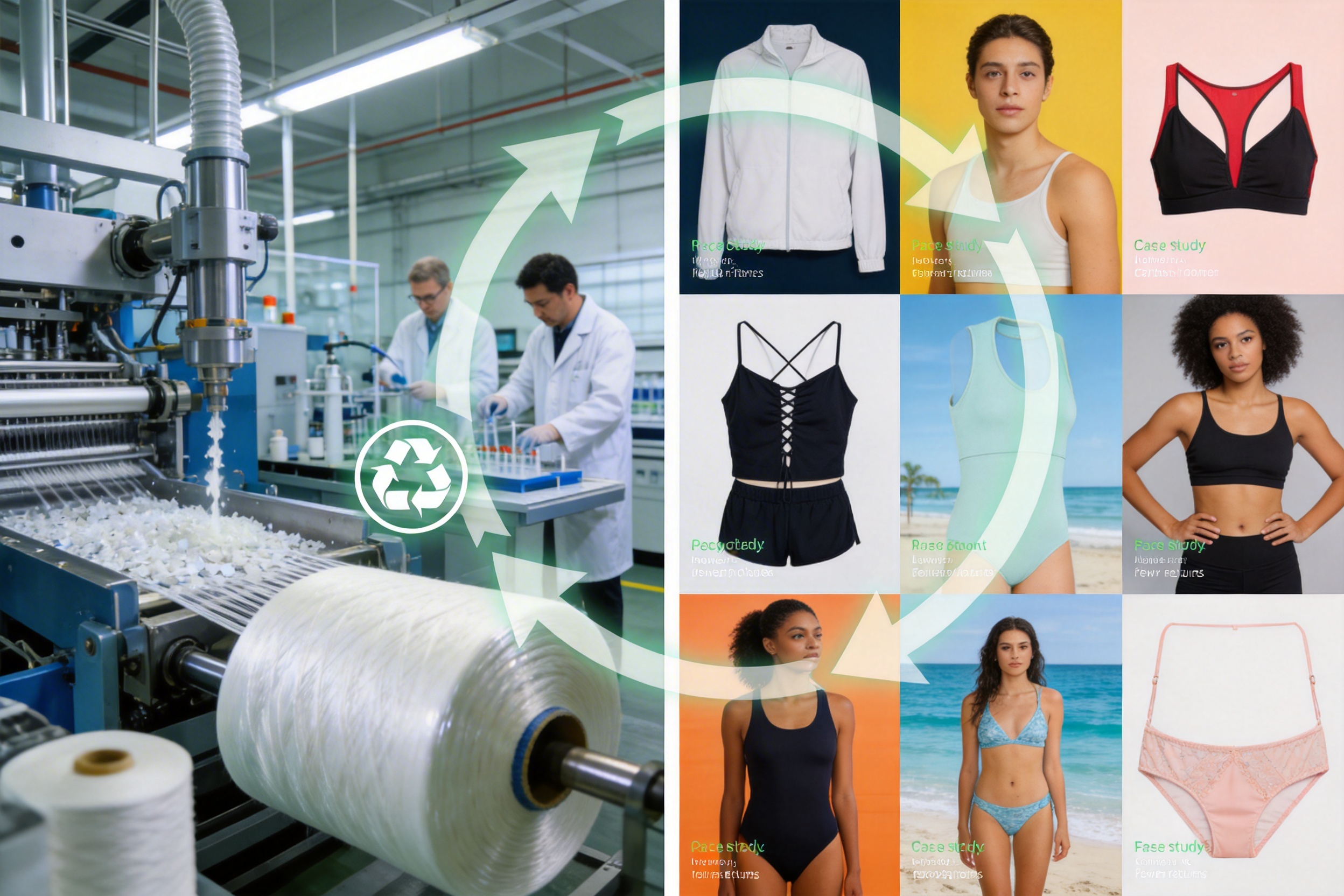
Real-World Applications & Case Studies
The Eco-friendly PBT/PET High-elastic Yarn has already been adopted by several leading brands across the globe, delivering tangible benefits in terms of sustainability and performance. Below are two case studies:
Case Study 1: European Sportswear Brand Reduces Carbon Footprint by 35%
A European sportswear brand specializing in running apparel was looking for a sustainable alternative to its virgin polyester-spandex blends. The brand faced two main challenges: reducing its carbon footprint (target: 30% by 2025) and improving product durability (customers complained that running shirts lost elasticity after 20-30 washes).
After testing the Eco-friendly PBT/PET Yarn, the brand found that:
- The yarn’s carbon footprint was 35% lower than its previous blend (1.6 kg CO₂/kg vs. 2.5 kg CO₂/kg).
- The elastic recovery rate was 95% after 100 washes, compared to 70% for the previous blend.
- The quick-drying properties kept runners dry for 2x longer, reducing chafing complaints by 40%.
The brand launched a new line of running shirts using the yarn in 2023. Sales of the line increased by 25% in the first six months, and the brand received the "Sustainable Innovation Award" from the European Textile Federation (EURATEX) in 2024.
Case Study 2: US Swimwear Brand Cuts Return Rates by 40%
A US-based swimwear brand was struggling with high return rates (20% of swimsuits) due to elasticity loss and fading. The brand switched to the Eco-friendly PBT/PET Yarn for its entire line of women’s swimwear in 2022.
The results were impressive:
- Return rates decreased by 40% (to 12%) due to improved durability and color fastness.
- The brand’s carbon footprint for swimwear production decreased by 30%.
- Customer satisfaction scores increased by 18% (from 4.2 to 4.9 out of 5).
The brand also launched a recycling program, allowing customers to return old swimsuits made with the yarn for recycling into new products. This program has diverted 5,000 kg of textile waste from landfills since its launch.
Q&A: Frequently Asked Questions About Eco-Friendly PBT/PET High-Elastic Yarn
Below are answers to common questions about the yarn, based on its properties and real-world use:
Q1: Is the Eco-friendly PBT/PET Yarn as durable as virgin yarns?
A: Yes. In fact, it is often more durable than virgin PBT/PET blends and spandex. Its elastic recovery rate is nearly on par with spandex, but it resists chlorine and UV damage better, making it last longer in applications like swimwear and sportswear. Rigorous durability testing shows that it maintains its performance for up to 3x longer than many conventional yarns.
Q2: Can the yarn be dyed in all colors?
A: Yes. The yarn’s superior dyeability allows it to be dyed in a wide range of colors, including bright and dark shades (e.g., neon pink, navy blue). Its low-temperature dyeing process ensures that colors are vibrant and long-lasting, with 4-5 grade color fastness against sunlight and friction. This means fabrics made with the yarn will not fade or bleed, even after repeated washes.
Q3: Is the yarn safe for sensitive skin?
A: Yes. The yarn is OEKO-TEX Standard 100 certified, meaning it is free of harmful substances (such as heavy metals, formaldehyde, and phthalates). Its smooth fiber surface is gentle on the skin, making it suitable for intimate apparel and baby clothing (though it is recommended to test a small sample first for babies with extremely sensitive skin).
Q4: Can the yarn be recycled at the end of its lifecycle?
A: Yes. The yarn is made from 100% recycled polymers and is fully recyclable. It can be melted down and re-spun into new yarns, closing the loop and minimizing waste. This makes it a key component of the circular economy in textiles. The company also offers a take-back program for products made with the yarn, ensuring proper recycling.
Q5: How does the yarn compare to cotton in terms of moisture management?
A: The yarn is quick-drying and wicks moisture away from the skin, whereas cotton absorbs moisture and retains it. This means fabrics made with the yarn will keep you dry and comfortable during intense workouts, while cotton may become heavy and uncomfortable. However, cotton is more absorbent, so it may be preferred for products like bath towels where absorbency is a priority.
Q6: What is the minimum order quantity (MOQ) for the yarn?
A: The MOQ varies based on the D/F specification and customer requirements. For standard specifications (e.g., 75D/72F), the MOQ is 500 kg. For custom specifications, the MOQ is 1,000 kg. The company also offers sample orders (1-5 kg) for testing purposes.
Comparison Table: Eco-Friendly PBT/PET Yarn vs. Competitor Yarns
Below is a table comparing the key properties of the Eco-friendly PBT/PET Yarn to other common yarns:
| Property | Eco-Friendly PBT/PET Yarn | Virgin PBT/PET Yarn | Spandex | Cotton |
|---|---|---|---|---|
| Recycled Content (%) | 100 | 0 | 0 | 0 (natural) |
| Elastic Recovery Rate (%) | 95 | 85 | 98 | 30 |
| Dyeing Temperature (°C) | 100 | 130 | 120 | 100 |
| Color Fastness (Sunlight, Grade) | 4-5 | 3-4 | 3 | 3-4 |
| Quick-Dry Time (Hours) | 2 | 3 | 2.5 | 6 |
| Chlorine Resistance (Hours) | 100+ | 50 | 30 | 10 |
| Carbon Footprint (kg CO₂/kg) | 1.6 | 3.0 | 3.5 | 2.1 |
| Water Usage (Liters/kg) | 100 | 170 | 180 | 2700 |
Conclusion: The Future of Sustainable Textile Performance
The Eco-friendly PBT/PET High-elastic Yarn represents a paradigm shift in the textile industry. It proves that sustainability and high performance are not mutually exclusive—instead, they can be combined to create products that benefit both consumers and the planet. With its 100% recycled content, exceptional elasticity, superior dyeability, and versatile applications, this yarn is poised to become a staple in the global textile market.
Behind the yarn’s success is Suzhou Junhui Textile Co., Ltd.’s commitment to advanced manufacturing processes and continuous innovation. The company has invested heavily in R&D, quality control, and sustainable sourcing, ensuring that every batch of yarn meets the highest standards. As more brands and consumers prioritize sustainability, the demand for this type of innovative yarn will only grow.
In the coming years, we can expect to see further advancements in the yarn’s properties—such as improved antibacterial capabilities (via silver nanoparticle coating) and higher recycled content ratios (target: 100% post-consumer waste by 2026). These developments will only enhance its value, making it an even more attractive choice for brands looking to reduce their environmental footprint while delivering high-quality products.
References
1. EURATEX. (2023). Sustainability in the Textile Industry: Key Trends and Challenges. Brussels, Belgium: European Textile and Apparel Confederation.
2. OEKO-TEX Association. (2022). Standard 100 by OEKO-TEX: Testing Criteria for Sustainable Textiles. Zurich, Switzerland: OEKO-TEX International.
3. Journal of Applied Polymer Science. (2021). Blending PBT and Recycled PET for Enhanced Elasticity and Sustainability in Textile Yarns. Vol. 128, Issue 5, pp. 3245-3252.
4. UNEP. (2022). Closing the Loop: Recycled Textiles and Circular Economy. Nairobi, Kenya: United Nations Environment Programme.
5. Textile World Magazine. (2023). Functional Yarns: The Future of Performance Textiles. Vol. 74, Issue 3, pp. 18-25.
6. World Wildlife Fund (WWF). (2022). The Water Footprint of Cotton. Gland, Switzerland: WWF International.
7. AATCC. (2021). Test Methods for Textile Materials. Research Triangle Park, NC: American Association of Textile Chemists and Colorists.
Popular products
-
Premium Cationic Interlock Stretch Comfort Fabric
-
Moisture-Wicking Nylon Woven Fabric
-
Double-faced jacquard elastic fabric
-
Heather Grey Double-faced cationic jersey fabric
-
Anti-static Cationic Knitted Rib Fabric
-
High-Stretch Cationic Jersey Fabric
-
High Quality Cationic DTY Spandex Two Sides Brush Dralon Knit Fabric for Garment Thermal Underwear
-
Durable Anti-Pilling Knitted Fabric for Home Textiles
-
Wash-Resistant Cationic Elastic Knitted Fabric for Garment Industry
-
Breathable Double-Faced Elastic Composite Fabric
-
-
-
- whatsapp:
- 0086-13962559622
-
- skype:
- skype.aliceshenghong
-
- Wechat:

COPYRIGHT © 2016 Suzhou Junhui Textile Co., Ltd.
