
 EN
 English
 中文简体
Eco-Friendly FDY and DTY Recycled Textile Yarn for Sustainable, High-Performance Fabrics
Content
- 1 What Makes Recycled FDY and DTY Yarn Important?
- 2 FDY and DTY: Two Complementary Yarn Solutions
- 3 Product Range and Available Specifications
- 4 Advantages Compared with Conventional Virgin Polyester Yarn
- 5 Advanced Manufacturing Process
- 6 Quality and Consistency Considerations
- 7 Applications in Apparel and Fashion
- 8 Applications in Bags, Accessories, and Home Textiles
- 9 Why the Manufacturing Partner Matters
- 10 How to Select the Right Specification
- 11 Recommended Development Workflow
- 12 Sustainability Benefits for Brands and Manufacturers
- 13 Q&A About Eco-Friendly FDY and DTY Recycled Textile Yarn
- 13.1 What is recycled FDY and DTY yarn made from?
- 13.2 What is the difference between FDY and DTY?
- 13.3 Can recycled yarn replace virgin polyester yarn?
- 13.4 Does recycled yarn have good strength?
- 13.5 Can the yarn be dyed?
- 13.6 What applications are suitable for recycled DTY?
- 13.7 What applications are suitable for recycled FDY?
- 13.8 Are customized yarns available?
- 13.9 How should buyers verify the environmental claims?
- 13.10 What information should be included in an inquiry?
- 14 Conclusion
- 15 References
- 16 Product: Eco-Friendly FD DTY(D/F) Recycled Textile Yarn
The textile industry is entering a decisive period in which sustainability, product performance, manufacturing flexibility, and supply reliability must develop together. Brands and fabric manufacturers are no longer evaluating yarn only by price, color, or basic physical properties. They also want to understand where the raw material comes from, how efficiently it is processed, whether it supports circular production, and how reliably it performs in finished fabrics. Eco-Friendly FDY and DTY Recycled Textile Yarn offers a practical response to these requirements by combining recycled polyester raw materials with the functional advantages of fully drawn yarn and drawn textured yarn.
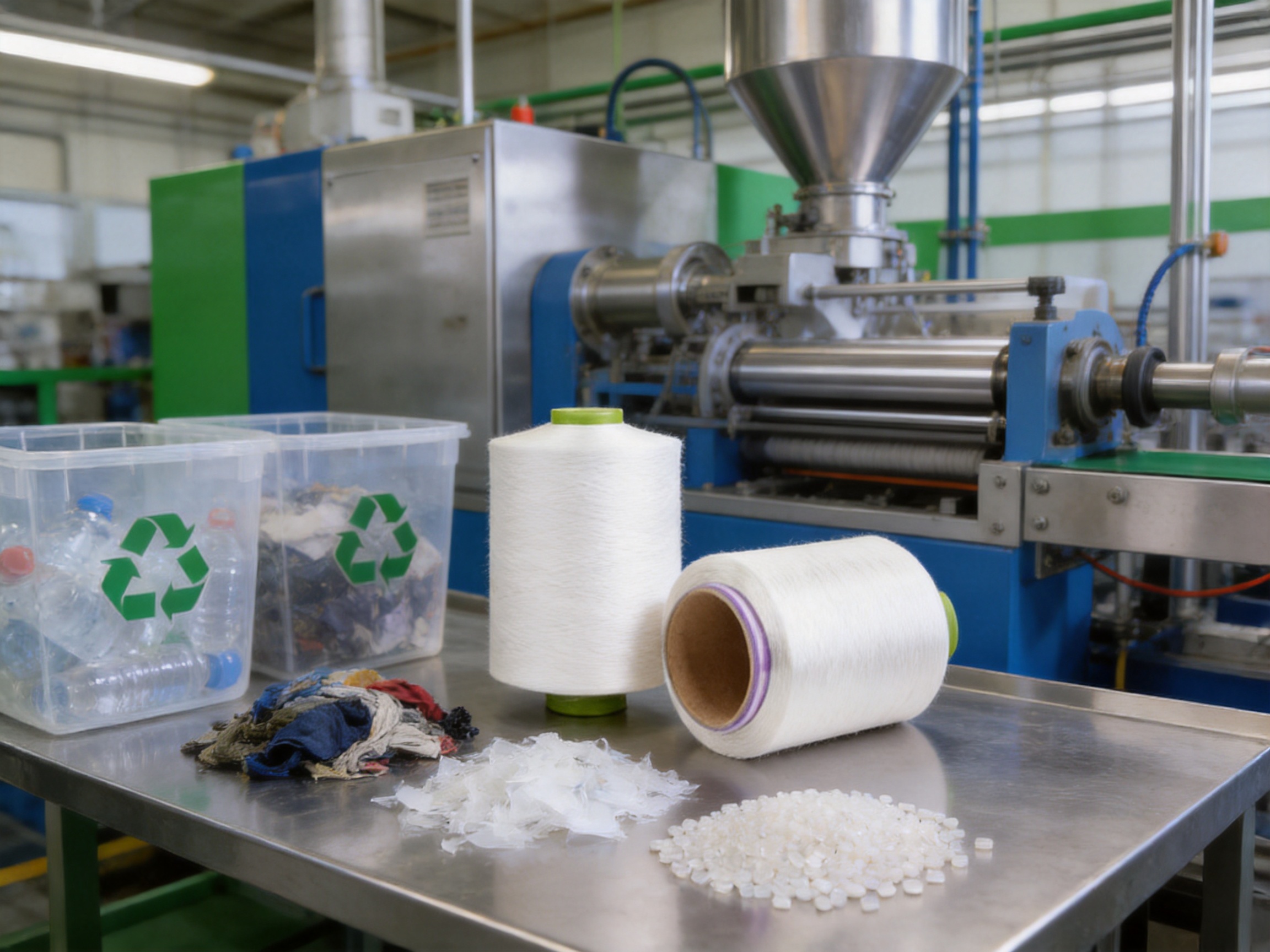
This product range is designed for manufacturers seeking an alternative to conventional virgin polyester yarn without sacrificing strength, appearance, processing stability, or application versatility. It is produced from post-consumer PET waste, including discarded plastic bottles, together with suitable industrial textile waste. Through controlled recycling, melt processing, spinning, drawing, and texturing, waste materials are transformed into useful textile filaments for apparel, home textiles, bags, accessories, and industrial products.
The product is available in FDY and DTY formats, including different deniers, filament counts, luster options, colors, and functional variations. Recycled SD DTY, recycled SD FDY, recycled FD DTY, recycled SD+CD DTY, recycled DDB DTY, and recycled CD DTY are included in the product portfolio. The broad selection allows buyers to select yarn according to fabric construction, hand feel, stretch requirements, dyeing method, visual effect, and end-use performance.
What Makes Recycled FDY and DTY Yarn Important?
Polyester remains one of the most widely used fibers in the global textile sector because it offers strength, dimensional stability, abrasion resistance, low moisture absorption, and relatively easy care. However, conventional polyester is produced from petroleum-based raw materials. This creates challenges for brands that are trying to reduce their dependence on virgin fossil resources and improve the environmental profile of their products.
Recycled polyester yarn helps address this challenge by using existing plastic and textile resources rather than relying entirely on newly extracted raw materials. In the case of recycled PET yarn, used beverage bottles and other PET waste are collected, sorted, cleaned, processed, and converted into polymer suitable for fiber production. Industrial textile waste may also be incorporated when it meets the necessary quality requirements.
The resulting yarn does not merely function as a symbolic environmental product. Properly manufactured recycled polyester can provide performance comparable to many conventional polyester yarns. It can be used for knitting, weaving, warp knitting, circular knitting, and other textile processes. It can also be dyed, finished, and developed into fabrics with a wide range of textures and appearances.
The environmental value of this approach comes from several factors. First, it diverts usable plastic from disposal streams. Second, it reduces the requirement for virgin polymer feedstock. Third, it supports a circular material system in which products can become inputs for future products. Fourth, it gives manufacturers a way to communicate measurable material choices to customers who increasingly care about recycled content and responsible sourcing.
Recycled yarn is therefore not limited to a niche market. It can serve mainstream sportswear, casualwear, fashion accessories, bags, home textiles, and selected industrial applications. The key requirement is consistent manufacturing, because recycled inputs can vary more than virgin materials if sorting and preparation are not carefully controlled.
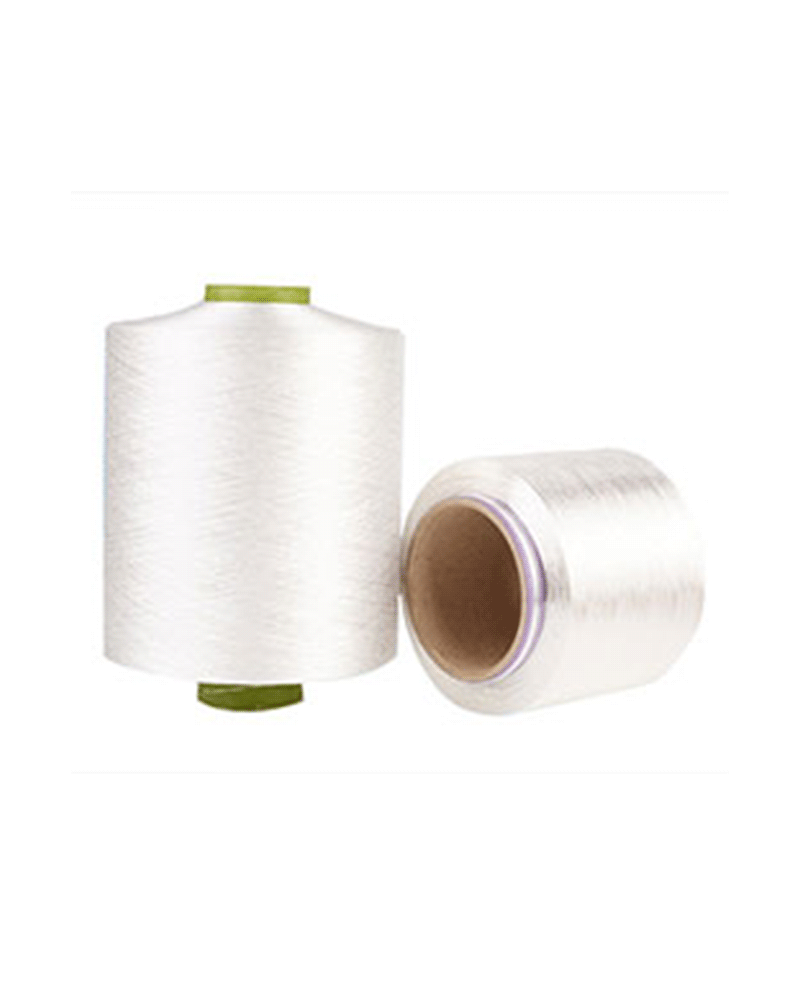
Eco-Friendly FD DTY(D/F) Recycled Textile Yarn
FDY and DTY: Two Complementary Yarn Solutions
Fully Drawn Yarn
FDY, or fully drawn yarn, is a continuous filament yarn that has undergone drawing during the spinning process. Drawing aligns the polymer chains and improves the yarn’s tensile properties, dimensional stability, and processing behavior. FDY generally has a smoother and more uniform surface than textured yarn, making it suitable for fabrics that require a clean appearance, stable construction, and sleek touch.
Recycled FDY is especially useful in woven and knitted fabrics where the yarn surface contributes directly to the visual effect of the fabric. It can be used in lining fabrics, lightweight apparel, fashion textiles, sportswear constructions, home furnishings, and technical fabrics. Depending on the selected specification, FDY can provide a balanced combination of strength, uniformity, and a refined appearance.
The product range includes recycled SD FDY and other recycled options in specifications such as 40/24–72, 50/24–36–48–72, 66/24, 75/36–72–144, 100/72, and 150/48–144. The notation commonly indicates denier and filament count. Exact availability, luster, color, package format, and technical parameters should be confirmed for each order.
Drawn Textured Yarn
DTY, or drawn textured yarn, is produced by drawing and texturing polyester filaments. The texturing process introduces bulk, stretch, softness, and a more flexible surface. Compared with smooth FDY, DTY can provide a fuller hand feel and improved fabric comfort. It is widely used in knitted garments, sportswear, casualwear, trousers, dresses, underwear, home textiles, and decorative fabrics.
Recycled DTY is suitable for manufacturers that want the environmental advantages of recycled polyester together with a softer and more elastic textile effect. The yarn can help create fabrics that drape well, recover after movement, and feel comfortable against the skin. Depending on the texturing design, DTY may also improve fabric coverage and reduce the need for heavier constructions.
Recycled FD DTY is one of the principal products in this range. Available specifications include 50/72, 75/36, 75/72, 150/144, and other denier and filament combinations. Recycled SD+CD DTY, recycled DDB DTY, and recycled CD DTY provide additional options for producing different surface appearances, dyeing effects, and color contrasts.
Choosing Between FDY and DTY
FDY is generally preferred when a smooth, stable, and clean filament surface is required. DTY is more appropriate when the fabric needs bulk, softness, elasticity, or a textured appearance. The right choice depends on the fabric construction, knitting or weaving equipment, finishing process, target price, and final application.
Many manufacturers use both types in their product development programs. FDY may be used for a sleek outer surface, lining, or structured fabric, while DTY may be selected for comfortable garments or fabrics with a soft touch. Blending different yarn specifications can also create visual contrast, improved recovery, or a distinctive surface effect.
Yarn Type |
Main Characteristics |
Typical Applications |
Recycled FDY |
Smooth surface, high tensile strength, dimensional stability, clean appearance |
Woven fabrics, lining, apparel, home textiles, technical fabrics |
Recycled DTY |
Soft hand feel, bulk, elasticity, flexibility, comfortable drape |
Knitwear, sportswear, casualwear, underwear, dresses, home textiles |
Recycled SD+CD DTY |
Combination of semi-dull and cationic-dyeable effects for visual contrast |
Fashion fabrics, blended-color fabrics, decorative textiles |
Recycled DDB DTY |
Special filament structure and textured appearance |
Fashion fabrics, knitwear, surface-effect materials |
Recycled CD DTY |
Cationic-dyeable effect, suitable for differentiated coloration |
Two-tone fabrics, color-effect fabrics, apparel and decorative products |
Product Range and Available Specifications
A major advantage of this recycled yarn range is its breadth. Different end uses require different combinations of fineness, filament number, luster, bulk, dyeability, and mechanical performance. A single yarn specification cannot meet every requirement. The available product list therefore includes a broad range of recycled and conventional polyester options for sampling, development, and production orders.
Recycled SD DTY specifications include examples such as 15/6, 20/12–24, 30/12–24–36, 50/36–48–72, 75/36–72–144, 100/36–48–96–144, 150/48–96–144–288, and 300/96–192–288–576. These options allow fabric developers to select finer yarns for lightweight materials or larger denier constructions for fabrics that require coverage and body.
Recycled SD FDY options include 40/24–72, 50/24–36–48–72, 66/24, 75/36–72–144, 100/72, and 150/48–144. Recycled FD DTY includes specifications such as 50/72, 75/36, 75/72, and 150/144. Additional products include 50/48–72, 75/48–72, 80/72, 100/72–108–144, 125/72–144, 150/72–108–144, and 300/96–144–288.
The supplier also provides related yarn categories that can support a broader sourcing program. These include normal SD DTY, FD DTY, SD DDB, CD DTY, high-elastic yarn, PBT/PET yarn, PBT/PET DDB, flame-retardant yarn, antibacterial yarn, moisture-wicking yarn, cotton-like yarn, hollow-warm yarn, and Acy yarn. This broader capability is valuable for customers that want to consolidate multiple yarn requirements with one experienced manufacturing partner.
For example, cotton-like yarn in 32S, 40S, and 80S counts can be considered for fabrics requiring a natural visual impression. Hollow-warm yarn in 75/72 and 150/144 can support lightweight warmth. High-elastic products in 30/12, 50/36–72, 60/72, 75/36–72, and 150/48–144 may be used where recovery and comfort are important.
Functional yarn options further expand the development possibilities. Flame-retardant products are listed in 75/36–72 and 150/36–48–144. Antibacterial yarn is available in several specifications, including 50/48–72, 75/36–48–72, and 150/48–72–96–144. Moisture-wicking options include 30/24, 50/48–72, 75/48–72, and 150/48–72. These specifications should be validated through sample testing according to the buyer’s performance requirements.
Advantages Compared with Conventional Virgin Polyester Yarn
Reduced Dependence on Virgin Resources
The most direct advantage of recycled polyester yarn is its use of recovered materials. Instead of relying only on newly produced polymer, recycled yarn gives existing PET waste a new purpose. This helps reduce dependence on virgin petroleum-derived raw materials and supports material circulation within the textile and packaging industries.
For brands, this can contribute to sustainability strategies involving recycled content, responsible material selection, waste reduction, and lower resource consumption. The precise environmental benefit depends on the raw material source, recycling method, energy mix, transportation, and production conditions. Nevertheless, replacing part of a virgin polyester program with recycled yarn can be a meaningful step toward a more circular product portfolio.
Comparable Textile Performance
Environmental performance is valuable only when the yarn also meets practical manufacturing requirements. Recycled FDY and DTY are designed to provide useful tensile strength, stable processing, consistent appearance, and reliable performance in finished fabrics. FDY offers a smooth and stable filament structure, while DTY offers elasticity, softness, and bulk.
Both yarn families can support strong dye absorption and long-lasting color when the appropriate dyeing process is used. They are also suitable for fabrics that need resistance to wrinkles and abrasion. These properties help manufacturers produce garments and textiles that remain attractive and functional during regular use.
Wide Application Range
Some sustainable materials are limited to specialized products or specific production methods. Recycled FDY and DTY are more versatile because they can be adapted to common textile processes. They may be used in activewear, casual apparel, fashion fabrics, bags, luggage, school bags, handbags, shopping bags, gift bags, and home textiles.
They can also support curtains, bedding, decorative fabrics, and other household products. In industrial applications, selected yarns may be used in materials requiring strength, abrasion resistance, dimensional stability, or specialized functionality. The suitability of a particular specification should always be confirmed through technical sampling.
Better Product Differentiation
Recycled content allows fabric and garment manufacturers to create a meaningful product story. In addition to color, construction, and design, brands can communicate that the material has been produced using recovered PET resources. This can help products stand out in markets where consumers are paying closer attention to environmental claims.
The availability of semi-dull, full-dull, cationic-dyeable, high-elastic, functional, and cotton-like options makes it possible to combine sustainability with a distinctive visual or tactile identity. Manufacturers do not have to choose between a recycled material and an attractive fabric concept. They can develop a material that addresses both environmental and commercial requirements.
Advanced Manufacturing Process
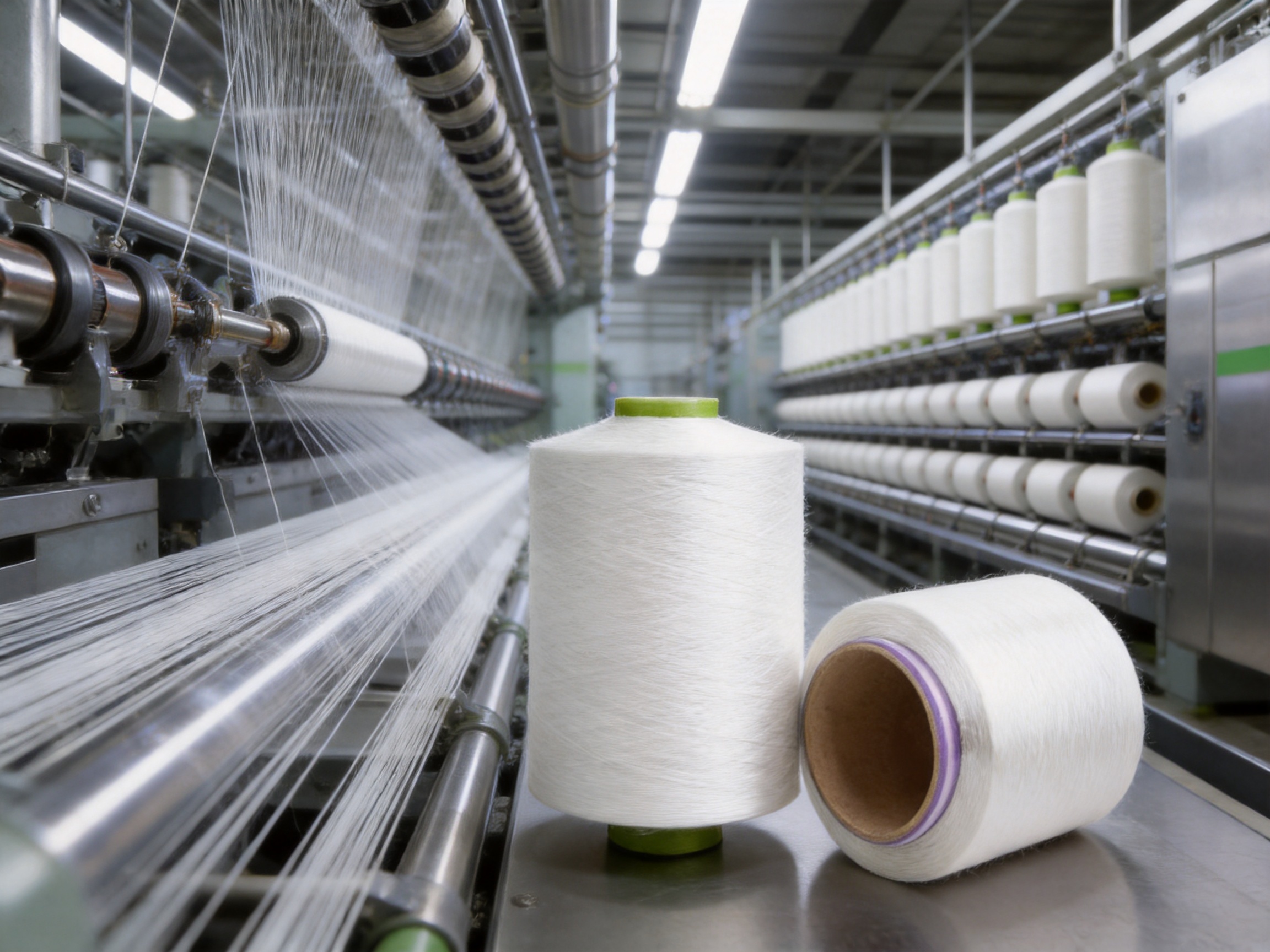
The quality of recycled yarn depends on more than the original waste material. It depends on the entire manufacturing chain, including material sorting, cleaning, polymer preparation, melt filtration, spinning, drawing, texturing, winding, inspection, packing, and customer service. The manufacturing strength of an experienced supplier is its ability to control these stages as an integrated process.
Raw Material Selection and Preparation
Post-consumer PET bottles and suitable industrial textile scraps must be identified, sorted, and prepared before they enter the recycling process. Different plastics have different melting behaviors and chemical characteristics, so effective separation is essential. Labels, caps, foreign materials, contamination, and unsuitable polymers must be removed as part of the preparation process.
Cleaning reduces dirt, adhesives, and residual substances. Size reduction makes the material easier to process. Moisture control is also important because polyester polymer is sensitive to hydrolysis during high-temperature processing. Proper drying helps protect molecular weight and supports more stable spinning performance.
Polymer Processing
Prepared recycled material is melted and processed into a polymer stream suitable for filament production. Filtration is a critical step because even small solid contaminants can affect spinneret performance, filament uniformity, and yarn quality. A well-controlled melt system helps maintain stable pressure, temperature, and flow.
For recycled inputs, process control is especially important because the material may have experienced previous use or thermal history. Consistent preparation and filtration help reduce variation and improve the reliability of the final yarn. The aim is to produce a polymer with the physical characteristics required for spinning, drawing, and texturing.
Spinning and Filament Formation
In melt spinning, the polymer passes through a spinneret to form continuous filaments. The number and arrangement of spinneret openings influence the filament count and yarn structure. Cooling conditions, spinning speed, polymer temperature, and winding tension must be controlled to maintain consistent filament formation.
Stable spinning contributes to uniform denier, fewer filament breaks, better package formation, and more predictable downstream processing. These factors are important for both FDY and DTY because irregular yarn can cause knitting defects, weaving problems, dyeing variation, and visible fabric bars.
Drawing and Orientation
Drawing stretches the newly formed filaments and aligns polymer molecules along the yarn axis. This improves tensile strength and dimensional stability. The drawing ratio and temperature must be matched to the polymer characteristics and target yarn specification.
For FDY, drawing is integrated into the production process to provide a smooth, fully oriented filament. For DTY, drawing is coordinated with the texturing stage to create the required combination of strength, bulk, stretch, and recovery. Proper control helps ensure that the yarn behaves consistently during knitting, weaving, and finishing.
Texturing
DTY texturing modifies the filament arrangement to create crimp, bulk, elasticity, and softness. Texturing conditions influence the final hand feel, stretch behavior, recovery, coverage, and appearance of the fabric. The process must be matched to the denier and filament count of the yarn.
Carefully textured recycled DTY can provide a comfortable surface and attractive drape while maintaining the advantages of polyester. This makes it suitable for garments that need movement and softness, including sportswear, casualwear, close-fitting garments, and fashion knitwear.
Winding and Package Control
After spinning or texturing, the yarn is wound into packages suitable for transport and subsequent textile processing. Package density, tension, winding uniformity, and surface condition affect how smoothly the yarn unwinds on customer equipment.
Good package formation reduces the risk of snarling, tension variation, and sudden yarn breaks. It also supports efficient storage and transportation. For international customers, stable packaging is especially important because the product may travel long distances before reaching a knitting, weaving, or dyeing facility.
Inspection and Order Support
Inspection may include checks of appearance, denier, filament count, tensile performance, elongation, crimp characteristics, package condition, and color consistency where applicable. Customer-specific requirements can be discussed during product selection and sample approval.
The manufacturing organization behind this product has a professional research and development team and experience discussing environmental and functional yarn applications with internationally recognized enterprises. More than 90 percent of its products are exported, and its customer base extends across 36 countries. This export experience supports communication across different markets, technical expectations, packaging requirements, and delivery procedures.
The company also states that it can accept orders for differentiated yarn products. This is important because many brands do not want a standard commodity yarn. They may need a particular combination of denier, filament number, luster, elasticity, dyeing behavior, recycled content, or functional performance. A development-oriented supplier can help transform these requirements into a practical yarn specification.
Quality and Consistency Considerations
When purchasing recycled yarn, buyers should evaluate both sustainability information and technical consistency. Recycled content is important, but it should be considered together with yarn performance, lot-to-lot uniformity, production traceability, and suitability for the intended fabric process.
Testing may include linear density, tenacity, elongation, boiling water shrinkage, crimp contraction, crimp stability, oil content, interlace level, moisture content, and appearance. The exact test program depends on whether the yarn will be used for knitting, weaving, warp knitting, or a specialized application.
Color consistency is also important for colored or dope-dyed yarns. Buyers should define color references, tolerance levels, package requirements, and approval procedures before mass production. If the yarn will be dyed after fabric formation, laboratory dyeing trials can help confirm shade development and compatibility with the selected dyeing process.
For recycled yarn, supply-chain documentation may also be relevant. Buyers may request information concerning the source of recycled material, recycled content calculations, production records, and applicable environmental or chain-of-custody certifications. Certification requirements vary by market and customer. The product should therefore be evaluated against the specific compliance standards required by the buyer’s country, brand, or retailer.
Applications in Apparel and Fashion
Sportswear and Activewear
Sportswear requires a balance of flexibility, comfort, moisture management, abrasion resistance, dimensional stability, and attractive appearance. Recycled DTY can provide softness and stretch for knitted activewear, while recycled FDY can contribute smoothness and stability to woven or structured components.
Moisture-wicking functional yarns may be selected where rapid movement of moisture away from the skin is important. High-elastic yarns can support garments requiring stretch and recovery. Product selection should be based on fabric testing because moisture management depends on yarn structure, fabric construction, finishing, and garment design.
Casualwear and Fashion Garments
Casual garments often require a soft hand, good drape, attractive surface, and easy-care performance. Recycled DTY can help create comfortable knit fabrics, while cationic-dyeable and SD+CD constructions can add contrast or a two-tone appearance. Recycled FDY may be used in smooth woven fabrics, linings, lightweight jackets, skirts, trousers, and decorative panels.
The broad range of denier and filament counts supports both lightweight and fuller fabric constructions. Designers can select a fine yarn for a delicate surface or a larger denier yarn for improved coverage and body. The same sustainability concept can therefore be applied across multiple garment categories.
Close-Fitting Garments
Softness, elasticity, and recovery are especially important in close-fitting garments. DTY and high-elastic options can provide a comfortable fit when combined with appropriate fabric construction. The yarn’s resilience and surface feel can improve wearability while recycled content supports a more responsible material story.
Applications in Bags, Accessories, and Home Textiles
Recycled polyester yarn is widely applicable to bags and accessories because polyester offers strength, abrasion resistance, color flexibility, and ease of care. The product information identifies mountaineering bags, handbags, school bags, luggage, briefcases, fashion bags, storage boxes, gift bags, and shopping bags as suitable application areas.
Bag fabrics often need a combination of tensile performance and visual appeal. FDY may be appropriate for smooth, compact fabric surfaces, while DTY can provide a softer or more textured effect. Larger denier options may be used where a stronger or more substantial material is required.
In home textiles, recycled yarn can be used for curtains, bedding, decorative fabrics, cushions, and other household materials. Dimensional stability is important for products that must maintain their shape through repeated use and cleaning. Polyester’s resistance to wrinkling and abrasion can be valuable in these applications.
Hollow-warm yarn may be considered for lightweight insulating materials. Moisture-wicking yarn can support bedding or sports-oriented home products where comfort and moisture control matter. Functional yarn development allows manufacturers to move beyond basic recycled content and create fabrics with specific performance benefits.
Why the Manufacturing Partner Matters
Recycled yarn is a technical product, not simply a material label. A manufacturer must understand polymer behavior, filament formation, texturing, package design, fabric processing, and end-use requirements. The supplier’s research and development capabilities are therefore important for customers who are developing new fabrics or replacing existing virgin polyester yarns.
The manufacturing group associated with this product was founded in June 2015 and focuses on differentiated yarn, recycled yarn, polyester dope-dyed yarn, microfine yarn, flame-retardant yarn, cationic-dyeing yarn, and knitting fabric products. Its work covers both environmental materials and functional textile solutions.
Its export-oriented structure provides experience in serving overseas customers. With more than 90 percent of products exported and cooperation with customers in 36 countries, the company is positioned to support international purchasing programs. The stated customer service approach emphasizes responding to professional guidance, product selection, and problem-solving requests within 12 hours globally.
Such support can be valuable during the development stage. A buyer may know the desired fabric weight, hand feel, stretch, appearance, and end use but may not know the exact yarn specification. Technical communication can help narrow the choices, arrange samples, compare alternatives, and identify the most suitable production route.
The ability to offer recycled yarn alongside normal polyester, functional yarn, high-elastic yarn, PBT/PET yarn, and knitting fabrics also improves sourcing efficiency. Customers can develop coordinated material programs rather than contacting several unrelated suppliers for every product category.
How to Select the Right Specification
The first step is to define the final product. A lightweight fashion lining, a stretch sports shirt, a durable bag fabric, and a soft home textile will not require the same yarn. The buyer should communicate the application, fabric construction, target weight, finishing method, color requirements, and performance expectations.
The second step is to select FDY or DTY. FDY is a logical starting point for smooth surfaces, stable woven constructions, and sleek visual effects. DTY is usually considered when softness, bulk, elasticity, and a textured surface are important.
The third step is to determine denier and filament count. Finer yarns may create lightweight and delicate fabrics, while larger denier options can provide greater coverage and body. Filament count affects surface feel and the distribution of denier among individual filaments. The correct selection should be confirmed through fabric trials.
The fourth step is to choose luster and special dyeing characteristics. Semi-dull yarn offers a subdued appearance, while other options may create brighter or more distinctive effects. Cationic-dyeable yarn can support color contrast and special visual designs when combined with suitable polyester components.
The fifth step is to evaluate functionality. If the fabric requires moisture management, antibacterial performance, flame resistance, hollow warmth, or high elasticity, the buyer should specify the performance objective and required test method. Functional claims should be supported by appropriate testing rather than assumed solely from the yarn name.
Finally, the customer should approve samples before bulk production. Sample evaluation should include knitting or weaving behavior, dyeing, finishing, physical testing, color assessment, hand feel, and end-use simulation. This process reduces risk and helps ensure that the selected yarn performs as expected in the complete fabric system.
Recommended Development Workflow
A practical product development workflow begins with a technical consultation. The buyer explains the intended application and provides any existing yarn or fabric reference. The manufacturer then recommends possible recycled FDY or DTY specifications and identifies alternative options where useful.
Next, yarn samples are prepared for laboratory or pilot production. The customer can evaluate package unwinding, knitting or weaving performance, dye uptake, fabric appearance, softness, stretch, recovery, and dimensional stability. If the first sample does not meet expectations, denier, filament count, luster, texturing conditions, or functional treatment can be reconsidered.
After sample approval, a production specification should be documented. It may include yarn type, denier, filament count, luster, color, recycled content requirement, package weight, winding direction, test standards, packing method, and acceptable tolerances.
Before shipment, production inspection and documentation should be completed according to the agreed purchasing conditions. Consistent communication is especially important for recycled yarn because raw material characteristics and sustainability documentation may be part of the buyer’s internal compliance process.
Sustainability Benefits for Brands and Manufacturers
Using recycled FDY and DTY can support several sustainability objectives. It can help reduce the use of virgin polyester, divert PET waste from disposal, encourage resource efficiency, and provide a more circular alternative for textile production. These benefits can be integrated into product development, procurement policies, and brand sustainability programs.
However, responsible communication is essential. Brands should describe the material accurately and avoid making broad environmental claims that cannot be supported. Recycled content, production method, certification status, and environmental comparisons should be documented according to applicable requirements.
The strongest sustainability strategy combines material selection with durable product design. A recycled fabric that performs well, resists abrasion, retains color, and remains useful for a long time may provide greater overall value than a material that has a recycled claim but poor service life. The performance characteristics of FDY and DTY therefore contribute directly to the practical success of sustainable products.

Q&A About Eco-Friendly FDY and DTY Recycled Textile Yarn
What is recycled FDY and DTY yarn made from?
The yarn is made primarily from recycled PET resources, including discarded plastic bottles and suitable industrial textile waste. These materials are processed into polymer and spun into continuous filaments. The exact raw material composition and recycled content should be confirmed for each product specification and order.
What is the difference between FDY and DTY?
FDY is fully drawn yarn with a relatively smooth and stable filament structure. DTY is drawn textured yarn that has been processed to create bulk, softness, elasticity, and a more flexible surface. FDY is often selected for smooth and stable fabrics, while DTY is commonly selected for comfortable, textured, and stretch-oriented fabrics.
Can recycled yarn replace virgin polyester yarn?
In many apparel, home textile, bag, and accessory applications, recycled FDY and DTY can serve as alternatives to comparable virgin polyester yarns. The suitability depends on the required denier, filament count, luster, strength, elongation, dyeing behavior, and fabric process. Sampling and testing are recommended before large-scale replacement.
Does recycled yarn have good strength?
Properly manufactured recycled polyester yarn can provide useful tensile strength and dimensional stability. Actual performance depends on raw material preparation, polymer processing, spinning conditions, drawing, texturing, and the selected specification. Buyers should review technical data and conduct testing for their intended application.
Can the yarn be dyed?
Yes. Recycled polyester yarn can be used in dyeing processes suitable for polyester. Color development depends on the yarn type, luster, dye formulation, temperature, time, and finishing conditions. Laboratory dyeing trials are recommended, especially when a specific shade or color consistency standard is required.
What applications are suitable for recycled DTY?
Recycled DTY can be used in sportswear, casualwear, knitwear, dresses, close-fitting garments, home textiles, decorative fabrics, bags, and accessories. Its softness, bulk, elasticity, and textured surface make it suitable for products where comfort and drape are important.
What applications are suitable for recycled FDY?
Recycled FDY can be used in smooth woven or knitted fabrics, linings, apparel, home textiles, lightweight technical fabrics, and selected bag materials. Its smooth surface and dimensional stability are useful where a clean appearance and stable fabric construction are required.
Are customized yarns available?
The supplier states that it can accept orders for different types of differentiated yarn. Customers can discuss requirements involving denier, filament count, luster, dyeing effect, elasticity, functional properties, color, and application. Customized production should be evaluated through technical consultation and sample approval.
How should buyers verify the environmental claims?
Buyers should request information about recycled material sources, recycled content, production records, and any applicable certification or chain-of-custody documentation. They should also confirm whether the documentation meets the requirements of their brand, market, retailer, or regulatory system.
What information should be included in an inquiry?
A useful inquiry should include the yarn type, denier, filament count, luster, color, intended application, knitting or weaving method, required quantity, package format, target delivery schedule, functional requirements, and sustainability documentation needs. Providing a fabric reference or sample can make technical recommendations more accurate.
Conclusion
Eco-Friendly FDY and DTY Recycled Textile Yarn provides manufacturers with a practical route toward more responsible polyester sourcing. By converting post-consumer PET waste and suitable industrial textile waste into usable filament yarn, the product supports resource efficiency and circular material development. At the same time, it retains the functional qualities required by modern textile production, including strength, dimensional stability, softness, elasticity, color compatibility, wrinkle resistance, and abrasion resistance.
The combination of recycled FDY, recycled DTY, SD, CD, SD+CD, DDB, high-elastic, functional, cotton-like, and hollow-warm options gives fabric developers a broad platform for innovation. Buyers can select smooth yarns for clean surfaces, textured yarns for comfort and bulk, cationic-dyeable yarns for contrast effects, and functional yarns for specialized performance.
The manufacturing strength behind the product is based on recycled material preparation, controlled polymer processing, stable spinning, drawing, texturing, winding, inspection, research and development, and international customer support. With experience in differentiated yarn and export markets, the supplier can support both standard purchasing and customized product development.
For brands and manufacturers looking to reduce reliance on virgin polyester while maintaining product quality, recycled FDY and DTY yarn is a strong candidate. The best results come from selecting the specification carefully, testing it in the intended fabric process, documenting sustainability information, and working closely with a technically capable manufacturing partner.
References
1. General principles of recycled polyethylene terephthalate fiber production and textile applications.
2. Technical information on fully drawn yarn, drawn textured yarn, filament count, denier, tensile strength, and elongation.
3. Textile dyeing and finishing practices for polyester and recycled polyester fibers.
4. Circular economy approaches for post-consumer PET packaging and industrial textile waste.
5. Product specifications and application information supplied for recycled FDY, DTY, functional yarn, and differentiated polyester yarn products.
6. General quality-control practices for synthetic filament yarn, including package inspection, linear density testing, strength testing, elongation testing, and dyeing evaluation.
Product: Eco-Friendly FD DTY(D/F) Recycled Textile Yarn

Popular products
-
Premium Cationic Interlock Stretch Comfort Fabric
-
Moisture-Wicking Nylon Woven Fabric
-
Double-faced jacquard elastic fabric
-
Heather Grey Double-faced cationic jersey fabric
-
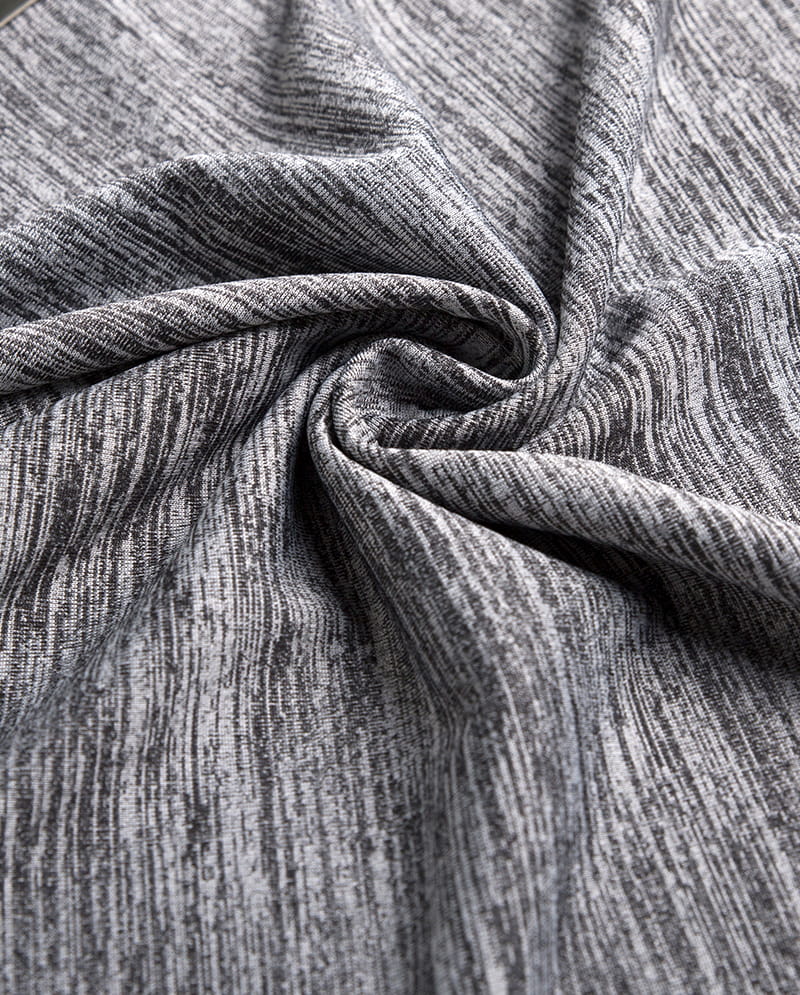
Anti-static Cationic Knitted Rib Fabric
-
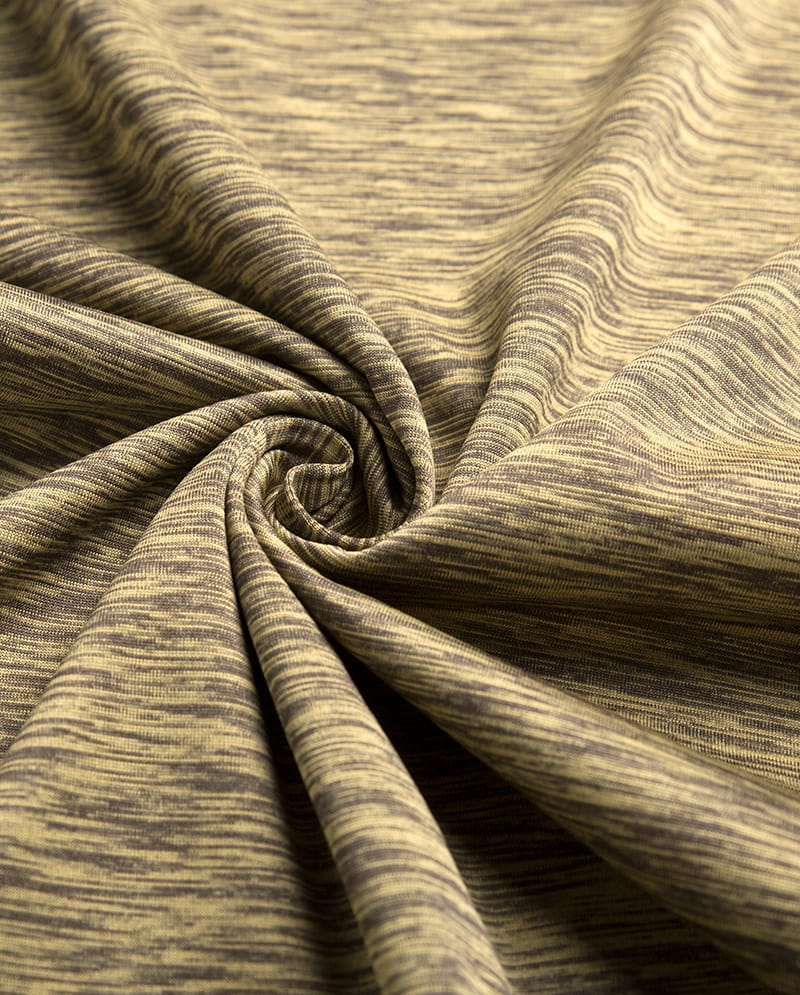
High-Stretch Cationic Jersey Fabric
-
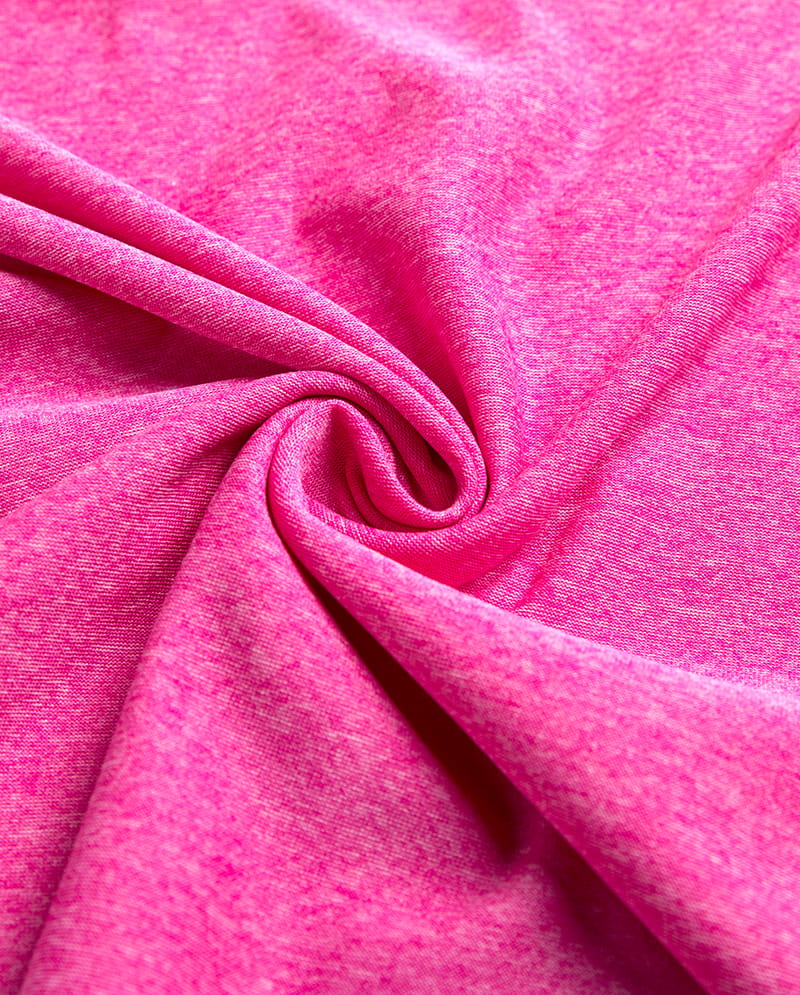
High Quality Cationic DTY Spandex Two Sides Brush Dralon Knit Fabric for Garment Thermal Underwear
-
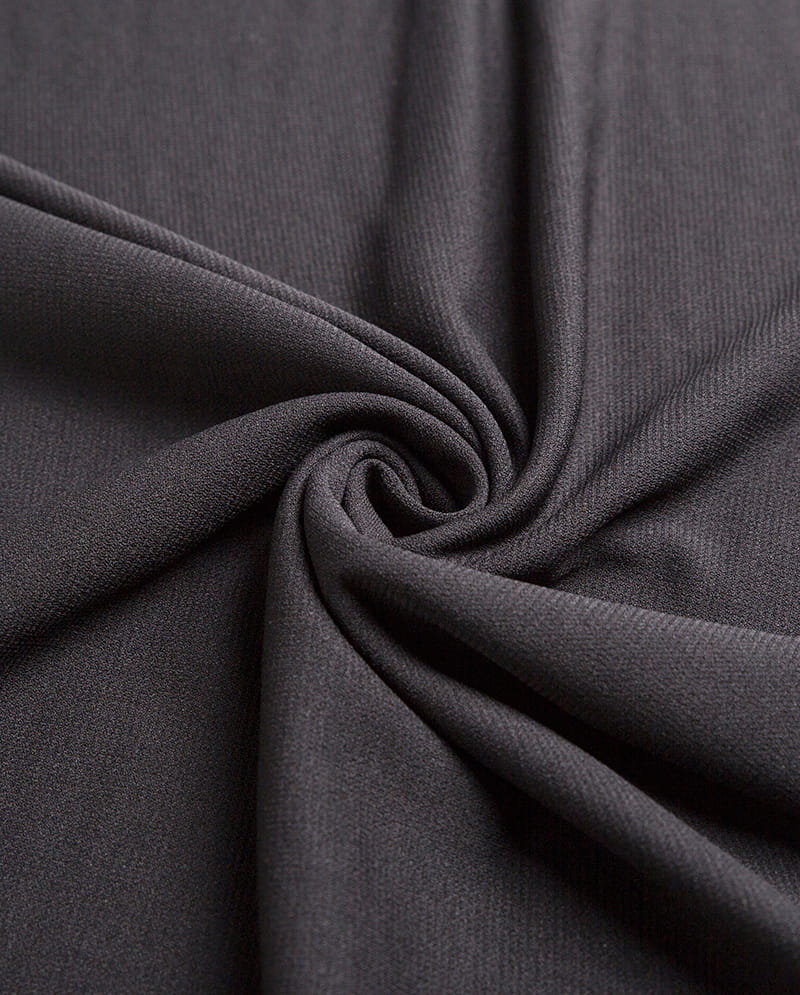
Durable Anti-Pilling Knitted Fabric for Home Textiles
-
Wash-Resistant Cationic Elastic Knitted Fabric for Garment Industry
-
Breathable Double-Faced Elastic Composite Fabric
-
-
-
- whatsapp:
- 0086-13962559622
-
- skype:
- skype.aliceshenghong
-
- Wechat:

COPYRIGHT © 2016 Suzhou Junhui Textile Co., Ltd.
