

 EN
EN English
 中文简体
中文简体Durable SD/FD/CD TBR Normal FDY Yarn for Safety-Focused Textile Applications
Content
- 1 Product Overview
- 2 Understanding SD, FD, CD, and TBR Characteristics
- 3 Core Product Advantages
- 4 Comparison with Conventional Competitor Yarns
- 5 Typical Specification Direction
- 6 Manufacturing Process Strength
- 7 Advanced Research and Development Capability
- 8 Quality Control and Consistency
- 9 Application in Room and Vehicle Interior Materials
- 10 Application in Clothing Production
- 11 Application in Military and Professional Supplies
- 12 Fabric Design Flexibility
- 13 Sustainability and Responsible Textile Development
- 14 Company Strengths Supporting the Product
- 15 Why This Yarn Offers Strong Competitive Value
- 16 Processing Recommendations for Customers
- 17 Storage and Handling
- 18 Q&A Section
- 18.1 What is Durable SD/FD/CD TBR Normal FDY Yarn?
- 18.2 What does FDY mean?
- 18.3 What are the main advantages of this yarn?
- 18.4 How is this yarn different from ordinary polyester FDY?
- 18.5 Does washing affect the flame-retardant performance?
- 18.6 What applications are suitable for this yarn?
- 18.7 What is the value of antistatic performance?
- 18.8 Can this yarn support different fabric appearances?
- 18.9 Why is low smoke release important?
- 18.10 Can customers request customized yarn specifications?
- 19 Conclusion
- 20 References
- 21 Product: Durable SD/FD/CD TBR Normal FDY Yarn
Durable SD/FD/CD TBR Normal FDY Yarn is a high-performance polyester filament yarn designed for textile applications where safety, durability, processing stability, and functional consistency are essential. As a fully drawn yarn, it is engineered to provide stable dimensional behavior, smooth downstream processing, and reliable performance in fabric manufacturing. Its key value lies in combining flame-retardant performance, low smoke release, melting resistance, thermal insulation, antistatic properties, and long-term durability in one versatile yarn platform.
In modern textile production, manufacturers are no longer satisfied with yarns that only meet basic weaving or knitting requirements. Interior decoration, automotive textiles, protective clothing, military supplies, and functional apparel all demand yarns with additional safety and comfort properties. Durable SD/FD/CD TBR Normal FDY Yarn responds to these needs by offering a practical balance between functional protection and textile usability. It supports applications that require both reliable mechanical performance and long-lasting flame-retardant behavior.
The product belongs to the Normal FDY Yarn category and is suitable for users seeking stable filament yarn for functional textile development. The SD, FD, CD, and TBR characteristics allow the yarn to serve different surface effects, dyeing requirements, and fabric design goals. Whether the target product is a flame-retardant decorative fabric, an automotive interior material, a protective uniform fabric, or a technical textile structure, this yarn offers a strong foundation for consistent production.
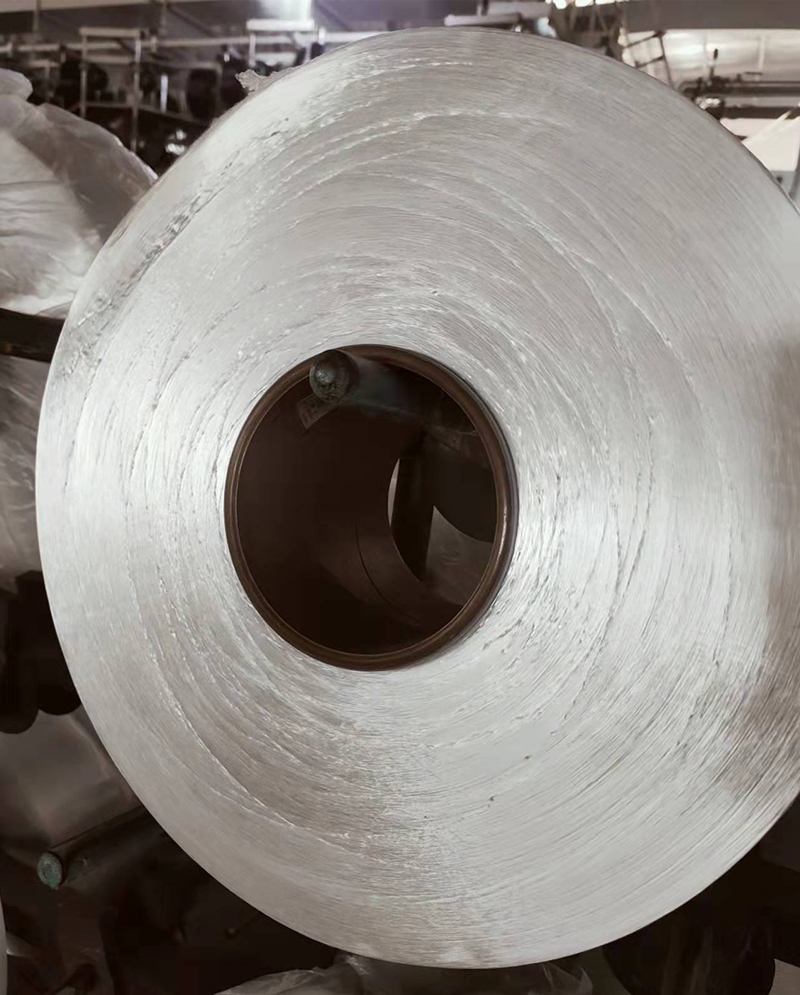
Durable SD/FD/CD TBR Normal FDY Yarn
Product Overview
Durable SD/FD/CD TBR Normal FDY Yarn is a synthetic filament yarn produced through a fully drawn yarn process. FDY, or Fully Drawn Yarn, is made by spinning and drawing the filament in a controlled continuous process, resulting in a yarn with stable orientation and physical properties. Compared with partially oriented yarn, FDY generally offers better dimensional stability and can be used directly in weaving, knitting, and other textile processes without additional drawing.
The yarn is designed with safety-focused performance features. It helps prevent the rapid spread of flame, produces relatively low smoke during exposure to flame, and resists melting behavior that may otherwise create secondary safety risks. These characteristics are especially important for interior materials and protective textiles, where fire behavior can significantly affect end-user safety.
A major advantage of this yarn is its permanent flame-retardant effect. In many functional textiles, flame-retardant performance may decrease after repeated washing, abrasion, or friction. This yarn is designed so that washing and friction do not easily reduce its flame-retardant performance. For customers producing durable goods, uniforms, upholstery, or technical materials, this stability helps reduce the risk of performance loss during the service life of the fabric.
In addition to flame-retardant properties, the yarn also provides good thermal insulation and antistatic performance. Thermal insulation helps improve protection and comfort in environments where heat management is important. Antistatic behavior helps suppress static buildup, which is valuable in clothing, interior textiles, and specialized materials used in sensitive environments.
Understanding SD, FD, CD, and TBR Characteristics
The product name includes several technical references that reflect possible yarn characteristics and application directions. SD commonly refers to semi-dull yarn, which has a softer and less glossy appearance because of the use of delustering agents. Semi-dull yarns are widely used in apparel, home textiles, and technical fabrics where a moderate surface luster is preferred.
FD generally refers to full-dull yarn. Full-dull yarns offer a more matte appearance and are suitable for fabrics requiring a subdued, premium, or natural visual effect. In safety-focused applications, full-dull surfaces may also be preferred for uniforms, interior fabrics, or textile structures where glare reduction is desirable.
CD refers to cationic dyeable polyester yarn. Cationic dyeable yarn supports dyeing flexibility and can help fabric manufacturers create color contrast, mélange effects, two-tone designs, and differentiated visual textures. When combined with functional performance, CD yarn allows designers to achieve both protective properties and attractive aesthetics.
TBR is often associated in textile markets with bright or trilobal bright effects, depending on the supplier’s product classification. Such yarns can provide higher luster and more reflective surface effects. In decorative and fashion-oriented applications, TBR-type yarns may contribute to a brilliant appearance while retaining functional performance.
The ability to offer SD, FD, CD, and TBR characteristics gives the yarn family a broad design range. Competitors may offer a flame-retardant yarn with limited appearance options or a decorative yarn without durable safety features. This product’s strength is its ability to combine functional protection with multiple fabric design possibilities.
Core Product Advantages
The first major advantage of Durable SD/FD/CD TBR Normal FDY Yarn is flame-retardant safety. The yarn helps slow flame spread, which is a key performance requirement in textile applications involving enclosed spaces, public facilities, vehicles, and protective clothing. In a fire-related event, slower flame spread may provide additional time for evacuation and response.
The second advantage is low smoke release. Smoke can be one of the most dangerous factors in fire situations, particularly in indoor environments or vehicle cabins. A textile material that supports lower smoke release can contribute to safer interior systems when properly designed and tested as part of a complete fabric or composite structure.
The third advantage is melting resistance. Many ordinary synthetic yarns may melt and drip under high heat exposure, creating additional burn hazards. This yarn is designed to resist melting behavior, helping improve its suitability for safety-oriented textiles.
The fourth advantage is durability. The yarn maintains structural integrity over long-term use and is suitable for applications where repeated handling, friction, laundering, or environmental exposure may occur. Durability is not only a mechanical advantage but also an economic advantage, because longer service life can reduce replacement frequency and total material cost.
The fifth advantage is permanent flame-retardant performance. Some competitive flame-retardant treatments are applied at the fabric finishing stage and may gradually weaken after washing, abrasion, or repeated use. Durable SD/FD/CD TBR Normal FDY Yarn is positioned as a yarn with flame-retardant effect that is not easily affected by washing and friction, making it especially useful for washable clothing, reusable interior materials, and functional fabrics requiring stable performance.
The sixth advantage is thermal insulation. This feature supports a full range of thermal protection and helps improve comfort in environments where heat transfer must be managed. For protective apparel, thermal insulation can help shield the wearer. For interior materials, it can contribute to comfort and safety.
The seventh advantage is antistatic performance. Static electricity can create discomfort, attract dust, interfere with sensitive environments, and in certain industrial settings create safety concerns. Antistatic functionality improves the practicality of the yarn in modern textile applications.
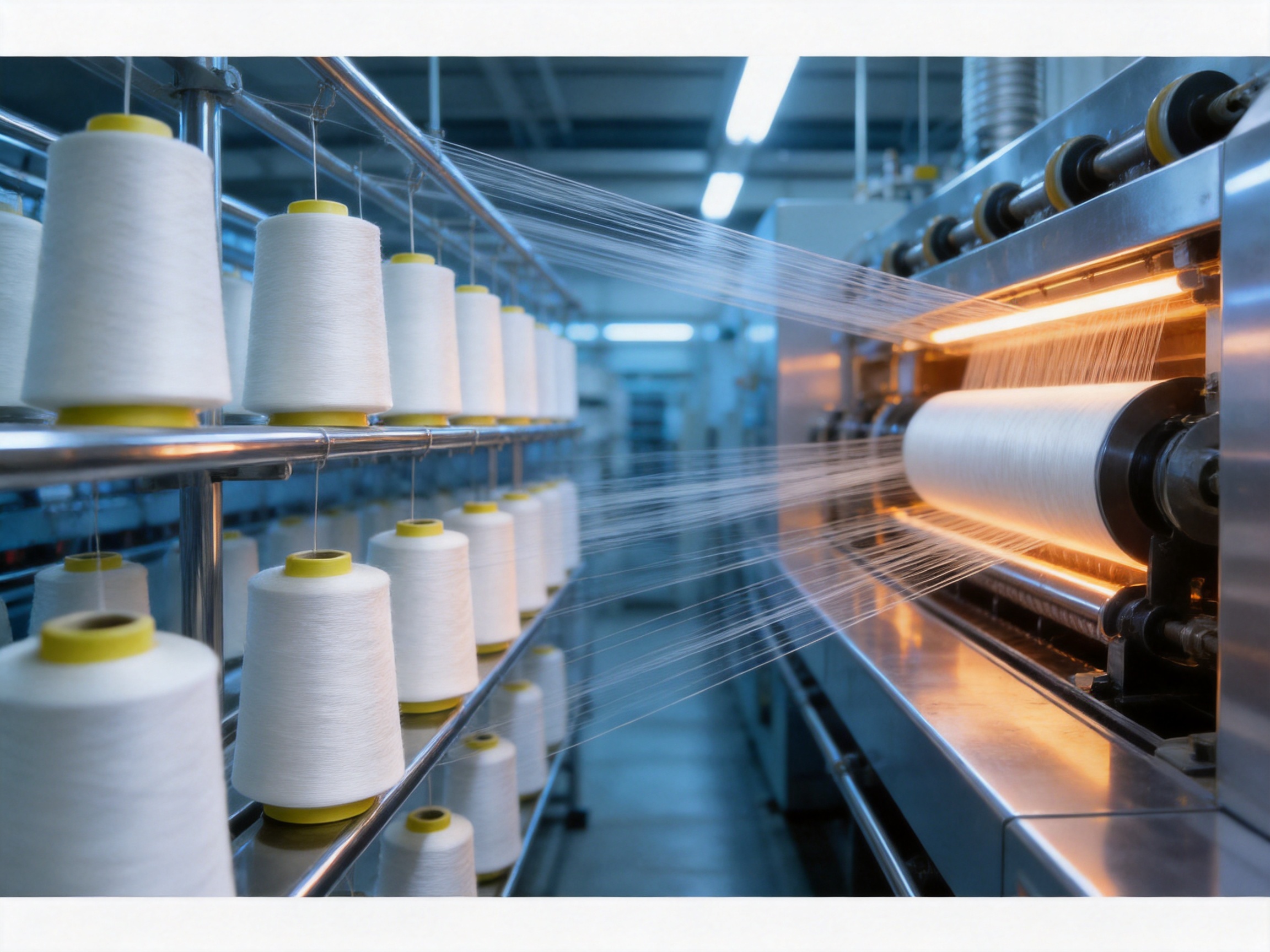
Comparison with Conventional Competitor Yarns
Many conventional polyester FDY yarns are designed mainly for strength, smoothness, and cost efficiency. They may perform well in standard weaving and knitting, but they often lack integrated safety functions. When flame-retardant properties are required, manufacturers may need to use additional finishing treatments or select special fibers with limited availability. Durable SD/FD/CD TBR Normal FDY Yarn provides a more direct route to functional fabric development by integrating safety-focused performance into the yarn concept.
Compared with yarns that rely heavily on surface finishing, this yarn offers stronger long-term functional confidence. Surface treatments may be reduced by laundering, dry friction, wet friction, or repeated bending. By contrast, a yarn designed for permanent flame-retardant behavior helps fabric producers create products with more stable performance over time.
Compared with ordinary bright or dull yarns, this product offers broader functional value. It is not limited to appearance or basic fabric formation. It supports safety, insulation, antistatic comfort, and durability. This makes it suitable for customers who need to meet higher performance expectations in end-use markets.
Compared with some specialty yarn suppliers that only provide a narrow denier range, the broader product system behind this yarn enables customers to source multiple yarn specifications for different fabric constructions. A manufacturer may need finer yarn for lightweight apparel, medium denier yarn for upholstery, and heavier yarn for industrial or decorative textiles. A wider product platform simplifies procurement and development.
Compared with competitors that focus only on domestic sales or limited service, the supplier behind this yarn has export experience across many countries and a service-oriented model. This matters because functional yarn purchasing often requires technical communication, sample confirmation, performance clarification, and problem-solving during production trials.
Typical Specification Direction
The product list includes multiple yarn series and denier/filament structures across normal, recycled, cationic, high-elastic, and functional yarn categories. For the Normal Series and related functional series, denier and filament combinations include fine, medium, and heavy options that support diverse fabric requirements. The following table summarizes representative directions relevant to product selection and development.
Product Direction |
Representative Denier/Filament Examples |
Typical Use Value |
Normal FDY and DTY Style Range |
30/12, 50/36, 75/36, 100/36, 150/48, 300/96 |
General weaving, knitting, fabric construction, and stable processing |
Semi-Dull and Full-Dull Options |
75/36-72, 150/36-48-144 |
Matte or moderate-luster fabrics for apparel, interiors, and functional textiles |
Cationic Dyeable Options |
50/48-72, 75/48-72, 100/72-144, 150/72-144 |
Two-tone effects, differentiated dyeing, and decorative fabric design |
Functional Flame-Retardant Direction |
50/48-72, 75/36-48-72, 150/48-72-96-144 |
Safety-focused textiles requiring resistance to flame spread and durable performance |
Moisture-Wicking and Comfort Direction |
30/24, 50/48-72, 75/48-72, 150/48-72 |
Comfort fabrics, active textiles, and functional apparel |
High-Elastic and PBT/PET Direction |
30/24, 50/36-72, 75/36-72, 150/72-144 |
Stretch, recovery, comfort, and performance fabric development |
This table is not a limitation of available development possibilities. The company can accept orders for different differentiation yarns, allowing customers to request specific denier, filament count, luster, dyeing behavior, and functional performance combinations according to fabric design needs.
Manufacturing Process Strength
The performance of a functional FDY yarn depends heavily on manufacturing control. Advanced yarn production is not simply a matter of melting polymer and winding filament. It requires careful raw material selection, precise polymer handling, controlled spinning conditions, accurate drawing, heat setting, stable winding, and continuous quality inspection. Each stage affects yarn strength, elongation, evenness, dyeing behavior, shrinkage, and functional reliability.
The process begins with polyester raw material selection. Polyester chips must meet requirements for viscosity, purity, moisture level, and thermal stability. Moisture control is especially important because excess moisture can degrade polymer during melting, causing reduced molecular weight, unstable spinning, filament breakage, and uneven yarn performance. Proper drying technology helps maintain polymer quality before extrusion.
For flame-retardant yarn, functional formulation control is critical. Flame-retardant performance must be achieved without severely compromising spinning stability or textile properties. A well-developed formulation balances safety performance with yarn strength, flexibility, color behavior, and downstream processability. This balance is a key difference between experienced functional yarn manufacturers and basic commodity yarn producers.
After preparation, the polymer is melted and filtered. Melt filtration removes impurities and gels that could block spinneret holes or create weak points in filaments. High-quality filtration contributes to uniform filament formation and reduces production defects. In FDY production, consistency at the spinneret directly affects yarn evenness and fabric appearance.
The spinneret forms the molten polymer into multiple fine filaments. Spinneret precision determines filament shape, count, and consistency. For special yarn effects such as bright, dull, or differentiated cross-section yarns, spinneret design and maintenance are important. Clean and accurate spinnerets help reduce broken filaments, uneven luster, and dyeing defects.
After extrusion, the filaments pass through a controlled quenching zone. Cooling conditions influence filament solidification, molecular orientation, and final yarn uniformity. Uneven cooling can create differences between filaments, leading to streaks or inconsistent dyeing in finished fabrics. Advanced production facilities control air flow, temperature, and humidity to achieve stable filament formation.
The yarn is then drawn to orient polymer molecules and develop strength. In FDY production, drawing is integrated into the spinning line. Drawing speed, draw ratio, roller temperature, and tension must be controlled precisely. Too little drawing may cause low strength and high shrinkage; too much drawing may cause brittleness or filament breakage. Proper drawing produces stable yarn suitable for direct textile use.
Heat setting helps stabilize the yarn structure and reduce unwanted shrinkage. For functional applications, heat setting must preserve both mechanical properties and flame-retardant performance. Controlled heat treatment contributes to dimensional stability in weaving, knitting, dyeing, finishing, and end-use conditions.
Winding is also a critical stage. A good package must have stable density, clean edges, appropriate tension, and smooth unwinding behavior. Poor winding can cause downstream problems such as yarn snarls, tension variation, broken ends, and machine stoppages. For customers operating high-speed weaving or knitting equipment, package quality can be as important as yarn strength.
Quality control continues throughout production. Parameters such as denier, filament count, breaking strength, elongation, oil pickup, shrinkage, evenness, appearance, and functional performance may be tested or monitored. Functional yarns require additional attention to flame-retardant durability, low smoke behavior, antistatic properties, and thermal performance depending on customer requirements.
Advanced Research and Development Capability
Functional textile yarns require research and development beyond ordinary commodity production. The company behind this product was founded in 2015 and focuses on the development and sale of differentiated yarns, including recycled yarn, polyester drop-dyed yarn, microfine yarn, flame-retardant yarn, cationic dyeing yarn, and knitting fabric products. This broad product background supports integrated technical knowledge across raw materials, spinning, dyeing behavior, fabric design, and end-use performance.
A professional research and development team is one of the company’s main strengths. The team works on environmental protection yarns, functional yarns, and fabric applications, including cooperation and discussion with internationally recognized enterprises. This R&D orientation allows the company to respond to market trends such as sustainability, fire safety, comfort, lightweight textiles, and differentiated dyeing.
For Durable SD/FD/CD TBR Normal FDY Yarn, R&D strength is reflected in the ability to balance multiple requirements. Flame retardancy must be strong, but the yarn must still be processable. Antistatic behavior must be useful, but the yarn must still meet fabric design expectations. Thermal insulation must support protection, but the fabric must remain practical for target applications. Such balance is achieved through formulation development, process optimization, and repeated application testing.
The company’s ability to provide customized or differentiated yarn orders is especially valuable. Many textile manufacturers do not need a single standard yarn; they need a yarn that matches a specific machine, fabric structure, dyeing process, finishing route, or end-user standard. A supplier with R&D capability can help adjust yarn specifications and provide technical recommendations during product development.
Quality Control and Consistency
Consistency is one of the most important purchasing criteria for FDY yarn. A yarn may perform well in a sample test but fail in mass production if batch-to-batch variation is high. Durable SD/FD/CD TBR Normal FDY Yarn is supported by a manufacturing approach that emphasizes stable properties and reliable quality control.
Denier consistency affects fabric weight, cover, strength, and appearance. If denier variation is too large, finished fabrics may show streaks, uneven texture, or unstable hand feel. Filament consistency affects softness, luster, and surface smoothness. Proper spinning and drawing control reduce variation and help maintain fabric uniformity.
Tension consistency is also important. During weaving or knitting, yarn tension changes can cause broken ends, loops, needle problems, or uneven fabric density. FDY yarn with stable winding and controlled package formation can improve production efficiency and reduce waste.
Dyeing consistency is essential for SD, FD, CD, and TBR yarn types. Semi-dull and full-dull yarns must maintain uniform delustering behavior. Cationic dyeable yarn must provide predictable dye uptake. Bright yarns must show consistent luster. Any variation can become visible in finished fabric, especially in large production lots.
For flame-retardant yarn, functional consistency is even more important than appearance consistency. A safety-focused yarn must deliver reliable flame-retardant behavior across production batches. Customers producing protective or interior textiles may need to validate fabric performance through relevant tests. Stable yarn quality helps improve the likelihood of repeatable fabric results.
Application in Room and Vehicle Interior Materials
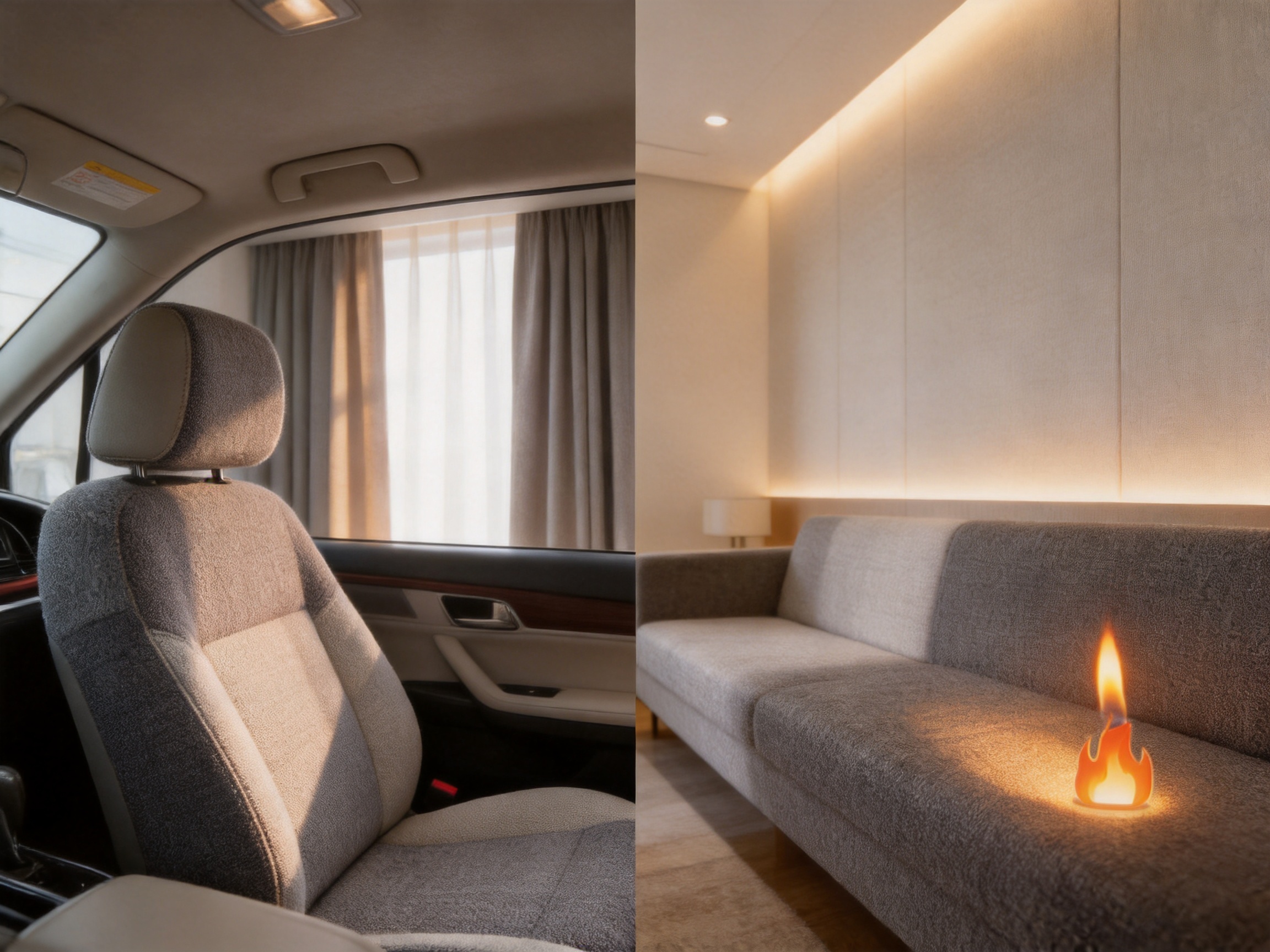
One of the key application areas for Durable SD/FD/CD TBR Normal FDY Yarn is room and vehicle interior decoration material. Interior textiles must satisfy both aesthetic and safety demands. They are used in spaces where people live, work, travel, and gather, so flame behavior and smoke release can be important performance factors.
In room interiors, the yarn can be used in decorative fabrics, wall coverings, curtains, upholstery, partition textiles, and other fabric-based materials. These products may require attractive appearance, durability, and resistance to flame spread. The availability of semi-dull, full-dull, cationic dyeable, and bright effects gives designers flexibility to create different interior styles.
In vehicle interiors, textile materials must withstand abrasion, temperature variation, sunlight exposure, cleaning, and long-term use. Automotive cabins also place strong emphasis on fire safety and low smoke behavior. A flame-retardant FDY yarn with durable performance can support the development of seat fabrics, headliner materials, side panel textiles, trunk fabrics, and decorative interior components.
Compared with ordinary polyester yarn, this functional FDY yarn provides a more suitable foundation for safety-conscious interior materials. Instead of relying only on post-finishing, fabric developers can begin with a yarn that already supports flame-retardant performance. This can simplify product engineering and improve confidence in long-term use.
Application in Clothing Production
Clothing production is another important application area. Functional apparel markets are expanding as consumers and professional users demand garments with safety, comfort, durability, and easy care. Durable SD/FD/CD TBR Normal FDY Yarn can be used in fabrics for workwear, uniforms, outdoor garments, protective layers, and specialty clothing.
For clothing, permanent flame-retardant performance is highly valuable. Garments are frequently washed and exposed to friction during wearing. If flame-retardant properties depend only on surface finishing, repeated laundering may reduce effectiveness. A yarn with durable flame-retardant behavior can help maintain protective performance for a longer time.
Antistatic performance improves wearing comfort and practicality. Static buildup can cause garments to cling, attract dust, or create discomfort in dry environments. In some work settings, static control is also a safety consideration. The antistatic property of the yarn helps support more comfortable and practical clothing.
Thermal insulation adds another benefit. For protective garments or uniforms used in variable environments, insulation can help improve comfort and protection. When combined with appropriate fabric design, the yarn can contribute to a balanced garment system.
The availability of different luster and dyeing options also supports apparel design. Full-dull yarn may be suitable for professional uniforms with a matte appearance. Semi-dull yarn may be used for general functional garments. Cationic dyeable yarn can create color contrast or heather effects. TBR-type bright yarn may be used where a more vivid visual effect is desired.
Application in Military and Professional Supplies
Military supplies and professional protective textiles require a high level of reliability. Materials may be exposed to harsh environments, repeated use, abrasion, heat, and strict performance expectations. Durable SD/FD/CD TBR Normal FDY Yarn is suitable for such fields because it combines safety, durability, thermal protection, and antistatic performance.
In military-related textile applications, flame-retardant performance can be a critical requirement. Fabrics may be used in uniforms, equipment covers, interior materials, bags, or other textile components. The ability to prevent rapid flame spread and resist melting supports safer material design.
Durability is also essential in professional supplies. A yarn that fails quickly under friction or repeated handling is not suitable for demanding use. The structural stability of FDY and the durability of this product help support long service life.
Antistatic behavior may be useful in specialized environments where static discharge is undesirable. Thermal insulation can support protection in conditions where heat exposure or temperature management matters. These combined properties make the yarn more versatile than ordinary FDY yarn.
Fabric Design Flexibility
One of the strongest commercial advantages of this yarn is its fabric design flexibility. Safety-focused yarns sometimes limit designers because they may have poor dyeing behavior, limited luster options, stiff hand feel, or narrow specification ranges. Durable SD/FD/CD TBR Normal FDY Yarn is positioned to support multiple design directions while maintaining functional value.
For woven fabrics, FDY yarn can provide clean structure, smooth surface, and stable dimensional behavior. It may be used as warp or weft depending on fabric construction. The yarn’s strength and stability help reduce production issues in weaving, especially when package quality and tension control are well managed.
For knitted fabrics, FDY yarn can contribute to smooth texture, stable loops, and functional surface effects. Depending on the fabric design, it may be combined with other yarns such as DTY, high-elastic yarn, cationic yarn, or moisture-wicking yarn to create composite functionality.
For decorative textiles, appearance options are important. Semi-dull yarn creates a refined moderate luster. Full-dull yarn creates a soft matte effect. Cationic dyeable yarn enables color variation. Bright yarn can create visual highlights. These options allow fabric designers to create marketable products without abandoning safety features.
For technical textiles, performance consistency is the priority. Stable denier, controlled elongation, durable flame-retardant behavior, and antistatic properties help technical fabric manufacturers achieve repeatable results. This is valuable for customers who must meet internal specifications or external testing requirements.
Sustainability and Responsible Textile Development
The textile industry is increasingly focused on sustainability, responsible sourcing, durability, and functional efficiency. While this product is categorized as Normal FDY Yarn, it is supported by a company that also develops recycled yarn and environmental protection yarn solutions. This broader capability reflects a modern approach to textile development.
Durability itself contributes to sustainability. A longer-lasting textile product may reduce replacement frequency and material waste. If a flame-retardant fabric maintains performance after washing and friction, it may remain useful for a longer period than a product with rapidly declining functionality.
Efficient production also supports responsible manufacturing. Stable spinning, low defect rates, reduced yarn breakage, and consistent quality can reduce waste during textile manufacturing. Downstream customers benefit from fewer machine stoppages, fewer rejected fabrics, and better production planning.
The ability to develop differentiated yarns also supports more precise material use. Instead of overengineering a fabric with unnecessary layers or heavy finishes, manufacturers can select a yarn that directly provides required performance. This can help optimize fabric weight, comfort, and resource efficiency.
Company Strengths Supporting the Product
Suzhou Junhui Textile Co., Ltd. and Suzhou Xiaoran New Material Co., Ltd. are committed to the development and sale of differentiated yarns and functional textile materials. Since being founded in 2015, the organization has built a product system covering recycled yarn, polyester drop-dyed yarn, microfine yarn, flame-retardant yarn, cationic dyeing yarn, and knitting fabric products.
The company’s export experience is a major strength. With more than 90 percent of products exported and customers in 36 countries, the company understands international textile supply requirements, communication standards, and quality expectations. This global service experience is especially important for functional yarn customers who need reliable delivery and technical support.
The company emphasizes customer success as its foundation. For buyers, this means more than receiving yarn. It means access to guidance in product selection, specification matching, problem analysis, and application development. The company’s experts are positioned to provide support within 12 hours globally, helping customers solve technical and procurement challenges quickly.
The company’s R&D team supports cooperation with recognized enterprises in the research, development, and application of environmental protection yarns, functional yarns, and fabrics. This collaborative approach helps the company remain aligned with market trends and technical requirements.
Another company advantage is product breadth. Customers can source normal yarn, recycled yarn, cationic yarn, high-elastic yarn, functional yarn, antibacterial yarn, moisture-wicking yarn, hollow warm yarn, and other differentiated yarn types. This broad catalog allows customers to develop integrated fabric systems using multiple compatible yarns from one supplier.
Why This Yarn Offers Strong Competitive Value
Durable SD/FD/CD TBR Normal FDY Yarn offers competitive value because it solves several problems at the same time. Many customers need flame-retardant yarn, but they also need attractive appearance, stable processing, dyeing flexibility, durability, and reliable supply. This yarn addresses these needs through a combined functional and production-oriented approach.
Its permanent flame-retardant effect helps differentiate it from products that depend mainly on temporary finishing. Its low smoke and melting resistance support safer textile design. Its thermal insulation and antistatic performance add practical comfort and protection. Its FDY structure supports stable weaving and knitting. Its SD, FD, CD, and TBR options support aesthetic versatility.
From a supply perspective, the company’s experience in differentiated yarns provides an advantage over commodity suppliers. Functional yarns require technical knowledge, not only production capacity. Customers benefit when their supplier can discuss application requirements, recommend suitable yarn structures, and support product development from sample stage to bulk production.
For wholesalers, fabric mills, apparel producers, interior material manufacturers, and technical textile developers, this yarn offers a practical way to improve product value. It can help create fabrics that are safer, more durable, more attractive, and more competitive in demanding markets.
Processing Recommendations for Customers
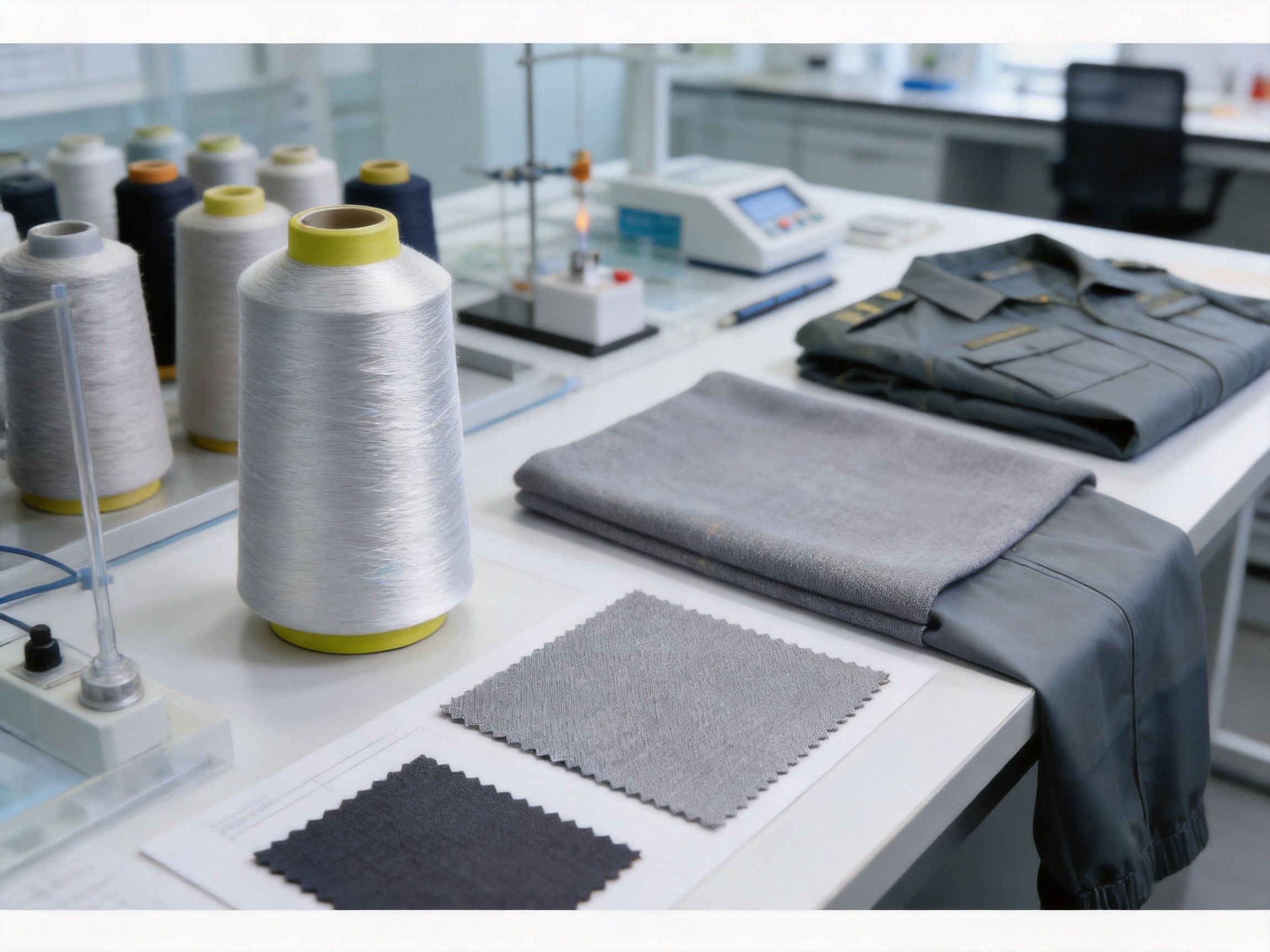
Customers using Durable SD/FD/CD TBR Normal FDY Yarn should select specifications according to final fabric requirements. Fine denier yarns are suitable for lightweight fabrics, soft hand feel, and refined textures. Medium denier yarns are suitable for apparel, upholstery, and decorative materials. Higher denier yarns can support heavier fabrics, stronger structures, and technical applications.
Before bulk production, customers should conduct sample trials in weaving, knitting, dyeing, finishing, and performance testing. Functional yarn behavior can be influenced by fabric structure, yarn density, finishing temperature, coating, lamination, and washing conditions. Testing the final fabric system is the best way to confirm performance for a specific application.
Dyeing and finishing processes should be selected carefully, especially for cationic dyeable or mixed-yarn fabrics. Temperature, pH, dye type, and finishing chemicals may affect fabric appearance and performance. Customers should communicate target standards and processing routes with the supplier to receive appropriate technical suggestions.
For flame-retardant applications, final fabric testing is essential. Yarn-level flame-retardant performance is important, but end-use compliance often depends on the complete fabric structure and finishing system. Customers should test according to relevant industry standards for their markets, such as apparel, upholstery, transportation, or protective textile standards.
Storage and Handling
Proper storage and handling help preserve yarn quality before production. Yarn packages should be stored in a clean, dry, and ventilated environment. Direct sunlight, excessive humidity, high temperature, dust, and chemical contamination should be avoided. Stable storage conditions help maintain package quality and reduce unwinding problems.
During handling, packages should not be dropped, compressed, or damaged. Deformed packages may cause tension variation during unwinding. Operators should also avoid contact with oil, dirt, and sharp objects. Good warehouse management supports smooth production and reduces waste.
Before use, yarn packages should be conditioned to the production environment if necessary. Temperature and humidity differences between storage and workshop areas can affect static behavior and unwinding performance. Controlled conditioning can improve processing stability.
Q&A Section
What is Durable SD/FD/CD TBR Normal FDY Yarn?
It is a fully drawn polyester filament yarn designed for functional textile applications. It combines stable FDY processing properties with flame-retardant behavior, low smoke release, melting resistance, durability, thermal insulation, and antistatic performance.
What does FDY mean?
FDY means Fully Drawn Yarn. It is produced through a spinning and drawing process that gives the yarn stable molecular orientation and physical properties. FDY can generally be used directly in weaving or knitting without additional drawing.
What are the main advantages of this yarn?
The main advantages include permanent flame-retardant effect, resistance to flame spread, low smoke release, melting resistance, good durability, thermal insulation, antistatic performance, stable processing, and flexible appearance options.
How is this yarn different from ordinary polyester FDY?
Ordinary polyester FDY is usually designed for general textile production. This yarn adds safety and functional properties, making it more suitable for interiors, clothing, military supplies, and other applications requiring enhanced protection and durability.
Does washing affect the flame-retardant performance?
The yarn is designed with a permanent flame-retardant effect. Washing and friction do not easily diminish its flame-retardant performance, making it suitable for reusable fabrics and garments.
What applications are suitable for this yarn?
It can be used in room interior materials, vehicle interior decoration, clothing production, workwear, uniforms, military supplies, upholstery, decorative fabrics, and other functional textile products.
What is the value of antistatic performance?
Antistatic performance helps reduce static buildup, improving comfort and practicality. It can also be useful in environments where static control is important.
Can this yarn support different fabric appearances?
Yes. SD, FD, CD, and TBR options support semi-dull, full-dull, cationic dyeable, and bright-style effects. This gives designers more flexibility in fabric appearance and dyeing effects.
Why is low smoke release important?
In fire situations, smoke can create serious safety risks. A yarn that supports low smoke behavior can contribute to safer textile systems, especially in enclosed spaces such as rooms and vehicles.
Can customers request customized yarn specifications?
Yes. The company can accept orders for different differentiated yarns. Customers may discuss denier, filament count, luster, dyeing behavior, and functional requirements according to their fabric development needs.
Conclusion
Durable SD/FD/CD TBR Normal FDY Yarn is a strong choice for textile manufacturers seeking more than basic filament yarn. It combines the stable processing benefits of FDY with safety-focused functions such as flame retardancy, low smoke release, melting resistance, thermal insulation, antistatic performance, and long-term durability. These features make it suitable for interior materials, automotive textiles, clothing production, military supplies, and professional functional fabrics.
Its competitive advantage comes from the integration of performance and flexibility. The yarn can support different surface appearances and dyeing effects while maintaining durable functional value. Compared with ordinary polyester yarns or temporary finishing-based solutions, it offers better long-term reliability for customers who need stable safety performance.
The company’s manufacturing strength, R&D capability, international export experience, and broad differentiated yarn portfolio further enhance the product’s value. With technical support, customization capability, and a service-oriented approach, the product is well positioned for fabric mills, wholesalers, apparel manufacturers, interior textile producers, and technical textile developers seeking dependable functional yarn solutions.
References
1. Textile Institute. Textile Terms and Definitions. Textile Institute Publications.
2. Hearle, J. W. S. High-Performance Fibres. Woodhead Publishing.
3. Horrocks, A. R., and Price, D. Fire Retardant Materials. Woodhead Publishing.
4. Deopura, B. L., Alagirusamy, R., Joshi, M., and Gupta, B. Polyesters and Polyamides. Woodhead Publishing.
5. Morton, W. E., and Hearle, J. W. S. Physical Properties of Textile Fibres. Woodhead Publishing.
6. Fung, W. Coated and Laminated Textiles. Woodhead Publishing.
Product: Durable SD/FD/CD TBR Normal FDY Yarn

Popular products
-
Premium Cationic Interlock Stretch Comfort Fabric
-
Moisture-Wicking Nylon Woven Fabric
-
Double-faced jacquard elastic fabric
-
Heather Grey Double-faced cationic jersey fabric
-
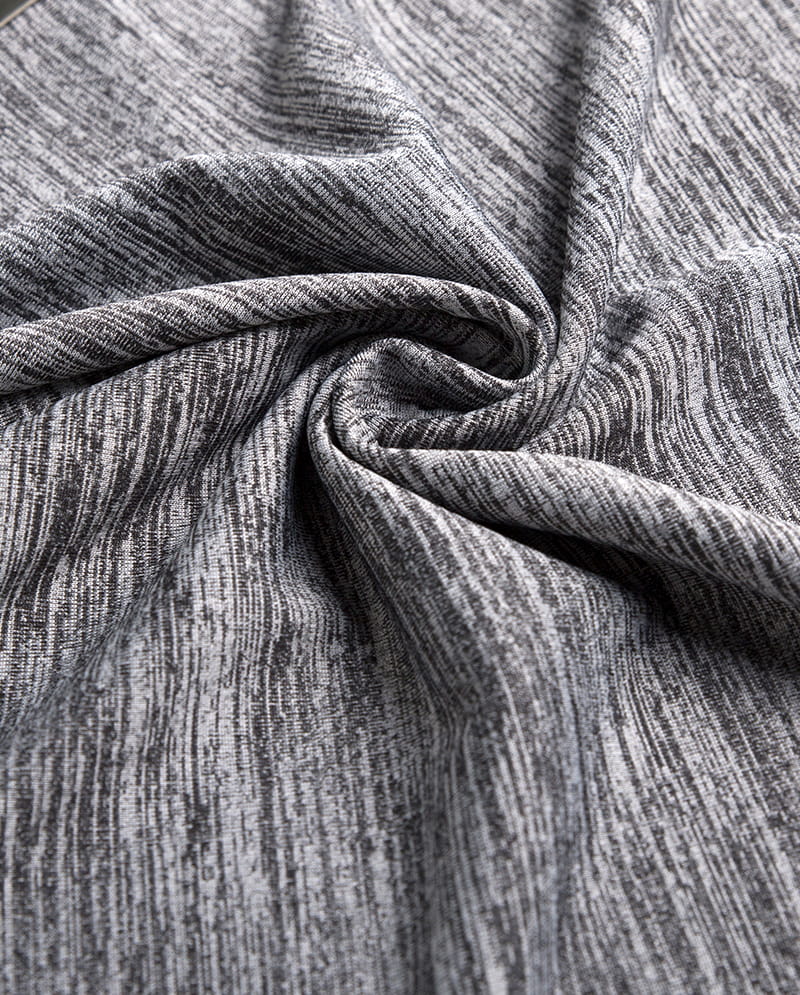
Anti-static Cationic Knitted Rib Fabric
-
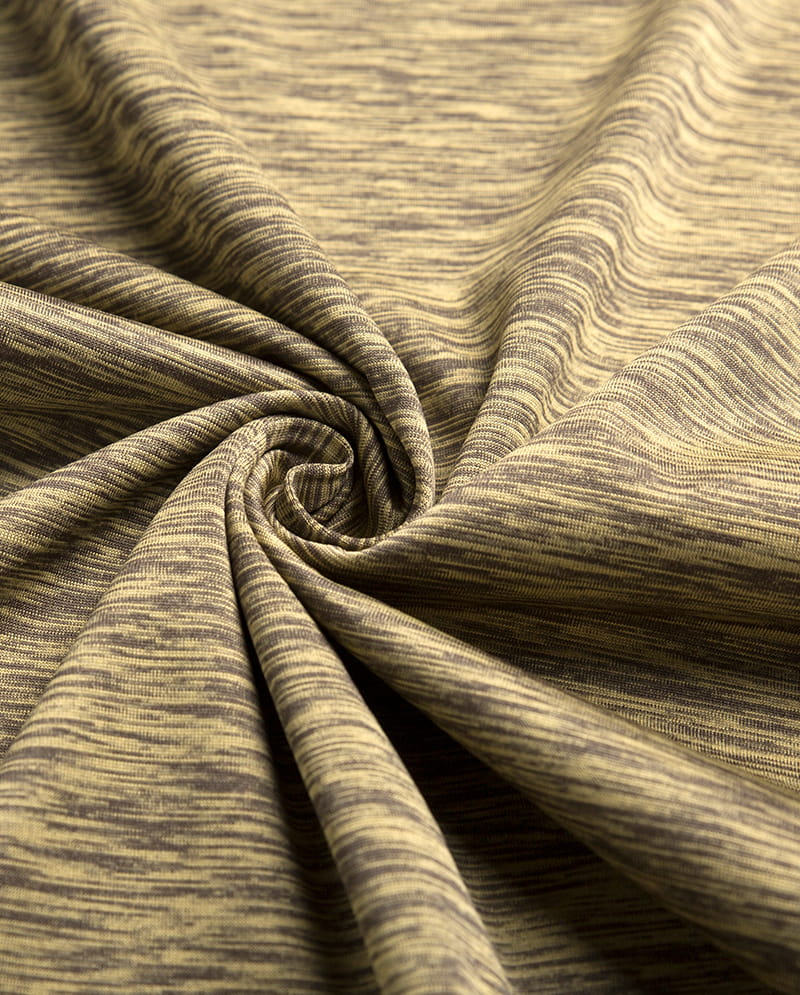
High-Stretch Cationic Jersey Fabric
-
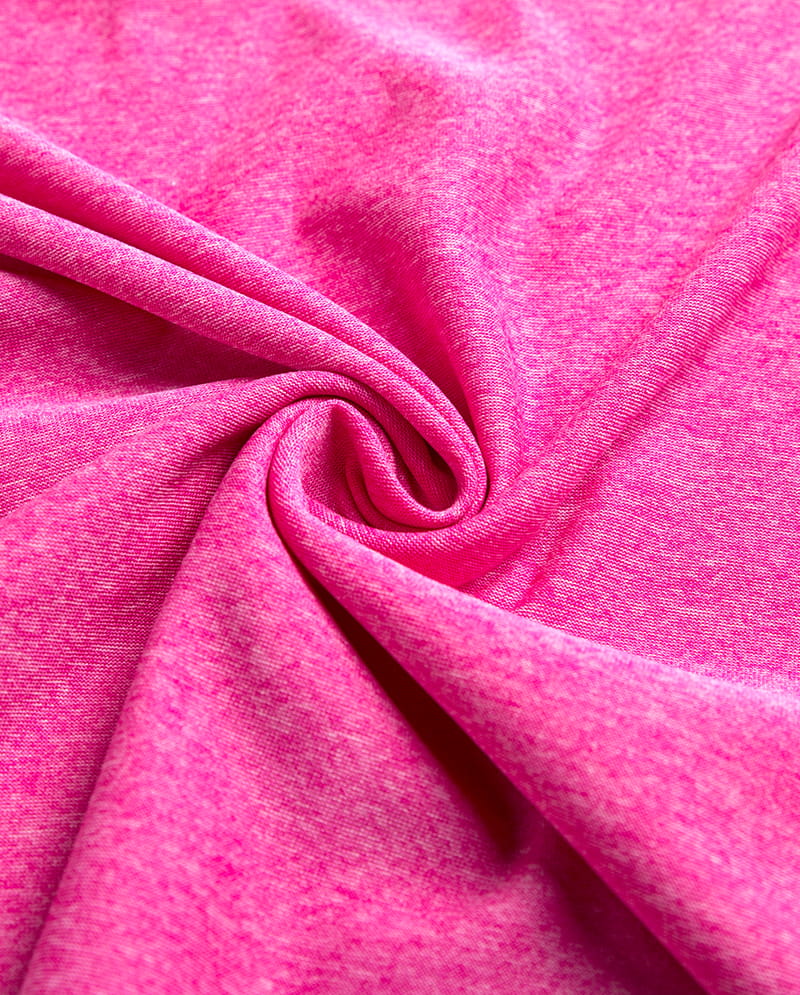
High Quality Cationic DTY Spandex Two Sides Brush Dralon Knit Fabric for Garment Thermal Underwear
-
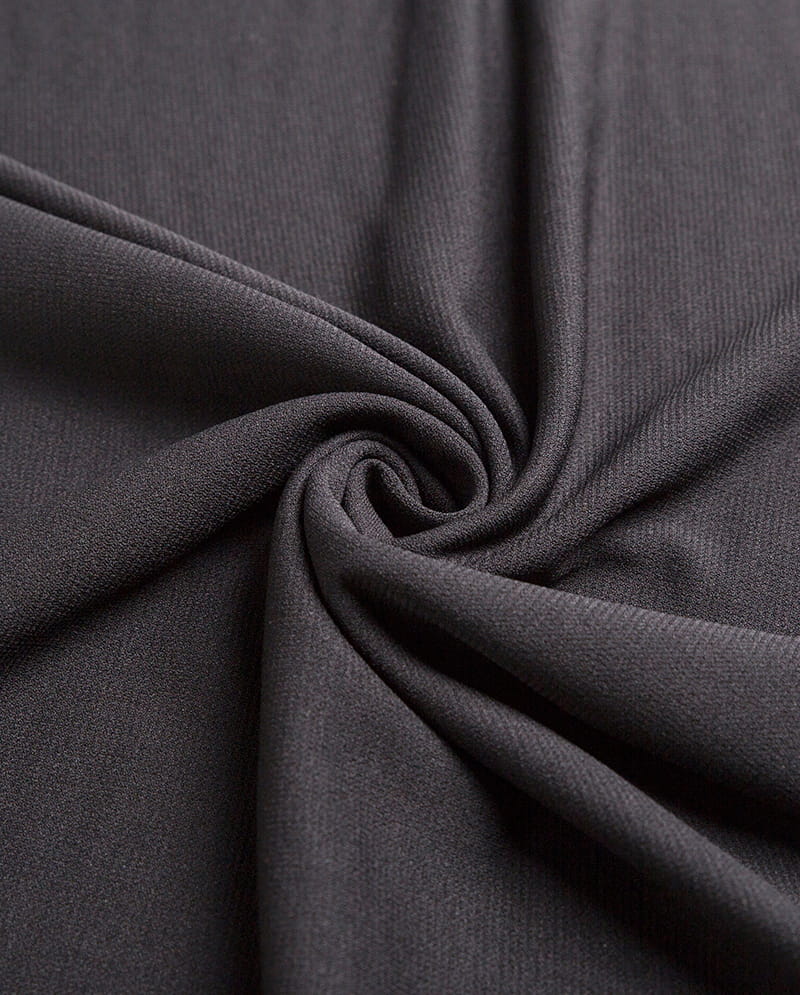
Durable Anti-Pilling Knitted Fabric for Home Textiles
-
Wash-Resistant Cationic Elastic Knitted Fabric for Garment Industry
-
Breathable Double-Faced Elastic Composite Fabric
-
-
-
- whatsapp:
- 0086-13962559622
-
- skype:
- skype.aliceshenghong
-
- Wechat:

COPYRIGHT © 2016 Suzhou Junhui Textile Co., Ltd.
