

 EN
EN English
 中文简体
中文简体Durable Anti-Pilling ACY Functional Yarn: Advanced Performance for Sportswear and Everyday Textiles
Content
- 1 1. Understanding Durable Anti-Pilling ACY
- 2 2. Core Product Advantages
- 3 3. Product Specifications and Available Options
- 4 4. Advanced Manufacturing Process
- 5 5. Why ACY Can Outperform Conventional Alternatives
- 6 6. Applications in Apparel and Textiles
- 7 7. Combining ACY with Other Functional Yarn Technologies
- 8 8. Manufacturing and R&D Strengths
- 9 9. Quality and Performance Evaluation
- 10 10. Sustainability and Material Flexibility
- 11 11. Product Development Guidance
- 12 12. Advantages for International Buyers
- 13 13. Packaging, Storage, and Handling Considerations
- 14 14. A Practical Value Proposition
- 15 15. Frequently Asked Questions
- 15.1 Q1: What is Durable Anti-Pilling ACY?
- 15.2 Q2: How is ACY manufactured?
- 15.3 Q3: Is ACY suitable for sportswear?
- 15.4 Q4: Can ACY be used for underwear?
- 15.5 Q5: What does the specification 40+75/36-72 mean?
- 15.6 Q6: Does anti-pilling yarn guarantee that a fabric will never pill?
- 15.7 Q7: Can the yarn be customized?
- 15.8 Q8: Can ACY be combined with recycled yarn?
- 15.9 Q9: What other functional yarns are available?
- 15.10 Q10: What should buyers test before bulk purchasing?
- 15.11 Q11: Where is the supplier located?
- 15.12 Q12: How can customers request technical support?
- 16 16. Conclusion
- 17 References
- 18 Product: Durable Anti-Pilling ACY (AIR COVERED YARN) Functional Yarn
In modern textile manufacturing, yarn must provide more than basic strength and color. Garment manufacturers, knitting mills, and apparel brands increasingly require materials that combine elasticity, softness, dimensional stability, abrasion resistance, easy processing, and reliable performance after repeated washing. Durable Anti-Pilling ACY, or Air Covered Yarn, is designed to meet these demands through a carefully engineered combination of an elastic spandex core and a polyester or nylon covering layer.
Air Covered Yarn is a specialized composite yarn in which the covering filament is wrapped around the elastic core through controlled air-jet processing. This construction creates a balanced yarn structure that can stretch with body movement while retaining recovery, surface smoothness, and processing stability. In the product described here, an anti-pilling treatment further improves the yarn’s resistance to fiber entanglement, fuzz formation, and surface deterioration during repeated wear and laundering.
The result is a functional yarn suitable for sportswear, casual apparel, knitwear, underwear, leggings, stretch fabrics, and other products where comfort and long-term appearance are essential. Its performance is especially valuable in high-stress areas such as knees, elbows, waistbands, cuffs, and seat panels, where ordinary yarns may be exposed to repeated stretching and friction.
Manufactured by Suzhou Junhui Textile Co., Ltd. and Suzhou Xiaoran New Materials Co., Ltd., the product benefits from a broader development platform covering recycled yarn, polyester dope-dyed yarn, microfine yarn, flame-retardant yarn, cationic-dyeable yarn, high-elastic yarn, moisture-wicking yarn, antibacterial yarn, and other differentiated textile materials. This product range supports flexible material selection and provides customers with access to a coordinated textile supply capability.
1. Understanding Durable Anti-Pilling ACY
ACY stands for Air Covered Yarn. Unlike a conventional single-component filament yarn, ACY is constructed from at least two functional elements: an elastic core and an outer covering filament. The core generally consists of spandex, which provides stretch and recovery. The outer layer may be polyester or nylon, selected according to the intended fabric structure, hand feel, durability, dyeing requirements, and end use.
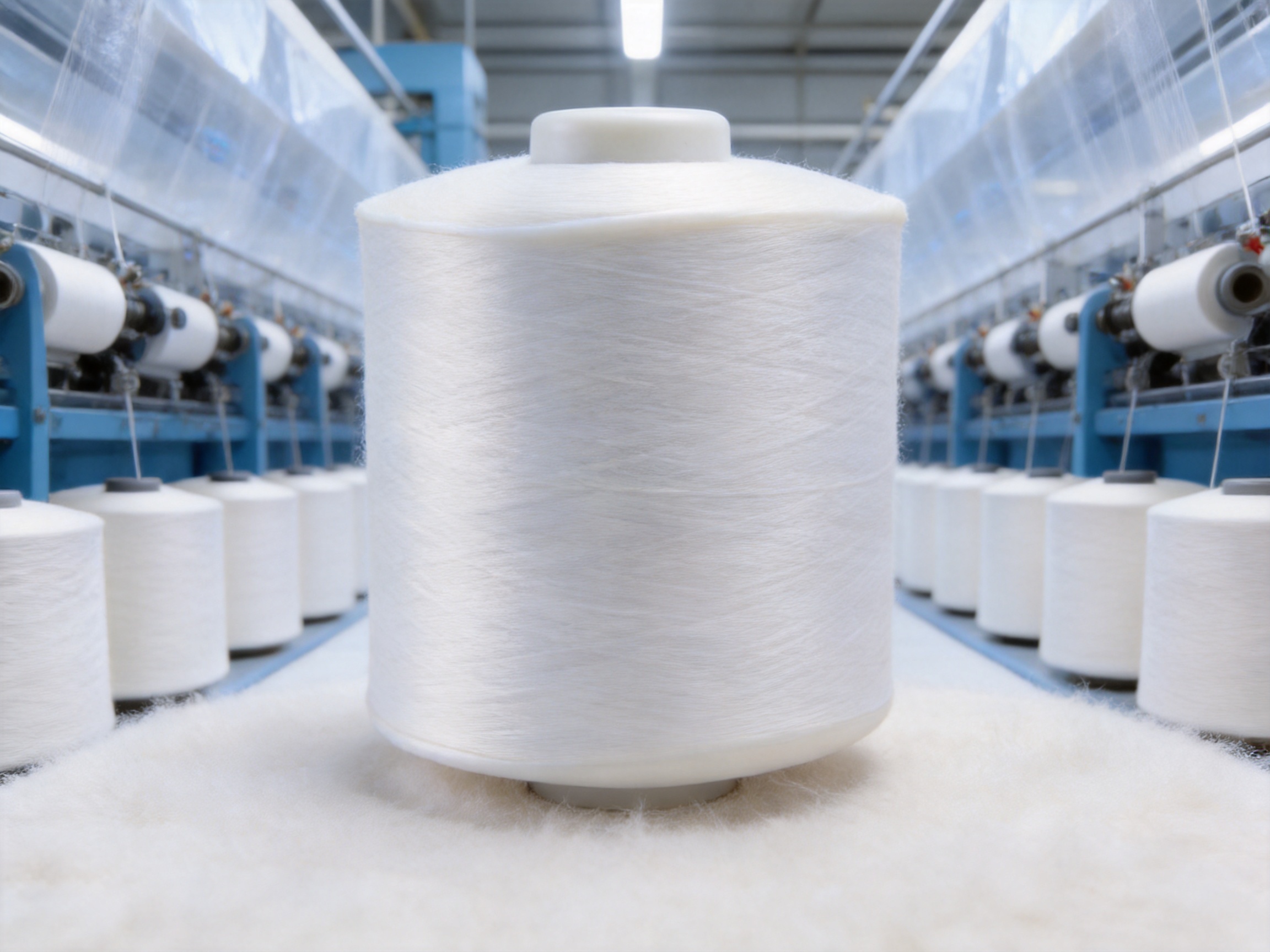
During manufacturing, the covering filament is guided around the elastic core by a controlled air stream. The air-jet process creates intermittent or continuous entanglement points that hold the components together. This method is different from traditional mechanical twisting. It can produce a soft, flexible yarn while maintaining good cohesion between the core and covering filament.
The air-covering structure is important because the elastic core alone may be difficult to process, dye, knit, or weave consistently. The outer filament protects and stabilizes the core, improves handling, and contributes to the visible and tactile characteristics of the finished yarn. The covering also helps reduce direct exposure of the elastic component to abrasion and processing stress.
The anti-pilling function adds another level of performance. Pilling occurs when loose fibers or filaments migrate to the fabric surface, become entangled, and form small balls or pills under rubbing. Pilling can negatively affect appearance and consumer perception even when the fabric remains structurally serviceable. By minimizing fiber tangling and improving surface stability, anti-pilling ACY helps fabrics maintain a cleaner, smoother appearance throughout their service life.
Durability is not limited to tensile strength. For stretch textiles, durability also includes recovery after extension, resistance to repeated deformation, stable covering performance, abrasion resistance, and the ability to retain a pleasant surface after washing. Durable Anti-Pilling ACY is developed around this broader definition of performance.
2. Core Product Advantages
2.1 Reliable Elasticity and Recovery
The spandex core gives ACY its fundamental stretch capability. It allows the yarn and the resulting fabric to extend with body movement, supporting close-fitting garments and activewear designs. When the stress is removed, the elastic core helps the fabric return toward its original dimensions.
This elasticity is useful in sportswear, compression-inspired garments, stretch leggings, underwear, socks, waistbands, cuffs, and fitted knitwear. It enables designers to create garments that follow the body without restricting movement. It also improves comfort during walking, exercise, bending, sitting, and other repeated activities.
Recovery is equally important. A yarn that stretches but does not recover adequately may lead to bagging, loose knees, distorted elbows, or a deformed waistband. ACY is designed to balance extensibility and resilience so that the fabric can maintain its intended shape more effectively than a non-elastic yarn construction.
2.2 Anti-Pilling Surface Performance
The product’s anti-pilling treatment is intended to reduce surface fiber entanglement. This is particularly valuable for garments that experience repeated contact with skin, bags, furniture, equipment, or other clothing. Sportswear and casualwear often undergo frequent washing and intense use, making surface appearance a major quality consideration.
A smoother surface can contribute to a more premium appearance and a more consistent hand feel. Reduced pilling can also extend the practical and visual service life of the fabric, helping finished garments remain attractive for a longer period. This advantage can support brands that prioritize durability, product longevity, and reduced replacement frequency.
Anti-pilling performance depends on the complete textile system, including fiber selection, yarn structure, knitting or weaving conditions, dyeing and finishing, garment construction, and laundering. Therefore, ACY should be evaluated in the target fabric and application. Nevertheless, the yarn’s controlled covering structure and anti-pilling treatment provide a strong foundation for developing low-pilling textiles.
2.3 Soft and Skin-Friendly Handle
Although the yarn is designed for durability, it is not intended to sacrifice comfort. The polyester or nylon outer layer contributes to a soft and smooth touch, while the elastic core provides flexibility rather than stiffness. This combination makes the yarn suitable for garments worn directly against the skin, including underwear, base layers, fitted tops, and lightweight sportswear.
Softness is particularly important in products used during exercise, when perspiration, movement, and extended contact can increase sensitivity to rough or abrasive surfaces. A smooth yarn can improve the perceived quality of the finished fabric and support more comfortable daily wear.
2.4 Abrasion Resistance
Active and casual garments are often exposed to repeated friction. Areas around the knees, elbows, hips, inner thighs, cuffs, and waist may experience more wear than other parts of a garment. The covering filament in ACY contributes to surface protection and helps the composite yarn withstand daily handling and processing.
Good abrasion resistance supports longer fabric life and helps preserve fabric appearance. It may also reduce breakage or surface damage during knitting and other converting operations when the yarn is correctly matched with machine settings and fabric construction.
2.5 Dimensional Stability
Elastic fabrics must maintain a reasonable balance between stretch and dimensional control. Excessive deformation can cause garments to lose their original fit, while insufficient elasticity can reduce comfort. ACY helps fabric developers adjust this balance by selecting suitable core ratios, covering specifications, and fabric structures.
The product is suitable for applications where fabric recovery and shape retention are important. This includes fitted sportswear, stretch knitwear, underwear, casual trousers, performance tops, and garments with high-mobility design features.
2.6 Compatibility with Different Textile Applications
ACY can be integrated into a range of fabric constructions and product categories. It may be used as a functional elastic component in knitted fabrics, stretch panels, rib structures, athletic garments, seamless products, and selected woven or warp-knitted constructions.
Its versatility allows textile manufacturers to develop materials with different weights, stretch levels, covering effects, and surface appearances. Depending on the selected specification, ACY can support lightweight apparel, medium-weight daily clothing, stretch accessories, and more demanding performance garments.
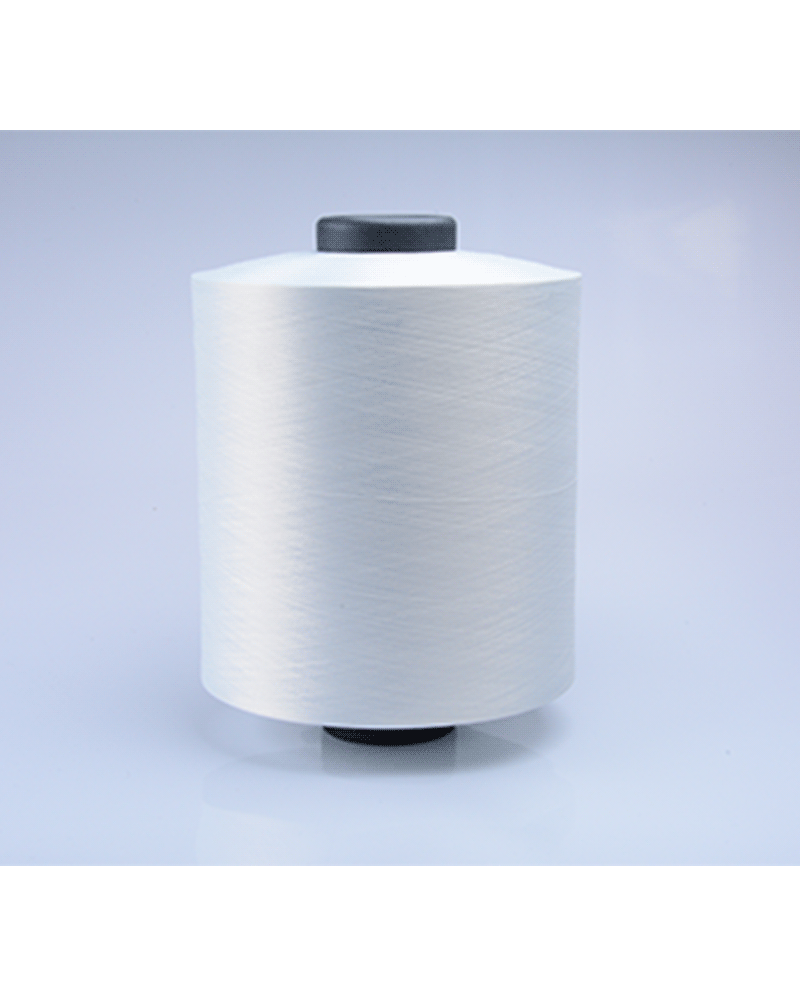
Durable Anti-Pilling ACY (AIR COVERED YARN) Functional Yarn
3. Product Specifications and Available Options
The available ACY specifications include combinations such as 40+75/36-72, 30+100/96, and 40+150/48-96-144. In these designations, the numbers generally indicate the denier and filament configuration of the component yarns. Exact interpretation should be confirmed with the supplier according to the selected product code, core material, covering material, and production standard.
Product Type |
Representative Specifications |
Typical Application Direction |
ACY Air Covered Yarn |
40+75/36-72 |
Lightweight stretch knitwear, sportswear, fitted apparel |
ACY Air Covered Yarn |
30+100/96 |
Stretch fabrics requiring a balanced covering and elastic core |
ACY Air Covered Yarn |
40+150/48-96-144 |
Medium-weight fabrics, durable apparel, high-stress garment areas |
Anti-Pilling Functional Yarn |
Customized combinations available |
Products requiring enhanced surface stability and appearance retention |
The company also provides a broad portfolio of related yarns. Recycled SD DTY, recycled SD FDY, recycled FD DTY, recycled SD plus CD DTY, recycled DDB DTY, and recycled CD DTY are available in multiple denier and filament combinations. The normal series includes SD DTY, FD DTY, and SD DDB yarns. CD yarns, white and black yarns, high-elastic yarns, PBT/PET yarns, and PBT/PET DDB yarns further expand the selection.
Functional options include flame-retardant yarn, antibacterial yarn, moisture-wicking yarn, cotton-like yarn, hollow warm yarn, and ACY. This portfolio makes it possible to combine elasticity with other performance characteristics. For example, a fabric developer may evaluate an elastic yarn for a sports garment, a moisture-wicking yarn for improved comfort, or a recycled yarn for environmental positioning.
The product list states that orders for different types of differentiated yarn can be accepted. This is important for customers who require customized denier, filament count, color, functional treatment, or material combination. Product selection should be confirmed through technical consultation and sample evaluation before bulk production.
4. Advanced Manufacturing Process
4.1 Raw Material Selection
Manufacturing performance begins with material selection. The elastic core must provide consistent elongation and recovery, while the outer polyester or nylon filament must meet requirements for strength, surface quality, uniformity, and process compatibility.
Material selection may also consider dyeability, moisture management, hand feel, environmental objectives, and end-use performance. Polyester is widely used for its strength, dimensional stability, abrasion resistance, and broad processing compatibility. Nylon can provide a different balance of softness, strength, and tactile performance. The appropriate covering material depends on the customer’s fabric design and finishing route.
4.2 Precision Preparation of the Elastic Core
The spandex core must be fed under controlled tension. Excessive tension can influence yarn elongation and final fabric behavior, while insufficient control may cause irregular covering or unstable yarn formation. Consistent feeding is therefore essential for a uniform composite structure.
Before covering, the core material is prepared according to the selected specification. The production team must coordinate core size, draft, feed rate, and covering filament parameters. These variables influence stretch, recovery, apparent yarn size, and the balance between the core and outer layer.
4.3 Air-Jet Covering
The defining process is air covering. A high-speed air stream guides and entangles the outer filament around the elastic core. This creates a stable composite yarn without relying solely on conventional twisting. The air-jet process can be adjusted to achieve the required level of cohesion and surface coverage.
Controlled air pressure, nozzle condition, feed speed, core draft, and filament tension all influence the final result. Stable process control helps maintain regularity along the yarn length and reduces the risk of bare core exposure, uneven covering, excessive loops, or inconsistent stretch behavior.
Air covering can provide a soft and flexible yarn structure. Because the process is based on controlled entanglement, it can support a comfortable hand feel while keeping the two components integrated during knitting or weaving. The result is a functional balance between elastic performance and processing convenience.
4.4 Anti-Pilling Treatment
After the basic yarn structure is formed, anti-pilling performance is developed through the selected treatment and finishing process. The objective is to reduce the tendency of surface fibers or filaments to migrate and entangle during use.
The exact treatment route depends on the yarn composition and customer requirements. Process control should ensure that the treatment is distributed consistently and does not compromise elasticity, softness, dyeability, or downstream processing. A well-designed anti-pilling system works together with the air-covered structure to improve surface stability.
4.5 Winding and Package Formation
Yarn winding affects both storage and downstream processing. Packages must be formed with suitable tension and density so that the yarn can unwind smoothly during knitting or other conversion processes. Poor winding may create unwinding resistance, snarling, tension variation, or stoppages.
Consistent package formation is particularly important for elastic yarn because changes in tension can influence fabric width, stitch formation, and stretch distribution. Careful winding helps customers achieve more stable production conditions.
4.6 Inspection and Quality Control
Quality control should cover the characteristics most relevant to ACY performance. These may include yarn appearance, linear density, elongation, recovery, covering uniformity, tensile behavior, package quality, surface condition, and anti-pilling performance after suitable testing.
Testing should be aligned with the intended application. A yarn for fine underwear may require different evaluation priorities from a yarn for heavy sports leggings. Customer-specific testing can include fabric trials, repeated washing, abrasion evaluation, stretch recovery, and appearance assessment.
The supplied product information states that testing refers to international standards and surpasses national standards. In practical purchasing, buyers should request the applicable test methods, performance targets, laboratory conditions, and sample results so that specifications can be compared consistently.
5. Why ACY Can Outperform Conventional Alternatives
5.1 Compared with Bare Spandex
Bare spandex provides excellent elasticity but can be more difficult to handle and process on its own. It may require careful feeding and is not always suitable as the only yarn component in a finished fabric. Its exposed elastic surface can also be more vulnerable to processing and handling conditions.
ACY surrounds the elastic core with polyester or nylon, creating a more manageable yarn form. The covering improves handling, contributes to surface characteristics, and supports integration into a wider range of textile structures. This makes ACY a practical alternative when elastic performance must be combined with comfort, durability, and process stability.
5.2 Compared with Conventional Covered Yarn
Traditional covered yarn may be produced through mechanical wrapping or twisting. While such methods can deliver useful performance, the final yarn may have a different balance of bulk, softness, torque, and elasticity. Air covering uses a controlled air stream to create entanglement points and can produce a flexible structure with a comfortable handle.
The air-covered construction is particularly useful when manufacturers want elastic performance without an excessively hard or twisted feel. It may also help simplify the yarn structure for certain applications, although machine settings and fabric design must always be optimized for the selected yarn.
5.3 Compared with Low-Cost Non-Functional Yarns
Basic yarns may meet initial cost targets but fail to provide adequate appearance retention or long-term comfort. When a garment pills quickly, loses recovery, or develops deformation at high-stress points, the apparent savings in raw material can be offset by higher returns, customer complaints, and reduced brand value.
Durable Anti-Pilling ACY is positioned as a performance-oriented material. Its value comes from combining elasticity, anti-pilling behavior, softness, resilience, and abrasion resistance in one yarn construction. This integrated approach can reduce the need to compensate for weak performance through excessive finishing or complicated fabric engineering.
5.4 Compared with Imported Specialty Yarns
The product information states that the company’s testing refers to international standards, exceeds domestic benchmarks, and is intended to provide an alternative to overseas products. For customers seeking supply diversification, this can be an important advantage.
A capable domestic supplier can offer technical communication, sample adjustments, flexible specifications, and more direct coordination during development. In addition, the company’s broad differentiated-yarn portfolio allows customers to evaluate several material solutions through one manufacturing partner.
Performance comparisons should always be confirmed through controlled testing. Factors such as denier, filament count, spandex ratio, covering density, dyeing route, fabric construction, and finishing conditions can affect the result. The strength of the product is therefore not only its stated characteristics but also the supplier’s ability to support application-specific development.
6. Applications in Apparel and Textiles
6.1 Sportswear
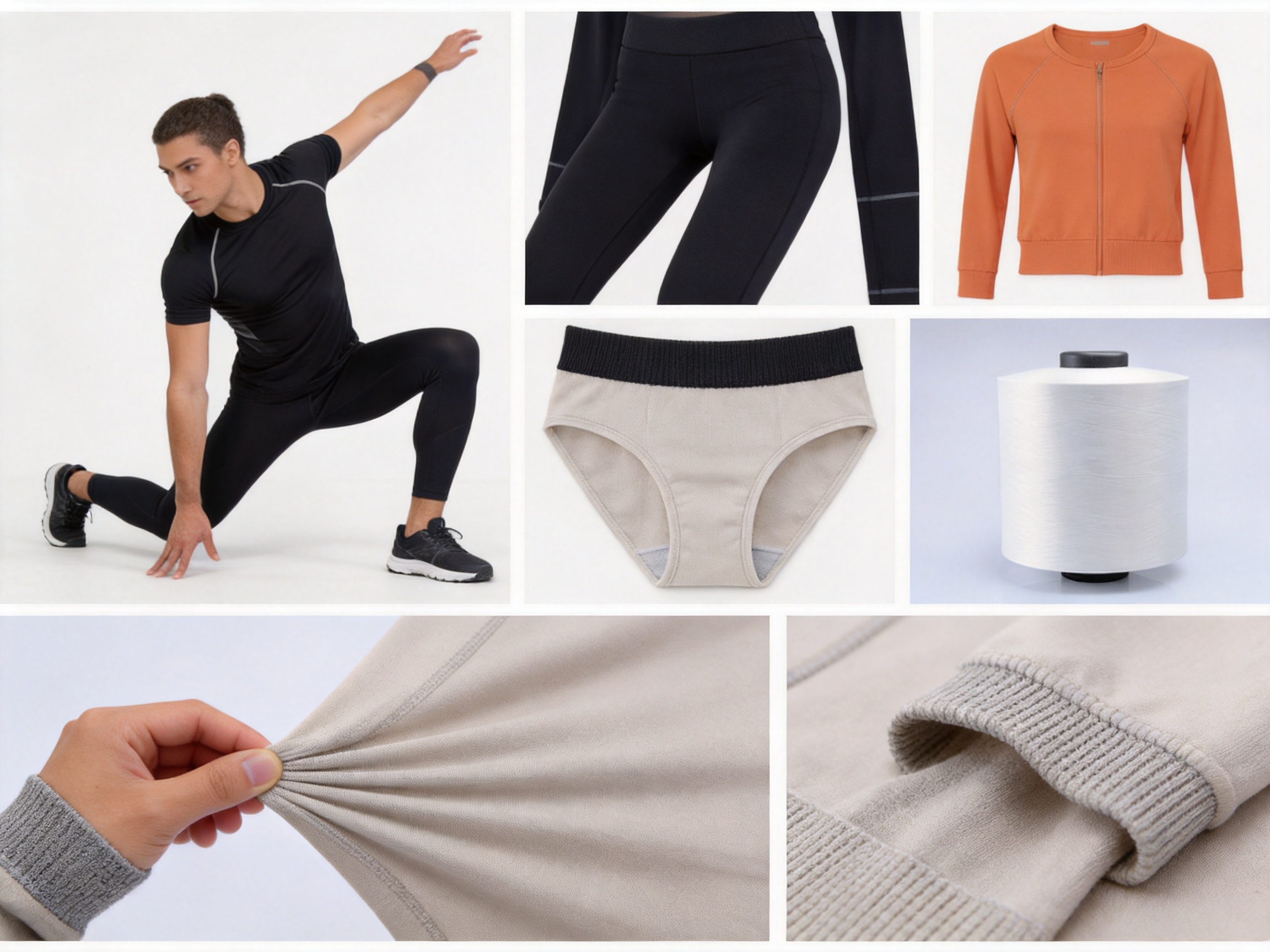
Sportswear requires freedom of movement, moisture comfort, elasticity, and resistance to repeated washing. ACY can be used in stretch tops, leggings, training garments, yoga wear, running apparel, cycling garments, athletic underwear, and performance base layers.
The yarn follows body movement and supports close-fitting designs without excessive restriction. Its anti-pilling performance is valuable because sportswear is often worn frequently and washed regularly. Abrasion resistance helps in areas exposed to equipment, floor contact, backpacks, and repeated body movement.
ACY may also be combined with moisture-wicking yarns. The supplied portfolio includes moisture-wicking options with several denier and filament specifications. By combining elastic and moisture-management components in a fabric plan, manufacturers can create garments that provide both movement comfort and a drier wearing experience.
6.2 Casualwear
Casual clothing must balance comfort, appearance, and practical durability. Stretch trousers, fitted shirts, casual jackets, knit tops, skirts, and daily loungewear can benefit from the elastic recovery and soft handle of ACY.
For garments worn repeatedly between washes, resistance to pilling and deformation is especially important. Consumers generally expect favorite casual garments to retain their shape and surface quality. ACY helps fabric developers address these expectations while maintaining a comfortable feel.
6.3 Knitwear
Knitted fabrics are naturally flexible, but their performance depends heavily on yarn selection and stitch structure. ACY can add controlled elasticity to rib, interlock, jersey, and other knitted constructions.
It can be used for stretch panels, fitted silhouettes, cuffs, waistbands, necklines, and full-body stretch constructions. The correct yarn specification depends on stitch density, machine gauge, fabric weight, target elongation, and recovery requirements.
6.4 Underwear and Base Layers
Underwear and base layers require softness, elasticity, smoothness, and resistance to frequent laundering. ACY’s skin-friendly handle and elastic core make it suitable for underwear fabrics, stretch briefs, camisoles, thermal base layers, and close-fitting inner garments.
Anti-pilling performance helps preserve comfort and appearance when the fabric is worn directly against the skin. A stable surface can also reduce the roughness that may develop when loose fibers become entangled through repeated washing and friction.
6.5 High-Stress Garment Zones
Some garment zones require additional durability because they are repeatedly flexed or rubbed. Knees and elbows are common examples, but waistbands, cuffs, inner thighs, seat panels, and shoulder areas can also experience high stress.
Using ACY in selected zones can help improve recovery, surface stability, and resistance to deformation. This approach allows designers to use performance yarn strategically rather than requiring every component of the garment to have the same construction.
7. Combining ACY with Other Functional Yarn Technologies
One of the major advantages of working with a differentiated-yarn supplier is the possibility of combining several functions. ACY addresses elasticity and anti-pilling performance, while other yarn technologies can provide moisture management, antibacterial properties, thermal insulation, flame resistance, recycled content, or special dyeing effects.
Cool Dry Yarn, for example, is described as having a special cross-section with a high surface area and grooves. This structure is intended to accelerate moisture absorption and diffusion, helping fabrics feel dry, soft, and breathable. It is suitable for sportswear, casualwear, shirts, and underwear.
A fabric development program may therefore use ACY as the elastic component and combine it with moisture-wicking yarn in the main fabric. Another program may combine elastic yarn with recycled polyester to support a lower-impact product concept. For protective applications, flame-retardant yarn may be evaluated alongside suitable elastic components where the end-use requirements permit.
Antibacterial yarn is another option for products where odor management and hygiene-related performance are priorities. Hollow warm yarn can support thermal comfort, while cotton-like yarn can provide a natural-feeling surface. These options make the supplier’s portfolio useful for product developers seeking differentiated fabric concepts rather than standard commodity yarn alone.
8. Manufacturing and R&D Strengths
8.1 Experience in Differentiated Yarn Development
Suzhou Junhui Textile Co., Ltd. and Suzhou Xiaoran New Materials Co., Ltd. were founded in June 2015 and focus on the development and sale of differentiated yarn and knitting fabric products. Their product categories cover recycled materials, polyester drop-dyed yarn, SHAWLIENCE, microfine yarn, flame-retardant yarn, cationic-dyeable yarn, and functional fabrics.
This specialization is relevant to ACY because functional elastic yarn must be developed with a clear understanding of downstream fabric requirements. Experience across multiple yarn technologies can help engineers identify compatible combinations and recommend appropriate specifications.
8.2 Professional R&D Capability
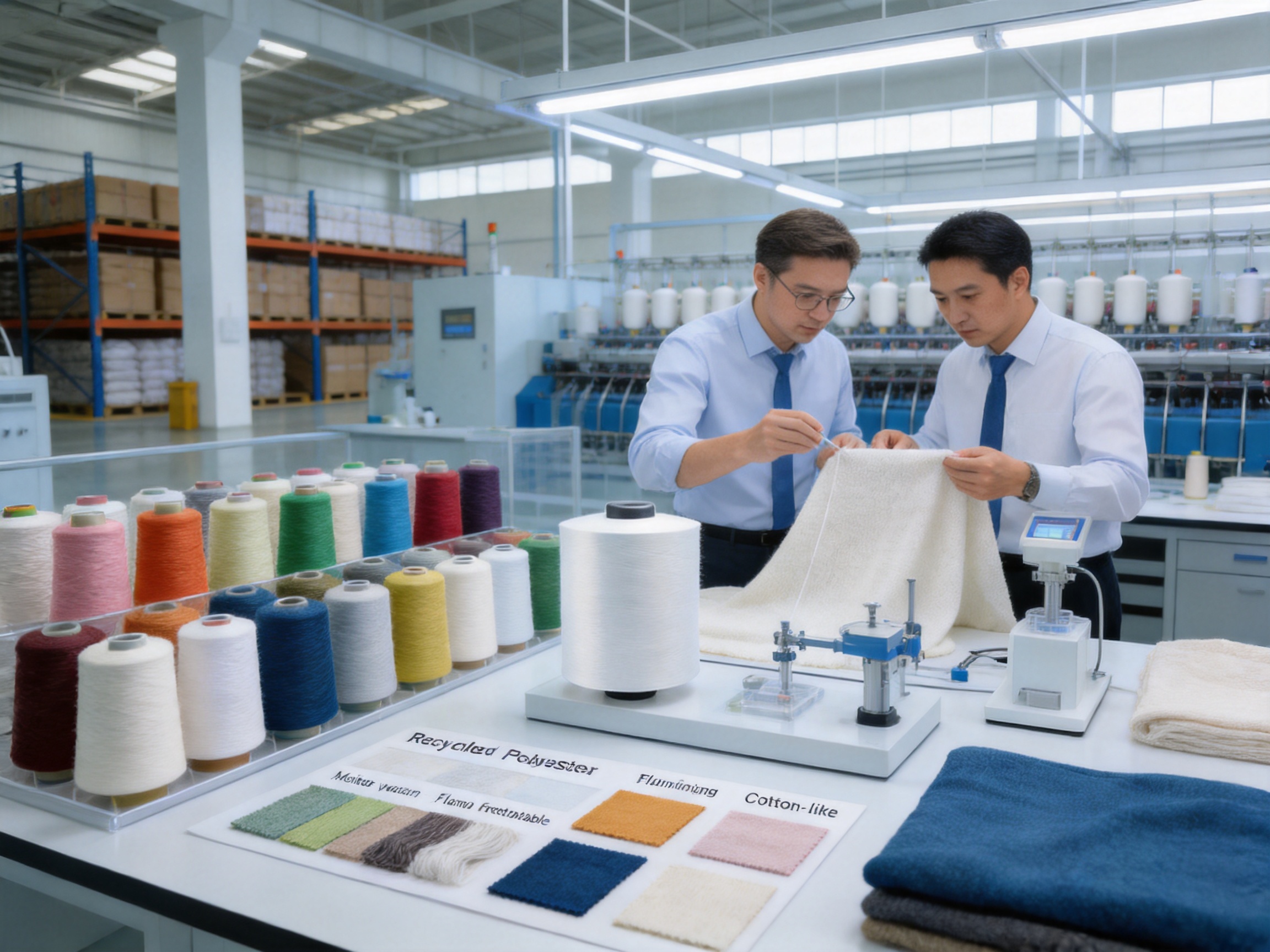
The company reports a professional research and development team and cooperation with internationally recognized enterprises on environmental protection, functional yarn, and functional fabric research, development, and application.
For customers, R&D strength is valuable during the transition from concept to bulk production. A technical team can help clarify the required stretch level, yarn count, covering material, fabric construction, dyeing process, and performance targets. This reduces the risk of selecting a yarn that appears suitable in isolation but fails to meet the needs of the final fabric.
8.3 Broad Product Portfolio
The company’s product list includes recycled, normal, cationic, high-elastic, PBT/PET, flame-retardant, antibacterial, moisture-wicking, cotton-like, hollow warm, and ACY products. The listed specifications cover a broad range of deniers and filament counts.
This breadth supports sourcing efficiency. Customers can evaluate standard and functional materials within one supply network instead of coordinating with multiple vendors for every component. It also supports product line expansion, allowing a buyer to develop basic, recycled, performance, and premium versions of a garment using related yarn platforms.
8.4 Export Experience
More than 90 percent of the company’s products are reported to be exported, with customers in 36 countries. This international business experience suggests familiarity with overseas communication, documentation, quality expectations, packaging requirements, and delivery coordination.
Export experience can be particularly useful for buyers who require consistent technical information and responsive problem-solving across different time zones. The company states that its experts are prepared to provide assistance within 12 hours globally, supporting faster communication during sampling and production.
8.5 Customer-Oriented Development
The company describes customer success as the foundation of its service approach. For ACY buyers, this philosophy can translate into support with product selection, application guidance, sample testing, and problem resolution.
Functional yarn is rarely a one-size-fits-all product. A yarn specification suitable for lightweight underwear may not be suitable for heavy leggings, and a yarn intended for one knitting gauge may require adjustment for another. Customer-oriented development is therefore an important manufacturing strength because it connects the yarn specification with the actual production environment.
9. Quality and Performance Evaluation
Before approving Durable Anti-Pilling ACY for bulk production, buyers should conduct a structured evaluation. The first stage is yarn inspection. This may include checking package appearance, yarn uniformity, covering stability, knots, contamination, winding density, and visible defects.
The second stage is laboratory testing. Useful measurements may include linear density, tensile strength, elongation, elastic recovery, heat resistance where relevant, and resistance to repeated extension. For anti-pilling evaluation, the yarn should be converted into the target fabric and tested under a recognized method because fabric construction strongly influences the final result.
The third stage is process testing. The yarn should be run on the intended knitting or weaving equipment to assess unwinding, tension stability, breakage, needle performance, fabric width, stitch formation, and production efficiency. This stage is important because a yarn may meet laboratory specifications but still require machine-setting adjustments.
The fourth stage is finished-fabric testing. The fabric can be evaluated for hand feel, appearance, stretch, recovery, dimensional change after washing, abrasion resistance, pilling, color fastness, and comfort. For sportswear, moisture management and drying behavior may also be tested if the fabric includes moisture-wicking components.
A suitable approval process should define acceptance criteria in advance. It should also distinguish between yarn-level performance and fabric-level performance. This helps avoid misunderstandings and creates a clear basis for quality control during mass production.
10. Sustainability and Material Flexibility
Environmental responsibility is becoming an important consideration in textile sourcing. The supplier’s recycled series includes recycled SD DTY, recycled SD FDY, recycled FD DTY, recycled SD plus CD DTY, recycled DDB DTY, and recycled CD DTY. These options allow customers to explore recycled material strategies alongside functional yarn development.
Although ACY itself is primarily valued for elasticity and anti-pilling performance, it can be included in broader sustainable fabric programs. For example, recycled polyester may be used in selected fabric components while ACY provides stretch and recovery. The final sustainability profile depends on the complete material composition, production process, certification status, dyeing route, garment life, and end-of-life pathway.
Durability also has an environmental dimension. A garment that retains its appearance and fit for a longer period may be worn more frequently and replaced less often. Anti-pilling performance, abrasion resistance, and shape recovery can therefore contribute to a longer useful life, provided that the finished garment is properly designed and cared for.
Customers seeking recycled content, certifications, traceability, or specific environmental claims should request current documentation and confirm the exact composition of each product. Material transparency is essential when making sustainability statements in the marketplace.
11. Product Development Guidance
11.1 Define the End Use First
Product selection should begin with the end use rather than the yarn name alone. A lightweight athletic top, a durable pair of leggings, and a soft underwear fabric may all require elasticity, but their ideal yarn specifications can differ significantly.
Important questions include the desired fabric weight, stretch direction, recovery target, surface appearance, hand feel, color range, dyeing method, machine gauge, and expected washing frequency. These factors help determine whether polyester- or nylon-covered ACY is more appropriate and which denier or filament configuration should be evaluated.
11.2 Confirm Compatibility with Machinery
Elastic yarn requires suitable tension control and machine settings. Before bulk production, the knitting or weaving mill should confirm feeder compatibility, yarn path conditions, package unwinding, needle or guide performance, and fabric take-up settings.
Small adjustments can influence fabric width, elasticity, stitch density, and appearance. Technical cooperation between the yarn supplier and fabric mill can help establish a stable operating window.
11.3 Test the Complete Fabric System
ACY performance should not be judged only from a yarn sample. The yarn must be tested in the intended construction, together with other yarns, finishing agents, dyes, and laundering conditions. Fabric structure can affect pilling, recovery, softness, and abrasion resistance.
For example, a dense fabric may provide strong wear resistance but feel less breathable, while a loose structure may improve airflow but be more vulnerable to snagging. The most suitable result comes from optimizing yarn, construction, and finishing together.
11.4 Consider Functional Combinations
Customers should consider whether the product needs one function or several. If moisture comfort is important, ACY may be paired with Cool Dry Yarn or another moisture-wicking material. If environmental positioning is important, recycled yarns may be included. If thermal performance is needed, hollow warm yarn may be evaluated.
Combining functions can create differentiated products, but it also requires careful testing. Every additional material may influence dyeing, finishing, hand feel, shrinkage, and cost. A technical development plan should identify which performance benefits are essential and which are optional.
12. Advantages for International Buyers
International buyers often need more than a product catalog. They need a supplier capable of providing clear communication, stable production, technical support, and consistent quality across repeated orders. The company’s export-oriented business model and customer base across 36 countries support this type of cooperation.
The product range allows buyers to source both standard and functional yarns. This can simplify supplier management and make it easier to develop coordinated collections. A buyer may obtain normal DTY for basic fabrics, recycled yarn for environmentally positioned products, ACY for stretch applications, and flame-retardant or antibacterial yarn for specialized projects.
Customization is another advantage. The company states that it can accept orders for various differentiated yarns. Depending on the project, customization may involve denier, filament count, material selection, color, functional treatment, or special performance requirements. The feasibility of each request should be confirmed through technical review and sampling.
Responsive support can also reduce development time. When a fabric mill experiences uneven stretch, pilling, tension variation, or surface issues, fast access to technical personnel helps identify whether the cause is yarn specification, machine settings, fabric construction, or finishing conditions.
13. Packaging, Storage, and Handling Considerations
Elastic covered yarn should be protected from excessive moisture, contamination, direct sunlight, and mechanical damage during transportation and storage. Packages should remain clean and should not be compressed or exposed to conditions that could deform the winding structure.
Before use, the yarn should be allowed to reach the working environment recommended by the supplier and processing facility. Sudden changes in temperature or humidity may influence yarn behavior and package unwinding. Storage procedures should follow the supplier’s technical instructions and the buyer’s quality system.
During handling, operators should avoid pulling or damaging the package surface. Damaged packages can increase tension fluctuations and affect fabric consistency. Proper identification of lot numbers and specifications is also important for traceability, especially when several similar denier combinations are used in the same facility.
14. A Practical Value Proposition
The principal value of Durable Anti-Pilling ACY lies in the way several performance attributes are integrated into a single yarn platform. Elasticity supports movement and fit. Recovery helps preserve garment shape. The outer polyester or nylon layer contributes softness, handling, and abrasion resistance. Anti-pilling treatment supports a cleaner surface after repeated use and washing.
This combination can help manufacturers reduce compromises between comfort and durability. A soft yarn does not necessarily need to be fragile, and a durable yarn does not necessarily need to feel harsh. Through air covering and controlled treatment, ACY is designed to provide a balanced result.
Compared with purchasing separate materials for elasticity, surface protection, and comfort, a composite functional yarn can simplify development. It may also support a more consistent fabric appearance because the elastic component and covering filament are integrated before entering the knitting or weaving process.
The best value is achieved when the yarn is correctly matched to the fabric design. Buyers should evaluate not only the purchase price per kilogram but also processing efficiency, fabric yield, defect rates, product life, return rates, and the ability to meet the required performance standard.
15. Frequently Asked Questions
Q1: What is Durable Anti-Pilling ACY?
Durable Anti-Pilling ACY is an Air Covered Yarn made by combining an elastic spandex core with a polyester or nylon covering layer. It includes anti-pilling treatment intended to reduce surface fiber entanglement and help fabrics maintain a smoother appearance during repeated wear and washing.
Q2: How is ACY manufactured?
The yarn is produced by feeding an elastic core through a controlled air-covering system. A polyester or nylon filament is guided around the core by an air stream, creating entanglement points that hold the components together. The yarn may then receive anti-pilling treatment, inspection, and precision winding.
Q3: Is ACY suitable for sportswear?
Yes. Its elasticity, recovery, softness, abrasion resistance, and anti-pilling properties make it suitable for sportswear, leggings, training garments, athletic tops, base layers, and other performance apparel. The exact specification should be selected according to fabric weight and stretch requirements.
Q4: Can ACY be used for underwear?
Yes. The yarn’s soft and skin-friendly handle, combined with stretch and surface stability, is suitable for underwear, fitted inner garments, camisoles, and base layers. Fabric trials should confirm comfort, recovery, dyeing performance, and washing durability.
Q5: What does the specification 40+75/36-72 mean?
This type of designation generally describes the denier and filament configuration of the elastic core and covering component. Because notation can vary by product system, buyers should confirm the precise meaning, composition, and test data with the supplier before placing an order.
Q6: Does anti-pilling yarn guarantee that a fabric will never pill?
No yarn can guarantee that pilling will never occur under every condition. Pilling is affected by fiber type, yarn structure, fabric construction, finishing, friction, laundering, and garment use. Anti-pilling ACY is designed to reduce the tendency toward pilling and should be evaluated in the final fabric.
Q7: Can the yarn be customized?
The supplier states that it can accept orders for various differentiated yarns. Customization may be possible for selected specifications, materials, colors, functional properties, or application requirements. Feasibility, minimum order quantity, lead time, and testing requirements should be confirmed during technical consultation.
Q8: Can ACY be combined with recycled yarn?
It may be possible to combine ACY with recycled polyester or other recycled yarns in a fabric construction. The final material composition and sustainability claim must be verified for each project. Customers should request documentation for recycled content, traceability, and any applicable certifications.
Q9: What other functional yarns are available?
The broader product portfolio includes recycled yarn, normal DTY and FDY-related products, cationic yarn, high-elastic yarn, PBT/PET yarn, flame-retardant yarn, antibacterial yarn, moisture-wicking yarn, cotton-like yarn, hollow warm yarn, and other differentiated products.
Q10: What should buyers test before bulk purchasing?
Buyers should evaluate yarn appearance, linear density, tensile behavior, elongation, recovery, covering uniformity, package quality, process stability, fabric stretch, dimensional change, abrasion resistance, pilling, color fastness, and final garment appearance. Testing should be performed under agreed standards and in the intended fabric construction.
Q11: Where is the supplier located?
The company is located in Shengze Town, Wujiang Area, Suzhou City, Jiangsu Province, China, a major textile manufacturing region. Its export-oriented operations support cooperation with international customers.
Q12: How can customers request technical support?
Customers can contact the supplier’s sales and technical team to discuss specifications, samples, fabric applications, testing requirements, and customized development. The supplied contact information includes email, telephone, and WhatsApp communication channels.
16. Conclusion
Durable Anti-Pilling ACY Functional Yarn is engineered for textile products that require reliable elasticity, recovery, softness, abrasion resistance, and long-term surface appearance. Its air-covered construction combines a spandex core with a polyester or nylon outer layer, while anti-pilling treatment helps reduce fiber entanglement and visible surface deterioration.
The yarn is suitable for sportswear, casualwear, knitwear, underwear, stretch fabrics, and high-stress garment zones. Its advantages over basic yarns come from the integration of multiple performance characteristics, allowing manufacturers to develop comfortable and durable fabrics without relying exclusively on separate treatments or complex constructions.
The manufacturing strengths behind the product include controlled air-jet covering, careful elastic-core feeding, anti-pilling treatment, package winding, quality inspection, differentiated-yarn R&D, and a broad portfolio of complementary functional materials. Suzhou Junhui Textile Co., Ltd. and Suzhou Xiaoran New Materials Co., Ltd. also bring export experience, customized product capability, and technical support for customers in international markets.
For buyers, the most effective approach is to define the end use clearly, select the correct denier and filament configuration, conduct fabric-level testing, and confirm quality requirements before bulk production. When matched correctly with fabric construction and finishing, ACY can provide a practical foundation for garments that remain flexible, comfortable, attractive, and durable throughout repeated use.
References
1. Product information and technical material supplied for Durable Anti-Pilling ACY Functional Yarn.
2. Product portfolio information supplied for recycled, normal, cationic, high-elastic, PBT/PET, and functional yarn series.
3. General principles of air-covered yarn construction and elastic-core filament processing.
4. General textile testing principles for yarn elongation, elastic recovery, abrasion resistance, dimensional stability, and fabric pilling.
5. General textile product-development practices for sportswear, casualwear, knitwear, underwear, and moisture-management fabrics.
6. Company information supplied for Suzhou Junhui Textile Co., Ltd. and Suzhou Xiaoran New Materials Co., Ltd.
Product: Durable Anti-Pilling ACY (AIR COVERED YARN) Functional Yarn

Popular products
-
Premium Cationic Interlock Stretch Comfort Fabric
-
Moisture-Wicking Nylon Woven Fabric
-
Double-faced jacquard elastic fabric
-
Heather Grey Double-faced cationic jersey fabric
-
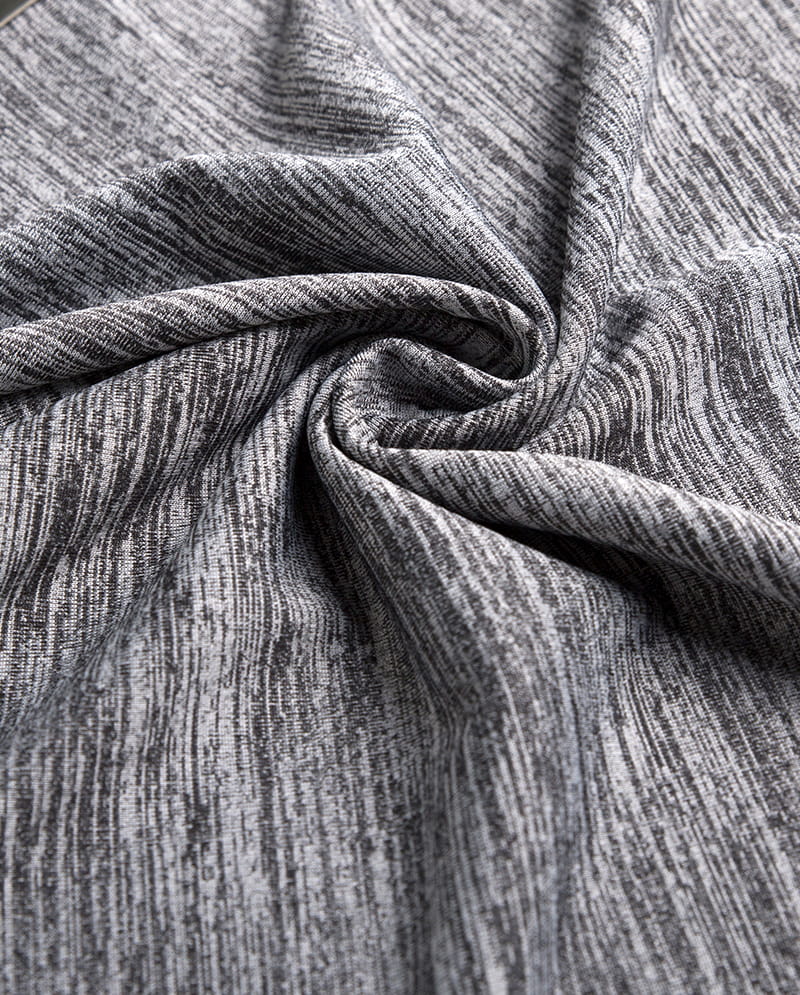
Anti-static Cationic Knitted Rib Fabric
-
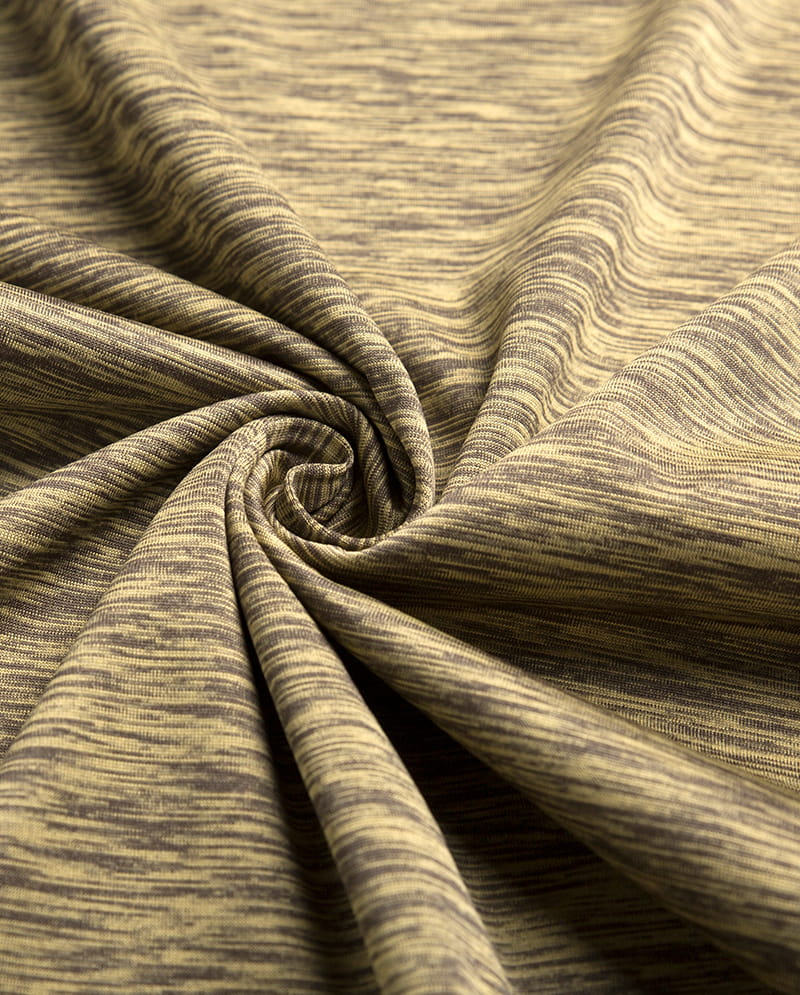
High-Stretch Cationic Jersey Fabric
-
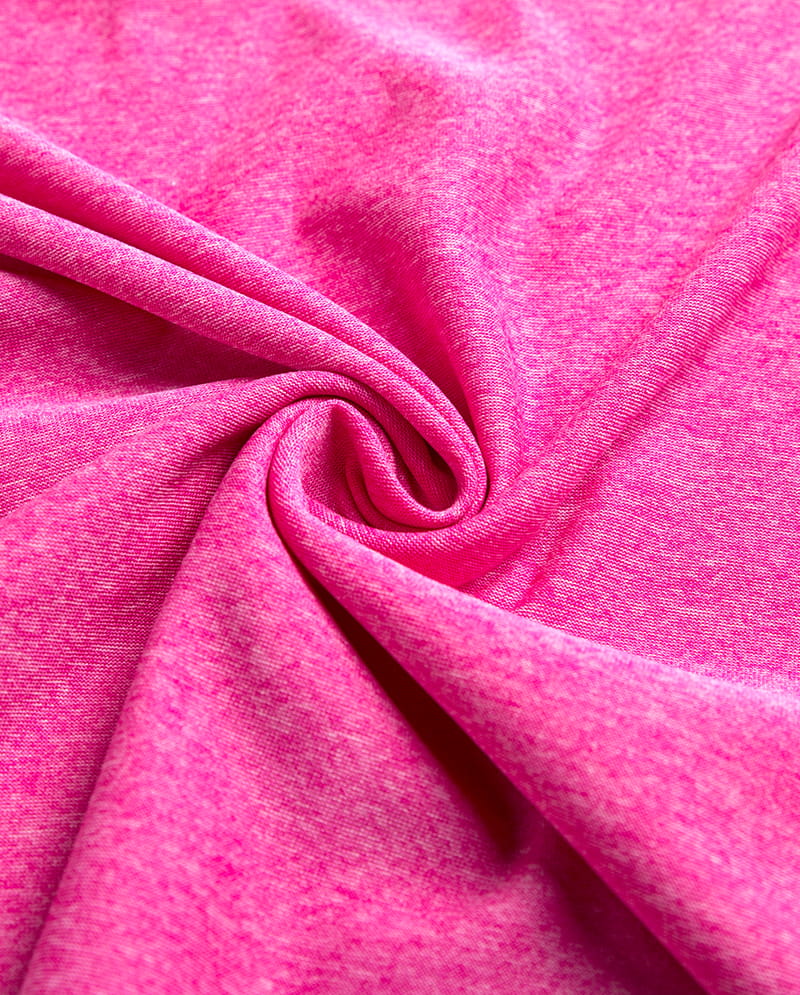
High Quality Cationic DTY Spandex Two Sides Brush Dralon Knit Fabric for Garment Thermal Underwear
-
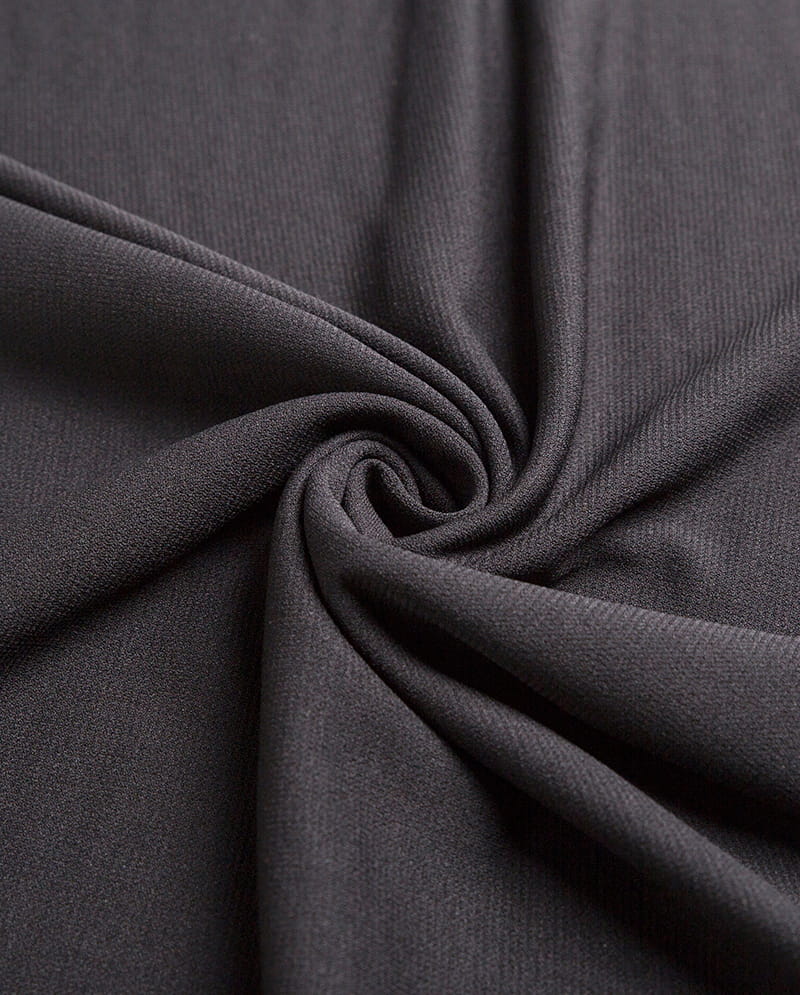
Durable Anti-Pilling Knitted Fabric for Home Textiles
-
Wash-Resistant Cationic Elastic Knitted Fabric for Garment Industry
-
Breathable Double-Faced Elastic Composite Fabric
-
-
-
- whatsapp:
- 0086-13962559622
-
- skype:
- skype.aliceshenghong
-
- Wechat:

COPYRIGHT © 2016 Suzhou Junhui Textile Co., Ltd.
