

 EN
EN English
 中文简体
中文简体Drop-Dyed Yarn for Versatile DTY Fabric Development
Content
- 1 Understanding Drop-Dyed DTY Yarn
- 2 Product Positioning and Main Application Value
- 3 Key Product Advantages Over Common Competitors
- 4 Representative Product Series and Specifications
- 5 How Denier and Filament Count Influence Fabric Performance
- 6 Manufacturing Strength: From Raw Material to Finished Yarn
- 7 Color and Shade Control in Drop-Dyed Yarn
- 8 Recycled Drop-Dyed Yarn for Responsible Textile Development
- 9 Normal Series for Reliable Everyday Fabric Production
- 10 Cationic Dyeable and Combination Yarn Effects
- 11 High-Elastic Yarn for Comfort and Movement
- 12 Functional Series for Added Textile Performance
- 13 Cotton-Like, Hollow Warm, and Air-Covered Options
- 14 Advanced Process Control and Quality Assurance
- 15 Company Strengths Supporting the Product
- 16 Applications in Knitting and Weaving
- 17 Why Buyers Choose a Differentiated Yarn Supplier
- 18 Selection Guide for Fabric Developers
- 19 Packaging, Logistics, and Export Service
- 20 Q&A Section
- 20.1 What is drop-dyed DTY yarn used for?
- 20.2 How is DTY different from FDY and POY?
- 20.3 Why choose drop-dyed yarn instead of ordinary greige yarn?
- 20.4 Can recycled drop-dyed yarn be used for export apparel fabrics?
- 20.5 What does 75/72 or 150/144 mean?
- 20.6 Which yarn should be selected for soft sportswear?
- 20.7 Can cationic dyeable yarn create two-tone effects?
- 20.8 What makes this product range competitive?
- 21 Conclusion
- 22 References
- 23 Product: Drop-dyed Yarn
In modern textile production, yarn is no longer a simple intermediate material. It is a performance platform, a color carrier, a sustainability tool, and a design resource for mills, brands, and fabric developers. Drop-dyed yarn, especially within the DTY yarn category, serves this wider role by combining stable color expression, textured hand feel, practical processing efficiency, and broad compatibility with woven and knitted fabric applications.
Drop-dyed yarn is designed for textile producers that need visual depth, consistent shade performance, and dependable production behavior. It can be used in apparel fabrics, sportswear, home textiles, decorative materials, lining fabrics, functional knitted fabrics, and many differentiated fabric structures. For buyers who require both standard specifications and customized yarn development, this product family offers a flexible foundation.
The supplied product range covers recycled series, normal series, cationic dyeable series, high-elastic series, functional series, cotton-like yarn, hollow warm yarn, and air-covered yarn options. These specifications include many denier and filament combinations such as 30/12, 50/36, 75/36, 75/72, 100/144, 150/48, 150/144, 300/96, and other commonly requested counts. This breadth is important because fabric designers often need to adjust softness, coverage, opacity, elasticity, luster, dyeing behavior, and fabric weight through yarn selection.
For manufacturers and brands, the competitive value of drop-dyed DTY yarn lies in its ability to simplify downstream processing while improving fabric character. Compared with conventional undyed yarn that requires later dyeing, drop-dyed or color-engineered yarn can reduce certain dyeing burdens, support better lot-to-lot color planning, and help mills manage shorter delivery cycles. Compared with ordinary commodity DTY yarn, it offers more differentiated options, including recycled content, semi-dull and full-dull appearances, cationic dyeable combinations, flame-retardant functions, antibacterial effects, moisture-wicking properties, and high-elastic performance.
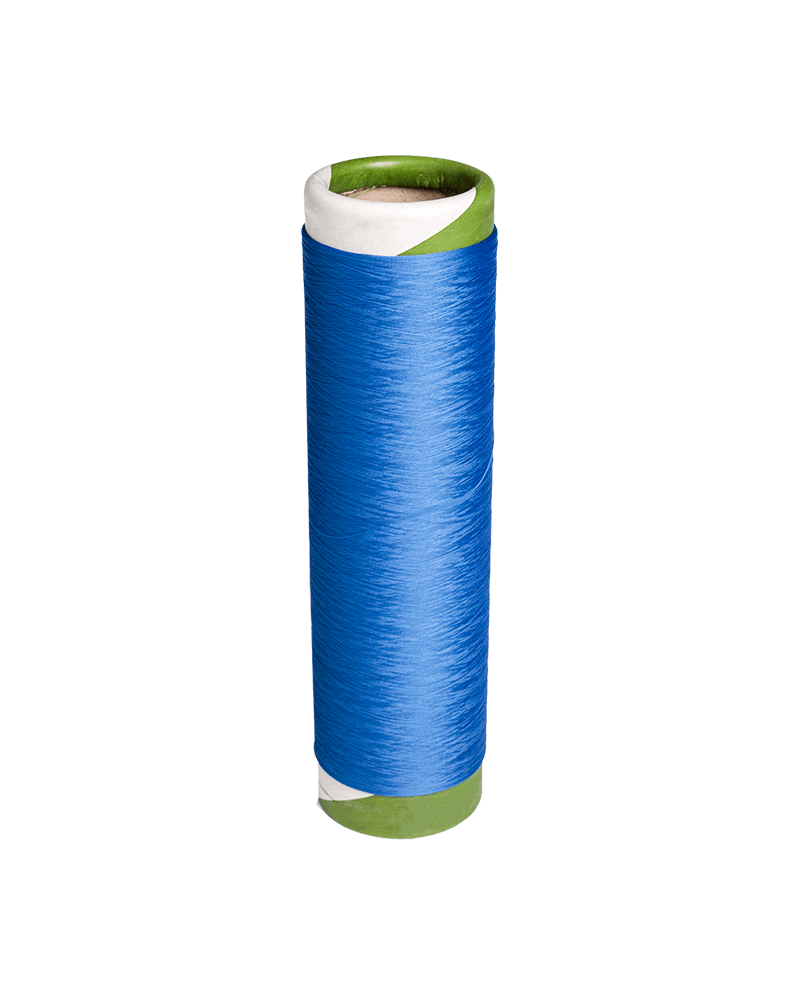
Understanding Drop-Dyed DTY Yarn
DTY stands for Draw Textured Yarn. It is typically produced from partially oriented yarn or related polyester filament feedstock through a texturing process that gives the yarn bulk, stretch, softness, and improved fabric handle. In many textile applications, DTY is preferred because it provides a more natural and comfortable touch than flat filament yarn. It can create fabrics with better drape, moderate elasticity, and enhanced surface fullness.
Drop-dyed yarn, in the context of differentiated polyester yarn development, refers to a color-oriented yarn solution that is engineered to support particular shade effects or stable color presentation. Depending on the production route and customer requirement, this may involve colored filament technology, dope-color principles, cationic dyeing combinations, or other differentiated yarn structures. Its purpose is not merely to add color, but to integrate color performance into the yarn’s technical identity.
The product is especially valuable when the fabric must achieve a reliable visual effect without sacrificing processing stability. Color consistency, yarn evenness, filament distribution, crimp stability, and package quality all influence the final fabric result. A small inconsistency in yarn can become highly visible after knitting, weaving, finishing, or garment making. Therefore, high-quality drop-dyed yarn depends on disciplined manufacturing control from raw material preparation to final inspection.
Polyester DTY yarn remains one of the most widely used synthetic yarn categories because polyester offers good strength, dimensional stability, abrasion resistance, wash durability, and cost effectiveness. When polyester DTY is combined with special color or functional technologies, it becomes an efficient material for high-volume fabric production and differentiated product development.
Product Positioning and Main Application Value
Drop-dyed DTY yarn is positioned for mills and brands seeking a balance between creativity and production reliability. It is suitable for fabric manufacturers that must respond quickly to market trends while still meeting technical requirements. Fashion cycles are shorter, sportswear collections change rapidly, and home textile buyers increasingly request both visual appeal and functional benefits. A flexible yarn portfolio allows producers to meet these demands without rebuilding their entire supply chain.
One major advantage is the ability to support multiple fabric styles. Fine-denier specifications can be used for lightweight, smooth, delicate fabrics. Medium specifications such as 75D and 100D are common in knitted sportswear, casualwear, linings, and light woven fabrics. Heavier specifications such as 150D, 200D, and 300D can provide stronger coverage, bulk, durability, and textured appearance for heavier apparel, upholstery-related fabrics, home textiles, and industrial-style textile uses.
Another advantage is the range of filament counts. A yarn such as 75/36 has a different character from 75/72 or 75/144. Higher filament counts generally produce a softer hand feel and finer surface, while lower filament counts can provide a slightly firmer texture and different fabric body. By offering many D/F combinations, the product range gives fabric developers more control over the final material.
The availability of semi-dull, full-dull, cationic dyeable, recycled, high-elastic, and functional versions further improves application flexibility. A fabric developer may choose semi-dull yarn for balanced luster, full-dull yarn for a matte and refined appearance, cationic dyeable yarn for two-tone or mixed-dye effects, high-elastic yarn for stretch fabrics, and recycled yarn for sustainability-oriented collections.
Key Product Advantages Over Common Competitors
The textile yarn market contains many standard DTY suppliers. However, commodity yarn alone is not enough for customers that require differentiation, stable export quality, and responsive technical support. Drop-dyed yarn from a manufacturer with a broad product list and experience in differential yarn development offers several advantages over competitors that provide only basic yarn counts.
Broader Specification Coverage
A common competitor may provide limited counts such as 75D/36F, 75D/72F, 150D/48F, or 150D/144F. The supplied product range is much broader. It includes fine counts, medium counts, and heavy counts across recycled, normal, cationic, elastic, and functional series. This means buyers can develop several fabric programs with one coordinated supplier instead of sourcing separate yarns from multiple vendors.
Specification breadth reduces procurement complexity. When a buyer needs 50/72 for one fabric, 75/144 for another, 150/288 for a brushed fabric, and 300/96 for a heavier textile, a wide product platform makes development faster. It also improves communication because the same technical team can understand the buyer’s fabric goals across several items.
Strong Differentiated Yarn Capability
The product list is not limited to ordinary polyester DTY. It includes recycled yarn, polyester drop-dyed yarn, cationic dyeing yarn, flame-retardant yarn, antibacterial yarn, moisture-wicking yarn, hollow warm yarn, cotton-like yarn, and air-covered yarn. This capability matters because customers increasingly want performance and design features combined in one textile product.
Compared with competitors that focus on volume only, a differentiated yarn supplier can support product innovation. If a brand wants a recycled moisture-wicking knit, a matte high-filament fashion fabric, a cationic two-tone surface, or a warm hollow textile, the supplier’s development background becomes a practical advantage. The result is a shorter route from concept to bulk production.
Improved Fabric Design Flexibility
Drop-dyed yarn gives designers more ways to achieve surface variation and color depth. When combined with cationic dyeable yarn, semi-dull yarn, full-dull yarn, or black-and-white yarn options, fabric makers can build layered effects. These effects may include melange-like surfaces, contrast textures, subtle tone changes, dark-and-light combinations, or structured color effects depending on the fabric construction and finishing method.
Competitors relying only on post-dyed greige yarn may require more finishing steps to achieve similar effects. In some cases, the shade result may be less predictable or more dependent on dyeing conditions. Color-engineered yarn can help stabilize the design intention earlier in the process.
Potential Sustainability Benefits
The recycled series is a major advantage for customers responding to environmental expectations. Recycled polyester yarn can reduce dependence on virgin resources and support sustainability claims when properly documented and managed. The product range includes recycled semi-dull DTY, recycled semi-dull FDY, recycled full-dull DTY, recycled cationic combinations, and related options.
In addition, color-integrated yarn technologies may help reduce certain downstream dyeing loads when compared with traditional piece dyeing routes, depending on the application and process. This can be relevant for mills seeking lower water usage, reduced chemical handling, and shorter finishing processes. While actual environmental benefits depend on the full production system, the availability of recycled and color-oriented yarn provides a useful starting point.
Export-Oriented Quality Mindset
The company information indicates that more than 90 percent of products are exported and that customers are located across 36 countries. This export experience is valuable because international buyers often require stable specifications, documentation discipline, communication efficiency, and consistent packaging. Export markets also expose a manufacturer to diverse fabric standards, testing requirements, and application challenges.
Compared with a supplier focused only on local spot-market transactions, an export-oriented yarn manufacturer is more likely to understand long-term cooperation, repeat-order consistency, and problem-solving communication. This is especially important for fabric mills and trading companies managing international deadlines.
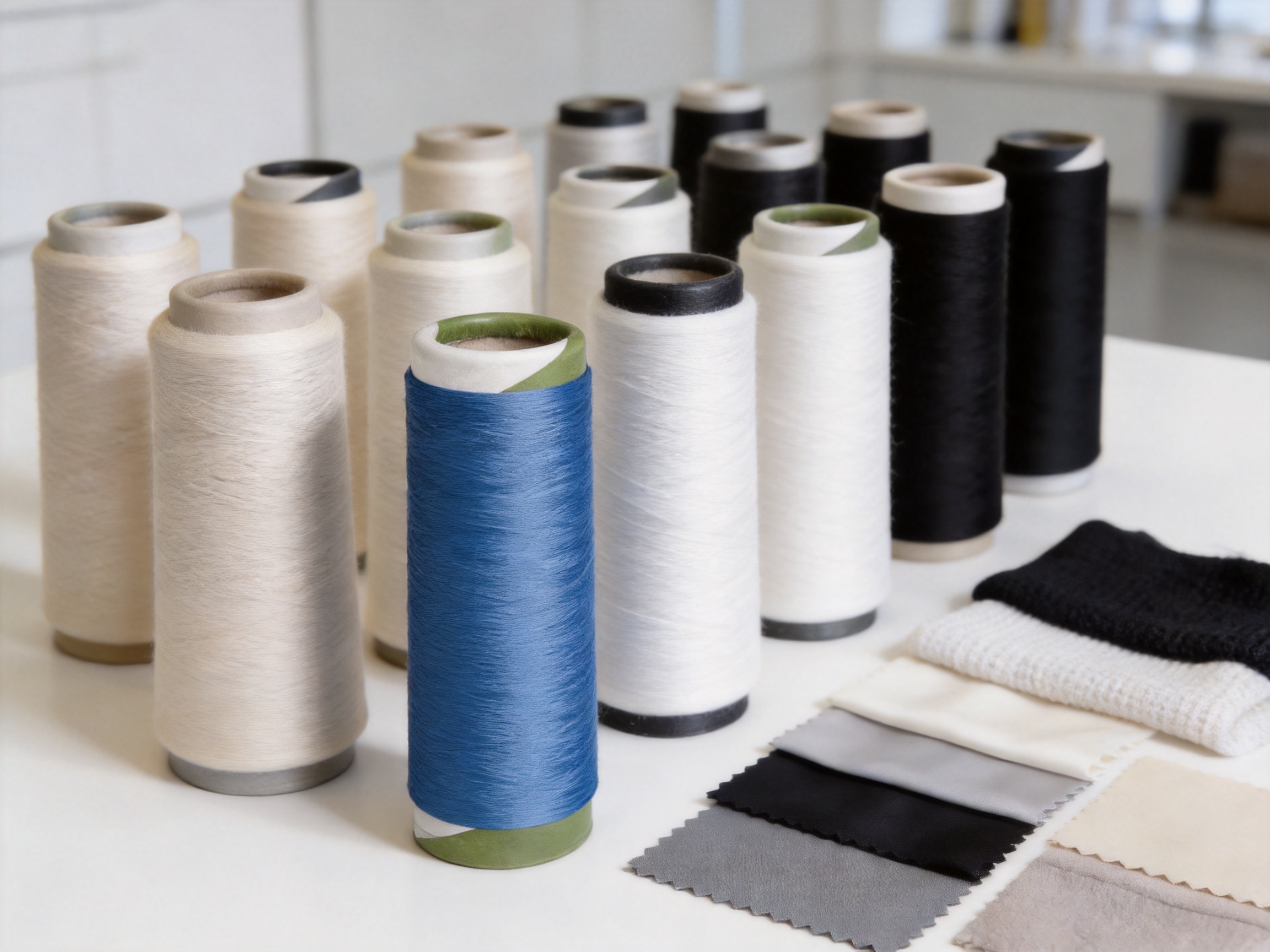
Representative Product Series and Specifications
The drop-dyed yarn family is supported by a wide product list. The following table summarizes representative categories and typical specification directions based on the supplied product information. Actual availability, shade, twist, intermingling, elasticity, and package requirements can be discussed according to order needs.
Series |
Representative Yarn Type |
Typical Specification Examples |
Main Application Value |
Recycled Series |
Recycled SD DTY, Recycled FD DTY, Recycled CD DTY, Recycled SD+CD DTY |
50/36, 75/72, 100/144, 150/144, 300/288 |
Sustainability-oriented fabrics, apparel, linings, home textiles |
Normal Series |
SD DTY, FD DTY, SD DDB |
30/36, 50/72, 75/144, 150/288, 300/576 |
General knitted and woven fabrics requiring stable texture and broad count choice |
CD Series |
CD DTY, SD+CD DTY, White and Black |
50/48, 75/72, 100/108, 125/144, 150/144 |
Cationic dyeing effects, two-tone surfaces, decorative fabric development |
High-Elastic Series |
High-elastic DTY, PBT/PET, PBT/PET DDB |
30/12, 50/72, 75/36, 150/144, 300/144 |
Stretch fabrics, sportswear, activewear, comfort textiles |
Functional Series |
Fire-retardant, antibacterial, moisture-wicking |
50/48, 75/72, 150/144, SD/FD 75/36, SD/FD 150/144 |
Performance fabrics for safety, hygiene, and comfort applications |
Specialty Series |
Cotton-like, hollow warm, air-covered yarn |
32S, 40S, 80S, 75/72, 150/144, 40+150/144 |
Soft-touch fabrics, thermal fabrics, elastic composite textiles |
How Denier and Filament Count Influence Fabric Performance
Understanding denier and filament count is essential for selecting the correct drop-dyed yarn. Denier indicates the linear density of the yarn. A lower denier usually produces lighter, finer fabrics, while a higher denier produces heavier, stronger, and more covering fabrics. Filament count indicates how many individual filaments form the yarn. Higher filament counts often create a softer and smoother surface because each filament is finer.
For example, a 75/36 yarn contains 36 filaments in a 75-denier yarn. It may offer a balanced hand feel and is widely used in general fabrics. A 75/72 yarn has more filaments and can feel softer. A 75/144 yarn has even finer filaments and may provide a silkier touch, better coverage, and a more delicate surface. This difference is important for sportswear, linings, and lightweight fashion fabrics.
Similarly, 150/48, 150/96, 150/144, and 150/288 yarns can produce very different fabric results. A 150/48 yarn may provide more structure and durability, while 150/144 or 150/288 may provide softness and fullness. Heavy filament combinations such as 300/96, 300/192, 300/288, and 300/576 are useful for heavier fabrics where coverage, bulk, warmth, and surface density are required.
Drop-dyed yarn makes these structural choices more powerful because the color effect is integrated with the yarn’s physical character. A high-filament matte yarn may produce an elegant surface, while a cationic blend may create a more active visual contrast. A high-elastic version may add stretch recovery to the same fabric concept. Therefore, choosing the right denier and filament count is both a technical and aesthetic decision.
Manufacturing Strength: From Raw Material to Finished Yarn
Advanced manufacturing is the foundation of reliable drop-dyed yarn. The product may appear simple on a cone, but its performance depends on many controlled steps. These include raw material selection, chip preparation or feedstock control, spinning, drawing, texturing, intermingling, heat setting, winding, inspection, and packaging. Each step must be aligned with the final yarn specification.
Polyester yarn production begins with polymer quality. The stability of intrinsic viscosity, moisture content, melt behavior, and filtration quality can influence spinning performance and filament uniformity. For recycled yarn, raw material control is especially important because recycled feedstock must be processed carefully to reduce variation. Consistent polymer preparation helps prevent broken filaments, uneven dyeing behavior, unstable elongation, and package defects.
During spinning, the molten polymer is extruded through spinnerets to form filaments. Spinneret design, temperature control, quenching conditions, and winding tension all affect filament uniformity. A high-quality yarn manufacturer monitors these parameters closely because small deviations can create uneven yarn, poor fabric appearance, or downstream processing issues.
For DTY yarn, texturing is a critical process. POY or suitable feed yarn is drawn and false-twist textured to create crimp, bulk, and elasticity. The texturing process includes controlled heating, twisting, drawing, cooling, and winding. Parameters such as draw ratio, heater temperature, texturing speed, friction disc condition, overfeed, and winding tension must be optimized for each denier and filament count.
Intermingling may be applied to improve yarn cohesion. The degree of intermingling affects weaving and knitting performance. Too little cohesion may cause filament separation, while too much may change hand feel or fabric appearance. A professional manufacturer adjusts intermingling according to customer application, whether the yarn will be used for circular knitting, warp knitting, air-jet weaving, water-jet weaving, or other processes.
Color and Shade Control in Drop-Dyed Yarn
Color consistency is one of the main reasons buyers choose a specialized drop-dyed yarn supplier. A yarn’s color must remain stable across cones, batches, and repeat orders. Inconsistent color can cause barré, streaks, shade variation, or visible defects in finished fabric. These defects are costly because they may appear only after fabric formation or finishing.
Color control begins with formulation. The manufacturer must select appropriate colorants, pigments, or dyeable polymer combinations according to the intended effect. Compatibility with polyester processing temperatures is essential. The color system must withstand spinning and texturing conditions without causing degradation, excessive filter pressure, or unstable shade.
Package management is also important. Even if the yarn itself is correct, inconsistent winding density or tension can affect downstream unwinding and fabric formation. Professional winding produces stable package shape, smooth unwinding, and predictable yarn feeding. This reduces machine stops and improves fabric efficiency.
Quality inspection may include visual shade checking, yarn evenness testing, denier measurement, strength and elongation testing, crimp evaluation, oil pickup control, intermingling assessment, and package appearance inspection. For export orders, stable labeling and traceability are also important. A disciplined quality system helps customers avoid mixed lots and improves repeat-order confidence.
Recycled Drop-Dyed Yarn for Responsible Textile Development
Sustainability is now a central theme in textile sourcing. Many brands want recycled polyester, reduced environmental impact, and more responsible production routes. The recycled series in the supplied product list is therefore an important part of the drop-dyed yarn offering. It includes recycled semi-dull DTY, recycled semi-dull FDY, recycled full-dull DTY, recycled cationic DTY, recycled SD+CD DTY, and related specifications.
Recycled polyester yarn can be developed from recycled polyester resources, often including post-consumer or post-industrial material depending on the supply chain. The key challenge is maintaining performance consistency. Recycled raw material may have more variation than virgin polymer, so the manufacturer must manage filtration, viscosity, moisture, and spinning stability carefully.
Compared with basic recycled yarn suppliers, a differentiated yarn manufacturer offers added value by combining recycled content with color and functional options. This is important because brands increasingly do not want sustainability alone; they want sustainable products that also feel good, look attractive, and perform well. Recycled drop-dyed DTY can support this goal by offering both environmental direction and fabric design flexibility.
Typical recycled specifications such as 50/72, 75/72, 75/144, 100/144, 150/144, 150/288, 300/96, and 300/288 can be used in many fabric categories. Fine and medium counts are suitable for apparel and linings, while heavier counts can serve thicker fabrics. Recycled cationic combinations can help create two-tone or differential dyeing effects while supporting sustainability-oriented collections.
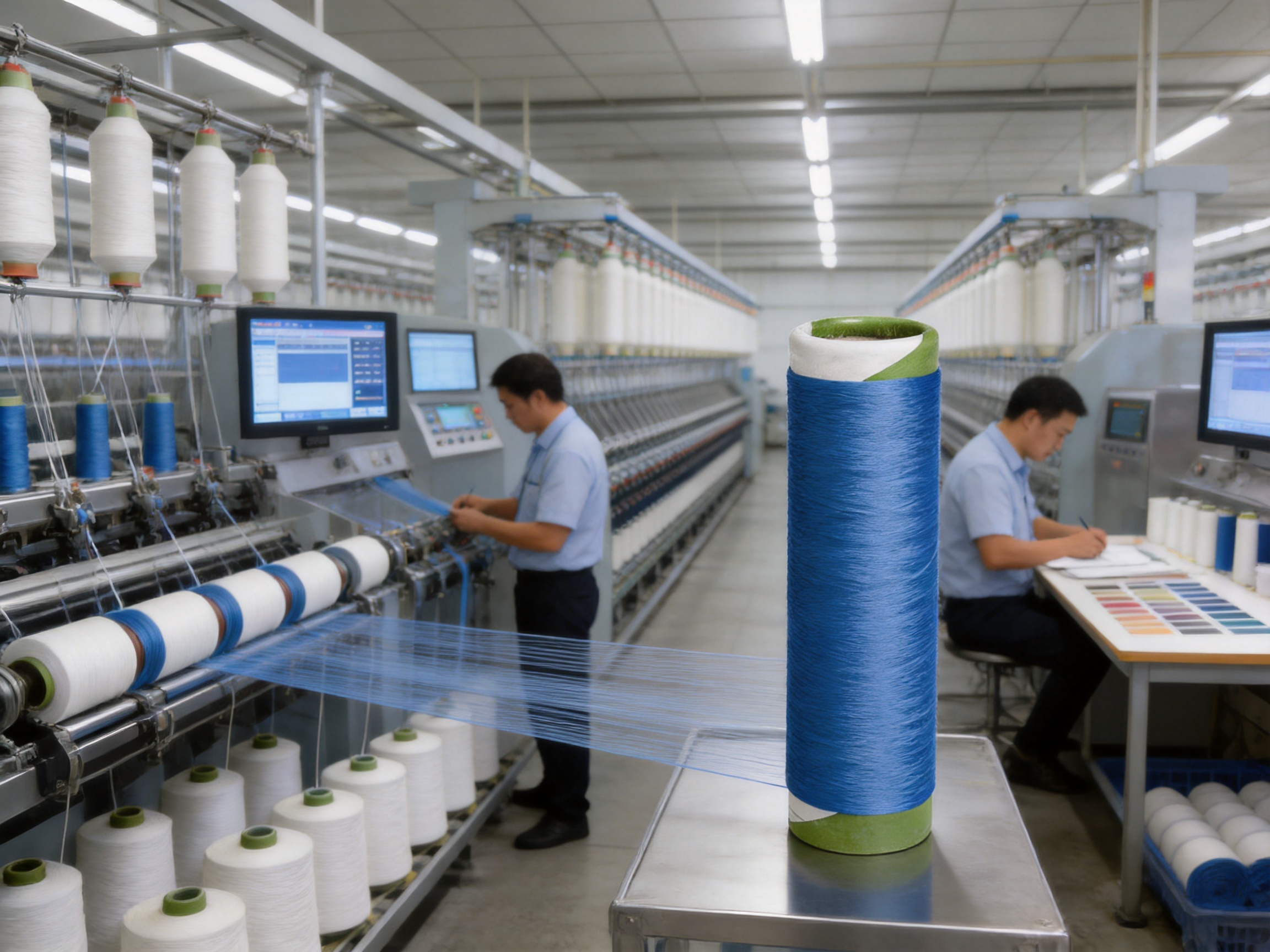
Normal Series for Reliable Everyday Fabric Production
The normal series provides the foundation for regular fabric programs. It includes semi-dull DTY, full-dull DTY, and related DDB options. These yarns are suitable for customers who require dependable quality, broad count availability, and stable processing performance.
Semi-dull yarn is widely used because it provides moderate luster without excessive shine. It is suitable for apparel, linings, home textiles, and many general-purpose fabrics. Full-dull yarn offers a more matte appearance and can create a refined, soft, non-glossy surface. It is often selected for fashion fabrics, outdoor-inspired textiles, and products where a calmer visual effect is preferred.
The normal series includes a wide range of denier and filament combinations, from fine counts such as 25/72 and 30/36 to heavier counts such as 300/576. This allows customers to develop lightweight, medium, and heavy textiles with consistent supplier support. Compared with competitors offering only standard counts, this wide selection improves speed and flexibility in fabric development.
In everyday production, yarn reliability is as important as yarn specification. A stable DTY yarn should have consistent tension, even crimp, good package formation, suitable oil content, and low defect rates. These characteristics reduce machine downtime and improve fabric first-quality rates. The normal series is therefore not merely a basic product; it is the production backbone for many textile mills.
Cationic Dyeable and Combination Yarn Effects
The CD series is especially useful for fabrics requiring color contrast, two-tone effects, or differential dyeing behavior. Cationic dyeable polyester can be dyed with cationic dyes and can create different shade responses when combined with regular polyester. This opens creative possibilities for fabric designers.
CD DTY, SD+CD DTY, and white-and-black combinations can create unique visual effects. For example, a fabric made with cationic and regular polyester components may display heathered tones, shadow effects, or contrasting patterns after dyeing. When combined with special knitting or weaving structures, the result can be more sophisticated than a flat single-color fabric.
Competitors that only supply ordinary polyester DTY may not be able to support these effects efficiently. They may require additional yarn sourcing, complicated dyeing trials, or less predictable results. A supplier with established CD and SD+CD options helps customers reduce development uncertainty.
Representative CD specifications include 25/24, 30/24, 50/36, 75/72, 100/144, 150/144, and 300/96. SD+CD specifications include 50/48, 75/72, 80/72, 100/108, 125/144, 150/144, and 300/288. These options give developers a wide range of yarn sizes for various fabric weights and textures.
High-Elastic Yarn for Comfort and Movement
Stretch and recovery are major requirements in contemporary textiles. Sportswear, athleisure, casualwear, fitted garments, waistbands, socks, and comfort fabrics all require yarn systems that support movement. The high-elastic series addresses this need through high-elastic DTY and PBT/PET options.
High-elastic yarn can provide enhanced stretch compared with standard DTY. PBT/PET composite or related elastic yarn structures can offer good resilience, soft stretch, and comfort. These yarns are useful when fabric designers want elasticity without relying entirely on spandex or when they need a particular balance of stretch, recovery, dyeing behavior, and fabric stability.
Specifications such as 30/12, 50/36, 50/72, 60/72, 75/36, 75/72, 150/48, 150/144, and 300/144 allow developers to choose different levels of fabric weight and stretch character. Fine high-elastic yarns can support lightweight comfort fabrics, while heavier ones can support stronger stretch textiles.
The advantage over competitors lies in integration. A supplier that offers normal DTY, recycled DTY, cationic DTY, and high-elastic DTY can help customers develop coordinated fabric collections. For example, a brand may need a recycled outer fabric, a high-elastic lining, and a cationic decorative panel. Sourcing from one technically capable supplier improves consistency and communication.
Functional Series for Added Textile Performance
The functional series includes fire-retardant, antibacterial, and moisture-wicking yarn options. These yarns are designed for textiles that need more than appearance and basic strength. Functional properties can expand product value in workwear, home textiles, sportswear, travel garments, public-space textiles, and specialized apparel.
Fire-retardant yarn is relevant where flame resistance is requested. Depending on the formulation and target standard, it may help fabrics meet specific safety requirements. Fire-retardant yarn development must be handled carefully because the function must be balanced with spinning stability, hand feel, strength, and durability.
Antibacterial yarn can support hygiene-oriented textile applications. It may be used in garments, linings, bedding-related fabrics, and other textiles where odor control or microbial management is valued. The exact performance depends on the active technology, testing method, and finishing route.
Moisture-wicking yarn is especially important for sportswear and comfort apparel. It helps move moisture away from the skin and supports faster drying or improved comfort sensation when used in suitable fabric structures. Yarn cross-section, filament fineness, texturing, and finishing all influence the final moisture management behavior.
By offering functional yarns in commonly used counts such as 50/48, 75/72, and 150/144, the manufacturer makes it easier for fabric mills to adapt existing fabric constructions. Instead of redesigning a fabric from the beginning, mills can often trial a functional yarn in a familiar denier and filament count.
Cotton-Like, Hollow Warm, and Air-Covered Options
Specialty yarns expand the design vocabulary beyond standard polyester texture. Cotton-like yarn is designed to imitate some of the softness and natural touch associated with spun yarn. It can be used when customers want a less synthetic hand feel while retaining polyester advantages such as durability and easier care.
Hollow warm yarn is designed to support thermal comfort. Hollow or modified filament structures can trap air and improve warmth retention in suitable fabrics. This can be useful for autumn and winter garments, thermal layers, blankets, bedding textiles, and comfort fabrics.
Air-covered yarn, often shown in composite specifications such as 40+75/36-72 or 40+150/48-96-144, can combine elastic or structural components with filament yarn. It is relevant for stretch fabrics, socks, waistbands, fitted garments, and other textiles requiring flexible comfort.
These specialty options demonstrate a major manufacturing strength: the ability to accept orders for many kinds of differentiation yarn. In a competitive textile market, this flexibility is often more valuable than a narrow low-price offering. Buyers need suppliers who can help solve design problems, not merely sell inventory.
Advanced Process Control and Quality Assurance
Yarn quality is measured not only in laboratory numbers but also in actual fabric performance. A yarn may pass basic strength tests but still cause problems if it has uneven crimp, unstable intermingling, poor package formation, shade variation, or excessive broken filaments. Therefore, advanced process control is central to manufacturing strength.
In professional DTY manufacturing, operators and technicians monitor line conditions continuously. Heater temperatures must remain stable. Draw ratios must match the yarn type. Friction components must be maintained to prevent twist variation. Yarn tension must be controlled to avoid uneven package density. Oil application must be uniform to support downstream processing.
Quality assurance usually includes both online and offline inspection. Online monitoring helps detect breaks, tension changes, and abnormal running conditions. Offline testing verifies denier, strength, elongation, crimp contraction, shrinkage, intermingling, oil pickup, and visual appearance. For color yarn, shade inspection is also essential.
Traceability is another important strength. Export customers often need clear batch identification, packing lists, product labels, and shipment consistency. If a problem occurs, traceability helps identify the affected batch and solve the issue quickly. This reduces risk for fabric mills and international buyers.
Company Strengths Supporting the Product
Suzhou Junhui Textile Co., Ltd. and Suzhou Xiaoran New Material Co., Ltd. are committed to the development and sale of differential yarn and related fabric products. Founded in 2015, the organization has built its product direction around recycled yarn, polyester drop-dyed yarn, microfine yarn, flame-retardant yarn, cationic dyeing yarn, and knitted fabric products.
The company’s professional research and development team is a major advantage. Textile customers often face technical questions involving yarn selection, dyeing routes, fabric defects, hand feel, shrinkage, elasticity, color matching, and functional performance. A supplier with R&D capability can provide guidance rather than only price quotations.
The company also cooperates with internationally known enterprises in research, development, and application of environmental protection and functional yarn and fabric. This collaborative approach helps the manufacturer stay connected to market needs and technical trends. It also supports product upgrading in sustainability and function-oriented yarns.
Export experience is another strength. With products sold to customers in 36 countries and more than 90 percent of products exported, the company has practical knowledge of international communication, packaging expectations, order scheduling, and quality stability. Customers working across borders need suppliers that can respond efficiently and clearly.
The company emphasizes service and customer success. Professional support within 12 hours globally is an important promise for buyers dealing with urgent production questions. Textile production is time-sensitive. If a fabric mill experiences yarn feeding problems, shade concerns, or specification uncertainty, quick technical communication can prevent larger losses.
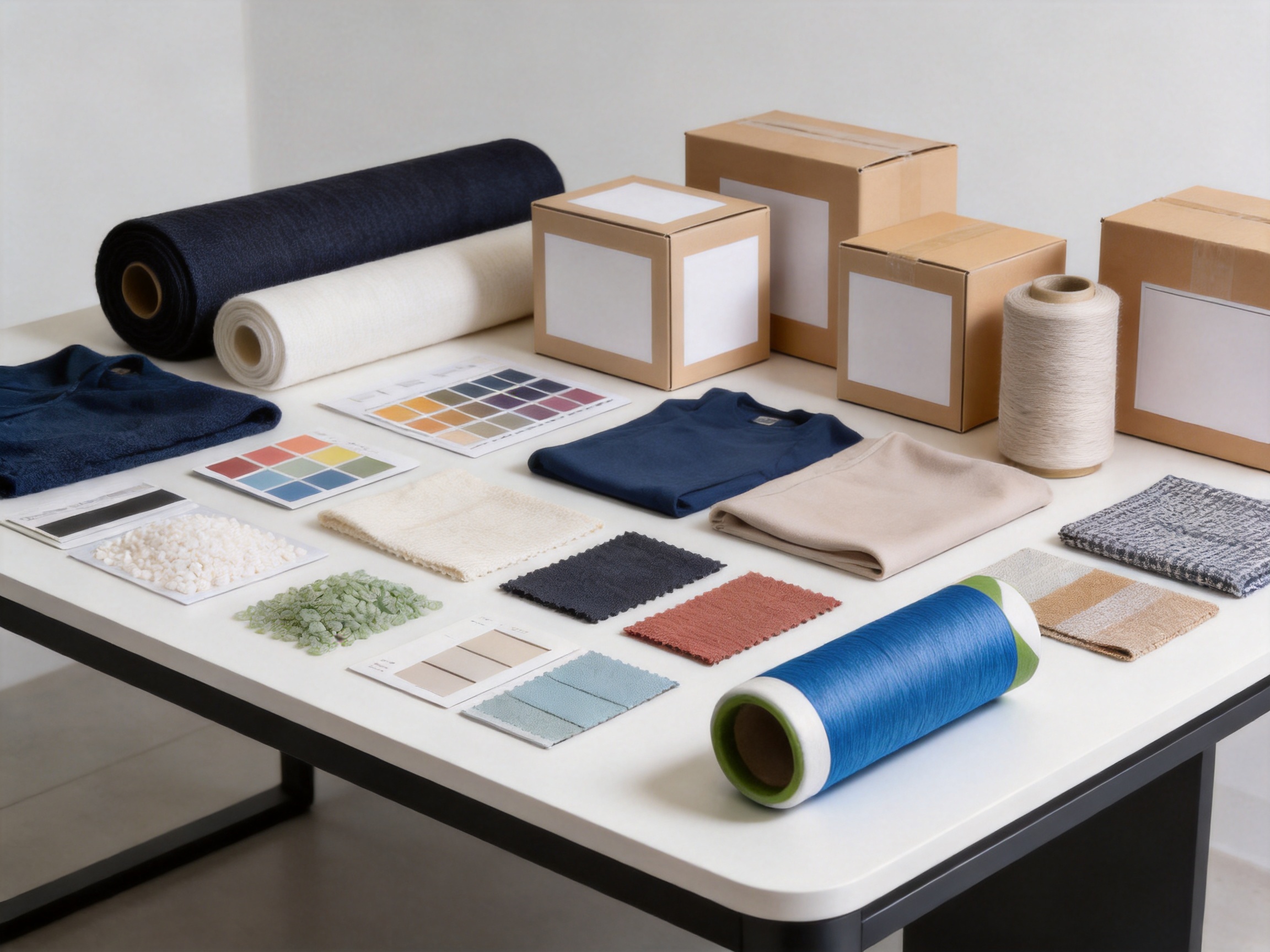
Applications in Knitting and Weaving
Drop-dyed DTY yarn is suitable for both knitting and weaving, depending on the specification and processing conditions. In circular knitting, DTY provides softness, stretch, and bulk. It can be used for T-shirts, sportswear, leggings, casualwear, linings, brushed fabrics, and thermal fabrics. Fine filament yarns can improve the smoothness of the fabric surface, while high-elastic options can support comfort stretch.
In warp knitting, DTY can be used for mesh fabrics, sports fabrics, lining materials, decorative textiles, and functional fabrics. Consistent yarn tension and package quality are especially important in warp knitting because many ends run simultaneously. Any inconsistency can create defects across the fabric width.
In weaving, DTY yarn may be used as weft or warp depending on the machine type and fabric design. It can create soft woven fabrics, peach-skin effects, matte surfaces, and textured hand feel. Heavier deniers can provide coverage and durability, while cationic combinations can create decorative color effects.
For home textiles, drop-dyed yarn can support curtains, bedding fabrics, upholstery-inspired materials, cushion fabrics, and decorative textiles. Full-dull and high-filament yarns are often useful for elegant, soft, low-luster appearances. Hollow warm yarns can support comfort and thermal effects in bedding-related products.
Why Buyers Choose a Differentiated Yarn Supplier
Price is always important in textile sourcing, but the lowest price does not always create the lowest total cost. Poor yarn consistency can cause machine stoppages, fabric defects, re-dyeing, delivery delays, and customer claims. A differentiated yarn supplier reduces these hidden costs through technical stability and product support.
Buyers choose a supplier with a broad drop-dyed yarn portfolio because it improves development speed. When a brand requests a new fabric, the mill can ask for several yarn alternatives quickly. The supplier can recommend denier, filament count, luster, elasticity, and functional direction based on the target fabric. This saves trial time.
Another reason is repeat-order reliability. A successful fabric may be reordered many times. If the yarn supplier cannot maintain shade, count, or performance consistency, the fabric mill may lose the customer. Export-oriented yarn manufacturing and batch control help protect repeat-order business.
Customization is also important. The supplied product list notes that orders for all kinds of differentiation yarn can be accepted. This is valuable for customers who need special colors, unusual denier-filament combinations, recycled versions, cationic combinations, or functional modifications. Competitors with rigid product lists may not be able to respond.
Selection Guide for Fabric Developers
When choosing drop-dyed yarn, buyers should begin with the final fabric purpose. A lightweight sportswear fabric may require fine, soft, moisture-wicking yarn. A fashion lining may require semi-dull or full-dull yarn with smooth running performance. A winter fabric may benefit from hollow warm yarn or heavier high-filament DTY. A two-tone decorative fabric may require CD or SD+CD yarn.
The second step is choosing denier. Lower denier yarns create lighter fabrics, while higher denier yarns create heavier fabrics. The correct denier depends on target fabric weight, opacity, strength, and season. For example, 50D and 75D yarns are common for lightweight and medium fabrics, while 150D and 300D yarns are suitable for thicker or stronger textiles.
The third step is choosing filament count. Higher filament count often improves softness and smoothness. However, very high filament counts may require careful processing. The best choice depends on machine type, fabric construction, desired hand feel, and finishing method.
The fourth step is deciding whether special properties are required. If sustainability is important, recycled yarn should be considered. If stretch is needed, high-elastic or PBT/PET options may be suitable. If visual contrast is needed, cationic or SD+CD yarn may be selected. If safety or comfort performance is needed, fire-retardant, antibacterial, or moisture-wicking yarn can be tested.
The final step is trial and confirmation. Laboratory testing, small machine trials, dyeing or finishing tests, and fabric evaluation should be performed before bulk production. A professional supplier can help interpret trial results and adjust yarn selection if needed.
Packaging, Logistics, and Export Service
For international buyers, packaging and logistics are part of product quality. A yarn cone must arrive clean, stable, and ready for production. Poor packaging can cause cone deformation, contamination, moisture issues, or handling damage. Export-oriented suppliers typically use packaging methods that protect yarn during transportation and storage.
Clear labeling helps prevent lot mixing. Labels should identify product type, specification, lot number, color or shade reference, net weight, and other required details. For mills handling many yarn types at once, labeling accuracy is essential.
Communication also affects logistics. Buyers need accurate lead times, shipment planning, documentation, and quick updates. A supplier with extensive export experience can help coordinate these details more effectively. This reduces uncertainty and supports stable production planning.
The company’s address in Shengze Town, Suzhou City, Jiangsu Province, places it in one of China’s important textile regions. This location provides access to textile supply chains, fabric mills, dyeing and finishing resources, logistics channels, and technical talent. Regional strength supports faster development and practical industry communication.
Q&A Section
What is drop-dyed DTY yarn used for?
Drop-dyed DTY yarn is used for knitted and woven fabrics that require stable texture, color expression, softness, stretch, or differentiated visual effects. Common applications include sportswear, casualwear, linings, fashion fabrics, home textiles, decorative fabrics, and functional textiles.
How is DTY different from FDY and POY?
DTY is draw textured yarn, valued for bulk, softness, and elasticity. FDY is fully drawn yarn, usually smoother and flatter with stable strength. POY is partially oriented yarn, commonly used as feedstock for texturing into DTY. Each yarn type serves different fabric and processing needs.
Why choose drop-dyed yarn instead of ordinary greige yarn?
Drop-dyed yarn can integrate color or special shade behavior into the yarn stage, helping support more stable visual effects and differentiated fabric development. It can reduce dependence on certain downstream color processes depending on the application and may improve design consistency.
Can recycled drop-dyed yarn be used for export apparel fabrics?
Yes, recycled drop-dyed yarn can be used for export apparel fabrics when the specification, performance, and documentation meet customer requirements. It is especially suitable for brands that want sustainability-oriented materials with stable fabric performance.
What does 75/72 or 150/144 mean?
The first number indicates denier, which is the yarn’s linear density. The second number indicates filament count. For example, 75/72 means a 75-denier yarn composed of 72 filaments. Higher filament counts usually create a softer and smoother hand feel.
Which yarn should be selected for soft sportswear?
Soft sportswear often uses 50D, 75D, or 100D DTY with higher filament counts, moisture-wicking options, or high-elastic properties. The exact choice depends on fabric weight, stretch requirement, knitting structure, and finishing method.
Can cationic dyeable yarn create two-tone effects?
Yes. Cationic dyeable polyester can respond differently from regular polyester during dyeing. When CD yarn is combined with ordinary polyester or semi-dull yarn, it can create two-tone, heathered, or contrast effects in suitable fabric constructions.
What makes this product range competitive?
The main competitive strengths include broad specifications, recycled options, cationic dyeable series, high-elastic yarns, functional yarns, specialty products, export experience, R&D support, and the ability to accept differentiated yarn orders. This makes the product suitable for both standard production and customized fabric development.
Conclusion
Drop-dyed DTY yarn is a practical and versatile solution for textile manufacturers seeking color expression, stable performance, and product differentiation. Its value comes from more than its appearance. It supports better fabric design, broader application coverage, sustainability programs, functional textile development, and efficient sourcing.
The product range includes recycled, normal, cationic, high-elastic, functional, cotton-like, hollow warm, and air-covered yarn options. This breadth gives buyers the flexibility to develop many fabric types with coordinated technical support. From fine lightweight yarns to heavy high-filament counts, the portfolio covers common and specialized textile requirements.
Advanced manufacturing processes, disciplined quality control, color management, export service, and R&D capability strengthen the product’s competitive position. In a market where buyers need reliable suppliers and faster development cycles, a differentiated drop-dyed yarn platform offers clear advantages over ordinary commodity yarn.
For fabric mills, garment suppliers, and textile brands, choosing the right yarn is the first step toward a successful product. Drop-dyed DTY yarn provides a strong foundation for textiles that must look good, perform well, and meet modern market expectations.
References
1. Textile Institute. Textile Terms and Definitions.
2. Hearle, J. W. S., Hollick, L., and Wilson, D. K. Yarn Texturing Technology.
3. Fourne, F. Synthetic Fibers: Machines and Equipment, Manufacture, Properties.
4. Deopura, B. L., Alagirusamy, R., Joshi, M., and Gupta, B. Polyesters and Polyamides.
5. Kadolph, S. J. Textiles.
6. Saville, B. P. Physical Testing of Textiles.
Product: Drop-dyed Yarn

Popular products
-
Premium Cationic Interlock Stretch Comfort Fabric
-
Moisture-Wicking Nylon Woven Fabric
-
Double-faced jacquard elastic fabric
-
Heather Grey Double-faced cationic jersey fabric
-
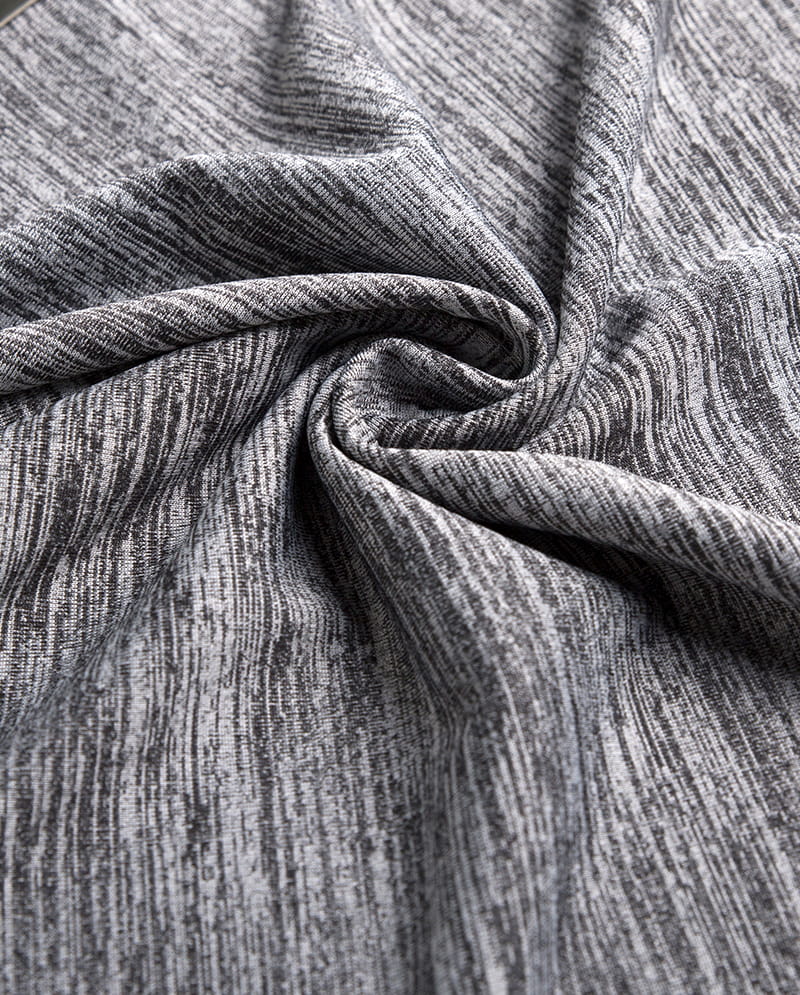
Anti-static Cationic Knitted Rib Fabric
-
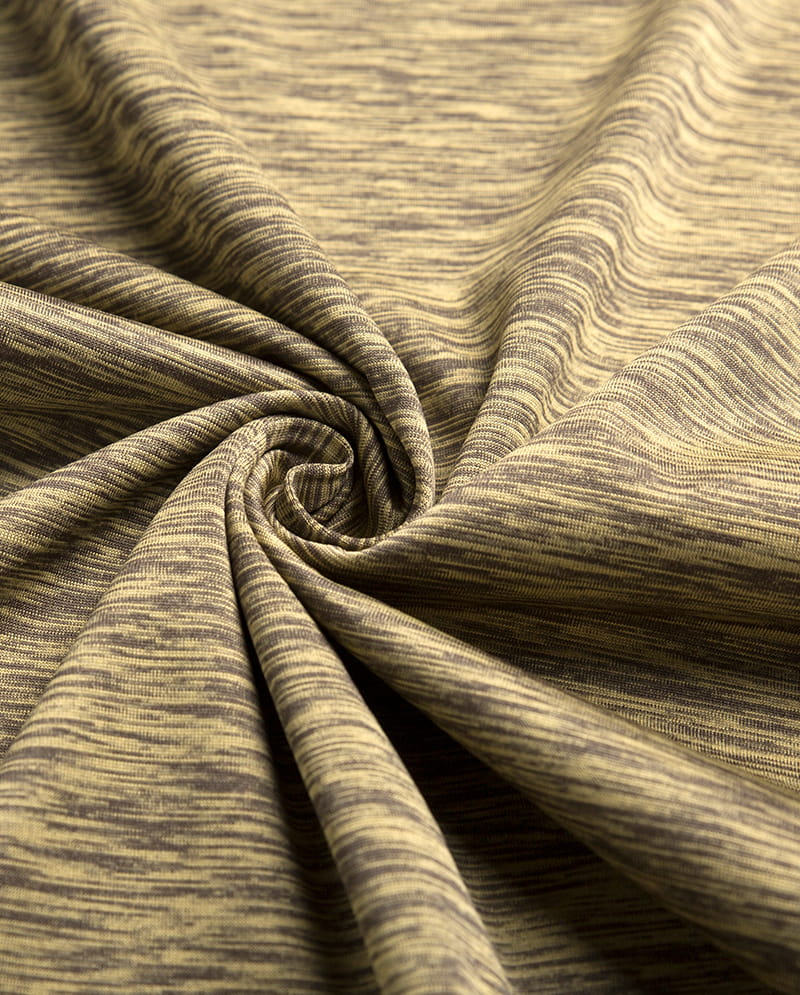
High-Stretch Cationic Jersey Fabric
-
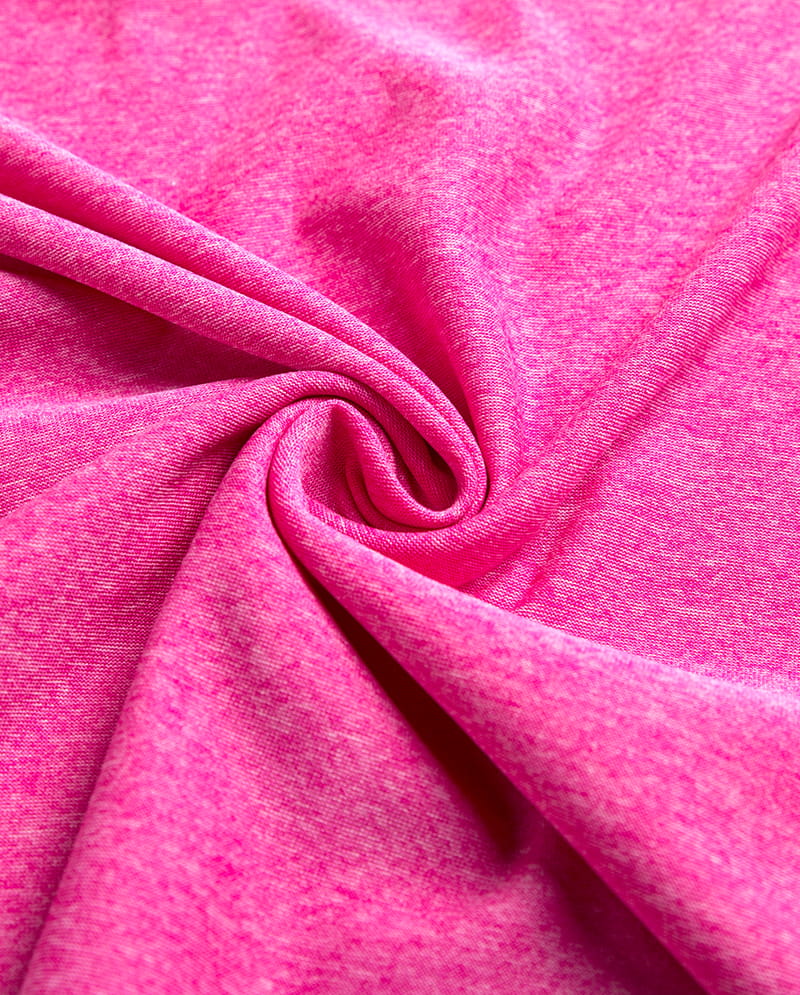
High Quality Cationic DTY Spandex Two Sides Brush Dralon Knit Fabric for Garment Thermal Underwear
-
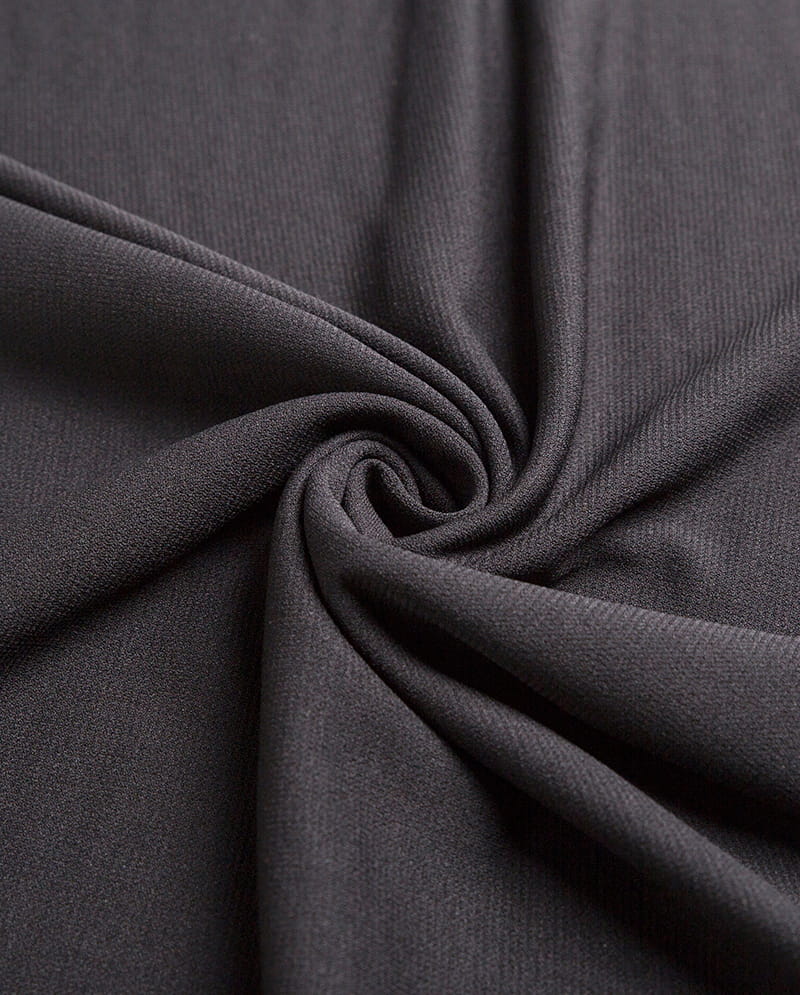
Durable Anti-Pilling Knitted Fabric for Home Textiles
-
Wash-Resistant Cationic Elastic Knitted Fabric for Garment Industry
-
Breathable Double-Faced Elastic Composite Fabric
-
-
-
- whatsapp:
- 0086-13962559622
-
- skype:
- skype.aliceshenghong
-
- Wechat:

COPYRIGHT © 2016 Suzhou Junhui Textile Co., Ltd.
