

 EN
EN English
 中文简体
中文简体Drop-Dyed Yarn for High-Performance Textile Color Engineering
Content
- 1 Understanding Drop-Dyed Yarn
- 2 Why Drop-Dyed Yarn Matters in Today’s Textile Market
- 3 Key Product Advantages Over Conventional Yarn
- 4 Product Range and Specification Flexibility
- 5 Advanced Manufacturing Process
- 6 Quality Control from Yarn to Fabric Performance
- 7 Manufacturing Strengths Behind the Product
- 8 Comparison with Common Competitor Products
- 9 Applications in Apparel Fabrics
- 10 Applications in Home Textiles and Decorative Fabrics
- 11 Sustainability and Recycled Polyester Opportunities
- 12 Functional Enhancements for Higher-Value Textiles
- 13 Guidance for Yarn Selection
- 14 Packaging, Logistics, and Export Readiness
- 15 Q&A: Practical Questions About Drop-Dyed Yarn
- 15.1 What is the main benefit of drop-dyed yarn?
- 15.2 Is drop-dyed yarn only used for fashion fabrics?
- 15.3 How does drop-dyed yarn compare with ordinary DTY?
- 15.4 Can drop-dyed yarn be combined with recycled polyester?
- 15.5 What specifications are commonly available?
- 15.6 Does drop-dyed yarn require special dyeing conditions?
- 15.7 What makes the supplier’s manufacturing process important?
- 15.8 Can the yarn be customized?
- 16 Future Development of Drop-Dyed Yarn
- 17 Conclusion
- 18 References
Drop-dyed yarn is an advanced polyester yarn solution developed for textile producers that need stable color expression, flexible design effects, reliable processing performance, and strong commercial value. In modern fabric manufacturing, color is no longer only a surface treatment applied at the final stage; it is increasingly engineered into the yarn itself. By controlling color distribution, dye affinity, filament structure, elasticity, and finishing behavior at the yarn level, manufacturers can create fabrics with richer visual depth, better production efficiency, and more consistent quality across large orders.
As a specialized DTY yarn product, drop-dyed yarn is especially suitable for woven and knitted fabrics that require distinctive color effects, soft hand feel, dimensional stability, and reliable downstream performance. It can be used in apparel textiles, home textiles, sportswear, decorative fabrics, fashion accessories, upholstery, functional fabrics, and customized fabric developments. Compared with ordinary yarn that depends heavily on piece dyeing or post-finishing, drop-dyed yarn provides textile mills with more opportunities to reduce process complexity, enhance color variation, and develop differentiated products for competitive markets.
The product is supported by the manufacturing and service capabilities of Suzhou Junhui Textile Co., Ltd. and Suzhou Xiaoran New Materials Co., Ltd., enterprises focused on differentiated polyester yarn, recycled yarn, cationic dyeing yarn, flame-retardant yarn, microfine yarn, functional yarn, and knitted fabric products. With an emphasis on research, environmental responsibility, product consistency, and international service, the company has built a yarn portfolio that serves customers in many export markets and supports fast response for product selection, technical consultation, and application problem-solving.
Understanding Drop-Dyed Yarn
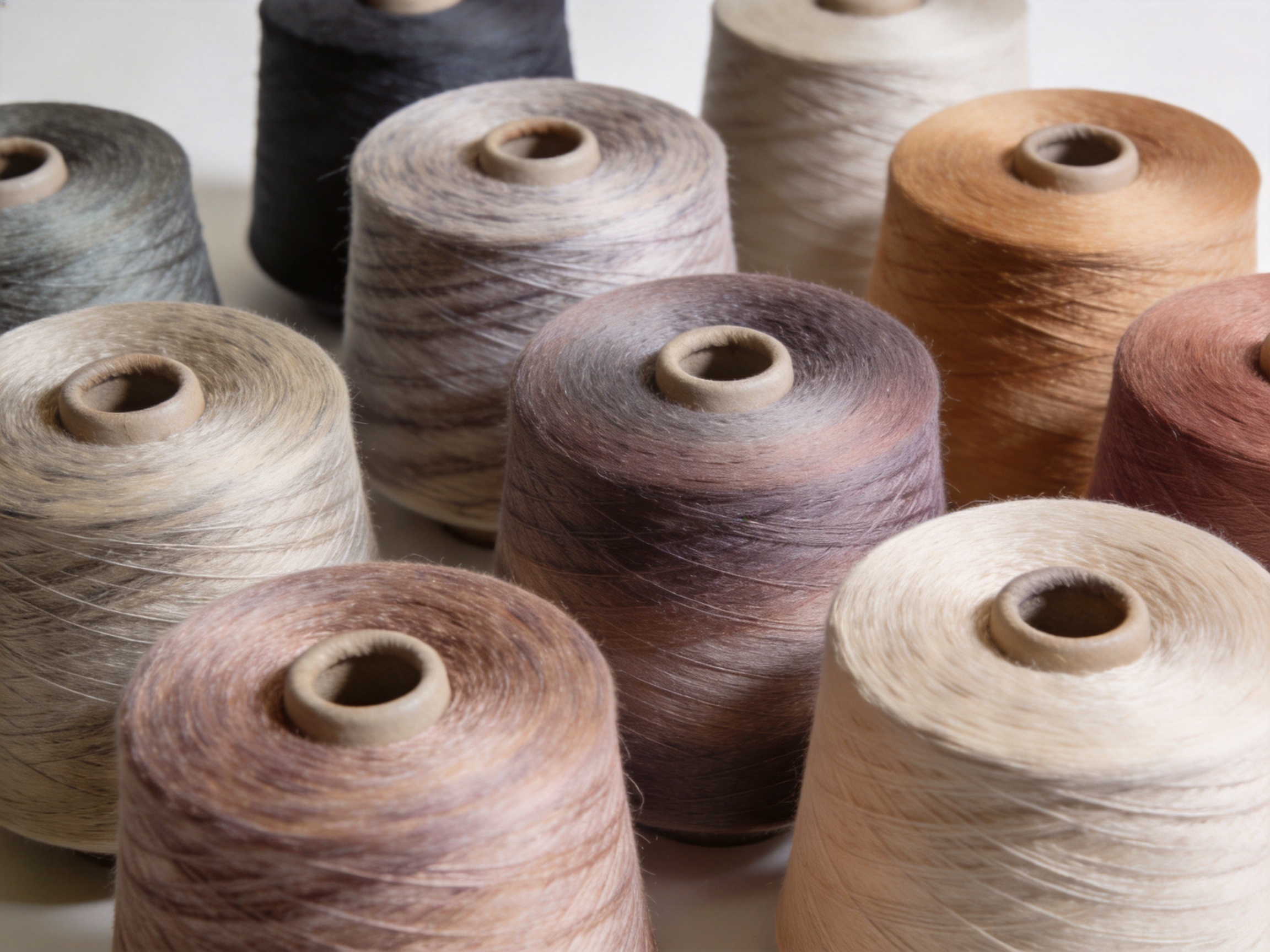
Drop-dyed yarn refers to yarn designed to create controlled color variation, irregular tonal transition, or distinctive dyeing performance within the yarn or fabric. In polyester textile development, this type of yarn is often associated with differential dyeing behavior, cationic dyeable components, dope-dyed or solution-colored elements, and textured filament structures that interact with light and dye in different ways. The result is a yarn that allows fabric designers to move beyond flat, uniform color and create nuanced surface effects without relying entirely on complex fabric printing or multiple finishing operations.
In the DTY category, drop-dyed yarn combines color engineering with drawn textured yarn technology. DTY, or drawn textured yarn, is produced by texturing partially oriented yarn through controlled drawing, heating, twisting, and untwisting. This process gives polyester filaments bulk, stretch, softness, and resilience. When drop-dyed color technology is integrated with DTY processing, the yarn becomes both visually expressive and mechanically practical. It offers a balance of color aesthetics and textile performance that is highly valued by modern mills.
The material base is typically polyester, which is widely used because of its strength, durability, easy care, wrinkle resistance, dimensional stability, and broad applicability. Polyester also supports multiple modification routes, including recycled content, semi-dull and full-dull finishes, cationic dyeable modification, flame-retardant additives, moisture-wicking structures, hollow warmth designs, and composite yarn technologies. Drop-dyed yarn can therefore be positioned not only as a color yarn but also as a platform for functional and sustainable textile innovation.
Why Drop-Dyed Yarn Matters in Today’s Textile Market
Textile buyers increasingly demand fabric that looks distinctive, performs consistently, and supports efficient manufacturing. Conventional fabrics made from uniform white yarn often require additional dyeing, printing, washing, or finishing to reach the desired appearance. These processes can increase cost, extend production time, create color variation between batches, and add environmental pressure through water, chemicals, and energy consumption. Drop-dyed yarn addresses many of these challenges by integrating color and differentiation earlier in the textile supply chain.
For fashion brands, drop-dyed yarn enables flexible product development. Designers can obtain melange-like, heathered, shadow, gradient, or mixed-tone effects directly from yarn selection and fabric construction. This opens creative possibilities in casualwear, athleisure, sportswear, outerwear linings, scarves, home textiles, and decorative fabrics. The visual effect can be subtle or highly expressive depending on yarn count, filament number, luster, dyeable component, fabric structure, and finishing method.
For fabric mills, drop-dyed yarn offers operational advantages. By selecting a yarn that already carries special color behavior or differential dyeing characteristics, mills may reduce dependence on complicated fabric dyeing recipes. They can also achieve repeatable effects in knitting and weaving, shorten sampling cycles, improve shade development efficiency, and reduce the risk of uneven fabric appearance caused by inconsistent post-dyeing. This is particularly important when producing export orders where consistency, lead time, and compliance matter.
For end users, fabrics made with high-quality drop-dyed DTY can deliver comfortable touch, good stretch recovery, durable appearance, easy maintenance, and attractive color depth. Polyester DTY is known for its stable performance in daily use, and when it is engineered with advanced color effects, it supports both fashion and function. This combination is one reason differentiated polyester yarn continues to grow in global textile markets.
Key Product Advantages Over Conventional Yarn
The first major advantage of drop-dyed yarn is design differentiation. Ordinary polyester DTY may provide good mechanical performance, but its visual expression is often limited unless extra dyeing or printing is added. Drop-dyed yarn allows the color effect to originate from the yarn itself. This gives fabrics a richer, more natural, and more layered surface, helping finished products stand out from standard commodity textiles.
The second advantage is manufacturing efficiency. When the desired visual effect is built into the yarn, fabric producers can simplify certain downstream processes. Depending on the fabric design and final requirement, mills may reduce the need for complex post-dyeing, multi-bath dyeing, overprinting, or repeated sample adjustments. This can lower production risk and improve delivery control, especially for orders requiring consistent color effect across large volumes.
The third advantage is batch consistency. A well-managed yarn producer controls polymer selection, spinning conditions, texturing parameters, dyeability, luster, denier, filament count, winding quality, and package formation. These controls help downstream customers obtain stable fabric appearance. In competitive export markets, consistency is as important as creativity. A beautiful sample has limited commercial value if it cannot be repeated in bulk production. Drop-dyed yarn produced under controlled manufacturing systems helps reduce this problem.
The fourth advantage is compatibility with diversified product lines. Drop-dyed effects can be combined with recycled polyester, semi-dull yarn, full-dull yarn, cationic dyeable yarn, high-elastic yarn, PBT/PET composite yarn, flame-retardant yarn, antibacterial yarn, moisture-wicking yarn, hollow warm yarn, cotton-like yarn, and air-covered yarn structures. This means textile mills can build collections that are not only colorful but also functional, sustainable, elastic, warm, or comfortable.
The fifth advantage is value creation. Commodity yarn competition often focuses on price, but differentiated yarn creates higher product value. A fabric made with special drop-dyed DTY can be positioned as a fashion fabric, performance fabric, eco-conscious fabric, or customized textile material. This allows mills and brands to avoid purely price-driven competition and move toward design, quality, and technical service as selling points.
Product Range and Specification Flexibility
One of the strengths behind the drop-dyed yarn offering is a broad specification platform. Textile producers need different yarn counts and filament combinations for different fabric structures. Fine denier yarns may be used for soft, lightweight, high-density fabrics, while medium and heavy denier yarns are suitable for thicker knitted fabrics, decorative textiles, upholstery, and outerwear materials. Filament count also affects hand feel, coverage, luster, drape, and surface texture.
The available portfolio includes many DTY and FDY-related options, including recycled series, normal series, cationic dyeable series, high-elastic series, and functional series. Common structures include 15/6, 20/12-24, 30/12-24-36-72, 50/36-48-72-144, 75/36-48-72-144, 100/36-48-96-144, 150/48-96-144-288, 200/96-288-384, and 300/96-192-288-576. These combinations reflect the relationship between denier and filament count, helping mills select yarn according to fabric weight, softness, opacity, elasticity, and desired visual effect.
Cationic dyeable and semi-dull plus cationic combinations are particularly useful for two-tone effects and differential dyeing. Specifications such as 50/48-72, 75/48-72, 80/72, 100/72-108-144, 125/72-144, 150/72-108-144, and 300/96-144-288 give customers multiple routes for developing fabrics with contrast, depth, and special shade response. White and black combinations, as well as special B01, B02, and B03 effects, may be applied where visible color contrast is required.
| Product Direction | Typical Specification Examples | Main Value for Fabric Producers |
| Drop-dyed DTY | 75/36-72, 150/48, 300/96 | Distinctive yarn-level color effect, stable textured performance, strong design differentiation |
| Recycled DTY and FDY | 50/72, 75/36, 75/72, 150/144, 300/96-288 | Supports sustainability goals while maintaining polyester yarn utility |
| Cationic Dyeable DTY | 50/36-72, 75/36-72-144, 100/36-144, 150/48-288 | Enables differential dyeing, two-tone effects, and improved shade development |
| Semi-dull plus Cationic DTY | 50/48-72, 75/48-72, 100/72-144, 150/72-144 | Combines controlled luster with color contrast and design flexibility |
| High-elastic Yarn | 30/12, 50/36-72, 75/36-72, 150/48-144 | Provides stretch, resilience, and comfort for active and fitted textiles |
| Functional Yarn | Flame-retardant, antibacterial, moisture-wicking, hollow warm, cotton-like | Adds performance value for safety, hygiene, comfort, warmth, and touch |
Advanced Manufacturing Process
High-quality drop-dyed yarn begins with careful raw material selection. Polyester chips, recycled polyester feedstock, cationic dyeable components, and functional additives must meet defined technical standards before production. Moisture content, intrinsic viscosity, melting behavior, contamination level, color stability, and compatibility with spinning equipment all influence yarn quality. Advanced manufacturers conduct inspection and classification at the material stage to prevent defects from entering the production line.
The next important step is drying and melt preparation. Polyester is sensitive to moisture during high-temperature melting. If moisture is not properly controlled, hydrolysis may occur, leading to reduced molecular weight, weakened filament strength, poor spinning stability, and increased breakage. Controlled drying systems remove excess moisture from polyester chips before extrusion, ensuring stable melt viscosity and smoother filament formation.
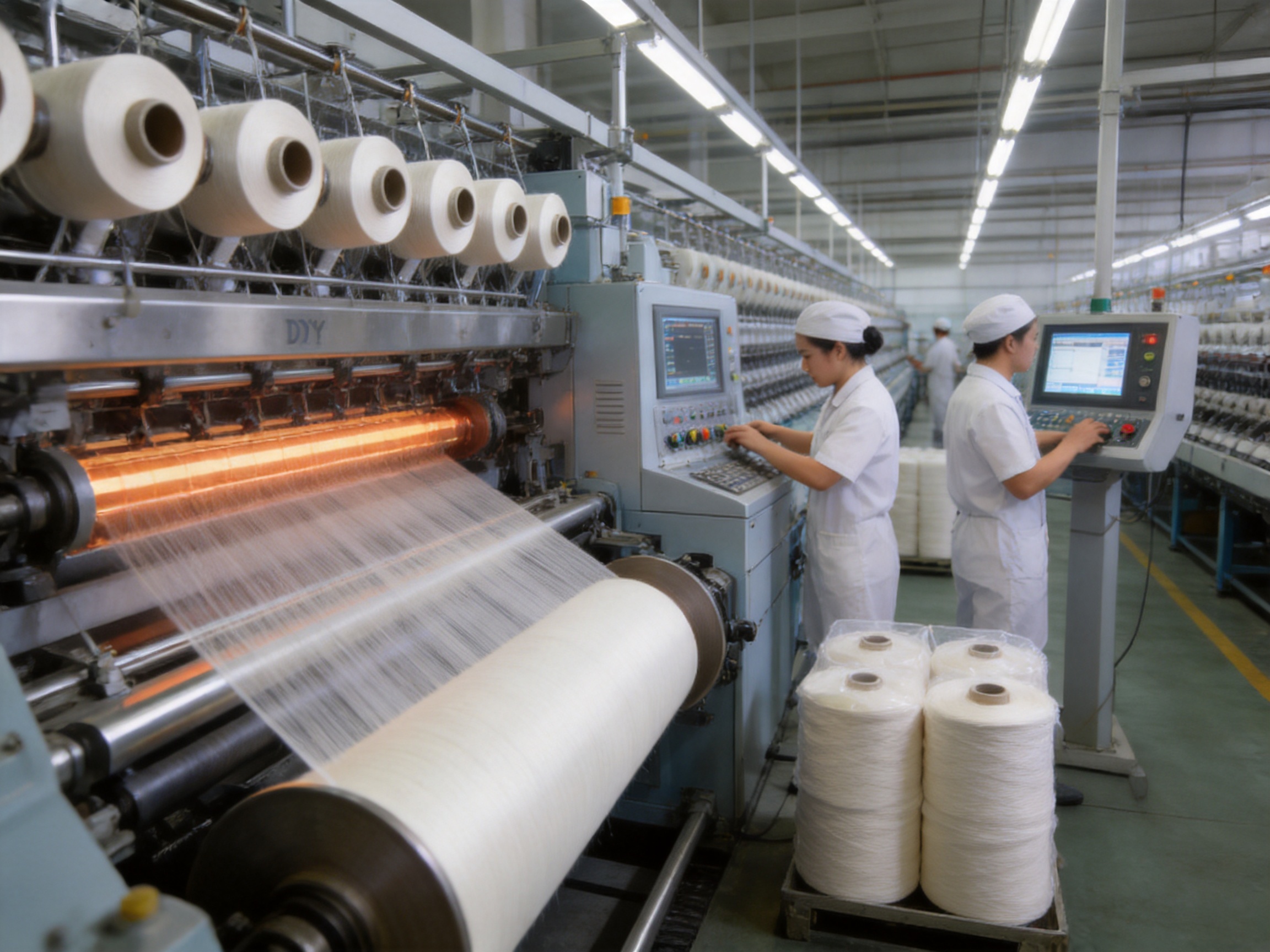
During spinning, polymer melt is filtered, metered, and extruded through spinnerets to form continuous filaments. The quality of spinnerets, melt filtration, cooling air, winding tension, and take-up speed directly affects filament uniformity. For differentiated yarn, process precision is especially important because variations in filament structure can influence dye uptake, luster, shrinkage, and fabric appearance. Consistent spinning creates the foundation for reliable DTY production.
For partially oriented yarn that will become DTY, texturing is the key transformation stage. The yarn is drawn and textured through a controlled false-twist process. Heat setting, draw ratio, friction disc condition, yarn tension, processing speed, and cooling conditions must be carefully managed. Proper texturing gives the yarn crimp, bulk, elasticity, and soft hand feel. It also improves coverage in fabric and helps create the desired surface texture.
When drop-dyed or differential dyeing behavior is required, additional process control is applied to component selection and dyeability management. Cationic dyeable polyester, semi-dull and full-dull components, recycled components, black-and-white combinations, or special modified yarn structures may be used. These materials respond differently to dyes or light, producing the final visual effect. The manufacturer must understand how yarn composition will behave during fabric dyeing, finishing, heat setting, washing, and garment use.
Quality Control from Yarn to Fabric Performance
Yarn quality cannot be evaluated only by appearance. A reliable drop-dyed yarn must perform well through knitting, weaving, dyeing, finishing, cutting, sewing, and final use. Therefore, comprehensive quality control is essential. Typical control points include denier accuracy, filament count, tenacity, elongation, crimp contraction, boiling water shrinkage, oil content, intermingling, color uniformity, package density, winding shape, and dyeing response.
Denier accuracy ensures that fabric weight and hand feel remain consistent. If yarn count varies, fabric GSM, opacity, drape, and thickness may fluctuate. Filament quality influences softness, pilling tendency, strength, and surface smoothness. Proper elongation and crimp provide stretch and recovery for knitted fabrics, while controlled shrinkage prevents fabric distortion during heat treatment.
Oil content is another important technical parameter. DTY requires spin finish or texturing oil to reduce friction and improve processing. Too little oil may cause yarn breakage, static electricity, and poor machine running. Too much oil may affect dyeing, finishing, or fabric cleanliness. Stable oiling contributes to smooth unwinding and efficient textile production.
Package quality is particularly important for modern high-speed knitting and weaving. Poor winding can cause tension variation, yarn slippage, broken ends, or uneven fabric appearance. A professional yarn producer pays attention to package hardness, shape, tailing, net weight, and unwinding behavior. These details may seem small, but they strongly influence customer production efficiency.
Color-related quality control includes not only shade checking but also dyeability testing. Drop-dyed yarn must achieve the intended color response when processed under recommended dyeing conditions. Laboratory testing, sample fabric trials, and customer feedback are used to refine product performance. This combination of technical testing and application testing gives fabric mills more confidence when moving from sample to bulk production.
Manufacturing Strengths Behind the Product
The competitive value of drop-dyed yarn depends not only on the yarn itself but also on the strength of the manufacturer behind it. Suzhou Junhui Textile Co., Ltd. and Suzhou Xiaoran New Materials Co., Ltd. focus on differentiated yarn development and sales, including recycled yarn, polyester drop-dyed yarn, cationic dyeing yarn, flame-retardant yarn, microfine yarn, functional yarn, and knitted fabric products. This broad specialization allows the company to respond to market trends with flexible technical solutions rather than single-purpose commodity yarn.
The company emphasizes research and development. In differentiated textiles, innovation requires understanding polymer science, spinning technology, dyeing behavior, fabric construction, finishing conditions, and end-use requirements. A professional R&D team can help customers select yarn specifications, develop new fabric effects, solve dyeing or processing problems, and build customized yarn solutions. This support is especially valuable for customers producing export orders or developing seasonal collections under tight schedules.
Another strength is international market experience. With a high proportion of products exported and customer relationships across many countries, the company understands the practical requirements of global textile trade. Export customers often need stable quality, clear communication, rapid sampling, compliance awareness, reliable packaging, and timely delivery. A manufacturer serving international markets must be disciplined in production planning and responsive in service.
The company also positions itself as a service-oriented textile enterprise. This is important because yarn selection is rarely a simple purchase decision. The same denier may behave differently depending on fabric structure, machine gauge, dyeing process, finishing temperature, and final application. Professional guidance helps customers avoid mismatches and reduce trial costs. The ability to provide support within a short response time is a meaningful advantage in fast-moving textile markets.
Comparison with Common Competitor Products
Many standard yarn suppliers compete primarily on low price and basic specifications. While such yarn may be sufficient for simple fabrics, it often lacks the specialized dyeing behavior, application support, and consistent process control required for differentiated products. Drop-dyed yarn from a focused differentiated-yarn manufacturer offers a broader technical foundation and stronger design value.
Compared with ordinary white DTY, drop-dyed yarn can create more complex color effects without depending entirely on post-fabric treatment. This reduces development limitations and gives designers more creative freedom. Ordinary white DTY may require additional printing or dyeing to produce special effects, which can increase cost and environmental burden. Drop-dyed yarn helps move part of the value creation upstream into yarn engineering.
Compared with simple space-dyed or low-control fancy yarn, high-quality drop-dyed DTY provides better repeatability. Some decorative yarns look attractive in small samples but are difficult to reproduce consistently in bulk. A supplier with controlled spinning, texturing, and dyeability management can reduce variation and help customers maintain stable appearance across production lots.
Compared with suppliers that only offer a narrow range of yarn, the available portfolio gives customers more flexibility. Recycled options support sustainability programs. Cationic dyeable options support two-tone effects. High-elastic options support comfort and stretch. Functional options support flame retardancy, antibacterial performance, moisture management, warmth, and cotton-like touch. This integrated range reduces the need for customers to source from multiple suppliers when developing complex textile collections.
Compared with competitors without strong technical service, the company’s application-oriented support helps reduce hidden costs. Yarn price is only one part of total cost. If yarn causes machine stoppage, dyeing failure, shade inconsistency, fabric defects, or delayed shipment, the real cost becomes much higher. Reliable technical support, stable production, and careful specification matching can create greater savings than a small difference in yarn unit price.
Applications in Apparel Fabrics
Drop-dyed DTY is well suited for apparel fabrics because it combines softness, stretch, durability, and expressive color. In casualwear, it can create heathered or mixed-tone surfaces that look more natural and less flat than conventional solid-dyed polyester. This is useful for T-shirts, hoodies, joggers, dresses, fashion tops, and lightweight jackets. The yarn helps garments appear more textured and premium while maintaining polyester’s practical advantages.
In sportswear and athleisure, DTY’s elasticity and resilience support movement and comfort. When combined with moisture-wicking or high-elastic yarn technologies, drop-dyed effects can be used in leggings, training tops, yoga wear, running shirts, and active jackets. The fabric can provide a modern visual style while also meeting performance expectations such as quick drying, shape retention, and easy care.
In outerwear linings and shell fabrics, drop-dyed yarn can create subtle depth and visual interest. Full-dull and semi-dull finishes can reduce excessive shine and create a softer appearance. Cationic dyeable combinations can create two-tone surfaces that add fashion value without heavy printing. For brands seeking lightweight, durable, and attractive polyester fabrics, drop-dyed yarn provides practical design options.
In knitwear and sweater-like fabrics, cotton-like yarn and high-filament DTY can create a warm, soft, and comfortable hand feel. Drop-dyed color effects add depth similar to natural blended fibers. This allows polyester-based fabrics to imitate the visual richness of cotton, wool blends, or melange yarn while offering easier care and stronger dimensional stability.
Applications in Home Textiles and Decorative Fabrics
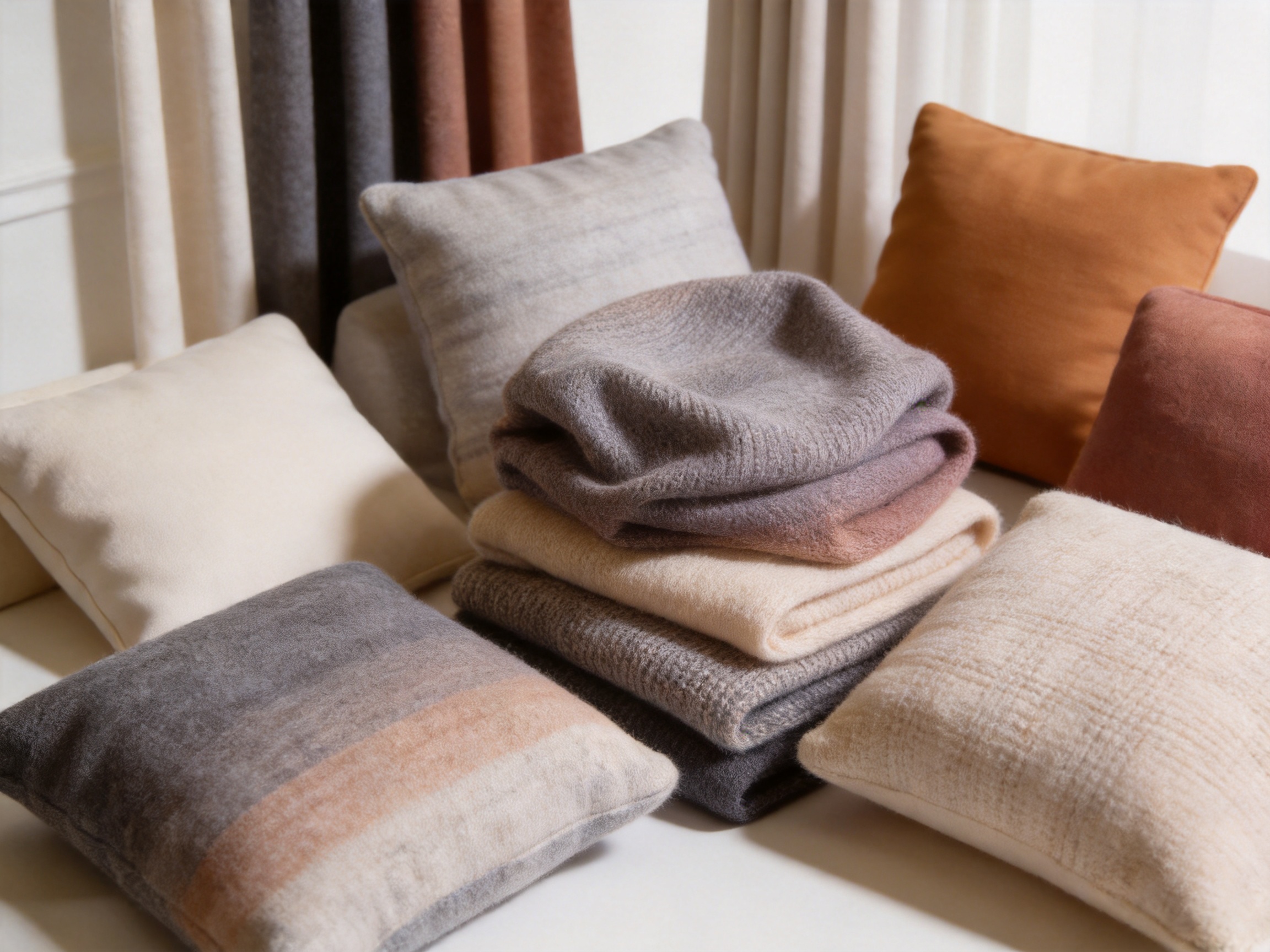
Home textile products require a balance of beauty, durability, and production efficiency. Drop-dyed yarn is suitable for curtains, sofa fabrics, cushions, bedding fabrics, decorative panels, wall coverings, table textiles, and indoor textile accessories. The color variation created by the yarn can give home fabrics a richer and more elegant appearance than plain solid polyester.
In curtains, yarn-level color depth can improve the way fabric interacts with light. Semi-dull or full-dull polyester can reduce harsh reflection, while textured yarn adds body and drape. Drop-dyed effects can create natural transitions or decorative tones that complement modern interior design. For hotels, apartments, offices, and residential projects, these effects help create a refined atmosphere.
In upholstery and cushions, durability is essential. Polyester DTY provides strength, abrasion resistance, and easy maintenance. By using drop-dyed or differential dyeing yarn, fabric makers can create surface effects that hide minor wear better than flat solid colors. This is useful for products that must retain good appearance after daily use.
In bedding and soft home textiles, fine denier and high-filament yarns can improve softness and comfort. Functional additions such as antibacterial or moisture-wicking properties may enhance hygiene and comfort. Drop-dyed color effects can support coordinated textile collections, allowing producers to develop multiple shades and textures from related yarn platforms.
Sustainability and Recycled Polyester Opportunities
Sustainability is a central issue in the textile industry. Brands and consumers are paying more attention to resource use, waste reduction, carbon impact, chemical management, and product life cycle. Recycled polyester yarn is one of the practical routes for improving the environmental profile of synthetic textiles. The product portfolio includes recycled DTY and FDY options, supporting customers who need eco-conscious yarn solutions.
Recycled polyester can be produced from post-consumer or post-industrial polyester materials, such as recycled bottles or polyester waste streams. When properly processed, it can offer performance suitable for many textile applications. Combining recycled content with drop-dyed or differential dyeing effects allows fabric manufacturers to create products that communicate both sustainability and design value.
Using differentiated recycled yarn can help mills and brands avoid the perception that sustainable products must be plain or limited in style. Recycled drop-dyed yarn can support attractive colors, special surface effects, and functional fabric development. This is important because sustainable textiles must still meet consumer expectations for appearance, comfort, and durability.
From a manufacturing perspective, recycled yarn requires careful quality control. Feedstock consistency, filtration, spinning stability, color control, and mechanical properties must be managed. A manufacturer experienced in recycled series yarn can help customers select appropriate specifications and understand the differences between recycled and virgin polyester in processing. This technical guidance supports smoother adoption of sustainable materials.
Functional Enhancements for Higher-Value Textiles
Drop-dyed yarn can be combined with functional yarn technologies to create products that serve specific markets. Flame-retardant yarn is used where improved fire safety is needed, such as certain home textiles, public-space fabrics, protective applications, and decorative materials. When color differentiation is added, flame-retardant fabrics do not need to be visually plain; they can maintain attractive design characteristics.
Antibacterial yarn supports hygiene-focused applications. It may be used in apparel, linings, home textiles, bedding, and other fabrics where odor control or microbial resistance is valued. As consumers pay more attention to cleanliness and wellness, antibacterial textile solutions have become more relevant. Combining antibacterial properties with attractive drop-dyed effects allows manufacturers to offer both function and fashion.
Moisture-wicking yarn improves comfort by helping move moisture away from the skin. This is important for sportswear, casual activewear, uniforms, and warm-weather garments. Polyester is already quick drying compared with many natural fibers, and engineered moisture management can further improve wear comfort. Drop-dyed moisture-wicking yarn allows active fabrics to look more stylish while supporting performance.
Hollow warm yarn is designed to enhance thermal insulation by using filament structures that trap air. This can be useful for lightweight warmth in apparel and home textiles. Cotton-like yarn is designed to deliver a softer, more natural touch, making polyester fabrics feel more comfortable and familiar. Air-covered yarn structures provide stretch and composite performance for garments requiring elasticity. These functional categories show how drop-dyed yarn can be part of a broader performance textile strategy.
Guidance for Yarn Selection
Selecting the right drop-dyed yarn begins with defining the final fabric purpose. A lightweight fashion knit may require fine denier, high filament count, soft hand feel, and elegant color depth. A sportswear fabric may require elasticity, moisture management, recovery, and colorfastness. A curtain fabric may require controlled luster, drape, dimensional stability, and decorative color effect. An upholstery fabric may require durability, coverage, abrasion resistance, and stable appearance.
The next factor is fabric structure. Circular knitting, warp knitting, weaving, jacquard, dobby, fleece, mesh, and double-knit structures all interact differently with yarn. A yarn that looks subtle in one construction may appear stronger in another. Filament count affects surface smoothness and opacity. Denier affects thickness and weight. Texturing level affects bulk and stretch. Luster affects visual brightness. Cationic content affects dyeing contrast.
Dyeing and finishing conditions must also be considered. Temperature, dye type, bath ratio, pH, finishing chemicals, heat setting, washing, and mechanical finishing can influence the final result. Customers should conduct sample trials under production-like conditions before confirming bulk orders. Professional yarn suppliers can provide recommendations and help interpret trial results.
Cost and value should be evaluated together. A higher-performance drop-dyed yarn may cost more than standard commodity DTY, but it may reduce downstream processing, improve fabric value, decrease defect rates, shorten development time, and support premium product positioning. The correct evaluation should include total production cost, fabric selling price, delivery reliability, and customer satisfaction.
Packaging, Logistics, and Export Readiness
For international customers, packaging and logistics are essential parts of product quality. Yarn must arrive clean, dry, undamaged, and ready for use. Proper packaging protects packages from moisture, dust, compression, deformation, and contamination during storage and transport. Carton strength, pallet arrangement, labeling, package weight, and batch identification all influence warehouse handling and production planning.
Clear labeling helps customers manage inventory and traceability. Information such as specification, lot number, net weight, gross weight, package count, and production batch supports efficient use in mills. Traceability is especially important when customers produce export fabrics for brands that require quality documentation and batch control.
Export experience also improves communication. International buyers may need technical documents, sample arrangements, shipment coordination, and quick responses across time zones. A service-oriented supplier that is familiar with global trade can help reduce delays and misunderstandings. In textile manufacturing, quick and accurate communication often prevents small issues from becoming costly production problems.
Q&A: Practical Questions About Drop-Dyed Yarn
What is the main benefit of drop-dyed yarn?
The main benefit is that it creates differentiated color effects and visual depth at the yarn level while maintaining the processing advantages of polyester DTY. This helps fabric manufacturers develop more attractive products with improved efficiency and stronger market differentiation.
Is drop-dyed yarn only used for fashion fabrics?
No. It is widely applicable in fashion apparel, sportswear, casualwear, home textiles, decorative fabrics, upholstery, linings, accessories, and functional textiles. Its value depends on the selected specification, fabric construction, and finishing process.
How does drop-dyed yarn compare with ordinary DTY?
Ordinary DTY mainly provides texture, stretch, and softness, but it usually needs additional dyeing or printing for special visual effects. Drop-dyed yarn adds color engineering and differential appearance potential, allowing mills to create more distinctive fabrics while keeping DTY’s mechanical advantages.
Can drop-dyed yarn be combined with recycled polyester?
Yes. Recycled polyester DTY and FDY options can be developed with differentiated color effects. This allows customers to produce fabrics that support sustainability goals while maintaining attractive design and reliable performance.
What specifications are commonly available?
Common examples include 50/36-48-72-144, 75/36-48-72-144, 100/36-48-96-144, 150/48-96-144-288, and 300/96-192-288-576, along with cationic dyeable and functional variations. The best specification depends on the fabric application.
Does drop-dyed yarn require special dyeing conditions?
It may require recommended dyeing conditions depending on the yarn structure and desired effect. Cationic dyeable components, semi-dull combinations, and functional additives can influence dye selection and processing. Sample testing is recommended before bulk production.
What makes the supplier’s manufacturing process important?
Drop-dyed yarn depends on precise control of raw materials, spinning, texturing, dyeability, winding, and quality testing. A manufacturer with strong R&D and process control can provide more consistent yarn, better repeatability, and stronger technical support for fabric mills.
Can the yarn be customized?
Yes. Customization may include denier, filament count, luster, recycled content, dyeing behavior, elasticity, functional performance, and fabric application support. Custom development should be based on sample trials and clear performance targets.
Future Development of Drop-Dyed Yarn
The future of drop-dyed yarn is closely connected with the future of differentiated textile materials. As textile markets become more competitive, customers will continue to seek products that combine appearance, comfort, function, sustainability, and efficiency. Yarn-level innovation will become increasingly important because it influences every stage of fabric development.
One future direction is more sustainable color engineering. The textile industry is under pressure to reduce water consumption, dyeing chemicals, wastewater load, and carbon impact. Yarn technologies that reduce downstream processing or improve dyeing efficiency will become more valuable. Recycled drop-dyed yarn, solution-colored components, and optimized differential dyeing systems may all contribute to more responsible production.
Another direction is multi-function integration. Customers may no longer be satisfied with yarn that offers only color effect. They may want drop-dyed yarn that is also moisture-wicking, antibacterial, flame-retardant, elastic, hollow warm, or cotton-like. Manufacturers with broad product portfolios and strong R&D capabilities will be better positioned to meet these complex demands.
Digital textile development will also influence yarn selection. Faster sampling, virtual fabric presentation, and short-cycle fashion development require suppliers that can respond quickly and provide stable repeatable materials. Drop-dyed yarn with reliable specification control supports this trend by enabling mills to develop distinctive fabrics without excessive trial-and-error.
Finally, global supply chains will continue to value communication, technical service, and trust. A yarn supplier that understands customer applications, responds quickly, and supports problem-solving provides value beyond the product itself. In this sense, drop-dyed yarn is not only a material but also part of a collaborative development system between yarn producer, fabric mill, brand, and end market.
Conclusion
Drop-dyed yarn is a high-value DTY yarn solution for textile manufacturers seeking stronger design expression, stable processing, and competitive differentiation. By integrating color effect, texturing performance, specification flexibility, and functional potential, it helps fabric producers create products that stand out in apparel, home textiles, sportswear, decorative fabrics, and customized textile applications.
Its advantages over conventional yarn include richer visual depth, improved manufacturing efficiency, better batch repeatability, compatibility with recycled and functional yarn systems, and stronger market value. When supported by advanced manufacturing processes such as controlled raw material selection, precise spinning, professional texturing, dyeability management, quality testing, and application-oriented service, drop-dyed yarn becomes a practical tool for both creative design and industrial production.
Suzhou Junhui Textile Co., Ltd. and Suzhou Xiaoran New Materials Co., Ltd. provide a strong manufacturing and service platform for this type of product, with experience in differentiated polyester yarn, recycled yarn, cationic dyeing yarn, flame-retardant yarn, microfine yarn, functional yarn, and knitted fabric development. For customers seeking reliable yarn solutions, customized specification support, and fast technical communication, drop-dyed yarn offers a pathway to more attractive, efficient, and market-ready textiles.
References
1. Hearle, J. W. S. Textile Fibers: A Comparative Overview of Structure, Properties, and Applications.
2. Deopura, B. L., Alagirusamy, R., Joshi, M., and Gupta, B. Polyesters and Polyamides: Textile Progress and Industrial Applications.
3. Fourne, F. Synthetic Fibers: Machines and Equipment, Manufacture, Properties.
4. Lewin, M. Handbook of Fiber Chemistry.
5. Horrocks, A. R., and Anand, S. C. Handbook of Technical Textiles.
6. Textile Institute. Textile Terms and Definitions.
7. Karmakar, S. R. Chemical Technology in the Pre-Treatment Processes of Textiles.
8. Broadbent, A. D. Basic Principles of Textile Coloration.

Popular products
-
Premium Cationic Interlock Stretch Comfort Fabric
-
Moisture-Wicking Nylon Woven Fabric
-
Double-faced jacquard elastic fabric
-
Heather Grey Double-faced cationic jersey fabric
-
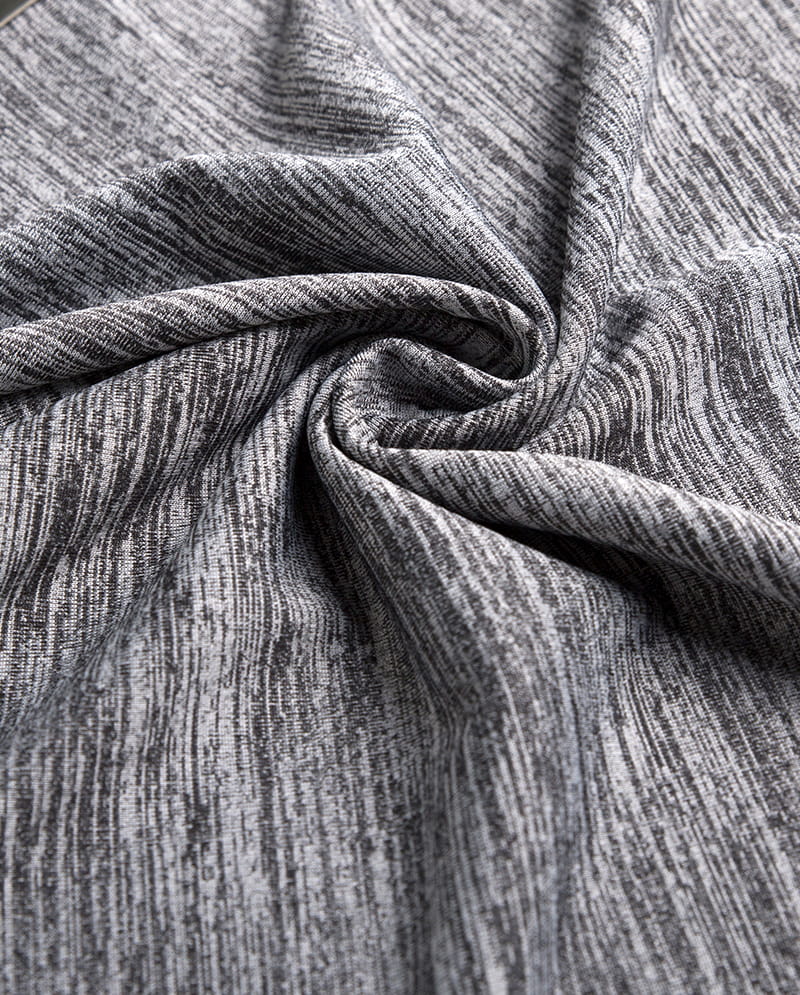
Anti-static Cationic Knitted Rib Fabric
-
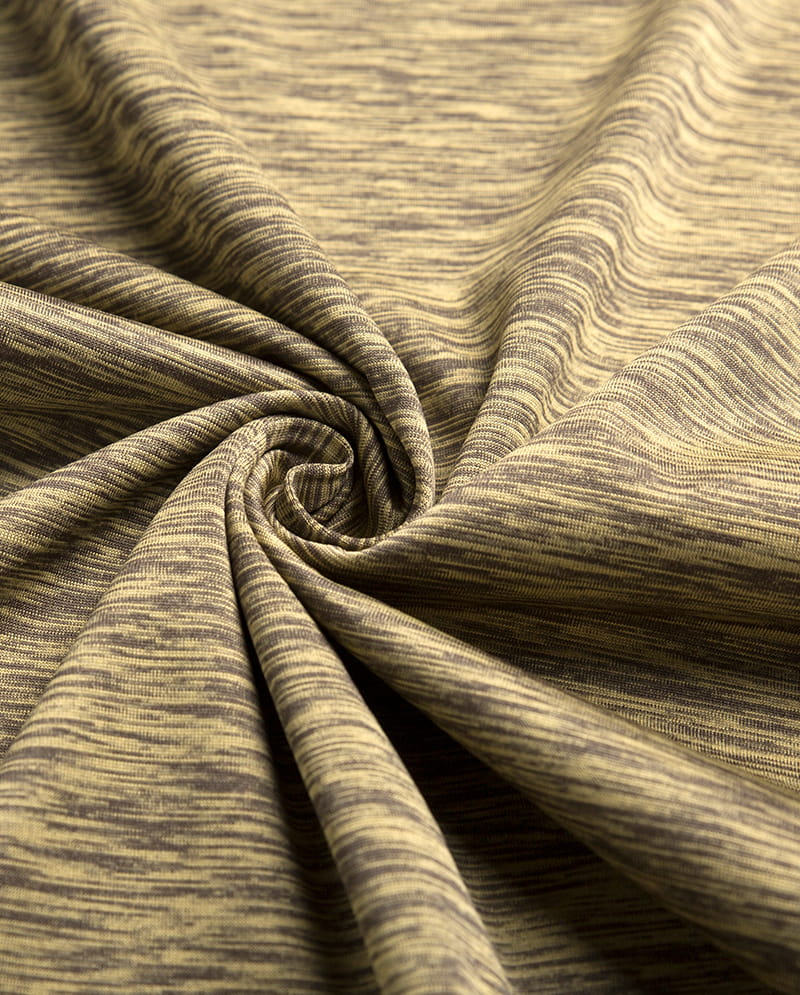
High-Stretch Cationic Jersey Fabric
-
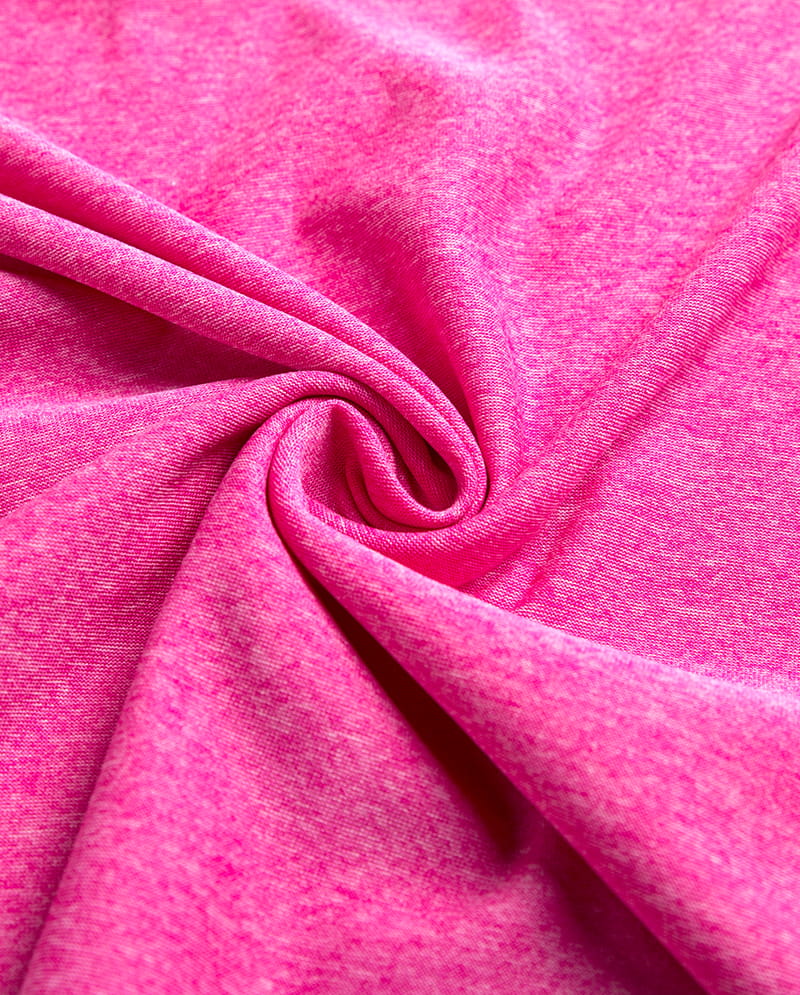
High Quality Cationic DTY Spandex Two Sides Brush Dralon Knit Fabric for Garment Thermal Underwear
-
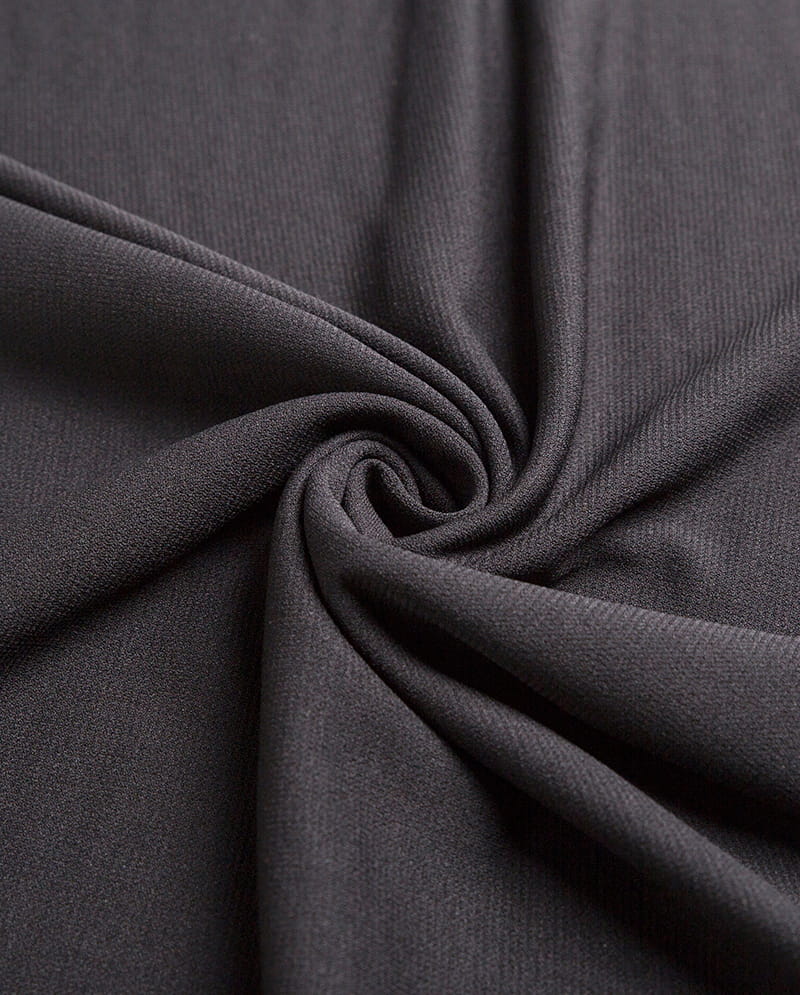
Durable Anti-Pilling Knitted Fabric for Home Textiles
-
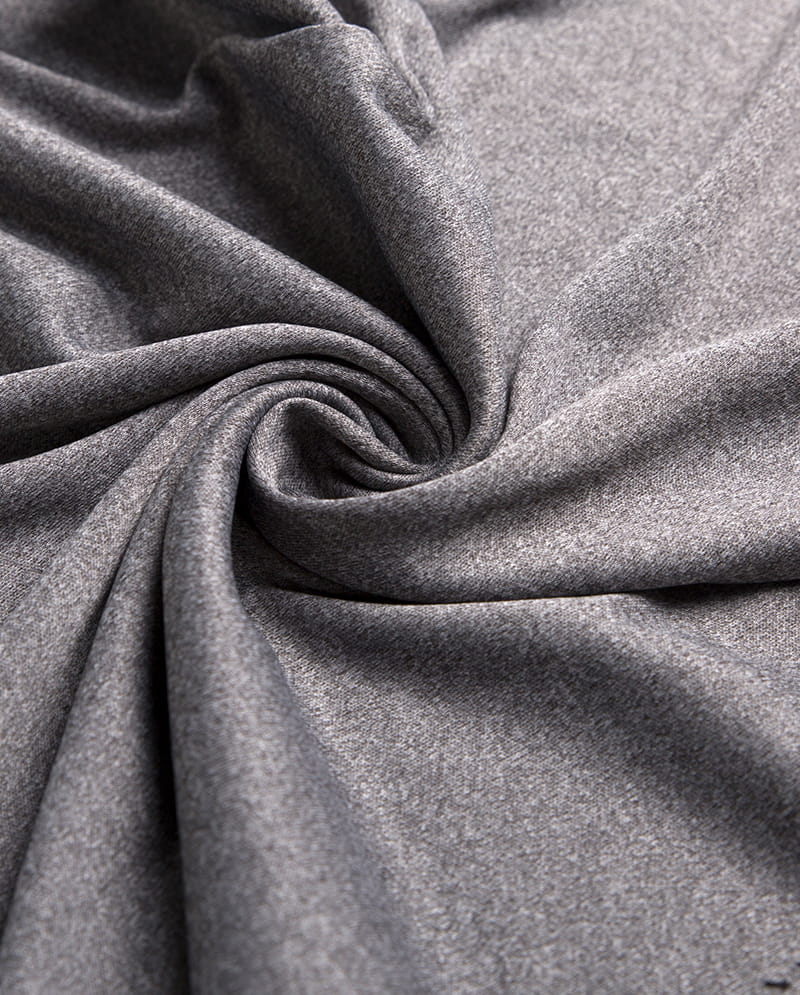
Wash-Resistant Cationic Elastic Knitted Fabric for Garment Industry
-
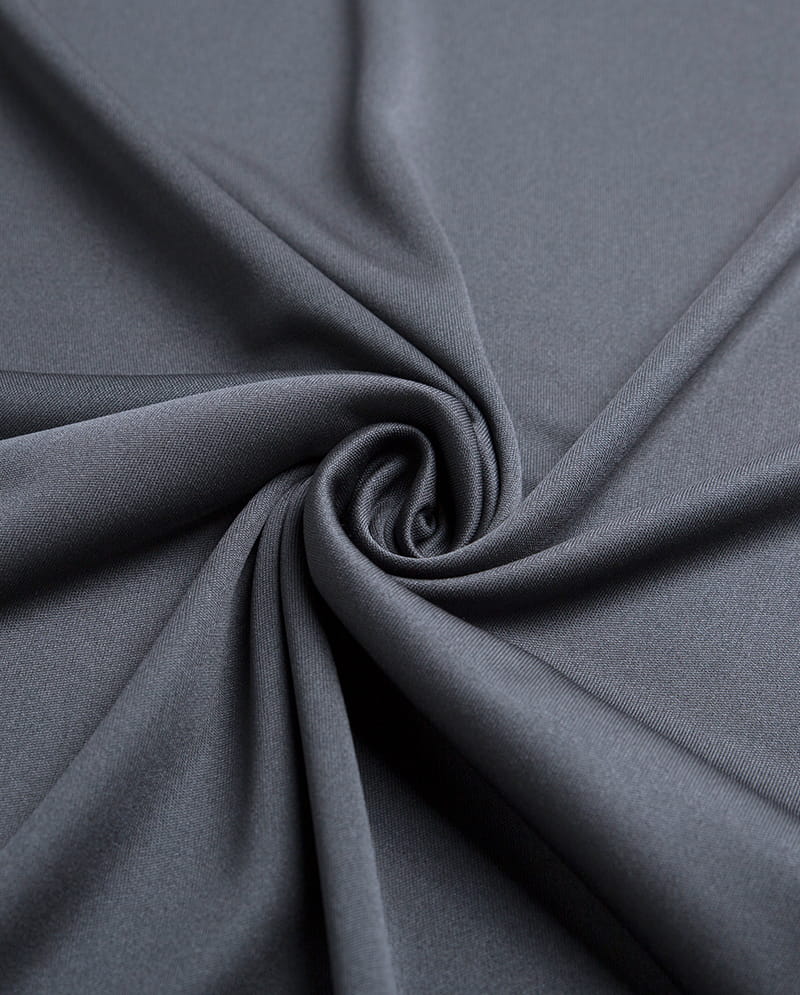
Breathable Double-Faced Elastic Composite Fabric
-
-
-
- whatsapp:
- 0086-13962559622
-
- skype:
- skype.aliceshenghong
-
- Wechat:

COPYRIGHT © 2016 Suzhou Junhui Textile Co., Ltd.
