

 EN
 English
 中文简体
Breathable Lightweight Tricot Mesh Fabric: Performance, Applications, and Manufacturing Excellence
Content
- 1 Introduction
- 2 What Is Lightweight Tricot Mesh Fabric?
- 3 Major Advantages Compared with Conventional Mesh Materials
- 4 Recommended Applications
- 5 Manufacturing Process and Quality Control
- 6 Integrated Yarn and Fabric Development
- 7 Product and Customization Considerations
- 8 Advantages for Wholesale and OEM Buyers
- 9 Quality Evaluation and Recommended Testing
- 10 Sustainability and Material Efficiency
- 11 How to Select the Right Construction
- 12 Communication with the Manufacturer
- 13 Q&A
- 13.1 What makes this fabric breathable?
- 13.2 Is the fabric suitable for sportswear?
- 13.3 Can the fabric be used in automotive interiors?
- 13.4 Can recycled yarn be used?
- 13.5 Can the color be customized?
- 13.6 Can the fabric receive a coating?
- 13.7 Is the fabric flame-retardant or antibacterial by default?
- 13.8 What information is needed for a quotation?
- 13.9 Can the supplier develop differentiated yarn combinations?
- 13.10 How should buyers approve bulk production?
- 14 Conclusion
- 15 References
- 16 Product: Breathable Lightweight Tricot Mesh Fabric
Introduction
Breathable Lightweight Tricot Mesh Fabric is designed for manufacturers that need a reliable balance of air permeability, low weight, dimensional stability, and processing flexibility. Its fine tricot structure creates a consistent open surface that supports air circulation while maintaining a stable fabric form. This combination makes the material suitable for sportswear linings, protective equipment, automotive interior components, and other products where comfort and functional performance must coexist.
Unlike ordinary lightweight knitted materials that may lose shape, develop uneven openings, or become unstable after repeated washing, a well-engineered tricot mesh fabric is produced with controlled loop formation and consistent tension management. These production characteristics help the fabric resist tearing, deformation, and appearance changes during converting and end use. The result is a fabric that can be integrated into finished products without adding unnecessary weight or compromising structural reliability.
The product is manufactured by a specialized textile group based in Shengze Town, Suzhou, Jiangsu Province, China. The group combines knitted fabric development with the production and supply of differentiated polyester yarns, including recycled yarn, dope-dyed yarn, microfine yarn, flame-retardant yarn, cationic-dyeable yarn, high-elastic yarn, moisture-wicking yarn, antibacterial yarn, and other functional options. This integrated product foundation allows buyers to discuss not only fabric orders but also yarn selection, functional requirements, coloration, and application-specific development.
For international buyers, the value of this approach lies in supply-chain coordination. Instead of treating the fabric as an isolated commodity, the manufacturer can evaluate the relationship between yarn type, knitting construction, dyeing, finishing, coating, and final application. This helps reduce compatibility problems and supports more efficient product development from initial concept to bulk production.
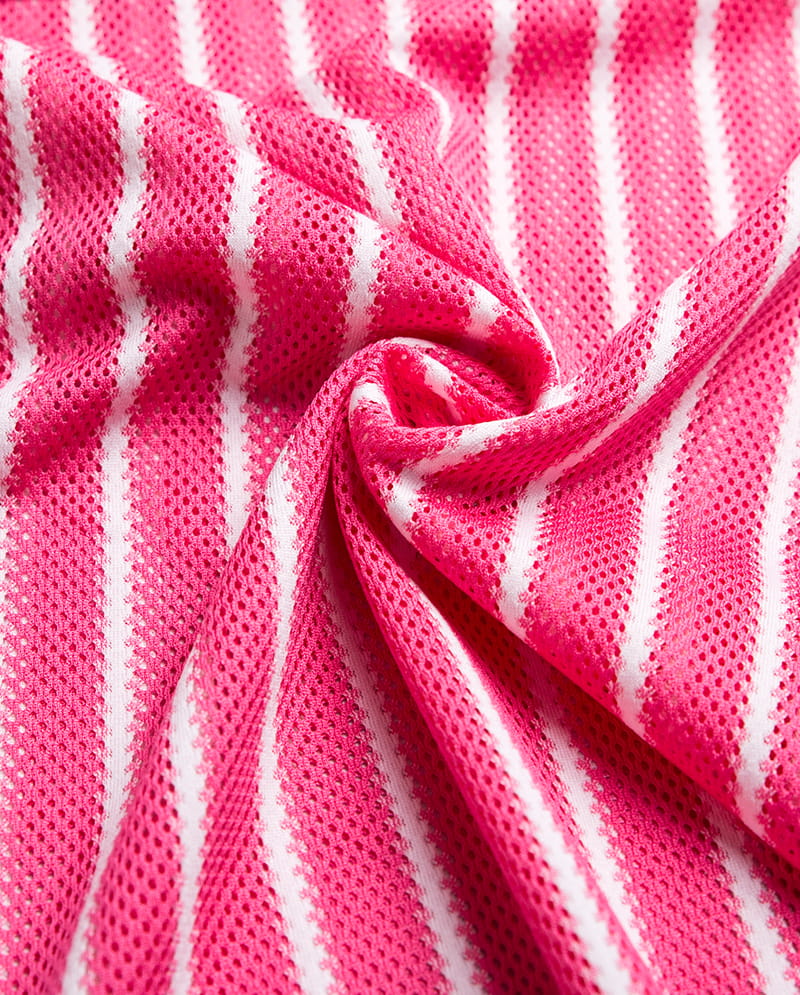
Breathable Lightweight Tricot Mesh Fabric
What Is Lightweight Tricot Mesh Fabric?
Tricot is a type of warp-knitted construction. In this structure, yarns are guided through the knitting elements in a controlled sequence to create a fine, stable surface. The resulting fabric can be engineered with open areas, fine mesh effects, or compact patterns depending on the machine setup, yarn specification, and finishing process.
Breathable Lightweight Tricot Mesh Fabric uses this construction to provide a practical combination of ventilation and stability. Its micro-openings allow air to pass through the surface, helping dissipate heat and moisture from areas in contact with the body or surrounding components. At the same time, the interconnected knitted structure provides greater continuity than a loosely assembled mesh, supporting resistance to snagging, distortion, and tearing.
The fabric is especially useful when a product designer needs an inner layer rather than a heavy outer material. In sportswear, it can help create breathable lining panels. In protective equipment, it can improve comfort between the user and the outer shell. In automotive interiors, it can serve as a lightweight trim or backing material where ventilation, flexibility, and low mass are important.
Because the fabric is lightweight, it can support material-reduction goals without necessarily sacrificing basic durability. Lower fabric weight may help reduce the total weight of a garment, accessory, interior component, or composite construction. This can be valuable in transportation, athletic products, and equipment where every additional layer affects handling, comfort, or energy consumption.
Key Construction Characteristics
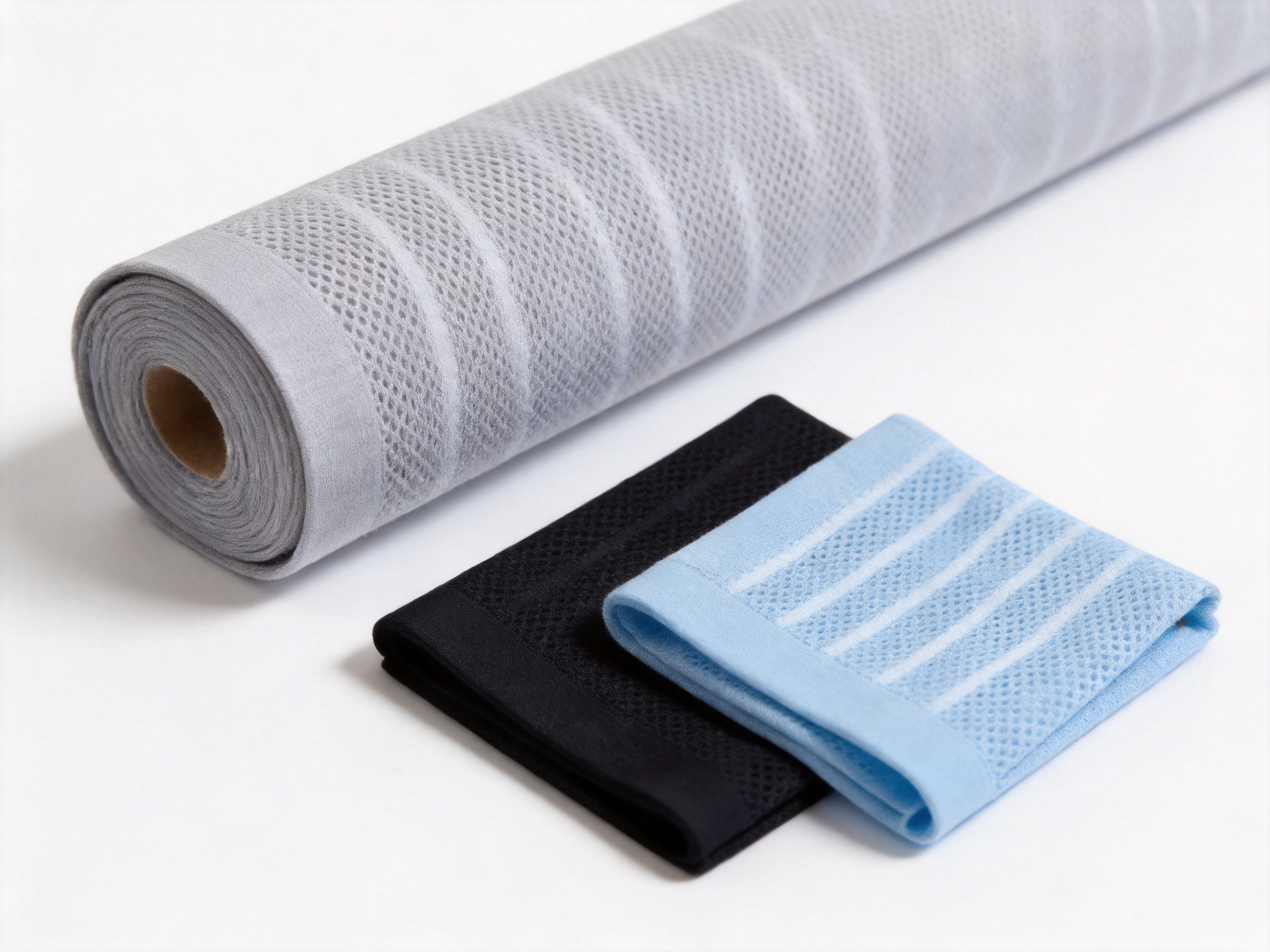
The fabric is characterized by fine tricot loops, controlled mesh openings, and a consistent knitted surface. These features can be adjusted according to the intended use. A sportswear lining may prioritize softness and moisture transfer, while an industrial inner layer may require stronger dimensional stability or compatibility with a protective coating.
Its open structure promotes rapid air circulation. This is different from a dense textile, which may trap heat and moisture against the skin or within a product assembly. In suitable designs, the mesh can contribute to a cooler touch, faster drying behavior, and improved wearing comfort.
The fabric also offers a suitable foundation for subsequent processing. It can be dyed in customized colors and may be coated with basic functional layers where required. The precise treatment depends on the intended end use, target performance, chemical compatibility, and production conditions.
Major Advantages Compared with Conventional Mesh Materials
Efficient Air Permeability
The most important advantage of a breathable tricot mesh is its ability to support air movement through the fabric. The uniform openings form continuous channels that help heat and moisture move away from the contact surface. This feature is valuable in garments and equipment worn for extended periods, particularly in warm environments or during physical activity.
Compared with dense knitted fabrics, the open tricot construction can reduce the feeling of heat accumulation. Compared with irregularly perforated materials, the knitted mesh can provide a more continuous and flexible surface. Its performance depends on the final design, but the construction is well suited to products that require controlled ventilation without abandoning textile flexibility.
Low Weight without Excessive Bulk
Many technical products require a breathable layer but cannot tolerate unnecessary bulk. Heavy linings and thick cushioning materials may increase product weight, complicate assembly, or reduce freedom of movement. Lightweight tricot mesh provides an alternative by delivering a functional textile layer with limited added mass.
This low-weight characteristic is particularly useful for sportswear, footwear components, bags, safety equipment, automotive trim, and other products assembled from several layers. The fabric can be incorporated as a lining, backing, spacer-related component, or ventilation panel according to the product design.
Structural Stability
A key competitive advantage of tricot construction is the relationship between openness and stability. A fabric that is too loose may stretch irregularly, snag easily, or lose its appearance after washing. A fabric that is too dense may not provide the required ventilation. Tricot knitting offers a way to balance these properties through controlled loop geometry and production tension.
The interlocked knitted structure helps the fabric retain its shape during handling and conversion. It can also support resistance to tearing and deformation during repeated use. For manufacturers, structural stability is important because fabric that remains consistent is easier to cut, sew, laminate, coat, and assemble.
Comfortable Contact Surface
When used as a lining or inner layer, the fabric may remain close to the skin or to another flexible surface. A fine knitted construction can provide a more comfortable contact experience than rough, rigid, or heavily coated alternatives. The final hand feel depends on yarn selection, finishing, and dyeing, but the tricot platform is suitable for developing smooth and lightweight surfaces.
Moisture-wicking yarn options can also be considered for applications that require improved moisture management. The manufacturer’s functional yarn portfolio includes moisture-wicking, antibacterial, flame-retardant, recycled, and other differentiated options, allowing the textile structure and the fiber or yarn function to be evaluated together.
Processing Flexibility
The fabric can be prepared for dyeing and coating processes. This gives buyers flexibility in color matching, branding, functional finishing, and compatibility with other layers. A manufacturer may request solid shades, custom colors, or a basic coating depending on whether the fabric will be used in apparel, equipment, automotive trim, or industrial products.
Processing flexibility also supports design changes during development. For example, the same general mesh concept may be adapted for a softer apparel lining, a darker automotive backing, or a coated protective component. Final specifications should be confirmed through sampling and testing because the ideal process depends on the selected yarn, fabric density, finish, and end-use requirements.
Reliable Performance after Repeated Use
Products such as sportswear and protective equipment are exposed to movement, friction, washing, perspiration, and repeated handling. A fabric used in these products must remain functional after regular use. The stable knitted structure of this tricot mesh helps reduce the risk of severe deformation and supports long-term usability when the fabric is correctly selected and processed.
For automotive interior applications, the fabric may also experience temperature changes, installation stress, and continuous contact with adjacent materials. Consistent construction and controlled finishing can help manufacturers achieve a more reliable component than an inconsistent low-cost mesh.
Recommended Applications
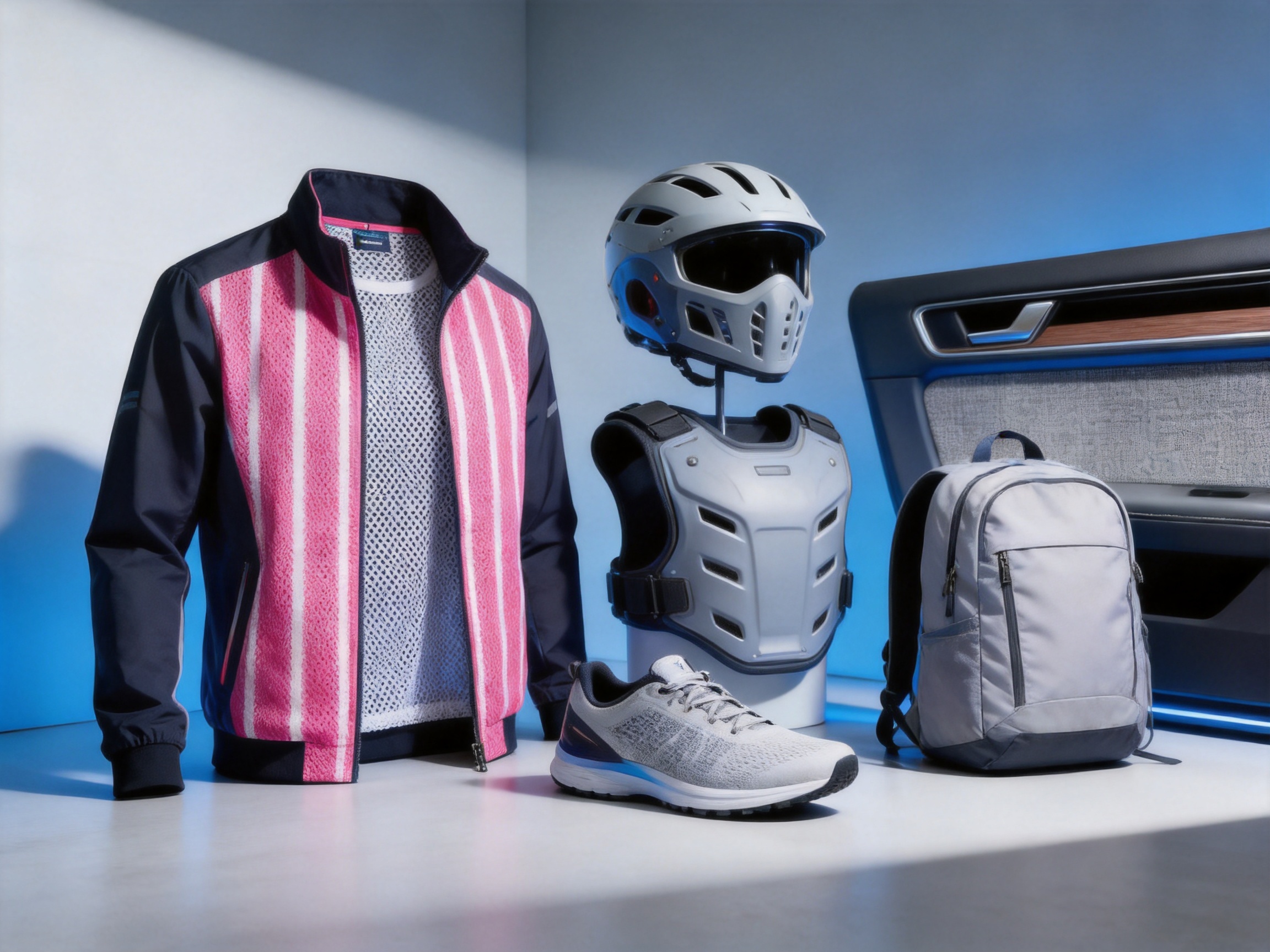
Sportswear Linings
Sportswear requires a careful balance of ventilation, comfort, flexibility, weight, and durability. A breathable tricot mesh can be used as an inner layer in jackets, training garments, athletic tops, shorts, outdoor clothing, and performance accessories. It can support airflow in high-heat areas while helping the garment remain lightweight.
The fabric may also be applied selectively rather than across an entire garment. Designers can place mesh panels in areas where heat and moisture are most likely to accumulate. This approach can improve comfort while preserving coverage and support in other areas of the product.
For athletic garments, buyers may consider moisture-wicking yarns, recycled yarns, dope-dyed yarns, or color-specific solutions. The correct choice depends on the desired appearance, sustainability objectives, colorfastness requirements, softness, and cost target.
Protective Equipment Inner Layers
Protective equipment often needs a comfortable interface between the user and an outer protective shell. Tricot mesh can be used as an inner layer in helmets, safety accessories, workwear, protective pads, and other equipment. Its open structure may improve ventilation while its stable form helps maintain the intended position within the product.
For industrial protective applications, the material may be combined with functional yarn or a coating. Fire-retardant yarn options may be considered for certain applications, although the finished product must be tested as a complete system. The fabric alone should not be assumed to provide a specific level of protection unless the relevant test data confirms it.
Automotive Interior Trim
Automotive interior components often require materials that are lightweight, flexible, stable, and compatible with multilayer construction. Tricot mesh can be used in interior trim, backing, ventilation-related components, seat-related structures, and other applications where textile support and airflow are useful.
The material can help provide a clean and consistent textile surface behind or beneath an exterior layer. Its low weight is beneficial when designers are attempting to reduce the mass of interior assemblies. Its ability to accept color and coatings may also support coordination with the vehicle interior design.
Automotive buyers normally require additional evaluation of odor, fogging, abrasion, aging, temperature resistance, dimensional stability, and chemical compatibility. These requirements should be reviewed during product development before full-scale production.
Footwear and Accessories
Lightweight mesh is widely used in footwear uppers, shoe linings, tongue components, insoles, bags, backpacks, and other accessories. Tricot construction can offer a balance between air permeability and handling stability, helping manufacturers create components that are easier to cut and sew than unstable open fabrics.
For footwear and bags, visual uniformity is especially important. Uneven mesh openings can create an inconsistent appearance after cutting or assembly. Controlled production helps provide a more uniform surface that supports a cleaner finished product.
Industrial and Technical Products
The fabric may also be considered for equipment linings, filtration-related supporting layers, packaging components, interior reinforcement, and other technical textile uses. Each application requires a separate review of strength, temperature, chemical exposure, abrasion, and dimensional requirements.
The manufacturer’s ability to supply differentiated yarns creates opportunities to adjust the fabric for particular technical needs. Recycled polyester can support material sustainability goals, while functional yarns may provide additional properties to be evaluated during development.
Manufacturing Process and Quality Control
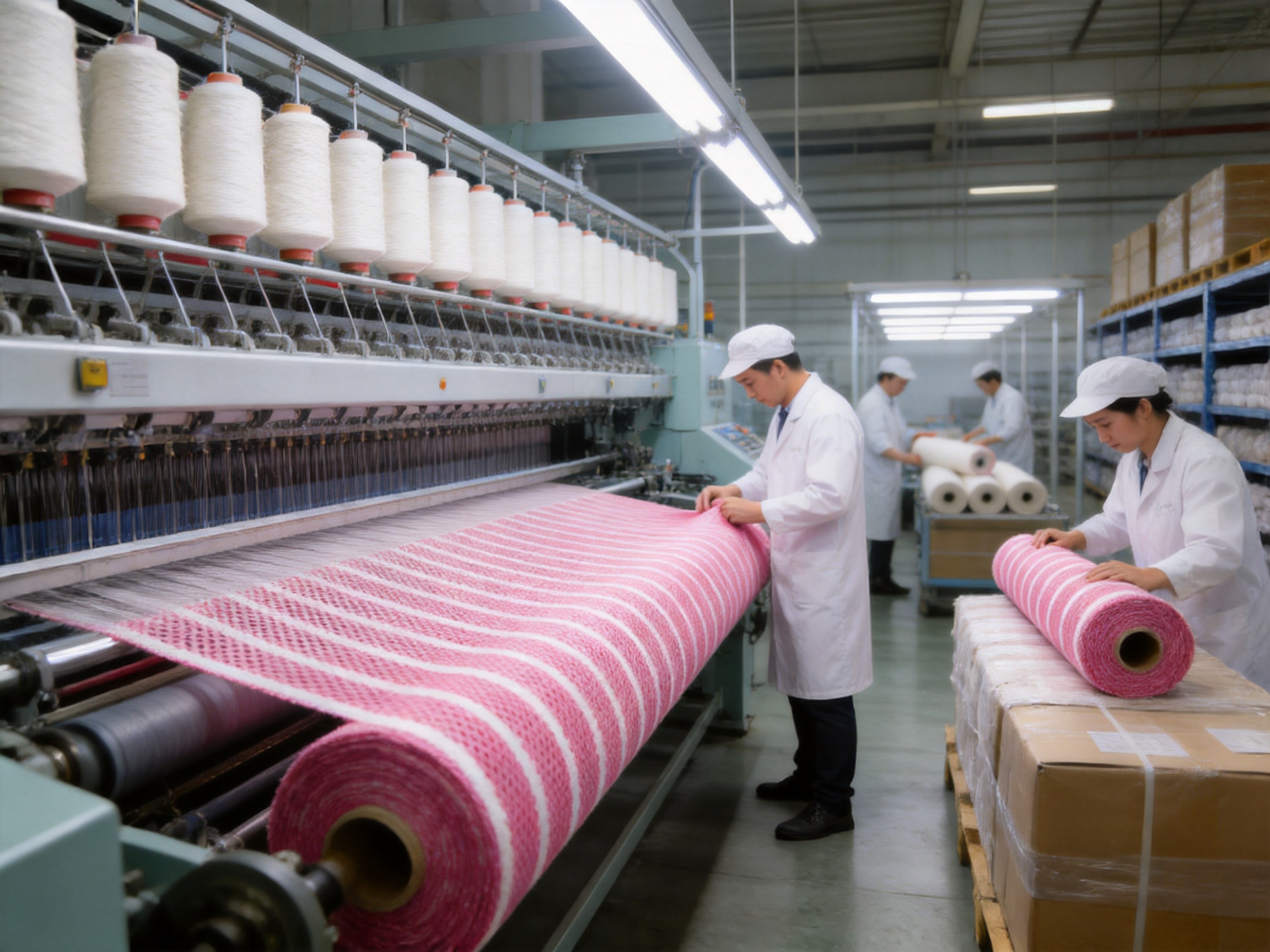
The quality of lightweight tricot mesh fabric is determined by more than the knitting machine alone. It depends on the full sequence of yarn selection, preparation, knitting, inspection, dyeing or finishing, cutting or rolling, packing, and shipment. A disciplined manufacturing process helps ensure that the finished rolls are consistent from the first meter to the last.
Yarn Selection and Preparation
The production process begins with selecting yarn that matches the intended fabric construction. Yarn count, filament arrangement, luster, dyeability, elasticity, surface character, and functional properties all influence the final result. The supplier’s product portfolio includes multiple polyester yarn categories and specifications, including recycled and conventional options.
Available yarn families include semi-dull and full-dull yarns, draw textured yarn, fully drawn yarn, cationic-dyeable yarn, dope-dyed yarn, high-elastic yarn, PBT/PET yarn, flame-retardant yarn, antibacterial yarn, moisture-wicking yarn, hollow warm yarn, cotton-like yarn, and other differentiated products. These options allow the fabric program to be developed around the application instead of relying on a single standard yarn.
Yarn preparation must also consider package quality and feeding consistency. Irregular tension or damaged packages can lead to stripes, bars, holes, or uneven mesh formation. Proper preparation helps the knitting machine operate with stable yarn delivery.
Precision Tricot Knitting
During knitting, the machine forms the fabric through a controlled sequence of yarn movements. The technical objective is to maintain consistent loop formation, width, weight, openness, and surface appearance. Machine settings, yarn tension, take-up conditions, and production speed must be coordinated.
For breathable mesh, the open spaces must remain uniform. If the openings vary excessively, the fabric may show visual defects or perform inconsistently. If the structure is too open, the fabric may lack the required stability. If it is too tight, the air-permeability advantage may be reduced. Production control is therefore essential to maintaining the intended balance.
In-Process Inspection
In-process inspection can identify defects before the entire roll is completed. Operators and quality personnel may check for broken filaments, holes, streaks, uneven width, edge problems, contamination, tension marks, and irregular mesh formation. Early detection reduces waste and makes corrective action more efficient.
Inspection standards should be aligned with the customer’s application. A fabric intended for visible sportswear panels may require strict appearance control, while a hidden automotive backing may focus more heavily on dimensional stability and compatibility with lamination.
Finishing and Surface Treatment
After knitting, the fabric may undergo dyeing, heat setting, washing, softening, coating, or other finishing procedures. Heat setting can help stabilize dimensions, while dyeing provides the required color. A coating may be applied when the end product needs a basic functional layer, additional bonding support, or a specific surface effect.
Finishing conditions must be selected carefully because excessive heat, tension, or chemical treatment can change the hand feel, openness, elasticity, or appearance of a lightweight mesh. A professional development process evaluates the fabric before and after finishing to ensure that the desired performance remains available in the final product.
Roll Inspection and Packing
Before shipment, finished fabric should be checked for roll length, width, appearance, color consistency, and packaging integrity. Proper rolling helps prevent creasing and handling damage. Protective packaging is important for international transportation, especially when fabric will be stored before cutting or further processing.
Clear identification of lot information, color, construction, quantity, and customer reference helps buyers manage incoming inspection and production planning. These basic controls contribute to more dependable global supply.
Integrated Yarn and Fabric Development
One of the manufacturer’s important strengths is the connection between yarn development and fabric production. The business supplies a broad range of differentiated yarns and knitted fabric products rather than focusing only on one standard polyester specification. This creates a more direct path between material selection and finished fabric performance.
The product list covers recycled series, normal series, cationic-dyeable series, high-elastic series, functional series, and cotton-like or hollow-warm options. Recycled yarns include different forms of draw textured and fully drawn yarn, as well as combinations such as semi-dull and cationic-dyeable yarn. Conventional products include multiple denier and filament configurations for different knitting requirements.
The high-elastic series includes elastic yarn options and PBT/PET-related constructions. Functional products include flame-retardant, antibacterial, and moisture-wicking yarns. Other choices include cotton-like yarn, hollow warm yarn, and air-covered or combined yarn structures. These categories provide a broad starting point for the development of mesh fabrics with different hand feels, appearances, and functional targets.
Because the company states that it can accept orders for various differentiated yarns, buyers can discuss custom combinations instead of selecting only from a narrow catalog. The final feasibility will depend on order quantity, yarn availability, machine capability, testing requirements, and delivery schedule, but the product range supports flexible inquiry.
Recycled Material Options
Recycled polyester yarn can be considered by brands and manufacturers seeking to increase recycled content in textile products. Recycled yarn options may be used in selected tricot mesh constructions, subject to the required appearance, strength, dyeing, and certification conditions.
Using recycled content does not eliminate the need for technical evaluation. The fabric should still be tested for consistency, color performance, dimensional behavior, and end-use durability. However, access to recycled yarn at the material-development stage allows sustainability objectives to be considered earlier rather than added after the fabric structure has already been finalized.
Functional Yarn Options
Functional yarns can help manufacturers address application-specific needs. Moisture-wicking yarn may be evaluated for sportswear and active products. Antibacterial yarn may be considered for products where odor management or hygiene-related performance is relevant. Flame-retardant yarn may be reviewed for selected protective or industrial uses.
These yarn functions should be assessed together with the finished fabric construction. A yarn property may change during knitting, dyeing, finishing, coating, or lamination. Testing the completed material is therefore essential before making performance claims for the final product.
Product and Customization Considerations
Buyers should define the intended end use before requesting a quotation. Important factors include fabric width, target weight, color, mesh appearance, air permeability, stretch or recovery, hand feel, finishing, coating, packaging, order quantity, and delivery schedule.
For sportswear, the buyer may prioritize softness, moisture management, colorfastness, breathability, and wash durability. For automotive trim, dimensional stability, odor, aging, abrasion, and compatibility with adjacent materials may be more important. For protective equipment, strength, tear resistance, flame behavior, and coating adhesion may receive greater attention.
The manufacturer can use these requirements to recommend a suitable yarn category and knitting approach. In some cases, a standard construction may be sufficient. In other cases, the product may require sampling and iterative adjustment to achieve the desired balance of openness, strength, softness, and cost.
Application Area |
Primary Benefits |
Potential Development Priorities |
Sportswear lining |
Air circulation, low weight, comfort, moisture management |
Soft hand feel, color, wash durability, moisture-wicking yarn |
Protective equipment |
Ventilation, flexible support, stable inner layer |
Tear resistance, coating compatibility, flame-retardant options |
Automotive interior trim |
Low mass, consistent appearance, flexible multilayer use |
Dimensional stability, aging, odor, abrasion, bonding |
Footwear and accessories |
Breathability, lightness, cut-and-sew convenience |
Surface uniformity, color matching, strength, flexibility |
Industrial textile components |
Lightweight support, open structure, adaptable processing |
Chemical resistance, temperature performance, coating, durability |
Advantages for Wholesale and OEM Buyers
Broad Product Capability
A buyer working with a broad textile supplier can coordinate fabric and yarn requirements through one development channel. This may simplify communication when a project needs a specific yarn combination, recycled content, color solution, or functional characteristic.
The company’s product range includes both standard and differentiated yarns, as well as knitted fabric products. This capability is valuable for OEM and wholesale customers who may manage several product lines with different material needs.
Support for Custom Orders
Custom textile programs often require more than a standard catalog item. The buyer may need a special color, a particular luster, a specific yarn count, a modified mesh appearance, or a combination of performance attributes. The supplier’s stated ability to accept orders for different differentiated yarns provides a foundation for these discussions.
Custom development should be handled through samples, written specifications, and approval procedures. This reduces misunderstandings and gives both parties a clear reference for bulk production.
Export Experience
The company reports that more than 90 percent of its products are exported and that it has developed customer relationships in 36 countries. International experience can support practical coordination involving export documentation, packaging, production schedules, communication across time zones, and customer-specific requirements.
Global buyers also benefit when a supplier understands the importance of stable batch quality. For textile importers, consistency between shipments is often as important as the performance of the original sample.
Research and Development Orientation
The group maintains a professional research and development team and states that it works with internationally recognized enterprises on environmental protection and functional yarn and fabric applications. This orientation supports the development of materials that respond to current industry priorities, including recycled content, functional performance, comfort, and resource efficiency.
Research capability is especially useful when a buyer has a technical problem rather than a simple purchasing requirement. For example, the manufacturer may help assess whether a different yarn, knitting structure, or finishing process could improve ventilation, hand feel, stability, or processing behavior.
Responsive Technical Service
The company states that its experts are prepared to provide guidance and support within 12 hours globally. Fast communication can help buyers resolve questions about sampling, yarn selection, product specifications, production status, and technical issues.
Responsive service does not replace testing or formal quality control, but it can shorten the time required to move from an initial inquiry to a workable development plan. This is important for seasonal sportswear, automotive programs, and other projects with strict launch schedules.
Quality Evaluation and Recommended Testing
Before approving a tricot mesh fabric for mass production, buyers should evaluate the material under conditions that reflect the intended application. A laboratory test plan may include fabric weight, width, thickness, air permeability, tensile strength, tear strength, bursting strength, dimensional stability, colorfastness, abrasion resistance, and pilling resistance.
For garments, washing and drying tests are important. The buyer should observe changes in size, mesh opening, color, hand feel, and surface appearance. If the fabric will be laminated or coated, adhesion and compatibility tests should also be performed.
For automotive use, the test program may include heat aging, humidity aging, light exposure, odor, fogging, abrasion, flammability, chemical resistance, and dimensional change. Requirements vary by vehicle manufacturer and component position, so the supplier should receive the applicable technical standard before production approval.
For protective equipment, the finished assembly must be evaluated rather than relying only on the base fabric. The performance of a mesh layer can change when it is combined with foam, coatings, shells, adhesives, or other textiles. Any claim relating to protection, flame resistance, antibacterial activity, or safety should be supported by relevant test reports.
Appearance Inspection
Appearance inspection should consider mesh regularity, streaks, holes, broken filaments, edge quality, color variation, contamination, creases, and roll-to-roll consistency. A standard light source and approved sample can help make inspection more objective.
For visible fashion or interior applications, appearance standards may be particularly strict. For hidden technical components, functional criteria may take priority, but basic uniformity remains important for smooth processing.
Dimensional Stability
Lightweight knitted fabrics may respond to heat, moisture, tension, and washing. Dimensional stability testing helps confirm whether the finished material will remain within the customer’s acceptable tolerance during production and use.
Heat setting and finishing can improve stability, but the correct conditions must be established through development. Over-processing may affect softness, openness, and elasticity, while insufficient stabilization may lead to distortion during cutting or assembly.
Sustainability and Material Efficiency
Lightweight construction can contribute to material-efficiency goals by reducing the amount of textile mass used in a product. This benefit is particularly relevant when the mesh performs as a breathable lining, backing, or support layer rather than as the primary exterior material.
Recycled polyester yarn options provide another route for buyers seeking to incorporate recycled content. The environmental value of a recycled material program should be evaluated through verified sourcing, applicable certifications, manufacturing controls, and the complete product life cycle.
Dope-dyed yarn options may also be considered in suitable applications. Because color is introduced during the fiber or yarn manufacturing stage, dope dyeing can reduce reliance on some later coloration processes. The specific resource benefits depend on the production route, color requirements, order volume, and applicable environmental controls.
Durable fabrics can support longer product use and reduce the frequency of replacement. A mesh that remains stable after repeated washing or handling may contribute to better product life, provided that the construction is correctly matched to the application.
Sustainability should be treated as a combination of material choice, production efficiency, durability, recyclability, packaging, and responsible sourcing. No single characteristic should be considered in isolation.
How to Select the Right Construction
The ideal tricot mesh is not necessarily the most open or the lightest option. Selection should begin with the actual performance requirement. A highly open mesh may maximize air circulation but may not provide enough coverage, strength, or support. A denser mesh may provide greater stability but may reduce ventilation.
Buyers should compare samples under realistic conditions. Stretching, bending, washing, coating, lamination, and sewing can all change the final behavior of the material. It is useful to test both the raw fabric and the finished component.
Yarn choice should also be considered. Semi-dull yarn may provide a softer or less reflective appearance, while full-dull yarn may offer a more subdued visual effect. Recycled yarn may support sustainability goals. High-elastic or PBT/PET options may be considered where recovery and flexibility are important. Moisture-wicking or antibacterial options may be relevant to sportswear and other close-contact products.
Color requirements should be communicated early. Custom colors may require laboratory dips, minimum quantities, and additional approval time. If a coated or laminated product is planned, the color and surface effect should be reviewed after the complete process rather than only on the greige fabric.
Communication with the Manufacturer
A clear technical inquiry helps the manufacturer provide a more accurate recommendation. The inquiry should state the application, required fabric width, expected order quantity, preferred fiber or yarn type, color, target performance, finishing requirements, packaging expectations, and destination market.
Customers should also identify whether they require recycled content, specific certifications, restricted-substance compliance, flame-retardant performance, antibacterial performance, moisture management, or automotive testing. Early disclosure prevents the development of a material that later fails an essential requirement.
For new projects, it is advisable to request a sample approval procedure. The approved sample should identify the construction, color, dimensions, weight range, finish, inspection standard, and testing requirements. This document can become the reference for bulk production.
When purchasing several related fabrics, buyers may benefit from discussing the complete material program. The supplier’s yarn and fabric capability may allow several products to share compatible materials, colors, or finishing methods. This can simplify procurement and improve consistency across a product collection.
Q&A
What makes this fabric breathable?
The fine tricot structure contains controlled open areas that allow air to move through the fabric. These openings can support heat and moisture dissipation, particularly when the material is used as a lining or inner layer. Actual air-permeability performance depends on construction, yarn, finishing, and test conditions.
Is the fabric suitable for sportswear?
Yes. Its low weight, open structure, flexibility, and potential compatibility with moisture-wicking yarn make it suitable for sportswear linings, ventilation panels, athletic garments, and related accessories. Buyers should select the final construction according to the required softness, wash durability, stretch, and moisture-management performance.
Can the fabric be used in automotive interiors?
It can be considered for automotive interior trim, backing, and other lightweight textile components. Automotive applications require additional testing for aging, odor, fogging, abrasion, dimensional stability, chemical exposure, and other vehicle-specific criteria.
Can recycled yarn be used?
Recycled polyester yarn options are available within the supplier’s product range. The appropriate recycled yarn and fabric construction should be confirmed through sampling, testing, and documentation review. Any recycled-content claim should be supported by the relevant supply-chain records or certification.
Can the color be customized?
The fabric is compatible with dyeing and can be developed in customized colors. Color matching normally requires laboratory sampling and approval. Final color should be evaluated on the finished fabric because yarn, construction, dyeing, and finishing can all influence the visual result.
Can the fabric receive a coating?
Yes, the fabric can be considered for coating or other basic functional layers. Coating selection should take account of adhesion, flexibility, breathability, wash durability, chemical compatibility, and the intended end use. The coated fabric should be tested as a complete product.
Is the fabric flame-retardant or antibacterial by default?
No performance property should be assumed by default. The supplier offers functional yarn options, including flame-retardant and antibacterial yarn, but the final fabric and finished product must be tested against the required standard before a specific claim is made.
What information is needed for a quotation?
Useful information includes the application, fabric width, approximate weight, mesh appearance, color, quantity, yarn preference, functional requirements, finishing or coating, packaging, destination, and delivery schedule. A physical reference sample or technical drawing can further improve the accuracy of the recommendation.
Can the supplier develop differentiated yarn combinations?
The supplier states that it can accept orders for various differentiated yarns. Possible discussions may include recycled yarn, semi-dull or full-dull yarn, cationic-dyeable yarn, high-elastic yarn, PBT/PET yarn, moisture-wicking yarn, antibacterial yarn, flame-retardant yarn, cotton-like yarn, and hollow warm yarn, subject to technical and commercial feasibility.
How should buyers approve bulk production?
Buyers should approve a representative sample and confirm the written specification before bulk production. The approval should cover appearance, construction, width, weight, color, finishing, testing, packing, and acceptable tolerances. Incoming inspection should then compare bulk goods with the approved reference.
Conclusion
Breathable Lightweight Tricot Mesh Fabric offers a practical solution for products that require ventilation, low weight, flexibility, and structural stability. Its fine warp-knitted construction supports uniform air circulation while maintaining a more controlled surface than many irregular open-mesh alternatives. The fabric can be used in sportswear linings, protective equipment, automotive interior trim, footwear, accessories, and selected industrial products.
Its competitive value is strengthened by processing flexibility. The material can be developed for dyeing and coating, and it can be paired with different yarn categories to address appearance, sustainability, comfort, elasticity, moisture management, and other performance objectives. Recycled, functional, and differentiated yarn options create additional possibilities for application-specific development.
The manufacturer’s integrated yarn and fabric capability, research and development orientation, export experience, and responsive technical support provide a strong foundation for wholesale and OEM cooperation. By connecting yarn selection, tricot knitting, finishing, testing, and customer service, the company can help buyers move from a general concept to a more dependable finished textile solution.
For the best result, every project should begin with a clear application brief, representative samples, and a defined testing plan. When the fabric construction and yarn are matched correctly to the end use, lightweight tricot mesh can deliver a valuable balance of comfort, airflow, stability, durability, and cost efficiency.
References
1. Technical product information supplied for Breathable Lightweight Tricot Mesh Fabric.
2. Technical product list covering recycled, conventional, cationic-dyeable, high-elastic, and functional polyester yarns.
3. General textile engineering principles for warp-knitted tricot construction and mesh fabric development.
4. General quality-control practices for knitted fabric inspection, dimensional stability, color evaluation, and finished-product testing.
5. General guidance for evaluating recycled polyester, functional yarns, dyeing, coating, and multilayer textile applications.
6. Application-based considerations for sportswear linings, protective equipment, automotive interior trim, footwear, accessories, and industrial textiles.
Manufacturer: Suzhou Junhui Textile Co., Ltd. and Suzhou Xiaoran New Materials Co., Ltd.
Product category: Knitted fabric.
Available support: Product selection, differentiated yarn development, fabric customization, application guidance, and technical problem solving.
Product: Breathable Lightweight Tricot Mesh Fabric

Popular products
-
Premium Cationic Interlock Stretch Comfort Fabric
-
Moisture-Wicking Nylon Woven Fabric
-
Double-faced jacquard elastic fabric
-
Heather Grey Double-faced cationic jersey fabric
-
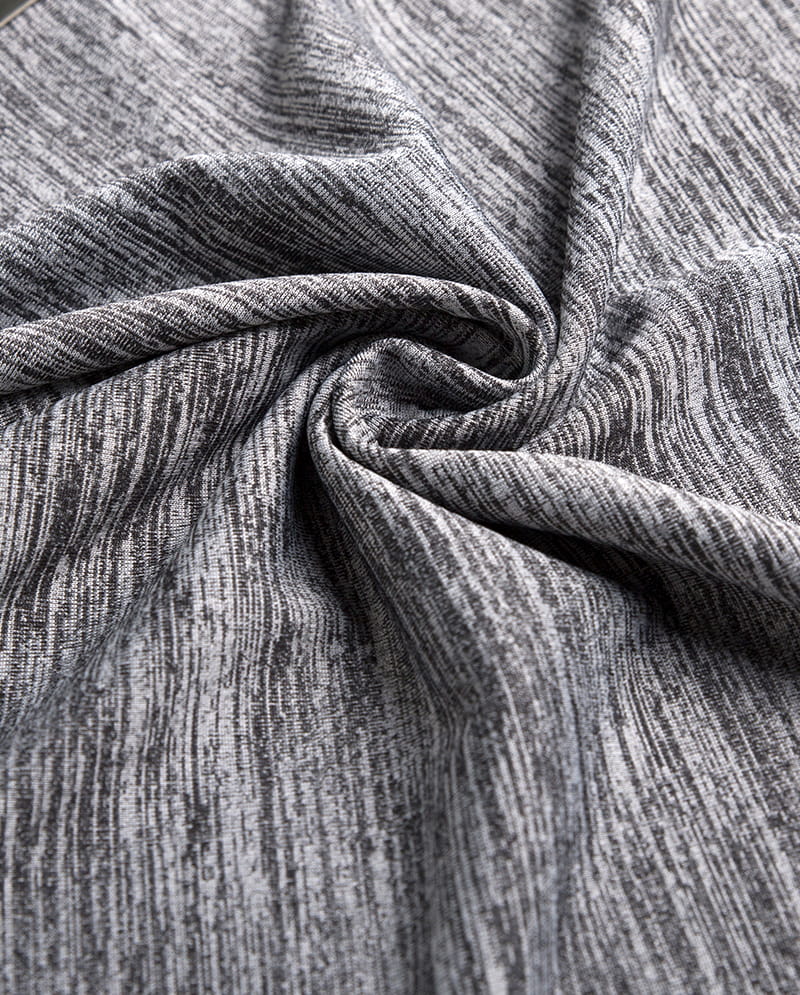
Anti-static Cationic Knitted Rib Fabric
-
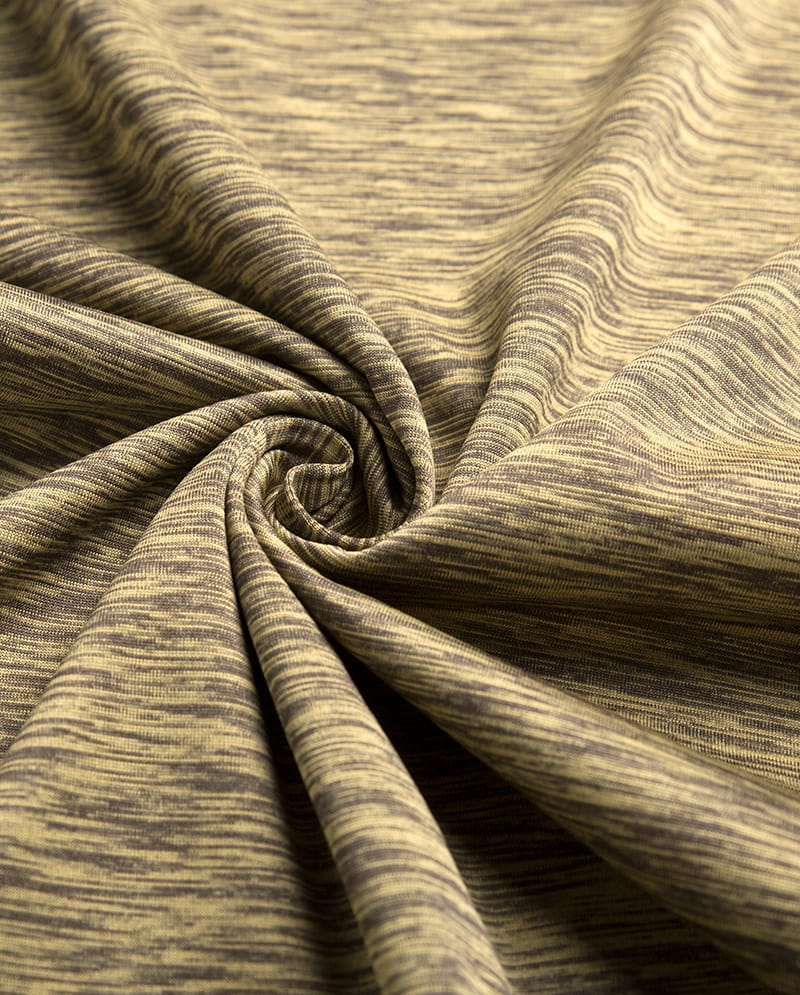
High-Stretch Cationic Jersey Fabric
-
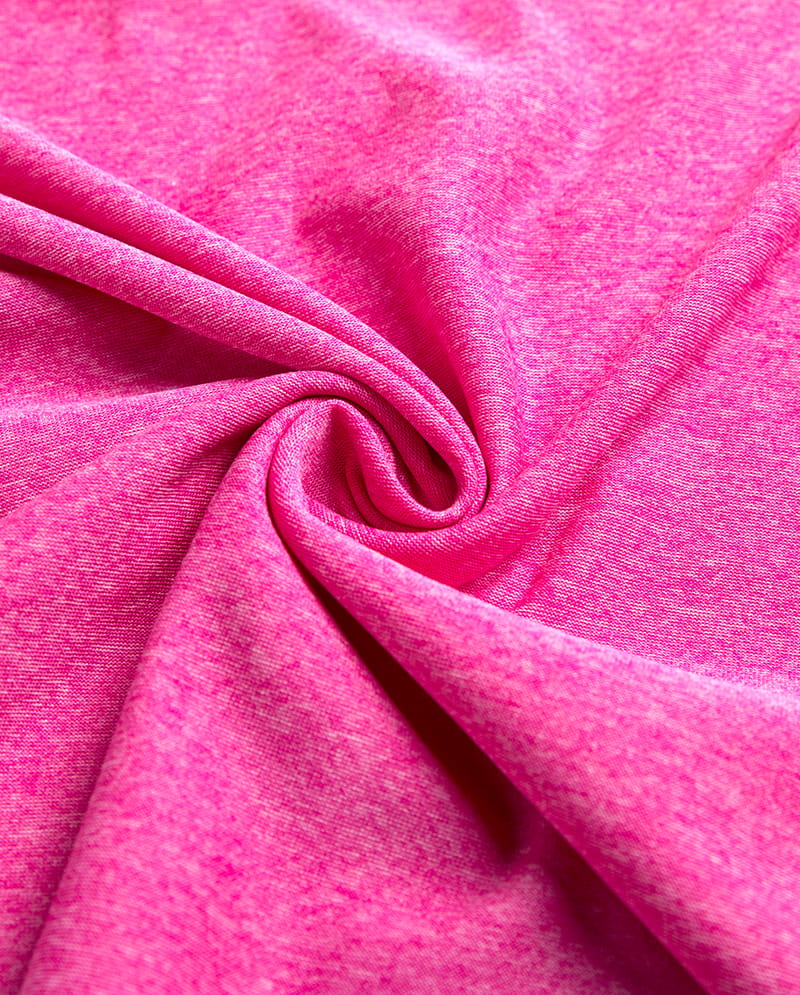
High Quality Cationic DTY Spandex Two Sides Brush Dralon Knit Fabric for Garment Thermal Underwear
-
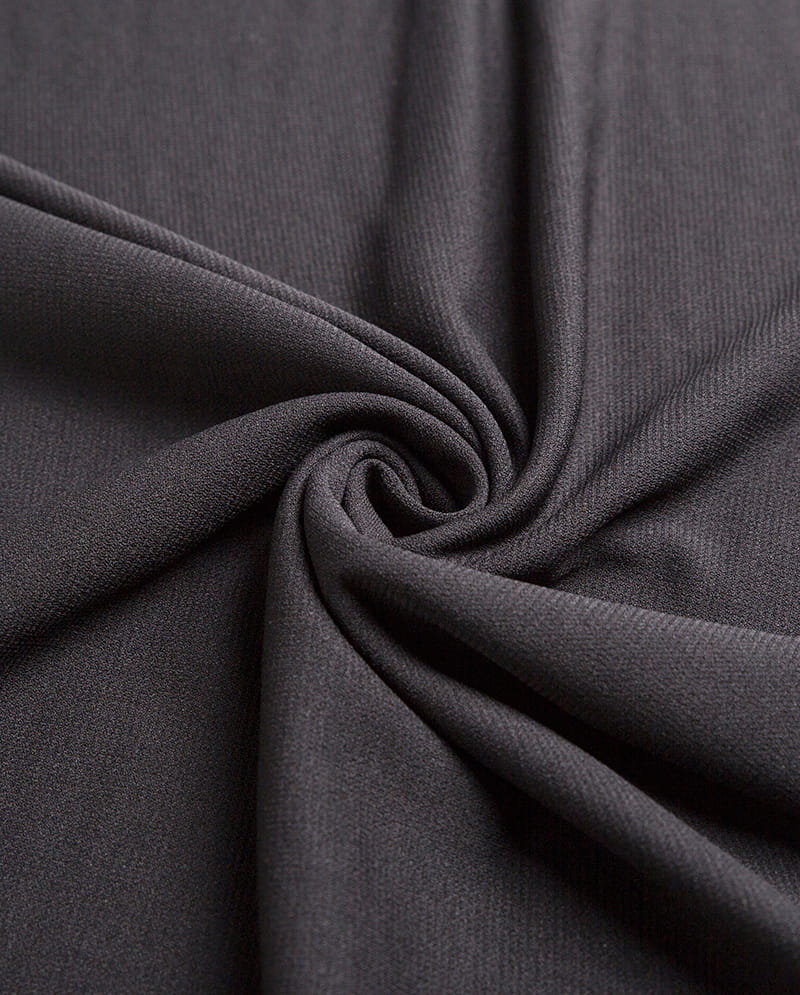
Durable Anti-Pilling Knitted Fabric for Home Textiles
-
Wash-Resistant Cationic Elastic Knitted Fabric for Garment Industry
-
Breathable Double-Faced Elastic Composite Fabric
-
-
-
- whatsapp:
- 0086-13962559622
-
- skype:
- skype.aliceshenghong
-
- Wechat:

COPYRIGHT © 2016 Suzhou Junhui Textile Co., Ltd.
