

 EN
EN English
 中文简体
中文简体Breathable Lightweight Tricot Mesh Fabric for Advanced Textile Applications
Content
- 1 Product Overview
- 2 Key Performance Advantages
- 3 Advantages Over Conventional Mesh Fabrics
- 4 Applications in Sportswear and Active Products
- 5 Industrial and Protective Applications
- 6 Automotive Interior Uses
- 7 Material and Yarn Compatibility
- 8 Advanced Manufacturing and Development Strengths
- 9 Production Process for Tricot Mesh Fabric
- 10 Quality and Supply Reliability
- 11 How to Select the Right Specification
- 12 Recommended Buyer Development Procedure
- 13 Why Work with a Specialized Textile Manufacturer
- 14 Environmental and Functional Considerations
- 15 Performance Balance in Product Design
- 16 Q&A
- 16.1 What is Breathable Lightweight Tricot Mesh Fabric?
- 16.2 Is tricot mesh woven or knitted?
- 16.3 What are the main applications?
- 16.4 Can the fabric be used next to the skin?
- 16.5 Can the fabric be customized?
- 16.6 Can recycled yarn be used in this fabric?
- 16.7 Can the mesh be made with functional yarns?
- 16.8 Can the fabric be dyed in custom colors?
- 16.9 Can coatings or laminations be applied?
- 16.10 What makes this fabric different from ordinary mesh?
- 16.11 What information should a buyer provide when requesting a quotation?
- 16.12 How should the fabric be tested?
- 16.13 Where is the supplier located?
- 16.14 How can international buyers request assistance?
- 17 Conclusion
- 18 References
- 19 Product: Breathable Lightweight Tricot Mesh Fabric
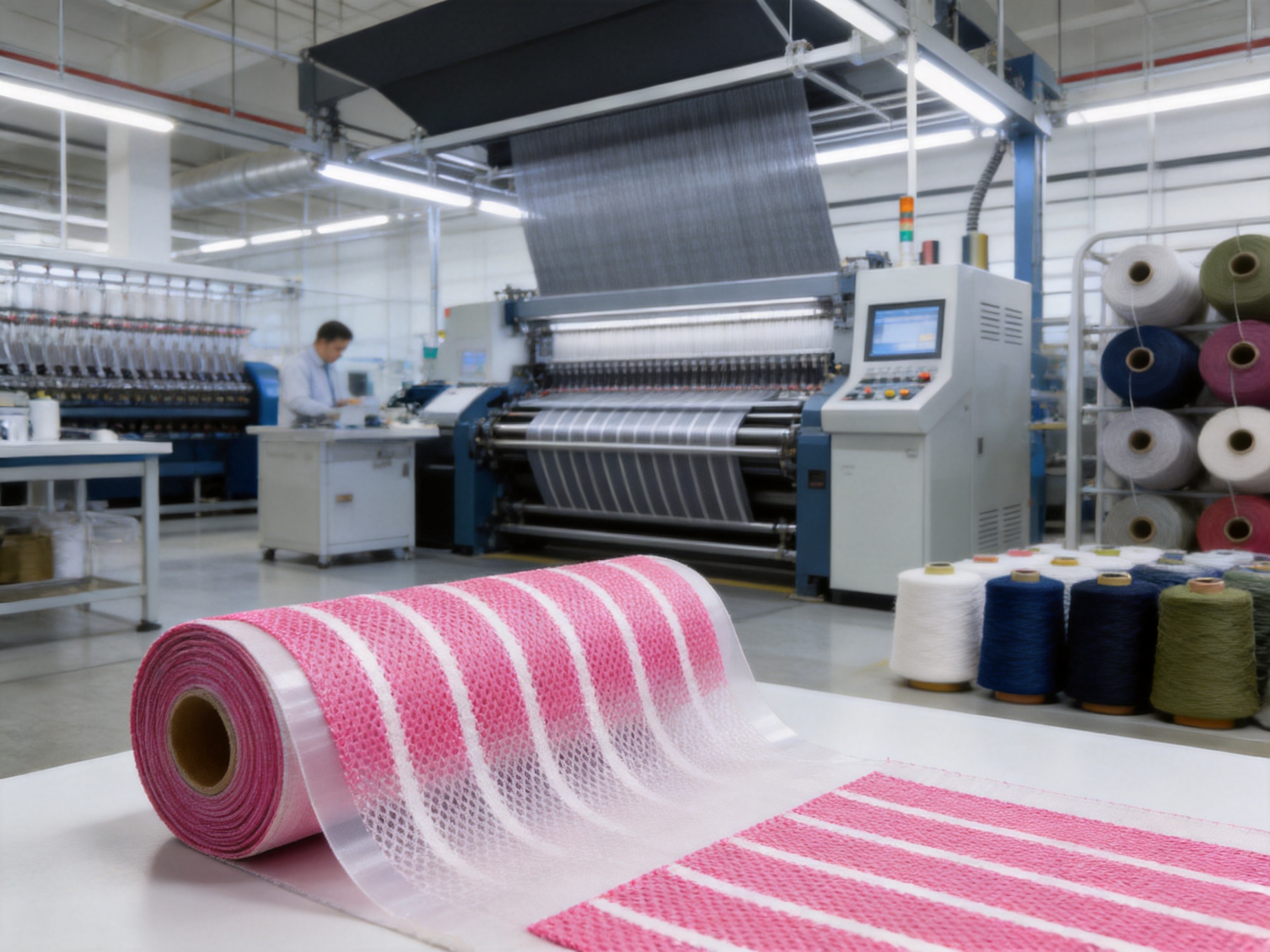
Breathable Lightweight Tricot Mesh Fabric is designed for manufacturers that need a practical balance of air permeability, low weight, dimensional stability, and processing flexibility. Its fine tricot construction creates a consistent open surface that supports airflow while maintaining a stable textile structure. This combination makes the fabric suitable for sportswear linings, industrial protective equipment, automotive interior components, footwear, bags, ventilation panels, and other products in which comfort and functional performance are equally important.
Unlike ordinary lightweight fabrics that may lose shape, fray easily, or provide inconsistent ventilation, this tricot mesh fabric is engineered to retain its structure during handling, sewing, lamination, dyeing, coating, washing, and repeated use. The fabric can be produced in configurations that support different end-use requirements, including lightweight lining performance, improved moisture movement, customized color development, and compatibility with functional finishing systems.
The product is manufactured by Suzhou Junhui Textile Co., Ltd., together with Suzhou Xiaoran New Materials Co., Ltd., a China-based textile enterprise specializing in differential yarns, recycled yarns, functional yarns, and knitted fabric products. With a professional research and development team, export-oriented production experience, and a product portfolio covering recycled, cationic, flame-retardant, antibacterial, moisture-wicking, hollow warm, high-elastic, and cotton-like yarns, the company is positioned to support both standard and customized textile programs.
Product Overview
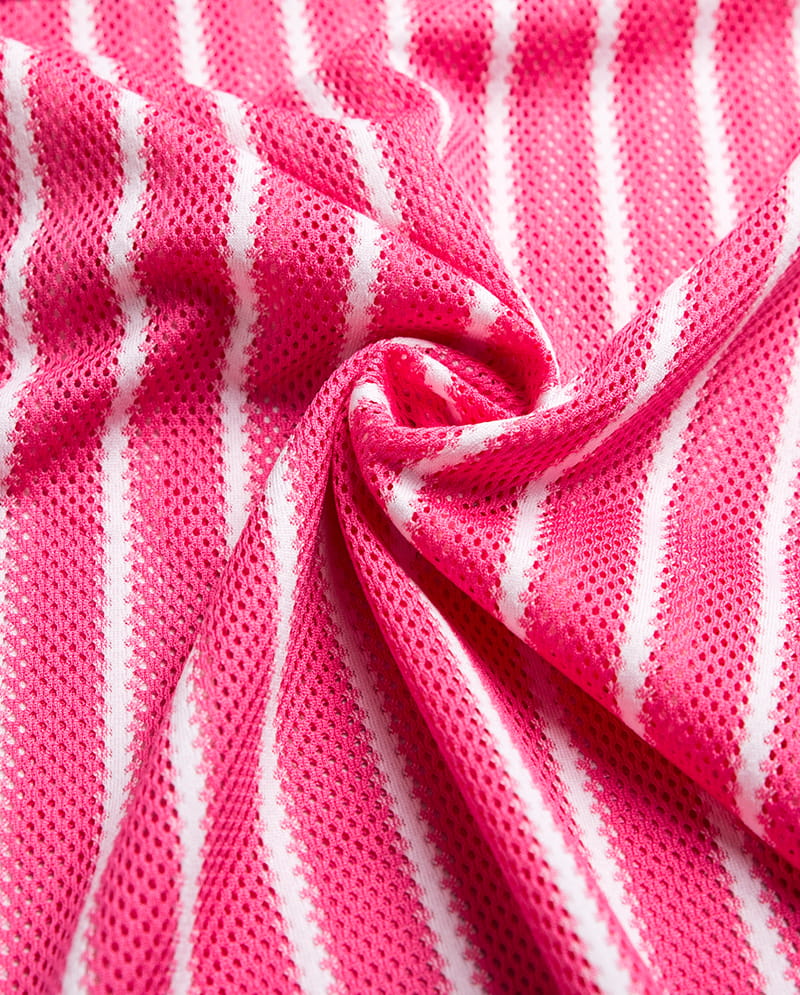
Tricot mesh is a warp-knitted fabric made with a fine, regular structure. The knitting process forms an interconnected network of loops and openings. Compared with many loosely constructed fabrics, tricot mesh offers a more controlled surface and better resistance to distortion. This allows it to remain light and breathable without becoming excessively unstable during manufacturing or use.
The Breathable Lightweight Tricot Mesh Fabric described in this article is intended for applications requiring rapid air circulation and a low-burden textile layer. The fabric’s micro-porous gaps allow air to pass through the material, helping heat and moisture move away from the contact surface. This characteristic is particularly valuable in products worn next to the body or installed in locations where ventilation contributes to comfort and product performance.
The fabric can also act as a support layer. In sportswear, it may be used behind a primary outer fabric to improve ventilation and reduce the accumulation of heat. In protective equipment, it can provide a lightweight inner layer that improves contact comfort without adding unnecessary bulk. In automotive interiors, it can support breathable trim concepts, backing structures, seat components, and selected interior surfaces where stable construction and controlled airflow are needed.
Because the fabric is compatible with dyeing and coating processes, buyers can specify colors, surface effects, and selected functional treatments. Depending on the final application, the fabric may be developed as a basic mesh, a colored mesh, a coated support, a laminated component, or a customized textile layer combined with specialized yarns.
Key Performance Advantages
Efficient Air Permeability
The primary advantage of this product is its breathable construction. The regular openings in the tricot structure provide channels through which air can circulate. This helps dissipate heat from the body or from enclosed product spaces. In garments, improved air movement can support a cooler and drier wearing experience. In technical products, it can help reduce heat accumulation in areas where a solid fabric would restrict ventilation.
Air permeability is influenced by yarn size, knitting density, finishing, coating, and the geometry of the openings. The value of a controlled tricot structure is that these variables can be managed more consistently than in an irregular or loosely formed mesh. Manufacturers can therefore select a suitable balance between openness, coverage, strength, and appearance.
The fabric is not limited to one type of airflow requirement. A more open construction can be selected for maximum ventilation, while a tighter construction can provide greater coverage and support. This flexibility helps product designers use the same general fabric category in multiple applications while adapting the construction to specific performance targets.
Low Weight and Reduced Bulk
Lightweight construction is essential in sportswear, portable equipment, transportation interiors, and consumer products designed for daily use. A heavy lining or support fabric can increase the total weight of a finished product, affect drape, and reduce user comfort. Breathable Lightweight Tricot Mesh Fabric is intended to provide functional support without creating an excessive weight penalty.
Its low-bulk profile makes it suitable for layered constructions. It can be placed beneath an outer textile, between a face fabric and foam, or inside a composite component without overwhelming the design. In clothing, it can contribute to a softer and less cumbersome lining system. In bags and footwear, it can support ventilation while preserving a streamlined construction. For manufacturers, lower material weight may also help improve material efficiency and simplify handling during cutting and assembly.
Structural Stability
Some lightweight mesh fabrics are comfortable and breathable but difficult to process because they stretch unpredictably, curl at the edges, or deform under tension. The tricot knitting process gives this product a stable and uniform structure. The interlinked loops help the fabric maintain its basic shape during cutting, sewing, laminating, and other conversion steps.
Structural stability is particularly important when the fabric is used as a lining or backing. A stable textile can reduce shifting between layers and make it easier to maintain accurate seam placement. It can also help finished products retain their appearance after washing or repeated handling. Although performance depends on the selected specification and finishing method, the tricot structure provides a sound foundation for dimensional control.
Resistance to Tearing and Deformation
Regular use places repeated stress on textile components. Sportswear linings may be stretched during movement, protective equipment may be installed and removed frequently, and automotive components may experience vibration, friction, temperature changes, and repeated contact. A fabric that loses its shape quickly can shorten product life and create quality problems.
The fine tricot structure distributes stress across interconnected knitted elements. This helps the fabric resist localized deformation and supports its ability to withstand normal handling and use. It is also less likely to behave like a loose, unstable net during sewing or assembly. For manufacturers, this can translate into fewer processing difficulties and more consistent finished-product quality.
Moisture and Heat Management
Breathability is most valuable when it contributes to moisture management. When a textile is worn against the body, perspiration and heat can accumulate between the skin and the garment. A breathable mesh layer encourages air exchange and helps moisture move through the construction. The result can be a drier contact surface and improved comfort during activity.
The fabric can also be combined with moisture-wicking polyester yarns from the company’s functional yarn portfolio. This creates opportunities for a more complete moisture-management system in which the fabric structure promotes airflow while the selected yarn and finish help move liquid away from the skin. Such combinations can be considered for athletic apparel, workwear, uniforms, helmet interiors, gloves, and other products where sweat control is important.
Advantages Over Conventional Mesh Fabrics
Many standard mesh fabrics are designed primarily for appearance or basic ventilation. They may not provide the dimensional control required for industrial processing. In contrast, this tricot mesh fabric is positioned as a functional textile for manufacturers that need repeatable structure and adaptable performance.
One difference is construction uniformity. An engineered warp-knitted structure can provide more consistent openings across the fabric width than a loosely woven or irregularly knitted mesh. Uniform openings are valuable because they support predictable airflow, stable appearance, and consistent coating or lamination results.
A second difference is processing behavior. A fabric that shifts or stretches excessively can slow down cutting, sewing, bonding, and inspection. The stable tricot construction is better suited to conversion operations in which accurate alignment matters. This may reduce production interruptions and improve the repeatability of finished goods.
A third difference is the ability to combine the mesh with specialized yarn systems. The company’s product range includes recycled yarns, solution-dyed or dope-dyed colored yarns, cationic dyeing yarns, microfine yarns, flame-retardant yarns, antibacterial yarns, moisture-wicking yarns, high-elastic yarns, hollow warm yarns, PBT/PET yarns, and cotton-like polyester yarns. This broader material platform allows the mesh to be developed as part of a performance package rather than treated as an isolated fabric.
A fourth difference is customization. Buyers may require a specific color, weight, openness, elasticity, hand feel, or finishing method. A supplier with experience in differential yarn development can adjust the textile design more effectively than a supplier offering only a fixed standard mesh. Customization can help brands and industrial manufacturers create products that meet particular design and performance targets.
Applications in Sportswear and Active Products
Sportswear Linings
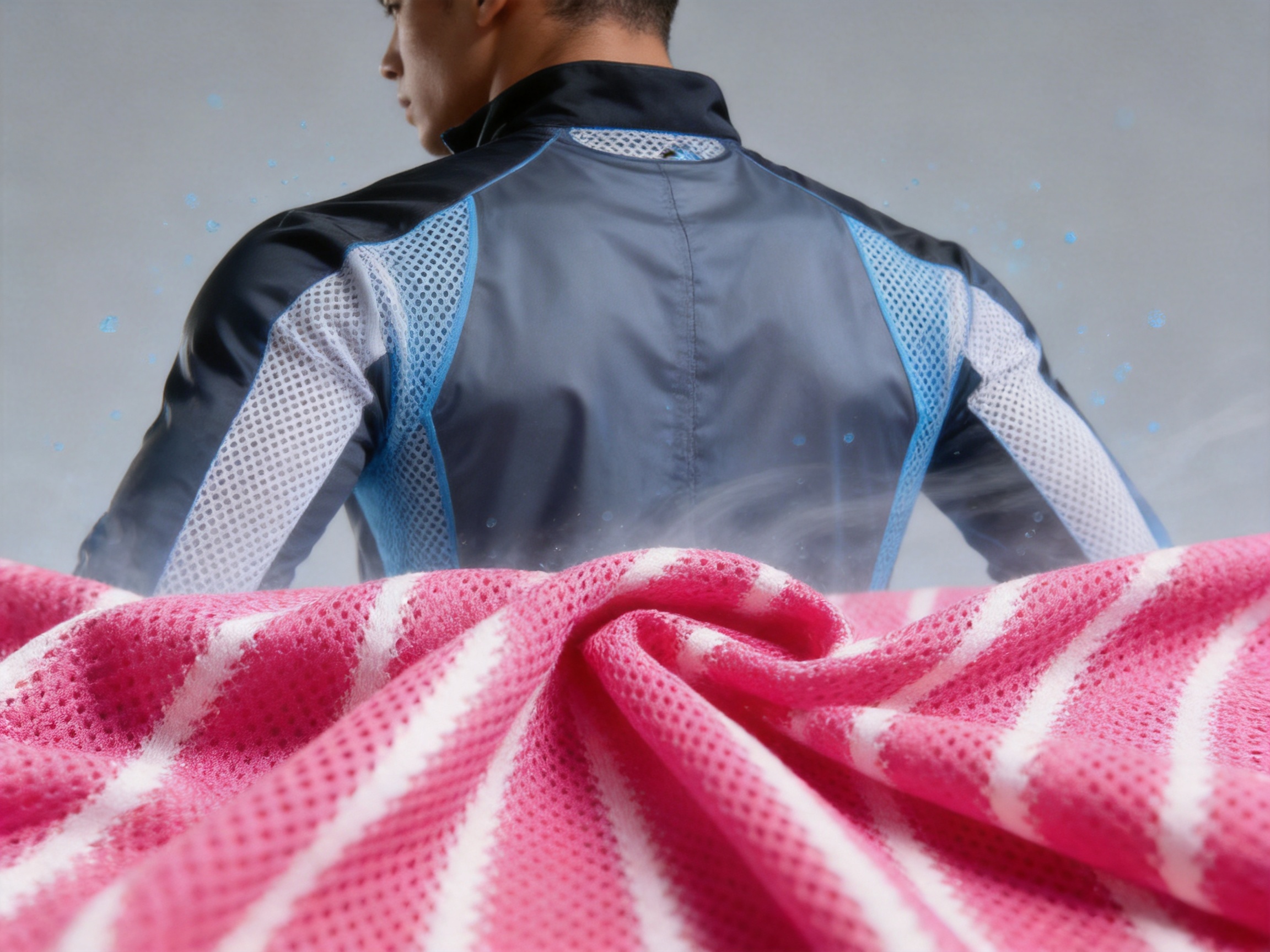
Sportswear must manage movement, heat, moisture, and repeated washing. A breathable tricot mesh lining can be placed in jackets, training tops, shorts, pants, uniforms, and performance accessories. Its open structure supports airflow, while its lightweight profile avoids adding unnecessary bulk to the garment.
In a jacket or training garment, the mesh may be used across the back, under the arms, inside pockets, or throughout the body lining. Designers can use different constructions in different garment zones to balance ventilation and coverage. A tighter mesh may be chosen for areas requiring greater opacity, while a more open version may be placed in high-heat zones.
Outdoor and Fitness Equipment
The same principles apply to backpacks, sports bags, braces, protective padding covers, and outdoor accessories. Mesh can provide ventilation against the back or around high-contact areas. Its low weight helps keep the total product manageable, while its stable structure supports sewing and attachment to foam, webbing, zippers, and outer fabrics.
For fitness equipment, breathable textile surfaces can improve contact comfort. For example, the fabric may be considered for the inner layer of exercise supports, equipment straps, or protective covers. The appropriate yarn, coating, and finishing system should be selected according to the required abrasion resistance, skin-contact performance, and care conditions.
Footwear Components
Footwear manufacturers often use mesh materials to improve ventilation and reduce internal humidity. Tricot mesh can function as a tongue lining, collar lining, quarter lining, insole cover, or support layer. Its fine structure can help create a comfortable internal surface while allowing air to circulate through selected sections of the shoe.
Its suitability for footwear depends on the final specification, including abrasion requirements, bonding compatibility, colorfastness, and resistance to perspiration. The fabric’s ability to accept coatings and laminations provides additional design possibilities for manufacturers developing lightweight athletic, casual, and work footwear.
Industrial and Protective Applications
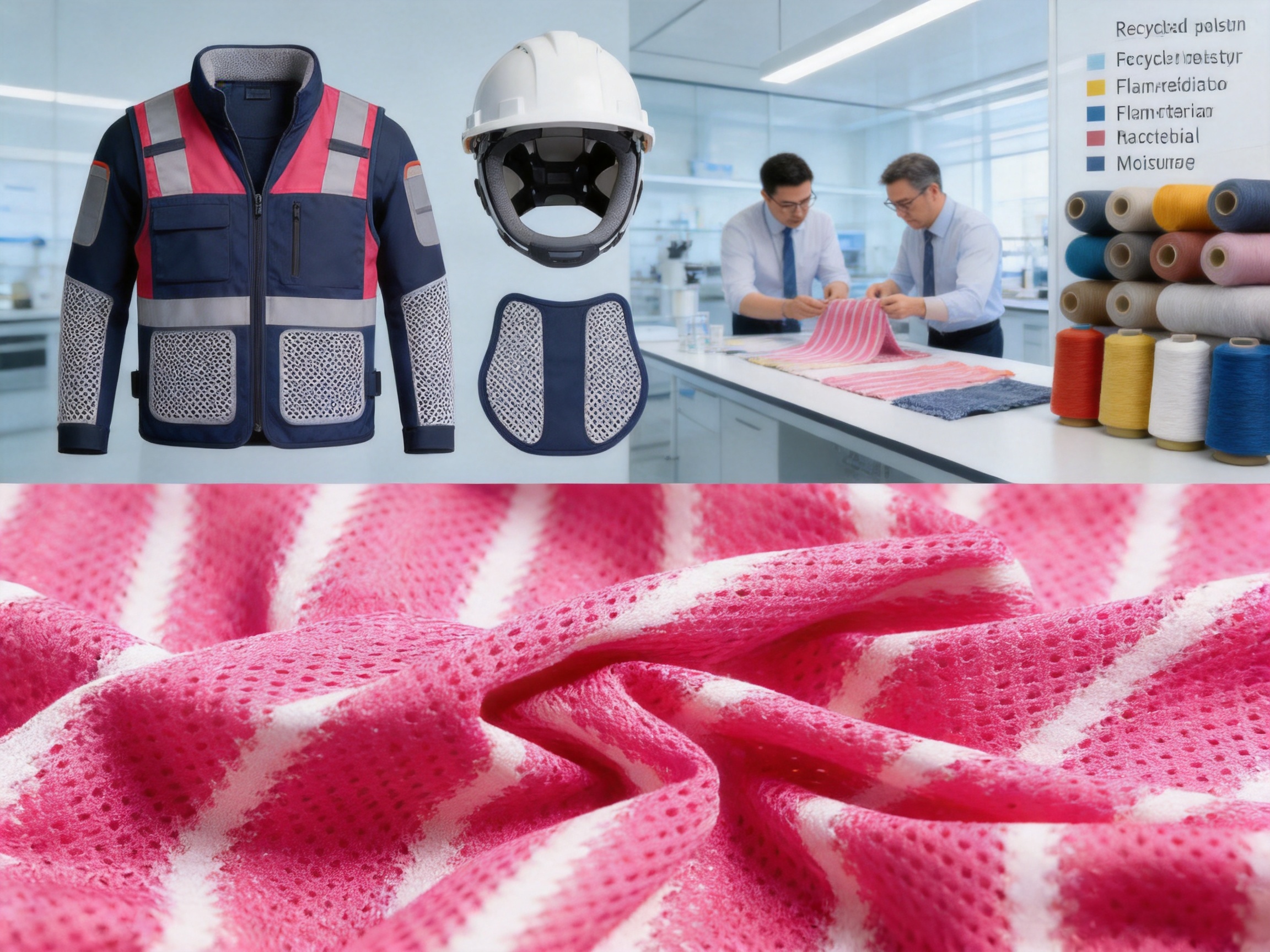
Protective equipment must often balance durability with wearer comfort. Heavy or poorly ventilated inner layers can increase heat stress and reduce the likelihood that workers will wear equipment consistently. A lightweight tricot mesh can serve as an inner comfort layer in selected protective products, helping separate the body from harder outer components while supporting air movement.
Potential applications include the inner layers of protective vests, helmet comfort components, workwear ventilation panels, safety harness covers, protective sleeves, and equipment padding systems. The specific product design must determine whether additional flame-retardant, antibacterial, moisture-wicking, antistatic, or coating technologies are needed.
The company’s functional yarn range provides a basis for these options. Flame-retardant yarns can be considered for applications where reduced flammability is required. Antibacterial yarns may support odor-control and hygiene objectives. Moisture-wicking yarns may improve comfort in products used during physically demanding work. These functions should be validated through appropriate testing for the finished product rather than assumed solely from the yarn category.
Industrial buyers also benefit from the fabric’s compatibility with manufacturing processes. Stable mesh can be cut into panels, sewn into assemblies, bonded to other layers, or used as a backing material. Its low weight may help reduce the material burden of protective products while preserving the desired level of support.
Automotive Interior Uses
Automotive interiors demand materials that are visually consistent, dimensionally stable, and compatible with layered construction. Tricot mesh can be used in selected seat, door, headliner, trim, storage, and ventilation-related components. Its breathable structure may help support comfort-oriented interior designs, while its light weight can contribute to material efficiency.
In seat-related applications, mesh may be used as a backing, spacer-related component, or interior support layer, subject to the requirements of the specific vehicle program. In door and trim systems, it may provide a stable textile base for lamination or surface treatment. In storage compartments and interior pockets, it can combine flexibility with controlled structure.
Automotive development requires careful testing for abrasion, odor, fogging, colorfastness, heat aging, humidity, flammability, dimensional stability, and bonding performance. The fabric can be customized and finished according to program requirements, but final acceptance must always be based on the relevant automotive specifications and validation procedures.
Material and Yarn Compatibility
Polyester is widely used in technical and apparel textiles because it offers a useful combination of strength, dimensional stability, processability, and color development. The company’s portfolio includes multiple polyester yarn categories that can be matched to different fabric objectives.
Yarn or material category | Potential contribution to tricot mesh development | Typical application direction |
Recycled polyester yarn | Supports recycled-content product programs and sustainability-oriented sourcing | Sportswear, bags, linings, and consumer textiles |
SD and FD DTY yarn | Provides options for different surface appearances, bulk, and handle characteristics | Knitted fabrics, linings, apparel, and accessories |
FDY yarn | Supports smooth, stable, and consistent textile surfaces | Fine mesh, lining, backing, and technical fabrics |
High-elastic yarn | Introduces stretch and recovery possibilities into selected constructions | Sportswear, fitted products, supports, and comfort components |
Flame-retardant yarn | Provides a route toward reduced-flammability textile systems when properly tested | Protective products, workwear, and technical interiors |
Antibacterial yarn | Supports hygiene and odor-management objectives | Sportswear, uniforms, footwear, and contact layers |
Moisture-wicking yarn | Helps move moisture through the textile system | Activewear, workwear, and high-activity products |
Hollow warm yarn | Offers a route toward lightweight insulation and warmth management | Apparel linings and temperature-management products |
Cotton-like polyester yarn | Creates a softer, more natural hand-feel concept while retaining polyester-based performance | Apparel, casual products, and comfort-focused textiles |
PBT/PET yarn | Supports elastic and recovery characteristics in appropriate constructions | Stretch fabrics, fitted components, and technical applications |
The yarn count options listed in the company’s product portfolio cover numerous combinations, including fine-denier and higher-denier constructions. Available categories include recycled SD DTY, recycled SD FDY, recycled FD DTY, recycled SD plus CD DTY, recycled DDB DTY, recycled CD DTY, normal-series SD DTY, FD DTY, SD DDB, CD DTY, high-elastic yarns, PBT/PET yarns, and functional yarns.
These choices help the supplier develop a more precise relationship between yarn specification and fabric performance. For example, a fine yarn may be appropriate where a delicate hand and high openness are required, while a higher-denier yarn may be considered where greater support or durability is needed. The correct selection depends on the mesh geometry, finished weight, stretch target, coating, and end-use environment.
Advanced Manufacturing and Development Strengths
Integrated Yarn and Fabric Capability
A major strength of the manufacturing platform is the relationship between yarn development and fabric production. The company is not limited to trading finished fabrics. Its product range covers raw material and yarn differentiation, including recycled and functional options. This creates a stronger foundation for developing a mesh fabric that matches a customer’s application rather than forcing every project into one standard specification.
Integrated product knowledge can improve communication between yarn selection, knitting, dyeing, finishing, and final inspection. When a customer requests changes in hand feel, elasticity, color, weight, or function, the technical team can evaluate how adjustments at the yarn level may influence the finished fabric. This approach is useful for buyers who require a stable supply program across multiple product seasons or product categories.
Professional Research and Development
The company maintains a professional research and development team focused on differential yarns, environmental protection, functional materials, and fabric applications. Its work includes collaboration and discussion with internationally recognized enterprises on research, development, and application projects.
For tricot mesh, research and development may involve evaluating yarn combinations, loop structure, density, opening size, surface feel, stretch, dyeing behavior, coating adhesion, and washing performance. These variables are interconnected. A change in yarn type can affect the fabric’s handle; a change in knitting density can affect airflow; a coating can improve protection but reduce openness. A capable development team is important because it can evaluate the complete system rather than optimizing one property in isolation.
Recycled and Functional Product Development
Sustainability and performance are increasingly considered together in textile purchasing. Recycled polyester yarn can help customers develop products with recycled-content objectives, while functional yarns can reduce the need for separate treatments in some applications. The company’s recycle series includes recycled SD DTY, recycled SD FDY, recycled FD DTY, recycled SD plus CD DTY, recycled DDB DTY, and recycled CD DTY in multiple specifications.
The recycle series gives buyers a broader selection than a single recycled yarn option. This can help manufacturers maintain similar design concepts across different fabric constructions. Recycled yarn should still be assessed for the relevant requirements, including color consistency, strength, process performance, traceability, and documentation for the intended market.
Functional development includes flame-retardant, antibacterial, moisture-wicking, high-elastic, hollow warm, cotton-like, cationic dyeing, and other differential yarn categories. These materials provide design routes for fabrics that need more than basic appearance. When combined with a breathable tricot structure, they can support products designed around comfort, hygiene, thermal regulation, or selected protective needs.
Flexible Customization
The company states that it can accept orders for different kinds of differentiated yarns. This flexibility is valuable to buyers who need a special yarn combination, nonstandard count, custom color direction, or application-specific performance. Customization may be discussed at the yarn, knitting, dyeing, coating, or finishing stage depending on the product requirement.
For the mesh fabric, a customization program may begin with a technical brief covering final use, target weight, desired openness, width, color, stretch, hand feel, coating, washing conditions, and required tests. Samples can then be evaluated for air permeability, dimensional stability, tear resistance, colorfastness, moisture management, and bonding or sewing performance. This staged approach reduces the risk of selecting a fabric based only on appearance.
Production Process for Tricot Mesh Fabric
1. Requirement Analysis
Manufacturing begins with a clear understanding of the intended application. Sportswear, protective gear, and automotive interiors have different requirements. A sportswear lining may prioritize air permeability, softness, moisture movement, and wash durability. An industrial inner layer may require added flame resistance, abrasion resistance, or antibacterial performance. An automotive component may require heat aging, low odor, dimensional control, and bonding compatibility.
By defining the end-use conditions at the beginning, the technical team can recommend an appropriate yarn and structure. This reduces the likelihood of selecting a fabric that performs well in one area but fails to meet a more important requirement in the finished product.
2. Yarn Selection and Preparation
Yarn selection considers denier, filament configuration, luster, cross-section, stretch, recycled content, and functional treatment. Semi-dull and full-dull options can provide different visual effects. Draw-textured yarns may contribute to bulk and surface character, while fully drawn yarns can support smoothness and stability. High-elastic, PBT/PET, or other specialized yarns may be used when recovery and flexibility are important.
Yarn preparation also involves checking package condition, uniformity, moisture, tension behavior, and suitability for knitting. Consistent yarn preparation supports even fabric formation and helps minimize defects during production.
3. Tricot Knitting
During knitting, yarns are formed into a fine warp-knitted structure with controlled loops and openings. Machine settings influence the appearance, weight, elasticity, thickness, and air permeability of the fabric. Proper tension control is essential because excessive or uneven tension can cause streaks, distortion, or inconsistent mesh openings.
The knitting process is monitored for defects such as broken filaments, dropped loops, uneven density, holes outside the design, oil marks, and width variation. Early detection helps protect production efficiency and ensures that only suitable fabric moves forward to dyeing or finishing.
4. Dyeing and Color Development
The fabric can be dyed in colors selected for the customer’s product. Color development must account for the yarn type, fabric construction, dye class, temperature, and finishing process. Recycled and functional yarns may require specific dyeing conditions to achieve consistent results.
For certain product programs, colored or solution-dyed yarns may be considered. This approach can support color consistency and may reduce some wet-processing requirements, depending on the selected yarn and final construction. The best method depends on order volume, color range, performance targets, and sustainability objectives.
5. Functional Finishing
Finishing can modify hand feel, dimensional stability, surface appearance, moisture behavior, or compatibility with later processes. Coatings may be applied when the fabric needs an additional protective or bonding layer. However, finishing must be carefully controlled because excessive coating or compacting can reduce the openness that provides breathability.
A well-designed finishing process maintains the intended balance between airflow and stability. Sampling and testing are important before bulk production, particularly when the fabric will be laminated, printed, bonded, or combined with foam and other substrates.
6. Inspection and Packing
Final inspection evaluates appearance, width, weight, color, defects, hand feel, and other agreed specifications. Depending on the application, additional testing may cover air permeability, tear strength, bursting strength, dimensional change, colorfastness, abrasion, moisture management, or functional performance.
After inspection, the fabric is rolled, labeled, packed, and prepared for shipment. Clear identification of batch, color, specification, and quantity helps customers manage incoming inspection and production planning.
Quality and Supply Reliability
More than 90 percent of the company’s products are exported, and its customer base extends across 36 countries. International supply experience requires attention to communication, documentation, packaging, production scheduling, and consistency between sample approval and bulk delivery.
For buyers, supply reliability is not limited to manufacturing capacity. It also includes the ability to respond to technical questions, clarify specifications, manage sample revisions, and address production issues. The company states that its experts are prepared to provide guidance and support within 12 hours globally. Rapid communication can be valuable when a buyer is working under a tight development schedule or needs assistance selecting among several yarn and fabric options.
Quality control should be based on agreed standards for each project. A buyer may specify tolerances for width, weight, color difference, air permeability, shrinkage, stretch, recovery, or appearance. Establishing these requirements before bulk production creates a clear basis for inspection and helps both sides manage expectations.
How to Select the Right Specification
The most suitable tricot mesh specification depends on the product’s function. Buyers should begin by identifying whether the fabric will be next to the skin, enclosed between layers, exposed to abrasion, bonded to another material, or subject to repeated washing. The required performance should then be translated into measurable criteria.
Air permeability is important for breathable products, but maximum openness is not always the best choice. An overly open mesh may provide insufficient coverage, reduce support, or complicate printing and coating. A more balanced design may provide adequate airflow while improving appearance and durability.
Weight and thickness should be considered together. A light fabric can reduce bulk, but a very thin construction may not provide enough stability for sewing or lamination. The ideal fabric should meet the product’s structural needs without adding unnecessary material.
Stretch and recovery are important in fitted garments, supports, and components that must follow body movement. High-elastic or PBT/PET yarns may be evaluated for these applications. However, the final fabric’s stretch depends on yarn selection, knitting structure, finishing, and direction of measurement.
Color requirements should include not only the visual shade but also colorfastness to washing, perspiration, rubbing, light, and other relevant conditions. For high-volume programs, customers may also consider whether standard dyed yarn, dope-dyed yarn, or another color-development method is most appropriate.
Functional requirements should be defined according to the finished product. For example, an antibacterial fabric may need odor-control testing after washing, while a moisture-wicking fabric may need liquid-spreading and drying tests. Flame-retardant requirements must be evaluated using the applicable standard for the target market and product category.
Recommended Buyer Development Procedure
A practical development program can follow several stages. First, the buyer provides the application, target market, performance requirements, estimated quantity, desired color, and expected delivery schedule. Second, the supplier recommends one or more yarn and fabric constructions. Third, samples are produced and evaluated by the buyer’s technical team. Fourth, adjustments are made to weight, opening, hand feel, color, elasticity, or finish. Finally, an approved specification is documented for bulk production.
For complex projects, buyers should test the fabric in the actual product assembly. A mesh that performs well by itself may behave differently when laminated, sewn, printed, coated, or combined with foam. Product-level testing can reveal issues related to seam slippage, adhesive compatibility, edge curling, delamination, odor, or dimensional change.
It is also useful to define packaging and shipment requirements in advance. Roll length, roll diameter, labeling, moisture protection, palletization, and container loading can influence warehouse handling and production efficiency. Clear logistics instructions help protect the fabric during international transportation.
Why Work with a Specialized Textile Manufacturer
A specialized textile manufacturer can provide more than a catalog item. It can help connect material selection with actual product performance. This is particularly important for tricot mesh because the final result depends on the interaction of yarn, knitting, dyeing, finishing, and application design.
The combined experience of Suzhou Junhui Textile Co., Ltd. and Suzhou Xiaoran New Materials Co., Ltd. covers differential yarns and knitted fabrics, with a focus on recycled materials, functional yarns, and application development. The companies’ product portfolio demonstrates familiarity with a broad range of polyester yarn structures and performance directions.
Their location in Shengze Town, Suzhou, places the business within an important Chinese textile manufacturing region. Access to textile supply networks can support material sourcing, production coordination, development speed, and export logistics. For international customers, this regional manufacturing base can provide access to both standard and customized textile solutions.
The company’s customer-oriented approach is also relevant to development work. Its stated goal is to support customer success through product selection guidance and problem-solving assistance. This approach is especially useful when buyers are comparing recycled, functional, elastic, and standard yarn options or when they need to adapt a mesh fabric to a new application.
Breathable Lightweight Tricot Mesh Fabric
Environmental and Functional Considerations
Textile buyers increasingly seek materials that support both environmental objectives and product performance. Recycled polyester yarn is one option for reducing dependence on virgin polyester in suitable applications. When used in a tricot mesh fabric, recycled yarn can support lightweight and breathable product concepts while helping brands pursue recycled-content targets.
Environmental evaluation should consider the complete product life cycle. Relevant questions may include the origin and traceability of recycled content, dyeing requirements, finishing chemistry, expected product life, wash durability, recyclability, packaging, and transportation. A lightweight fabric may contribute to material and transport efficiency, but these benefits should be evaluated alongside the requirements of the final product.
Functional yarns can also improve resource efficiency when they reduce the need for additional finishing or enable a product to last longer. For example, improved moisture management may support longer wearing comfort, while stable construction may reduce replacement caused by deformation. These potential benefits depend on actual product performance and should be verified through testing.
Performance Balance in Product Design
The strongest advantage of Breathable Lightweight Tricot Mesh Fabric is not one isolated property but the balance among several properties. Air permeability is useful only when the fabric remains stable enough for production. Low weight is valuable only when the material still provides the required durability. Functional finishing is beneficial only when it does not excessively restrict airflow or compromise hand feel.
This balance is why yarn and fabric development should be considered together. A finer yarn may improve softness and openness, while a different yarn or denser structure may improve support. A recycled construction may satisfy sustainability goals, while a functional yarn may address moisture or hygiene. The correct solution depends on the application and the priorities established by the buyer.
Through a combination of yarn selection, tricot knitting, color development, finishing, and quality inspection, the product can be adjusted to meet different industrial and consumer textile requirements. This adaptability gives manufacturers a practical alternative to buying separate materials for every application.
Q&A
What is Breathable Lightweight Tricot Mesh Fabric?
It is a fine warp-knitted mesh fabric designed to provide air permeability, low weight, and structural stability. Its regular openings support airflow, while the tricot construction helps resist excessive deformation during processing and use.
Is tricot mesh woven or knitted?
Tricot mesh is a warp-knitted fabric. It is formed by knitting yarns into interconnected loops. The product information describes the fabric as a tricot structure, although general textile discussions sometimes use the word “woven” loosely when referring to the manufacturing of fabric.
What are the main applications?
Main applications include sportswear linings, activewear panels, footwear components, bags, industrial protective equipment inner layers, workwear ventilation sections, automotive interior trim, backing materials, and selected laminated textile products.
Can the fabric be used next to the skin?
It can be considered for skin-contact applications when the selected yarn, dye, finishing, and construction meet the buyer’s comfort and safety requirements. Hand feel, softness, colorfastness, moisture management, and chemical compliance should be evaluated for the intended market.
Can the fabric be customized?
Yes. Potential customization areas include yarn type, recycled content, denier, mesh openness, weight, width, color, elasticity, hand feel, coating, and functional finishing. The final options depend on order quantity, technical requirements, and production feasibility.
Can recycled yarn be used in this fabric?
Yes. The company offers a recycle series that includes recycled SD DTY, recycled SD FDY, recycled FD DTY, recycled SD plus CD DTY, recycled DDB DTY, and recycled CD DTY. Buyers should confirm recycled-content documentation and the performance requirements for their specific product.
Can the mesh be made with functional yarns?
Functional options include flame-retardant, antibacterial, moisture-wicking, high-elastic, hollow warm, cotton-like, cationic dyeing, PBT/PET, and other differential yarn categories. The selected function should be validated on the finished fabric and finished product.
Can the fabric be dyed in custom colors?
Yes. The fabric is compatible with dyeing and can be developed in colors selected by the customer. Color approval should include laboratory dips or samples and testing for the required colorfastness properties.
Can coatings or laminations be applied?
The fabric is compatible with coating and related finishing processes. The coating type, amount, curing conditions, and bonding method should be tested because excessive coverage may reduce air permeability or alter flexibility.
What makes this fabric different from ordinary mesh?
Its key differences are the controlled tricot construction, lightweight profile, stable structure, resistance to tearing and deformation, and compatibility with a broad range of yarn and finishing options. These qualities make it suitable for functional products rather than appearance-only applications.
What information should a buyer provide when requesting a quotation?
A buyer should provide the intended application, required width, approximate weight, mesh appearance, color, stretch, estimated quantity, finishing requirements, testing standards, packaging needs, and target delivery schedule. Product samples, drawings, or reference fabrics can also help the technical team recommend an appropriate specification.
How should the fabric be tested?
Testing should reflect the final use. Common evaluations may include air permeability, width, weight, thickness, dimensional change, tear strength, bursting strength, abrasion, colorfastness, stretch and recovery, moisture management, coating adhesion, and functional performance. Automotive or protective applications may require additional industry-specific tests.
Where is the supplier located?
The company is located at No. 757, West Ring Road, Shengze Town, Wujiang Area, Suzhou City, Jiangsu Province, China. It serves international customers and exports most of its products.
How can international buyers request assistance?
International buyers can contact the company’s sales team for product selection, sample development, specification confirmation, and application guidance. The company states that its experts are prepared to respond to customer support requests within 12 hours globally.
Conclusion
Breathable Lightweight Tricot Mesh Fabric offers a practical combination of ventilation, low weight, dimensional stability, and processing flexibility. Its fine tricot construction supports uniform airflow while maintaining a more controlled structure than many unstable lightweight meshes. This makes it appropriate for sportswear, protective equipment, automotive trim, footwear, bags, and other applications where comfort and reliable manufacturing performance matter.
The product’s value is strengthened by the manufacturer’s broader expertise in polyester and differential yarns. Recycled, colored, high-elastic, flame-retardant, antibacterial, moisture-wicking, hollow warm, cotton-like, PBT/PET, and other yarn options create opportunities for customized fabric development. Buyers can work with the supplier to balance openness, weight, strength, stretch, hand feel, color, and functional performance.
With a professional research and development team, export experience across 36 countries, a product range covering both standard and specialized yarns, and a customer-support-oriented approach, Suzhou Junhui Textile Co., Ltd. and Suzhou Xiaoran New Materials Co., Ltd. can support textile manufacturers from initial concept through sample development and bulk production. For companies seeking a breathable and lightweight textile solution with customization potential, this tricot mesh fabric provides a strong platform for developing comfortable, stable, and cost-conscious products.
References
1. Product information and technical description supplied for Breathable Lightweight Tricot Mesh Fabric.
2. Product portfolio information supplied for recycled, normal-series, CD, high-elastic, PBT/PET, and functional polyester yarns.
3. Textile manufacturing principles relating to warp-knitted tricot structures, air permeability, dimensional stability, and fabric finishing.
4. General textile quality-control practices for fabric weight, width, colorfastness, dimensional change, tear strength, abrasion, and functional performance.
5. General product-development practices for recycled polyester, moisture-wicking, antibacterial, flame-retardant, elastic, and coated textile materials.
Product: Breathable Lightweight Tricot Mesh Fabric

Popular products
-
Premium Cationic Interlock Stretch Comfort Fabric
-
Moisture-Wicking Nylon Woven Fabric
-
Double-faced jacquard elastic fabric
-
Heather Grey Double-faced cationic jersey fabric
-
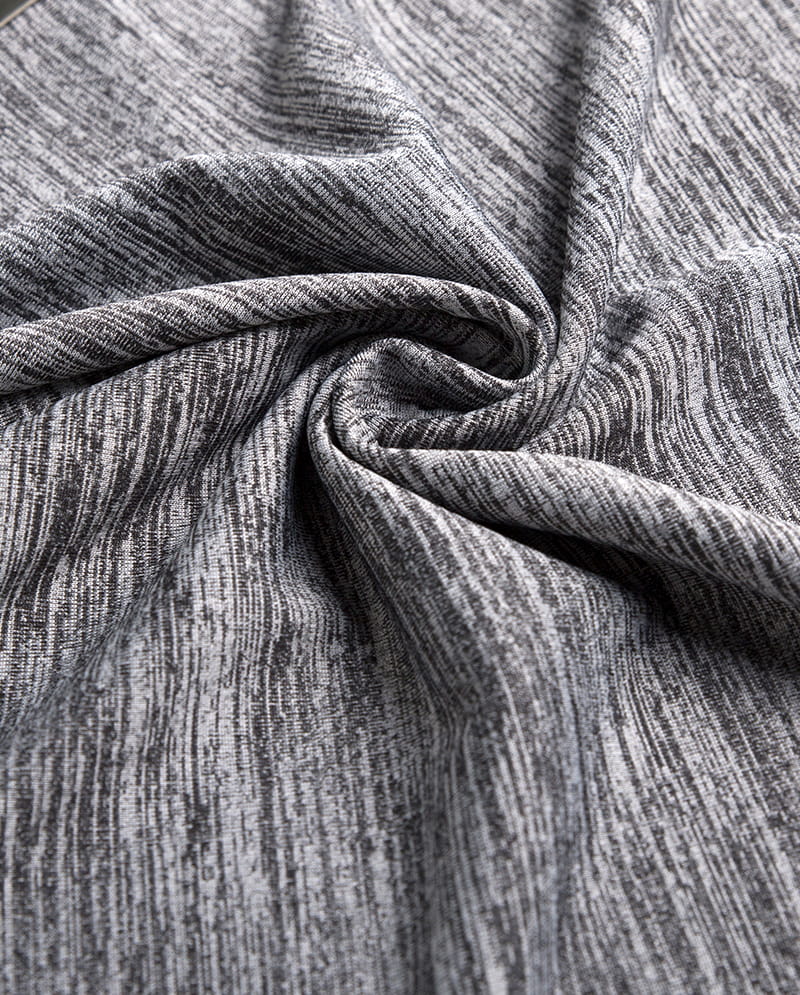
Anti-static Cationic Knitted Rib Fabric
-
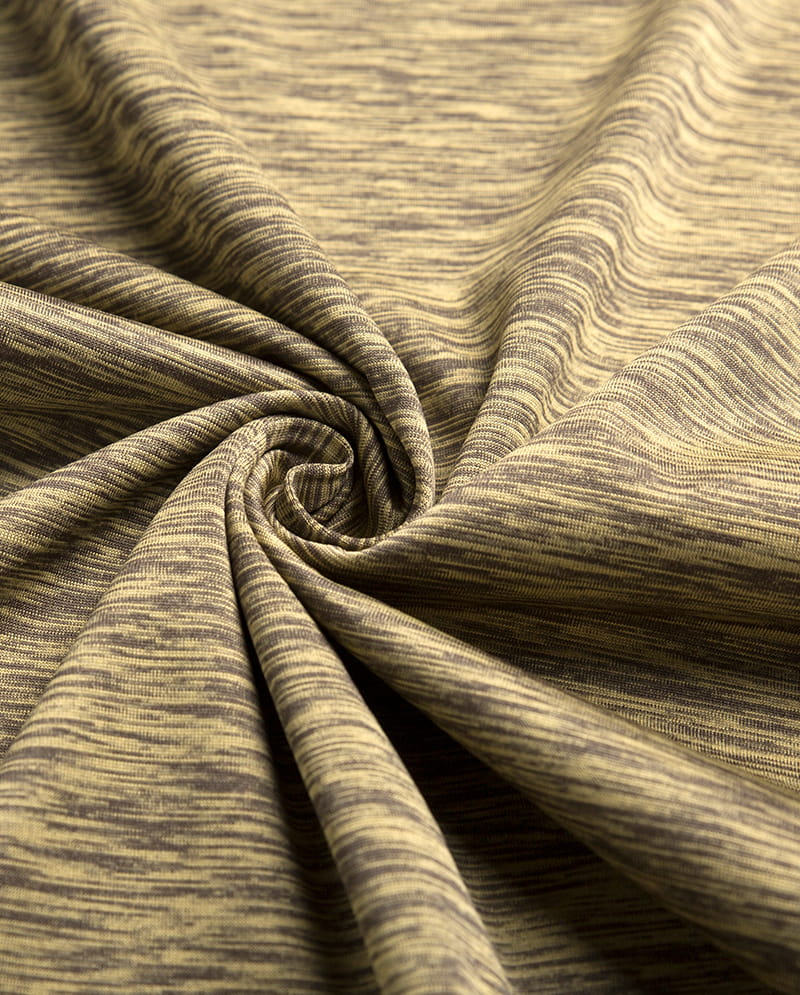
High-Stretch Cationic Jersey Fabric
-
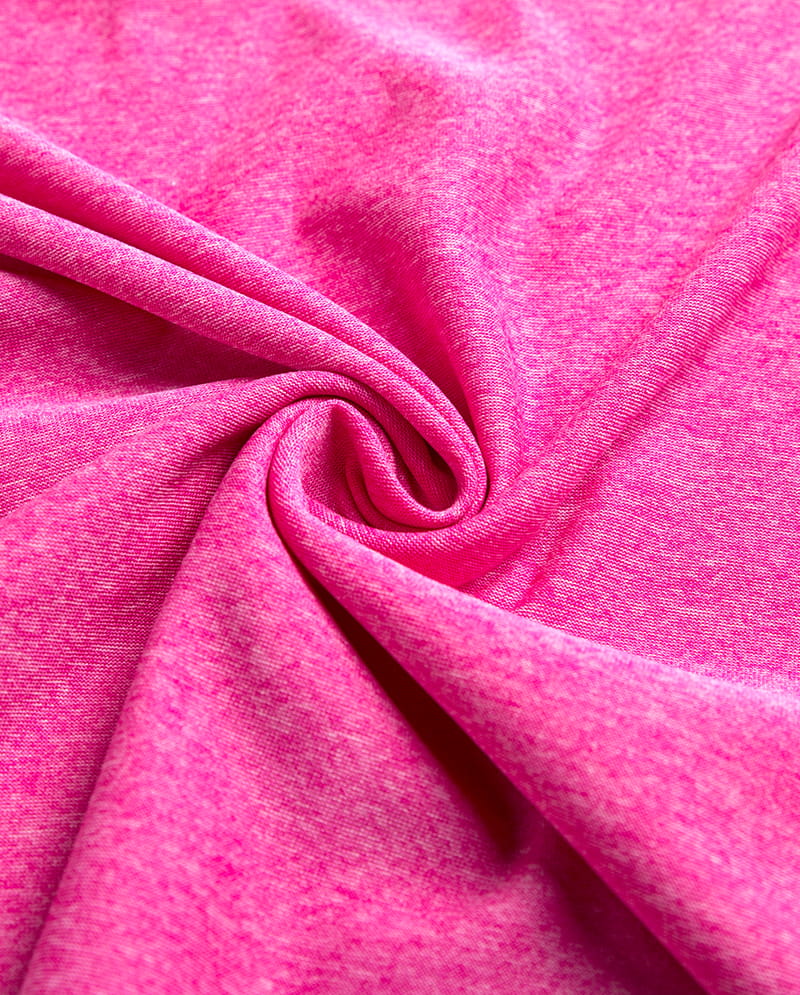
High Quality Cationic DTY Spandex Two Sides Brush Dralon Knit Fabric for Garment Thermal Underwear
-
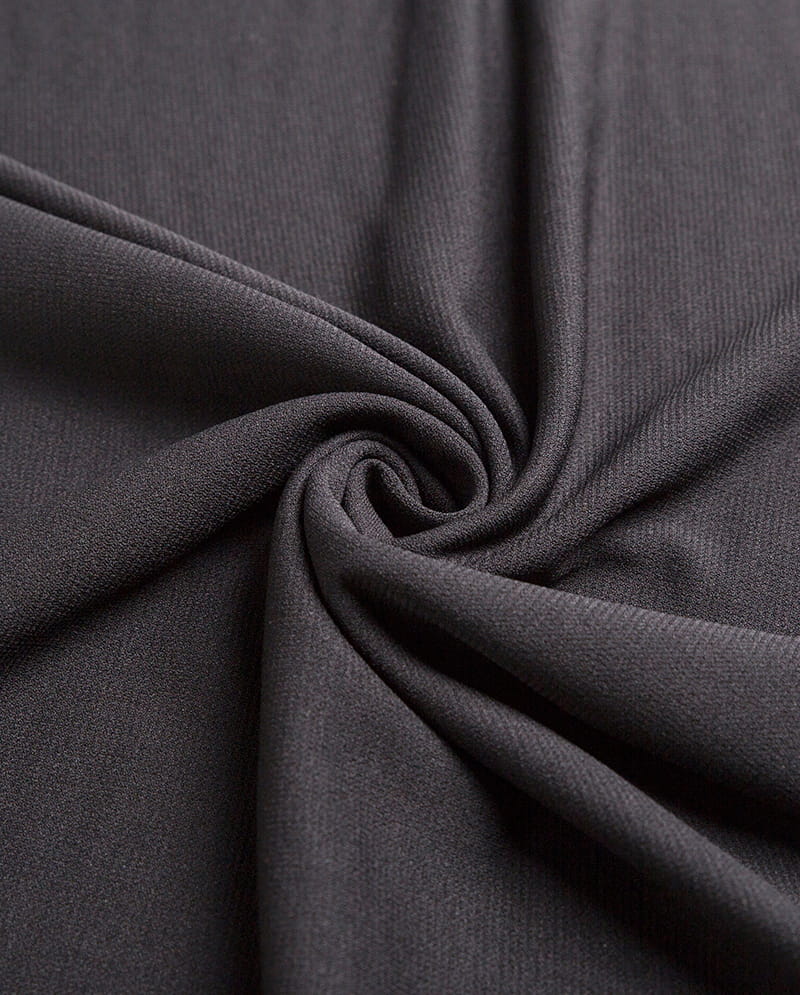
Durable Anti-Pilling Knitted Fabric for Home Textiles
-
Wash-Resistant Cationic Elastic Knitted Fabric for Garment Industry
-
Breathable Double-Faced Elastic Composite Fabric
-
-
-
- whatsapp:
- 0086-13962559622
-
- skype:
- skype.aliceshenghong
-
- Wechat:

COPYRIGHT © 2016 Suzhou Junhui Textile Co., Ltd.
