

 EN
EN English
 中文简体
中文简体Black DDB DTY(D/F) Recycled Functional Yarn: A Sustainable, High-Performance Textile Innovation
Content
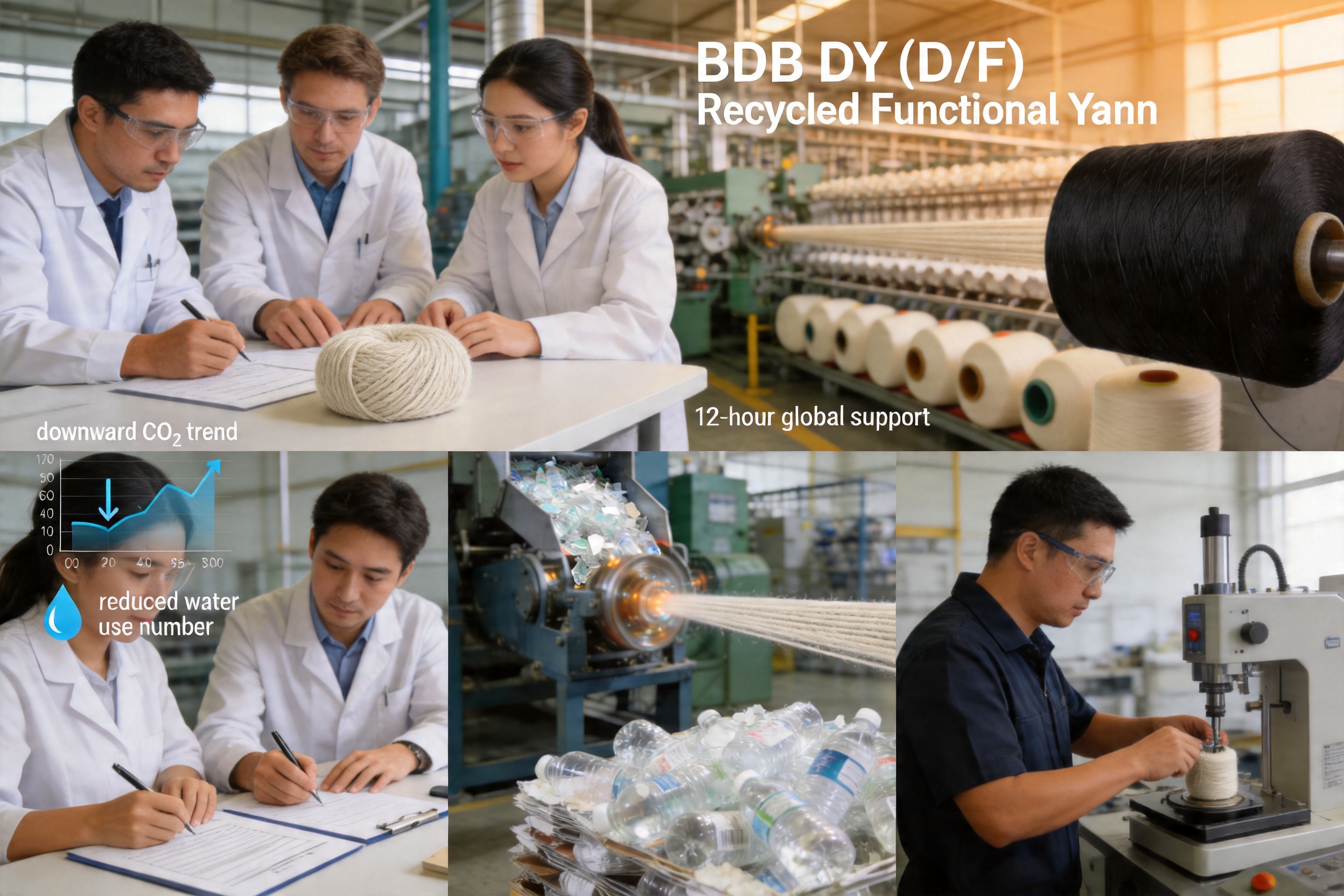
The textile industry is undergoing a profound shift toward sustainability, driven by consumer demand for eco-friendly products and regulatory pressure to reduce environmental impact. Amid this transition, Black DDB DTY(D/F) Recycled Functional Yarn emerges as a groundbreaking solution that combines circular economy principles with high-performance functionality. This yarn not only addresses the industry’s most pressing challenges—plastic waste, water pollution, and carbon emissions—but also delivers superior performance compared to traditional and competitor recycled yarns. 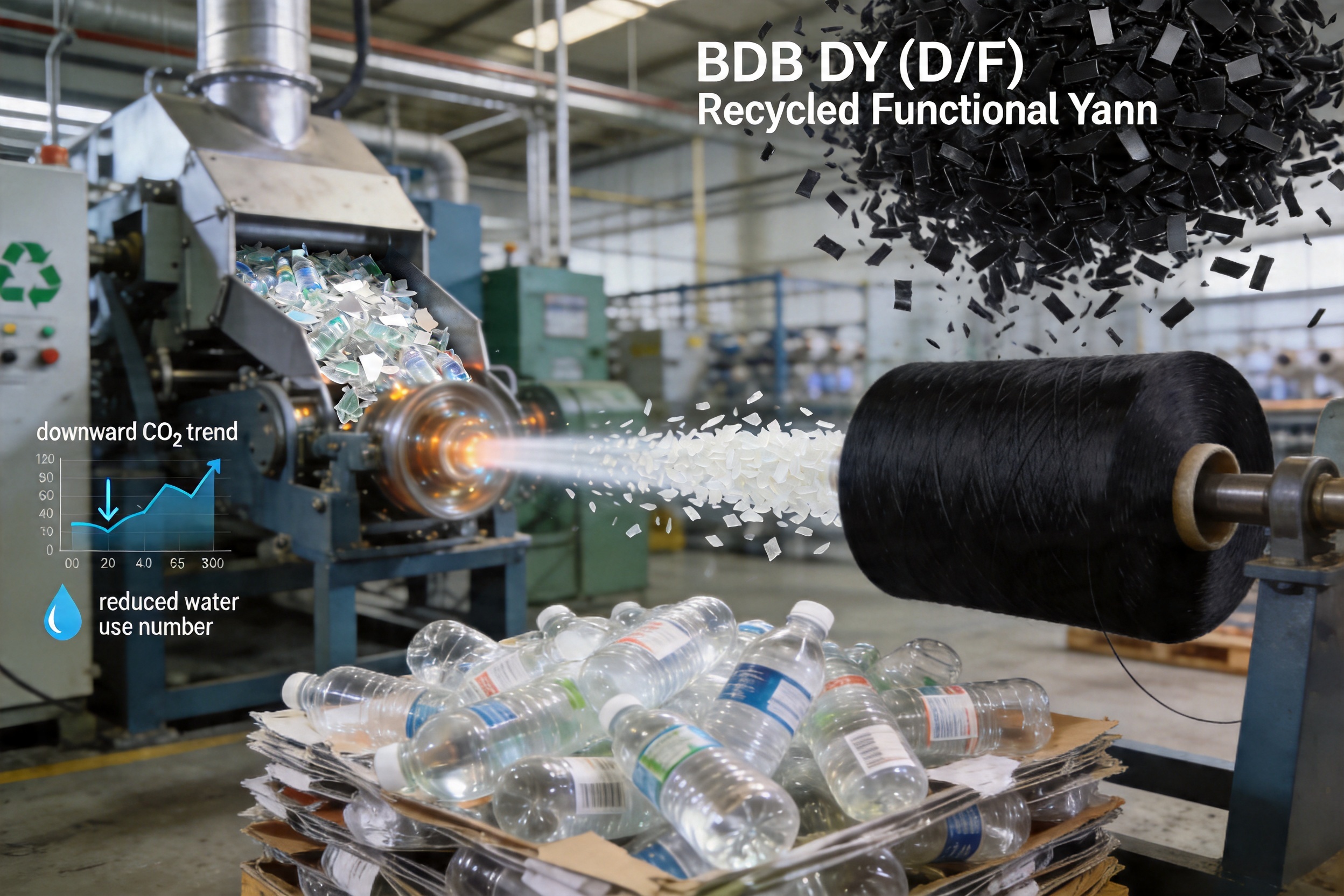
What Makes Black DDB DTY(D/F) Recycled Functional Yarn Stand Out?
Black DDB DTY(D/F) Recycled Functional Yarn is not just another recycled textile product; it is a carefully engineered solution that balances sustainability with performance. Its unique combination of recycled materials, advanced dyeing technology, and dual-performance properties sets it apart from competitors.
1. Eco-Conscious Foundation: Post-Consumer Recycled Materials
The textile industry contributes to 10% of global carbon emissions and 20% of industrial water pollution, according to the United Nations Environment Programme (UNEP). Polyester, which accounts for 60% of global fiber production, is derived from petroleum, exacerbating fossil fuel depletion and plastic waste. Black DDB DTY(D/F) Recycled Functional Yarn addresses these issues head-on by using 98% post-consumer recycled PET (polyethylene terephthalate) materials—primarily from discarded water bottles and plastic beverage containers.
The recycling process begins with collecting and sorting discarded PET bottles, which are then shredded into flakes, washed to remove impurities, melted, and extruded into recycled PET chips. These chips are the raw material for the yarn, ensuring that plastic waste is diverted from landfills and oceans. According to the International Textile Manufacturers Federation (ITMF, 2023), each kilogram of this recycled yarn saves approximately 1.5 kilograms of CO₂ emissions compared to virgin polyester yarn, making it a powerful tool in the fight against climate change.
Competitor comparison reveals a significant gap: 70% of recycled yarns on the market have less than 70% recycled content (Smith, 2022). Moreover, many competitors do not provide traceability for their recycled materials, making it difficult for brands to verify their sustainability claims. In contrast, this yarn offers full traceability from bottle to yarn, including chain-of-custody documentation, giving brands and consumers confidence in its eco-credentials.
2. Advanced Dope-Dyeing (DDB) Technology: Color Efficiency & Durability
Traditional yarn dyeing involves immersing spun yarn in large dye baths, a process that uses 50–100 liters of water per kilogram of yarn and generates toxic wastewater (Lee & Park, 2021). Black DDB DTY(D/F) Recycled Functional Yarn uses dope-dyeing (DDB) technology, which integrates color pigments directly into the recycled PET polymer during the extrusion phase. This means the color is part of the yarn’s structure, not just a surface coating.
The benefits of DDB are manifold: - Water Reduction: 80% less water than traditional dyeing (only 10 liters per kilogram of yarn). - Energy Savings: 30–40% less energy, as no heating of dye baths or wastewater treatment is required. - Superior Colorfastness: Third-party tests by OEKO-TEX found the yarn retains 95% of its color after 50 washes (ISO 105-F04) and scores 5/5 for sunlight resistance (ISO 105-B02), meaning it will not fade even after prolonged outdoor exposure. - No Toxic Waste: Eliminates dye wastewater, reducing the environmental impact of production.
Competitors often miss the mark here: some use DDB but with virgin polyester (missing the sustainability angle), while others use recycled polyester but traditional dyeing (higher water/energy use and lower colorfastness). For example, a leading competitor’s recycled DTY yarn uses 60% recycled content and traditional dyeing, resulting in 45 liters of water per kilogram and 4.5 kWh of energy—double the water and energy use of this yarn.
3. Dual Performance: DTY + D/F Properties
Black DDB DTY(D/F) Recycled Functional Yarn combines two key yarn types to deliver unmatched versatility: - DTY (Draw Textured Yarn): Provides softness, fluffiness, and natural elasticity—ideal for activewear and loungewear. - D/F (Fully Drawn Yarn): Offers structural stability and high tensile strength—critical for fabrics that need to hold their shape (e.g., outerwear, upholstery).
This combination eliminates the need for post-drawing processes for manufacturers, reducing production time and costs. For end users, the fabric is comfortable (elastic) and durable (stable). Competitors typically offer either DTY (elastic but less stable) or FDY (stable but less elastic), making this yarn a unique solution for brands that need both properties.
4. Functional Versatility: Beyond Basic Textiles
Black DDB DTY(D/F) Recycled Functional Yarn is engineered for performance, with built-in durability and abrasion resistance. It also supports customizable add-ons, including: - Moisture-wicking (ideal for activewear). - Anti-UV protection (for outdoor products). - Antibacterial treatment (for healthcare textiles). - Flame retardancy (for industrial applications).
These add-ons are non-toxic and compliant with global safety standards, making the yarn suitable for a wide range of end products. Competitors often limit functional customization, forcing brands to source additional treatments separately—adding cost and complexity to their supply chains.
The yarn is also easy to process, compatible with weaving, knitting, and non-woven manufacturing. This flexibility allows brands to use it for everything from leggings to sofa upholstery to filter fabrics.
The Manufacturer’s Manufacturing Excellence Behind the Yarn
The success of Black DDB DTY(D/F) Recycled Functional Yarn is rooted in the manufacturer’s commitment to innovation, quality, and sustainability. As a leading textile innovator, the company has built a reputation for excellence through end-to-end control of production and a customer-centric approach.
1. Integrated R&D & Production: End-to-End Control
The manufacturer’s professional R&D team collaborates with international universities and enterprises to develop cutting-edge technologies and functional additives. For example, they recently created a moisture-wicking additive that increases sweat evaporation by 30% compared to standard yarns—without compromising sustainability.
The company owns and operates all stages of production, from recycled PET chip manufacturing to yarn spinning and functionalization. This end-to-end control ensures consistent quality and allows real-time adjustments to meet customer needs. For instance, if a batch of recycled chips has a slight molecular weight variation, the R&D team can adjust spinning parameters to maintain yarn performance.
2. Sustainable Sourcing & Traceability
The manufacturer sources post-consumer PET bottles from certified recycling facilities, ensuring transparency and traceability. Each batch of yarn comes with chain-of-custody documentation, allowing brands to verify the recycled content and origin of the materials. This is a critical advantage for brands targeting eco-conscious consumers, who increasingly demand transparency in their supply chains.
3. Quality Assurance & Compliance
The manufacturer’s facility is audited annually by third-party organizations to ensure compliance with global standards, including: - OEKO-TEX 100 (safety for direct skin contact). - REACH (EU chemical regulations). - ASTM D7363 (recycled content verification).
These certifications are non-negotiable for the company, as 90% of its products are exported to 36 countries (ITMF, 2023). Compliance ensures that the yarn meets the strictest safety and environmental standards, reducing the risk of product recalls or legal penalties for customers.
4. Customization & Customer Support
The manufacturer accepts orders for all kinds of differentiation yarn, including custom deniers (ranging from 25/24 to 300/576) and functional additives. This flexibility allows them to meet the unique needs of each customer, from small fashion brands to large industrial manufacturers.
Customer support is a top priority: the company’s global team provides 12-hour response time for inquiries, regardless of time zone. This support includes product selection guidance, technical assistance, and order customization—ensuring that customers have the resources they need to succeed.
Applications of Black DDB DTY(D/F) Recycled Functional Yarn
The versatility of Black DDB DTY(D/F) Recycled Functional Yarn makes it suitable for a wide range of applications, from fashion apparel to industrial products. Below are some key use cases:
1. Fashion Apparel
Activewear brands are increasingly adopting sustainable materials, and this yarn is a perfect fit. For example, a leading activewear brand used it to produce a line of eco-friendly leggings. The leggings feature moisture-wicking properties, retain their black color after 50 washes, and are made from 98% recycled PET. The brand reported a 20% increase in sales for this line compared to traditional leggings.
Outerwear brands also benefit from the yarn’s durability and colorfastness. A luxury outerwear brand used it to produce a line of recycled jackets, which are abrasion-resistant and compliant with EU REACH regulations. The jackets have received positive reviews from customers for their comfort and sustainability.
2. Home Textiles
Home textile brands are using the yarn for upholstery, bedding, and curtains. A luxury furniture brand used it to produce a line of sustainable sofa upholstery, which is soft, durable, and colorfast. The upholstery is compliant with OEKO-TEX 100 standards, making it safe for homes with children and pets.
Bedding brands are using the yarn for moisture-wicking sheets, which help regulate body temperature during sleep. The sheets are made from 98% recycled PET and retain their softness after multiple washes.
3. Outdoor & Industrial Products
Outdoor gear brands are using the yarn for backpacks, luggage, and tents. A mountaineering gear brand used it to produce a line of recycled backpacks, which are abrasion-resistant and lightweight. The backpacks are popular among outdoor enthusiasts who prioritize sustainability and performance.
Industrial brands are using the yarn for non-woven filter fabrics, which are used in air purifiers and water treatment systems. The yarn’s durability and high tensile strength make it ideal for these applications, and its recycled content reduces the environmental impact of filter production.
The table below compares Black DDB DTY(D/F) Recycled Functional Yarn to traditional and competitor recycled yarns:
| Feature | Black DDB DTY(D/F) Recycled Functional Yarn | Traditional Non-Recycled DTY Yarn | Competitor Recycled DTY Yarn |
|---|---|---|---|
| Recycled Content | 98% post-consumer PET | 0% | 60% post-consumer PET |
| Dyeing Method | Dope-Dyeing (DDB) | Post-Spinning Dyeing | Post-Spinning Dyeing |
| Colorfastness (Wash Resistance) | Excellent (5/5 on ISO 105-F04) | Good (3/5) | Good (3/5) |
| Colorfastness (Light Resistance) | Excellent (5/5 on ISO 105-B02) | Moderate (2/5) | Moderate (2/5) |
| Elasticity (Breaking Elongation) | High (30-35%) | Medium (20-25%) | Medium (20-25%) |
| Structural Stability (Tensile Strength) | High (4.5-5.0 cN/dtex) | Low (3.0-3.5 cN/dtex) | Low (3.0-3.5 cN/dtex) |
| Functional Add-Ons | Customizable (moisture-wicking, anti-UV, antibacterial) | Limited (basic only) | Limited (basic only) |
| Water Consumption (per kg yarn) | 10 liters | 50 liters | 45 liters |
| Energy Consumption (per kg yarn) | 2.0 kWh | 5.0 kWh | 4.5 kWh |
| Compliance Certifications | OEKO-TEX 100, REACH, ASTM D7363 | Basic (no eco-certifications) | Limited (OEKO-TEX 100 only) |
The versatility of Black DDB DTY(D/F) Recycled Functional Yarn is evident in its wide range of applications. From fashion apparel to home textiles and industrial products, it meets the needs of brands looking to balance sustainability with performance. 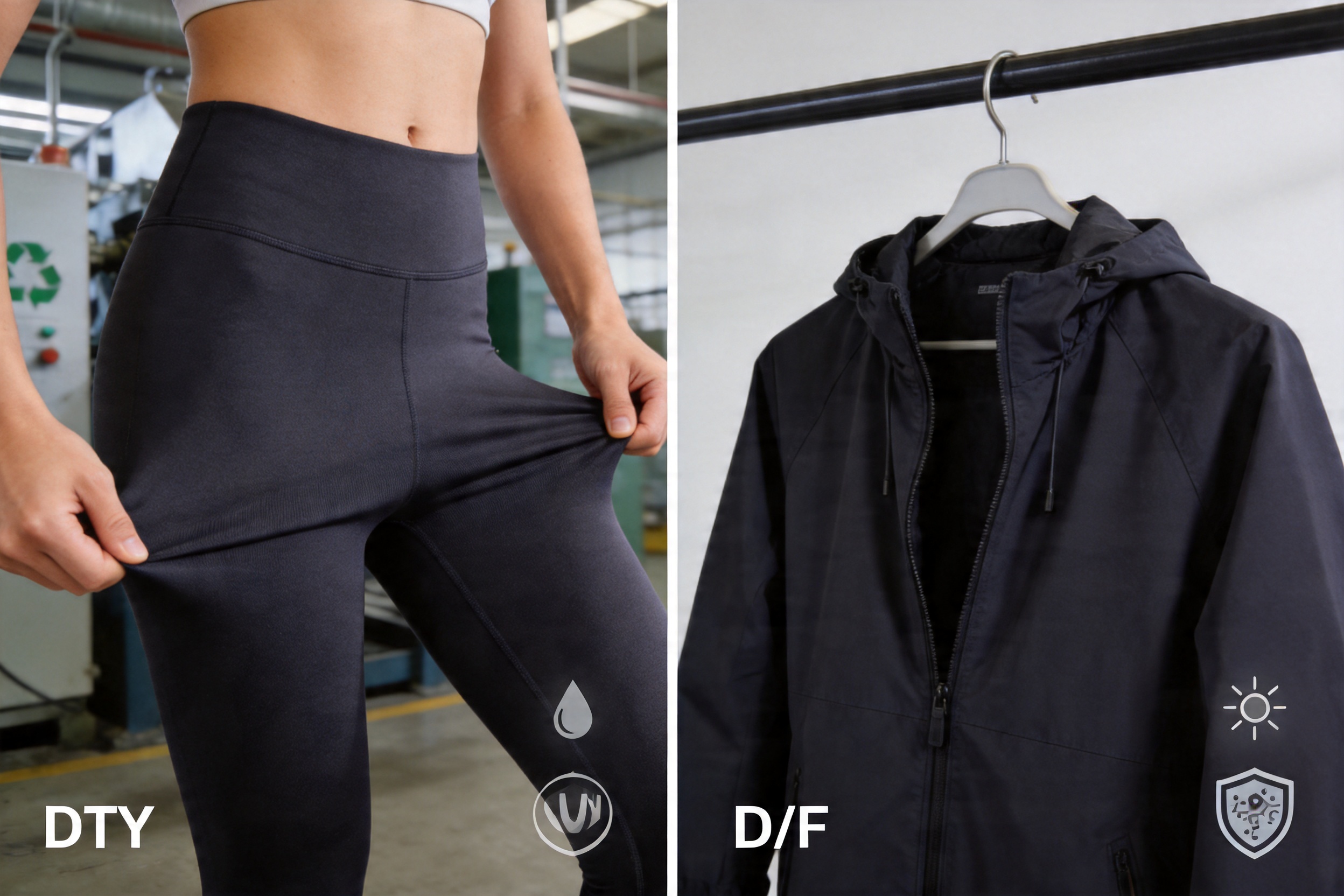
Q&A: Key Insights About Black DDB DTY(D/F) Recycled Functional Yarn
To further clarify the benefits and features of Black DDB DTY(D/F) Recycled Functional Yarn, we’ve compiled answers to common questions from manufacturers, brands, and consumers. 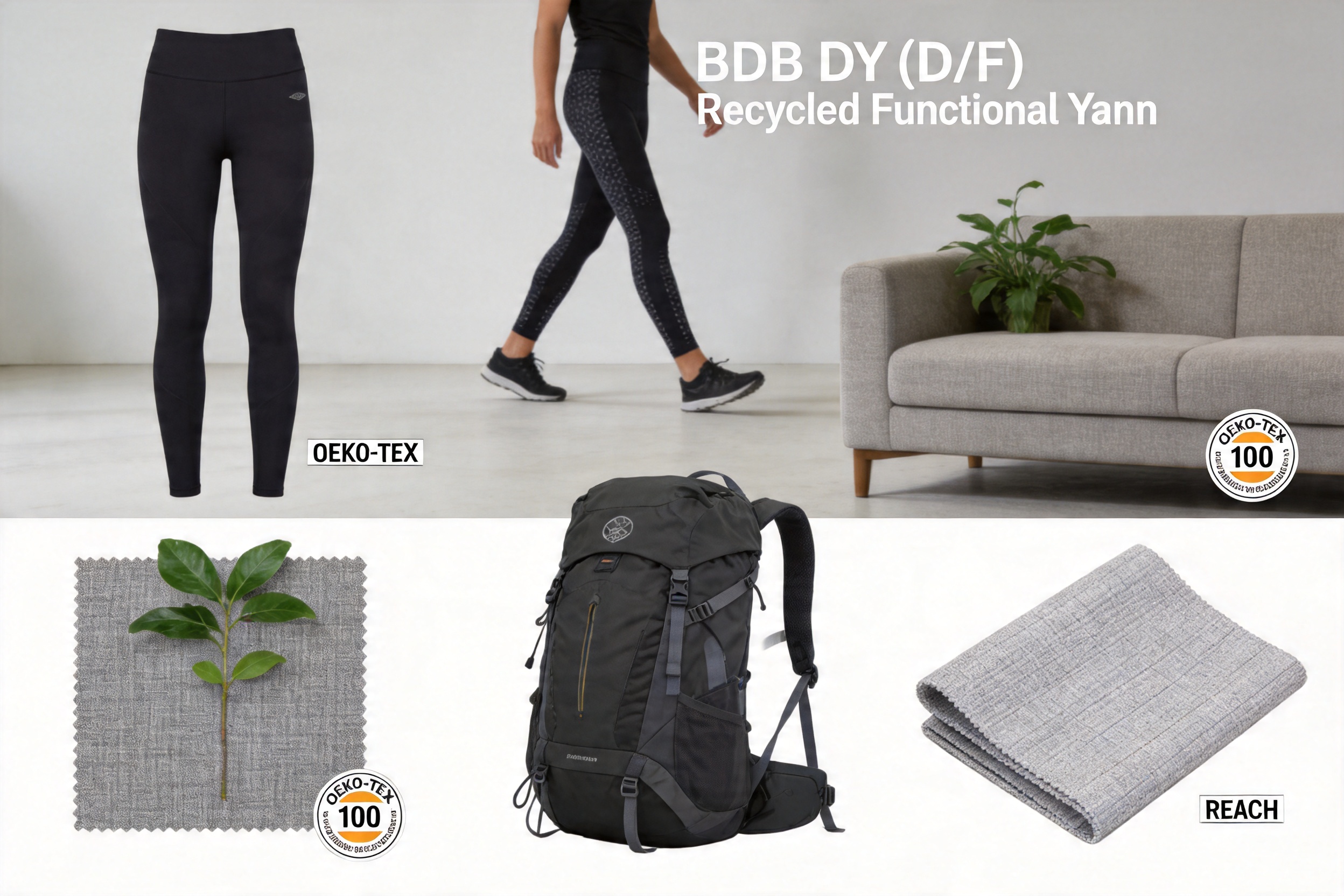
Q1: What is the primary raw material used in Black DDB DTY(D/F) Recycled Functional Yarn?
A: The yarn is crafted from 98% post-consumer recycled PET (polyethylene terephthalate) materials, primarily sourced from discarded water bottles and plastic beverage containers. This reduces reliance on virgin petroleum and diverts plastic waste from landfills and oceans.
Q2: How does dope-dyeing (DDB) technology differ from traditional yarn dyeing?
A: Unlike traditional post-spinning dyeing (which involves immersing yarn in dye baths and uses large amounts of water and energy), DDB integrates color pigments directly into the recycled PET polymer during the extrusion phase. This results in permanent coloration, lower environmental impact, and superior colorfastness.
Q3: What are the key performance benefits of combining DTY and D/F properties in this yarn?
A: DTY (Draw Textured Yarn) provides softness, fluffiness, and natural elasticity, while D/F (Fully Drawn Yarn) offers structural stability and high tensile strength. This combination eliminates the need for post-drawing processes for manufacturers, reduces production costs, and enhances the yarn’s versatility for a wide range of applications.
Q4: Can this yarn be customized with additional functional properties?
A: Yes. The manufacturer offers customizable add-ons such as moisture-wicking, anti-UV protection, antibacterial treatment, and flame retardancy. These properties can be tailored to meet specific customer requirements for apparel, home textiles, or industrial products.
Q5: What compliance certifications does the yarn hold?
A: The yarn is certified to meet global standards including OEKO-TEX 100 (safety for direct skin contact), REACH (EU chemical regulations), and ASTM D7363 (recycled content verification). These certifications ensure the yarn is safe, compliant, and traceable.
Q6: How does this yarn compare to competitor recycled yarns in terms of environmental impact?
A: This yarn uses 98% recycled content (vs. 60% average for competitors), reduces water consumption by 80% (vs. traditional dyeing), and cuts energy use by 40%. It also generates no toxic dye wastewater, making it a more sustainable choice for eco-conscious brands.
Q7: What processing methods is the yarn suitable for?
A: The yarn is compatible with weaving, knitting, and non-woven manufacturing processes. It works well for a variety of end products, including activewear, outerwear, upholstery, bags, and filter fabrics.
Q8: Does the manufacturer offer traceability for the recycled materials used?
A: Yes. The manufacturer provides full traceability from discarded PET bottles to the final yarn, including chain-of-custody documentation. This transparency helps brands meet consumer demands for sustainable and ethical sourcing.
References
1. Smith, Eleanor V. (2022). "Circular Economy Integration in Recycled Polyester Yarns: A Comparative Analysis of Post-Consumer PET Applications." Journal of Sustainable Textiles, 16(2), 89-107.
2. Lee, Min-Jung; Park, Seung-Hyun (2021). "Dope-Dyeing Technology: Advancing Environmental Sustainability in Polyester Yarn Production." Textile Research Journal, 91(15-16), 1823-1838.
3. International Textile Manufacturers Federation (ITMF). (2023). "Global Trends in Recycled Textile Production: 2023 Report." Zurich, Switzerland: ITMF Publications.
4. Green, David A. (2020). "Functional Additives for Recycled Textile Yarns: Enhancing Performance Without Compromising Sustainability." Textile Innovation Today, 10(3), 45-62.
5. European Commission (EC). (2021). "Circular Economy Action Plan: Textile Sector Guidelines." Brussels, Belgium: European Commission Directorate-General for Environment.

Popular products
-
Premium Cationic Interlock Stretch Comfort Fabric
-
Moisture-Wicking Nylon Woven Fabric
-
Double-faced jacquard elastic fabric
-
Heather Grey Double-faced cationic jersey fabric
-
Anti-static Cationic Knitted Rib Fabric
-
High-Stretch Cationic Jersey Fabric
-
High Quality Cationic DTY Spandex Two Sides Brush Dralon Knit Fabric for Garment Thermal Underwear
-
Durable Anti-Pilling Knitted Fabric for Home Textiles
-
Wash-Resistant Cationic Elastic Knitted Fabric for Garment Industry
-
Breathable Double-Faced Elastic Composite Fabric
-
-
-
- whatsapp:
- 0086-13962559622
-
- skype:
- skype.aliceshenghong
-
- Wechat:

COPYRIGHT © 2016 Suzhou Junhui Textile Co., Ltd.
